



Login
Get Instant Pricing On 23,000+ Aircraft

>

Private aviation allows passengers to move on individualized schedules. A single itinerary can span commercial hubs from Paris to Shanghai within a 48-hour window.
But if private aviation only catered to billionaires with their own aircraft, the industry wouldn’t have reached a nearly $30 billion market in 2025. It would still be a tiny world occupied by ultra wealthy individuals and corporate fleets, while everyone else dealt with crowded terminals, delays, and uncomfortable seating.
Owning a Gulfstream isn’t the only way to fly private anymore. With charter operators, jet memberships, and on-demand booking services, private aviation has become accessible to a much broader group of travelers.
Jettly examines how membership and subscription models are reshaping private aviation and reducing reliance on full aircraft ownership.
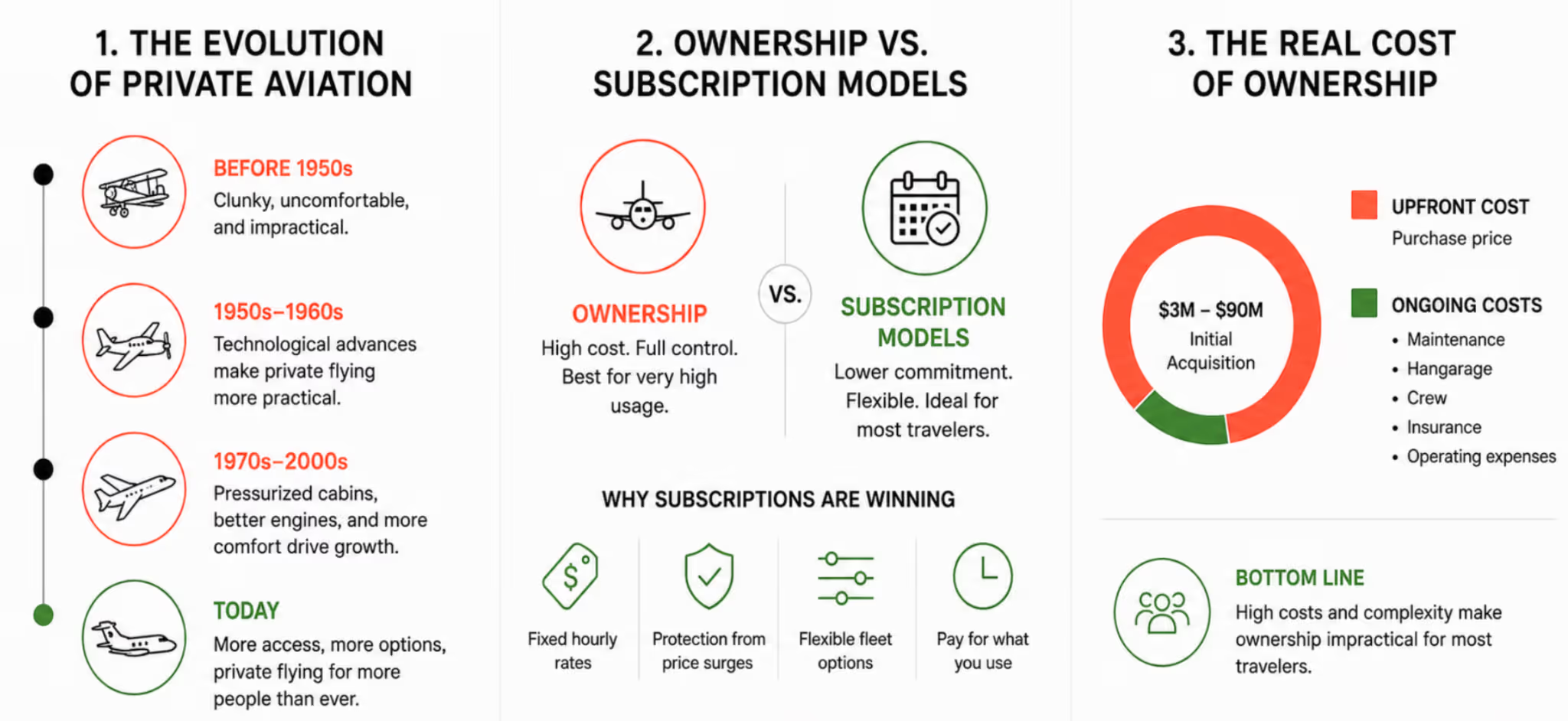
Wealthy people have been fascinated with aircraft since the inception of civil aviation. But early private flying looked nothing like the sleek business jets we know today.
Before the 1950s, private planes were often clunky, uncomfortable, and wildly impractical. There were no pressurized cabins or plush interiors, and plane rides were generally uncomfortable.
That started to change as aircraft technology improved. One major milestone was the Cessna 172, which helped make private flying more practical for up to three passengers. In 1957, the aviation market saw the introduction of the Lockheed JetStar, one of the first business jets capable of carrying 10 passengers.
With better engines, improved comfort, and eventually pressurized cabins, private aviation began evolving from a risky hobby into a legitimate business travel solution. For decades, though, it still remained a luxury reserved almost entirely for billionaires, celebrities, and major corporations.
But as the industry grew and more charter companies emerged, the tides turned, and more people were able to access the service. And we arrive at today, when flying private means booking a seat, chartering a flight, or joining a membership program.
In just a few decades, private aviation has evolved from a status symbol into something much more practical. Sure, owning a luxury jet is still an unmistakable sign of wealth, especially in today’s economy. Most users do not require the capital footprint of ultra-high-net-worth individuals or global icons; rather, they prioritize utility over legacy equity ownership.
A lot of today’s private flyers are business executives, entrepreneurs, families, or frequent travelers who value flexibility, privacy, and saving time more than the bragging rights of owning an aircraft.
Why Subscriptions are Winning
Until recently, on-demand booking was the most popular model among charter clients. Within this model, users pay an annual or monthly fee to access a digital marketplace with guaranteed or capped hourly rates.
Subscribers maintain complete fleet flexibility, allowing them to secure a 6-seat Phenom 300 or a large-cabin corporate jet depending on the mission profile.
But the current fuel surcharges and pilot wage spikes caused on-demand rates to fluctuate by as much as 20% month over month. To avoid this, frequent flyers many prefer membership models that provide fixed hourly rates, such as jet cards, all-you-can-fly, or fractional ownership.
Here is a breakdown of these models and who they’re best for:
Subscriptions provide fixed hourly rates during the membership period and peak-day protection. This protects users from price surges motivated by high-demand events (like the Super Bowl or the FIFA World Cup).
The Financial Burden of Whole Ownership
The one disadvantage of subscriptions and on-demand booking is that passengers are not guaranteed access to the same aircraft type every time. Also, during peak season, they may not be able to book a flight without a 24-hour notice.
Whole asset ownership mitigates these availability constraints. An individual owner retains total operational control, a dedicated crew is permanently at their disposal, and the aircraft can achieve operational readiness within hours of notification. However, this level of readiness comes with steep costs.
Initial acquisition requires allocating between $3 million and $90 million in capital. Beyond the purchase price, operators must account for ongoing overhead, including maintenance, hangarage, and crew.
Without a high-frequency travel profile or ultra high-net-worth status, justifying these staggering outlays remains difficult.
While owning a private jet remains prohibitively expensive, today’s business model is far more accessible. For most travelers, chartering offers the flexibility, privacy, and convenience of flying private without taking on the enormous costs and responsibilities of owning an aircraft.
There are no maintenance headaches, no need to hire a crew, and no paying for a jet to sit in a hangar. That’s why jet memberships and subscription models continue to grow. They give travelers the freedom to fly on their own terms, whether that means a few flights a year or frequent business trips across the globe.
Share this post:
Jay Franco Serevilla
May 27, 2026
|
5
min read
Discover tips and trends in the industry.

5
min read
Lodi CA Airport Guide: Flying Into Lodi Airport (1O3) & Lodi Airpark (L53) with Private Charter
Lodi, CA, offers two primary airports for private flying: Lodi Airport (1O3) and Lodi Airpark (L53). This guide provides essential information for private pilots and charter travelers, detailing airport features, services, and nearby alternatives for efficient travel planning to the Central Valley's wine country.
Read More
5
min read
SWA Southwest Airlines Reservations: How to Book, Manage, and Compare with Private Jet Travel
This guide explores the evolving landscape of Southwest Airlines reservations, detailing booking options, fare types, and policies. It also compares these with private jet travel alternatives, highlighting when chartering a jet might be the better choice. Whether you're a frequent flyer or new to private jets, this resource equips you with essential insights for your next trip.
Read MoreStay updated with our latest insights and tips to elevate your journey with us.
MEMBERSHIPS AND ASSOCIATIONS



Disclaimer: Jettly operates as a charter broker, offering access to a global digital jet charter marketplace. Jettly is not a direct air carrier and does not own or operate aircraft. All advertised flights are conducted by third-party air carriers that are fully licensed and hold the appropriate Part 135 or Part 121 certifications issued by the Federal Aviation Administration (FAA) or equivalent regulatory authorities under U.S. or foreign law. Jettly complies fully with the U.S. Department of Transportation's Part 295 and Part 298 Charter Broker regulations. Jettly does not carry additional liability insurance. Passengers are covered by aircraft operator insurance. TICO: 50023770


