


Login
Get Instant Pricing On 23,000+ Aircraft

>
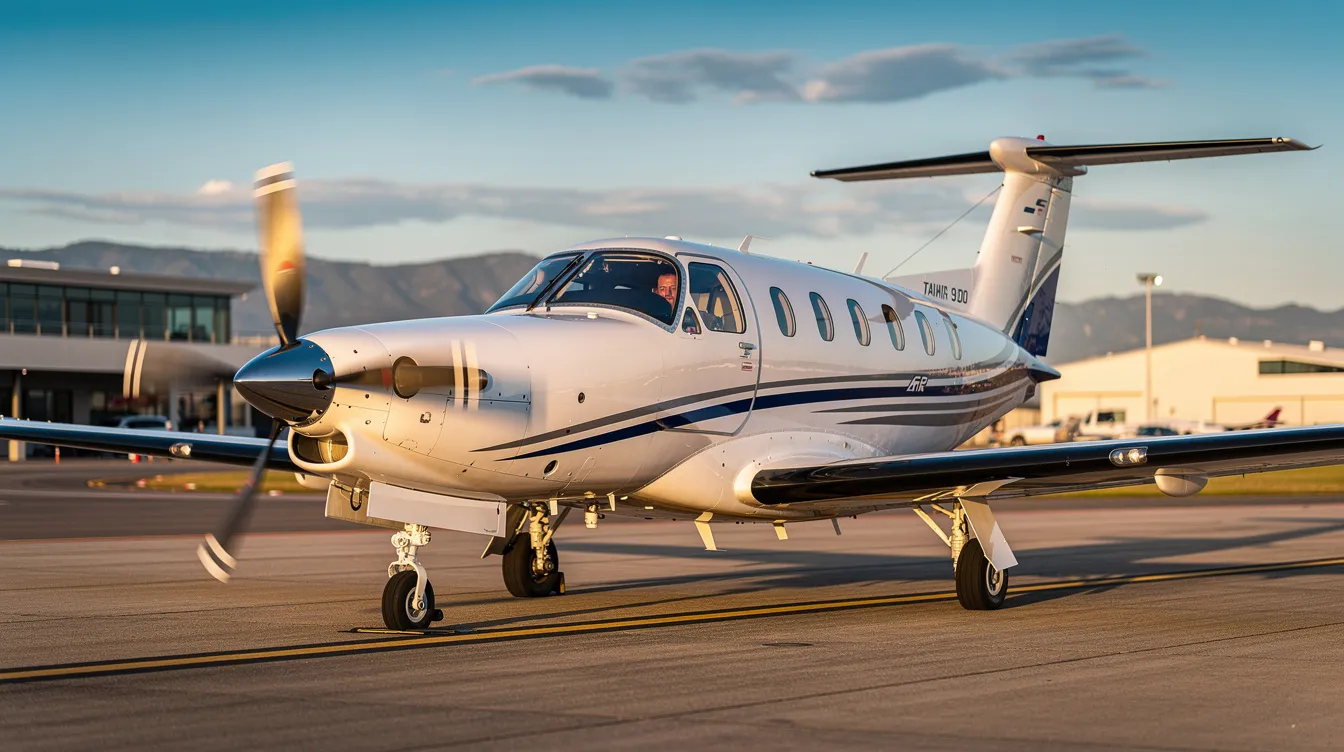
The TBM 900 is a high-performance single-engine turboprop aircraft built by Daher, launched in 2014 as a significant evolution of previous models like the TBM 700 and TBM 850. It combines the speed of a light jet with the cost efficiency of a turboprop, making it one of the most compelling aircraft in its class. The airplane is designed for executive transport and personal travel, and it routinely cruises above 320 knots, earning its reputation as the world's fastest single-engine turboprop.
Key specs tell the story quickly: a maximum cruise speed around 326 knots under ISA conditions, a service ceiling of 31,000 ft, and a maximum range near 1,730 nautical miles with long-range settings and standard reserves. The TBM 900 sits squarely between high-performance piston aircraft and entry-level jets, popular with owner-pilots, corporate flight departments, and select charter operators.
Jettly frequently features the TBM 900 and related Daher TBM models in its global turboprop charter inventory, giving travelers access to this aircraft without the complexity of ownership.
The Daher TBM 900 (formerly Socata TBM) is a high-performance single-engine turboprop aircraft introduced in 2014, bridging the gap between piston aircraft and light jet models with a maximum cruise speed of 326 knots and a maximum range of approximately 1,730 nautical miles.
Annual operating costs for the TBM 900 run approximately $717,728 for 300–400 flight hours, with a list price of $3.9 million and current market ask prices ranging from $2.7 million to $5.8 million.
The aircraft seats up to six passengers (five plus pilot in most charter configurations), making it ideal for regional business trips and family travel into smaller airports.
On-demand charter through Jettly avoids capital outlay and long-term commitments, offering instant quotes and transparent pricing for TBM 900 flights alongside 20,000+ other aircraft.
Readers can compare TBM 900 charter pricing against other turboprop aircraft and light jets directly on Jettly's platform.
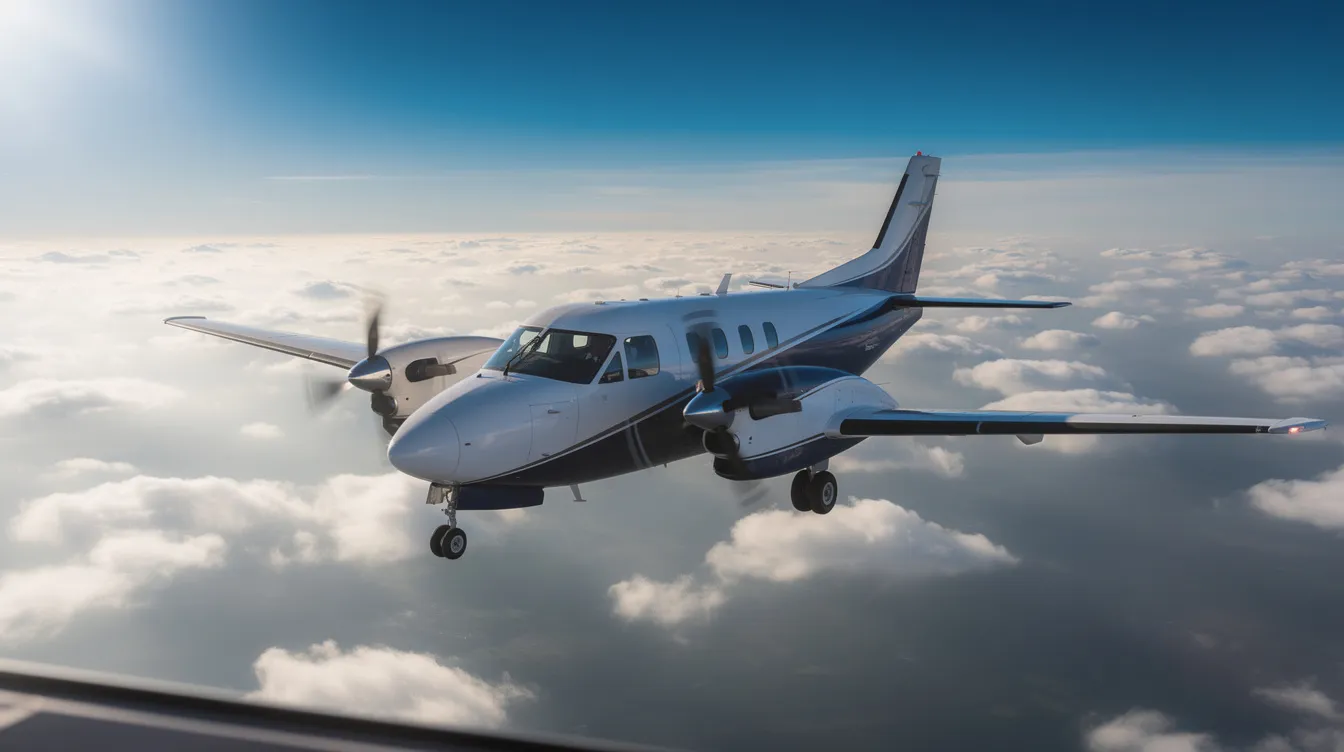
The TBM series traces its roots to the early 1990s. The TBM 700, certified in 1990, was a Franco-American collaboration between what was then known as eads socata and Mooney. It was the first airplane in the line that would eventually set new standards for single engine turboprop performance, and its production continued through several sub-variants including the TBM 700C2 with increased maximum takeoff weight.
From the TBM 700, the tbm lineup expanded into the TBM 850, which introduced higher engine power and refined aerodynamics. Daher rebranded from EADS Socata and continued pushing the series forward, adding Garmin glass cockpits, quieter cabins, and better climb performance across the TBM 910, TBM 930, and TBM 960.
The TBM 900 marked the key turning point. Aerodynamic redesign-new cowling, winglets, a five-blade prop, and refined airflow management-delivered a complete generational leap in speed and efficiency versus the models that came before it. As one Daher deputy vice president noted during the launch, the 900 was intended to redefine what pilots expect from a turboprop aircraft.
The TBM 900 is a low-wing aluminum airframe with a pressurized cabin, T-tail, retractable landing gear, and a five-blade Hartzell propeller. It includes in-house-designed winglets that reduce drag and improve both climb and cruise efficiency. Other aerodynamic refinements include redesigned exhaust stacks, a new engine air intake, modified main landing gear doors, and a strake under the left wing leading edge.
Inside the cabin, the aircraft offers seating for up to six passengers in a club configuration with an executive interior. A small door on the left side provides access to the pressurized cabin, which measures roughly 4 ft 1 in tall, 4 ft wide, and 10 ft long. The TBM 900's cabin is quieter due to better vibration isolation from the engine and prop, and noise-reduction treatments throughout. The wing span and overall dimensions keep the airplane compact enough for smaller hangars and regional airports.
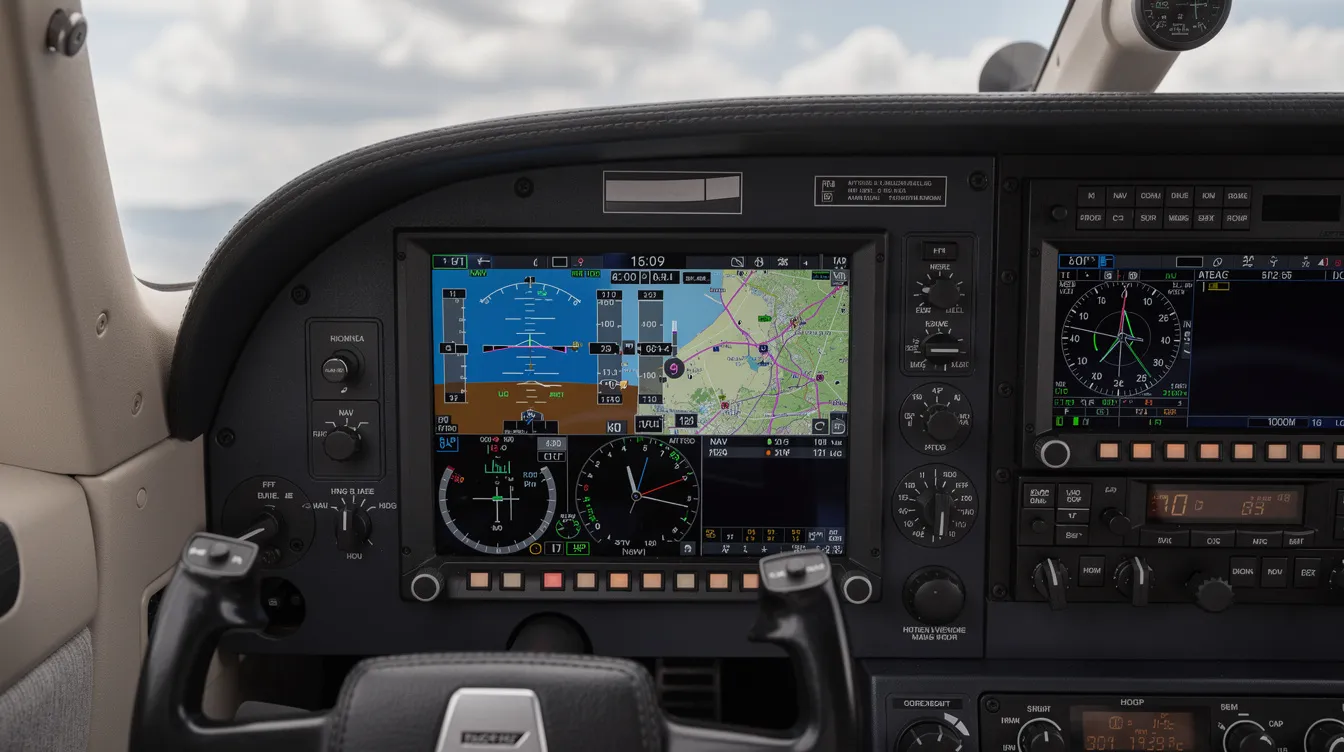
The cockpit features a Garmin G1000 integrated flight deck and GFC 700 autopilot, with synthetic vision and automated systems for fuel management and ice protection. A single power lever simplifies engine operation, while automatic torque limiting handles power management, reducing pilot workload significantly. These technology improvements make the TBM 900 attractive for both owner-pilots and charter operations that value reliability and situational awareness. Coverage in publications like AOPA Pilot has consistently highlighted how these systems help pilots operate the aircraft safely in demanding conditions.
This is where the TBM 900 earns its reputation. Whether you're a charter planner or a traveler comparing options, these numbers matter.
Speed and range highlights:
|
Metric |
Value |
|---|---|
|
Maximum cruise speed |
~326 KTAS (FL 280, standard day) |
|
Long-range cruise speed |
~252 KTAS |
|
Maximum range (long-range cruise, reserves) |
~1,730 NM |
|
Range at max cruise |
~1,440 NM |
|
Service ceiling |
31,000 ft |
|
Climb rate |
1,700 feet per minute |
|
Time to 31,000 ft (MTOW) |
Under 19 minutes |
|
Fuel consumption |
73 gallons per hour |
The TBM 900 can climb to its service ceiling in under 19 minutes from sea level at max takeoff weight, which means it reaches fuel-efficient cruise altitudes quickly. At altitude, wind conditions and fuel weight directly influence actual range-with full fuel, useful load for passengers and baggage is reduced, so operators balance payload against distance on every flight.
Runway performance is equally capable. The TBM 900 has a takeoff distance of 2,380 feet under standard conditions (over a 50-ft obstacle), while longer runway scenarios with higher takeoff weight push that figure to approximately 2,823 feet. Landing distance is around 2,430 feet. This short-field performance opens access to regional airports that larger turboprop aircraft and jets simply cannot use.
Real-world route examples:
New York to Miami (~1,200 NM): roughly 3.5–4 hours block time at high cruise speed
Los Angeles to Aspen (~650 NM): about 2–2.5 hours
Toronto to Fort Lauderdale (~1,150 NM): comfortably within the TBM 900's range, non-stop
These missions fall well within the aircraft's envelope with four to five passengers, making it a strong fit for private flights to Florida and similar popular routes.
While the TBM 900 burns less fuel than most light jets at comparable cruise speed, total annual operating costs still place it firmly in business aircraft territory. That's precisely why many travelers prefer charter over ownership.
Ownership cost breakdown (300–400 hours/year):
|
Cost Category |
Annual Amount |
|---|---|
|
Annual fixed costs (hangar, insurance, training) |
$171,021 |
|
Variable costs per hour |
$1,114.44 |
|
Hourly maintenance cost |
$374 |
|
Annual operating costs |
~$717,728 |
|
Total cost of operation |
$717,728 |
|
Direct operating costs |
$2.48 per nautical mile |
Key cost drivers include fuel burn of approximately 73 gallons per hour of Jet A, engine reserves for the Pratt & Whitney PT6A-66D (TBO around 3,500 hours), propeller overhaul, and avionics subscriptions. The aircraft is powered by a PT6A-66D engine producing 850 shp-a proven and reliable powerplant, but one that still carries significant maintenance and overhaul costs.
For travelers who fly fewer than 200 hours annually, the math tilts heavily toward charter. On-demand booking through Jettly eliminates the $3.9 million purchase price (with current market ask prices ranging from $2.7 million to $5.8 million), avoids depreciation risk, and offers pay-per-flight flexibility. Jettly's charter cost estimator lets users compare TBM 900 pricing against light jets and larger turboprops for any route. For affordable private charter options, turboprops like the TBM 900 consistently offer strong value.
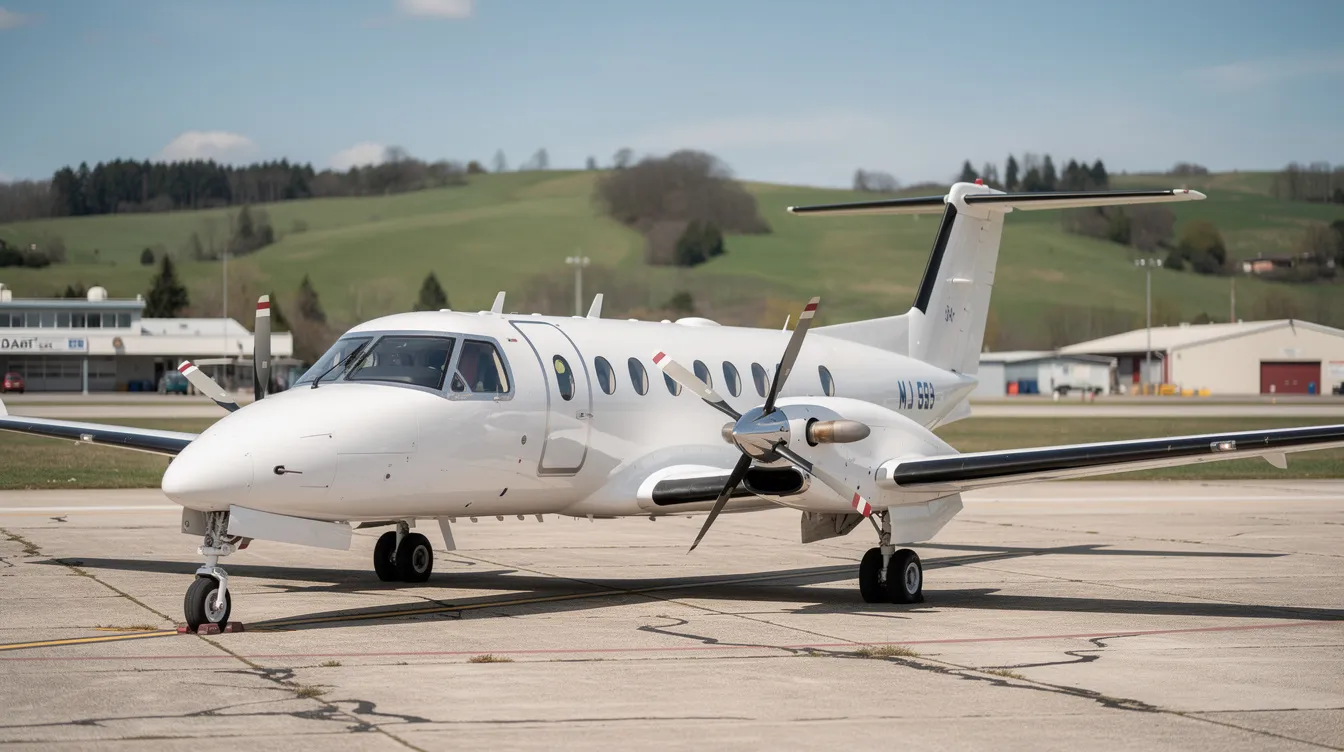
Performance data translates into specific mission profiles where the TBM 900 excels-particularly in private charter.
Business travel: Executives flying between regional corporate hubs or secondary airports near city centers save hours over commercial connections. The TBM 900's short-field capability means you can fly into airports half the distance from downtown compared to major commercial hubs.
Leisure and family trips: Flights from major cities to coastal resorts, ski destinations, or island airports with shorter runways play to the TBM 900's strengths. The pressurized cabin keeps passengers comfortable at altitude, and the aircraft is capable of reaching destinations that require precision approaches.
Special missions: Medical transport, urgent document delivery, and on-demand point-to-point travel benefit from the TBM 900's speed, efficiency, and single-engine turboprop simplicity.
A Jettly user booking a sub-1,000 NM business trip-say, Chicago to Nashville-might select a TBM 900 over a light jet for significantly lower operating costs while still arriving in roughly half the time of a commercial itinerary. The data consistently shows that for missions under 1,000 nautical miles with three to five passengers, the TBM 900 is priced competitively against jets while delivering comparable block times.
Jettly is a digital private aviation platform that lists TBM 900 and other turboprop private jet options among more than 20,000 available aircraft worldwide.
The booking flow is straightforward: enter departure and arrival airports, dates, and passenger count. View instant pricing that includes TBM 900 options where available. Confirm and pay online. No membership required, no long-term commitment.
Benefits specific to chartering turboprop aircraft like the TBM 900 through Jettly include access to smaller airfields, competitive hourly rates compared with light jets, and strong reliability for regional missions. Jettly works with vetted, regulated operators-FAA Part 135 in the U.S. and equivalent authorities elsewhere-ensuring flight safety, maintenance standards, and pilot experience meet strict criteria.
Empty leg flights on TBM aircraft may also be available at reduced rates when the airplane is repositioning, offering flexible travelers another way to fly for less.
How does the TBM 900 stack up against alternatives in the market?
|
Feature |
TBM 900 |
Light Jet (typical) |
|
|---|---|---|---|
|
Cruise speed |
~326 KTAS |
~280 KTAS |
~380–420 KTAS |
|
Fuel burn |
~73 gal/hr |
~70 gal/hr |
~120–180 gal/hr |
|
Passengers (typical) |
4–5 |
6–8 |
5–7 |
|
Cabin size |
Compact |
Larger |
Varies |
|
Engine(s) |
Single turboprop |
Single turboprop |
Twin jet |
|
Charter hourly rate |
Lower |
Moderate |
Higher |
The TBM 900 stands out with a higher cruise speed than most turboprop aircraft while using less fuel than any light jet on similar stage lengths. For three to five-passenger missions under 1,000 NM, it consistently delivers the best balance of speed, cost, and airport access.
Trade-offs exist. The single-engine configuration means no redundancy versus twin-engine jets or aircraft like the King Air 350. Cabin volume is smaller, and baggage space requires careful planning for larger groups. But for the right mission profile, the TBM 900 is hard to beat on value.
Jettly's platform lets users compare the TBM 900's charter rate, cruise speed, and operating profile directly against these alternatives-helping optimize each trip for cost and time.
The TBM 900 uses the proven Pratt Whitney PT6A-66D engine with decades of reliability data across thousands of aircraft. It's certified for instrument flight and icing conditions under strict regulatory standards. Charter flights arranged through Jettly are operated by licensed air carriers subject to oversight from aviation authorities, with rigorous maintenance, pilot training, and operational standards.
For context, the TBM 900 series has 17 reported incidents with 6 fatalities. Across the broader tbm series since 1991, there have been 93 total accidents-the TBM 700 series recorded 62 accidents with 66 fatalities, while the TBM 800 series had 33 accidents resulting in 12 fatalities. Safety records should be viewed relative to total fleet hours, and risk management includes route planning, weather assessment, and adherence to standard operating procedures.
The TBM 900 cabin is outfitted with six seats, but most charter missions fly with four to five passengers for optimal comfort, baggage capacity, and performance. For full fuel and maximum range missions, operators may limit passenger count or luggage. Shorter flights allow more flexibility. The club seating arrangement suits business discussions or family travel, but larger groups may prefer light jets or larger turboprop aircraft available on the Jettly platform.
Typical high-speed cruise is around 320–326 KTAS, with long-range cruise slightly lower at ~252 KTAS when prioritizing fuel efficiency. A New York to Miami flight takes roughly 3.5 hours block time, while Los Angeles to Aspen runs about 2 hours. Actual times depend on wind, routing, and air traffic control. Jettly's trip planning tools estimate block time when you enter your specific city pair.
On many routes under 1,000 nautical miles, TBM 900 hourly charter rates are generally lower than comparable light jets because the aircraft burns less fuel and has simpler operating costs. Total trip cost also depends on positioning, airport fees, and minimum flight time requirements. Users can compare multiple aircraft quotes on Jettly for the same itinerary to see how the TBM 900 stacks up.
One-way TBM 900 charters are available, and empty leg flights may offer reduced rates when the aircraft is repositioning. Last-minute availability depends on operator schedules and aircraft location, but Jettly's real-time inventory often allows same-day or next-day bookings on popular routes.
Ready to experience private travel on your terms? Explore flight options or request a quote at https://www.jettly.com.
The TBM 900 remains a standout choice for travelers seeking a balance of speed, efficiency, and flexibility in private aviation. Its combination of light jet-like performance with turboprop cost advantages makes it ideal for regional business trips, leisure travel, and special missions. Chartering a TBM 900 through platforms like Jettly offers the convenience of instant pricing, access to a global fleet, and transparent booking without the financial and operational burdens of ownership. Whether flying solo or with a small group, the TBM 900 delivers reliable, comfortable, and efficient travel to a wide range of destinations.
Ready to experience private travel on your terms? Explore TBM 900 flights or request a quote at https://www.jettly.com.
Share this post:
Jay Franco Serevilla
Jun 15, 2026
|
5
min read
Discover tips and trends in the industry.

5
min read
Jettly Cloud Fractional Jet Ownership Pricing Guide
The Jettly Cloud Fraction program offers a unique fractional jet ownership model, allowing access to entire aircraft classes with fixed pricing over a 36-month term. This guide details the costs, fees, and inclusions for Light, Midsize, and Super-Mid jets, helping buyers make informed decisions without hidden fees. Understanding the full cost structure is essential for comparing Cloud Fraction with traditional ownership and jet card options.
Read More
5
min read
When Is the Best Time to Buy Airfare? (And When to Book Private Jets Instead)
Knowing the best time to buy airfare can save you money on flights. For domestic trips, booking 1 to 3 months in advance is ideal, while international flights are best booked 2 to 8 months ahead. This guide also explores when private jet charters may be a more convenient option, especially when commercial flights become costly or inconvenient.
Read MoreStay updated with our latest insights and tips to elevate your journey with us.
MEMBERSHIPS AND ASSOCIATIONS



Disclaimer: Jettly operates as a charter broker, offering access to a global digital jet charter marketplace. Jettly is not a direct air carrier and does not own or operate aircraft. All advertised flights are conducted by third-party air carriers that are fully licensed and hold the appropriate Part 135 or Part 121 certifications issued by the Federal Aviation Administration (FAA) or equivalent regulatory authorities under U.S. or foreign law. Jettly complies fully with the U.S. Department of Transportation's Part 295 and Part 298 Charter Broker regulations. Jettly does not carry additional liability insurance. Passengers are covered by aircraft operator insurance. TICO: 50023770


