


Login
Get Instant Pricing On 23,000+ Aircraft

>
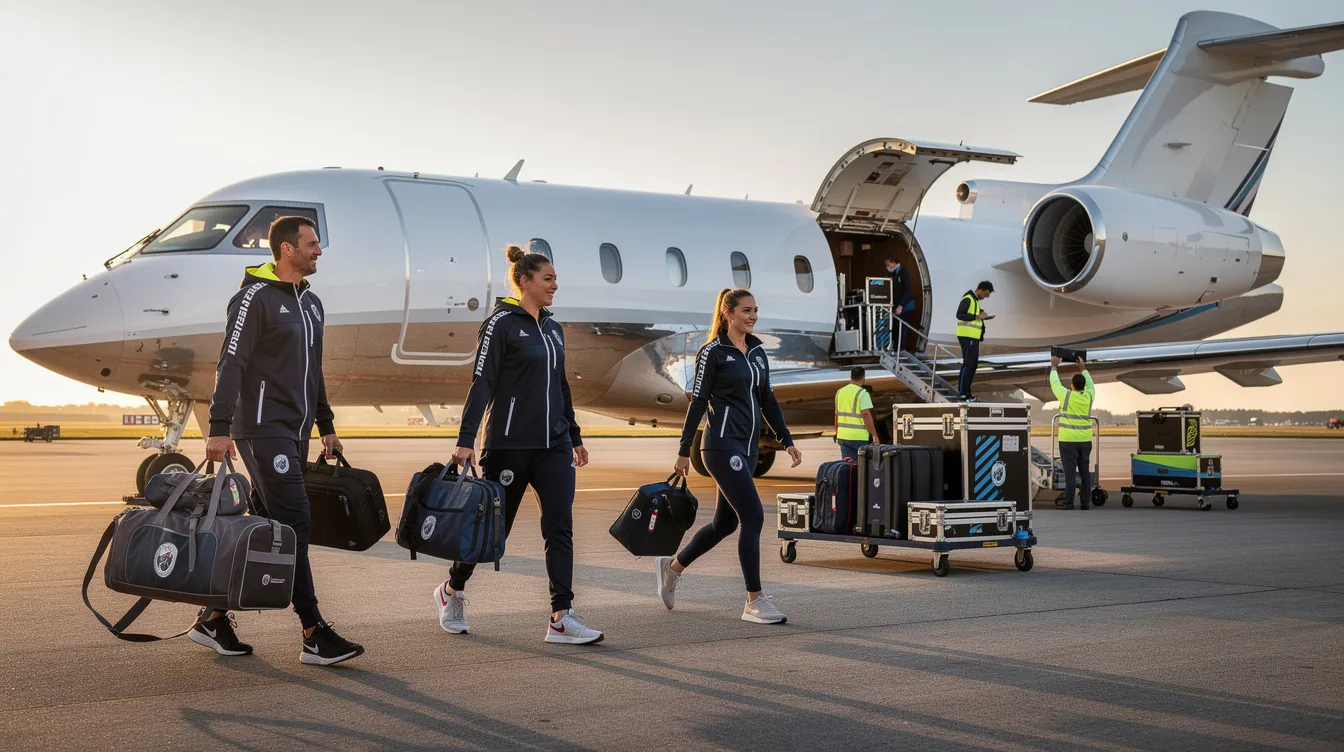
A sports team jet refers to any aircraft owned, leased, or chartered and used to transport rosters, coaches, medical staff, and equipment for professional, collegiate, or elite youth teams. This guide is designed for team managers, travel coordinators, and sports executives seeking to optimize team travel logistics and performance. Understanding the ins and outs of sports team jets and charter flights is crucial for these professionals, as efficient travel can directly impact team performance, scheduling, and overall operational success.
A private jet charter is when a team rents an entire aircraft for exclusive use, while a charter flight refers to a flight arranged specifically for a group, such as a sports team, rather than the general public. Private jet charter and sports team charter flights have become the standard for sports teams at every level because private aviation offers control, speed, and predictability that commercial air travel simply cannot match.
Most professional sports teams now rely on charter flights or private jets rather than commercial flights. Whether it is a team aircraft owned by the franchise, an airline-operated charter, or an on-demand aircraft charter booked through platforms like Jettly, the goal is the same: protect the schedule, accelerate recovery, improve the overall travel experience for players and staff, and keep operations private.
Flexible departure times that adjust to overtime, weather, and rescheduled games
Enhanced security at private terminals, away from crowded commercial airports
Access to airports closest to stadiums and training facilities
Customized meals prepared with input from team nutritionists
Cargo space for bulky equipment, medical gear, and crew uniforms
Across the NFL, NBA, MLB, NHL, MLS, and top NCAA programs, charter flights are the norm. Commercial airlines have rigid timetables that do not fit sports scheduling, so pro teams and major college programs rely on three primary models.
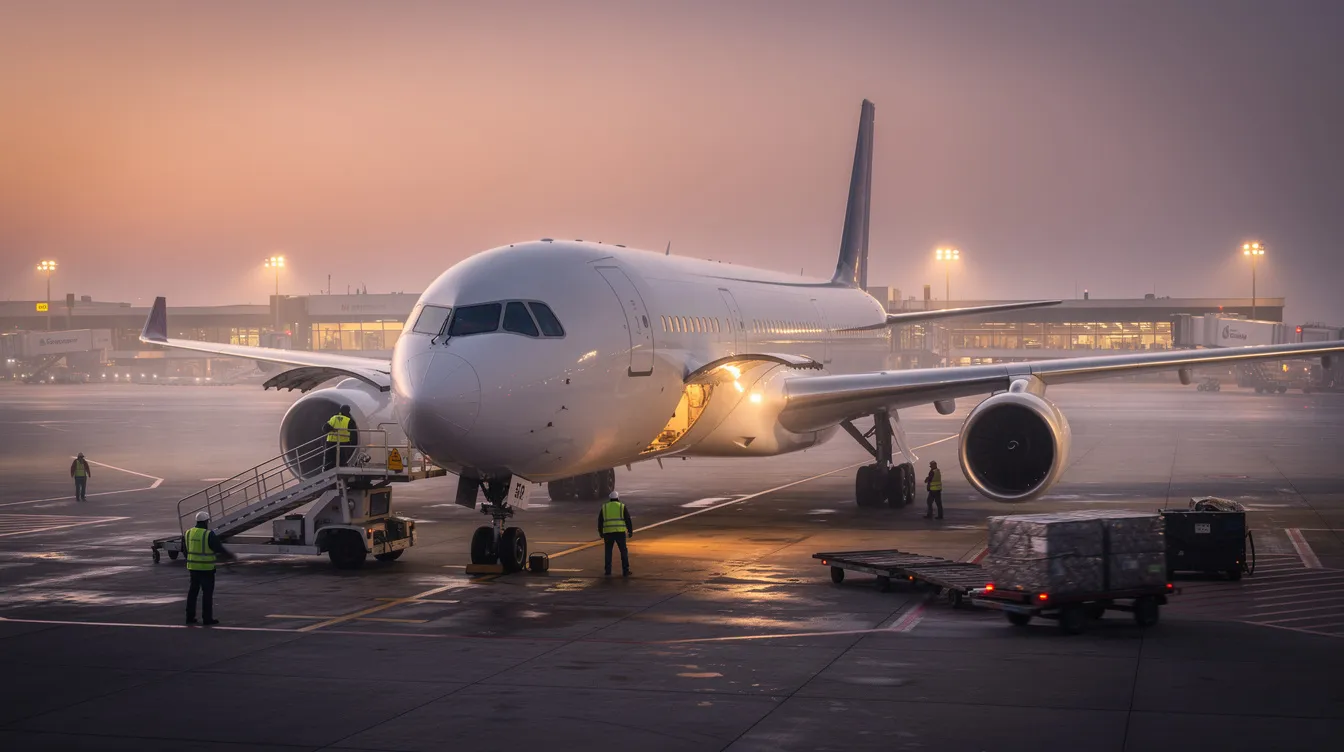
Airline-operated charter flights: carriers like Delta, United, or Atlas Air configure widebody jets (757, 767, 777) to seat full rosters plus support staff. NFL teams regularly fill cargo holds exceeding 10,000 lbs of equipment per trip.
Dedicated team aircraft: a small number of franchises own or lease their own aircraft. This gives a professional sports team total control over cabin layout, branding, and scheduling.
On-demand private jet services: platforms such as Jettly let teams book a group private jet charter for a single away game, a playoff run, or an entire season—without the overhead of ownership through its extensive private charter aircraft network.
Chartered flights keep entire teams consolidated, and private flights simplify logistics for travel management. When a game goes to overtime, or a fixture is rescheduled mid-week, charter operators can re-time departures within hours. That flexibility is impossible on a commercial airline.
Some professional athletic teams have invested in their own aircraft, creating purpose-built flying facilities that double as recovery centers, film rooms, and brand showcases. These examples illustrate how far customization can go.
Aircraft cabin configurations often include lie-flat seating, medical treatment areas, recovery zones, and full in-flight entertainment systems tailored to player performance
Charters allow for team branding inside and outside the aircraft, from fuselage wraps in team colors to custom headrest covers
Private jets can include multimedia suites for strategy discussions and film review
Owning a team aircraft is expensive; many organizations instead use sports team charter flights through platforms like Jettly for financial flexibility, leveraging it as a NetJets alternative for private flying
The Arizona Cardinals operate one of the most recognizable setups in professional sports under the Gridiron Air banner. Their Boeing 777-200ER (registration N777AZ) was acquired in late 2021 to handle cross-country and international travel.
Approximately 275-seat configuration across four cabin zones, including lie-flat seats for players and coaches
Range and payload to cover east coast trips and overseas fixtures without refueling stops
One 777 is occasionally dedicated to fan travel packages, allowing family members and supporters to fly on a team-branded jet charter
Cargo capacity accommodates specialized recovery equipment alongside standard gear
New England Patriots: two Boeing 767-300ERs purchased in 2017, nicknamed "AirKraft," based at Rhode Island TF Green International Airport, used for team travel and occasionally humanitarian charters.
Dallas Mavericks: a customized Boeing 757 with team-branded leather seating, 4K monitors, high-speed Wi-Fi, an onboard weight area, medical treatment zone, and conference space.
Detroit Tigers and Detroit Red Wings: shared Boeing 737-800 (N313TR "Red Bird III") that coordinates overlapping MLB and NHL seasons with improved fuel efficiency over their older MD-81.
Houston Rockets and Houston Astros: Boeing 767-300ER managed by iAero Airways, used for NBA and MLB road trips and showcased at charity events under initiatives like "Rockets Runway."
While these examples grab headlines, most NFL teams and professional athletic teams do not own their own aircraft. The high cost of ownership typically limits this approach to the wealthiest franchises. Many clubs, women's basketball team programs, and university athletics departments rely on on-demand charter instead.
Private jet charter gives sports organizations control over schedule, routing, and in-flight environment while improving the travel experience-factors that directly affect performance on game day, as outlined across the broader charter airlines and private aviation landscape.
Time savings: check-in takes only 15–30 minutes at private terminals. Direct routing can reduce total travel duration by 30–50% compared to connecting commercial flights, giving athletes more time to rest and prepare for the next game.
Proximity: teams can fly directly to airports closest to stadiums and practice facilities, cutting bus transfers and late-night arrivals. This is critical for back-to-back road games.
Enhanced security: avoiding crowded terminals enhances privacy and security for high-profile athletes, club managers, sponsors, and coaching staff. Discreet boarding eliminates interactions with fans and media at commercial airports.
Privacy: a closed aircraft cabin is ideal for tactical meetings, video review, contract discussions, and media strategies—no outside observers, no lost luggage worries.
Comfort: lie-flat or oversized seating accommodates taller passengers with greater legroom than standard airline seats. HEPA-filtered air and smaller passenger loads reduce exposure to illness.
Modern sports science ties travel conditions directly to performance metrics. Sleep quality, hydration, soreness, and reaction times all suffer when athletes endure long commercial travel days. That makes the sports team jet a core part of the performance ecosystem.
Sleep and recovery: lie-flat seating, dimmable lighting, and quiet cabins help athletes sleep after late starts. Teams can configure seating for quiet zones during flights, allowing players to relax and decompress.
Nutrition: in-flight meals can be customized to meet athletes' dietary needs, including allergy requirements, high-protein recovery meals, and timed hydration protocols aligned with game and training schedules, often coordinated through specialized in-flight catering for private jets.
Medical support: charter flights can accommodate medical and recovery equipment—compression devices, treatment tables, and portable technology—so trainers can work in-flight. Private aircraft allow athletes to maintain recovery routines during travel.
Mental focus: a calm, uncrowded travel environment lowers stress. Private jets provide a calm environment for pre-match preparation, allowing coaches and players to visualize the next game without distractions.
Private aviation can reduce travel fatigue and promote better athlete performance. Private jet travel minimizes fatigue and stress for athletes, and that advantage compounds across a full season of sports events.
Not every organization can justify owning a widebody jet. That is where charter experts and digital platforms come in. Jettly is a digital private jet charter marketplace connecting sports teams with 20,000+ aircraft worldwide, covering different aircraft categories from turboprops to airline-size airliners and offering affordable private jet charter pricing guidance.
On-demand access: teams can secure a private aircraft for a single away game, a playoff run, or a full season schedule without owning or leasing long-term.
Transparent pricing: instant pricing tools and itemized quotes clarify hourly rates, repositioning costs, airport fees, and optional services like catering, ground transportation, and branding.
Global reach: the platform supports domestic trips and international travel across North America and Europe, with a wide selection of aircraft to accommodate any roster size.
Safety standards: Jettly pairs teams with FAA- and EASA-compliant operators, with independent safety checks and options to review operator history and insurance.
Support services: charter specialists coordinate equipment handling, customized meals, and VIP ground transfers between private terminals and stadiums, managing every last detail so operations staff can focus on the game.
The right sports team jet depends on roster size, route length, and equipment volume. Aircraft charter platforms help decision-makers compare aircraft categories side by side before booking.
Turboprops (e.g., Beechcraft 1900, ATR 42): accommodate 8–19 passengers for regional flights. Ideal for college games under 500 miles and access to short runways near smaller campuses.
Light and midsize private jets: carry 6–9 passengers for distances up to 2,500 miles. Best for coaches, scouts, or small squads traveling separately from main rosters on tight schedules.
Large-cabin jets (e.g., Gulfstream, Global) and narrow-body airliners (737, A320, 757): transport 12–100 passengers depending on aircraft type. Suitable for full NBA or NHL rosters with support staff on domestic routes.
Wide-body aircraft (767, 777): carry over 200 passengers for long-haul travel. Reserved for major NFL teams, international soccer tours, and large delegations requiring multiple cabin zones and heavy cargo capacity, with options such as the Boeing 777-200 LR long-range airliner.
Jettly's platform allows users to compare range, seating capacity, baggage capacity, and hourly rates, using guidance on how many passengers different private jets can carry. Learn more about how to charter a private jet through the platform.
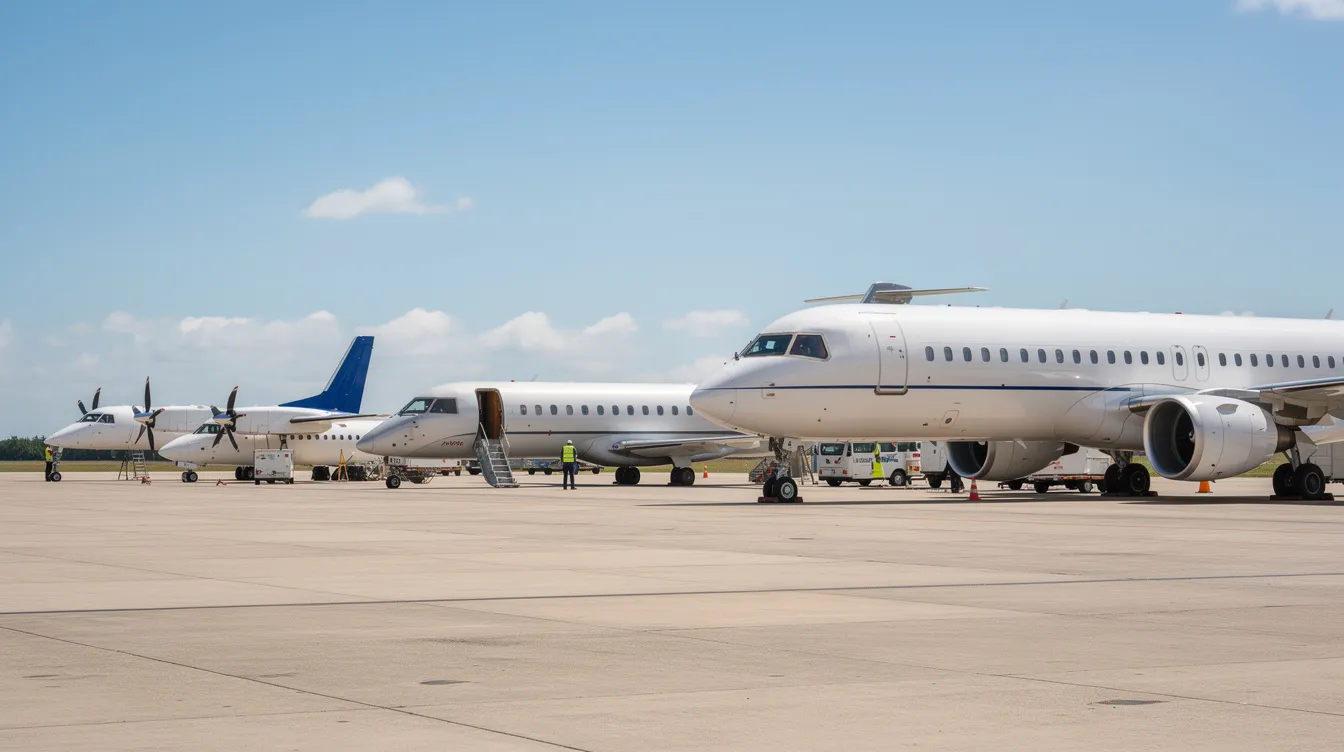
For team operations staff and travel coordinators, planning a full season of charter flights is a logistical exercise that rewards early preparation. Here is a simple flying playbook.
Schedule mapping: list every away game, pre-season tournament, and playoff window with dates, city pairs, and estimated passenger counts (players, staff, media, VIPs), then use tools like a jet card flight cost estimator to model budget scenarios.
Equipment planning: estimate cargo needs—uniforms, medical gear, training equipment—and communicate weight and volume to charter specialists early.
Airport choices: select private or regional airports closest to stadiums to reduce ground transfers. Smaller city airports often cut 30+ minutes off bus rides compared to major hubs.
Contingency planning: build time buffers for overtime, weather delays, and rescheduled games. Jettly can re-time departures or source backup aircraft when plans change last minute, allowing teams to board and fly without delay, especially when supported by structured jet card programs for predictable access.
Ground integration: coordinate ground transportation, hotel check-in timing, and security requirements through Jettly's support team so every trip runs end-to-end.
Chartering a private jet or full-size team aircraft is a significant but strategic investment. The estimated cost varies based on several factors, but transparent pricing removes guesswork.
Main cost drivers: aircraft type, total flight hours, one-way vs. round-trip pricing, repositioning legs, airport and handling fees, seasonality (playoff windows, holidays), and optional extras like catering or enhanced security.
Budgeting approaches: college programs like Alabama, Nebraska, and Michigan spend over $1 million per season on private aviation for recruiting and non-game travel. Professional sports team budgets scale higher for full-season charter contracts, which can be optimized through flexible private jet memberships.
Jettly tools: instant price estimates for common routes, the ability to lock in quotes, and membership options for frequent travel. The platform's cost estimator complements broader guidance on how much a private jet really costs, letting coordinators compare aircraft and routes before committing.
Booking process: inquiry, aircraft selection, safety verification, contract signing, and final itinerary confirmation—typically completed within days.
Environmental considerations: carbon offset options, right-sized aircraft selection, and efficient routing reduce environmental impact. Many operators available via Jettly support offset programs and may also use crowdsourced and shared private jet flights to maximize seat utilization.
All quotes are itemized with no hidden fees, so teams know exactly what they are paying for before the plane leaves the ground, and partners in Jettly's ULTRA high-ticket affiliate program can confidently promote these services for sports and group travel, including long-haul options on aircraft like the Airbus A330-300.
A sports team jet is an aircraft owned, leased, or chartered specifically to transport professional, collegiate, or elite youth sports teams along with their staff, equipment, and sometimes supporters.
Private jet charters offer flexible scheduling, direct flights to airports near venues, enhanced privacy and security, customized in-flight services, and ample cargo space for equipment, all of which improve team logistics and player performance.
For full-season programs or international tours, several months in advance is recommended. Regular fixtures benefit from 4-6 weeks lead time, but Jettly can accommodate last-minute requests when aircraft are available.
Yes, many private jets can carry specialized medical and recovery gear such as compression devices and portable treatment tables, with cabin layouts adapted to support in-flight treatment.
This depends on the team’s policies and aircraft capacity. Some teams keep travel groups separate for focus, while others arrange coordinated or separate flights for supporters and family members.
Private jets reduce travel fatigue by minimizing travel time and stress, providing quiet, comfortable cabins for rest, and allowing tailored nutrition and medical support during flights.
Aircraft range from turboprops for short regional flights, light and midsize jets for small groups, large-cabin jets and narrow-body airliners for full rosters, to wide-body aircraft for long-haul international tours.
Jettly offers instant pricing, a wide selection of aircraft worldwide, transparent quotes, safety-vetted operators, and dedicated charter specialists to manage all aspects of team travel logistics.
Learn more about Jettly’s charter options at https://www.jettly.com.
A sports team jet-whether owned or chartered—gives organizations control over schedule, routing, security, and in-flight environment. Private jets help teams maintain operational and performance advantages that translate directly to results on the field.
Not every program needs a Boeing 777 like the Arizona Cardinals. Many benefit more from flexible aircraft charter via platforms like Jettly, which delivers the same core advantages—privacy, recovery time, and schedule control-without the fixed costs of ownership.
Private jet charter scales from a single trip to a full-season program
Transparent pricing and safety-vetted operators remove the complexity from team travel
Every detail—from customized meals to cargo handling—is managed by charter specialists
Ready to plan your team's next trip? Explore flight options or request a quote at https://www.jettly.com.
Share this post:
Jeff Ryan Serevilla
Sep 25, 2026
|
5
min read
Discover tips and trends in the industry.
5
min read
Rai Jets: Private Jet Charter, Runway Access, and Jettly Alternatives
RAI Jets offers personalized private jet charter services in the Midwest, focusing on hands-on customer care and a limited fleet. In contrast, Jettly provides a global digital marketplace with access to over 20,000 aircraft, catering to diverse travel needs. This article compares the two options, highlighting the advantages of runway access and the unique benefits of each service.
Read More
5
min read
Pilatus PC-12/45: Charter Guide, Specs, and Use Cases with Jettly
The Pilatus PC-12/45 is a versatile single-engine turboprop aircraft ideal for both business and leisure travel. With a range of approximately 1,742 nautical miles and the ability to operate from short runways, it offers exceptional flexibility and comfort for charter clients through Jettly. Its spacious cabin and cargo capacity make it perfect for small groups and those needing to transport bulky luggage.
Read MoreStay updated with our latest insights and tips to elevate your journey with us.
MEMBERSHIPS AND ASSOCIATIONS



Disclaimer: Jettly operates as a charter broker, offering access to a global digital jet charter marketplace. Jettly is not a direct air carrier and does not own or operate aircraft. All advertised flights are conducted by third-party air carriers that are fully licensed and hold the appropriate Part 135 or Part 121 certifications issued by the Federal Aviation Administration (FAA) or equivalent regulatory authorities under U.S. or foreign law. Jettly complies fully with the U.S. Department of Transportation's Part 295 and Part 298 Charter Broker regulations. Jettly does not carry additional liability insurance. Passengers are covered by aircraft operator insurance. TICO: 50023770


