


Login
Get Instant Pricing On 23,000+ Aircraft

>
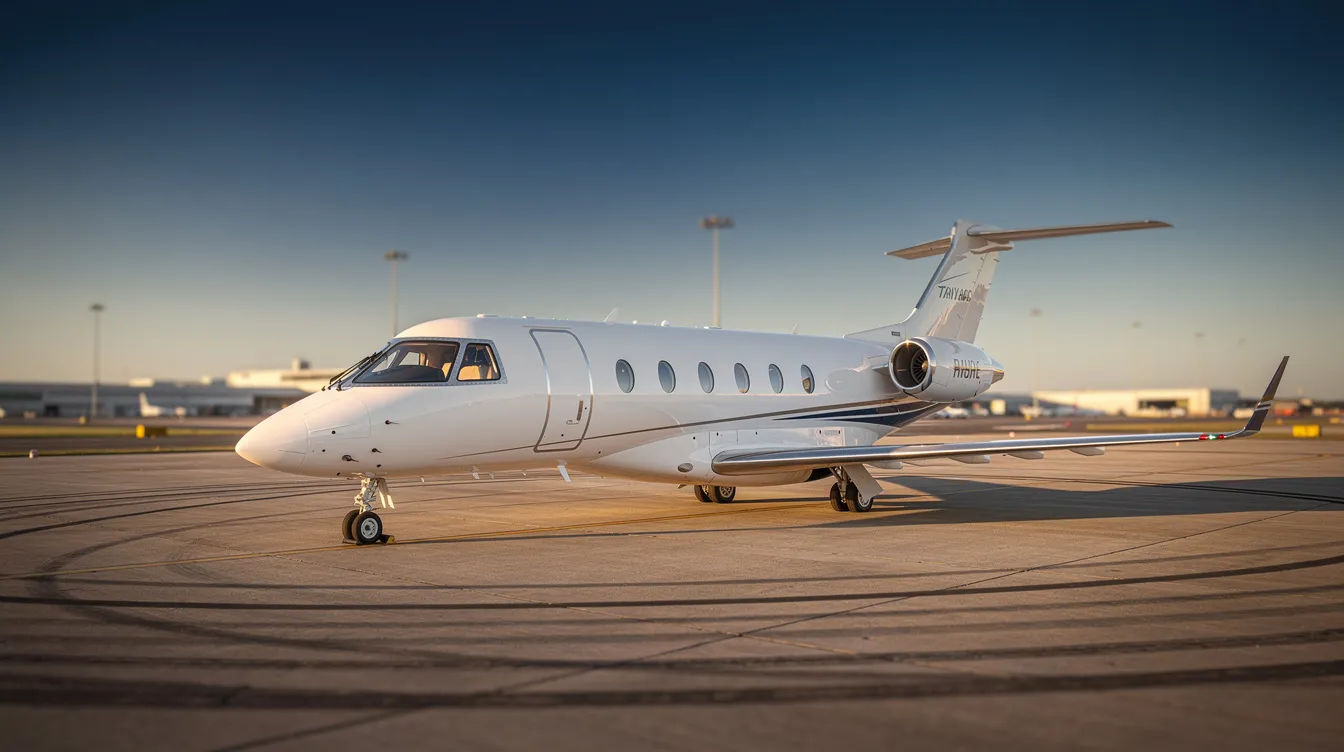
The small private jet price is the first question most travelers ask before booking a charter or visiting a dealership. The answer depends on whether you plan to charter by the hour or buy the aircraft outright. This guide breaks down both paths with specific 2026 numbers, covering everything from purchase prices and fuel costs to charter rates and annual operating costs.
Charter rates for small private jets in North America and Europe fall into two bands. Very light jets run about $2,000 to $3,000 per flight hour. Light jets cost roughly $2,500 to $4,500 per hour, depending on the route, fuel prices, and demand timing. Light jets have operational costs between $2,000 and $3,500 per flight hour when you account for all variable expenses.
On the purchase side, private jet prices range from $3 million to $90 million across all categories. Within the "small" bucket specifically: used very light jets start around $1 to $2 million for older models. New VLJs like the HondaJet Elite II sit in the $6 to $8 million range. New light jets typically list between $9 and $12 million, with high-spec versions pushing toward $15 million. The average price range for purchasing a small private jet is influenced by jet type and age.
When chartering via Jettly, business travelers avoid ownership overhead: no maintenance costs, no crew salaries, no hangar fees, and no aircraft management contracts. For most private jet travelers flying under about 150 hours per year, on-demand charter through a platform like Jettly is more cost-effective than owning a private jet.
|
Charter (per flight hour) |
Own (annual all-in cost) |
|
|---|---|---|
|
Very Light Jet |
$2,000–$3,000 |
$500,000–$1,200,000 |
|
Light Jet |
$2,500–$4,500 |
$700,000–$1,500,000+ |
In 2026, "small private jet" covers three categories: very light jets (VLJs), light jets, and some compact midsize jets at the upper boundary. Light jets are slightly larger than very light jets in cabin volume, range, and payload.
Very light jets typically seat 2 to 6 passengers and are built for quick trips of 1,000 to 1,200 nautical miles. Models like the Cirrus Vision Jet and Eclipse 500 fall here. Light jets carry 6 to 8 passengers across 1,200 to 2,000 nautical miles, making them ideal for regional flights with more passenger space. Entry-level mid-size jets push to 7 to 9 passengers and range up to 2,500 nautical miles.
Mid-size jets comfortably seat 8 to 10 passengers for cross-country trips. Super mid-size jets combine transatlantic capability with comfort. Beyond that, ultra-long-range jets can fly over 7,500 nautical miles non-stop, and executive liners are often converted commercial airliners for luxury travel. These larger categories fall outside the "small jet" scope of this article.
The key drivers that push travelers from one category to the next are how many passengers need seats and how far the trip goes. A group of four on a 600-mile hop fits a VLJ. A team of seven heading 1,500 miles needs a light jet or larger.
Jettly's platform categorizes private charter aircraft by size, range, and cabin layout so users can filter for the right aircraft quickly.
Purchase price is the number buyers fixate on first, even though it represents only a fraction of total ownership costs. Private jet ownership costs range from $10 million to over $70 million when you include larger categories, but small jets occupy the lower end.
Here are specific 2026 purchase price ranges:
Purchase costs for pre-owned aircraft in the light-jet category generally start around $1 million. Used VLJs from the 2005 to 2012 era (Eclipse 500, Cessna Citation Mustang) sell for about $1 to $2 million.
New VLJs like the HondaJet Elite II list in the $6 to $8 million band.
A new Embraer Phenom 300E costs around $10 million. New light jets from Cessna (Citation CJ4 Gen2) and Embraer typically run $9 to $12 million.
Older used light jets (Learjet 31A, Citation Bravo) from the 2005 to 2015 era sell for roughly $2.5 to $4.5 million.
Age, avionics upgrades (such as retrofitting a Garmin G3000 glass cockpit), and engine program enrollment shift values by hundreds of thousands or more. An older private jet with outdated avionics or engines approaching overhaul thresholds will trade at a discount. The age and condition of a jet also affect its resale value.
|
Category |
Used (2005–2012) |
Modern (2013–2020) |
New (2021–2026) |
|---|---|---|---|
|
Very Light Jet |
$1–$2M |
$2.5–$4M |
$6–$8M |
|
Light Jet |
$2–$3.5M |
$3.5–$6M |
$9–$12M |
|
Entry Mid Size |
$3–$5M |
$5–$9M |
$12–$18M |
Moving to larger mid-size jets and long-range jets pushes list prices into the $15 to $75+ million range. Many Jettly users skip buying entirely and instead charter the same models on-demand, converting a major financial commitment into a trip-by-trip expense.
Owning a private jet is a significant investment that extends well beyond the purchase price. Annual operating costs for private jets can reach $1 to $4 million depending on category and usage. Full ownership costs range from $500,000 to $4 million annually. Many first-time owners find the operational expenses more surprising than the sticker price.
Fixed annual costs for a small light jet in 2026:
Liability insurance: $30,000 to $80,000 per year
Hangar fees and parking: $25,000 to $80,000 depending on airport location
Navigation subscriptions, charts, and databases: $10,000+
Crew salaries and recurrent training: can exceed $1 million annually for private jet operations with two full-time pilots
Aircraft management and administrative fees: tens of thousands per year
Annual fixed costs for owning a small private jet typically range from $500,000 to $1 million when these line items are combined.
Variable (hourly) costs add another layer:
Fuel burn for light jets runs 150 to 220 gallons per hour at $4 to $7 per gallon
Engine reserves, parts, and routine maintenance checks
Variable operating costs for small jets can add $2,000 to $3,000 per flight hour
A realistic annual operating-cost band for a typical owner flying 200 to 300 flight hours in a light jet sits at [${400,000 to $800,000 per year](LINK 3). For readers evaluating broader budgets and aircraft categories, a separate guide explains how much a private jet really costs to buy and operate. Operating costs for ultra-long-range jets range from $5,000 to $8,000 per flight hour, illustrating why staying in the "small jet" category matters for cost control.
When chartering via Jettly, these operational costs are bundled into a transparent hourly or trip-based price. No surprise maintenance bills, no insurance renewals, no hangar contracts.
For travelers flying under 200 hours per year, chartering light jets through Jettly costs less than full ownership once you add up all fixed and variable expenses. Chartering offers flexibility without long-term commitments.
2026 private jet charter cost benchmarks on common routes:
Very light jet charter: about $2,000 to $3,000 per flight hour
Light jets: roughly $2,500 to $4,500 per hour
Small mid-size jets: about $3,500 to $5,500 per hour
Final charter cost depends on distance, routing, airport landing fees, repositioning, and demand timing. Weekend flights, holiday periods, and last-minute bookings can push prices 20 to 50% above base rates, which is why many travelers use a private jet charter cost estimator before they book.
Example: A 2-hour light jet flight from New York (Teterboro) to Toronto with 6 passengers might cost $10,000 to $15,000 total. Flying that route 20 times per year via charter runs $200,000 to $300,000. Owning the same jet and flying those same 40 hours still incurs purchase capital, crew salaries, hangar fees, and insurance that can exceed $700,000 annually; the math favors charter until flight hours climb much higher.
Jettly's platform gives instant, upfront pricing so customers see the total small private jet price before confirming. The platform also lists empty leg flights that can cut per-hour charter pricing by 25 to 75% on select routes.
Both charter rates and ownership costs are shaped by several consistent drivers. The private jet market responds to all of them simultaneously.
Aircraft size and category: VLJ vs light jet vs midsize jets. Larger cabins burn more fuel, require more crew, and cost more to maintain.
Age and condition: Older jets often incur higher maintenance costs over time. Airframe hours, cycles, and corrosion history matter.
Avionics and interior spec: Modern glass cockpits (Garmin G3000/G5000), recent cabin refurbishments, and connectivity systems add value. A specific aircraft with outdated avionics trades at a discount.
Fuel efficiency: Fuel efficiency impacts operational costs for jets. Newer engines and optimized aerodynamics reduce gallons per hour.
Engine program coverage: Whether engines are enrolled in an overhaul program or require reserve funding affects both operating costs and resale.
Range and payload: Ultra-long-range jets can fly up to 7,750 nautical miles but cost accordingly. Range requirements should include a 200 nautical mile buffer for diversions when planning trips. Higher capability means higher purchase and hourly costs.
Macro factors: Jet fuel price trends, insurance rate inflation, and pilot salary increases all affect 2025-2026 pricing.
Location: Busy hubs like New York, London, or Dubai see higher charter rates compared with secondary markets due to demand and airport fees.
For a detailed breakdown of how different private jets compare, including insights into the best private plane manufacturers for every budget, Jettly's platform lets users filter by these factors.
Answering "how many passengers" is the fastest way to narrow down small private jet options. Passenger capacity affects the choice of private jet more than almost any other variable, and a dedicated guide on how many passengers a private jet can carry can help frame that decision.
VLJs: 2 to 4 passengers comfortably (very light jets usually seat 2 to 6 passengers for quick trips, but 4 is the comfort limit with luggage)
Light jets: 6 to 8 passengers with enclosed lavatory and light refreshments
Small midsize jets: 7 to 9 passengers with improved cabin height, more aisle space, and larger baggage holds. Midsize jets typically accommodate 4 to 6 passengers with a 2,700+ nautical mile range in some configurations, though larger midsize cabins seat up to 10.
Booking a jet too large for the group wastes capacity and money. One too small limits comfort or forces leaving bags behind. Jettly's booking interface prompts travelers to enter passenger count first, then recommends aircraft perfectly suited to balance cost and comfort.
Use case: A family of four with luggage on a 700-mile holiday trip fits a VLJ, though baggage may push them toward a light jet. A team of 7 business executives on a 1,500-mile business trip needs a light jet or entry midsize. The preferred aircraft depends on matching group size to cabin.
Typical fuel burn figures in 2026:
VLJ: about 80 to 110 gallons per hour
Light jet: about 150 to 220 gallons per hour
Mid-size jet: 220 to 300+ gallons per hour
At $4 to $7 per gallon for Jet-A in North America and Europe, a light jet burning 180 gallons per hour costs $720 to $1,260 in fuel alone each hour. A VLJ burning 90 gallons per hour cuts that to $360 to $630.
Modern light jets like the Embraer Phenom 300E and HondaJet Elite II are optimized for better fuel efficiency, incorporating lighter materials, improved wing designs, and newer engine technology. These design choices reduce both trip cost and environmental impact.
For trips of 500 to 1,200 miles with up to 7 passengers, light jets often hit the best balance between fuel costs, speed, and time savings over commercial flights. They are fast enough to beat airline door-to-door times, yet burn far less fuel than midsize or super-midsize jets, which also simplifies long-term private jet maintenance cost planning for owners.
Professional aircraft management is effectively mandatory for most owners who do not want to build their own maintenance and crewing organization. Operating a small private jet can involve substantial management and administrative fees annually; these are not optional add-ons but structural requirements.
Maintenance includes scheduled inspections (based on flight hours and cycles), engine overhauls, hot-section inspections, unscheduled repairs, avionics updates, and mandatory airworthiness directives. Maintaining a small private jet incurs unexpected expenses periodically, and these events can run into six figures when engines or major components are involved. Maintenance costs typically require about 2% of the aircraft's purchase price annually. For a $10 million light jet, that is $200,000 per year in maintenance reserves alone.
Aircraft management companies handle crew hiring and training, scheduling, regulatory compliance (Part 91 or Part 135 in the US), safety programs, and maintenance oversight to keep the aircraft legal and flying safely. These private operations require careful planning and dedicated administrative resources. Management contracts run from fixed annual fees to percentage-of-revenue models, and some owners compare these costs against options such as a jet card flight cost estimator when deciding how to structure their flying.
In 2026, combined maintenance and management costs for an actively used light jet range from $200,000 to $400,000 per year, depending on aircraft age and utilization. Older jets often incur higher maintenance costs, pushing total ownership expenses upward.
Jettly's model sidesteps all of this. The platform works with vetted operators who already handle maintenance and management, so travelers avoid these responsibilities entirely.
Private jets save an average of 3.5 hours per trip compared to commercial airlines. That number comes from shorter check-in times (arrive 15 to 20 minutes before departure), no security lines, direct routing, and access to smaller airports closer to the final destination.
Private jets can access over 5,000 airports worldwide, compared to the roughly 500 that commercial airlines serve. This reduces ground transportation time from the airport to a meeting or hotel. On routes like Los Angeles to San Francisco or New York to Chicago, the door-to-door time advantage can exceed 2 hours even on short flights.
Cost-per-seat on a fully occupied light jet (say, 6 passengers on a $12,000 charter) works out to $2,000 per person. Last-minute business-class fares on the same route can run $1,200 to $2,500 per seat, making private jet travel competitive when the jet is full and the tickets are booked late.
Qualitative benefits matter too. Private jets allow for spontaneous trips without strict schedules. Business executives can hold confidential business meetings in a quiet cabin, arrive rested, and control the in-flight environment.
Use case: A deal team needing to visit three cities in a single day. Commercial airlines force tight connections, layovers, and risk of delays. A private jet sequences stops on the team's schedule. Another case: a medical emergency where a family needs to reach a distant hospital within hours; private aviation offers schedule flexibility that commercial flights cannot match.
Three main access models exist for small private jet travel, each with different cost structures.
Full ownership means purchasing and operating your own aircraft. It suits travelers flying roughly 250 to 300+ annual flight hours. Owning a jet is more economical for over 300 flight hours yearly because fixed costs spread across enough trips to bring per-hour cost below charter rates. Annual operating costs for a private jet can reach $1 to $4 million depending on the category.
Fractional ownership programs let buyers purchase a share (1/8 or 1/16) in a fleet. Fractional ownership allows shared costs among multiple owners, reducing both upfront capital and monthly management fees compared to full ownership. The trade-off is restricted scheduling flexibility and ongoing monthly costs that still represent a financial commitment, as seen with major providers like NetJets and its fractional model.
On-demand charter through platforms like Jettly requires no upfront capital. Chartering is ideal for flying under 100 hours annually and works well for irregular, seasonal, or unpredictable travel plans. Private flights are booked per trip with no long-term commitment, and services that offer affordable private jet charter help keep effective hourly rates competitive.
|
Full Ownership |
Fractional Ownership |
On-Demand Charter |
|
|---|---|---|---|
|
Ideal annual hours |
300+ |
50–200 |
Under 150 |
|
Upfront cost |
$1M–$15M+ |
$500K–$3M |
$0 |
|
Flexibility |
High (you own it) |
Moderate (scheduled access) |
High (any aircraft, any time) |
|
Fixed overhead |
$500K–$1M+/year |
Monthly fees + share cost |
None |
Learn more about membership and jet card options for travelers between these models, including Jettly's dedicated jet card programs with fixed hourly rates.
Actual quotes vary daily, but typical ranges help set expectations before using Jettly's instant pricing tool.
New York (Teterboro) to Miami in a light jet, 6 to 7 passengers, about 2.5 to 3 hours block time. Charter flights on this route run approximately $10,000 to $15,000 total. Per passenger when full: $1,500 to $2,500. A last-minute round-trip business-class ticket on commercial airlines costs $800 to $2,000 per seat; the private jet becomes competitive for groups of 5 or more.
London (Biggin Hill) to Geneva in a light jet, about 1.5 to 2 hours. European charter rates for light jets run roughly €4,700 to €7,500 per hour. With handling and surcharges, one-way cost lands at €10,000 to €15,000. Travelers compare this against premium-class fares plus taxi time to Heathrow or Gatwick.
Los Angeles to Las Vegas in a VLJ or light jet: about 1 to 1.5 hours. Charter cost runs approximately $3,500 to $5,500 for the flight. For a group of 4, that is under $1,400 per person; empty legs on this popular route can drop the price further.
Variables that shift the quote: whether the aircraft is already at the origin (repositioning fees if not), overnight crew costs, landing fees at both airports, fuel price at departure and arrival, and local taxes. Jettly surfaces multiple aircraft options per route, allowing users to choose between lower price, newer cabin, or longer range jets based on their priorities.
The aviation industry rule of thumb: ownership starts to rival charter on a per-hour basis around 200 to 300+ flight hours per year. Below that threshold, fixed costs (insurance, hangar, crew, management) dominate, making each hour flown disproportionately expensive.
Predictable, high-frequency flying favors ownership. A CEO commuting weekly between two company hubs, logging 250+ hours per year, spreads fixed costs across enough flights to bring per-hour cost below charter rates. Tax considerations help too: depreciation schedules, accelerated write-offs for business aircraft, and the ability to charter out the jet via a Part 135 certificate can offset some operational expenses.
Scenario: A business executive flying 60 round trips per year (about 120 to 150 flight hours) between Dallas and Atlanta. Chartering a light jet for those trips costs roughly $350,000 to $500,000 per year. Owning the same jet costs the purchase price plus $700,000 to $1,200,000 annually in operating costs, plus depreciation risk. Charter wins until flight frequency doubles.
For travelers with irregular or seasonal travel plans, chartering small jets through Jettly keeps fixed costs near zero and eliminates asset risk.
Price differences between VLJs, light jets, and small midsize jets are partly driven by what passengers experience inside.
VLJs trade cabin space for lower cost. Most lack a stand-up cabin; headroom hovers around 4 to 4.5 feet. Baggage capacity is limited. For private flights under 2 hours, these trade-offs are acceptable for groups of 2 to 4.
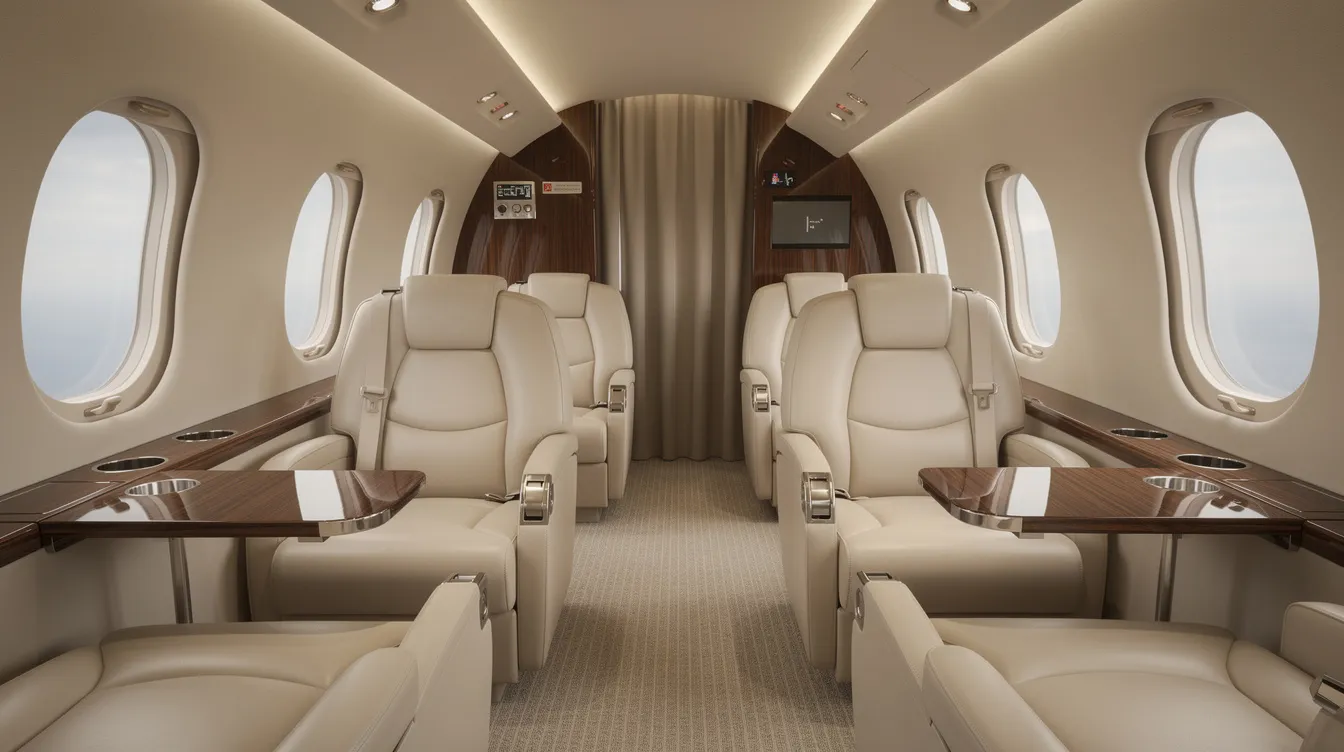
Light jets add club seating for 4 with extra seats aft, a small galley or refreshment center, and an enclosed lavatory. Many newer models offer Wi-Fi and in-flight entertainment. Cabin service on these aircraft is usually handled by the pilots, while dedicated flight attendants are more common on larger jets and longer trips. Spacious cabins relative to VLJs make a difference on flights over 90 minutes.
Moving to small mid-size jets brings better cabin height (some with full stand-up cabin space), more aisle room, enhanced soundproofing, and larger baggage holds. These matter for transcontinental flights or trips with heavy luggage.
Jettly's aircraft profiles show photos, seating plans, and amenities so customers see what they are paying for before booking. A private plane at the VLJ level and a light jet at twice the hourly rate deliver different experiences; knowing the difference prevents overspending or uncomfortable surprises.
Small private jets function as tools for business travelers who value time and schedule control as much as ticket price. A private jet opens access to same-day multi-city itineraries that commercial airlines cannot support.
The productivity math: if an executive saves 3 to 5 hours per business trip by flying private, and travels 40 to 60 times per year, that adds up to 120 to 300 recovered hours annually. For business executives whose hourly revenue contribution exceeds $500, the recovered time alone can justify the private jet charter cost.
Private jet travel offers unmatched privacy for confidential meetings. Executives can review sensitive deal documents, hold calls without eavesdroppers, and arrive rested rather than fatigued from crowded terminals.
Use cases that illustrate return on investment:
Deal roadshows: visiting three investors in three cities in a single day, returning home by evening
Plant or facility visits: quick business trip to inspect operations at a remote manufacturing site with no commercial service
Investor tours: hosting board members or partners on a multi-stop tour with schedule flexibility
Jettly's platform supports fast digital booking for business travel, enabling last-minute decisions without committing to long-haul contracts or fractional ownership programs.
Even in private aviation, practical strategies reduce the small private jet price.
Empty leg flights: booking repositioning flights through Jettly at 25 to 75% off standard charter rates. If your itinerary aligns with an aircraft that needs to reposition, savings are substantial, especially when combined with options to crowdsource private jet flights and share empty seats.
Turboprops for short regional flights: on legs under 300 miles where the speed advantage of a jet is minimal, turboprops cost less per hour and access smaller airstrips.
Secondary airports: flying from or into smaller airports with lower landing fees and handling charges. Teterboro vs. JFK, or Biggin Hill vs. Luton, can save hundreds per trip.
Flexible timing: avoiding peak-demand surcharges by booking outside weekends, holidays, and major events. Flight frequency during off-peak windows often yields better rates.
Cost sharing: multiple business executives on the same flight split the charter cost. Six travelers on a $12,000 flight pay $2,000 each, competitive with last-minute commercial business class. Additional strategies for booking the cheapest private jet flights build on these principles.
Jettly memberships can unlock preferred pricing and added perks for frequent flyers without tying capital up in a high-quality aircraft or fractional ownership share, and the range of private jet membership plans is designed to fit different travel profiles.
Newer light jets feature more efficient engines and aerodynamics, reducing fuel burn and emissions compared with legacy models from the 2000s. The HondaJet Elite II and Phenom 300E both burn fewer gallons per hour than their predecessors while carrying similar or greater payloads.
Some operators on the Jettly platform offer flights with partial Sustainable Aviation Fuel (SAF) content or optional carbon offset programs. These options are becoming more common as the business aviation community responds to environmental scrutiny, particularly on international private jet flights where route length magnifies fuel burn and emissions.
Route and payload optimization also contributes. Choosing the right aircraft size (a light jet instead of a half-empty super midsize jet) for each mission minimizes wasted fuel and operating cost. Matching aircraft to mission is both a cost and environmental decision, and a survey of the cheapest private aircraft options shows how different categories stack up.
When booking small private jets through Jettly, travelers can ask about operator efficiency records, fleet age, and SAF availability to align private operations with sustainability goals.
Jettly is a digital private aviation marketplace that simplifies comparing and booking small private jets globally. The platform connects travelers with over 20,000 unique private aircraft for on-demand private jet charter, covering light jets, very light jets, super light jets, turboprops, and mid-size jets in one interface.
Key features for navigating the private jet market, including an airport locator tool to find convenient departure and arrival points:
Instant pricing: upfront quotes covering hourly rates, repositioning, handling, and fuel surcharges so customers see total cost before confirming, similar in spirit to a complete guide on how much it costs to rent a private jet
Aircraft availability filters: search by cabin size, passenger count, range, and budget to find aircraft perfectly suited to the trip
Operator vetting: only regulated, certified operators with clear safety credentials and maintenance records
Membership and on-demand access: frequent flyers can opt into membership plans; occasional users book per trip with no long-term commitment, positioning Jettly as a flexible NetJets alternative for many travelers
Whether comparing a quick business trip on a VLJ or evaluating long-haul flights on larger jets, Jettly's platform provides the transparency that private jet travelers need to make informed decisions.
Learn more about Jettly's charter options at https://www.jettly.com.
Small private jet prices in 2026 span a wide range. Purchase prices run from about $1 million for pre-owned VLJs to $12 million or more for new light jets. Annual operating costs for owners flying 200 to 300 hours land between $400,000 and $800,000, with full ownership costs reaching $500,000 to $4 million annually depending on category and usage. Charter rates sit at $2,000 to $4,500 per hour for VLJs and light jets.
The deciding factor is annual flight hours. Travelers flying under 150 hours per year almost always save money and avoid risk by chartering. Those above 300 hours may find ownership or fractional ownership more cost-effective. Everything in between requires careful planning and honest assessment of flight frequency, schedule predictability, and appetite for the financial commitment of owning a private jet.
Small private jets deliver real advantages over commercial airlines: 3.5 hours saved per trip on average, access to 5,000+ airports, schedule flexibility, and privacy that no airline cabin can match. For business travelers, families, and anyone on a tight schedule, private travel is less about luxury and more about reclaiming time, whether you charter the whole aircraft or simply buy a seat on a private jet.
Ready to experience private travel on your terms? Explore flight options or request a quote at https://www.jettly.com, or review practical strategies on how to get a seat on a private jet easily before you book.
Share this post:
Jeff Ryan Serevilla
Oct 5, 2026
|
5
min read
Discover tips and trends in the industry.
5
min read
The Real Cost of Flying Private: Pricing, Options, and How to Save
Flying private offers a range of costs and options, making it more accessible than many think. With hourly rates varying by aircraft type and additional fees, understanding pricing can help travelers save. Jettly provides transparent pricing and flexible booking, making private aviation a viable choice for both business and leisure travel.
Read More
5
min read
Aeromas and Modern Private Charter: How It Compares and Connects to Jettly
Aeromas, a leading Uruguayan private air charter operator since 1983, offers a versatile fleet for passenger, cargo, and medical flights across MERCOSUR. With the support of digital platforms like Jettly, travelers can easily access a wide range of aircraft and flexible booking options, enhancing their private aviation experience.
Read MoreStay updated with our latest insights and tips to elevate your journey with us.
MEMBERSHIPS AND ASSOCIATIONS



Disclaimer: Jettly operates as a charter broker, offering access to a global digital jet charter marketplace. Jettly is not a direct air carrier and does not own or operate aircraft. All advertised flights are conducted by third-party air carriers that are fully licensed and hold the appropriate Part 135 or Part 121 certifications issued by the Federal Aviation Administration (FAA) or equivalent regulatory authorities under U.S. or foreign law. Jettly complies fully with the U.S. Department of Transportation's Part 295 and Part 298 Charter Broker regulations. Jettly does not carry additional liability insurance. Passengers are covered by aircraft operator insurance. TICO: 50023770


