


Login
Get Instant Pricing On 23,000+ Aircraft

>

A small plane can cut regional travel time in half, bypass crowded hubs, and land at thousands of airports that commercial airlines never touch. For business executives and families who value schedule control, understanding the categories, costs, and booking options for small aircraft is the first step toward smarter private travel.
Small planes - including piston aircraft, turboprops, very light jets, and light jets - save significant time by using regional airports like Teterboro, Westchester, and Farnborough instead of major hubs.
Travelers do not need to own a small aircraft to benefit. Jettly's on-demand charter platform connects them to 20,000+ aircraft worldwide with instant pricing.
Ownership costs for small planes can run into tens of thousands of dollars annually, making charter more practical for most flyers under 150–200 hours per year.
The capacity of small planes typically ranges from 2 to 10 passengers depending on the type.
This guide covers aircraft classes, popular models, pilot training basics, cost breakdowns, and how to match small planes to real-world trips using Jettly.
Small planes are defined by the FAA as having a maximum takeoff weight of 12,500 pounds or less under 14 CFR Part 1, though Part 23 airworthiness standards can extend to 19,000 lbs for commuter-category aircraft. This weight-based definition is distinct from general aviation, which includes virtually all civilian flying outside scheduled airline service - everything from personal flights under Part 91 to commercial charters under Part 135.
Why does this matter for travelers? Small aircraft reduce travel time by 50% or more because they can land on short, unpaved, or grass runways, allowing access to thousands of smaller airports. For example, flying into Teterboro instead of JFK for New York, or London Farnborough instead of Heathrow, can save 30–90 minutes of ground transit per leg. Small aircraft access airports closer to final destinations, making them ideal for business and leisure travel.
Jettly focuses on professionally operated small planes flown under Part 135 or EASA AOC regulations - not privately flown owner aircraft. Small aircraft operators must comply with Part 135 regulations, which require higher insurance standards, recurrent pilot training, and stricter maintenance oversight than non-commercial operations.
Small planes used in private travel fall into four main categories, each suited to different mission requirements. For a deeper dive into each category, see Jettly's guide to small aircraft.
Piston aircraft typically seat 2–4 passengers, cruise at 110–200 KTAS, and cover 400–900 nm - ideal for training and short hops.
Turboprops can carry 6–9 passengers and cruise at 260–300 KTAS with ranges of 1,200–1,800 nm.
Very light jets seat 4–6 passengers with a range of 1,100–1,200 nm and cruise at 300–400 KTAS.
Light jets typically accommodate 6–8 passengers and cruise at 400–450 KTAS with 1,300–1,700+ nm range.
The right aircraft depends on distance, passenger count, baggage, runway length, and budget. A Cessna 172 handles a 200 nm training hop. A Pilatus PC-12 NGX suits a 1,500+ nm mixed cargo-passenger mission to a remote airstrip. A Phenom 100EV VLJ covers LA–Napa in about an hour. A light jet handles New York–Miami nonstop. Small planes often feature cramped cabins that lack pressurized environments or onboard lavatories in the piston category, though turboprops and jets offer pressurized comfort. Additionally, Light Sport Aircraft are simple two-seaters built for low-cost local flying and training at the lightest end of the spectrum.
Jettly's private charter aircraft platform surfaces these different classes side by side with transparent pricing, so travelers match class to mission instead of guessing.
Piston light aircraft are the entry point to aviation. Small planes are mainly used for flight training, personal travel, and regional business transport, and single-engine piston aircraft remain the backbone of general aviation worldwide. Single-engine piston aircraft are popular entry-level models powered by a single gas piston engine, and single-engine planes are simpler to insure and fly without needing complex type ratings.
Key models include:
Cessna 172 Skyhawk: 4 seats, ~120 KTAS cruise speed, 600–700 nm maximum range, and the most-produced airplane in history with over 44,000 units. Roughly 80% of U.S. flight schools use 172s for pilot training.
Cirrus SR22T: 4 seats, up to ~183 KTAS, 1,000+ nm range, equipped with the cirrus airframe parachute system - a whole-aircraft recovery parachute that makes it a standout personal aircraft for safety-conscious owners.
Diamond DA50 RG: 5 seats, efficient diesel engine, strong safety record, introduced to the U.S. market in 2024 as a premium owner aircraft.
Multi-engine piston aircraft have two piston engines providing extra power and redundancy, though they require additional ratings. Flight training typically includes teaching basic flight maneuvers and instrument navigation, with pilot training costs for a private license ranging from $10,000 to $20,000 in the U.S. by 2026, usually requiring 40–70 flight hours. Experimental and homebuilt aircraft are assembled from kits by individuals or hobbyists, occupying a separate niche in general aviation.
While basic piston planes rarely appear in Jettly's charter inventory, higher-end pistons may be available for niche missions where efficiency matters more than speed.
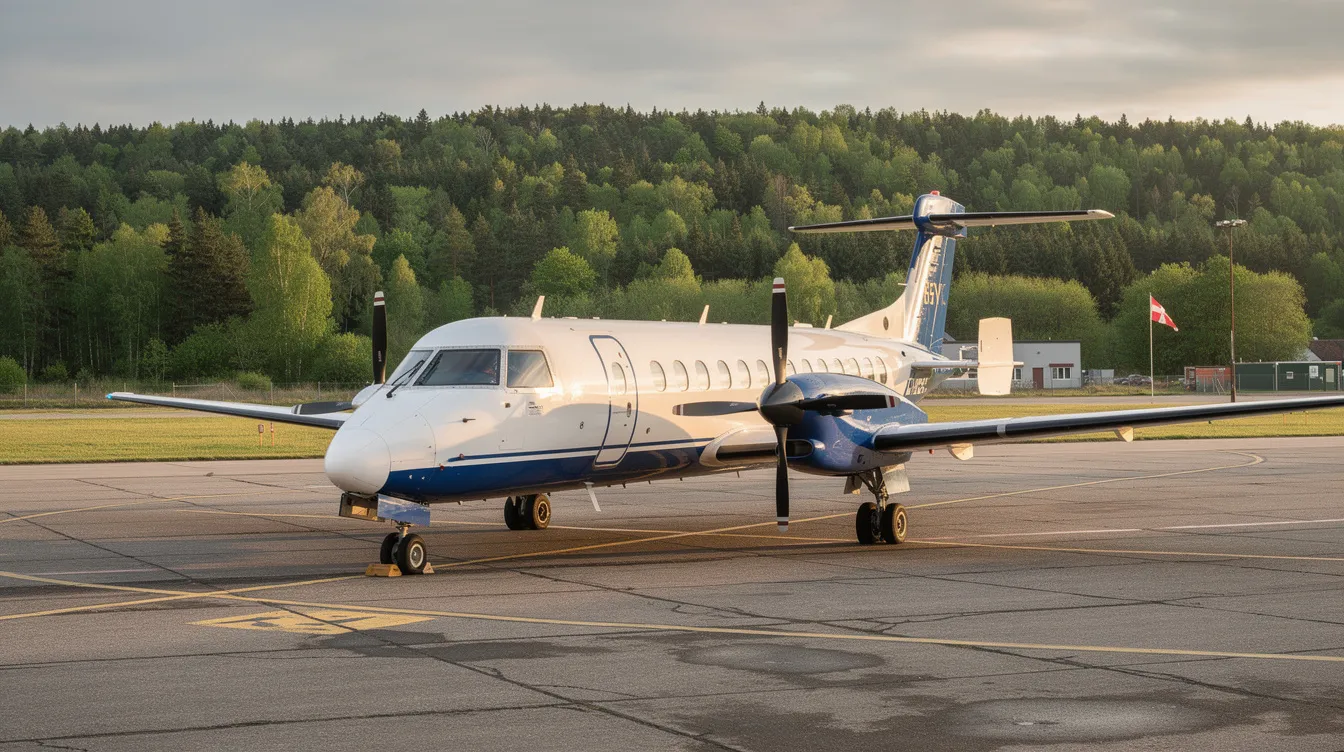
Turboprops, very light jets, and light jets dominate small-plane charter for business and premium leisure travel. Larger aircraft often require multi-engine ratings and rigorous recurrent simulator training for pilots, ensuring compliance with the highest operational standards.
Turboprops: The Pilatus PC-12 NGX and Beechcraft King Air 260 seat 6–9 passengers, cruise at ~260–300 KTAS, and deliver 1,700–1,800 nm range. Single turboprop aircraft are fast, turbine-engine aircraft that fly higher and carry heavier loads than pistons, and they can operate from 2,000–4,000 ft runways - including rough strips. The PC-12's fuel burn and efficient performance make it a smart choice over jets for sectors under 1,000 nm.
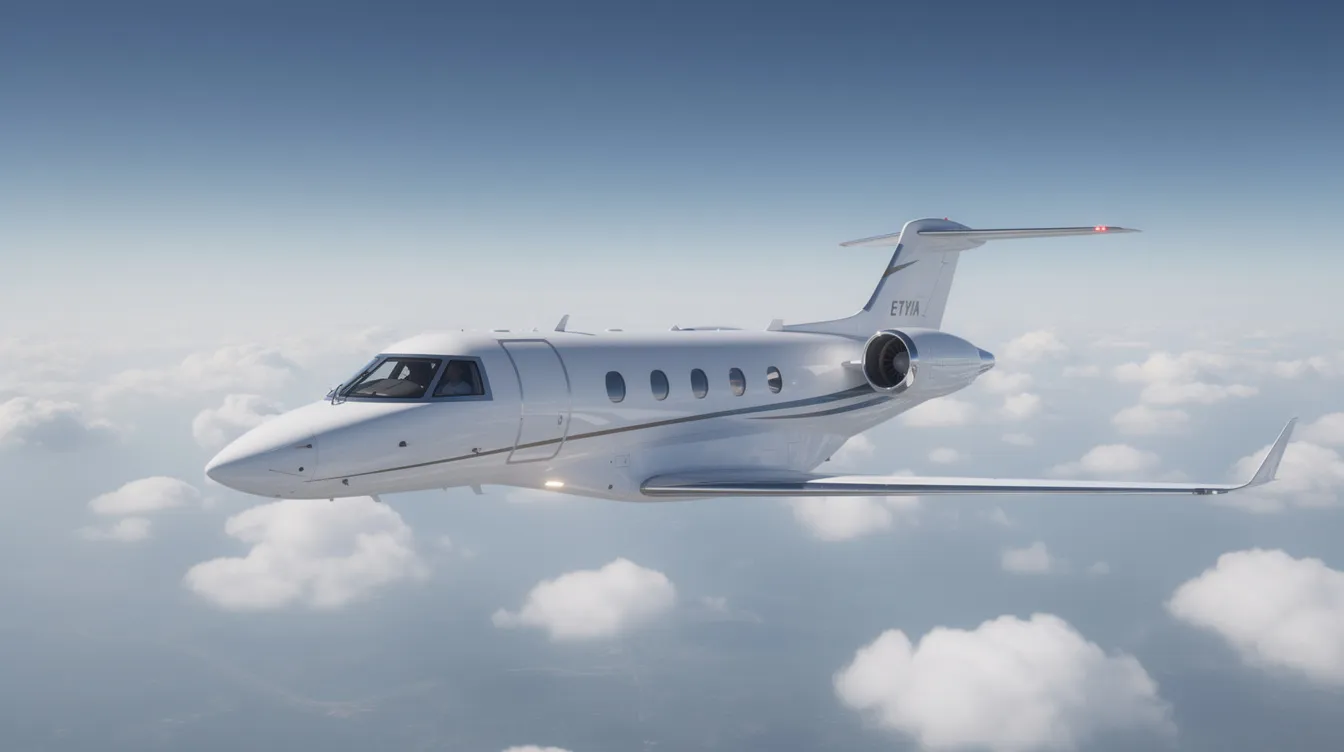
VLJs: Models like the Cirrus Vision Jet and Embraer Phenom 100EV offer 4–6 seats, ~300–400 KTAS, and ~1,100–1,300 nm range. Many feature single-pilot certification and advanced capabilities like autoland and CAPS.
Light Jets: The HondaJet Elite II and Citation M2 Gen2 seat 6–8 passengers, cruise at 400–450 KTAS, and cover 1,300–1,700+ nm. Use cases include New York–Chicago, LA–Vegas, and London–Ibiza for time-sensitive business jet missions.
Jettly customers commonly select these categories for trips of 1–3 hours, comparing options directly in the platform based on range, speed, cabin size, and hourly charter rates.
Understanding specific aircraft models helps travelers interpret Jettly search results more confidently. Here's a quick breakdown of flagship models and their sweet-spot missions. For expanded comparisons, see the guide to the best small airplanes.
Cessna 172: Training and sub-400 nm hops - the ultimate general aviation aircraft.
Cirrus SR22T: Fast 300–800 nm personal or business trips, with production continuing strong through the mid-2020s.
Pilatus PC-12 NGX: Investor tours, remote destinations, and aerial surveying and medical transport missions. The PC-12 fleet surpassed 2,000 deliveries by mid-2020s.
Cirrus Vision Jet: Regional family travel; adoption has grown since FAA certification in 2016, with Safe Return autoland added later.
HondaJet Elite II / Citation M2 Gen2: High-speed executive routes entering premium charter fleets between 2024–2026.
Operators configure interiors differently - club seating, divans, cargo doors - affecting luggage capacity, pet accommodation, and comfort for 2–7 passengers. Amphibious and floatplanes can take off and land on water as well as traditional runways, adding another dimension for travelers visiting lakeside or island destinations.
Jettly's aircraft cards include model name, year, seat count, estimated range, and photos, so users quickly match model capability to their trip requirement.
Three main access paths exist for small aircraft: ownership, fractional, and charter. Tools like Jettly's jet card flight cost estimator help clarify which option aligns with your routes and budget. Each fits a different flying profile and budget.
Full ownership means purchasing outright. A used Cessna 150 costs around $30,000. Modern four-seat pistons run $400,000–$1 million, while new turboprops and light jets range from $3–$9 million. Annual fixed costs for a small jet often exceed $500,000 for hangar, crew, insurance, and regular maintenance. Full ownership requires 200–300 flight hours per year to be economical.
Fractional ownership and jet cards involve 25–50+ hour minimums with buy-ins of $150,000–$500,000 plus management fees. Fractional ownership typically involves 50–150 flight hours per year. Predictable rates, but limited fleet and fixed contract terms; Jettly's jet card programs aim to preserve flexibility while offering fixed rates. For a detailed comparison, see Fractional Ownership vs Jet Card vs Charter.
On-demand charter allows booking flights as needed with no long-term commitment - ideal for travelers flying under ~150 hours per year. Jettly offers a global inventory of 20,000+ aircraft, including small planes, with instant pricing and private jet memberships or pay-as-you-go options that avoid the capital lock-up of ownership. Aircraft sales and purchase decisions become unnecessary when charter covers the mission.
Booking through Jettly follows a simple flow: enter route, date, passenger count, and luggage requirements; use the airport locator tool to identify convenient departure and arrival fields; receive instant quotes; compare small aircraft options side by side; confirm and pay online. Small aircraft allow for same-day multi-city itineraries that commercial aviation simply cannot support.
Route scenarios:
New York–Miami (~1,100 nm): Light jet, ~2.5 hours, ~$20,000–$30,000 all-in.
Los Angeles–Napa (~350 nm): VLJ or high-performance piston, about 1 hour, mid-four-figure range.
London–Nice (~400 nm): Turboprop with extra baggage, under 2 hours, with costs easy to approximate using Jettly's private jet charter cost estimator.
Toronto–Vancouver (~2,100 nm): Light jet for cross-country business travel, with potential fuel stop.
A small plane from New York to Boston takes 2–3 hours door-to-door, including ground time - often faster than a commercial flight plus airport procedures. The platform helps match aircraft type to mission by surfacing range, flight time, estimated cost, and airport options (Westchester vs Teterboro, London Luton vs Farnborough) with notes on potential fee savings.
Jettly also supports special needs: multi-leg investor roadshows, same-day out-and-back meetings, pet-friendly flights, or equipment-heavy trips. Travelers looking for tips for booking the cheapest private jet flights can combine Jettly's tools with flexible scheduling to keep costs down. All-in pricing is shown early, including positioning, landing, overnight, and de-icing fees, ensuring compliance with the promise of transparency.
Professionally chartered small planes meet strict regulatory standards comparable to larger corporate jets. For a comprehensive look at safety practices, see Are Private Jets Safe?
Modern small aircraft feature advanced safety systems like autoland, glass cockpit avionics suites (Garmin G1000/3000/5000), synthetic vision, envelope protection, and autothrottle. Whole-airframe parachutes have a 95% survival rate in emergencies - a feature standard on Cirrus models. Modern avionics have transformed the cockpit into an information-rich environment that reduces pilot workload and improves reliability.
On the operator side, Part 135/EASA AOC requirements mandate recurrent training every 6–12 months for pilots. Common third-party audits include ARGUS Gold/Platinum, Wyvern Wingman, and IS-BAO. Operators with ARGUS Platinum certification represent the top 10% for safety. Most small planes are affected by turbulence and severe weather due to their light mass, and weather limitations often restrict small planes from flying in conditions with heavy icing or strong winds - but certified operators plan around these factors.
On sustainability: newer turboprops like the PC-12 can burn 20–30% less fuel than many legacy light jets. Sustainable Aviation Fuel adoption is growing across Europe and North America by 2026, and carbon offset options are available through providers promoted by Jettly.

Charter pricing varies by route, date, and aircraft type, but rough ranges help set expectations. For detailed 2026 pricing, see How Much Does It Cost to Charter a Small Plane and Jettly's overview of affordable private jet charter.
Typical hourly charter ranges (2025–2026):
|
Aircraft Class |
Hourly Rate Range |
Best For |
|---|---|---|
|
Piston |
$800–$2,000/hour |
Short hops under 400 nm |
|
Turboprop |
$2,000–$4,000/hour |
Regional routes, short runways |
|
Light Jet |
$4,000–$7,000/hour |
Business routes, speed priority |
Trip cost examples: New York–Miami on a light jet runs ~$20,000–$30,000 all-in. London–Ibiza on a turboprop or light jet falls around $15,000–$25,000. LA–Vegas on a VLJ lands in the mid-four-figure to low-five-figure range.
Additional cost factors include peak-day pricing, airport fees at premium fields, overnight charges for multi-day trips, and de-icing in winter. Turboprop charter rates can offer meaningful savings over jets for sectors under 800 nm.
Optimization strategies for Jettly users: flexible departure windows, alternate airports to save $1,000+ in handling fees, choosing turboprops over jets for short sectors, and watching for empty leg offers that can be 30–50% lower than standard charter rates.
While small plane ownership can be rewarding for aircraft owners and frequent flyers, it comes with substantial upfront and ongoing ownership costs. For a full pricing breakdown, see Small Private Plane Cost.
Purchase price bands:
Pre-owned two-seat trainers (older Cessna 150s): starting near $30,000
Modern four-seat pistons (late-model Cessna 172s, SR22s): $400,000–$1 million
New turboprops and light jets: roughly $3–$9 million depending on configuration
Ongoing costs based on mid-2020s data include hangar storage costs ranging from $300 to $600 per month, annual inspections for small planes ranging from $750 to $2,000, fuel at 5–10 gallons per hour for piston aircraft (fuel costs may account for 70% of operational expenses), and insurance varying by aircraft value and pilot experience. A pre-purchase inspection before any aircraft purchase is essential to avoid hidden maintenance liabilities.
Annual snapshot for a typical single-engine plane owner flying 100 hours per year: hangar, fuel, maintenance, and insurance adding up to approximately $8,000–$12,000, excluding financing and upgrades. Guides to affordable planes and budget-friendly aircraft choices can help buyers align expectations with real-world costs. Small planes typically consume 5 to 10 gallons of fuel per hour, lowering variable operating costs compared to jets.
Many executives and families instead rely on on-demand charter through Jettly. Those exploring the cheapest private aircraft options often compare purchase, fractional, and charter to see which model makes sense. Ownership tends to be cost-effective only when flying 200–300+ hours per year and being personally involved in operation and pilot training. For everyone else, charter delivers the same benefits without the capital commitment.
Below are answers to common questions not fully covered above.
Safety is driven by maintenance quality, pilot training, and operator oversight - not strictly aircraft size. Jettly works with certified operators flying under Part 135 or EASA AOC, many holding ARGUS, Wyvern, or IS-BAO safety ratings, ensuring compliance with the highest aviation industry standards. The pilots association standards require recurrent training, and modern avionics including autopilot, synthetic vision, de-icing systems, and whole-airframe parachutes add multiple layers of protection. Travelers can review safety credentials and ask Jettly support for detailed operator information when booking.
Typical real-world ranges: piston aircraft cover around 500–1,000 nm, turboprops such as the PC-12 NGX reach approximately 1,700–1,800 nm, and light jets generally manage 1,300–1,700 nm depending on payload and weather. Practical planning often reduces brochure range by 10–20% to allow for reserves, headwinds, and air traffic routing. For example, New York–Denver is an upper-limit turboprop mission, while London–Athens works for some light jets. Jettly's trip planner automatically selects only aircraft with suitable range for each route.
Many charter itineraries include custom meals through services like Jettly Eats in-flight catering, especially on longer sectors.
Most modern turboprops and light jets in charter fleets offer in-flight Wi-Fi suitable for email, messaging, and often video calls. Small aircraft flights often include Wi-Fi for productivity on business routes. Basic training pistons usually do not have connectivity. Catering ranges from simple snacks and drinks to full hot meals on flights over 60–90 minutes, depending on departure airport and operator. Jettly allows customers to specify Wi-Fi and catering preferences during the request process so suitable aircraft are prioritized.
Some travelers reduce per-person costs by using Jettly's platform to crowdsource private jet flights and share empty seats with others on similar routes.
Many small aircraft - especially turboprops and light jets - accommodate pets, skis, golf bags, and compact medical equipment, but space and weight limits vary by model. Some operators have pet policies including crate requirements and cleaning fees, with typical pet weight limits ranging from 50 to 100+ pounds based on aircraft size. Travelers should provide detailed information on passengers, pets, baggage, and special equipment in the Jettly request form. Jettly support can propose specific models like the PC-12 for bulky cargo loads or cabin layouts better suited for traveling with pets.
If your schedule is flexible, you can also buy a seat on a private jet rather than charter the entire aircraft, especially on popular business corridors.
In regions with dense aircraft supply - around New York, Los Angeles, London, or Dubai - charter flights on small planes can often be arranged within 12–24 hours, sometimes faster for urgent situations. Booking 48–72 hours in advance typically unlocks better aircraft choices and pricing in the market, especially for popular business routes or weekend leisure travel destinations. Jettly's platform provides instant pricing and available options at any time, allowing travelers to compare offers quickly and confirm once approvals are complete. Visit https://www.jettly.com to explore real-time availability or speak with support about last-minute arrangements.
Small planes - from efficient pistons to fast light jets - offer schedule control, time savings, and access to secondary airports that commercial airlines cannot match for regional travel. They represent a unique blend of flexibility and speed across the skies for both business and leisure missions.
Full ownership of a small aircraft comes with substantial capital and maintenance commitments. On-demand charter through Jettly delivers the same benefits to travelers who fly fewer than 150–200 hours per year, without the burden of hangar fees, insurance, inspections, and crew management. The answer for most private travelers is clear: charter gives the performance without the overhead.
Jettly's strengths - a global fleet inventory of 20,000+ aircraft, transparent instant pricing, safety-focused operator selection, and flexible digital booking - make it straightforward to find the right aircraft for any trip and budget, positioning it as a compelling NetJets alternative for flying private. The luxurious appeal of private air travel is now accessible without ownership barriers.
Ready to experience small-plane travel on your terms? Explore flight options or request a quote at https://www.jettly.com.
Share this post:
Jay Franco Serevilla
Aug 4, 2026
|
5
min read
Discover tips and trends in the industry.
5
min read
Priceline Plane Ticket: How It Works, What It Costs, and When Private Charter Makes More Sense
Priceline plane tickets offer affordable commercial flight options through an online travel agency, making them popular among budget-conscious travelers. However, they come with trade-offs such as rigid change policies and nonrefundable fares. For those prioritizing time and flexibility, private jet charters via Jettly present a compelling alternative, providing tailored travel experiences.
Read More
5
min read
Cheap Time to Fly to Europe: How to Find Cheap Flights, Routes, and Travel Windows
Finding the cheapest time to fly to Europe involves understanding seasonal patterns and booking strategies. January through early March offers the best deals, with midweek flights being more affordable. Utilizing flexible dates and comparing commercial flights with private jet options can significantly reduce travel costs.
Read MoreStay updated with our latest insights and tips to elevate your journey with us.
MEMBERSHIPS AND ASSOCIATIONS



Disclaimer: Jettly operates as a charter broker, offering access to a global digital jet charter marketplace. Jettly is not a direct air carrier and does not own or operate aircraft. All advertised flights are conducted by third-party air carriers that are fully licensed and hold the appropriate Part 135 or Part 121 certifications issued by the Federal Aviation Administration (FAA) or equivalent regulatory authorities under U.S. or foreign law. Jettly complies fully with the U.S. Department of Transportation's Part 295 and Part 298 Charter Broker regulations. Jettly does not carry additional liability insurance. Passengers are covered by aircraft operator insurance. TICO: 50023770


