


Login
Get Instant Pricing On 23,000+ Aircraft

>
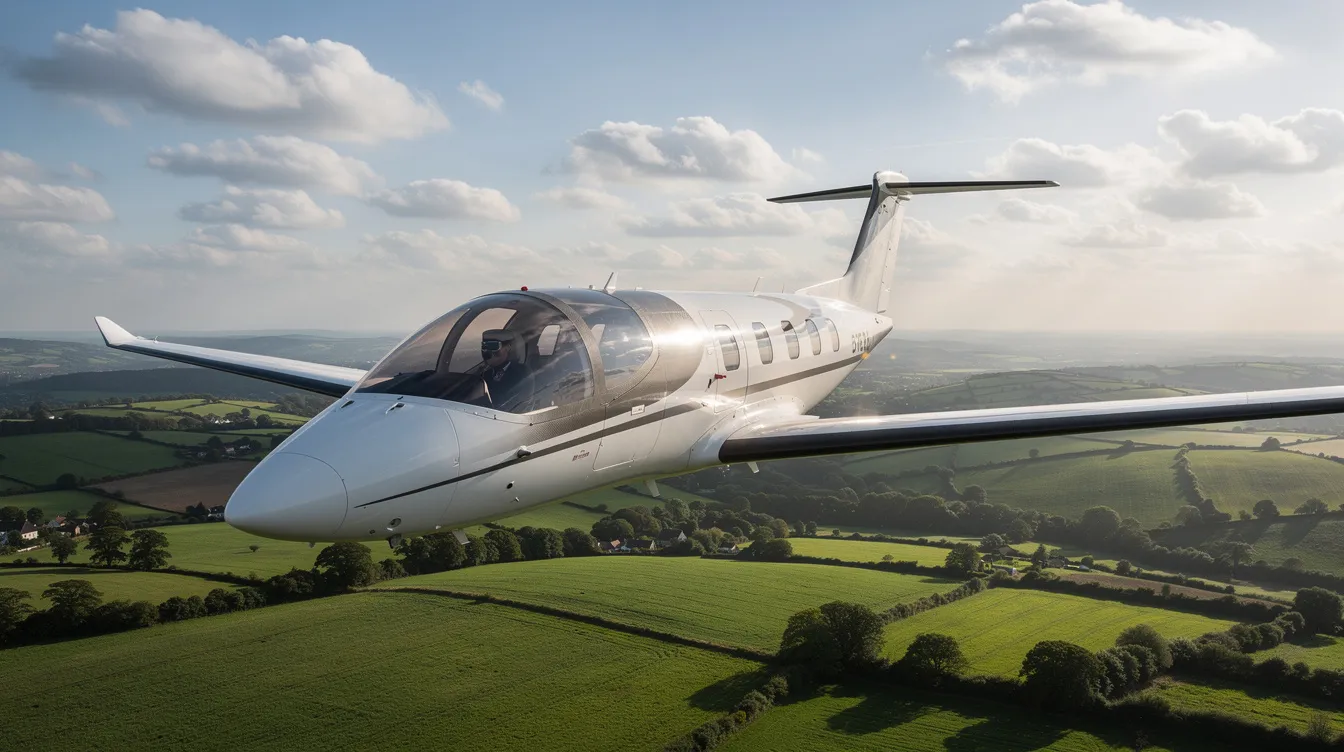
Small plane manufacturers build the aircraft that keep general aviation running. From the Cessna 172 parked at your local flight school to a Cirrus SR22 crossing state lines at 180 knots, these airframes serve pilot training, personal travel, aerial work, and the first rung of private aviation. This article covers the major brands, their aircraft lines, certification realities, operating costs, and how light aircraft connect to the broader world of private jet charter.
Cessna Aircraft Company, Beechcraft, Piper Aircraft, Cirrus Aircraft, and Diamond Aircraft are among the most popular general aviation manufacturers, collectively responsible for thousands of new airplanes delivered each year to flight schools, private owners, and utility operators worldwide.
Cirrus Aircraft, established in 1984, has delivered over 17,000 aircraft, including high-performance single-engine piston and light jet aircraft. The Cirrus SR20 was their first ready-to-fly aircraft, and the SR22T has received over 1,000 orders to date.
The Cessna 172, known as the most produced aircraft in history with over 44,000 units, remains a cornerstone of pilot training and personal flying. Cessna specializes in single-engine and twin-engine piston aircraft as well as turboprops.
Piper Aircraft, founded in 1925 and having produced over 144,000 planes since 1927, is known for straightforward handling and efficient designs. It specializes in single- and twin-engine piston aircraft for personal transport and flight training.
Beechcraft, in operation for over 80 years since its founding in 1932, produced the Model 17 and now offers light turboprops and piston trainers.
Mooney International, founded in 1929, produces the M20 series, emphasizing speed and fuel efficiency.
A notable distinction in aircraft manufacturing is that "small" manufacturers may not be small companies; for example, Textron Aviation operates both Cessna and Beechcraft under one corporate umbrella.
The Wright brothers' Kitty Hawk flight in 1903 marked the birth of powered flight, laying the foundation for modern aircraft manufacturing.
Van's Aircraft leads the kit-built homebuilt aircraft market, known for its popular RV series.
CubCrafters specializes in short takeoff and landing (STOL) utility aircraft, while Tecnam focuses on light sport and certified training aircraft.
Diamond Aircraft, known for modern designs and fuel efficiency, produces composite-material single- and twin-engine piston aircraft.
Single-engine aircraft dominate general aviation ownership, favored for their balance of performance, cost, and simplicity.
Flight schools represent a significant share of new aircraft purchases, driven by the global pilot shortage and renewed demand for flight training programs.
Cirrus Aircraft emphasizes advanced avionics, safety technology, including the Cirrus Airframe Parachute System introduced in 2000, and offers comprehensive training for new aircraft owners.
Cessna supports long-term maintenance, parts availability, and safety upgrades, contributing to pilot familiarity and operational reliability.
"Small planes" span several categories: single-engine piston aircraft (two to four seats, 100 to 180 knots cruise), light twin-engine models, light turboprop workhorses like the Pilatus PC-12, and light sport aircraft built under simplified certification rules. Ranges run from roughly 300 nautical miles for basic trainers to over 1,200 nautical miles for high-performance single-engine cruisers.
Cessna Aircraft Company, Piper Aircraft, Cirrus Aircraft, Diamond Aircraft, and Tecnam serve three primary markets:
Pilot training and flight schools: high utilization, low operating costs, durable airframes. Flight schools represent a large share of new aircraft purchases.
Personal/owner-piloted travel: comfort, avionics, range, and aesthetics matter most. Single-engine aircraft dominate general aviation ownership in this segment.
Utility missions: aerial survey, agriculture, medical evacuation, air taxi, and bush flying, where ruggedness and short takeoff capability count.
In 2025, GAMA reported 1,782 piston aircraft delivered globally, up from 1,772 in 2024. Total airplane billings (piston, turboprop, and business jet combined) reached approximately $31 billion. Post-COVID recovery between 2022 and 2026 saw renewed demand as airlines faced pilot shortages and travelers sought alternatives to commercial schedules. While small planes handle shorter regional routes, longer multi-city or international trips are increasingly served by on-demand charter platforms like Jettly, whose airport locator tool and global charter platform enhance time efficiency and routing flexibility.
Global demand for light aircraft tracks directly with growth in pilot training across North America, Europe, and Asia-Pacific. The global pilot shortage, documented by major airlines from 2023 through 2026, has renewed demand for flight training programs and pushed flight schools to upgrade aging fleets.
Flight training fleets rely on proven models. The Cessna 172 is the most produced aircraft in history, with over 44,000 units built; in Asia-Pacific alone, Cessna fixed-wing trainers held roughly 50% market share in 2022. Piper's PA-28 Archer and Diamond's DA40 round out the top three choices, chosen for reliability, low per-hour costs, and pilot familiarity with parts support networks. Pilots destined for airline careers typically log their first flight hours in these aircraft before progressing to multi-engine ratings.
Light aircraft also support aerial work (pipeline inspection, coastal patrol, mapping) and tourism flights, especially where airport infrastructure for larger jet aircraft is limited. Pilots who train on these airplanes often progress to careers flying business jets, many of which can be booked through platforms like Jettly for private jet business travel.
The Federal Aviation Administration in the US, EASA in Europe, and Transport Canada each certify new light aircraft through a process that shapes what manufacturers can build and when they can deliver. Since the Wright brothers' Kitty Hawk flew in 1903, aviation regulation has evolved into a layered system of type certificates, airworthiness directives, and production approvals.
Certification of a new light aircraft or light sport model, especially one with novel propulsion or avionics suites, typically takes 5 to 10 years from concept to first customer delivery. The FAA's MOSAIC rule, finalized in July 2025, expands what qualifies as a light sport aircraft by permitting more seats, retractable gear, and alternative propulsion (including electric and turbine), marking a major milestone for the industry.
Next-generation light aircraft increasingly feature:
Composite materials replacing aluminum for better strength-to-weight ratios
Glass cockpits with synthetic vision, GPS WAAS approaches, and ADS-B traffic overlays
Whole-airframe parachute systems (Cirrus introduced the Cirrus Airframe Parachute System in 2000)
Stall-protection systems and envelope-protecting autopilots
Diesel/Jet-A piston engines for global fuel availability
These advances mirror the standards required for turbine aircraft and private jets, reinforcing confidence for travelers who later choose chartered flights.
The US remains the historic center of small plane production, with more than one leading American manufacturer shaping general aviation. A notable distinction in aircraft manufacturing is that small manufacturers may not be small companies; Textron Aviation alone operates Cessna and Beechcraft under a multi-billion-dollar parent.
Cessna Aircraft Company (Textron Aviation): Founded in 1927, Cessna specializes in single-engine and twin-engine piston aircraft as well as turboprops. The Cessna 172 Skyhawk, the most popular aircraft for training and personal flying today, has been produced in greater numbers than any other airplane in history. Cessna's aircraft support long-term maintenance, parts support, safety upgrades, and other necessary services, and the Caravan turboprop serves utility operators worldwide. In 2025, Cessna delivered 311 single-engine piston aircraft.
Piper Aircraft: Founded in 1925, Piper has produced over 144,000 planes since 1927. The PA-28 family (Cherokee, Archer, Warrior) remains a mainstay for flight training classes and owner-piloted cross-country flying. Piper Aircraft is known for straightforward handling qualities and efficient designs. The Seminole twin serves multi-engine training, while the M350 and newer M700 Fury turboprop target the high-performance single-engine and pressurized cabin market.
Cirrus Aircraft: Established in 1984, Cirrus Aircraft has delivered over 17,000 aircraft. The SR20 was the first ready-to-fly aircraft from Cirrus, followed by the SR22 and SR22T. The SR22T has received over 1,000 orders to date. Modern Cirrus aircraft feature integrated Garmin flight displays and advanced avionics that have shaped aviation safety expectations for owner-pilots. Cirrus offers comprehensive training for new aircraft owners. The SF50 Vision Jet (a single-engine light jet) claimed best-selling general aviation jet for the eighth straight year in 2025, with 691 SR-series piston deliveries and approximately 106 Vision Jets. Cirrus Aircraft specializes in high-performance single-engine piston and light jet aircraft.
Beechcraft: Founded in 1932 and having produced the Model 17 as its first aircraft, Beechcraft has been in operation for over 80 years. Now part of Textron Aviation alongside Cessna, it covers light turboprops (King Air series) and piston trainers.
Mooney International: Founded in 1929, Mooney produces the M20 series, built around speed and fuel efficiency. Its low-drag airframes appeal to pilots who prioritize cruise speed over cabin width.
These manufacturers sit at the entry layer of private aviation. When mission needs call for more range, speed, or passengers, charter services like Jettly extend the ecosystem by offering turboprop and jet options and a broad catalog of private charter aircraft for complex trip profiles.
European light aircraft companies have become central to modern training fleets and eco-focused operations.
Diamond Aircraft (Austria/Canada): Diamond Aircraft is known for modern designs and fuel efficiency. Its composite-material, fuel-efficient single- and twin-engine piston aircraft (DA20, DA40, DA42, DA62) run diesel or Jet-A-compatible engines, cutting fuel consumption and eliminating reliance on avgas. In 2025, Diamond produced 121 twin-engine piston aircraft and 114 single-engine units. The DA42 Twin Star offers cruise speeds near 170 knots on roughly 12 gallons per hour total across both engines, making it a cost-effective multi-engine trainer.
Tecnam (Italy): Tecnam specializes in light sport aircraft and certified training aircraft. Models like the P92, P2002, P2006T, and newer P-Mentor trainers hold a strong presence in EASA-regulated flight schools across Europe and beyond. GAMA data showed 138 Tecnam piston deliveries in 2025.
Other players include Pilatus (Switzerland), whose PC-12 NGX turboprop is a workhorse for utility and charter missions, and Robin Aircraft (France) for sport and recreational flight training. Many of these aircraft are approved for night and instrument operations, making them competitive alternatives to older fleets in both European and North American flight schools and a useful contrast to leading private plane manufacturers for every budget and need.
Beyond factory-built trainers, a notable share of the light aircraft world involves kit planes, STOL aircraft, and light sport aircraft tailored to specific missions.
Van's Aircraft is the leader in the kit-built homebuilt aircraft market. Known for its popular kit aircraft community, the RV series offers high performance, low operating costs, and a strong builder-support network that appeals to experienced enthusiasts. The FAA's light-sport-aircraft data includes manufacturers like CubCrafters and Flight Design alongside factory LSA producers.
CubCrafters specializes in short takeoff and landing utility aircraft, accessing remote strips for bush flying, eco-tourism, and logistics in rugged terrain from Alaska to sub-Saharan Africa.
The light sport aircraft category, introduced in the US in the mid-2000s, provides simplified licensing and lower-cost pathways into recreational flying. With MOSAIC expanding LSA performance limits in 2025 and 2026, new pilots and sport pilots gain access to more capable airframes, including those with retractable gear and alternative propulsion. While these segments lack the cabin size or range of business jets, they complement the broader aviation ecosystem and connect with larger charter aircraft and top private jet charter companies when needed.
Fuel consumption and total operating cost drive aircraft selection for owner-pilots and flight schools, especially as avgas prices rise and lead-content regulations tighten.
|
Aircraft |
Fuel Type |
Approx. Fuel Burn (cruise) |
Cruise Speed |
Category |
|---|---|---|---|---|
|
Cessna 172 |
Avgas (100LL) |
8-10 gal/hr |
~120 ktas |
Single piston trainer |
|
Diamond DA42 |
Jet-A (diesel) |
~12 gal/hr total |
~170 ktas |
Twin diesel |
|
Cirrus SR22T |
Avgas (100LL) |
~15 gal/hr |
~213 ktas |
High-performance single |
|
Piper M350 |
Avgas (100LL) |
~17 gal/hr |
~213 ktas |
Pressurized cabin piston |
Next-generation light aircraft adopt aerodynamic refinements, FADEC engine controls, and lighter composite structures to reduce emissions. Some manufacturers and operators participate in carbon offset and sustainable aviation fuel initiatives, aligning with broader industry sustainability trends.
For travelers comparing options, responsible charter platforms like Jettly help compare aircraft categories for efficiency and right-size the airplane to the trip, especially when evaluating how much a private jet costs relative to light aircraft ownership. Exploring charter cost estimates and a complete guide on how much to rent a private jet allows passengers to weigh per-trip costs against the fixed expenses of owning and operating a four seat piston aircraft.

A typical pilot journey starts in a light aircraft at a local flight school. A student earns a private pilot certificate in a Cessna 172 or Diamond DA40, accumulates flight hours, adds instrument and multi-engine ratings, and eventually transitions to crew positions on business jets or airliners. This pipeline is what makes the flying experience in small planes a foundation for the entire aviation industry.
The design priorities of light aircraft (safety, avionics familiarity, cockpit ergonomics) prepare pilots for the advanced flight decks of modern jet aircraft, while some advanced trainers also prepare students who later fly fighter aircraft. Owner-pilots often begin with personal light aircraft for regional trips and later transition to chartering jets when time becomes more valuable than the hobby of flying. A business leader might train locally in a Cessna or Diamond aircraft, with specialized training platforms helping bridge the step before fighter aircraft or other high-performance operations, fly themselves on short hops in one of the cheapest private aircraft options, then rely on Jettly to charter a light jet for multi-city corporate travel in a single day.
Digital platforms complement small plane use by offering on-demand access to turboprops and jets with instant pricing, without requiring ownership or long-term jet card commitments.
Jettly operates as a digital private jet charter marketplace that sits downstream from the light aircraft segment in terms of speed, range, and cabin size. While small plane manufacturers focus on building and certifying airframes, Jettly connects travelers to already-operational aircraft through a transparent, tech-driven booking experience.
For readers familiar with light aircraft, the platform offers:
Access to over 20,000 aircraft worldwide, including turboprops, light jets, midsize jets, and large-cabin jets
Instant pricing and on-demand or membership access without ownership commitments
Coverage for use cases that would be impractical in a two- or four-seat light aircraft: business meetings across time zones, urgent medical travel, and weekend escapes requiring speed and weather tolerance
Explore Jettly's charter options, private jet memberships, or request a quote at jettly.com when travel needs move beyond what light aircraft can handle.

Many small plane manufacturers (Cessna, Piper, Diamond, Cirrus, Beechcraft) focus on piston-powered and light turboprop aircraft used for pilot training, personal flying, and short-range utility missions. Their aircraft typically seat two to seven people and cruise between 100 and 220 knots. Private jet manufacturers like Gulfstream and Bombardier build larger turbine-powered aircraft optimized for speeds above 400 knots and ranges exceeding 3,000 nautical miles, with established operators such as NetJets, a leader in private aviation, fielding large fleets of these jets. Some companies, like Textron Aviation, operate across both segments with Cessna pistons and Citation jets under one corporate roof, positioning themselves among the best private plane manufacturers for a range of missions and budgets.
Modern light aircraft meet stringent FAA and EASA safety standards. Many include glass cockpits, terrain awareness systems, autopilots, and (in Cirrus models) whole-airframe parachutes. The key differences are operational: light aircraft typically fly at lower altitudes, lack pressurized cabins in most piston models, and are more affected by weather. Proper training, current maintenance, and disciplined risk management are the primary factors in light aircraft safety outcomes.
Light aircraft work well for short regional hops (under 300 nautical miles), flexible schedules, and access to small airfields. Chartering a jet through a platform like Jettly is more practical for trips involving multiple meetings in different cities on the same day, longer distances, poor weather, or the need for more than three passengers and a pressurized cabin, and aligns with many of the options found in an ultimate list of charter airlines. Comparing private jet charter costs and evaluating shared charter flights vs. full charters against ownership expenses helps clarify which approach fits a given trip.
Owning a light aircraft involves acquisition (roughly $200,000 to $900,000 for new piston models), annual fuel, maintenance costs, hangar rental, insurance, and periodic engine overhauls. These costs must be spread across enough flight hours to be practical. Private jet charter consolidates costs into a per-trip price with no long-term commitments, especially when travelers leverage crowdsourced private jet flights and shared empty seats to lower per-passenger costs. For travelers who fly only a handful of business or leisure trips per year, charter often provides an efficient training solution to the cost equation without tying up capital, particularly when they buy a seat on a private jet instead of committing to full aircraft ownership.
Aircraft manufacturers often partner with or run dedicated training programs. Cirrus, for example, offers structured transition training for new aircraft owners through its facilities. Jettly focuses on connecting travelers with licensed operators and experienced pilots rather than training new pilots. Aspiring pilots typically work with local flight schools that operate fleets built by the major small plane manufacturers covered in this article, using an efficient training solution tailored to each student's certification goals, while future passengers can get a seat on a private jet easily through flexible charter options.
Small plane manufacturers, from Cessna Aircraft Company and Piper Aircraft to Cirrus Aircraft and Diamond Aircraft, form the backbone of general aviation, pilot training, and regional flying today. Advances in safety systems, avionics, and fuel efficiency are defining a new era of light aircraft design, with global demand shaped by flight schools, private owners, and specialized utility operators flying in skies around the world.
As pilots and passengers move forward from light aircraft to faster and larger airframes, private jet charter via platforms like Jettly offers a natural extension: range, comfort, and scheduling flexibility without aircraft ownership. The perfect plane for any trip depends on the mission, and the industry now offers options from a two-seat trainer to a transcontinental jet.
Ready to experience private travel on your terms? Explore flight options or request a quote at jettly.com.
Share this post:
Jay Franco Serevilla
Aug 15, 2026
|
5
min read
Discover tips and trends in the industry.

5
min read
How Long Is a Flight to London, England? (Private & Commercial Travel Times Explained)
Flight times to London vary significantly based on the departure city, ranging from 1 hour for nearby European cities to 14 hours for long-haul flights from Asia. Private jet travel can greatly reduce overall journey time by minimizing airport waiting and offering flexible routing. This guide provides insights into flight durations, airport choices, and the benefits of private versus commercial travel.
Read More
5
min read
Days Cheapest to Fly in 2026: How to Time Your Trip for the Best Prices
Discover the best days to fly in 2026 to save on airfare, with midweek departures typically offering the lowest prices. This guide covers domestic and international trends, booking strategies, and tips for private jet travelers. Learn how to leverage flexible dates and booking windows for maximum savings.
Read MoreStay updated with our latest insights and tips to elevate your journey with us.
MEMBERSHIPS AND ASSOCIATIONS



Disclaimer: Jettly operates as a charter broker, offering access to a global digital jet charter marketplace. Jettly is not a direct air carrier and does not own or operate aircraft. All advertised flights are conducted by third-party air carriers that are fully licensed and hold the appropriate Part 135 or Part 121 certifications issued by the Federal Aviation Administration (FAA) or equivalent regulatory authorities under U.S. or foreign law. Jettly complies fully with the U.S. Department of Transportation's Part 295 and Part 298 Charter Broker regulations. Jettly does not carry additional liability insurance. Passengers are covered by aircraft operator insurance. TICO: 50023770


