


Login
Get Instant Pricing On 23,000+ Aircraft

>
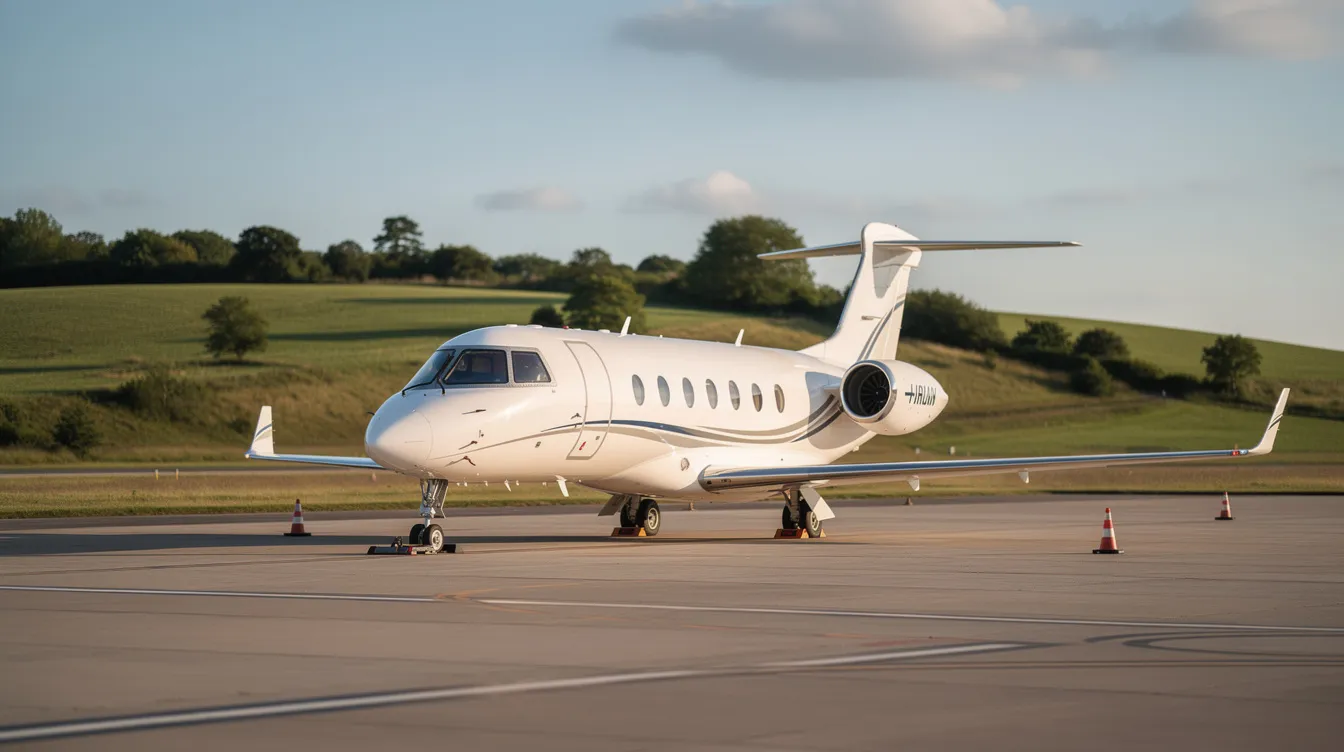
When people talk about small jet plane manufacturers, they typically mean companies building very light jets and light jets-twin-engine jet aircraft seating 4–8 passengers with ranges between 1,000 and 2,000+ nautical miles. These are the workhorses of business aviation, designed for city-pair routes like New York–Miami, Los Angeles–Las Vegas, or Toronto–Chicago.
These aircraft sit well below the ultra-long-range jets and high-end business jets built by Gulfstream Aerospace (which produces the G700, G550, G600, and G650 models), Dassault Aviation (founded in 1929 by Marcel Dassault), and the Boeing Company. Readers comparing these brands across budgets and mission profiles may find it helpful to review the best private plane manufacturers for every budget and need. Bombardier, which operates a fleet of about 5,000 aircraft, and Airbus, founded on December 18, 1970, also serve the larger end of the market. The Gulfstream G700 has the longest cabin in its segment and was expected to be certified in 2024, while the Falcon 6X received certification in 2023-both reminders that development cycles for new aircraft can span five to ten years and that aircraft manufacturers must obtain FAA or EASA certification before delivering a single unit. Certification requirements affect aircraft model market entry timelines significantly.
This article covers the major manufacturers building small private jets: Textron Aviation's Cessna Aircraft Company, Embraer, Honda Aircraft Company, Cirrus Aircraft, Pilatus Aircraft, and Eclipse. It's written from Jettly's perspective as a digital private jet charter platform that works with many of these types rather than selling the aircraft themselves, complementing broader resources like the ultimate list of charter airlines and private flight options.
Small jet plane manufacturers focus on very light jets and light jets-compact aircraft seating 4–8 passengers with ranges of 1,000–2,000+ nautical miles, ideal for regional charter flights.
Key manufacturers of small jets include Cessna, Embraer, and Honda Aircraft Company, alongside Cirrus Aircraft, Pilatus Aircraft, and Eclipse, each with distinct strengths in range, cabin design, and fuel consumption.
Very light jets typically accommodate 4 to 6 passengers and focus on private travel efficiency, while light jets push closer to 8 seats and longer range.
For charter customers using Jettly, manufacturer matters less than aircraft category, mission profile, and operator quality-but knowing brands helps set realistic expectations for comfort and performance.
Business jet technology is trending toward lower fuel burn, smarter Garmin avionics, and enhanced safety systems like autoland and airframe parachutes, with effects felt most in small jets and executive jets.
Textron Aviation is the parent company of the Cessna Aircraft Company and Beechcraft (maker of the Beechcraft King Air and King Air turboprop line). Cessna has been owned by Textron since 1992, and its track record spans from flight training to private jet manufacturing. The Cessna 172 is the most produced aircraft in history with 44,000 units, and flight schools represent a large share of new aircraft purchases-driven further by the global pilot shortage, which has increased demand for flight training programs, pilot training, and flight training classes worldwide.
On the business jet side, Cessna's small Cessna Citation jets have evolved from the original CitationJet in the early 1990s to modern models, and it features prominently among leading private plane manufacturers across segments. The Citation M2 Gen2 functions as an entry-level light jet, offering a range of approximately 1,550 nautical miles and a cruise speed of 404 knots. The CJ3+ balances range (up to 2,040 nautical miles) and cabin comfort with direct operating costs around $1,100–1,200 per hour. The CJ4 Gen2 is the fastest of the CJ line, and the XLS Gen2 acts as a popular small midsize step-up. The Cessna Citation Longitude, a larger variant, can carry 12 passengers over 6,482 km.
Reliable Williams International engines, glass cockpit avionics, and a strong global support network make Citation light business jets a backbone of charter fleets. Compared with larger executive jets, these Citations offer lower hourly cost and fuel consumption-making them attractive for cost-conscious private travelers and small companies booking through platforms like Jettly. Common itineraries include Boston–Nassau on a CJ3+ or regional hops on an M2 Gen2.
Embraer claims to be the third largest aircraft manufacturer globally, after Airbus and Boeing. Its deep experience in regional commercial airliners feeds directly into its business jet designs-and it shows in the cabin.
The Embraer Phenom 100EV is a very light jet introduced in late 2008 (original certification December 2008), seating 4–5 passengers with single-pilot certification and competitive fuel burn for short-haul hops. For longer missions, the Phenom 300E is the best-selling light jet globally over the past decade. It cruises at roughly 464 knots true airspeed (near Mach 0.80) with a range of about 2,010 nautical miles carrying five occupants. Over 900 Phenom 300 family aircraft are in service with nearly 3 million flight hours logged.
Embraer is recognized for cabin comfort and performance in the light jet market. The Prodigy flight deck (based on Garmin G3000), efficient Pratt & Whitney Canada engines, and a quiet, well-lit cabin appeal to both business and family travelers. Jettly users choosing between a Phenom 100 and 300 should consider passenger count, luggage, and distance-the 100EV works well for 4-passenger private jet missions, while the 300E handles routes like New York–Dallas or São Paulo–Buenos Aires with ease. Embraer's robust support network translates into high reliability and schedule integrity for charter operators.
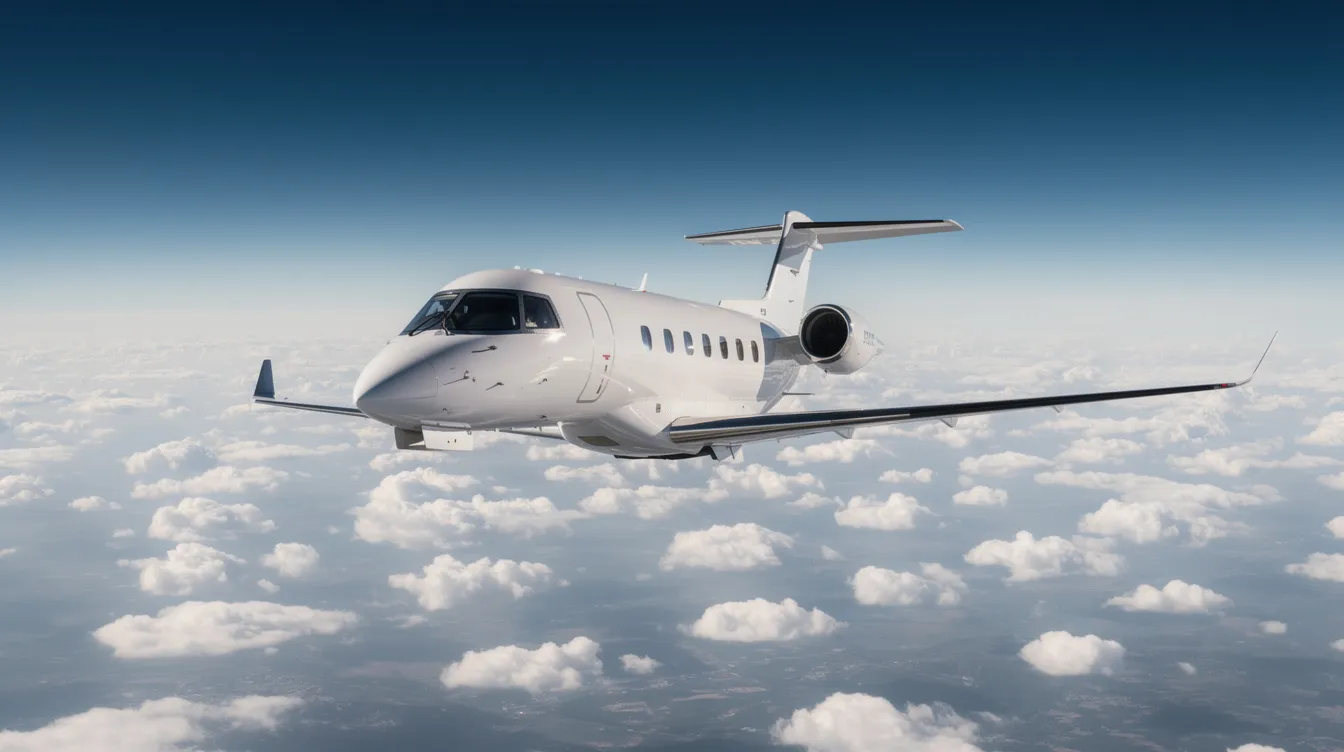
Honda Aircraft Company was founded in 2006 in Greensboro, North Carolina, though Honda's aviation research dates back to concept studies in the late 1980s. The first aircraft to earn certification-the HondaJet HA-420-received its FAA type certificate in December 2015, a major milestone in the private aviation industry.
Honda Aircraft Company emphasizes innovative designs in the very light jet category, and its signature feature is the engine-over-wing configuration—a concept often discussed in guides to the cheapest private aircraft across categories. The GE Honda HF120 engines sit above the wings, freeing up cabin volume, reducing cabin noise via a composite airframe design, and contributing to efficient aerodynamics and lower fuel consumption. The HondaJet Elite II is the world's first production twin-engine VLJ-and a very light jet with autothrottle- offering a range of approximately 1,547 nautical miles with four occupants and a max cruise speed of 422 knots.
The Elite series evolved from the original HA-420 through the HondaJet Elite (August 2018) to the Elite II (2022), with each generation improving range, takeoff performance, and cockpit automation. Short-runway capability makes it suitable for secondary airports near major cities-think San Francisco–Seattle or Paris–Ibiza.
In Jettly's marketplace, HondaJets appear in the same mission space as small Citation and Phenom models. For tech-savvy travelers doing frequent regional trips, the HondaJet's modern cabin, low operating costs, and fuel efficiency make it a strong fit, especially for those who prioritize personal aviation convenience.
Cirrus Aircraft is a Duluth, Minnesota–based American aircraft manufacturer founded in 1988, initially known for high-performance piston aircraft like the SR20 and SR22—aircraft that frequently appear in discussions of choosing the best personal plane. Single-engine aircraft dominate general aviation ownership, and Cirrus built its reputation in that space before making the jump to jet aircraft, a path explored in many guides to affordable planes and budget-friendly aircraft choices. Cirrus Aircraft is noted for its emphasis on safety features in personal aviation and is often highlighted among the best cheapest single-pilot jets for budget-conscious buyers.
The Cirrus Vision Jet SF50 became the world's first certified single-engine personal jet when it received FAA certification in December 2016, with updates including the G2 (2019) and G2+ versions. It's designed as a step-up for owner-pilots and for small charter missions-a bridge between flying conventional trainer aircraft and piloting advanced aircraft.
What sets the Vision Jet apart from other small jet plane manufacturers is its safety technology. The Cirrus Airframe Parachute System (CAPS) is standard equipment, and the Safe Return autoland system (Collier Trophy-winning technology) can fly the aircraft to the nearest suitable airport and land it if the pilot becomes incapacitated. With a Williams FJ33 engine, the aircraft produces cruise speeds above 300 knots and a range around 1,200 nautical miles; the Vision Jet handles shorter regional flights like Los Angeles–Sun Valley or Munich–Nice.
The cabin fits 5–7 passengers with large windows and a flexible layout well-suited for family travel. While the Vision Jet is less common in large charter fleets than Citation or Phenom models, Jettly's broad inventory may include them where owner-operated business jets are offered for charter.
Pilatus Aircraft of Switzerland (founded 1939) built its reputation on the PC-12 turboprop before launching the PC-24 "Super Versatile Jet," certified in 2017 as a unique entrant in the light jet category. The Pilatus PC-24 can land on short runways and unpaved strips-dry sand, gravel, grass-a capability no other production light jet matches.
The PC-24 bridges turboprop utility and light jet speed. It cruises above 440 knots with a range around 2,000 nautical miles for six passengers, while its generous cabin offers stand-up height in some configurations, a large cargo door, and flexible interiors that can switch between passenger, medevac, and transporting cargo missions. The 2024 update added roughly 272 kg more payload, noise reduction improvements, and a divan that converts into a berth.
For charter customers, the PC-24 unlocks airports that most jets can't reach-short strips in the Alps, remote Canadian airfields, London City's steep approach. These capabilities save ground time and make it a popular aircraft for corporate teams flying Zurich to London City or serving remote mining sites in Australia.
By contrast, larger jet manufacturers like Gulfstream Aerospace or Dassault Aviation focus on ultra-long-range jets and high-end business jets (the Dassault Falcon 7X, for example, can carry up to 16 passengers). The PC-24 shows how small jet plane manufacturers can dominate specific use cases through versatility rather than sheer size.

The Eclipse 500 was among the first aircraft to define the very light jet category, receiving FAA certification in 2006. Powered by twin Pratt & Whitney Canada PW610F engines, it seated 4–6 passengers with cruise speeds around 360–370 knots and relatively low fuel consumption for short-haul on-demand flights-essentially creating the air taxi concept for private aviation.
Eclipse Aviation filed for bankruptcy in 2008, and support continued under Eclipse Aerospace and later ONE Aviation. Many Eclipse jets still fly in private and charter service today, though parts availability and maintenance support remain more limited than the major manufacturers.
Other niche aircraft manufacturers worth noting include Piaggio Aerospace's P.180 Avanti EVO-a turboprop with jet-like performance-and emerging electric or hybrid concepts like Eviation Alice. These programs blur lines between turboprops, light aircraft, and business jets, though most remain in development or early certification phases. Meanwhile, Piper Aircraft continues to serve the general aviation and flight training market with popular aircraft used in flight schools, and transition training from conventional trainer aircraft to jets remains an efficient training solution for pilots destined for the private jet industry—especially for those planning cross-country plane travel across long distances.
On Jettly's platform, niche aircraft appear alongside mainstream light jets, sometimes at attractive hourly rates. Availability tends to be regional, and fleet sizes are smaller than Cessna or Embraer, so they work best as specialist tools for specific routes or for crowdsourced private jet flights with shared empty seats rather than universal solutions.
For charter customers using Jettly, aircraft category, configuration, and operator standards matter more than the logo on the tail-but brand differences still influence cabin comfort, noise levels, and cost, especially when selecting from Jettly's extensive inventory of private charter aircraft.
Fuel consumption and engine technology directly affect hourly charter pricing. A typical VLJ like the HondaJet or Phenom 100 burns less fuel per hour than a Phenom 300E or Citation CJ3+, which translates into lower rates on sectors under 2–3 hours. When comparing light jets vs midsize jets, the differences become even more pronounced.
Practical selection criteria for Jettly users include:
Passenger count and baggage volume
Nonstop range needed for the route
Runway length at preferred airports
Cabin height, width, and Wi-Fi expectations
Some manufacturers tend to excel on specific criteria: Embraer for spacious cabins, Cessna for broad availability and maintenance support, Honda for innovative aerodynamics, Pilatus for rough-field performance, and Cirrus for safety systems.
Regardless of manufacturer, Jettly only lists flights operated by properly certified operators (FAA Part 135 or equivalent), making operator oversight, pilot training standards, and maintenance history more important than brand alone.
Private jets often emphasize fuel efficiency, cabin comfort, and performance-and small jet plane manufacturers respond to environmental concerns through engine improvements, aerodynamic refinements, and lighter materials. HondaJet's engine-over-wing design reduces drag. Embraer's winglets and updated avionics profiles cut fuel burn. Cessna's newer Citation models are optimized for lower specific fuel consumption. Pilatus emphasizes versatile operations that minimize repositioning flights.
Short-haul operations with properly sized small jets are often more efficient than flying larger executive jets half-empty on the same route-especially when chartered through a marketplace like Jettly that can minimize empty legs. Many current small jets are already compatible with sustainable aviation fuel (SAF), which customers can ask about when arranging flights.
Aviation enthusiasts who prioritize environmental impact can choose smaller aircraft categories, avoid unnecessary positioning legs, and explore carbon offsetting options while still benefiting from the time savings of business jets, while keeping an eye on global private jet fleet numbers and trends that shape overall environmental impact.
All the technical details about small jet plane manufacturers matter most when they connect to actual trip planning. Digital private aviation platforms offer flexible access to a large inventory of aircraft, and customers of private jet charters value convenience, flexibility, and luxury in travel.
Jettly's platform lets users input route, dates, and passenger count, then receive instant pricing across multiple aircraft types-including light and very light jets from Cessna, Embraer, Honda, Cirrus, Pilatus, and others- making it easy to compare with other charter airlines and private flight providers. Its integrated airport locator tool helps match your route to suitable airports, and the platform displays key specs in plain language: seating, estimated flight time, luggage capacity, Wi-Fi availability, and sometimes aircraft age and model.
Consider these example comparisons:
|
Route |
Option A |
Option B |
Key Difference |
|---|---|---|---|
|
Toronto–New York |
Citation M2 Gen2 |
HondaJet Elite II |
M2 offers wider cabin; HondaJet offers lower noise |
|
Los Angeles–Aspen |
Phenom 300E |
PC-24 |
PC-24 handles Aspen's short runway better |
|
Miami–Nassau |
Vision Jet |
Phenom 100EV |
Vision Jet costs less; Phenom 100 carries more luggage |
Frequent flyers might consider membership plans or jet card programs with fixed hourly rates for better economics on repeated use of specific light jet types. For more details on how to charter a private jet or explore private jet options, visit Jettly's platform.
This FAQ addresses common questions about chartering small business jets through platforms like Jettly, covering practical decisions not fully explored above.
A very light jet like the HondaJet Elite or Embraer Phenom 100 typically seats 4–5 passengers, has shorter range (1,200–1,550 nautical miles), and lower operating costs. A light jet like the Phenom 300E or Citation CJ3+ carries 6–8 passengers and flies farther (up to 2,000+ nautical miles) at higher speeds. The right choice depends on your passenger count, luggage, and route distance.
All major manufacturers-Cessna, Embraer, Honda, Cirrus, Pilatus-meet strict FAA and EASA certification standards. For charter customers, the operator's maintenance practices, pilot training, and regulatory oversight matter more than the manufacturer. Modern tools for tracking private jets also contribute to transparency and operational oversight. Cirrus does stand out with its standard airframe parachute and autoland system, but these are supplemental safety layers, not replacements for proper operations.
Long experience in flight training and single-engine aircraft (like Cessna with the Cessna 172, or Cirrus with the SR22) gives these companies deep knowledge of pilot workload and cockpit ergonomics. That heritage carries into their jet designs. But "better" still depends on mission and budget- an American aircraft manufacturer based in Wichita and one in Greensboro solve different problems.
Very large aircraft from the Boeing company, Gulfstream Aerospace, or Bombardier are optimized for long-range missions with large groups. The Bombardier Global 7500 has a range of 7,700 nautical miles (14,800 km), and Gulfstream produces models like the G650 for intercontinental travel. For typical regional business or family flights, small jets are more economical, easier to position, and can access smaller airports that commercial airliners and large fighter aircraft–derived platforms simply cannot. The world's leading aerospace company for your route might simply be one making a light jet.
Fuel is a major component of hourly operating cost. More efficient small jets-VLJs and light jets-usually mean lower charter rates compared with midsize or heavy jets on the same route. A Citation CJ3+ burns roughly 110 gallons per hour, translating to several hundred dollars of the $1,100–1,200 hourly direct operating cost. On sectors under 2–3 hours, smaller aircraft deliver clear savings. Use Jettly's charter cost estimator to compare.
Cessna Citation, Embraer Phenom, HondaJet, Cirrus Vision Jet, Pilatus PC-24, and Eclipse have defined modern small jet design-each balancing speed, comfort, and fuel consumption differently. From the American company heritage of Textron's Citation line to the Swiss engineering behind the PC-24, these are the aircraft that move the private jet industry forward in the light jet category. Private jet ownership offers complete customization and long-term investment value, but for most travelers, chartering through a platform like Jettly delivers the same access without the commitment.
The ideal choice depends less on brand loyalty and more on mission profile: distance, passenger count, airports used, and schedule flexibility. Whether you need a first private jet experience for a weekend trip or a reliable weekly shuttle for your team, small jet plane manufacturers have built an aircraft that fits.
Jettly's digital charter platform lets customers compare these aircraft types side by side-making manufacturer differences easy to understand without reading technical manuals, while its resources on affordable private jet charter pricing help frame the cost implications of each choice. Ready to find the right flight? Explore options or request a quote at https://www.jettly.com.
Share this post:
Jay Franco Serevilla
Jul 29, 2026
|
5
min read
Discover tips and trends in the industry.

5
min read
Travel Insurance Airfare: How Flight Insurance Works for Private and Commercial Air Travel
Travel insurance for airfare is crucial for protecting your investment in non-refundable tickets against cancellations and delays. Whether you're flying commercially or chartering a private jet, understanding the nuances of flight insurance can save you from significant financial loss. This guide covers what flight insurance entails, its benefits, and when it's worth purchasing.
Read More
5
min read
Vonlane vs. Private Jet Charter: How Luxury Motorcoach Travel Compares to Jettly
This article compares Vonlane, a luxury motorcoach service in Texas, with Jettly, a private jet charter platform. While Vonlane offers a comfortable and convenient ground travel experience, Jettly provides flexibility and privacy for air travel. Discover which option suits your travel needs best.
Read MoreStay updated with our latest insights and tips to elevate your journey with us.
MEMBERSHIPS AND ASSOCIATIONS



Disclaimer: Jettly operates as a charter broker, offering access to a global digital jet charter marketplace. Jettly is not a direct air carrier and does not own or operate aircraft. All advertised flights are conducted by third-party air carriers that are fully licensed and hold the appropriate Part 135 or Part 121 certifications issued by the Federal Aviation Administration (FAA) or equivalent regulatory authorities under U.S. or foreign law. Jettly complies fully with the U.S. Department of Transportation's Part 295 and Part 298 Charter Broker regulations. Jettly does not carry additional liability insurance. Passengers are covered by aircraft operator insurance. TICO: 50023770


