



Login
Get Instant Pricing On 23,000+ Aircraft

>
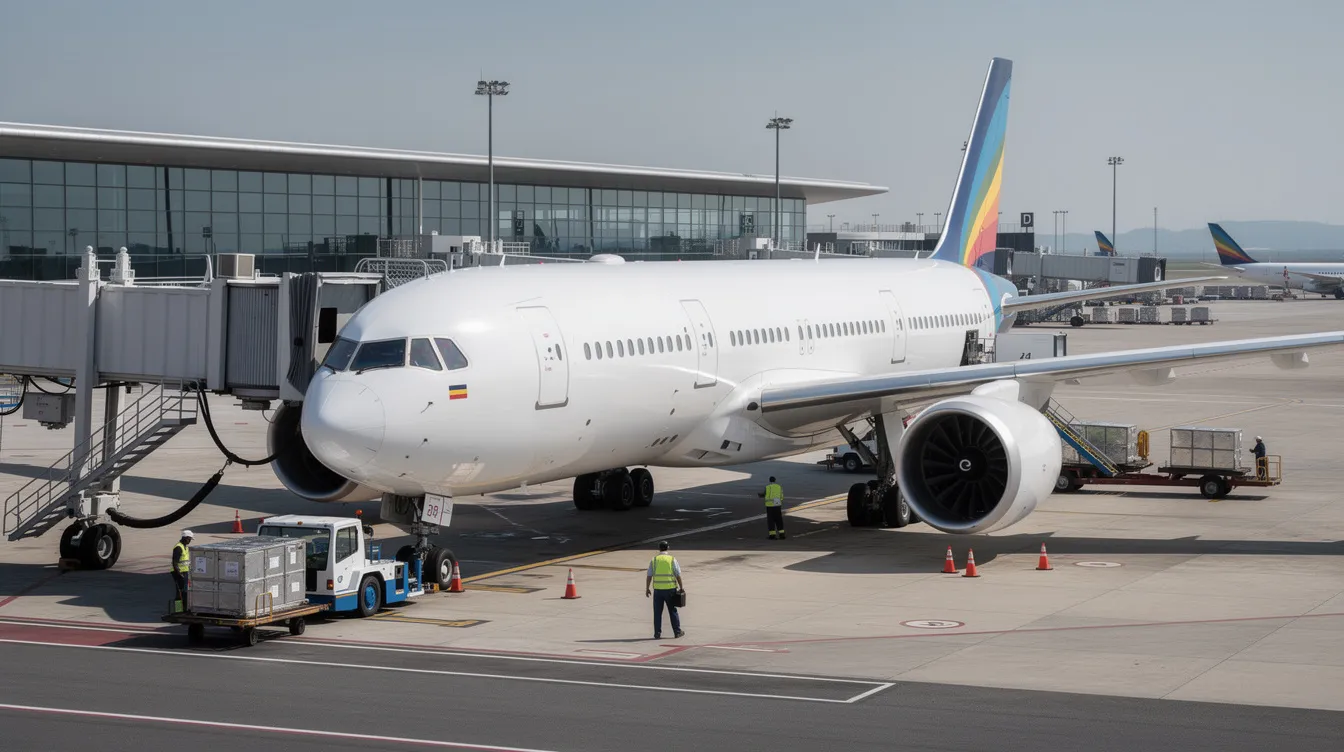
The size of Boeing planes spans a remarkable range. From the compact, single-aisle 737 that serves medium-haul routes to the massive double-deck 747-8 built for intercontinental passenger service, Boeing commercial airplanes cover nearly every segment of air travel. Understanding how these aircraft differ in length, wingspan, cabin width, and passenger capacity helps travelers - whether flying commercial or evaluating private jet alternatives - make smarter decisions about comfort, flexibility, and value.
This guide is for travelers, aviation enthusiasts, and private jet clients interested in understanding how Boeing aircraft sizes compare and what those differences mean for comfort and travel planning.
This guide breaks down every major Boeing aircraft family by size, explains the metrics that matter, and shows how private jet charter clients can use these commercial benchmarks to find the right aircraft for their next trip.
Boeing commercial airplanes range from narrow-body jets like the 737 (starting at approximately 35.6 m in length) to wide-body aircraft like the 777-9, which measures about 76.7 m long - making it Boeing's longest aircraft.
Aircraft size is defined by length, wingspan, cabin width, fuselage cross section, and maximum takeoff weight. These metrics determine passenger capacity, route suitability, and airport compatibility.
The 737 MAX sits at the compact end of Boeing's commercial lineup with a 148-inch fuselage width and six-abreast seating, while wide-bodies like the 777 and 787 offer twin-aisle cabins up to roughly 6 meters wide.
Boeing aircraft dimensions and passenger capacities significantly differ based on the model, ranging from about 100 seats on smaller narrow-bodies to over 460 on the 747-8.
Jettly customers often use the cabin experience on Boeing commercial aircraft as a reference point when evaluating private jet cabin size, comfort, and layout.
Aircraft size is one of the most consequential decisions an airline makes. It determines which airports a plane can serve, how many passengers fit onboard, how far it can fly, and how comfortable the cabin experience feels. Commercial aircraft vary in size and capacity depending on type and configuration, and choosing the wrong aircraft for a route means either empty seats or overcrowded cabins.
In practical terms, commercial aircraft size comes down to a handful of measurable dimensions:
Length - nose to tail, affecting how many rows of seats fit inside
Wingspan - tip to tip, influencing aerodynamic efficiency and gate compatibility
Fuselage width and cabin width - defining whether the aircraft is single-aisle or twin-aisle
Height - relevant for hangar and ground equipment clearance
Maximum takeoff weight (MTOW) - the operational ceiling for fuel, passengers, and cargo combined
Boeing offers a family of aircraft suited for different market segments in aviation. A Boeing 737 flying a two-hour domestic hop has a completely different size profile than a 777 crossing the Pacific. Airlines match commercial aircraft size to route demand: smaller, fuel-efficient jets for short- and medium-haul flights, and larger aircraft for high-demand long-haul routes where per-seat economics favor scale.
Aircraft size affects passenger comfort and space allocation directly. A wider fuselage means more room per seat; a longer cabin means more rows and configuration flexibility, and it also influences operating costs that travelers may see reflected in tools like a private jet charter cost estimator. For travelers considering private aviation, these same metrics - cabin width, floor area, ceiling height - become the benchmarks for evaluating what a private jet offers relative to commercial service, and for comparing the many private charter aircraft options available on the market.
Boeing commercial aircraft range from narrow-body jets to wide-body airliners. The main families, ordered from smallest to largest, are the 717, 737 (including the 737 MAX), 757, 767, 787 Dreamliner, 777/777X, and 747-8. Boeing uses a numeric designation to differentiate between various models within families, with stretched variants adding length and seats within each line.
Narrow-body jets typically seat 100 to 240 passengers, while wide-body aircraft can carry 250 to over 400 passengers. The dividing line between narrow-body and wide-body sits roughly at the 767, where twin aisles and wider cabins begin.
Passenger capacity on Boeing aircraft varies considerably by model and airline configuration. A 737 MAX 8 might seat 160 in two-class or 200+ in a single-class layout. A 777-9 can accommodate up to 426 passengers at maximum density. The numbers depend heavily on how airlines balance premium cabins against economy seating.
Several of these commercial airliners have been adapted into Boeing Business Jets - low-density VIP aircraft that use the same airframes but seat far fewer passengers in luxury configurations. These BBJ variants are relevant to charter clients who need airliner-scale cabin space for a small group.
Understanding the key size metrics helps compare Boeing aircraft to each other - and to private jet categories. Here is what each measurement means in practice.
Length - total nose-to-tail distance; longer aircraft fit more rows of seats
Wingspan - determines aerodynamic efficiency and dictates which airport gates the aircraft can use
Height - ground to top of tail; relevant for hangar access and ground servicing
Fuselage diameter - the external width of the tube; sets the upper limit on cabin width
Cabin width - the usable interior width after insulation and structure, determining seat count per row
MTOW - the maximum certified weight at takeoff, including fuel, passengers, cargo, and the aircraft itself
Seating capacity - varies by aircraft classification and airline layout choices
Wingspan is especially important for airport operations. The 777X family uses folding wingtips to solve a specific problem: its extended span of over 71.8 m provides exceptional aerodynamic efficiency in flight, but folds down to approximately 64.8 m on the ground to fit existing Code E gates. This advanced technology lets airlines worldwide operate a very large aircraft without requiring expensive airport modifications.
Cabin width versus fuselage width is another distinction worth understanding. The 737's fuselage width is about 148 inches (3.76 m), but the actual cabin is slightly narrower once wall structure and insulation are accounted for. On wide-bodies like the 777, the fuselage measures roughly 6.2 m externally, with an interior cabin width of about 5.86 m. That difference in cabin width is what separates a 3-3 economy layout from a 3-4-3 arrangement with twin aisles.
For Jettly's customers, cabin width and layout matter more than raw seat count. A private jet carries fewer passengers in a given space, so even aircraft with narrower fuselages can deliver exceptional cabin comfort when density is low.
The Boeing 737's first flight took place in 1967. Since then, it has evolved into the world's best-selling commercial aircraft family, with thousands of deliveries across multiple generation series introduced over five decades. The Boeing 737 family is designed for short- to medium-haul routes, connecting city pairs that range from 500 to 3,500 nautical miles.
All 737 variants are narrow-body jets with a single aisle and six-abreast seating. The fuselage width remains consistent at about 148 inches (~3.76 m) across every generation, from the original -100 through the current MAX line. This standardized width keeps the aircraft type compatible with existing airport infrastructure and ground equipment.
Size ranges across the 737 generations:
Original/Classic (737-100 through -500) - lengths from ~28 m to ~34 m, seating ~100–145
Next Generation (NG: 737-600 through -900ER) - lengths from ~31 m to ~42 m, seating ~110–220
737 MAX (MAX 7 through MAX 10) - lengths from ~35.6 m to ~43.8 m, seating ~135–230
The 737's relatively compact size enables operation from shorter runways and secondary airports. Many 737 variants can take off and land on runways of 1,500–2,000 m, opening up access to airports that larger aircraft cannot serve. This flexibility is a key reason airlines deploy the 737 on routes where demand or infrastructure would not support a wide-body.
The 737 airframe also underpins several non-passenger roles, including cargo conversions, military variants (such as the P-8 Poseidon maritime patrol aircraft and AEW&C platforms), and VIP transport configurations. The common size and structure make it adaptable for many missions beyond commercial service.
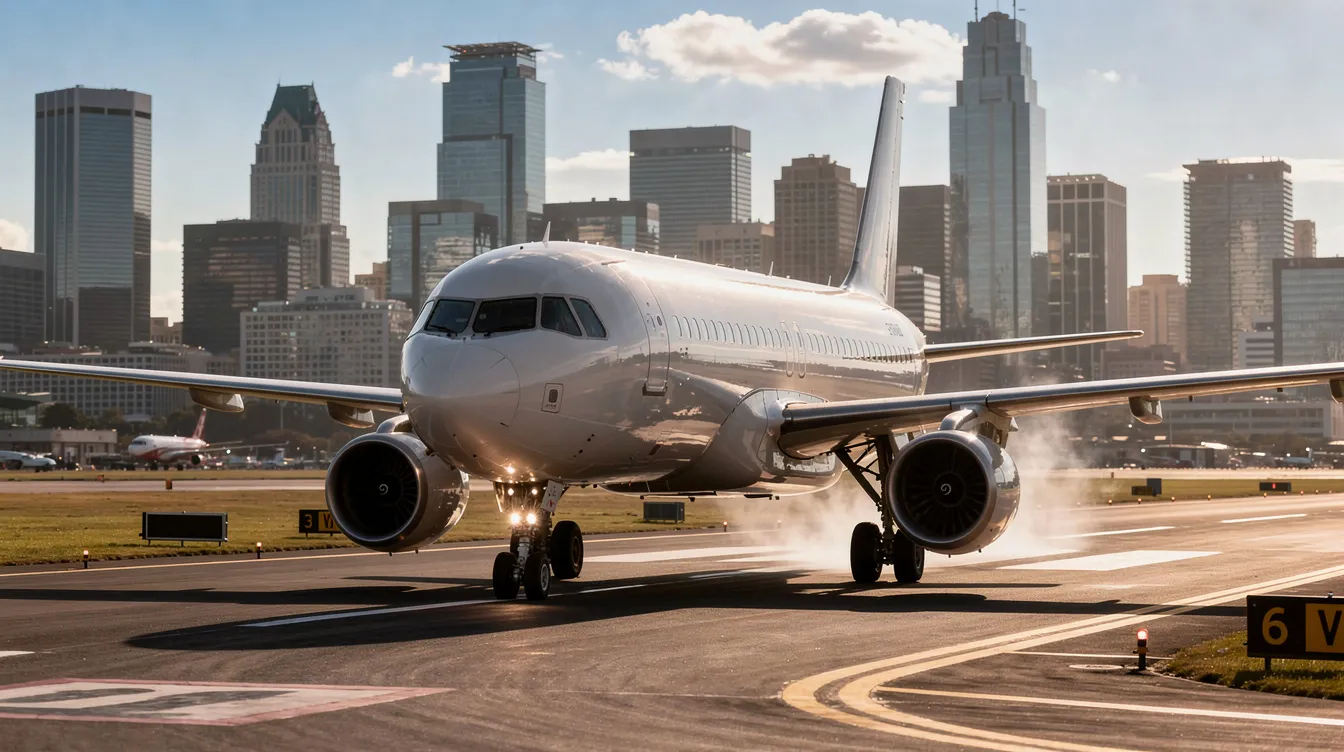
The 737 MAX is the latest generation of the 737 line - the fourth major iteration. Its first flight occurred in 2016, and after a global grounding from 2019 to late 2020, the aircraft returned to commercial service with enhanced safety systems and updated certification requirements that meet strict regulatory standards.
Here is how size steps up across the MAX variants:
MAX 7 - ~35.6 m (116 ft) length, ~135–160 seats in two-class, up to ~172 max
MAX 8 - ~39.5 m (130 ft) length, ~160–180 seats in two-class, up to ~210 in high-density
MAX 9 - ~42.1 m (138 ft) length, ~175–195 seats in two-class, up to ~220 max
MAX 10 - ~43.8 m (144 ft) length, ~185–210 seats in two-class; the Boeing 737 MAX 10 can seat up to 230 passengers in a single-class layout
Cabin width remains constant across all MAX variants at the familiar 148-inch fuselage width. Economy class uses a standard 3-3 configuration. Airlines like American Airlines, United Airlines, Delta Air Lines, and Turkish Airlines each configure their MAX cabins differently - varying seat pitch, premium cabin layout, and overhead bin size - but the underlying aircraft dimensions stay the same.
Key size-related technologies distinguish the MAX from its previous generation:
Advanced Technology winglets - split-tip designs that reduce induced drag and improve fuel efficiency
LEAP-1B engines - fuel-efficient engines from CFM International; the 737 MAX's LEAP-1B engines reduce fuel consumption by 14% compared to the previous generation NG series
Boeing Sky Interior - updated cabin design with modern avionics displays, sculpted sidewalls, and LED lighting that improve the perception of space
Airlines use different 737 MAX sizes to match route demand. The MAX 7 suits thinner, longer-range routes where a launch customer might need fewer seats but greater distance. The MAX 10 targets high-density short routes where airlines want to increase capacity without moving to a wide-body. Jettly customers flying these same routes may compare the cabin feel of a MAX to large-cabin private jets that offer similar stage-length capability with far fewer passengers and significantly more personal space, or to specific airliners like the Boeing 737-800 that also operate many short- and medium-haul routes.
These mostly legacy Boeing narrow-body models illustrate how commercial aircraft size evolved over several decades.
The 717 (originally developed as the McDonnell Douglas MD-95) measures about 31 m in length with a wingspan of roughly 28.4 m. It seats around 100–120 passengers in a typical two-class layout. Airlines like Delta Air Lines have operated the 717 on short regional routes where its small size matches low route demand.
The tri-engine 727-200 featured a long, narrow fuselage of approximately 46 m and seated 150–189 passengers in dense configurations. Its steep climb and descent performance made it suitable for airports with noise restrictions or challenging approaches. While largely retired from passenger service, the 727 represents an important step in fuselage length evolution.
The 757 occupies a unique position: a narrow-body aircraft with the range and capacity that overlap with smaller wide-bodies. The 757-200 measures about 47 m long and seats roughly 200 in two-class. The stretched 757-300 reaches approximately 54 m with up to 240 seats - the upper end of what narrow-body jets typically seat. Its strong runway performance and long range made it a favorite for transatlantic routes operated by airlines like Air Canada and Air France on lower-demand city pairs.
Some of these classic airframes have been converted into VIP aircraft or charter configurations - stripped of high-density seating and fitted with lounges, bedrooms, and conference areas. These conversions create large-cabin private aircraft that clients sometimes charter through platforms like Jettly for groups too big for typical business jets but not large enough to fill a full commercial flight.
Wide-body aircraft are defined by their twin-aisle cabins, larger fuselage diameter, and significantly wider interior than narrow-body Boeing jets. The transition from narrow-body to wide-body marks a major jump in cabin width - from roughly 3.5–3.8 m on the 737 to approximately 5.0–6.2 m on models like the 767, 787, 777, and 747.
Airlines choose wide-body Boeing aircraft for long-haul routes where range, passenger capacity, and cargo volume all need to be maximized. A 787 Dreamliner can fly over 7,000 nautical miles nonstop. A 777-300ER can carry 350+ passengers across the Pacific. These are missions that narrow-bodies simply cannot perform.
The cabin experience on wide-bodies differs substantially from narrow-body jets. Twin aisles mean easier boarding and deplaning. Wider cabins allow for premium configurations - lie-flat business class suites, premium economy sections with extra shoulder room, and economy seats that are measurably wider than those on a 737.
For private charter clients, the cabin experience of a wide-body commercial aircraft sets a high bar. Travelers accustomed to business class on a 777 or 787 often look for heavy jets that deliver comparable cabin height, width, and overall comfort - but with far fewer passengers sharing the space, similar in mission profile to a long-range airliner such as the Boeing 777-200 LR.
The Boeing 777 family is known for ultra-long-haul and high-capacity international routes. Introduced in the mid-1990s with airlines like Singapore Airlines and Qatar Airways among its early operators, the 777 has become a cornerstone of long-range commercial aviation.
Key dimensions and capacities across the family:
777-200ER - ~63.7 m length, ~300–350 seats in two-class
777-300ER - ~73.9 m length, ~350–396 seats, one of the most popular long-haul commercial airliners in service today
777-9 - Boeing's longest aircraft at approximately 76.7 m (251 ft 8 in) long, with a maximum capacity of 426 passengers
The 777 wingspan exceeds 71.8 m (235 ft 5 in) on the 777-9, giving it remarkable lift efficiency. But that extended span would not fit standard airport gates without a solution. Boeing's answer: folding wingtips. In flight, the full wingspan provides aerodynamic improvements that make the aircraft remarkably efficient. On the ground, the tips fold inward to reduce the span to about 64.8 m, fitting existing Code E gates used by airlines worldwide.
Cabin width on the 777 family measures approximately 5.86 m internally, supporting economy layouts of 9-abreast (3-3-3) or 10-abreast (3-4-3) depending on the airline. Japan Airlines and Singapore Airlines typically configure 9-abreast for more cabin comfort, while others opt for 10-abreast to increase capacity.
Compared to ultra-long-range private jets, the 777 offers enormously more total cabin volume and seat count. But aircraft like the Gulfstream G700 or Bombardier Global 7500 can match the 777's range of 7,000+ nautical miles while carrying 13–19 passengers in intercontinental private jet comfort. The trade-off is total capacity versus per-passenger space.
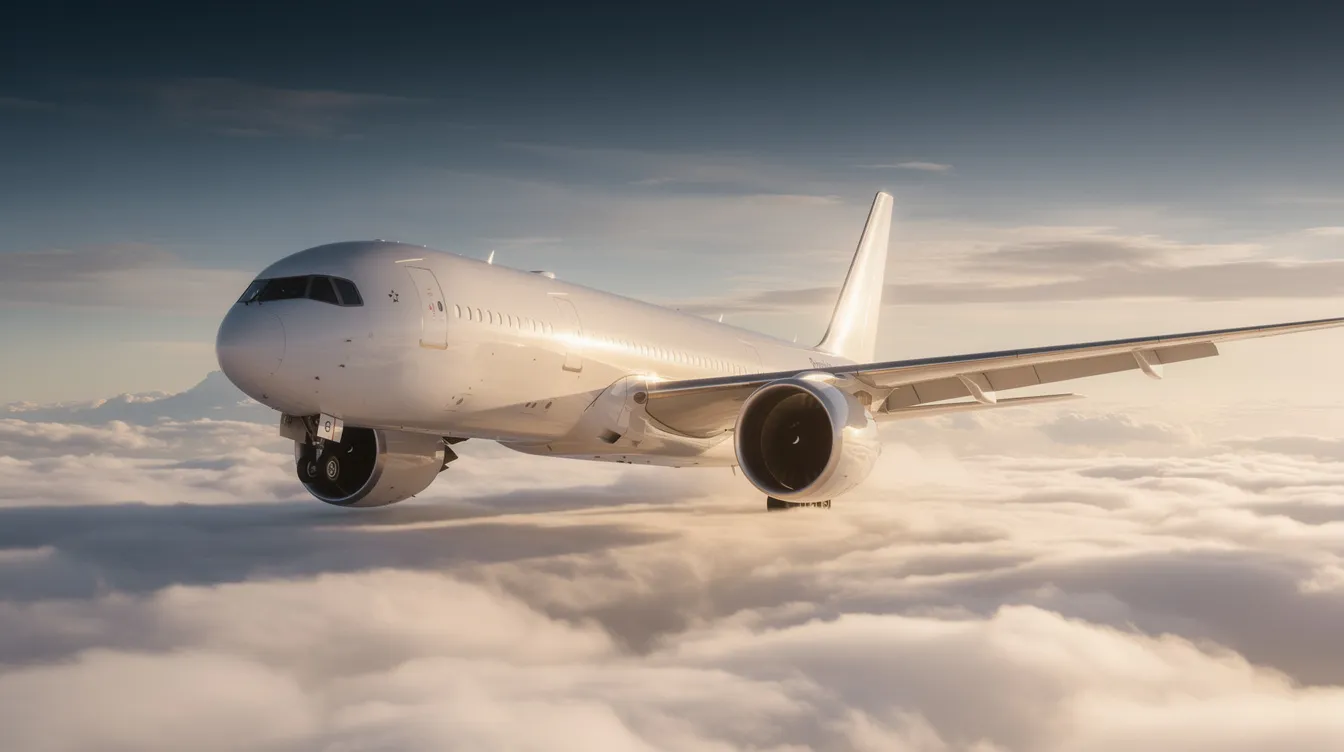
The Boeing 787 Dreamliner family emphasizes fuel efficiency for long-haul flights. Its goals from the outset were clear: reduce fuel burn, improve the cabin experience through advanced materials and systems, and offer airlines an efficient size for routes that did not need a 777 or 747. The 787's first flight took place in 2009, with entry into commercial service in 2011.
Variant dimensions and capacities:
787-8 - ~57 m (186 ft) length, ~242 seats in two-class, range ~7,355 nm
787-9 - ~63 m (206 ft) length, ~290 seats in two-class, range ~7,635 nm
787-10 - The Boeing 787-10 measures about 68.3 m (224 ft) in length, with a typical capacity of 318–330 passengers, range ~6,430 nm
Cabin width on the 787 is approximately 5.49 m, which supports a 3-3-3 economy layout - slightly tighter per seat than the 777's broader cabin but still a significant step up from any narrow-body. The fuselage cross section is built from carbon fiber reinforced polymer panels rather than traditional aluminum, reducing weight and enabling higher cabin humidity and lower cabin altitude. Passengers arrive less fatigued, and the larger windows - the biggest on any commercial aircraft - enhance the sense of space.
The Boeing 787 Dreamliner cuts fuel burn by approximately 20% compared to the aircraft it replaces, making it one of the most fuel-efficient wide-bodies in service. Airlines like Qatar Airways and Air France deploy 787s on routes where a 777 would be too large and a 737 too small - the middle ground of commercial aircraft size.
For private jet use cases, Jettly customers flying city pairs typically served by Dreamliners (London–Tokyo, New York–Tel Aviv) may consider ultra-long-range private jets that offer nonstop capability with personalized cabin comfort, drawing on guides to the best private airplanes and luxury aircraft when evaluating options.
The Boeing 747 family includes large aircraft used for both passenger and cargo transport. The 747-8 Intercontinental and 747-8 Freighter are the final and largest variants of this iconic jumbo jet line. Passenger production has ended, but the 747-8 remains a useful benchmark for understanding the upper limits of commercial aircraft size.
Key specifications for the 747-8 Intercontinental:
|
Specification |
Value |
|---|---|
|
Length |
~76.3 m (250 ft 2 in) |
|
Wingspan |
~68.4 m |
|
Maximum Takeoff Weight |
447,700 kg |
|
Seating Capacity |
410–467 passengers |
The 747-8's distinctive double-deck fuselage "hump" creates a unique interior. The upper deck serves as premium cabin or lounge space, while the main deck provides the bulk of seating and cargo volume. Total cabin floor area exceeds that of any other Boeing commercial aircraft in terms of usable volume per deck.
The cargo variant, the 747-8F, uses the same external dimensions but replaces the passenger interior with a freight-optimized layout, including a nose door that swings open for loading oversized cargo. This makes it one of the most capable freighters in commercial aviation.
VIP configurations of the 747-8 - Boeing Business Jets based on the 747 platform - offer enormous cabin floor area measured in thousands of square feet. These VIP aircraft feature full bedrooms, conference rooms, and living spaces. However, they require long runways (typically 3,000 m+) and large airport infrastructure, making them far less flexible than smaller private jets commonly chartered through Jettly.
The Boeing 767 family bridges the gap between narrow-bodies and larger wide-bodies. The Boeing 767 family is utilized for medium- to long-haul operations, including transatlantic and transcontinental routes.
767-300ER - ~54.9 m length, wingspan ~47.6 m, ~200–260 seats in two-class
767-400ER - ~61.4 m length, ~240–300 seats, the largest 767 variant
The 777-300ER remains one of the most widely operated long-haul aircraft in the world. The Boeing 777-300ER seats approximately 350–396 passengers depending on airline configuration. It sits between the 787-10 and the 777-9 in Boeing's size hierarchy - longer and wider than the Dreamliner but slightly shorter than Boeing's longest aircraft, the 777-9.
These aircraft types' size and range characteristics have inspired certain large-cabin private jet designs aimed at similar mission lengths. Manufacturers like Gulfstream and Bombardier have progressively stretched their flagship jets to cover city pairs traditionally dominated by the 767 and 777, offering nonstop capability for fewer passengers but with dramatically more personal space, especially on leading models from the best private plane manufacturers.
Cabin width and layout determine how spacious an aircraft feels - sometimes more than overall aircraft size. A 40-meter-long 737 can feel cramped at six abreast, while a slightly shorter large-cabin private jet with four passengers feels expansive.
Typical cabin widths across Boeing families:
|
Aircraft Family |
Interior Cabin Width (m) |
Typical Seating Layout |
|---|---|---|
|
737 |
~3.53 |
3-3 |
|
757 |
~3.53 |
3-3 |
|
767 |
~4.72 |
2-3-2 or 2-4-2 |
|
787 |
~5.49 |
3-3-3 or 2-4-2 |
|
777 |
~5.86 |
3-3-3 or 3-4-3 |
|
747 |
~6.1 |
3-4-3 |
These differences translate directly into passenger comfort. On a 777, economy passengers get seats that are typically 17–18 inches wide. On a 737, that number may drop to 16.5–17 inches with the same six-abreast seating. The difference seems small on paper but is noticeable over a long flight.
Boeing cabin features also shape perception. The Boeing Sky Interior on the 737 MAX uses sculpted sidewalls, larger overhead bins, and LED mood lighting to make the narrow cabin feel more open. The 787's large electrochromic windows, higher humidity, and lower effective cabin altitude (equivalent to 6,000 ft vs. the typical 8,000 ft) enhance the cabin experience beyond what raw dimensions suggest.
On private jets available through Jettly, fewer passengers share the available cabin width. Even light jets with cabin widths of just 1.5–1.8 m feel spacious because only 4–6 people occupy the space. Large-cabin jets with widths of 2.2–2.5 m and ceiling heights above 1.8 m deliver big jet comfort that rivals or exceeds the per-passenger space of wide-body premium cabins, particularly on some of the top private jets in the world.
Commercial airliners prioritize total seating capacity and route economics. Private jets focus on per-passenger comfort, flexibility, and airport access. The size comparison is less about total dimensions and more about how space is distributed.
Approximate cabin dimensions by private jet category:
Light jets - cabin length ~4.5–5.5 m, width ~1.5–1.7 m, 4–8 seats
Midsize jets - cabin length ~5.5–7.5 m, width ~1.7–1.9 m, 7–9 seats
Super-midsize jets - cabin length ~7.5–9 m, width ~1.8–2.1 m, 8–12 seats
Large-cabin jets - cabin length ~9–13 m, width ~2.2–2.5 m, 10–19 seats
Ultra-long-range jets - cabin length ~10–17 m, width ~2.3–2.5 m, 12–19 seats
A single Boeing 737 fuselage is longer than the entire cabin of even the largest private jet. But that 737 spreads its space across 150–200+ passengers. A super-midsize or large-cabin private jet offers stand-up cabins, lie-flat seating, and personal space that most commercial passengers - even in business class - do not experience, making them especially attractive as some of the best private planes for families.
Jettly helps clients use familiar Boeing aircraft sizes as a mental reference. A traveler who finds 737 economy tight but appreciates the spacious feel of 787 business class might map well to a midsize or super-midsize private jet for domestic routes, or an ultra-long-range jet for intercontinental trips, and may also compare top private jet charter companies when choosing a provider.
Boeing Business Jets are private, low-density versions of Boeing commercial airplanes. The program takes standard 737, 787, 777, and 747-8 airframes and reconfigures them with VIP interiors - fewer seats, more lounges, and the kind of cabin space that no standard private jet can match.
A typical 737-based BBJ seats just 15–25 passengers in a cabin that would hold 160–180 in airline configuration. That same fuselage length of ~39 m becomes a private suite with bedrooms, a dining area, a conference room, and a lounge.
Larger BBJs based on the 787 or 777 offer cabin floor areas in the thousands of square feet - enough for multiple living zones, full-size bathrooms, and even medical facilities. These are the aircraft of heads of state and large corporations.
However, BBJs usually require large airports and long runways. A 737-based BBJ still needs a 1,800+ meter runway, and a 777 BBJ needs considerably more. This limits access compared to the thousands of smaller airports that standard private jets can serve.
For many Jettly customers, a large-cabin Gulfstream, Bombardier, or Dassault jet offers a more practical balance of size, range, cost, and airport access than a full airliner-based BBJ. The cabin may be smaller, but the flexibility - landing at secondary airports, faster turnaround, lower operating cost - often outweighs the raw square footage advantage, particularly for frequent flyers using structured solutions like jet card programs.
Aircraft dimensions determine airport compatibility and runway requirements. Every airport has limits on the size of aircraft it can handle - defined by runway length, taxiway width, gate dimensions, and pavement strength relative to MTOW.
Smaller Boeing jets like the 737 can operate at a wide range of airports. Many 737 variants can use runways of 1,500–2,000 m, opening up secondary and regional airports for commercial service. This is one reason the 737 dominates short- and medium-haul markets globally.
Larger aircraft need significantly more infrastructure:
The 777-9 typically requires runways of 3,000 m or more at full payload
The 747-8, with its 447,700 kg MTOW, demands strong pavement and wide taxiways
Gate widths must accommodate wingspans of 64–72 m on the largest models
The 777X's folding wingtips directly address this challenge. By reducing ground wingspan from over 71 m to about 64.8 m, the aircraft can use existing gates designed for earlier wide-bodies - a practical example of right-sizing the aircraft's ground footprint without sacrificing airborne efficiency.
Private jets chartered via Jettly can use thousands of smaller airports that even the 737 cannot access. In the United States alone, there are over 5,000 airports available to private aviation versus roughly 500 served by commercial airlines. This reduces total travel time by cutting out long drives to major hubs and eliminating the congestion of large terminals, a topic explored further when asking where private jets land and access airports.
Right-sizing the aircraft to the airport and mission is a core concern for both airlines and private aviation providers.
Larger aircraft burn more fuel overall, but they can be more efficient per passenger on long routes when filled to capacity. This makes aircraft size selection an environmental decision as much as an economic one. Operating a larger aircraft than necessary on a thin route raises fuel consumption and emissions per passenger.
Boeing has introduced several technologies that reduce the environmental footprint across its fleet:
The 737 MAX's LEAP-1B engines are fuel-efficient engines that cut CO2 emissions significantly compared to previous-generation narrow-bodies
The 787 Dreamliner's composite airframe and advanced engine technology reduce fuel burn by approximately 20% versus the aircraft it replaced
The 777X uses new GE9X engines and a high-aspect-ratio wing with aerodynamic improvements to deliver lower fuel burn per seat on long-haul routes
Boeing aims for a 50% reduction in carbon emissions by 2050, a target that depends on a combination of engine technology improvements, airframe efficiency, operational changes, and alternative fuels.
Sustainable aviation fuel plays a growing role. Sustainable aviation fuel can reduce lifecycle emissions by 80% compared to conventional jet fuel. Boeing has supported SAF testing across its fleet and advocates for broader industry adoption.
Jettly supports environmentally aware travelers by helping them select appropriately sized jets - avoiding oversized aircraft for small groups - and by highlighting operators that offer SAF or carbon offset options, while also providing transparent guidance on pricing through resources like its affordable private jet charter cost guides.
Many travelers use their experience on Boeing commercial airplanes as a baseline when considering private jet charter. The reasoning is intuitive: "I know what a 737 feels like. I know what a 787 business class cabin looks like. What private jet gives me something similar - or better?"
Here are some simple mappings:
If 737 economy feels tight and you want more elbow room on a 2–3 hour flight, look at midsize or super-midsize private jets with cabin widths of 1.8–2.1 m and stand-up cabins
If you fly 787 business class regularly and value lie-flat seating on routes of 5,000+ nm, consider ultra-long-range private jets with cabin lengths exceeding 12 m
If your group of 12–18 typically fills a premium cabin section on a 777, a large-cabin charter jet may replicate that space without the commercial terminal experience
Jettly's platform lets users filter aircraft by cabin dimensions, passenger capacity, and range - mirroring the way airlines match Boeing models to route demand. This makes it straightforward to compare private jets by the metrics that actually affect comfort and to draw on advice such as finding the best cross-country plane for your travel journey.
Typical use cases include executives flying routes normally served by 737 MAX aircraft (New York–Miami, Toronto–Montreal), families choosing private jets instead of long-haul 777 flights with connections, and groups upgrading from commercial business class to large-cabin charters for corporate retreats or events, often leveraging flexible private jet memberships to manage recurring travel.
Compare aircraft categories and explore options directly at https://www.jettly.com for size-based decisions tailored to your next trip, use tools like Jettly's airport locator to identify convenient departure and arrival points, or explore ways to crowdsource private jet flights and share empty seats to reduce per-passenger costs.
These FAQs address common size-related questions that go beyond the main sections above, focusing on practical comparisons and travel decisions.
The Boeing 777-9 is the longest Boeing passenger aircraft at approximately 76.7 m (251 ft 8 in), and its wingspan exceeds 71.8 m (235 ft 5 in) when fully extended. The Boeing 747-8 Intercontinental, while slightly shorter at 76.3 m, is heavier with a maximum takeoff weight of 447,700 kg and features a double-deck fuselage with higher total seating capacity - typically 410–467 passengers in three-class layouts. So "largest" depends on the metric: the 777-9 wins on length and wingspan, while the 747-8 leads on weight and seat count in some configurations.
Even the smallest 737 MAX variant (MAX 7 at ~35.6 m) is far longer and has a wider wingspan than any standard private jet. But the MAX spreads its cabin across 150–200+ passengers, while a typical private jet seats 6–19. A super-midsize or large-cabin private jet offers far more personal space per passenger, stand-up cabins, and lie-flat seating despite its smaller overall aircraft size. The private jet category that best compares in cabin feel depends on what you value - legroom, width, or total volume.
Both interact to define comfort. Cabin width affects shoulder room and aisle space - critical on long flights where you want to move around. Seat pitch (legroom) determines whether you can stretch your legs or sleep. On Boeing wide-bodies, the wider cabin allows airlines to offer more generous seat dimensions even in economy. On narrow-bodies like the 737, width is fixed, so airlines compete primarily on pitch and recline. Private jets avoid high-density layouts entirely, so even with narrower fuselages, perceived comfort often exceeds commercial cabins.
Yes. Modern ultra-long-range private jets - the Gulfstream G700, G800, and Bombardier Global 7500 among them - can fly 7,000–8,000+ nautical miles nonstop. This overlaps with many routes where airlines deploy 787s and 777s. Payload, headwinds, and reserve fuel requirements can reduce practical nonstop range, but major intercontinental city pairs are achievable. Jettly can recommend specific aircraft based on route length and passenger count to ensure both range and comfort align with expectations, positioning itself as a flexible NetJets alternative for flying private.
Start by thinking about the Boeing aircraft you usually fly and how much space you wish you had. If you fly 737s domestically and want more room, look at midsize or super-midsize private jets. If you cross oceans on 787s or 777s, explore ultra-long-range heavy jets that offer nonstop capability with the privacy and comfort of a dedicated cabin. Compare seat count, cabin height, and range rather than focusing only on overall fuselage length. You can also learn how to get a seat on a private jet easily, review an ultimate list of charter airlines, or see how these concepts apply in specific markets such as private jet charter in Kolkata, West Bengal. Explore charter options or request a quote at https://www.jettly.com for personalized advice.
Knowing the size of Boeing planes—from the compact 737 MAX to the longest 777-9 and the iconic 747-8—provides valuable insight for travelers and private jet clients alike. Aircraft dimensions influence passenger capacity, comfort, range, airport access, and environmental impact. While commercial jets prioritize seating hundreds on fixed schedules, private jets emphasize personalized space, flexibility, and access to more airports.
Jettly helps travelers leverage these size benchmarks to choose the right aircraft for each trip, whether that’s a midsize jet for regional hops or a large-cabin ultra-long-range jet for intercontinental travel. Understanding Boeing’s aircraft size spectrum also clarifies what to expect in terms of cabin layout and operational capabilities.
For those seeking convenience, time savings, and tailored comfort, private jet charter offers a compelling alternative to commercial flying, supported by transparent pricing and instant booking through platforms like Jettly.
Ready to experience private travel on your terms? Explore flight options or request a quote at https://www.jettly.com.
Share this post:
Jay Franco Serevilla
Oct 20, 2026
|
5
min read
Discover tips and trends in the industry.
5
min read
Range of 737: How Far the Boeing 737 Flies, and When a Private Charter Makes More Sense
The Boeing 737 family offers a range from 1,500 to 3,850 nautical miles, making it versatile for various flight missions. While chartering a 737 can be cost-effective for large groups, private jet options through Jettly provide greater flexibility and access to more airports, often reducing total travel time. Understanding the range and capabilities of the 737 helps travelers make informed decisions about their flight options.
Read More
5
min read
How Many Planes Crashed This Year? (2026 Update)
In 2026, aviation safety continues to improve, with over 600 aviation accidents reported in the U.S. by September, primarily involving small general aviation aircraft. Fatal accidents remain rare in commercial aviation, with only a handful of incidents globally. Understanding the context of these numbers is crucial for travelers concerned about flying safety.
Read MoreStay updated with our latest insights and tips to elevate your journey with us.
MEMBERSHIPS AND ASSOCIATIONS



Disclaimer: Jettly operates as a charter broker, offering access to a global digital jet charter marketplace. Jettly is not a direct air carrier and does not own or operate aircraft. All advertised flights are conducted by third-party air carriers that are fully licensed and hold the appropriate Part 135 or Part 121 certifications issued by the Federal Aviation Administration (FAA) or equivalent regulatory authorities under U.S. or foreign law. Jettly complies fully with the U.S. Department of Transportation's Part 295 and Part 298 Charter Broker regulations. Jettly does not carry additional liability insurance. Passengers are covered by aircraft operator insurance. TICO: 50023770


