


Login
Get Instant Pricing On 23,000+ Aircraft

>
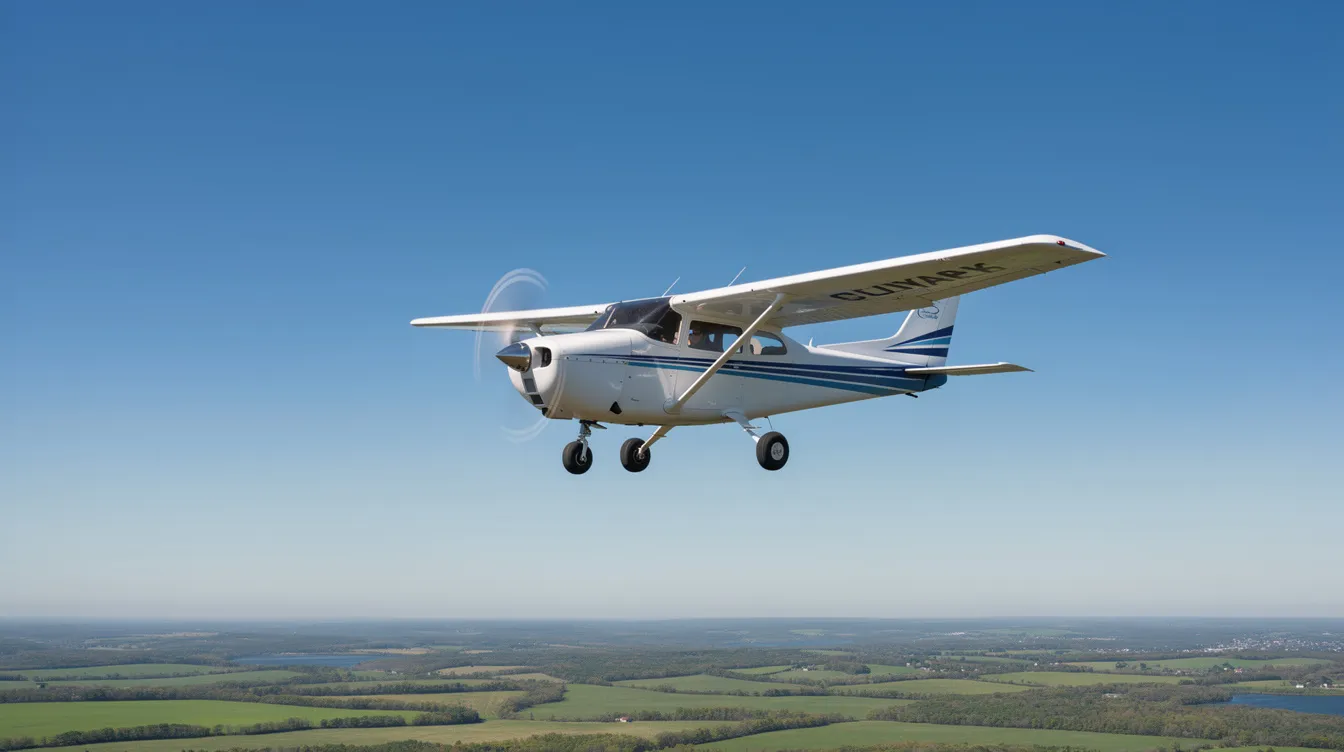
The Cessna 172 is the most produced aircraft in history, and understanding the service ceiling of Cessna 172 variants is one of the first performance questions student pilots and aviation enthusiasts ask. The short answer: modern Cessna 172 models top out at about 14,000 ft. But there is a lot more to that number than meets the eye.
This article breaks down what the Cessna 172's service ceiling actually means, how weight, temperature, and density altitude shift it in real-world flying, and why it matters for both training flights and cross-country planning.
The service ceiling of the Cessna 172 is 14,000 ft, defined as the altitude where rate of climb drops to roughly 100 ft/min at maximum gross weight under standard conditions.
Service ceiling is not the same as absolute ceiling or maximum altitude. A lightly loaded Cessna 172 on a cold day can climb higher, but with very thin safety margins.
Weight, temperature, and density altitude dramatically affect climb performance. A fully loaded airplane on a hot summer day may never reach the published ceiling.
The Cessna 172 serves primarily as a training aircraft for flight training, pattern work, and regional cross-countries, not high-altitude cruise.
Travelers who need to fly far above Cessna 172 altitudes can explore private jet charter options through platforms like Jettly, which provides easy access to aircraft cruising at FL350–FL450.
In pilot terms, the service ceiling is the highest altitude at which an aircraft can still maintain a rate of climb of about 100 ft/min at its maximum certified gross weight under International Standard Atmosphere conditions. For the late-model Cessna 172S Skyhawk SP, powered by a 180 hp Lycoming horizontally opposed aircraft engine and certified at a gross weight of 2,558 lb, that ceiling sits at approximately 14,000 ft.
Older and lighter variants, such as some 172N and 172P configurations with 160 hp powerplant options, may show slightly different figures in their Pilot's Operating Handbook. Early Skyhawks with the Continental O-300 (145 hp) and a lighter empty weight listed service ceilings as high as 15,500 ft. But across the model line, most Cessna 172s land in the same general band: roughly 13,500–15,500 ft, depending on engine power, weight, and test conditions.
These two terms get confused often, but they describe different points on the performance curve.
The service ceiling is a practical limit. It marks where climb becomes impractically slow for normal operations, not where climb becomes impossible. Above the service ceiling, the plane can still gain a bit of altitude, but the effort required increases exponentially.
The absolute ceiling is the altitude at which the aircraft can no longer climb at all. Rate of climb drops to zero. For the Cessna 172, this point lies somewhat above 14,000 ft, but reaching it takes extreme patience and ideal conditions. A lightly loaded Cessna on a cold winter day might slowly push past 14,000 ft, but doing so demands careful fuel mixture management, precise pitch control, and often supplemental oxygen under FAA regulations. Pilots and operators plan around the published service ceiling for safety and regulatory reasons, not around one capacity records achieved under rare ideal circumstances.
The Cessna 172 is first and foremost a four-seat training aircraft and personal tourer. Its service ceiling is relevant for planning but rarely the main selling point.
Most training flights, pattern work, and instrument approaches take place below 8,000 ft. The 14,000 ft ceiling provides a comfortable margin above those typical altitudes. Where it really matters is route planning over terrain. Crossing mountain passes in the western United States or Canada requires careful consideration of density altitude and obstacle clearance. A Cessna 172 operating out of a high-elevation field on a warm afternoon may have very limited climb margin remaining before hitting the ceiling.
Compared with private jets that often cruise between FL350 and FL450, as noted in Jettly's guide on how high private jets fly, the Cessna's modest ceiling keeps it in lower, more weather-affected air. Pilots should always consult the specific POH for their model when planning flights near the upper end of the aircraft's performance envelope.
Several core specifications of the Cessna 172 collectively determine how high it can climb. Here are the key numbers for a modern 172S:
|
Specification |
Value |
|---|---|
|
Empty weight |
~1,680 lb |
|
Maximum gross weight |
2,558 lb |
|
Useful load |
~878 lb |
|
Wing area |
174 sq ft |
|
Wingspan |
36 ft 1 in |
|
Wing loading |
~14.7 lb/sq ft at gross weight |
|
Engine |
180 hp Lycoming IO-360 |
|
Takeoff distance (50 ft obstacle) |
1,630 ft |
|
Seats |
4 |
The Cessna 172 has a maximum gross weight of 2,558 lb. Its single-engine design pairs moderate wing loading with limited engine power, which supports stable, forgiving handling at training speeds but caps climb capability at high density altitudes. Earlier 172 models with 160 hp engines show similar patterns, just with slightly reduced performance numbers. The wings generate enough lift for safe, predictable flight, but the drag profile and power limitations of the cylinder-driven engine define where the airplane simply cannot climb higher.
Published service ceiling values assume operations at maximum gross weight, the worst-case climb scenario. Flying below that limit changes the picture significantly.
With only two people on board and partial fuel rather than full fuel capacity, a Cessna 172 can maintain climb performance closer to its published ceiling, or even push slightly beyond it in ideal air. The key trade-offs include:
Fuel load: Full 56-gallon tanks add about 336 lb, leaving roughly 560 lb for passengers and baggage.
Passenger and baggage loading: Every extra pound reduces rate of climb.
Avionics and equipment upgrades: Heavier panels, auxiliary equipment, and interior modifications add weight without adding power.
Performance becomes marginal near the service ceiling when flying heavy or in warm conditions. Supplemental type certificates (STCs) that raise authorized gross weight can further reduce climb performance unless matched with more engine power or aerodynamic improvements.
Student pilots should practice weight and balance calculations and reference performance charts to understand how gross weight shifts real-world maximum altitude compared with the handbook's idealized figures. This knowledge is tested on checkrides for good reason.
Density altitude is the single biggest variable that can shrink or expand the Cessna 172's usable ceiling. It represents the "effective altitude" the airplane experiences based on temperature, pressure, and humidity, regardless of what the altimeter reads.
Air density decreases with altitude, reducing engine horsepower and performance. High temperatures and humidity can increase density altitude, affecting climb performance even at airports that sit at modest elevations. A summer afternoon at a 5,000 ft airport with an outside air temperature of 35°C can produce a density altitude of 8,000–9,000 ft, leaving very limited climb margin toward 14,000 ft.
A Cessna 172 may struggle to climb near its service ceiling under high-density altitude conditions. POH climb tables for the 172S show rate of climb dropping to roughly 135 ft/min at 12,000 ft pressure altitude on a warm day, already close to the 100 ft/min threshold.
Cold air near sea level reverses the equation. The engine develops more power, the wings produce more lift, and the aircraft may climb beyond published service ceiling toward its practical maximum altitude. But pilots must factor density altitude into takeoff distance, rate of climb, and terrain clearance on every flight plan, especially in mountainous regions.
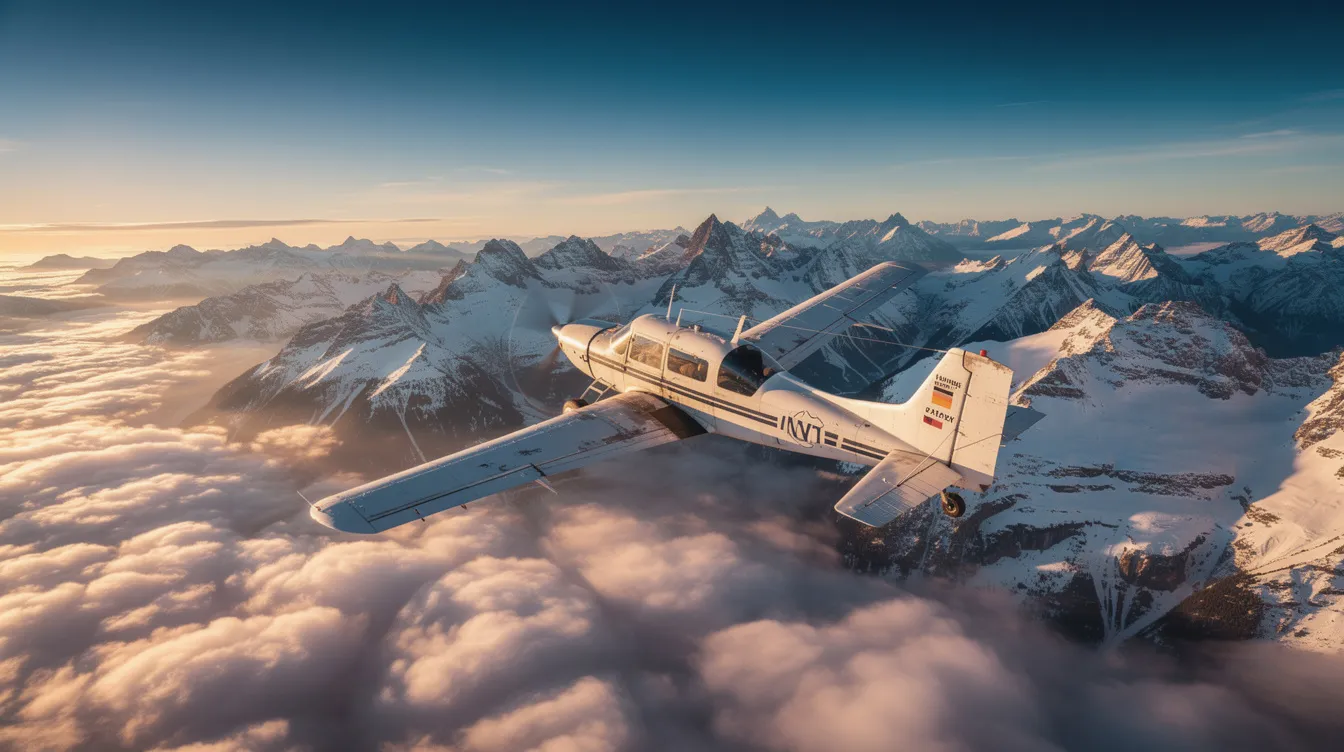
Service ceiling connects directly to the day-to-day climb metrics pilots actually use: rate of climb, best angle speed (VX), and best rate speed (VY).
The Cessna 172 can climb at 730 feet per minute at sea level and gross weight. Its rate of climb at sea level is 730 feet per minute with VY at approximately 74 KIAS. VX sits around 62 KIAS at sea level.
As altitude increases, available power drops and both VX and VY converge. By 10,000 ft, rate of climb may fall to roughly 180 ft/min. By 12,000–13,000 ft, the aircraft is approaching the 100 ft/min threshold that defines service ceiling. True airspeed increases while indicated airspeed drops at high altitudes, which pilots monitor on their airspeed indicators as they climb.
Pilots watch vertical speed indicators and maintain precise pitch control during climb, especially when obstacle clearance or terrain demands maximum performance. Near the service ceiling, any additional altitude requires patience and careful fuel mixture leaning to maintain whatever power the engine can still deliver. The stall speed remains relevant here because the gap between cruise speed and stall narrows as the airplane reaches its performance limits.
Standard fuel capacity on a modern Cessna 172S is about 56 gallons total, with roughly 53 gallons usable. Full fuel enables the Cessna 172 to fly considerable distances at normal cruise altitudes. The Cessna 172 has a range of 640 nautical miles and its cruise speed is 124 knots at 75% power, figures that apply at mid-altitude cruise, not near service ceiling.
Flying at or near 14,000 ft is rarely ideal for the 172's typical mission profile. Best overall efficiency is achieved at middle altitudes around 6,000–8,000 ft, where the engine runs well, fuel burn stays reasonable, and oxygen is not yet a concern.
Fuel mixture control becomes increasingly important as altitude rises. Improperly leaned engines may struggle to sustain climb or maintain smooth operation at higher altitudes. For most cross-country training and recreational flights, pilots choose altitudes well below service ceiling to balance fuel burn, true airspeed, weather avoidance, and ATC requirements.
The Cessna 172's strengths lie in affordability, forgiving handling, and easy access to smaller airfields, not in speed or altitude. It excels at what it was designed for: teaching student pilots the fundamentals and supporting short regional flights.
Private jets commonly chartered through platforms like Jettly operate in an entirely different performance envelope. Light jets and midsize jets often have service ceilings in the FL410–FL450 range and cruise speeds above 400 ktas, far beyond what any prop plane can achieve. These private charter aircraft overfly weather systems and congested airways that a Cessna 172 must route around or fly under.
Consider a simple comparison: a student pilot flying a Cessna 172 for a 150 nm cross-country at 7,500 ft versus a business traveler using a private jet at FL430 for a 1,500 nm trip. The jet completes the journey in a few hours with no fuel stops, a pressurized cabin, and a smooth ride above the weather. The Cessna, limited by its altitude and speed, handles the short hop well but would need multiple ground stops and an entire day for the longer route.
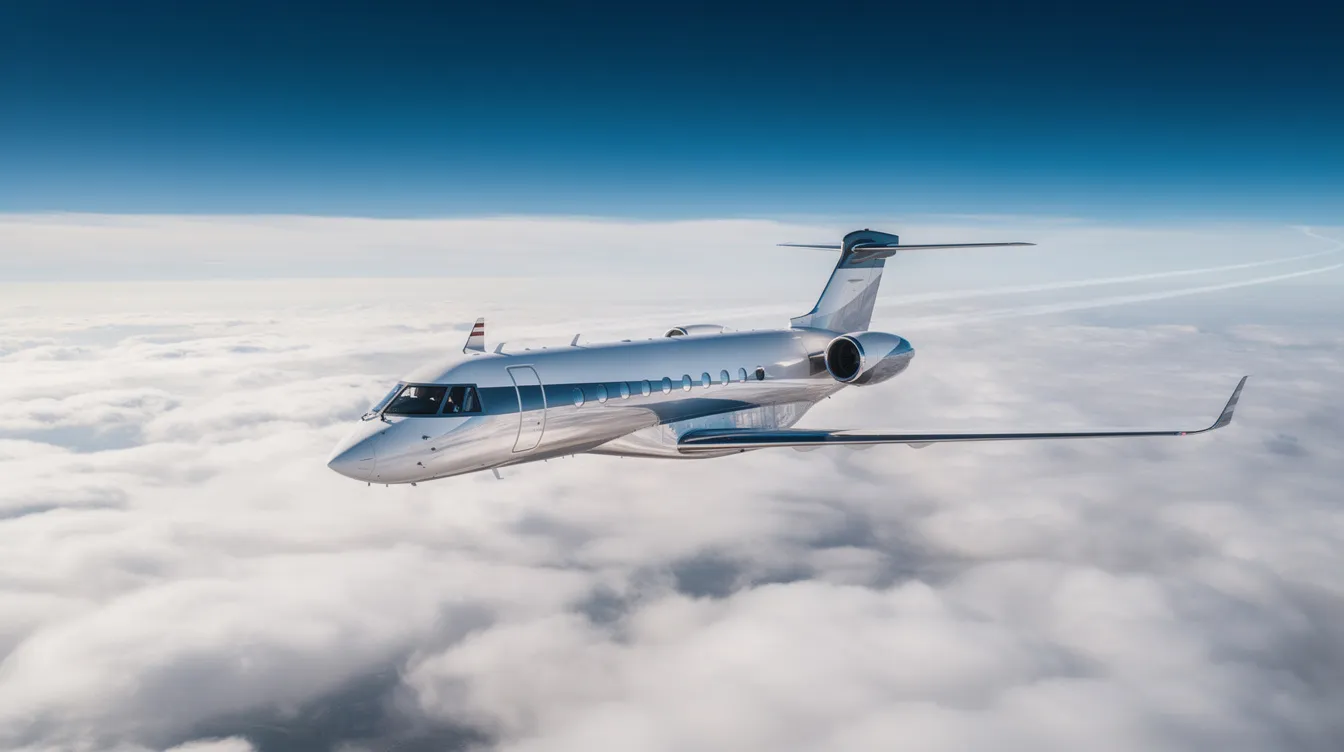
Just because a Cessna 172 can approach 14,000 ft does not mean it always should, especially without careful planning and proper equipment.
Pilots must use supplemental oxygen above 12,500 feet for more than 30 minutes under FAA rules. At or above 14,000 ft, the flight crew needs oxygen for the entire duration. Above 15,000 ft, passengers must be provided oxygen as well. Since the 172's cabin is unpressurized, hypoxia risks increase with altitude, especially in a training environment where workload is already high.
Narrowing airspeed margins near the service ceiling can reduce maneuverability. Turbulence, icing potential, and engine performance margins all become more critical when the airplane is operating near its limits. A rough cylinder, slightly off mixture setting, or unexpected updraft/downdraft can quickly turn a marginal climb into a descent.
Treat the published service ceiling as an upper bound for carefully managed operations, not as a routine cruise target. Conservative altitude choices keep the flight safer and the landing options more plentiful.
Jettly is a digital private jet charter platform, different from the flight schools that operate Cessna 172 training fleets. While the Cessna is ideal for learning fundamentals and short regional hops, business and leisure travelers often need to fly thousands of miles at jet altitudes, far above the 14,000 ft service ceiling.
Jettly provides access to a global inventory of over 20,000 aircraft, from turboprops to light jets to long-range heavy jets that routinely cruise in the FL350–FL450 band, along with an airport locator tool that helps match each trip with convenient departure and arrival fields. Key benefits include:
Instant private jet charter cost estimator visibility with no hidden fees
On-demand access without long-term ownership commitments through flexible private jet memberships
Departures from smaller airports that Cessna pilots know well, but at jet speeds and altitudes
A digital booking process that simplifies what used to require brokers and phone calls, with tools that help you understand affordable private jet charter options and pricing
For those who understand small-aircraft performance and its limitations, or who simply want faster, higher travel, learn more about how to charter a private jet or how to buy a seat on a private jet through Jettly's platform.
These questions address common practical concerns about Cessna 172 altitude and operations that go beyond the main discussion above.
Under ideal conditions (light weight, cold temperatures, careful mixture leaning, and a healthy engine), some Cessna 172s have climbed above 14,000 ft. However, climb rates become extremely shallow, often well under 50 ft/min, and safety margins shrink rapidly. Such flights fall outside the normal performance envelope assumed by the POH and typically require oxygen equipment and conservative risk management. For everyday training and cross-country flights, pilots operate several thousand feet below service ceiling.
Many pilots consider 4,000–8,000 ft a practical cruising band for cross-country flights, balancing fuel efficiency, true airspeed, and weather avoidance. Exact altitude choice depends on direction of flight (VFR hemispheric rules), winds aloft, cloud layers, and terrain. Cruising close to service ceiling is rarely optimal because the time spent climbing eats into fuel reserves while engine and performance margins decrease.
Most primary flight training focuses on pattern work, maneuvers, and short cross-countries at relatively low altitudes, often below 6,000–7,000 ft. Instructors choose altitudes that keep students close to airports, in predictable airspace, and below freezing levels. Advanced training for instrument ratings or mountain flying courses may involve higher altitudes, but instructors still maintain a buffer well below the 14,000 ft ceiling for comfort and safety. A record high-altitude attempt is not the point of a training flight.
Approved modifications via STCs, such as higher-power engines, constant-speed propellers, or aerodynamic fairings, can influence climb performance and therefore practical ceiling. Any change to certified performance figures must come from supplemental documentation, and pilots should always reference the revised POH or STC data for updated ceiling, gross weight, and climb charts. Adding weight through equipment or interior upgrades without added power may reduce climb performance, making it harder to approach the original published service ceiling. Conversion kits and tested modifications need proper documentation before they affect planning.
A Cessna 172 is economical and excellent for short-range training or leisure flights with friends, but its cruise speed and service ceiling make long multi-leg trips time-consuming and more exposed to weather and pressure changes. Private jets accessible through Jettly can complete in a few hours what might take a light piston aircraft multiple fuel stops and an entire day, flying much higher, faster, and often above most weather. For business travel, family holidays, or time-sensitive trips, the value of a private charter becomes clear quickly.
Ready to experience private travel on your terms? Explore flight options or request a quote at https://www.jettly.com, whether you want to crowdsource private jet flights and share empty seats, run a quick jet card flight cost estimate, compare world class corporate jet card programs, understand whether private jets can fly internationally, research the cheapest private aircraft options, learn how much a private jet really costs, discover easy ways to get a seat on a private jet, review the ultimate list of charter airlines, evaluate a NetJets alternative in Jettly, explore specific aircraft like the Cessna 207 specs, range and charter rates or Cessna 340 specs, range and charter rates, or arrange dedicated charter services in Chennai, Tamil Nadu, Kolkata, West Bengal, or New Delhi, Delhi.
The service ceiling of the Cessna 172, at around 14,000 feet, reflects its role as a reliable, versatile training and personal aircraft rather than a high-altitude performer. While pilots can sometimes exceed this altitude under ideal conditions, the practical limits imposed by weight, temperature, and density altitude mean most flights operate well below this ceiling for safety and efficiency. For travelers seeking higher altitudes, faster speeds, and longer ranges, private jet charters through platforms like Jettly offer a compelling alternative with access to aircraft cruising well above 35,000 feet. Understanding the Cessna 172's service ceiling helps pilots plan safe, effective flights and highlights the distinct advantages of private jet travel for longer or more demanding trips.
Ready to experience private travel on your terms? Explore flight options or request a quote at https://www.jettly.com.
Share this post:
Jay Franco Serevilla
Aug 15, 2026
|
5
min read
Discover tips and trends in the industry.
5
min read
Best Time to Book Flight for December: How to Lock In Christmas Flights at the Best Prices
Booking flights for December, especially around Christmas, requires strategic planning to secure the best prices. The ideal booking window typically falls between 33 and 67 days before departure, with early September being the time to start tracking fares. Flexibility with travel dates and routes can lead to significant savings, making it crucial to understand fare patterns and dynamics during this peak travel season.
Read More
5
min read
Jet Market Outlook: Private Jet Demand, Regional Growth, and Charter Opportunities
The private jet market is experiencing significant growth, projected to rise from USD 25.5 billion in 2024 to USD 38.25 billion by 2033. Key drivers include increasing demand from high-net-worth individuals, technological advancements, and a shift towards charter services over ownership. Jettly offers a flexible platform for travelers to access a vast network of private jets, catering to the evolving needs of business and leisure travelers.
Read MoreStay updated with our latest insights and tips to elevate your journey with us.
MEMBERSHIPS AND ASSOCIATIONS



Disclaimer: Jettly operates as a charter broker, offering access to a global digital jet charter marketplace. Jettly is not a direct air carrier and does not own or operate aircraft. All advertised flights are conducted by third-party air carriers that are fully licensed and hold the appropriate Part 135 or Part 121 certifications issued by the Federal Aviation Administration (FAA) or equivalent regulatory authorities under U.S. or foreign law. Jettly complies fully with the U.S. Department of Transportation's Part 295 and Part 298 Charter Broker regulations. Jettly does not carry additional liability insurance. Passengers are covered by aircraft operator insurance. TICO: 50023770


