



Login
Get Instant Pricing On 23,000+ Aircraft

>
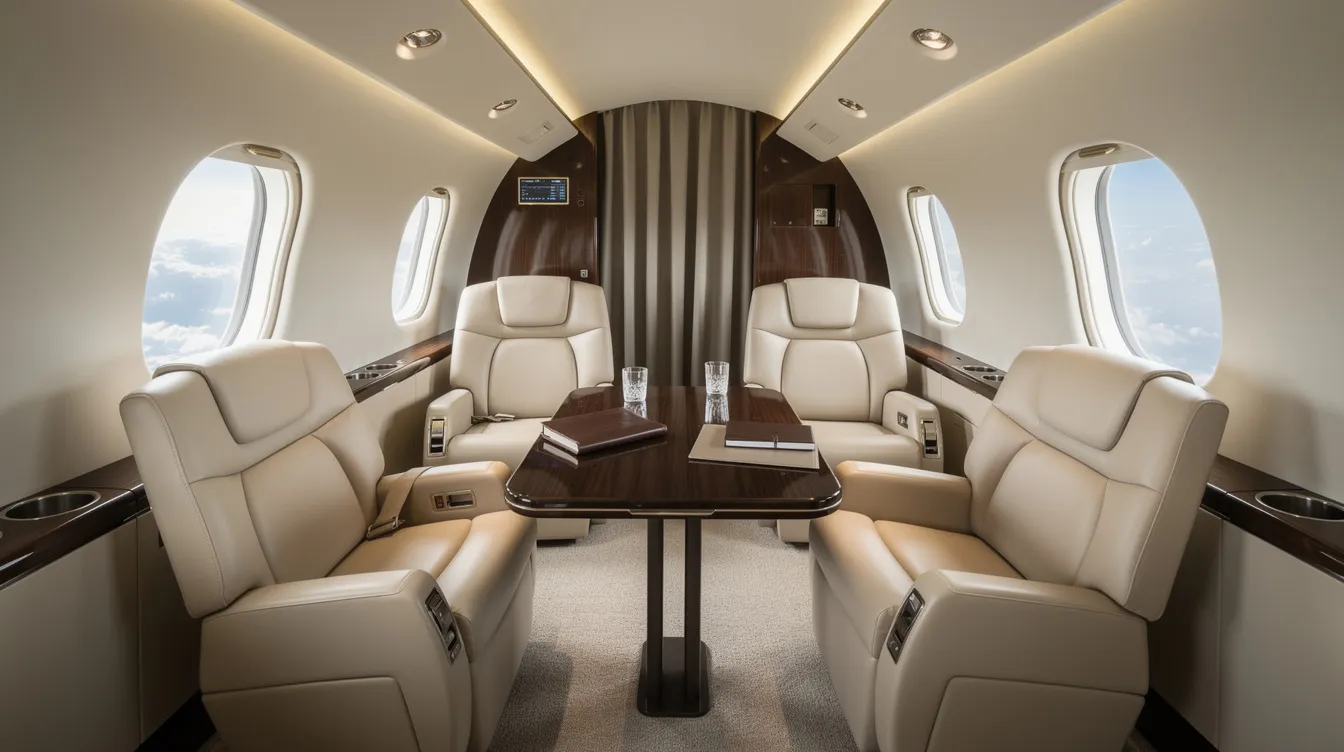
Every flight starts with a layout decision—whether you realize it or not. A seat map on a plane is the single best tool for understanding what your cabin will look and feel like before you board. For commercial passengers, it helps assess legroom, noise, and proximity to the lavatory. For private jet travelers, it shows where they can work, rest, dine, and store luggage. This guide explains how aircraft seat maps work across commercial and private aviation, and how Jettly uses them to help travelers compare charter cabins.
Aircraft seat maps help travelers visualize a plane's layout, compare seats, and avoid surprises at boarding. Seating arrangements can affect comfort, convenience, and safety.
Generic airline seat maps differ from private jet cabin diagrams. Private jet maps highlight club seating, divans, and convertible beds instead of dense economy rows.
Seat maps help travelers assess comfort, productivity, and practical details such as baggage capacity, accessibility, and pet-friendly layouts.
Jettly provides access to more than 20,000 unique aircraft, helping travelers compare jet categories and cabin configurations for a trip.
Explore Jettly's live inventory and request an instant quote at jettly.com.
A seat map is a visual layout of seats, aisles, galleys, and lavatories for a specific aircraft configuration. The formal document behind this layout is called a LOPA, or Layout of Passenger Accommodations. A LOPA shows the cabin's interior design and helps ensure passenger comfort and safety.
Commercial airlines display seat maps during booking—for example, a Boeing 777-300ER seat map for a New York–London flight—so passengers can choose seats in advance. Passengers can also search for seat maps through airline apps or websites.
Each map reflects a particular cabin configuration, not just an aircraft model. Airlines may operate several layouts of the same aircraft, so two Airbus A320s on the same route can have different seat counts, pitch, and class divisions. SeatMaps covers over 800 airlines worldwide, and seatmap.org lists 1,491 aircraft seat maps.
Private jet charter seat maps look different from commercial layouts. Instead of dense economy rows, they may show club seating, divans, conference tables, and convertible beds. The focus shifts from selecting one seat to evaluating the cabin as a shared space.
Jettly displays aircraft and cabin information in its marketplace listings so travelers can review layouts before confirming a charter.
Understanding how to read a seat map helps travelers choose between seats on a plane—and sometimes between different aircraft offered for the same route. Here's what to look for.
Rows are numbered sequentially from front to back, with row 1 usually near the front of the cabin. Seat maps divide the aircraft into sections such as first class, business, premium economy, and economy, each with different services and dimensions.
Columns are typically lettered from left to right, usually A through F on narrow-body aircraft and A through K on widebodies. Aircraft seat configurations often skip the letter “I” to avoid confusion with the number 1. Window seats are generally at the outermost letters.
A widebody aircraft such as an Airbus A350-900 may have a 1-2-1 business-class section and 3-3-3 economy seating. A regional turboprop like the ATR 72 typically has a 2-2 cabin. These differences matter when comparing aircraft for a route.
Key seat characteristics include pitch, width, and recline. Pitch measures the distance between a point on one seat and the same point on the seat ahead. Recline measures the maximum incline from the upright position. Seat ratings may assess legroom, proximity to galleys and lavatories, and recline impact.
Live seat maps can show available, blocked, and occupied seats. Availability may change near departure as check-in opens or airlines reassign inventory.
Private jet cabin diagrams highlight club seating, worktables, divans, enclosed lavatories, luggage zones, and galleys. When reviewing aircraft on Jettly's platform, travelers can compare these zones before booking.
|
Aircraft type |
Typical cabin layout |
Best suited for |
What to check on the map |
|---|---|---|---|
|
Narrow-body airliner |
Often 3-3 in economy |
Short- and medium-haul commercial routes |
Seat pitch, aisle access, exit rows, and cabin sections |
|
Wide-body airliner |
Varies; economy may be 3-3-3 or 3-4-3 |
Long-haul commercial flights |
Business-class configuration, lavatory locations, and seat recline |
|
Turboprop |
Often 1-1 or 2-2 |
Short regional trips |
Passenger count, aisle access, and baggage space |
|
Light jet |
Often club-four seating; typically 7–8 seats |
Short private trips such as Los Angeles–Las Vegas |
Seating orientation, baggage capacity, and lavatory type |
|
Midsize or super-midsize jet |
More cabin space, often with an enclosed lavatory and small galley |
Regional or cross-country business travel |
Cabin height, workspace, catering setup, and luggage capacity |
|
Heavy or ultra-long-range jet |
Multiple zones may include a conference area, divan, or lie-flat beds |
Long-haul and overnight private flights |
Rest areas, privacy, galley, and lavatory configuration |
Commercial narrow-body planes like the Boeing 737-800 typically feature a 3-3 economy arrangement, with pitch around 29 to 31 inches and seat width near 17 to 18 inches. Wide-body aircraft such as the Boeing 777-200 vary by airline, with business class often arranged in a 1-2-1 or 2-2-2 pattern.
Private jet layouts vary by aircraft class. A light jet can suit a quick Los Angeles–Las Vegas hop. A midsize jet often provides more cabin space, an enclosed lavatory, and a small galley. A heavy jet or ultra-long-range aircraft such as a Gulfstream G550 may offer distinct areas for meetings, dining, and rest on overnight trips.
Jettly uses aircraft and cabin information to help travelers compare turboprops, light jets, midsize jets, and heavy jets based on passenger count, baggage requirements, and desired comfort. A couple taking a weekend trip has different layout needs from a team of eight traveling to a conference.
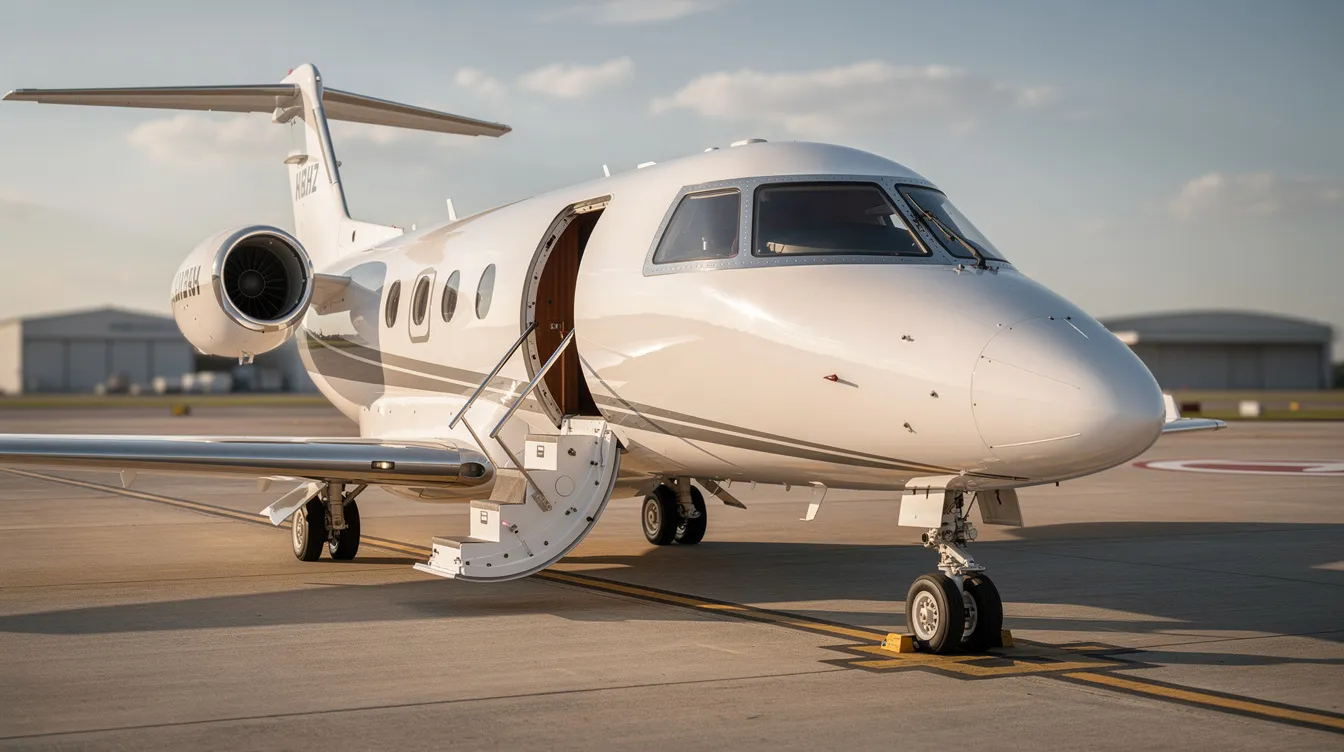
Understanding standard aviation symbols is crucial for reading a seat map. Color codes distinguish between available, occupied, and extra-legroom seats. Available seats are often white or blue/green; occupied seats may be marked with an “X” or grayed out.
Preferred or extra-legroom seats may have special icons or different colors. Exit rows are marked with an emergency exit door icon and offer extra legroom, but passengers seated there must be willing and able to assist in an emergency. Emergency exits may also be shown with door or window symbols. Lavatories are indicated by a toilet symbol.
Detailed seat maps may use icons for power outlets, USB ports, Wi-Fi, and in-seat entertainment. These can help travelers identify seats suited to work or staying connected.
Private jet diagrams focus on seat orientation, divans, and zones where seats convert into beds or workspaces. Labels may identify a club four, divan, or conference table and show the galley and lavatory locations.
A seat map on a plane is more than a diagram—it is a decision-making tool. On commercial flights, it helps travelers avoid an unsuitable seat. In private aviation, it can help identify the right aircraft and cabin for the trip.
On commercial flights, middle seats sit between window and aisle seats and are often less desirable. Seats near lavatories may have more foot traffic and noise. The last row in a section can have limited recline. Seats over the wings tend to experience less turbulence because they are near the aircraft's center of gravity.
Exit rows provide extra legroom but come with safety requirements. Aisle seats offer easier access to the walking path and more freedom of movement. Front rows usually allow faster deplaning. Studies have also reported a preference for leftward seats on aircraft.
In private aviation, the decision shifts from choosing one seat to selecting an entire cabin layout. Travelers can compare aircraft for routes such as New York to Los Angeles or Toronto to Vancouver and consider which layout suits their group.
A business team of six might prefer a midsize jet with a conference-style seating cluster. A family on an overnight transatlantic trip may prioritize a divan that converts to a bed and an enclosed lavatory.
Jettly's global marketplace provides access to over 20,000 unique aircraft. Travelers can compare aircraft options and pricing, then review cabin information before booking. Jettly is a charter broker; flights are operated by properly certified third-party carriers.

Seat maps help travelers match cabin space to passenger numbers, baggage, workspace, and rest needs. A turboprop can handle a short regional hop efficiently. A super-midsize jet may suit cross-country business travel when passengers want room to work or sleep.
Special requirements deserve attention. Medical travelers may need easy aisle access and a seat that reclines. Passengers with reduced mobility may benefit from a clear path into the cabin. Travelers flying with pets can plan carrier placement by reviewing the cabin diagram. Learn more about tailoring a charter in Jettly's guide to private jet amenities.
Jettly's team can help confirm details that a standard diagram may not show, such as whether a specific divan is certified for takeoff and landing or whether the galley supports hot catering.
Some airline and booking systems show live seat maps with current availability. Options may change or become locked near departure as check-in begins and airlines adjust inventory.
Aircraft swaps can happen on commercial flights. If an airline substitutes an Airbus A321 for a Boeing 737, the original seat map may no longer match the cabin. Recheck the map before departure and confirm the aircraft type in the airline app or on the boarding pass. Seat requests are not always guaranteed.
For private jet charters arranged through Jettly, aircraft changes are communicated by the relevant parties. Travelers should confirm the final aircraft and cabin details with the charter team before departure.
Aircraft seat maps support decisions from initial quote to final booking on Jettly's digital platform.
Jettly connects travelers with aircraft information from certified operators worldwide, including cabin layouts, certified seat counts, and amenities. This helps customers assess whether an aircraft fits their passenger count and trip profile before booking.
Layout affects price as well as comfort. A light jet generally has lower operating costs than a larger aircraft but offers less space and fewer amenities. A larger jet may provide more cabin room, lie-flat beds, or a larger galley, with higher operating costs. For more detail, see Jettly's guide to private jet charter costs.
For frequent travelers, membership and on-demand options can make repeat bookings more straightforward. A corporate executive who prefers a super-midsize jet with an enclosed lavatory can use that preference to guide future searches.
Safety and regulation underpin every cabin configuration. Flights booked through Jettly are operated by properly certified third-party carriers. Cabin layouts must comply with applicable requirements, including emergency exit placement and certified seat counts.
Popular routes illustrate how aircraft choices vary by trip. A Los Angeles–Las Vegas charter may call for a light jet. A New York–Miami flight may suit a midsize jet, while a London–Nice trip could call for a larger cabin depending on the group and travel requirements.
Travelers enter route details and passenger count on Jettly, review available aircraft and cabin information, request a quote, and confirm the charter details. Jettly's guide on how to book a private jet explains the process.
Minor differences may exist between aircraft of the same type, such as upholstery or trim. Confirm the final aircraft's layout and features with the charter team before travel.
Jettly can coordinate trip details related to cabin use, including catering, child-seat requirements, and workspace needs, subject to operator confirmation.
Reviewing cabin information in advance can help first-time private fliers understand what to expect and make a more informed choice.

Below are answers to common questions travelers ask about seat maps, aircraft layouts, and how Jettly incorporates cabin information into the booking process.
Not always. Airlines may use multiple layouts for the same aircraft type, and aircraft swaps can cause differences between a published map and the actual cabin. Operators and brokers such as Jettly use available configuration information, but travelers should confirm final details, especially if a specific feature matters.
Airlines may block seats for crew, operational reasons, or frequent-flyer programs. Premium or extra-legroom seats may require an added fee or loyalty status. In private jet charter, the cabin is generally reserved for the chartering group, subject to the aircraft's certified capacity and booking terms.
Detailed seat maps and cabin diagrams may indicate Wi-Fi, power sockets, USB ports, and entertainment screens. Jettly's aircraft descriptions include available connectivity and amenity details where provided, helping travelers assess whether an aircraft suits their needs.
For commercial flights, choosing seats during booking gives travelers the broadest selection. Some carriers release additional options at online check-in, often around 24 hours before departure. For private charters via Jettly, the focus is on selecting a cabin that suits the group rather than competing for individual seats.
Travelers can enter a route, date, and passenger count on jettly.com to review aircraft options and available cabin details. Comparing turboprops, light jets, midsize jets, and heavy jets can help identify a fit for the trip and budget. Request an instant quote or contact Jettly's team for help interpreting the information.
Ready to see how different cabin layouts compare for your next trip? Explore flight options or request a quote at jettly.com.
A seat map plane gives travelers a practical view of cabin layout, seating, and amenities before a flight. For commercial travel, it can help identify preferred seats and avoid common drawbacks. For private jet travel, comparing cabin diagrams helps match aircraft size and layout to passenger numbers, baggage, work, and rest needs.
Jettly's marketplace lets travelers compare aircraft options and review cabin details before booking. Jettly is a charter broker, and flights are operated by properly certified third-party carriers. Explore Jettly's charter options at https://www.jettly.com or request an instant quote to find an aircraft that fits your trip.
Share this post:
Jay Franco Serevilla
Nov 4, 2026
|
5
min read
Discover tips and trends in the industry.
5
min read
Seat Map Plane: How Aircraft Seat Maps Help You Choose the Best Private Jet Cabin
Understanding aircraft seat maps is essential for both commercial and private jet travelers. These maps provide a visual layout of seating arrangements, helping passengers choose the best options for comfort and convenience. Jettly offers access to over 20,000 unique aircraft, allowing travelers to compare cabin configurations and make informed decisions before booking.
Read More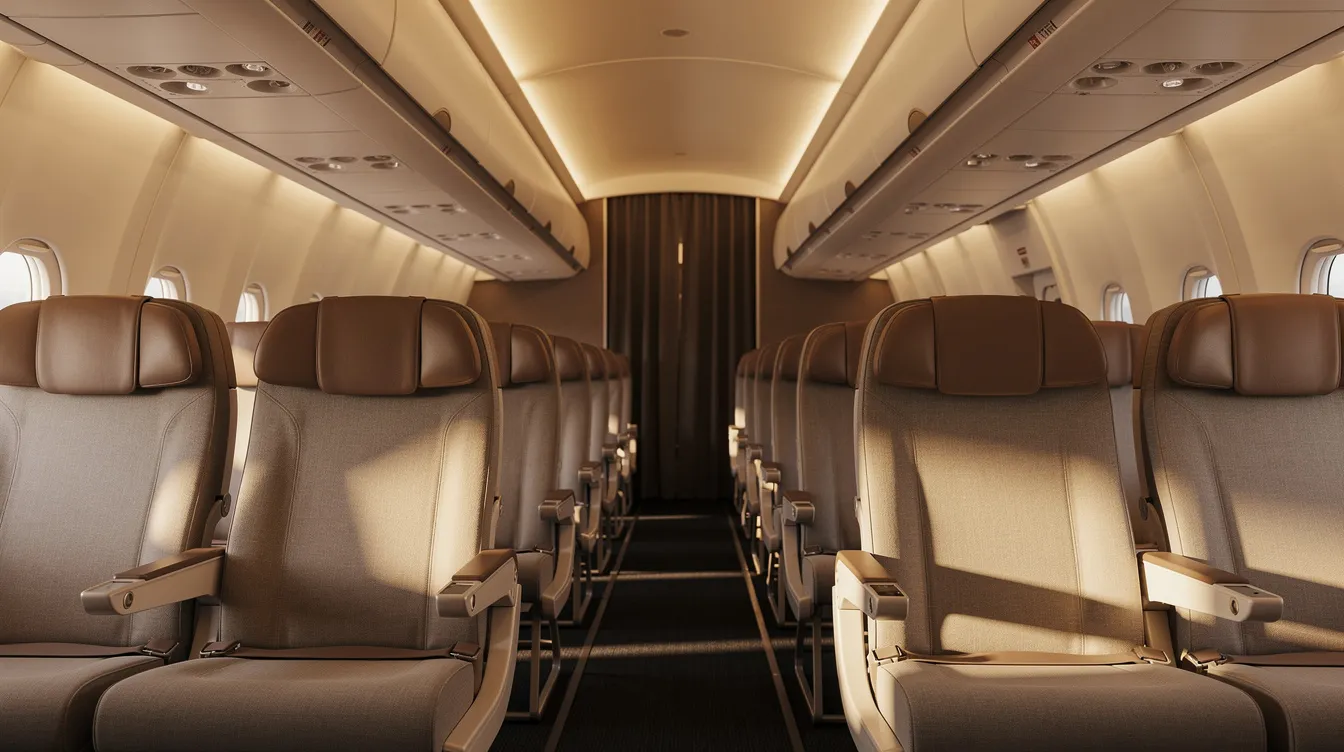
5
min read
Inside a Delta Plane: What the New Cabin Interior Really Feels Like
Delta Air Lines has introduced a new cabin interior across its fleet, featuring modern designs, memory-foam cushions, and enhanced lighting. The updated cabins aim to provide a more comfortable and inviting atmosphere for travelers, with distinct offerings in Delta One, Premium Select, Comfort+, and Main Cabin. This article explores the features and experiences of flying in the revamped Delta planes compared to private jet alternatives.
Read MoreStay updated with our latest insights and tips to elevate your journey with us.
MEMBERSHIPS AND ASSOCIATIONS



Disclaimer: Jettly operates as a charter broker, offering access to a global digital jet charter marketplace. Jettly is not a direct air carrier and does not own or operate aircraft. All advertised flights are conducted by third-party air carriers that are fully licensed and hold the appropriate Part 135 or Part 121 certifications issued by the Federal Aviation Administration (FAA) or equivalent regulatory authorities under U.S. or foreign law. Jettly complies fully with the U.S. Department of Transportation's Part 295 and Part 298 Charter Broker regulations. Jettly does not carry additional liability insurance. Passengers are covered by aircraft operator insurance. TICO: 50023770


