


Login
Get Instant Pricing On 23,000+ Aircraft

>
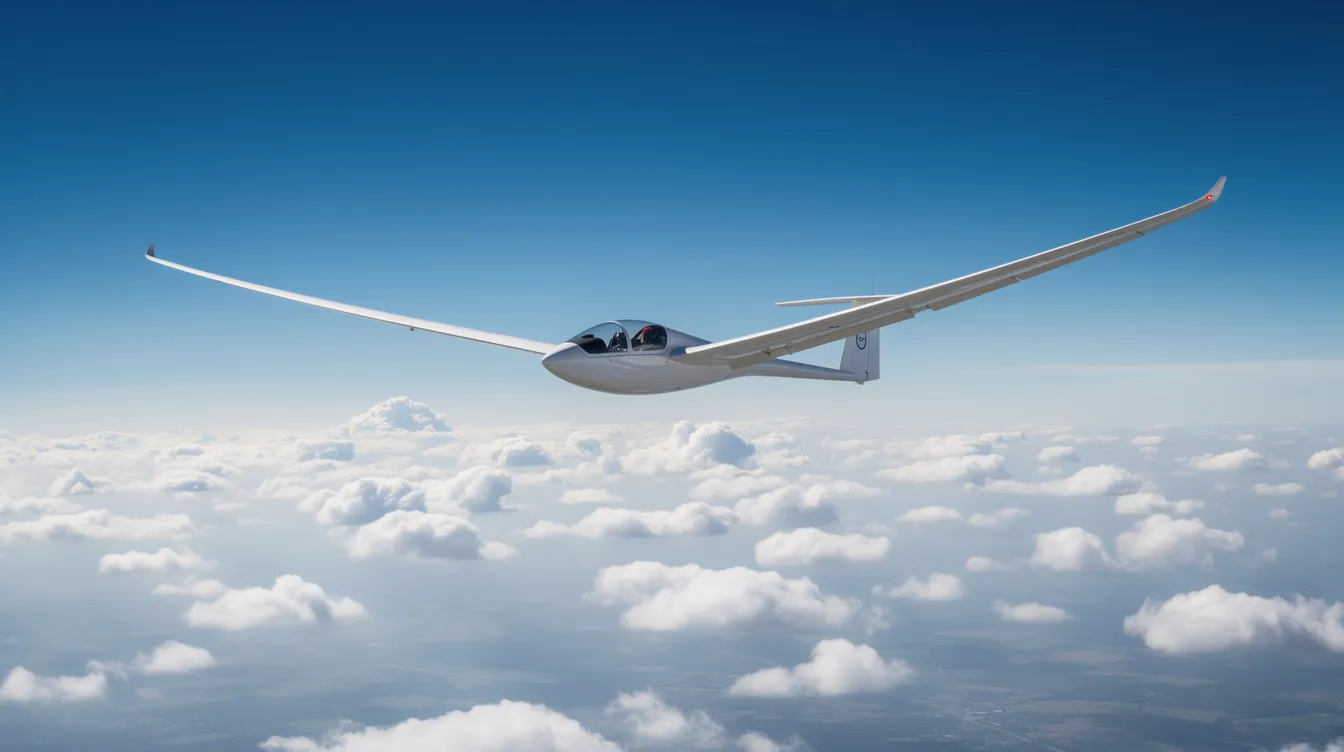
A sailplane glider is a high-performance, unpowered aircraft built to fly long distances by using atmospheric energy such as thermals, ridge lift, and wave lift to stay aloft. For many pilots, soaring in a sailplane represents the purest form of flight: silent, strategic, and closely tied to the weather and terrain below.
For aviation enthusiasts, aspiring or current glider pilots, competitive soarers, and readers comparing private aviation options, this guide explains how modern sailplanes work and what it takes to fly them well. It covers aerodynamics, lift sources, training, launch methods, competition classes, aircraft design and materials, motor gliders and electric variants, soaring techniques, safety, ownership costs, major manufacturers, and how gliding compares with alternatives such as private jet charter through Jettly. Whether you want to understand the efficiency and skill behind unpowered flight or decide if soaring is worth pursuing yourself, the sections below provide a clear, data-driven overview of modern sailplane glider flying.
A sailplane glider is an unpowered, high-performance glider with a glide ratio typically between 30:1 and 60:1, optimized for long-distance soaring flight using thermals, ridge lift, and wave lift.
Glider pilots extract energy from rising air currents in the atmosphere, climbing without engines and cruising hundreds of kilometers in a single day using advanced cross-country strategy and instruments.
Motor gliders and touring motor gliders blend powered flight with traditional soaring, offering self-launch capability and, increasingly, modern electric motor options for low-emission operations.
Sailplanes differ significantly from hang gliders (glide ratios of 8:1–12:1) and powered aircraft in terms of aerodynamic efficiency, speed range, and cockpit comfort.
Non-pilots who want the benefits of private aviation without the training commitment often choose digital charter platforms like Jettly for fast, point-to-point travel.
A sailplane glider is a fixed-wing, heavier-than-air aircraft built specifically for soaring flight. It features long, slender wings, a streamlined fuselage, and advanced aerodynamics that together produce a high lift-to-drag ratio, often between 30:1 and 60:1. Sailplanes are high-performance gliders designed for longer flights, setting them apart from basic training gliders used primarily for recreational flying and training.
What makes sailplanes different from conventional gliders or primary gliders? It comes down to materials, wing design, and aerodynamic refinement. Modern gliders use glass and carbon fiber composites to achieve smooth surfaces and low drag, while early gliders from the 1930s relied on wood and fabric and managed glide ratios of only about 17:1. Sailplanes usually feature longer wings for better lift and glide capability, with aspect ratios far exceeding those of conventional airplanes.
Modern sailplane gliders carry sophisticated instruments, including GPS flight computers and electronic variometers, and many feature retractable landing gear to further minimize drag. Under good soaring conditions, a high-performance sailplane can cover 250–500 km in a single day, with cruising speeds ranging from 40 to 150 knots depending on conditions and competition class.
Soaring flight is the art of using atmospheric energy to sustain gliding flight without an engine. Glider pilots convert rising air into altitude and distance by finding columns or bands of air moving upward faster than the glider descends. A sailplane in still air loses altitude steadily during this regime because gravity pulls it down. The key metric is sink rate: how fast the glider descends in calm conditions.
Typical minimum sink rates for sailplanes range from 0.5 to 0.6 m/s at best glide configuration. To maintain altitude or gain altitude, a pilot must find lift stronger than the sink rate. If a thermal is rising at 3 m/s and the sailplane sinks at 0.5 m/s, the net climb is about 2.5 m/s. Between thermals, cruise speed increases sink rate to perhaps 1.0–1.5 m/s, so pilots adjust constantly.
The soaring cycle works like this:
Climb in a lift, circle inside a thermal, ride along a ridge, or surf a mountain wave to gain height.
Cruise at speed - fly straight toward the next expected lift source, trading altitude for distance.
Find next lift - read clouds, terrain, and wind to locate the next source of rising air before altitude runs out.
Repeat - continue the cycle until the task is completed or conditions weaken.
This cycle is why soaring requires continuous learning and skill development in pilots. Every flight demands real-time decision-making about speed, direction, and energy management.
Glide ratio (also called lift-to-drag ratio, or L/D) is the single most important performance number for any sailplane. A glide ratio of 40:1 means the glider travels 40 km forward for every 1 km of altitude lost in still air. Put differently, a glider with a 30:1 glide ratio can travel 30 meters forward while descending just 1 meter in altitude.
Sailplanes achieve glide ratios typically between 30:1 and 50:1. Modern competition gliders in the 18-meter class, like the ASG 29, exceed 50:1. Some extreme sailplanes in the Open class report glide ratios approaching 70:1. Compare that with:
Training gliders (e.g., Blanik L-13): approximately 28:1
Hang gliders: roughly 8:1 to 12:1
High-performance 18 m sailplanes (e.g., ASG 29): over 50:1
How wing loading and ballast affect performance:
Wing loading (weight per unit wing area) does not change the best glide ratio in still air. Heavier gliders achieve the same glide angle at a higher speed.
Higher wing loading increases sink rate in calm air, which hurts performance in weaker lift. But heavier sailplanes cruise faster between strong thermals, improving average cross-country speed.
Pilots add water ballast in strong conditions and dump it when thermals weaken.
Two real-world examples of glide planning:
A sailplane with a 50:1 glide ratio starting at 2,000 m above ground could theoretically glide 100 km in perfectly still air. In practice, headwinds, sinking between thermals, and safety margins reduce that significantly.
An Open-class glider with L/D around 60:1, flying a cross-country task with strong thermals averaging 3 m/s, might sustain a net cross-country speed of 110–130 km/h. In weaker conditions, the pilot slows down to reduce drag and maintain a given glide angle without losing too much height.
Minimum sink speed keeps you airborne the longest. Best glide speed covers the most distance per meter of altitude lost. Cross-country pilots often fly faster than best glide between strong thermals because the time saved outweighs the extra altitude lost.
Sailplanes can utilize thermals, ridge lift, and mountain waves to gain altitude. These three lift sources are the energy that makes long-distance, engine-off soaring possible.
When the sun heats the ground unevenly - dark fields, parking lots, rocky slopes - warm air rises in columns called thermals. Typical climb rates inside thermals range from 1 to 5 m/s (roughly 200–1,000 ft/min), with thermal diameters often between 100 and 400 m. Pilots circle tightly inside the thermal core to stay in the strongest rising air currents.
When steady wind hits a hill, ridge, or escarpment, it deflects upward along the slope. This creates a band of continuous lift that experienced pilots can follow for long distances at nearly constant altitude. Ridge lift works best when wind speed is steady and roughly perpendicular to the ridge line. It enables some of the most efficient long-distance flights in regions with well-defined terrain.
Mountain waves form when wind flows over a mountain range and sets up standing waves on the lee side. These waves can extend tens of thousands of feet into the atmosphere. Modern sailplanes can soar to altitudes over 20,000 ft using wave lift. The most dramatic example: the Perlan 2 sailplane reached 76,124 ft (approximately 23,200 m) over the Andes in 2018, using stratospheric mountain waves.
Imagine a 300 km cross-country task on a summer day. The pilot launches by aerotow and climbs in a thermal to cloud base at around 2,000 m. Heading south, the route follows a series of thermals over farmland. Midway, a ridge line appears, and the pilot shifts to ridge lift, maintaining altitude with minimal circling. Past the ridge, flat terrain resumes, and the pilot drops back into thermals the ridge lift cannot reach, linking climbs and cruises until crossing the finish line. That blend of reading clouds, terrain, and weather shifts is what makes competitive soaring both demanding and rewarding.

All three - sailplanes, gliders, and hang gliders - are heavier-than-air aircraft that fly without continuous power. But they differ substantially in structure, performance, and how they are regulated.
The term "glider" covers a broad category. A conventional glider can be anything from a basic training ship to a high-performance machine. "Sailplane" typically refers to higher-performance gliders with good gliding performance, retractable gear, and composite wings - aircraft built for cross-country soaring rather than basic circuits around the field.
Hang gliders are foot-launched, flexible or semi-rigid winged aircraft where the pilot hangs in a harness below the wing. They are far simpler and lighter, with typical glide ratios of about 8:1 to 12:1 and cruise speeds of 20–40 knots. A sailplane pilot, by contrast, sits in a semi-reclined cockpit, flies at much higher speeds, and benefits from a high glide ratio that can exceed 50:1. The operational environments differ too: hang gliders launch from hills and ridges, while most gliders operate from airfields using aerotow or winch launching.
Sailplanes use aerodynamic designs, high aspect-ratio wings, and lightweight materials to achieve their remarkable performance. Here are the main structural components.
Sailplanes have long, slender wings to minimize induced drag and maximize lift. Wingspans range from 15 m in Standard class to over 25 m in Open class. Modern designs use laminar-flow airfoils and advanced composites - carbon fiber spars and fiberglass skins - to create smooth surfaces that reduce drag at every speed. Many gliders incorporate flaps along the trailing edge for variable camber, plus ailerons as primary control surfaces. High aspect ratio wings are the defining aerodynamic features of any high-performance sailplane.
Sailplanes are characterized by their streamlined fuselage and low aerodynamic drag. The cockpit is narrow, with the pilot seated in a semi-reclined position to reduce frontal area. Construction is typically composite monocoque - a single-shell structure of fiberglass or carbon fiber that is both strong and light.
The tail assembly provides stability and pitch/yaw control. T-tail configurations are common on modern sailplanes because they keep the horizontal stabilizer out of the wing's wake, improving efficiency at low speeds during thermalling.
Gliders typically have fixed landing gear, while sailplanes often have retractable gear. Most high-performance sailplanes use a single retractable mono-wheel under the fuselage. Retracting it in flight improves glide ratio and reduces drag. Training gliders and some club aircraft use fixed landing gear for simplicity and durability. The difference between fixed and retractable configurations is one of the clearest markers separating a traditional glider from a high-performance competition ship.
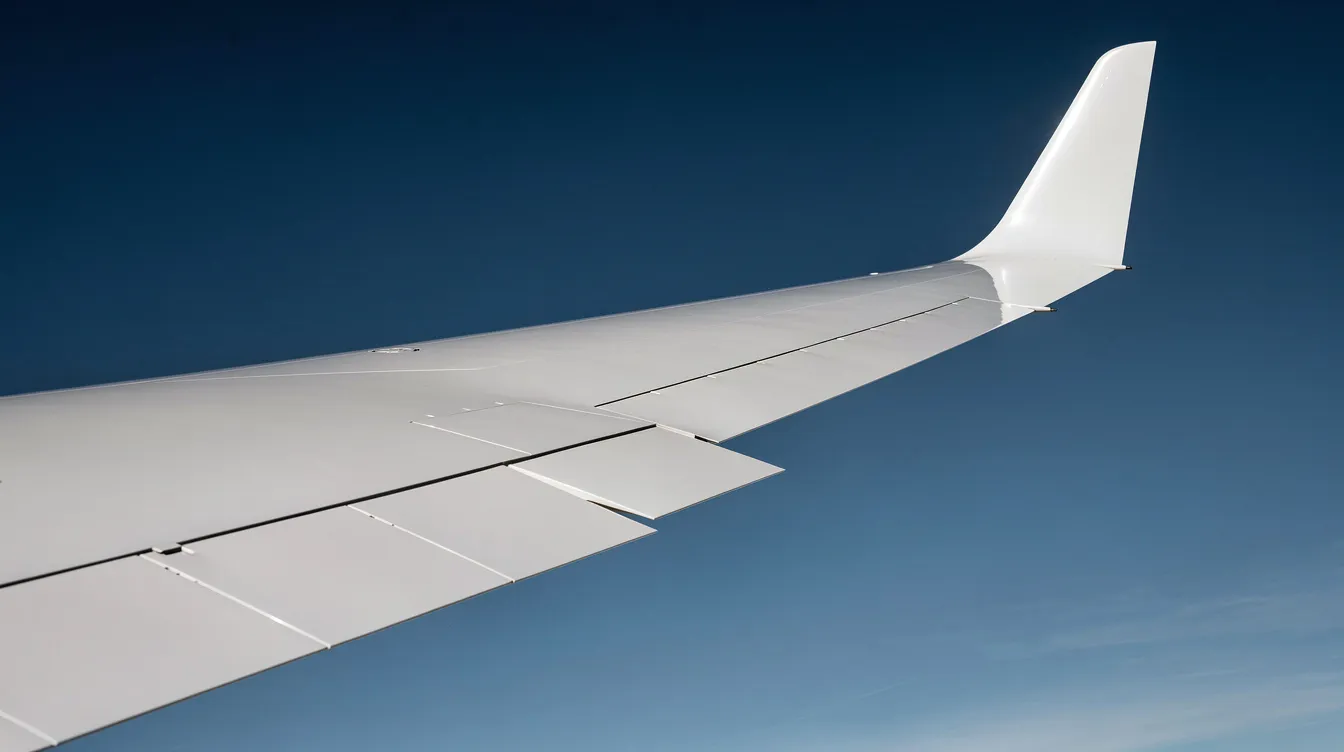
A sailplane has three primary flight controls: ailerons for roll, elevator for pitch, and rudder for yaw. These control surfaces work together to maneuver the aircraft in all axes. Additionally, airbrakes or spoilers mounted on the wings allow pilots to increase drag and control the glide slope during approaches.
The typical cockpit layout includes a center stick (or side-stick in some designs), rudder pedals, a flap lever, an airbrake handle, and a five-point harness. Space is tight but ergonomically designed for flights lasting several hours.
Instrumentation in most gliders includes:
Airspeed indicator - shows current speed through the air
Altimeter - displays altitude above sea level or ground
Magnetic compass - basic directional reference
Variometer - the most important soaring instrument, showing rate of climb or descent; often includes total energy compensation to filter out stick-induced readings
GPS flight computer - modern units calculate optimal speed to fly, track position, display task progress, and record flight data for competition scoring
Sailplanes are equipped with advanced avionics, including GPS flight computers that apply MacCready theory. This speed-to-fly logic tells the pilot exactly how fast to cruise between thermals based on expected climb strength ahead. Setting a higher MacCready value means flying faster and accepting more sink — appropriate when thermals are strong. Lowering it conserves altitude in weaker lift.
Most sailplane gliders are launched using external power and then released to soar independently. The choice of method depends on club infrastructure, terrain, and local traditions.
Aerotow is the most common launch method for gliders. A towplane pulls the glider aloft using a 200-foot nylon rope. Powered aircraft tows typically climb to 2,000–3,000 ft AGL at tow speeds of 60–70 knots before the glider releases. This method gives pilots the most flexibility in choosing release altitude and position relative to expected lift.
Winch launching uses a ground-based winch that rapidly reels in a steel cable attached to the glider's nose. The glider climbs steeply, reaching 500–2,000 feet in under a minute. Winch launches are cheaper per launch than aerotows and are common at European gliding clubs. Auto launches, a related method, use a 1,000- to 2,000-foot rope for towing behind a vehicle.
Gliders can be launched using self-launching motor gliders, which eliminate the need for towplanes or winches entirely. These aircraft carry their own power - piston, jet, or electric motor - and take off under their own power from a runway.
In Europe, winch launching dominates due to flat terrain, large fields, and cost efficiency. In North America, aerotow is more common because many clubs operate from shared airports where winch operations are impractical.
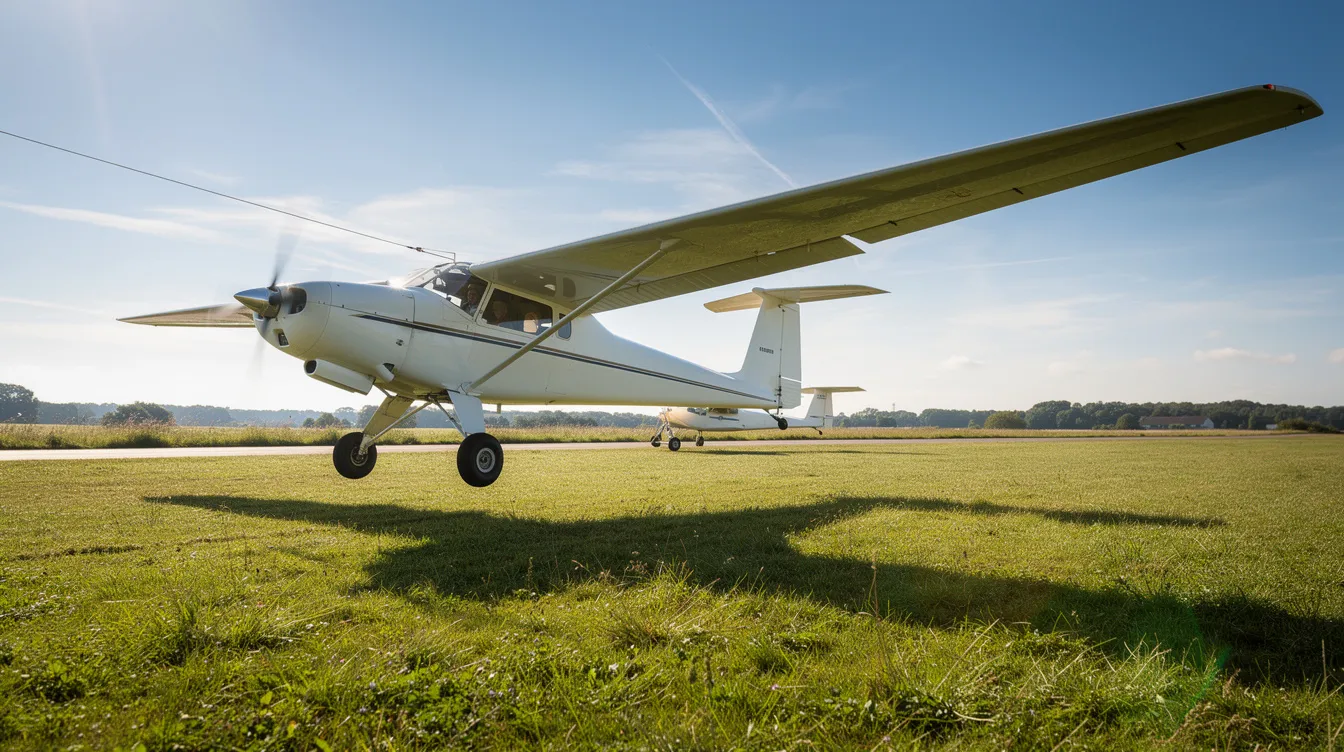
A motor glider is a sailplane-type aircraft equipped with an engine for self-launch or sustaining flight. These aircraft bridge the gap between pure soaring and powered flight, offering independence from ground-based launch infrastructure.
There are important distinctions:
Self-launching motor gliders carry engines powerful enough for independent takeoff. Self-launching motor gliders can take off without external assistance. Once at soaring altitude, the pilot shuts down and retracts the engine.
Sustainer motor gliders have a small engine designed only to maintain altitude when natural lift weakens. They cannot take off on their own, but they prevent the need for off-field landings when thermals die.
Touring motor gliders have front-mounted engines, fixed landing gear, and often side-by-side seating. Touring motor gliders cruise at speeds of 85–100 knots, making them practical for regional travel.
Powered sailplanes can achieve glide ratios from 27:1 to over 50:1, depending on design. To minimize drag during pure soaring, many gliders use retractable engines and folding propellers that tuck away behind automatic doors in the fuselage. When retracted, the aerodynamic penalty is minimal.
The flexibility of a motor glider appeals to pilots who want to soar in remote areas without depending on club infrastructure. But that convenience comes at a cost: higher purchase price, more complex maintenance, and additional weight that affects flight characteristics in weak conditions.
Electric motor gliders represent a fast-growing subcategory aimed at low-noise, low-emission self-launch and training operations. Modern electric motor gliders offer low-emissions leisure flying while maintaining competitive soaring performance.
Typical systems feature lightweight electric motors in the 20–50 kW range, lithium-ion battery packs, and climb endurance of 20–40 minutes — enough to reach a soaring height of 1,000–2,000 m before switching to silent gliding mode.
Notable examples include:
Lange Antares 20E - a purpose-built electric self-launch sailplane with a 42 kW motor, retractable propeller, and a 20 m wingspan. With the motor retracted, it delivers glide ratios comparable to pure sailplanes of similar span (above 45:1).
Pipistrel Taurus Electro G2 - a two-seat electric motor glider designed for training and leisure, offering quiet takeoff and climb with minimal environmental footprint.
Current limitations include battery energy density (lithium-ion packs are heavy relative to the energy they store), recharge times of several hours, and limited charging infrastructure at remote airfields. Still, the technology is advancing rapidly.
Lessons from electric sailplane development inform broader private aviation research. Hybrid-electric concepts for regional aircraft and business jets under development in the mid-2020s draw directly on the lightweight motor integration, battery management, and aerodynamic efficiency pioneered in the soaring world.
Unlike powered aircraft, which can add thrust to adjust their approach, glider pilots control the glide slope mainly by changing drag and airspeed. This is where airbrakes and spoilers become critical.
Airbrakes - typically panels that deploy upward from the wing surface - dramatically increase drag, allowing steeper approaches without dangerous speed buildup. On high-performance gliders, wing flaps can also be set to negative (landing) positions to increase both drag and low-speed lift during final approach.
Landing a sailplane follows a disciplined pattern:
Circuit planning - the pilot flies a standard downwind-base-final pattern, monitoring altitude and wind speed to ensure the glider reaches the runway
Energy management - airbrakes are used to control the descent rate on final approach; opening them more steepens the glide angle, closing them extends it
Safe margins - proper training emphasizes always having enough altitude to reach the field, with airbrakes as the tool to dissipate any excess energy
During training, students practice dozens of landings to develop the judgment needed for consistent, safe touchdowns. The stall speed on most gliders is low (75–80 km/h), giving a reasonable margin for approach speed control.
Getting started in gliding is more accessible than many people expect. Pilots can solo a glider at 14 years old in the United States - younger than for any other type of aircraft.
Here is a typical progression through gliding clubs:
Dual instruction - new students fly with a certified instructor in a two-seat glider, learning basic maneuvers, stall recovery, and pattern work. Training typically includes 40–60 hours of dual instruction.
First solo - most students need 30 to 35 flights to solo, though this varies with aptitude and weather.
Written exam - The Federal Aviation Administration requires passing a written exam for glider certification, covering air law, meteorology, aerodynamics, navigation, and human performance.
Practical test - glider pilots must complete a practical flight test for certification, demonstrating proficiency in all required maneuvers and decision-making.
From there, pilots can pursue advanced soaring, cross-country endorsements, and eventually a glider rating for competitive soaring. Those interested in powered options can add motor glider endorsements or touring motor glider ratings.
The soaring community is known for its teamwork and camaraderie among pilots. At most clubs, other pilots help with wing-running, launch operations, and mentoring - creating a supportive environment for beginners.
For those who want the benefits of private air travel without dedicating time to flight training, charter services such as Jettly offer a faster path. How to Charter a Plane: Steps to Your Exclusive Flight Experience explains the booking process in detail.
Sailplanes are used for sport, recreation, and competitive cross-country soaring. The core goal in cross-country flying is simple: cover distance efficiently by linking lift sources while minimizing time spent in sinking air.
When entering a thermal, the pilot circles tightly in the rising air, adjusting bank angle and speed to stay in the strongest core. Variometers provide real-time climb rate data, and sailplane pilots must read clouds, terrain, and weather shifts during flight to anticipate where the next thermal will form.
Between thermals, pilots apply MacCready's speed-to-fly theory. If the next expected climb is strong (say 3 m/s), the pilot cruises fast, accepting a higher sink rate to save time. In weaker lift conditions, slowing down conserves altitude. This speed management is the backbone of competitive soaring.
Dolphin Flying
In cloud streets — lines of cumulus indicating continuous lift — experienced pilots can "dolphin" by speeding up in sink and slowing down under clouds without circling at all. This technique dramatically improves cross-country speed on good days.
Sailplane competitions depend entirely on tactical decision-making and pilot skill. Typical tasks include 300 km FAI triangles or assigned area tasks where pilots choose optimal paths within designated zones. Winning depends on reading conditions better than other pilots and executing speed-to-fly decisions with precision.
The FAI (Fédération Aéronautique Internationale) defines several competition classes to keep racing fair across different glider types:
|
Class |
Max Wingspan |
Flaps Allowed |
Max Weight (approx.) |
|---|---|---|---|
|
Club |
Varies (handicapped) |
No |
Varies |
|
Standard |
15 m |
No |
~525 kg |
|
15 Metre |
15 m |
Yes |
~525 kg |
|
18 Metre |
18 m |
Yes |
~600 kg |
|
20 m Two-Seater |
20 m |
Yes |
~750 kg |
|
Open |
Unrestricted |
Yes |
~850 kg |
|
13.5 Metre |
13.5 m |
Yes |
Limited |
The Standard class prohibits flaps, forcing pilots to rely purely on piloting skill and aerodynamic features of simpler wing designs. The Open class allows virtually unlimited wingspan and produces the highest gliding performance numbers.
Altitude: The Perlan 2 reached 76,124 ft over the Andes using wave lift — higher than most jet aircraft fly.
Distance: Flights exceeding 3,000 km have been achieved in Argentina's Patagonian wave and thermal conditions.
Speed: Competition tasks see average speeds over 150 km/h on strong days.
International competitions like the World Gliding Championships draw pilots from dozens of countries, illustrating the global reach of the sport. Cloud flying in wave conditions and long-distance flights across vast landscapes push both pilot and aircraft to their limits.
Germany has dominated sailplane design for decades. Key manufacturers and their signature models include:
Schempp-Hirth - Ventus 3 (15/18 m class, glide ratio ~50:1+), Discus 2 (Standard class favorite), Arcus (20 m two-seater)
Alexander Schleicher - ASW 27 (high-speed Open class flyer), ASG 29 (18 m class, over 50:1), ASK 21 (the most widely used training two-seater in gliding clubs worldwide)
DG Flugzeugbau - DG-1001 (20 m two-seater), DG-800 (aspect ratio ~27.4, glide ratio ~51.5:1)
Jonker Sailplanes (South Africa) - JS3 Rapture (18 m, extremely competitive in recent world championships)
HPH (Czech Republic) - Shark (304S), a popular 18 m flapped sailplane
Several models offer motor glider variants. The ASK 21 Mi adds a retractable sustainer engine to the classic trainer. The Discus 2cT includes a turbo sustainer for self-retrieval. Lange Aviation produces the Antares 20E and 23E as dedicated electric self-launching gliders.
For beginners, the ASK 21 and Grob G 103 Twin Astir are standard introductions to the sport. For advanced cross-country soaring, many gliders in the Ventus, JS3, and ASG families dominate competition fields.
Gliding has a good safety record when proper training, maintenance, and weather judgment are applied. Most accidents trace back to human factors rather than equipment failure.
Key risk areas include:
Launch mishaps - rope breaks during winch launches, towplane engine failures during aerotow
Stall/spin at low altitude - particularly dangerous during thermal entry or circuit turns
Weather misjudgment - getting caught in deteriorating conditions, strong sink, or thunderstorm outflow
Off-field landings - necessary when thermals fail during cross-country soaring, requiring pilots to select safe fields from the air
Many gliders carry FLARM collision-avoidance devices, which alert pilots to nearby traffic in busy soaring areas. Parachutes are standard equipment in many countries. Aircraft are certified under strict airworthiness standards (EASA CS-22 in Europe, FAA regulations in the U.S.), with regular inspections of wings, control systems, and tow hooks.
Motor gliders add engine-related failure modes — retractable engines that fail to deploy, propeller issues — requiring additional proper training. But they also reduce the risk of off-field landings by providing a go-around option when natural lift disappears.
There are several ways to access sailplane flying:
Club membership - most beginners start at gliding clubs, paying annual dues of roughly USD 500–1,500 plus per-launch fees (tow or winch)
Syndicate or share ownership - several pilots co-own a glider, splitting purchase and maintenance costs
Private ownership - buying your own sailplane glider with a dedicated trailer
Cost ranges vary widely:
|
Category |
Approximate Cost (USD) |
|---|---|
|
Used club glider (e.g., older Blanik, Ka-6) |
$10,000–$30,000 |
|
Used high-performance sailplane |
$40,000–$100,000 |
|
New high-performance sailplane |
$150,000–$250,000+ |
|
New motor glider / self-launch |
$200,000–$350,000+ |
|
Annual inspection & insurance |
$1,500–$4,000 |
|
Hangar or trailer storage |
$1,000–$3,000/year |
These figures are indicative ranges, not formal quotes. The commitment of sailplane ownership - maintenance, inspections, transport, and storage - is significant. For those who want to fly privately without that responsibility, pay-per-trip services like private jet charter offer a different model entirely, and tools such as a private jet charter cost estimator make it easier to understand pricing before you book. |
Sailplane gliders are primarily for sport, training, and personal challenge. Private jets are tools for fast, point-to-point travel. These are fundamentally different missions, and comparing them directly would be misleading — but understanding the contrast is useful.
Consider a New York to Boston trip. A touring motor glider might cruise at 90 knots, taking roughly two hours in good VFR weather, with no ability to fly in cloud or at night. A light jet chartered through Jettly cruises around 400–450 knots, covering the same distance in about 40 minutes, in virtually any weather, with pressurization, de-icing, and IFR capability.
Charter platforms like Jettly eliminate the need for passengers to be licensed pilots or to manage aircraft ownership. Resources such as guides to the best private jet charter companies and their services and How to Book a Private Jet: Private Jet Insights & Travel Tips walk through the process - instant digital booking, transparent pricing, and access to thousands of aircraft.
Gliding and private jet charter serve complementary but distinct roles in aviation. One is about the joy of flight and mastering the atmosphere. The other is about moving people and time-sensitive cargo efficiently. Both have a place, and many pilots who soar on weekends charter jets on Monday mornings.
Many advances developed for high-performance sailplanes later influenced powered aircraft design. The relationship between glider innovation and commercial aviation is deeper than most people realize.
Carbon fiber composites - first widely adopted in sailplane spars and skins, now standard in modern airliners like the Boeing 787 and Airbus A350
Winglets and high aspect ratio wings - inspired partly by decades of glider efficiency research, now found on virtually every commercial jet
Laminar-flow airfoils - perfected on sailplane wings where every fraction of a percent in aerodynamic efficiency matters, then scaled up for transport aircraft
Electric motor glider development directly informs hybrid-electric concepts for regional aircraft and business jets under development in the mid-2020s. The challenges are parallel: minimizing weight, maximizing battery energy, and designing retractable or integrated propulsion systems that do not compromise the aircraft's primary mission.
Operational efficiency - matching aircraft size and range to mission - is a shared objective in both gliding design and private jet charter networks like Jettly's. In soaring, that means choosing the right wing loading for the day's conditions. In charter, it means selecting a light jet for a short hop rather than booking a heavy jet you do not need.
The right aircraft depends on the mission. Here are the key decision factors:
Pure sailplane - lightest, simplest, optimized for silent soaring and high aerodynamic efficiency. Requires towplane or winch infrastructure. Best for pilots focused on competitive soaring or local club flying.
Motor glider - offers self-launch or sustainer capability. Higher purchase and maintenance costs, more complex systems. Ideal for pilots in areas with limited club infrastructure or those wanting cross-country independence.
Touring motor glider - practical for regional trips at 85–100 knots with fixed landing gear. Less about soaring performance, more about flexible powered flight with occasional soaring.
Ultralight or small GA airplane - for pilots who prioritize transportation over soaring flight. Conventional methods of powered flight apply.
For non-pilots, the calculus is different. If the goal is efficient travel rather than piloting, flexible private jet memberships with Jettly and resources like The Modern Private Jet Traveler: How to Fly Private Smarter with Jettly outline how digital charter platforms simplify private aviation.
The guiding principle: fit the aircraft to the mission. A sailplane excels at what it was designed for - extracting maximum performance from the atmosphere. A jet excels at moving people quickly across long distances. Neither replaces the other.
While glider pilots fly for sport and skill, many of the same individuals and their businesses rely on private aviation for time-sensitive travel. A pilot who competes in international soaring events may need to reach remote airfields in Patagonia, South Africa, or Central Europe on short notice.
Jettly is a digital private jet charter marketplace providing access to thousands of aircraft worldwide with instant pricing and on-demand booking. For the soaring community specifically, this means:
Reaching competition sites that commercial airlines serve poorly or not at all
Transporting crew and equipment alongside a glider trailer being shipped separately
Avoiding long layovers and multi-connection itineraries before or after an intense week of competition flying
Benefits valued by this demographic include transparent pricing, the ability to choose aircraft size and type from a broad range of private charter aircraft, and the flexibility to book same-day if weather or schedules change unexpectedly.
Learn more about Jettly's charter options at https://www.jettly.com.
In good soaring conditions, experienced glider pilots can remain aloft for 3–6 hours or more, limited mainly by weather, pilot endurance, and airspace rules. Record flights using strong thermals and wave lift have lasted over 10 hours and covered more than 1,000 km. Typical club flights, however, range from 30 to 90 minutes depending on conditions and pilot skill level.
Modern sailplane cockpits are ergonomically designed with semi-reclined seating, making flights of several hours possible with reasonable comfort. Pilots should be prepared for sun exposure, limited movement, and occasional turbulence in thermals. Most healthy adults tolerate gliding well with proper hydration, sun protection, and clothing layers for temperature changes at altitude.
In many countries, including the United States, glider pilots do not need a Federal Aviation Administration medical certificate. Instead, they self-certify that they are fit to fly before each flight. Touring motor gliders, however, sometimes fall under powered-aircraft licensing rules, which may require a formal medical certificate depending on local regulations and aircraft classification.
Sailplanes are lighter, more aerodynamically efficient, and flown with a constant focus on energy management and atmospheric reading. There is no throttle - altitude is your fuel. Small powered airplanes rely on engines for climb and cruise, operate from a wider variety of airports, and are typically used for transportation rather than pure sport soaring. The core skill in soaring is finding and using rising air; in powered flight, navigation and systems management take more prominence.
Gliding is about learning skills, enjoying the challenge of unpowered flight, and investing significant time in training — most students need 30 to 35 flights just to solo. Private jet charter is about fast, flexible travel with professional crews handling every detail. Many business travelers and families who value time savings and comfort simply book aircraft through platforms like Jettly, or even buy a seat on a private jet through shared options, avoiding ownership responsibilities, licensing requirements, and the weather limitations inherent in VFR soaring.
Sailplane gliders represent the peak of unpowered flight - aircraft refined over nearly a century to extract maximum distance from every meter of altitude. From the wood-and-fabric primary gliders of the 1930s to today's carbon fiber competition machines with glide ratios exceeding 50:1, the evolution has been relentless.
The differences between sailplanes, motor gliders, and hang gliders come down to mission, performance, and pilot preference. Thermals, ridge lift, and wave lift remain the atmospheric engines that make soaring flight possible. Electric motor gliders and advanced composites are pushing the sport toward a more sustainable, accessible future - and feeding innovation back into commercial and private aviation.
For those who want to experience flight at its most fundamental, learning to soar is an unmatched pursuit. For those who want the benefits of private aviation without becoming a sailplane pilot, flexible charter solutions offer a complementary path.
Ready to experience private travel on your terms? Explore flight options or request a quote at https://www.jettly.com.
Share this post:
Jay Franco Serevilla
Aug 15, 2026
|
5
min read
Discover tips and trends in the industry.
5
min read
Sundance Flight Academy: Flight Training in Oklahoma City
Sundance Flight Academy in Oklahoma City offers flexible flight training programs for aspiring pilots, from discovery flights to commercial pilot certification. Utilizing reliable Piper Cherokee aircraft and advanced Redbird FMX simulators, students can tailor their training to fit their schedules while gaining essential skills for a career in aviation.
Read More
5
min read
Excelaire: Private Jet Charter, Fleet Options, and Jettly Alternatives
ExcelAire is a prominent private aviation operator based in New York, offering charter flights and aircraft management since 1985. While it provides personalized service and a focused fleet, digital marketplaces like Jettly offer broader options and instant pricing, catering to diverse travel needs. This article compares ExcelAire's offerings with Jettly's tech-driven approach to help travelers choose the best option for their next flight.
Read MoreStay updated with our latest insights and tips to elevate your journey with us.
MEMBERSHIPS AND ASSOCIATIONS



Disclaimer: Jettly operates as a charter broker, offering access to a global digital jet charter marketplace. Jettly is not a direct air carrier and does not own or operate aircraft. All advertised flights are conducted by third-party air carriers that are fully licensed and hold the appropriate Part 135 or Part 121 certifications issued by the Federal Aviation Administration (FAA) or equivalent regulatory authorities under U.S. or foreign law. Jettly complies fully with the U.S. Department of Transportation's Part 295 and Part 298 Charter Broker regulations. Jettly does not carry additional liability insurance. Passengers are covered by aircraft operator insurance. TICO: 50023770


