


Login
Get Instant Pricing On 23,000+ Aircraft

>
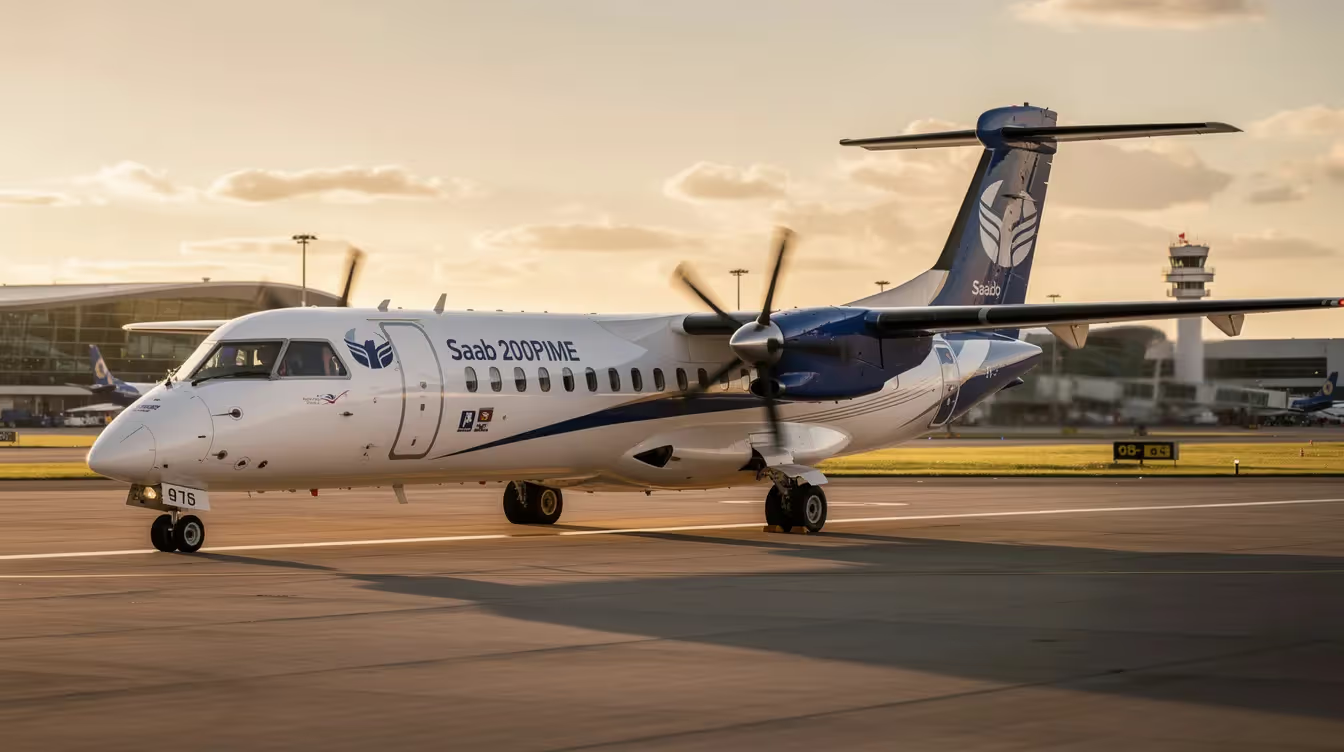
The Saab 2000 plane stands out as one of the fastest turboprop commercial aircraft ever built, offering jet-like performance with turboprop efficiency. With a maximum speed of 368 knots (682 km/h) at 25,000 ft, it surpasses many of its class's competitors in both speed and efficiency. For groups seeking regional charter options, this Swedish-built aircraft delivers a compelling combination of speed, range, and access to smaller airports that jets cannot serve.
The Saab 2000 is a high-speed, 50-seat regional turboprop that continues to serve charter, VIP, and special mission roles worldwide. Jettly can arrange charter flights on this aircraft where operators are available in its global network as part of its broader private charter aircraft offerings.
Performance profile: Twin-engine turboprop derived from the Saab 340, featuring a maximum cruise speed of 370 knots true airspeed (approximately 413 mph), a range of about 1,000 nautical miles, and a service ceiling of 31,000 ft.
Operational flexibility: Combines jet-like speed with turboprop fuel efficiency and short-runway capability, requiring only 1,200 meters (approximately 4,000 feet) for takeoff. The Saab 2000 delivers higher profitability for operators due to its efficiency and strong performance, making it an economically attractive choice for airlines and charter companies.
Proven reliability: Used by airlines, charter operators, and military forces—including the Pakistan Air Force, which operates AEW&C variants equipped with the Erieye radar system.
Charter access: Jettly’s platform allows travelers to compare available aircraft options, including turboprops like this one, with instant pricing and on-demand booking for group travel needs.
More detailed information and brochures about the Saab 2000 are available as PDFs for download.
The Saab 2000 is a Swedish-built regional turboprop developed by Saab AB, headquartered in Stockholm, Sweden, and in Linköping during the late 1980s and early 1990s. It was designed as a faster, stretched evolution of the Saab 340 to serve 50-seat markets where airlines wanted jet-like speeds without jet-level fuel consumption.
The aircraft typically seats around 50 passengers in a three-abreast (2+1) cabin configuration, with two pilots and cabin crew. Compared to the Saab 340, it features a significantly stretched fuselage, more powerful Rolls-Royce Allison AE 2100A engines, and improved cruise performance that positions it closer to regional jets than traditional turboprops, while retaining the efficiency and reliability of the Saab 340.
Although production ceased in the early 2000s, only 63 units had been sold before it ended. The type remains in active military service and civilian operation with regional airlines, charter operators, and government users across multiple continents.
The Saab 2000 program was launched in May 1989 as a stretched derivative of the Saab 340, developed to meet airline demand for a high-speed 50-seat turboprop aircraft. The first aircraft completed its first flight on 26 March 1992 in Sweden. After receiving certification from the Joint Aviation Authorities and the Federal Aviation Administration, the type entered scheduled airline service in September 1994.
Key design elements include:
A fuselage 7.55 meters longer than the Saab 340
A 15% greater wingspan for improved aerodynamic efficiency
Structural enhancements allowing operation at higher altitudes and speeds
Capacity for up to 58 passengers in high-density layouts
The aircraft was designed to operate at a maximum cruise speed of Mach 0.62 with a service ceiling of 31,000 feet, providing jet-like performance. The Saab 2000 was the first commercial aircraft to be powered by the Allison GMA 2100 turboprop engines, which were derated to 3,390 kW specifically for this model.
Crossair was the major initial customer, operating 34 aircraft between 1994 and 2005. The government of the Marshall Islands took delivery of two units to serve the Micronesia region between 1995 and 1998, after which the aircraft were leased to Air Vanuatu.
Only 63 units were produced before production ended, which may create logistical hurdles for maintenance and sourcing parts. However, the limited production run also means operators have developed specialized support networks to keep the fleet airworthy.
The numbers behind the Saab 2000 explain why it remains competitive for regional operations decades after production ended.
Length: approximately 27 meters
Wingspan: approximately 24.8 meters
Height: approximately 7.7 meters
Typical capacity: 50 passengers in standard layout
Maximum capacity: 58 passengers in high-density configuration
Twin Rolls-Royce Allison AE 2100A turboprop engines deliver exceptional power, giving the Saab 2000 superior speed, climb rate, and operational performance compared to other turboprops.
Six-blade Dowty-Rotol composite propellers
Engine positioning further from the fuselage reduces cabin noise
The Saab 2000 has a maximum cruise speed of 370 knots true airspeed, allowing for shorter flight times and higher productivity
The aircraft can efficiently cover significant distances on regional routes, with a commercially viable range of 1,000 nautical miles in approximately three hours, a profile that aligns well with Jettly’s private jet charter cost estimator when planning regional trips
Block times often match or beat regional jets on routes under 800 nm when factoring in boarding and taxi phases
The aircraft has a service ceiling of 31,000 feet, enabling it to operate in smoother upper airways that other turboprops cannot reach
The aircraft can climb to 20,000 feet in just 10 minutes at a rate of approximately 2,250 feet per minute
The aircraft can climb from 0 to 9,000 meters in just eight minutes, which is a world record in its class
It requires a runway length of only 1,200 meters (approximately 4,000 feet) for takeoff, providing access to regional destinations
Steep approach certification enables operations at challenging airports like London City
These specifications translate to real benefits: faster trips than most turboprops, the ity to fly above weather at higher cruise levels, and access to airports that exclude larger aircraft.
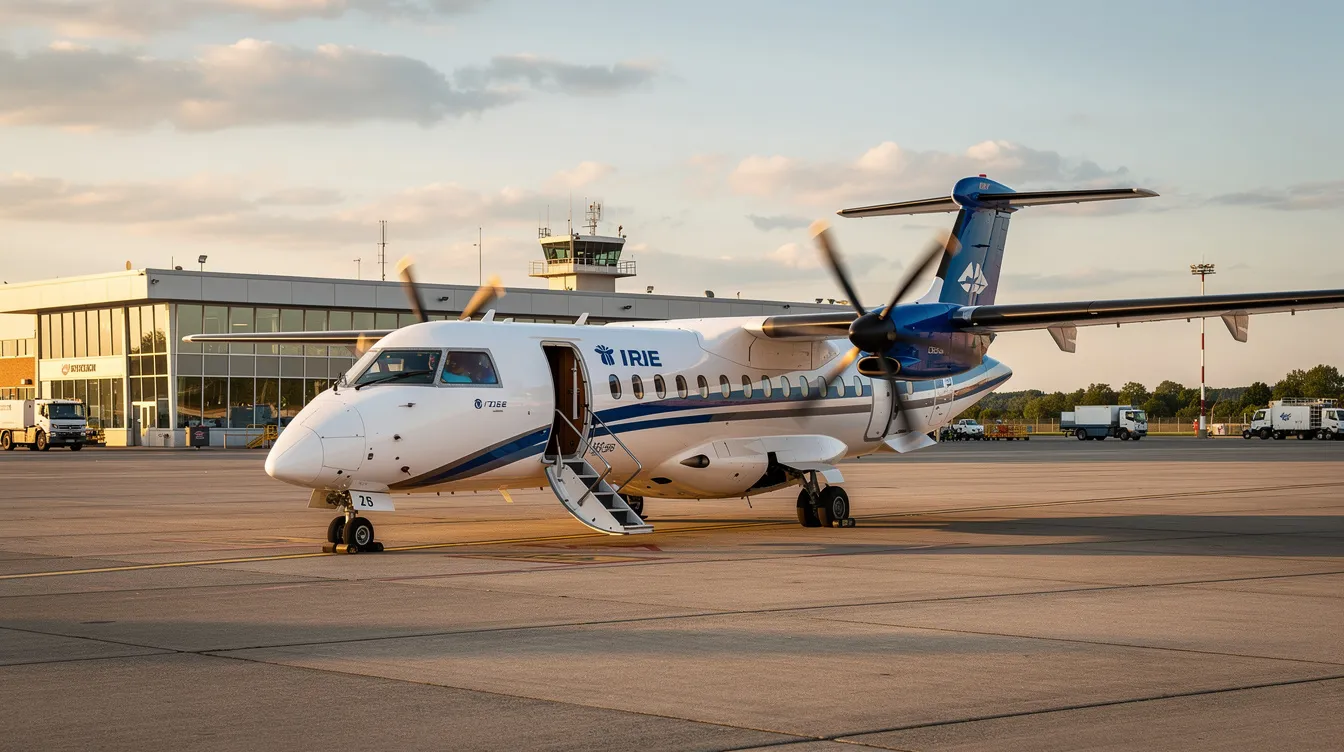
The cabin is designed to feature a spacious seating arrangement, often configured for both business and commercial flights. The three-abreast layout (2+1) provides more personal space than four-abreast regional jets.
The Saab 2000 features a generous seat pitch of 32 inches (81 cm) in a more comfortable layout, accommodating up to 50 passengers
Cabin width supports comfortable seating for regional flight durations
The aircraft is equipped with an active noise reduction system, enhancing passenger comfort by minimizing cabin noise levels during flight
Engine positioning away from the fuselage further reduces propeller noise transmission
Many passengers report a near-jet experience in cruise conditions
Refurbished aircraft often feature ACRO seats or similar slimline designs
LED lighting systems provide a modern cabin ambiance
Updated sidewalls and improved overhead storage are common in recent refurbishments
Forward lavatory and galley facilities support a light catering service
The Saab 2000 can operate at altitudes of up to 31,000 feet, allowing for smoother flights in the upper airways and contributing to overall passenger comfort.
For charter customers, these cabin features translate to productive flight time for corporate groups, comfortable transport for sports teams, and professional environments for tour operations.
The combination of speed, range, and field performance gives operators significant deployment options across diverse missions.
Dense regional routes of 300–800 nm where frequency matters
Hub connections from spoke airports where jet economics are less favorable
High-frequency shuttles between medium-sized cities
The majority of regional airline operations today are served by regional jets and turboprops like the Saab 2000, reflecting their dominance in regional fleet compositions and operational roles, and highlighting why they feature prominently among Jettly’s private charter aircraft.
The Saab 2000 operates efficiently from smaller regional airports and can access challenging mountain runways
High service ceiling allows operations over alpine or Nordic terrain
Strong climb performance provides safety margins in demanding weather
Corporate shuttles between regional business centers
Energy sector crew rotations to remote airfields in areas like Alaska, similar to missions flown by operators such as Dexter Air Taxi
Sports teams moving between league cities
Government and NGO missions requiring group transport, often supported by global charter providers like Zenflight
The aircraft’s adaptability extends to special mission conversions. Many units have been transformed into surveillance platforms, AEW&C aircraft, maritime patrol variants, and calibration aircraft, demonstrating that the airframe supports diverse system integrations and mission payloads.
The Saab 2000 evolved directly from the Saab 340, and many operators and charter customers compare the two when evaluating regional options.
|
Feature |
Saab 340 |
Saab 2000 |
|---|---|---|
|
Typical Capacity |
30–36 passengers |
50 passengers |
|
Fuselage |
Shorter baseline |
7.55 m longer |
|
Wingspan |
Standard |
15% greater |
|
Cruise Speed |
~280 KTAS |
~370 KTAS |
|
Service Ceiling |
~25,000 ft |
31,000 ft |
The Saab 2000 cruises roughly 50–70 knots faster and offers an improved climb rate, leading to shorter block times on routes of 300–800 nm. The 340 may be more economical in thinner, low-demand sectors due to its smaller capacity and lower operating costs.
Both types share the three-abreast layout, but the 2000 benefits from reduced noise through engine repositioning and advanced noise reduction systems.
For charter work, the Saab 340 suits smaller corporate groups or niche routes, while the Saab 2000 is better suited to larger groups and higher-demand shuttles, where speed and capacity drive the decision, especially when paired with modern flight-sharing and crowdsourced charter options.
Beyond commercial operations, the Saab 2000 has built a strong reputation in military and government service.
The Pakistan Air Force operates multiple AEW&C aircraft equipped with the Saab Erieye radar system. These platforms support airborne early warning, surveillance, and airspace management missions. The AEW&C variants retain the airframe’s high service ceiling and strong endurance; some mission profiles exceed 9.5 hours, making them suitable for long on-station times and wide-area radar coverage.
Other governmental and special mission applications include:
Border surveillance platforms
Maritime patrol conversions
Calibration aircraft for navigation systems
VIP transport for government delegations
The same attributes valued by the Pakistan Air Force and other agencies-climb rate, ceiling, fuel efficiency, and structural reliability-underpin the aircraft’s continued appeal in commercial and charter service, and secure its place among leading types in the charter airline landscape.

As of October 2024, 31 Saab 2000 aircraft remain active in both civilian and military operations globally. The type has transitioned from mainstream regional airline work to niche and charter roles where its unique performance matters, reflecting broader trends in the charter airline market.
Operators such as Aleutian Airways in the United States and Frost Air in Denmark continue to fly the type. Several aircraft serve freight runners and specialized cargo operations. The average hourly rental rate for the Saab 2000 is around 4,850 USD, competitive for a 50-seat aircraft with this performance envelope.
The Saab 2000 is often compared to other turboprop aircraft such as the ATR 42, Dash 8-Q400, and regional jets like the Embraer ERJ 145, all of which appear among the best private jet charter companies and aircraft options that travelers may consider. Each has trade-offs in speed, capacity, and operating costs.
Many aircraft have been upgraded with modern avionics, including ADS-B transponders, WAAS LPV approach capability, and electronic flight bag support, making them well-suited for busy corridors and city pairs such as Kolkata, West Bengal, and New Delhi, Delhi. The Saab 2000 is recognized for its low ownership costs, making it an attractive option for leasing in the regional airline market, just as Jettly’s private jet memberships offer cost-efficient access for customers. Leasing options can include flexible and innovative structures tailored to operator needs.
Typical charter customers include corporate groups, tour operators, sports organizations, incentive travel groups, and government delegations needing to move 40–50 passengers efficiently on regional routes, sometimes opting to buy a seat on a private jet when full-aircraft charter isn’t required.
Jettly operates as a global, tech-driven private aviation marketplace with access to over 20,000 unique aircraft, including regional airliners and turboprops like the Saab 2000, where operators are available, and is frequently listed among the top private jet charter companies.
Enter route, dates, and passenger count on Jettly’s platform
Review instant pricing across available aircraft options
Compare the Saab 2000 against light, midsize, and heavy jets for cost and time trade-offs
Book on-demand or through membership structures
Cost-effective per-seat pricing for parties of 40–50
Strong range for regional itineraries up to 1,000 nm
Access to smaller airports closer to final destinations, which you can identify using Jettly’s airport locator tool
Faster boarding through private terminals versus commercial hubs
Jettly can coordinate value-added services, including in-flight catering tailored to group needs, ground transportation at each end, and flexible departure times that commercial schedules cannot match.
The platform is built around transparent, up-front pricing with no hidden fees. Customers can fly on-demand or choose from flexible private jet memberships and structured jet card programs without committing to traditional ownership or long-term contracts.
This section addresses practical questions about operations, safety, and charter suitability beyond what the main sections cover.
Yes. The aircraft combines 50-seat capacity with regional-jet-like speed, making it efficient for corporate shuttles, sports teams, and tour groups traveling up to approximately 1,000 nm. Platforms like Jettly can match group requirements with available aircraft and operators in relevant regions, and can even facilitate crowdsourced, shared private flights that help travelers easily book a seat on a private jet.
Regional jets typically fly slightly faster at cruise but often burn more fuel. The Saab 2000 offers similar block times on short-to-medium routes at lower operating costs, aligning well with Jettly’s approach to affordable private jet charter and its positioning as a NetJets alternative for cost-conscious travelers. For many sub-1,000 nm flights, overall travel time differences are small, and using secondary airports via a charter can save significant ground and connection time.
The type has experienced only a small number of hull-loss incidents over several decades of operation. The aircraft was certificated under modern safety standards by both European and American authorities. When booked through Jettly, flights are operated by licensed air carriers that comply with national aviation regulations and safety oversight.
The aircraft’s short-field length requirements (approximately 1,200 meters) and steep approach certifications enable operations at many regional airports with shorter runways. This capability can reduce total travel time compared with commercial itineraries requiring connections through major hubs.
Visit Jettly’s website, enter your route, dates, and passenger count, and review instant pricing options, including the Saab 2000, where available in your region.
Ready to experience regional private travel on your terms? You can also estimate jet card pricing with Jettly’s jet card flight cost estimator or earn commissions by promoting flights through its high-ticket affiliate program. Explore flight options or request a quote at https://www.jettly.com.
The Saab 2000 remains a distinctive choice in the regional turboprop market, combining impressive speed, operational flexibility, and passenger comfort. Its ability to carry up to 50 passengers efficiently over regional distances, access smaller airports, and deliver jet-like performance makes it a valuable consideration for group travel and charter operations. For travelers and operators seeking a balance of speed, capacity, and cost-effectiveness, the Saab 2000 offers a compelling option.
Jettly’s platform simplifies access to aircraft like the Saab 2000 by providing transparent pricing, instant booking, and a wide network of operators. Whether for business shuttles, sports team travel, or special missions, Jettly connects users with suitable aircraft and services to meet their needs.
Ready to experience regional private travel on your terms? Explore flight options or request a quote at https://jettly.com.
Share this post:
Jay Franco Serevilla
May 15, 2026
|
5
min read
Discover tips and trends in the industry.
5
min read
Gulfstream G100 Guide: Charter Costs, Performance & Use Cases
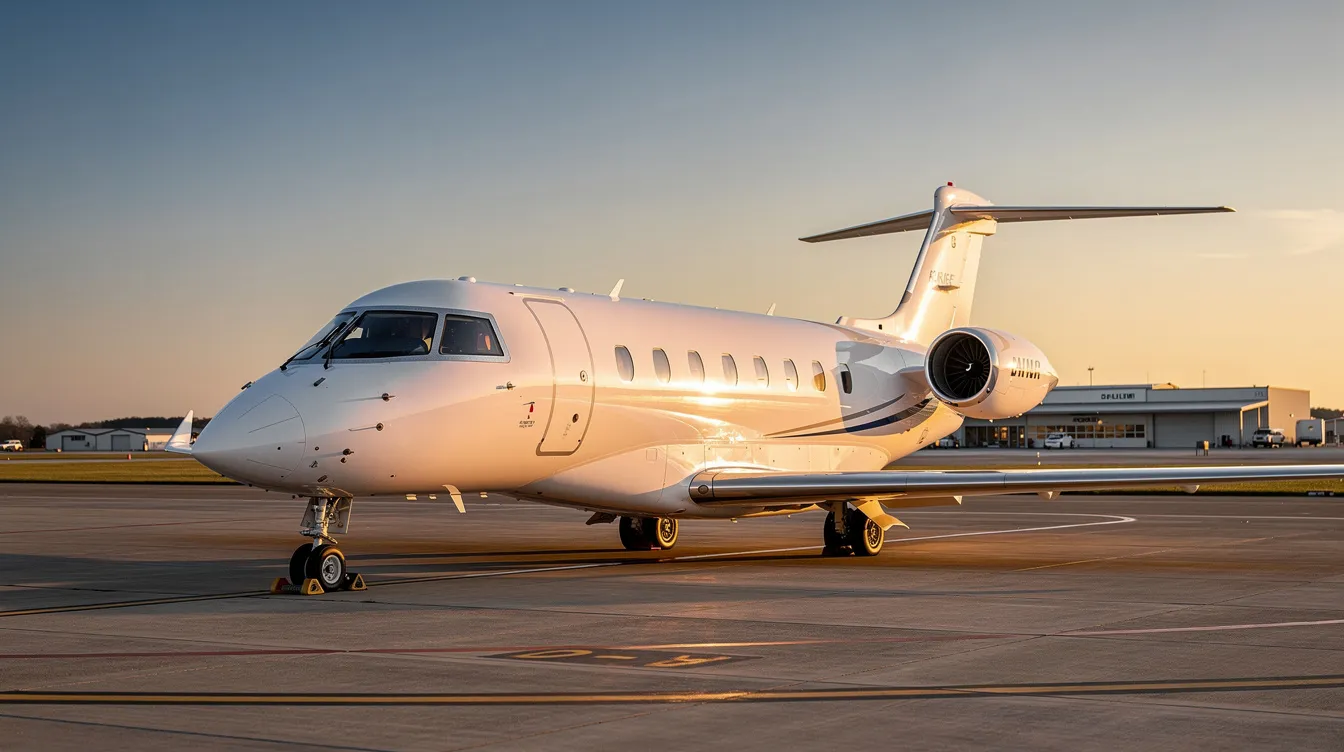
The Gulfstream G100 is a versatile midsize business jet known for its speed, range, and cost-effectiveness. With a maximum range of 2,790 nautical miles and seating for up to 8 passengers, it is ideal for both business and leisure travel. This guide provides insights into its performance, charter costs, and how to book through Jettly's platform.
Read More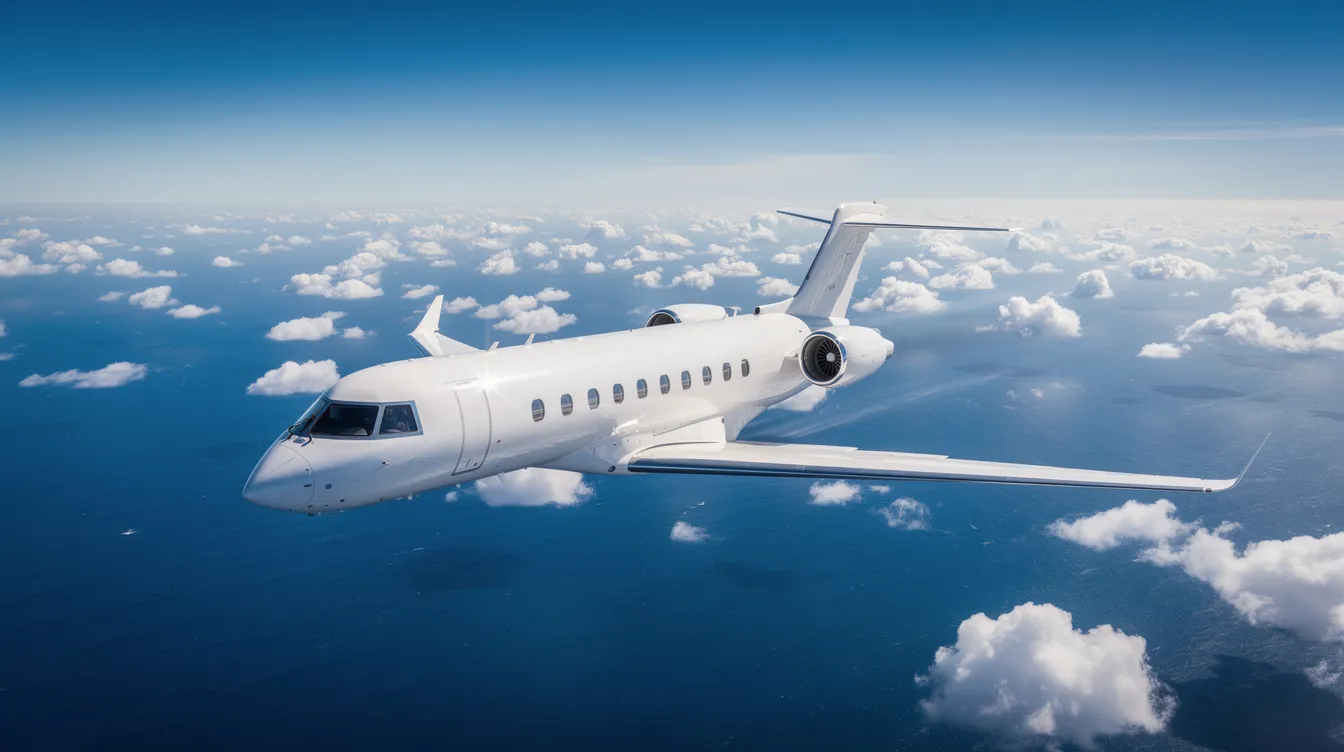
5
min read
Gulfstream GV Range: Ultra Long Range Performance, Cabin Dimensions, and Charter Options
The Gulfstream GV is a pioneering ultra-long-range business jet, offering a maximum range of approximately 6,500 nautical miles. With its spacious cabin designed for comfort and productivity, it accommodates up to 18 passengers and is ideal for intercontinental flights. Charter options through Jettly provide flexible access without the costs of ownership.
Read MoreStay updated with our latest insights and tips to elevate your journey with us.
MEMBERSHIPS AND ASSOCIATIONS



Disclaimer: Jettly operates as a charter broker, offering access to a global digital jet charter marketplace. Jettly is not a direct air carrier and does not own or operate aircraft. All advertised flights are conducted by third-party air carriers that are fully licensed and hold the appropriate Part 135 or Part 121 certifications issued by the Federal Aviation Administration (FAA) or equivalent regulatory authorities under U.S. or foreign law. Jettly complies fully with the U.S. Department of Transportation's Part 295 and Part 298 Charter Broker regulations. Jettly does not carry additional liability insurance. Passengers are covered by aircraft operator insurance. TICO: 50023770


