


Login
Get Instant Pricing On 23,000+ Aircraft

>
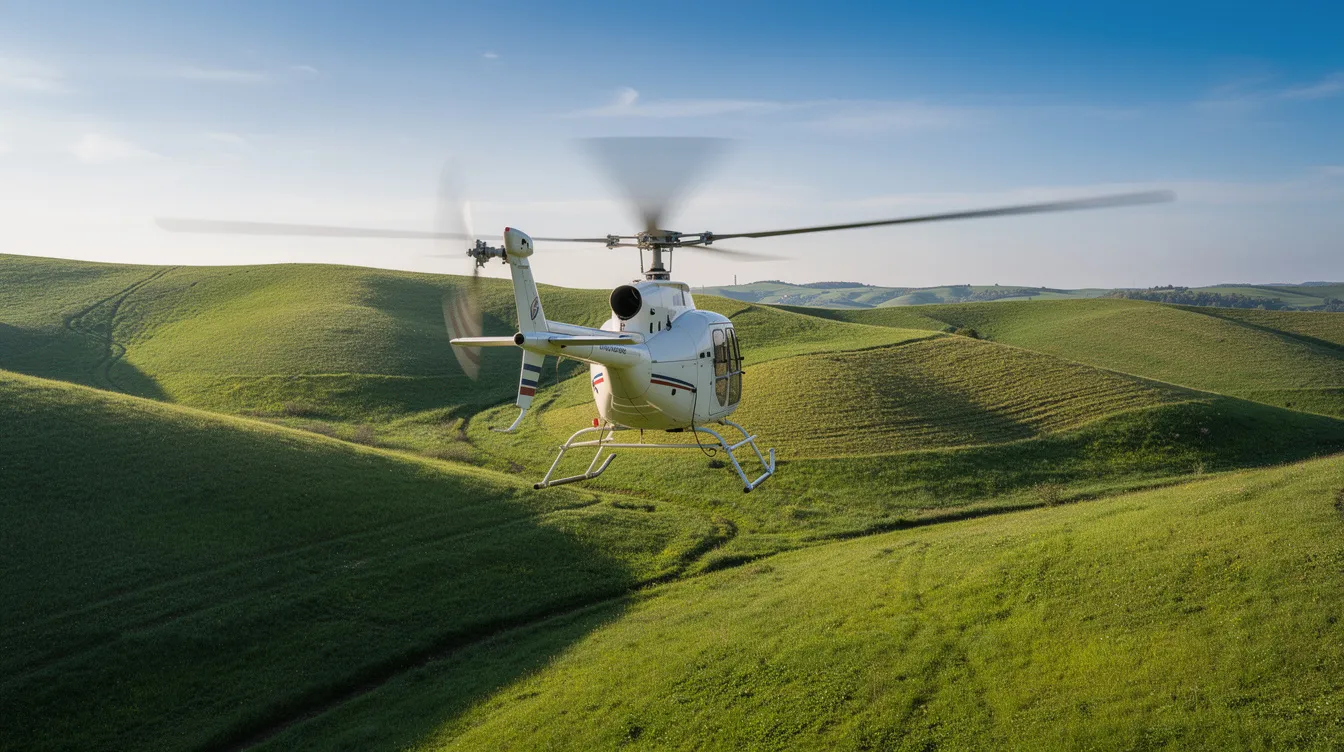
The Robinson R44 Raven II is one of the most recognized light helicopters in private aviation. This guide is intended for prospective charter clients, helicopter operators, and aviation enthusiasts seeking detailed information about the R44 Raven II. Whether the mission is a scenic coastal tour, a quick airport transfer, or a training sortie over open terrain, this four-seat light helicopter continues to earn its place across charter fleets and flight schools around the world. Here's what prospective charter clients, operators, and aviation enthusiasts should know about the aircraft's specs, real-world performance, and how to book one.
The Robinson R44 Raven II is a four-seat, single-engine, fuel-injected piston helicopter widely used for charter, flight training, and utility missions. It represents the higher-performance variant of the R44 line, offering meaningful advantages over the earlier Raven I in altitude capability, payload, and reliability.
The R44 Raven II delivers a cruise speed of about 109 knots (roughly 202 km/h), a service ceiling near 14,000 feet, and a range of up to 348 nautical miles, making it competitive among piston helicopters.
Charter pricing in North America typically runs around $900 per flight hour on average, though rates vary by region, operator, and mission type. Operating costs for owners and operators average about $260 per hour but can fluctuate based on usage and maintenance.
It is powered by a Lycoming IO-540 engine with 245 hp for takeoff, carries fuel in main and auxiliary tanks with crashworthy bladder-type fuel systems mandated since 2010, and seats one pilot plus three passengers with a maximum payload capacity of 2,500 pounds.
The R44’s two-bladed rotor system simplifies handling and storage but requires proper piloting to mitigate mast-bumping risks.
Jettly's digital platform makes it straightforward for travelers to source R44 Raven II flights with transparent pricing and on-demand booking alongside jets, turboprops, and other helicopter models.
The Robinson R44 Raven II is a four-seat, single-engine piston helicopter introduced in the early 2000s as an upgrade over the original R44 Raven. It is widely used in general aviation due to its affordability, capability, and extensive parts availability supported by a strong global network. The R44 bridges the gap between two-seat trainers and larger turbine helicopters designed for heavier commercial work.
Its basic configuration includes a two-bladed main rotor, a two-bladed tail rotor, skid landing gear, side-by-side front seating with adjustable pedals, and a rear bench seat for two people. The cabin accommodates one pilot and three passengers, with a payload capacity of around 716 pounds for passengers and baggage combined. The aircraft’s maximum gross weight is 2,500 pounds, with an empty weight near 1,500 pounds. The maximum gross weight of the R44 Raven II is 2,500 pounds, but the actual payload available for passengers and baggage is typically around 716 pounds after accounting for the empty weight and full fuel load. Payload capacity refers to the total weight the helicopter can carry, including passengers, baggage, and usable fuel, above its empty weight. The difference between the maximum payload capacity (2,500 lbs) and the payload capacity for passengers and baggage (716 lbs) is due to the weight of the helicopter itself and the fuel required for flight.
The R44 Raven II is popular for a range of missions, including flight training, sightseeing tours, law enforcement, and environmental protection projects such as those in Kenya. Its versatility extends to configurations for water operations, with Clipper II variants equipped with fixed or pop-out floats that inflate within 2–3 seconds for emergencies.
Both the Raven I and Raven II share the same airframe and general layout, but they differ in engine type, power output, and real-world performance. The Raven I uses a carbureted Lycoming O-540 engine, which produces slightly lower power and is more susceptible to carburetor icing—a problem the Raven II avoids entirely through fuel injection.
The R44 Raven II's fuel-injected Lycoming IO-540 provides about 245 hp for takeoff and 205 hp continuous, delivering improved altitude performance, better climb rates with full fuel and passengers, and smoother power delivery in hot or high-density-altitude environments. The Raven II’s maximum altitude reaches 14,000 feet, a significant advantage for operations in mountainous or hot-and-high environments.
In practice, compared to the Raven I, the Raven II is the preferred choice for commercial operators, training organizations, and charter fleets. Resale value also tends to favor the Raven II, especially low-hour examples.
The heart of the R44 Raven II is its Lycoming IO-540-AE1A5, a six-cylinder, horizontally opposed, fuel-injected piston engine known for reliability and low operating costs. The engine’s time between overhauls (TBO) is approximately 2,200 hours.
The fuselage is an aluminum monocoque structure with steel tube load-bearing elements, designed to keep weight low while allowing straightforward inspection and repair. The R44 has a two-bladed rotor system for stability and ease of maintenance, with wider blades on the Raven II that improve lift and efficiency. Low rotor tip speed contributes to quieter operation, which matters for noise-sensitive areas. Hydraulically boosted flight controls reduce cyclic and collective forces, helping the pilot maintain comfort during long training or charter flights.
Mast bumping remains a risk inherent to the two-bladed rotor design if not piloted correctly, underscoring the importance of proper training and recurrent safety programs.
Engine TBO: approximately 2,200 hours
Fuel type: 100LL avgas
The governor manages rotor RPM automatically, reducing pilot workload
The Raven II carries fuel in a main tank holding roughly 29.5 US gallons and an auxiliary tank with about 17.0 US gallons. Total fuel capacity gives the aircraft an endurance of roughly three-plus hours with reserves, and the R44 Raven II has a range of up to 348 nautical miles. It offers a range of about 300 nautical miles without reserve under typical loading.
Fuel burn in cruise runs about 14–16 gallons per hour depending on power setting, weight, and altitude. Bladder-type fuel tanks were mandated by 2010 for safety, replacing earlier aluminum designs. R44 helicopters with aluminum tanks were retrofitted by 2014, improving crashworthiness across the fleet.
When flying with full fuel, payload drops—meaning operators may need to reduce passengers or baggage on longer legs. For short-hop transfers or sightseeing tours, reduced fuel loads free up useful load for a full cabin. This trade-off is a standard part of charter planning, and tools like Jettly's airport locator for private flights help ensure your chosen heliports and airports fit the mission profile.
The R44 Raven II is fast for its class. The R44 Raven II has a cruise speed of 109 knots (about 125 mph / 202 km/h) at max gross weight. The R44 cruise speed can reach approximately 117 knots or 135 mph under lighter loads or favorable conditions.
The helicopter has a rate of climb of 1,000 feet per minute under standard conditions, which supports operations from confined areas or elevated terrain. It can reach a maximum altitude of 14,000 feet—a subject that matters for charter missions in mountainous regions or hot-and-high airports where density altitude erodes performance. Hover ceilings sit around 8,950 ft in ground effect and roughly 7,500 ft out of ground effect.
These numbers give the Raven II a meaningful edge over the Raven I for operators who need reliable speed and range in varied environments.
The cabin accommodates one pilot and three passengers. The front seat arrangement includes dual controls (removable on the right side for charter), while the rear bench holds two passengers side by side. Cabin width is about 50.5 inches—tight compared to turbine helicopters, but functional for flights under two hours.
Large bubble windows provide excellent visibility on all sides, a feature that matters for sightseeing, aerial photography, and law enforcement observation. Noise levels are typical for a piston helicopter; quality headsets (usually provided by the operator) make conversation easy. Storage is limited to small under-seat compartments—think soft bags and backpacks, not hard-sided luggage.
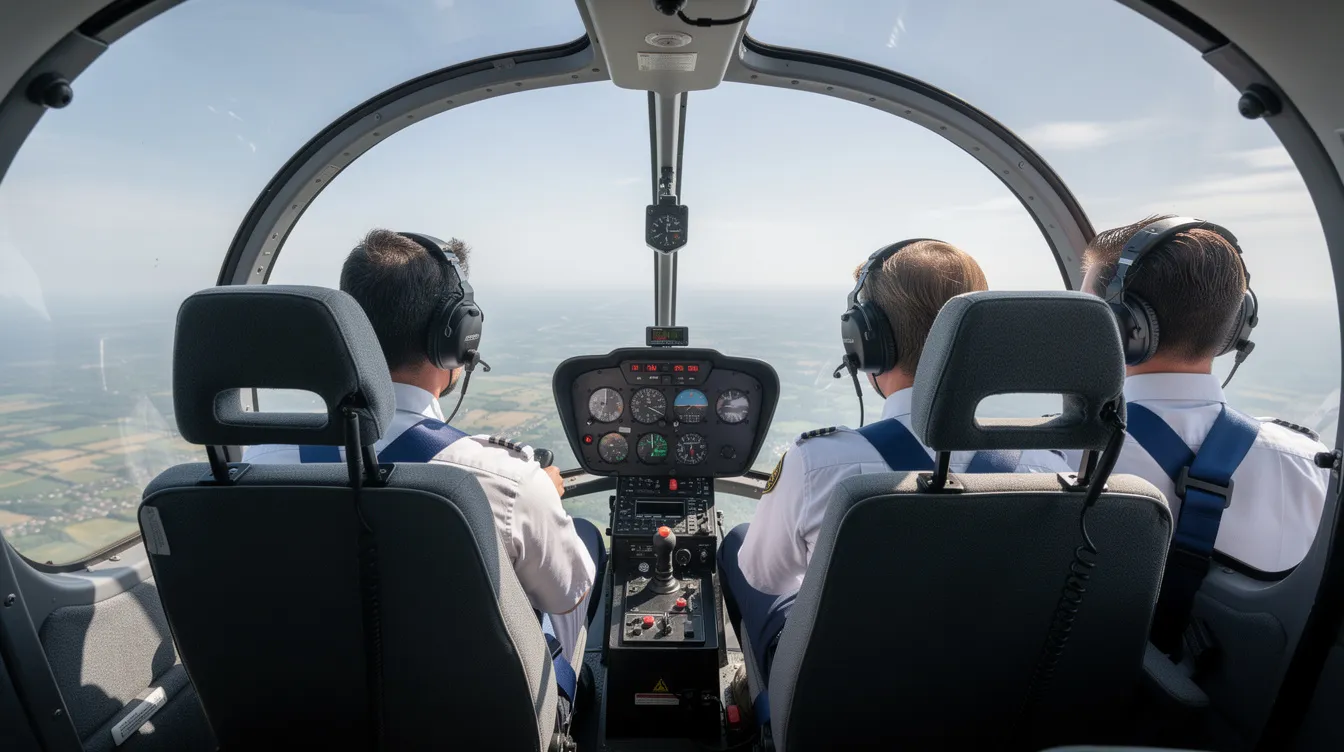
The R44 Raven series, especially the R44 Raven II, handles a wide range of missions across private, training, and commercial operation types. The R44 is frequently used for flight training and tours, and the R44 can be configured for various applications.
Common charter and commercial uses include:
City-to-city hops and airport transfers (e.g., a 30-minute shuttle from downtown to a regional airport)
Sightseeing tours over coastal, mountainous, or urban terrain
Aerial photography and filming with a doors-off configuration
Law enforcement operations, including patrol and observation
Pipeline, power line, and environmental monitoring flights that may connect with fixed‑wing positioning legs can be booked using methods similar to getting a seat on a private jet easily
It can perform missions in and around water with floats—the Clipper II variant features fixed floats or pop-out emergency floats. Pop-out floats inflate within 2–3 seconds for emergencies, allowing water landings when equipped. For a half-day scenic charter over coastal terrain, the Raven II's speed and range make it a solid choice without waiting for a larger, more expensive turbine aircraft, particularly for travelers already familiar with the economics of how much a private jet costs to own or charter.
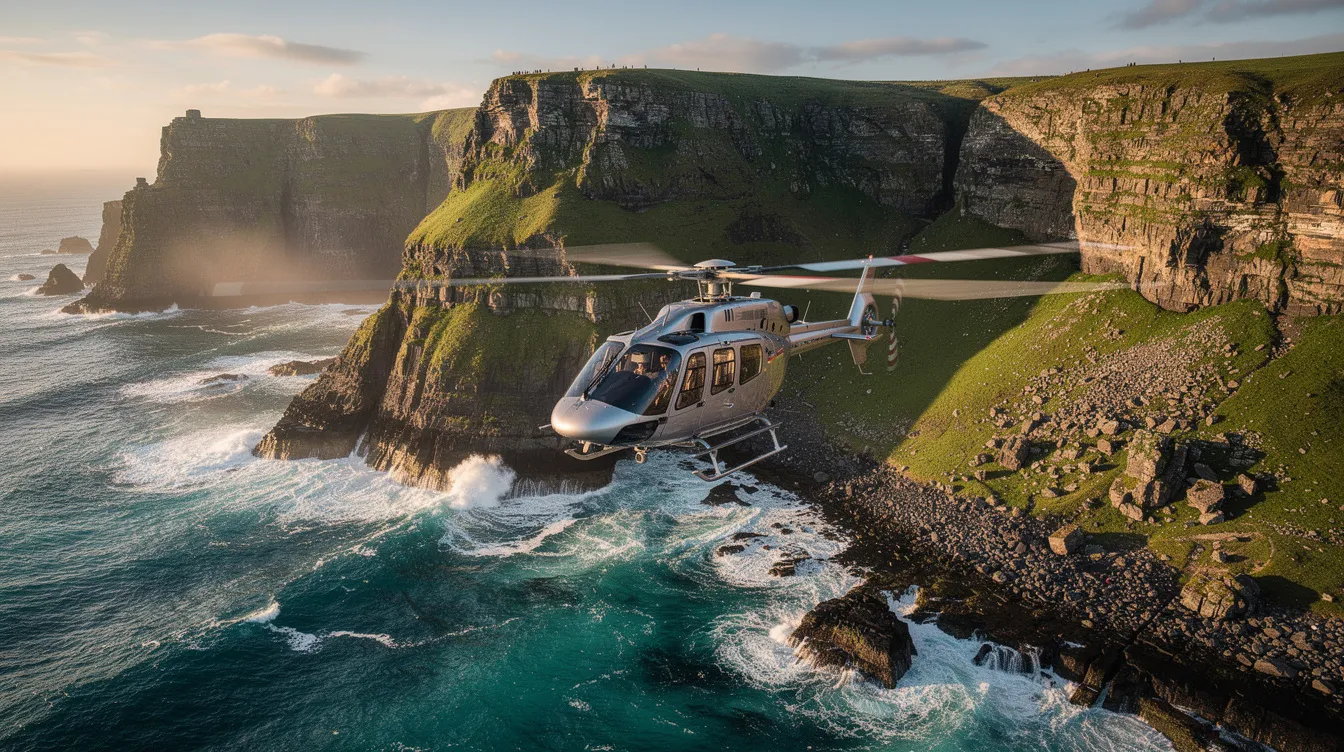
Hourly charter rates for an R44 Raven II generally fall in the $500–$900 range across North America, with the average hourly rental rate around $900 depending on market, operator, and mission complexity. Some operators in high-cost metro areas, like Houston, may charge over $1,000 per flight hour, and travelers often compare these figures with estimates from a private jet charter cost estimator when deciding between helicopters and jets.
Operating costs are about $260 per hour for owners and fleet operators, covering fuel, oil, maintenance reserves, and inspections. Hourly costs depend on the number of hours flown—higher utilization spreads fixed costs (insurance, hangar, inspections) across more revenue hours. A new Robinson R44 Raven II costs approximately $465,000, while a pre-owned Robinson R44 Raven II averages $456,000, depending on year and condition.
|
Cost Element |
Approximate Range |
|---|---|
|
Charter rate (per flight hour) |
$500–$900+ |
|
Direct operating cost (owner) |
~$260/hr |
|
New acquisition price |
~$465,000 |
|
Pre-owned price |
~$456,000 avg |
|
Fuel burn (cruise) |
14–16 gal/hr |
For travelers, chartering via a platform like Jettly avoids the capital outlay of ownership while still providing access to these aircraft on demand, alongside a broad catalog of private charter aircraft for fixed‑wing missions.
The Robinson R44 family has been subject to high-profile accidents over the years, but context matters, and not every crash is survivable. Many incidents trace back to pilot decision-making, weather, or loading errors rather than fundamental aircraft design flaws. The R44 has a crashworthy fuel system with bladder-type tanks mandated since 2010, energy-attenuating seats, and a strong airframe designed to protect occupants in survivable impacts. About 12% of R44 accidents resulted in post-crash fire.
Mast bumping is a risk with the R44's two-bladed rotor system if not piloted correctly, a point covered thoroughly in Robinson's safety courses and recurrent training programs. Pop-out floats inflate within 2–3 seconds for emergencies on water-equipped models. R44 helicopters are widely used for flight training due to their safety features and reliability.
Strict FAA, EASA, and national aviation authority oversight governs how operators maintain and operate the aircraft. Reputable charter brokers like Jettly work only with vetted operators that comply with commercial air operator certificates and safety audit standards, providing a line of defense for charter customers who may not know how to evaluate an operator on their own, similar to the criteria used when comparing the best private jet charter companies in the broader market.
The R44 has been used for flight training in the US and globally for years, and flight schools favor the Raven II for its four-seat cabin, realistic commercial operations experience, and board-ready avionics. Cadet programs and collegiate rotor-wing courses use the aircraft for cross-country time building, instrument procedures (when equipped), and crew decision-making exercises.
Commercial operators deploy the Raven II to handle lower-cost missions where a light piston helicopter is sufficient, complementing larger turbine machines in the fleet. With over 6,000 R44S built across all variants, the R44 has extensive parts availability and a strong support network. This fleet density benefits charter reliability—maintenance shops and operators worldwide can source components quickly, keeping aircraft on the line, much like the diverse fleets profiled in a comprehensive list of private charter airlines.
Jettly operates as a digital private aviation marketplace that connects travelers with operators flying aircraft like the Robinson R44 Raven II. The booking flow is straightforward: a user enters their route and dates, the platform displays available aircraft—including helicopters where applicable—with instant pricing, and the user selects and confirms. Frequent flyers can also benefit from Jettly's private jet memberships, which extend similar on-demand convenience across jets and other aircraft types.
Jettly aggregates a global inventory of over 20,000 aircraft, not limited to jets. Turboprops, helicopters, and light aircraft all appear alongside one another, allowing travelers to compare a Raven II against other categories on the same route. Benefits include transparent pricing, no long-term commitments, and the ability to integrate ground transportation, with additional flexibility available through jet card membership programs. Learn more about Jettly's charter options at https://www.jettly.com.
The R44 Raven II sits in a specific niche. Compared to larger turbine helicopters, it offers a much lower charter rate and acquisition cost but carries fewer passengers with less baggage and flies slower. For missions needing more than three passengers, longer legs, or offshore work, a turbine helicopter is the better choice, and some customers compare those options using a jet card flight cost estimator when deciding between rotor‑wing and fixed‑wing solutions.
Compared to smaller two-seat piston helicopters owned primarily for solo training, the Raven II provides a more realistic, mission-capable platform. And on short regional routes (say, 150–200 nm), the helicopter's ability to land at helipads, remote field sites, and rooftops can beat a light jet or turboprop on total door-to-door time, even if the jet flew faster nose to nose—especially when paired with a platform positioned as a NetJets alternative for flexible private flying.
|
Factor |
R44 Raven II |
Light Jet |
Turboprop |
|---|---|---|---|
|
Cruise speed |
~109 kts |
~350 kts |
~250 kts |
|
Passengers |
Up to 3 |
4–7 |
4–9 |
|
Landing flexibility |
Helipads, fields |
Airports |
Airports |
|
Hourly charter cost |
$500–$900 |
$2,500–$5,000 |
$1,500–$3,000 |
Start by defining your route, confirming passenger count and baggage weight, and checking heliport or landing site availability at both ends. At 109 knots cruise, a 100 nm trip takes roughly 55 minutes in the air—add 15–20 minutes for boarding, safety briefings, and ground transport. If budget is a concern, you can also apply many of the same tips for booking the cheapest private flights that travelers use on jet charters.
Weather and daylight matter. Low ceilings, strong winds, or night conditions can delay or stop a helicopter flight entirely, so build flexibility into your schedule. When requesting a quote through Jettly, provide passenger weights and any special equipment (camera gear, for instance) so the operator can confirm what the aircraft can safely handle. Note: final passenger and baggage acceptance depends on the operator's weight-and-balance calculations. If your group size or distance pushes near the helicopter's limits, Jettly's platform lets you compare the R44 Raven II with jets or turboprops on the same map and page, and even explore flight‑sharing options that work similarly to crowdsourced private jet flights with shared seats.
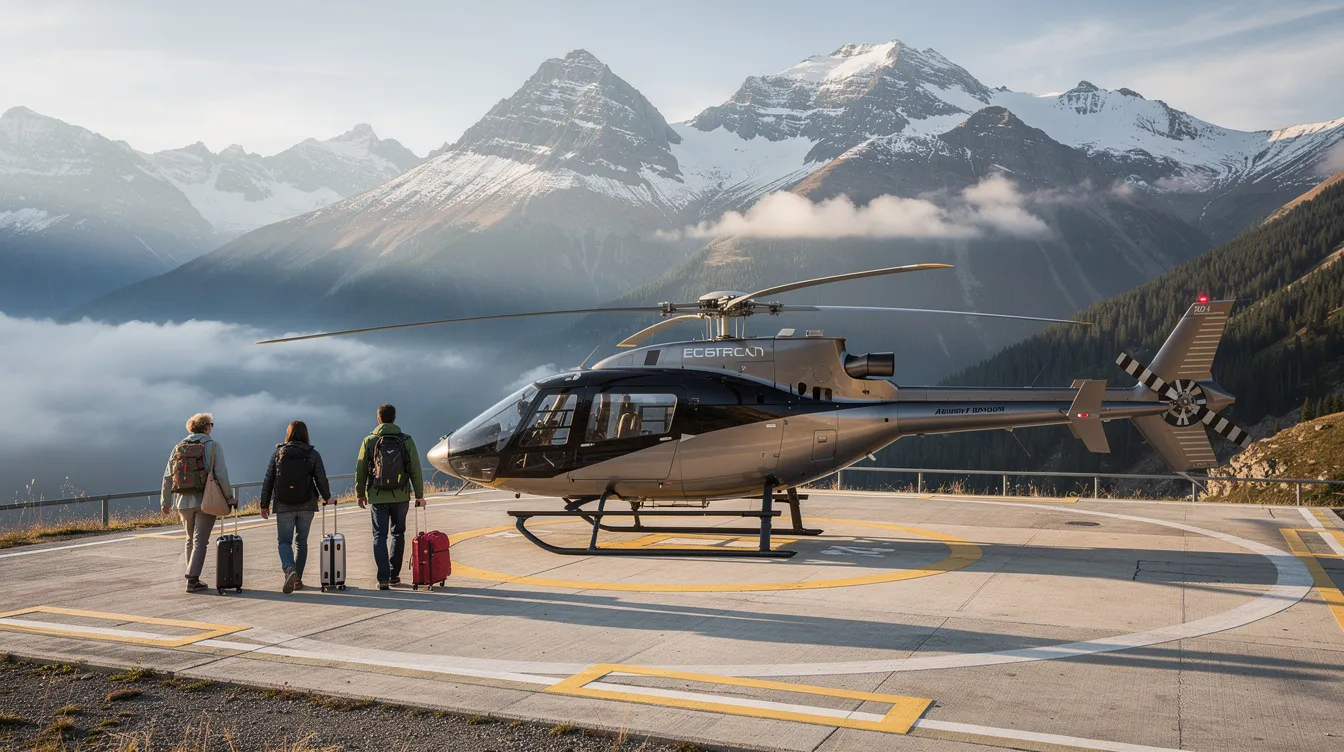
Piston helicopters like the R44 Raven II burn avgas and produce emissions. However, efficient routing, proper weight management, and direct point-to-point travel can minimize environmental impact compared with multiple ground vehicles covering the same territory.
Growing interest in carbon offset programs gives charter customers an option to offset emissions from their flight. On the operational side, proper maintenance, optimized flight planning, and modern avionics improve situational awareness and reduce unnecessary track miles—practical steps that benefit both fuel efficiency and air quality, while still allowing travelers to seek affordable private jet charter options when comparing helicopters with fixed‑wing flights.
The following FAQ covers practical questions that go beyond the specs and pricing discussed above. Each answer is kept brief and written for travelers who may be new to helicopter charter, whether they’re planning a local hop or connecting with fixed‑wing charters in major markets like private jet services in Kolkata, West Bengal.
Most operators set a one-hour daily minimum, though some may require higher minimums during weekends or peak seasons. Repositioning time—getting the helicopter from its base to your departure point—may also be billed separately. Jettly's platform displays these conditions transparently during the quoting process for both helicopters and fixed‑wing routes such as private jet charter in Chennai, Tamil Nadu.
Luggage capacity is limited by useful load and cabin space. Note: actual luggage allowance varies with passenger weight and route conditions, so the operator must confirm the final load. In most cases, passengers should plan on small soft bags or backpacks rather than large hard-sided suitcases. When requesting a quote through Jettly—whether for an R44 or a private jet charter in New Delhi—provide passenger weights and luggage estimates so the operator can confirm what is safely possible within weight-and-balance limits.
Night and instrument operations depend on the individual aircraft's installed equipment and the operator's regulatory approvals. Many R44 Raven II helicopters are equipped for VFR only, while some support limited IFR training configurations. Safety-focused operators will decline or delay flights when weather or visibility falls below legal and company minima.
Comfort is acceptable for a light piston helicopter, especially for flights under 1–2 hours. Noise and vibration are higher than in pressurized jets, so quality headsets (provided by the operator) are essential. Dress in layers—temperatures can shift, particularly on doors-off photo missions.
Commercial R44 Raven II charter flights arranged through Jettly are operated by licensed commercial helicopter pilots working for certified air operators. These pilots must meet regulatory experience and recurrent training standards. Customers can ask for pilot experience summaries and recent flight hours; reputable operators are typically happy to share this information before confirming a flight.
The R44 Raven II fits best when the mission involves short to medium regional trips, three or fewer passengers, light baggage, and flexible landing options close to final destinations. Its proven cruise speed, efficient fuel burn, and decades of global fleet support make it a reliable platform for everything from sightseeing to law enforcement to flight training.
It's not a jet, and it's not trying to be. Cabin space is limited, weather constraints are real, and vibration comes with the territory. But for the missions it's designed to handle, the R44 Raven II delivers value that's hard to match in its price class. Jettly makes it simple to source this helicopter among thousands of aircraft worldwide—no ownership required, no long-term commitments.
Ready to experience private travel on your terms? Explore flight options or request a quote at https://www.jettly.com.
Share this post:
Jay Franco Serevilla
Jul 7, 2026
|
5
min read
Discover tips and trends in the industry.
5
min read
When Air Tickets Are Cheaper: Best Time to Buy Flights and How Jettly Helps
Knowing when air tickets are cheaper can significantly reduce travel costs. This guide outlines optimal booking windows for domestic and international flights while highlighting how Jettly's private jet charter services provide a reliable alternative to fluctuating airline prices.
Read More
5
min read
When Do Flights Have Sales? Timing, Patterns, and How to Catch the Best Deals
Understanding flight sales can lead to significant savings for travelers. Airlines typically offer promotions during specific months and weekdays, with the best deals often found for off-peak travel. By being flexible with travel dates and monitoring sales, both commercial and private jet travelers can secure the best prices.
Read MoreStay updated with our latest insights and tips to elevate your journey with us.
MEMBERSHIPS AND ASSOCIATIONS



Disclaimer: Jettly operates as a charter broker, offering access to a global digital jet charter marketplace. Jettly is not a direct air carrier and does not own or operate aircraft. All advertised flights are conducted by third-party air carriers that are fully licensed and hold the appropriate Part 135 or Part 121 certifications issued by the Federal Aviation Administration (FAA) or equivalent regulatory authorities under U.S. or foreign law. Jettly complies fully with the U.S. Department of Transportation's Part 295 and Part 298 Charter Broker regulations. Jettly does not carry additional liability insurance. Passengers are covered by aircraft operator insurance. TICO: 50023770


