



Login
Get Instant Pricing On 23,000+ Aircraft

>
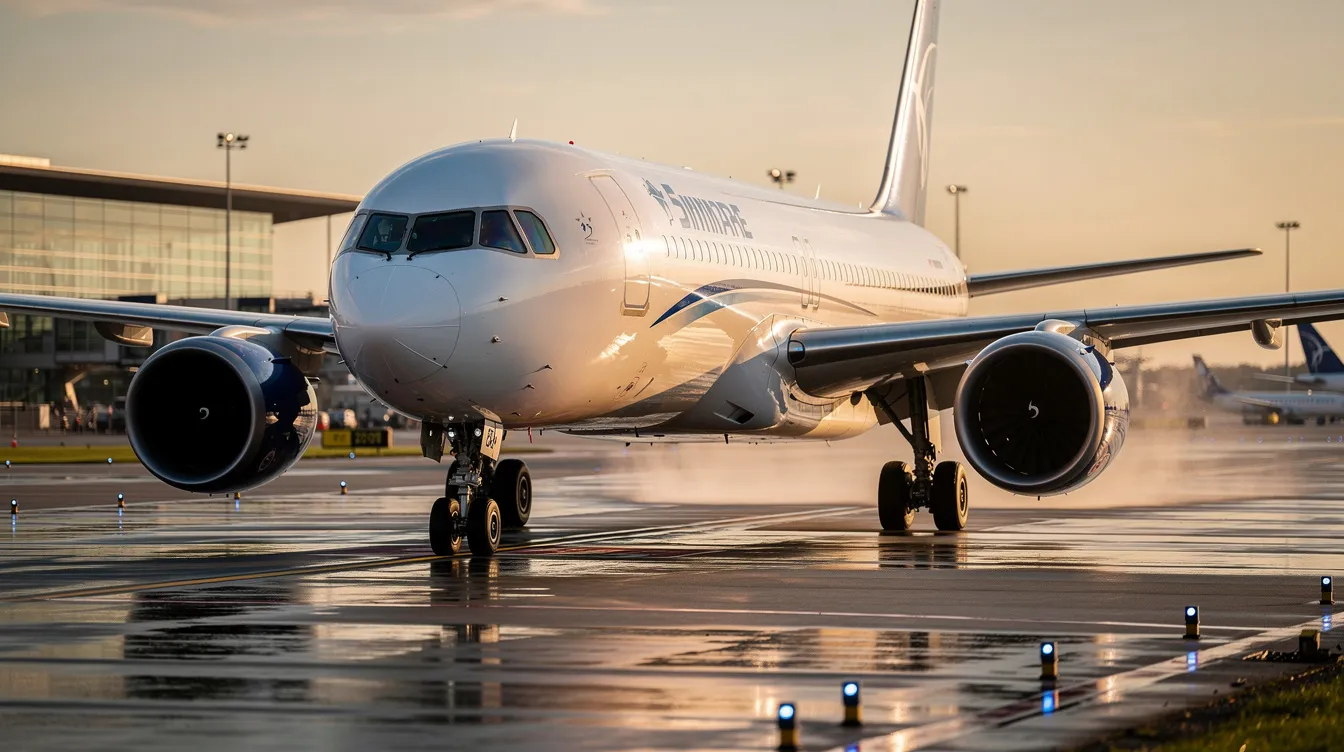
Recent plane crashes across the United States have renewed public concern about aviation safety. From a Learjet 60 that killed nine people in Florida to a cargo jet that overran a runway in Miami, events in 2025 and 2026 have put a spotlight on how aircraft accidents unfold, how investigations work, and what travelers can ask before booking a private flight. This guide reviews notable incidents, explains what the Federal Aviation Administration (FAA) and National Transportation Safety Board (NTSB) examine, and offers practical guidance for private flyers and charter customers.
Several high-profile plane crashes in 2025 and 2026 involved business jets, cargo operations, and small aircraft. Weather, mechanical factors, and pilot decision-making appear in many investigations.
General aviation has a higher accident rate per flight hour than scheduled airlines. The general aviation fatal accident rate fell to 0.68 per 100,000 flight hours in 2024, the lowest on record.
NTSB investigations can take 12 to 18 months to complete and may produce recommendations that strengthen standards for operators and manufacturers.
Jettly is a private jet charter broker and marketplace. Flights are operated by properly certified third-party carriers, not by Jettly itself.
Travelers can ask about operator certification, crew experience, aircraft maintenance, and route-specific risks before booking.

Between 2013 and 2026, high-profile aviation accidents in North America and Europe involved business jets, cargo freighters, and small piston or turboprop aircraft. Scheduled airline fatal accident rates have declined over time, while general aviation rates vary. The FAA recorded a general aviation fatal accident rate of roughly 0.93 per 100,000 flight hours in FY 2022, falling to about 0.68 in FY 2024, the lowest since tracking began in 2009.
Many incidents that shape public perception involve air ambulances, light business jets, turboprops, and piston planes operating into secondary or regional airports. Travelers can research airport access in advance using an airport locator tool. Recurring themes include loss of control, approach-and-landing accidents, runway overruns, icing encounters, and system malfunctions.
The sections below review specific cases, explain how investigators reconstruct events, and connect those findings to practical choices for charter customers. Each crash has its own circumstances; a headline alone cannot establish a cause or indicate the risk of a different flight.
A Learjet 60 crashed in Greenacres, Palm Beach County, Florida, on November 1, 2026. The aircraft, registration N722BD, was operated by Aurora Aviation, doing business as Upper Jet, and had departed Austin, Texas, for North Eleuthera Airport in the Bahamas. All nine people aboard died.
The flight left Austin-Bergstrom at roughly 10:37 a.m. ET. Around 12:47 p.m., the crew reported light clear icing, moderate turbulence, and precipitation, then requested a climb to Flight Level 370. Within 30 seconds, the aircraft began an uncontrolled descent. An overspeed warning sounded, followed by a Mayday call. The aircraft plunged roughly 27,000 feet in about one minute before radar tracking stopped.
Wreckage struck near Military Trail and Cresthaven Boulevard, producing a crater in the road and scattering debris across rooftops. One person on the ground suffered a leg injury. Parts of the aircraft's left elevator were found up to four miles from the crash site, indicating that structural separation may have occurred before the primary impact.
Aircraft icing can increase weight, disrupt airflow, reduce lift, and increase drag. The NTSB is leading the investigation and examining weather, engines and de-icing systems, maintenance records, and the flight path. Records show a cockpit voice recorder was installed, but investigators have not confirmed whether it remained onboard. The NTSB is investigating potential factors including severe weather and in-flight icing.
The Learjet was traveling from Austin, Texas, to the Bahamas. For charter customers, this case underscores why investigators assess operational, environmental, and mechanical evidence together before reaching conclusions. Early reports are not final findings.
On September 6, 2026, a Boeing 767-33A freighter flying as Amazon Prime Air Flight 7598 ran off Runway 30 at Miami International Airport. Five people on the ground were killed, and another was seriously injured. The aircraft, operated by 21 Air under contract to Amazon, was arriving from San Juan, Puerto Rico.
Key details from the NTSB preliminary report include:
The aircraft crossed the runway threshold at approximately 177 knots, above the target speed.
Touchdown occurred roughly 3,750 feet beyond the runway threshold.
The freighter broke through the airport perimeter fence and struck at least two vehicles on a public road.
Five people in a van were killed. A woman in an SUV was seriously injured.
The two-person flight crew received minor injuries.
The first officer had warned the captain several times during the approach that speed was excessive. Thunderstorm activity and possible tailwind components were present. The NTSB preliminary report raised questions about whether air traffic control (ATC) warned the crew about strong tailwinds. Investigators are examining pilot decision-making, runway condition, braking and spoiler performance, thrust reverser function, and the aircraft's engines.
Amazon suspended new flights with 21 Air pending review. The final report is expected in 12 to 24 months. Cargo incidents can inform wider oversight and training standards, though each operation has its own aircraft, crew, and operating conditions.
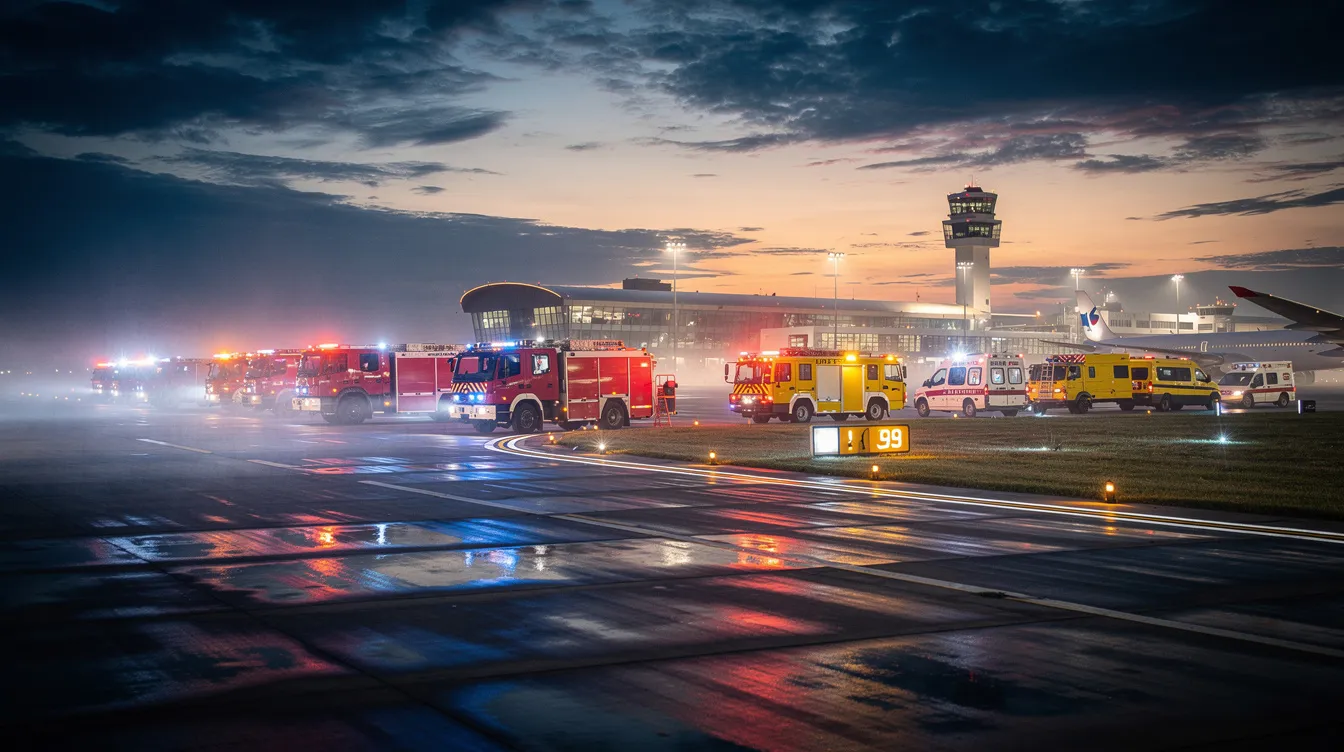
A small plane crash typically involves a piston aircraft or light turboprop used in general aviation, air taxi, or private ownership. These aircraft account for more than 90% of U.S. registered aircraft and historically have higher accident rates than scheduled airlines.
Several incidents from 2025 and 2026 illustrate the range of events investigators assess, including those involving large fleet operators such as NetJets, a major private aviation provider:
A Beechcraft BE95-A55 Baron crashed in South Carolina on July 2, 2026. The NTSB is investigating the crash, including reported engine issues.
One person died in a Cessna 680A Citation Latitude crash in Texas on June 16, 2026. The aircraft was operated by NetJets. The crew was managing a mechanical issue and low fuel while diverting. The NTSB preliminary report was released July 9, 2026. The event was NetJets' first fatal accident and has prompted some travelers to compare NetJets with alternatives such as Jettly when considering private flying options.
A Beechcraft 58 Baron crashed in Tennessee on April 13, 2026, killing both pilots.
A Cessna 550 Citation II crash on December 18, 2025, killed all seven aboard. Investigators are focusing on mechanical issues and other potential factors.
In Wisconsin, Representative Tom Tiffany's Beechcraft Bonanza lost engine power on final approach and made an emergency landing in Lake Wausau. Both occupants survived with minor injuries.
Potential contributing factors across general aviation accidents include engine or fuel problems, weather, pilot workload in instrument conditions, and limited margins near terrain or populated areas. Investigators determine whether any of these factors applied in a particular event; they should not be assumed from aircraft type alone.
Privately owned, pilot-flown trips differ from charter flights operated by FAA Part 135 carriers. Part 135 operators must meet commercial requirements for maintenance, crew training, duty time, and operational control. Travelers can ask about the operator and the specific private charter aircraft, rather than treating charter and owner-flown operations as interchangeable.
Not all recent plane crash stories involve civil aircraft. Several F-16 fighter jet accidents made headlines in September 2026.
On September 17, 2026, a Texas Air National Guard F-16 from the 149th Fighter Wing crashed during a training exercise called “Operation Northern Cactus” in Grand Traverse County, Michigan. The pilot ejected safely. A hydrazine chemical spill prompted authorities to evacuate residents within a one-mile radius. Five days later, on September 22, another F-16 from the 52nd Fighter Wing at Spangdahlem Air Base in Germany crashed on approach during a local training mission. That pilot also ejected and sustained minor injuries.
Military crash investigations operate through separate Air Force safety boards. Their engineering work may examine flight controls, engines, and ejection systems, but military training sorties take place in a different regulatory environment and often involve different flight profiles from FAA-regulated civil charter flights, including international private jet operations subject to additional rules.
Public interest in current crashes is often shaped by older aviation mysteries. Nearly 90 years after Amelia Earhart and navigator Fred Noonan disappeared over the Pacific in 1937, the search for their aircraft continues.
In late 2023, Deep Sea Vision flagged a sonar image dubbed the “Taraia Object” during a survey between Howland Island and Kiribati. The object has not been confirmed as Earhart's Lockheed Electra. Purdue University has been involved in archaeological efforts, including surveys around Kiribati and Nikumaroro through 2025 and 2026 using underwater drones and remote sensing.
The difference between Earhart's disappearance and a modern plane crash is the available data. Her aircraft had no flight data recorder, limited radio contact, and no real-time radar or satellite tracking. Modern aircraft may transmit ADS-B data and use digital recorders or satellite communications, although equipment varies by aircraft and operation. These tools can help investigators reconstruct events; they do not by themselves explain why an accident occurred.
The NTSB leads safety investigations into civil aviation accidents in the United States. The FAA focuses on regulation, oversight, and enforcement. Their roles are distinct but complementary.
Typical investigative steps include:
Securing and documenting the crash site.
Recovering wreckage, including small fragments that may be found miles away.
Recovering flight data and cockpit voice recorders when present.
Interviewing witnesses, air traffic controllers, and survivors.
Analyzing maintenance and pilot training records.
Reconstructing the flight path using radar, ADS-B, and other data sources.
Investigators may also prepare transcripts of cockpit audio or ATC communications when available. They examine cockpit communications alongside pre-existing mechanical conditions. Technical areas can include engine teardown, avionics, flight controls, icing, fuel quality, structural integrity, and weather. Investigators often examine human, mechanical, and environmental variables together.
Preliminary reports typically arrive within 30 to 60 days. The Miami cargo plane preliminary report, for example, was published about one month after the accident. NTSB investigations can take 12 to 18 months to complete, and final reports may include safety recommendations for manufacturers, operators, and the FAA. Some investigations take longer. Mandatory single-use parts protocols have also been established to enhance aviation safety.
Charter brokers such as Jettly can follow public NTSB and FAA findings to understand emerging risk factors relevant to aircraft and operators available through the marketplace, including partners like Dexter Air Taxi and similar private jet operators. That does not replace the carrier's safety responsibilities or regulator oversight, but it can complement cost-conscious strategies for booking safer, more affordable private jet flights.

No two accidents are identical, but patterns recur across NTSB and international reports. Aviation incidents typically result from an “error chain” of multiple factors rather than one isolated failure. An error chain is a sequence of events or factors that, when combined, lead to an accident.
Human factors: Pilot decision-making errors can contribute to incidents. Human factors are responsible for roughly 50% to 70% of aviation incidents, including checklist discipline, fatigue, and communication breakdowns.
Mechanical factors: Mechanical failures can compound other issues. Investigators examine systems and components, particularly when maintenance history is relevant. Recent investigations highlight the importance of maintenance oversight.
Weather: Severe weather events account for roughly 20% to 30% of aviation accidents, including icing, thunderstorms, wind shear, and low visibility.
Operational pressures: Tight schedules, runway selection, and crew coordination can affect safety margins. In the Miami cargo case, the crew was flying together for the first time, according to the account provided here.
Modern cockpit automation can reduce workload, but over-reliance on autopilot can contribute to skill degradation when pilots must manually respond to unusual attitudes or system failures. Post-maintenance check flights may also expose aircraft to unexpected aerodynamic behavior.
Safety management systems (SMS) aim to identify risks before they cause an accident. Ground operations and runway incursions have become focus areas for safety improvements. Charter customers can ask whether an operator maintains a formal SMS as one part of assessing its safety culture and can review guides to the best private jet charter companies that emphasize safety and operator standards.
This section draws on ATC recordings, flight data, and preliminary reports from cases like the Florida Learjet and Miami cargo crash. The goal is to describe the reported sequence without speculation beyond available evidence.
In the Florida case, the crew encountered icing and turbulence at cruise altitude. In the last minute before impact, less than 30 seconds after requesting a climb, ADS-B data showed the aircraft turning, slowing, and then descending steeply as an overspeed warning sounded. A Mayday call followed. Downward pitch control failure can leave pilots with very little recovery time. The discovery of elevator parts miles from the impact site is an important investigative finding, but it does not alone establish the cause.
In the Miami cargo crash, the first officer's warnings about excessive approach speed appear in the preliminary report. The aircraft crossed the threshold fast, touched down far along the runway, and could not stop before leaving the airport. The event illustrates how a high-energy approach and runway conditions can combine to reduce stopping margins.
Small plane crashes may involve a compressed emergency timeline. Pilots can report engine roughness or power loss and have limited time to identify a landing site. Effective communication and coordination between pilots and air traffic controllers are critical for safety in those moments.
Professional crew training includes emergency scenarios through simulator sessions and recurrent checks. Travelers can ask whether the proposed operator uses two-pilot crews for the selected flight and how it handles recurrent training, especially when comparing the broader costs of private jet ownership versus charter use.
Not every incident ends in death. Training, aircraft design, and quick decisions can help people survive emergencies.
Representative Tom Tiffany's Beechcraft Bonanza lost engine power on final approach to Wausau Downtown Airport in Wisconsin. The pilot chose Lake Wausau as a landing site. Both occupants swam to safety with minor injuries. The event shows how an emergency landing can end without fatalities, though circumstances differ from one flight to another.
The two F-16 ejections in Michigan and Germany showed military escape systems working as designed. Both pilots survived. In Michigan, the hydrazine spill posed a separate risk to people on the ground and led to evacuations.
Private jet customers do not see the emergency simulations pilots complete. Redundant systems, crew training, and aircraft design features can contribute to survivability, but no single feature guarantees a safe outcome, even on top-rated safe private jet models.
Serious aviation accidents can lead to lawsuits, wrongful-death claims, product-liability actions, and disputes over maintenance responsibility. Liability depends on evidence and applicable law, and a crash investigation does not by itself establish legal fault. Travelers can still review complete guides to private jet rental costs when planning future trips.
|
Party |
Potential liability area |
|---|---|
|
Operator or air carrier |
Crew training, flight operations, and dispatch decisions |
|
Aircraft owner |
Aircraft condition, if distinct from the operator |
|
Maintenance provider |
Inspection compliance, parts replacement, and record accuracy |
|
Manufacturer |
Potential design or manufacturing defects and parts quality |
NTSB findings do not assign legal blame, but investigative evidence may be relevant in court proceedings and insurance negotiations. Families may seek compensation for losses, subject to the facts and applicable law. The N823KD Bombardier Challenger 604 case is one example of how accident investigation data can inform legal proceedings.
Charter brokers like Jettly are not direct air carriers. Flights are operated by third-party carriers holding the required certification and insurance. The operating carrier is responsible for conducting the flight under its certificate and applicable regulations. Customers should confirm the operator for their specific itinerary.
A plane crash with fire or widely shared wreckage footage can dominate a news cycle and shape public perceptions of aviation risk. The Florida Learjet crash produced video of the road impact and crater that circulated widely. Coverage also includes the personal stories of victims and their families.
Less attention often goes to follow-up coverage when NTSB final reports appear months later. Those reports explain the evidence and may identify corrective actions, but they receive less attention than breaking news.
For perspective, more than 40,000 people die annually in U.S. automobile accidents. A plane crash involving nine fatalities can receive more sustained national attention than a comparable period of road deaths. News attention is not itself a measure of a traveler's relative risk; sound comparisons require relevant rates and exposure data.
Jettly's educational content aims to help travelers interpret investigation findings and make evidence-based decisions about private flying rather than reacting to headlines alone. Tools such as a private jet charter cost estimator can help align those decisions with budget considerations.
Most incidents discussed here involve business jets, cargo jets, or small aircraft, but lessons can carry over into scheduled airline operations.
After analyzing business and cargo accidents, regulators may require changes such as updated de-icing procedures, crew training for unstable approaches, or enhanced runway protections. The Boeing 787-8 Dreamliner crashed on June 12, 2025, when Air India Flight 171 went down. The crash marked the first fatal accident for the Boeing 787-8 fleet and prompted reviews of procedures for the aircraft type, just as travelers review jet card flight cost estimators and other planning tools when choosing how to fly.
Airline passengers benefit from two-pilot crews, duty-time rules, recurrent simulator checks, and safety systems. Major airlines are statistically among the safest forms of transportation. Investigations can produce lessons that improve procedures and equipment across the industry.
Many Jettly users fly on business jets and turboprops similar to aircraft discussed in recent incidents. Understanding the operational context can help travelers make more informed choices.
Charter flights arranged through Jettly are operated by properly certified Part 135 charter companies under applicable commercial rules. Requirements for maintenance, crew training, and operational control differ from those for privately flown owner-pilot trips.
Customers can ask about:
Two-pilot crews, including on light jets.
Modern avionics with terrain awareness (TAWS) and traffic collision avoidance (TCAS).
Runway performance margins for shorter fields.
De-icing equipment and procedures for winter routes.
Recent engine maintenance and compliance with applicable service bulletins.
When requesting a quote, travelers can ask for the operator certificate type, pilot experience on the specific aircraft type, the date of recent maintenance checks, and whether the operator maintains a recognized safety management system.
Jettly provides access to a broad global aircraft marketplace, allowing travelers to compare aircraft categories and options. The right aircraft depends on passenger count, baggage, range, runway, weather, and available performance margins—not just cabin size or price, which is also true when evaluating options for selecting a personal plane that fits your needs. Some travelers use private jet membership programs to structure their flying around these needs.
Jettly is a digital private jet charter marketplace and charter broker, not an air carrier. It connects customers with aircraft operated by licensed third-party carriers, similar to the broader ecosystem of private and charter airlines and operators. The platform offers access to a global inventory of more than 20,000 unique aircraft, subject to availability and suitability for a trip.
Instant quotes and aircraft filters help travelers compare options by size, range, and performance, including models from leading private plane manufacturers serving different budgets and missions. Matching an aircraft to runway length, weather conditions, and passenger needs is an important booking consideration. The operating carrier remains responsible for the flight and must hold the relevant certification. Jettly also highlights affordable private jet charter options for price-sensitive travelers.
For example, a traveler planning a winter trip to a regional airport with a 5,200-foot runway should compare suitable aircraft and their operating limits rather than assume any jet can use the field. A midsize aircraft may offer appropriate performance margins in one scenario, while another aircraft or airport may be better in different conditions, such as choosing between hubs like Atlanta private jet charter options and other cities. Jettly's advisors can help explain trade-offs.
Explore private jet safety ratings or learn more about how to charter a private jet. Learn more about Jettly's charter options at https://www.jettly.com.
Before confirming a private charter, travelers can ask concrete questions about the carrier, crew, aircraft, and route. They can also consider accessible ways to get a seat on a private jet that align with their safety expectations.
Questions to ask before booking:
What certificate does the operator hold, such as Part 135 or an equivalent?
How many hours does each pilot have on this aircraft type?
When did the crew last complete simulator training and recurrent checks?
What maintenance program governs the aircraft?
Is manufacturer support current for the aircraft's engines?
Does the operator hold third-party safety audits, such as ARGUS, Wyvern, or IS-BAO?
Airport and route factors to consider:
Runway length relative to aircraft performance.
Terrain and typical weather, including icing, crosswinds, and thunderstorms.
Whether the aircraft has suitable performance margins for the airport.
Departure and arrival elevation, since high-altitude airports can reduce performance.
Platforms like Jettly provide aircraft information, comparisons, and access to advisors who can explain trade-offs between light, midsize, and heavy jets, similar to broader guidance on choosing the best cross-country aircraft for different missions. Travelers can also ask about alternatives if weather or operational limits change, or explore ways to buy a single seat on a private jet instead of chartering the entire aircraft.
News of any plane crash is unsettling, especially for frequent business or family travelers. The instinct to avoid flying after a headline is understandable, but decisions are better grounded in relevant safety data and the circumstances of a specific flight.
Private travel can offer time savings, access to smaller airports, schedule flexibility, and privacy, whether you charter or eventually move into more affordable personal aircraft ownership options. These benefits should be weighed alongside operational considerations and managed through informed choices, whether booking a full charter or using crowdsourced private jet flights with shared empty seats.
|
Approach |
Characteristics |
|---|---|
|
Uninformed chartering |
Limited visibility into operator credentials, aircraft maintenance, and route considerations |
|
Informed chartering through Jettly |
Aircraft comparisons, operator information, and support discussing aircraft and route selection |
Safety improvements arising from NTSB and FAA investigations can strengthen training, procedures, and equipment requirements over time. Learning about the safest private jets and structured options like jet card programs for frequent flyers is one way to turn concern into practical questions.
Use data, ask questions, and use booking tools rather than basing decisions on high-profile accidents alone, whether planning flights in North America or considering routes such as private jet charter services in Kolkata, India.
General aviation, which includes many small private planes, has a higher accident rate per flight hour than scheduled airlines. In FY 2024, the FAA recorded a general aviation fatal accident rate of 0.68 per 100,000 flight hours. Major airlines have substantially lower fatal accident rates. The difference reflects variations in training requirements, operational oversight, equipment, and the types of flights being compared. Charter flights booked through regulated Part 135 operators have more structured maintenance and operational requirements than owner-flown aircraft, though they differ from airline operations in scale.
Outright engine explosions are rare. Partial power loss, flameouts, and mechanical degradation can contribute to an accident sequence, particularly in small aircraft. Twin-engine jets and turboprops are designed to continue flying after the loss of one engine within defined limits, but outcomes depend on circumstances, aircraft performance, and crew response. Investigators examine engines to distinguish pre-impact problems from damage caused by impact.
Ask for the operator's air carrier certificate information and verify it through the relevant aviation authority. Inquire about third-party safety audits from ARGUS, Wyvern, or IS-BAO, the operator's safety management practices, and the pilots' recurrent training. Jettly can help customers understand operator and aircraft information for a proposed trip, but the third-party carrier operates the flight and holds the applicable certificate.
Any plane crash is serious, but individual incidents do not describe the risk of every flight or operator. Many widely reported events involve particular weather, aircraft, or operational circumstances. Travelers can focus on factors they can investigate, including the operator, aircraft, crew, and route. No platform or aircraft can eliminate all risk.
Some actions, such as temporary advisories or recommended inspections, can occur within days. Formal rule changes may take months or years. Operators may also adopt recommendations before regulatory deadlines. Travelers concerned about a specific incident can ask the operating carrier or booking platform how relevant guidance applies to their itinerary.
Recent plane crashes—from the Florida Learjet accident to small aircraft incidents and the Miami cargo runway overrun—highlight the need for careful investigation and continued safety work. The NTSB and FAA examine aircraft systems, weather, operations, and crew actions before making recommendations. Investigators may consider factors such as engine failure, but only a completed investigation can establish a cause.
For travelers, headlines are a reason to ask informed questions, not assume every aircraft or operator carries the same risks. Before booking, confirm the operating carrier’s credentials, ask about the aircraft and crew, and consider route-specific weather and runway conditions. Jettly is a charter broker and marketplace; properly certified third-party carriers operate the flights. Its digital platform lets customers compare available aircraft and request instant pricing, while membership options such as prepaid jet card-style solutions and their costs may help frequent flyers plan for more predictable costs.
Learn more about Jettly’s charter options, or explore private jet safety ratings and how to charter a private jet.
Ready to plan your next trip? Explore flight options or request a quote at https://www.jettly.com.
Share this post:
Jay Franco Serevilla
Nov 6, 2026
|
5
min read
Discover tips and trends in the industry.

5
min read
Empty Leg Flights Explained for 2026, With Typical Savings, Key Restrictions, and How to Book
Empty leg flights offer a cost-effective way to fly privately, providing discounts of 30% to 75% on standard charter prices. However, these flights come with restrictions, including fixed routes and limited flexibility. This guide explains how to book empty leg flights, the savings potential, and key considerations for travelers.
Read More
5
min read
5 US airports perfect for fall foliage trips
Explore America's most spectacular fall foliage destinations, from Vermont's vibrant maple forests to Colorado's golden aspens and Virginia's Blue Ridge Mountains. Discover five breathtaking autumn getaways, the best airports for reaching each location, and how private aviation makes seasonal travel more convenient.
Read MoreStay updated with our latest insights and tips to elevate your journey with us.
MEMBERSHIPS AND ASSOCIATIONS



© 2026 Jettly Inc. All rights reserved.
Disclaimer: Jettly operates as a charter broker, offering access to a global digital jet charter marketplace. Jettly is not a direct air carrier and does not own or operate aircraft. All advertised flights are conducted by third-party air carriers that are fully licensed and hold the appropriate Part 135 or Part 121 certifications issued by the Federal Aviation Administration (FAA) or equivalent regulatory authorities under U.S. or foreign law. Jettly complies fully with the U.S. Department of Transportation's Part 295 and Part 298 Charter Broker regulations. Jettly does not carry additional liability insurance. Passengers are covered by aircraft operator insurance. TICO: 50023770


