



Login
Get Instant Pricing On 23,000+ Aircraft

>
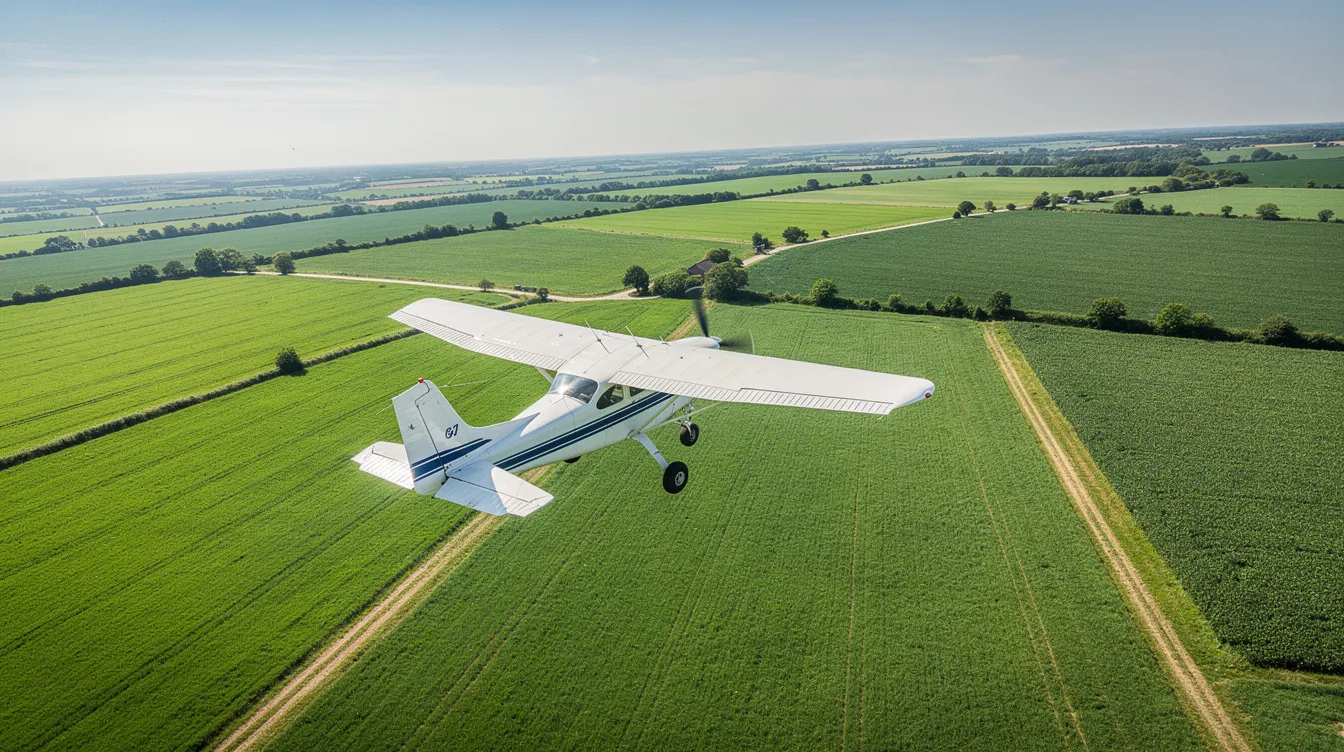
Cessna aircraft models range from single-engine trainers to business jets, and typical cruising ranges vary significantly across the lineup—from roughly 400–800 NM for a Cessna 172 up to 3,500 NM for the Citation Longitude.
The Grand Caravan and Cessna SkyCourier sit in the 900–940 NM range class, making them strong picks for regional cargo and charter operations.
Fuel capacity, fuel consumption, cruise speed, and fuel management are the primary factors that separate published maximum range from the distance you can actually plan around.
Wind conditions, aircraft weight, and power settings further narrow real-world range compared to brochure figures.
When range, speed, or comfort requirements exceed what a Cessna 172 can deliver, travelers often turn to Jettly's private jet charter platform to match the right aircraft to the mission.
The range of Cessna aircraft tells you how far a specific model can fly on one fuel load before it needs to land and refuel. It matters whether you are planning a training hop, a regional charter, or a transcontinental business trip. Understanding maximum range and cruise speed across the Cessna lineup helps pilots and passengers set realistic expectations for any flight.
Cessna builds several families of aircraft. Piston trainers like the Cessna 172, utility turboprops like the Grand Caravan and Cessna SkyCourier, and business jets such as the Citation Longitude each serve different missions with very different range figures. Published maximum range assumes optimal conditions—light payload, no headwinds, ideal cruise altitude. Real-world range is typically lower once fuel reserves, weather conditions, and passenger load enter the picture.
Digital charter platforms such as Jettly help travelers match trip distance and flight time with the most suitable aircraft, whether that is a short-range piston or a long-range jet.
Maximum range is usually defined as the farthest distance an aircraft can fly on a full tank at specific power settings, with standard reserves set aside. Aircraft range is influenced by payload and fuel capacity working together against drag and gravity.
Key technical drivers include:
Fuel capacity—total gallons available versus usable fuel, slightly reduced by unusable residual fuel in tanks
Fuel consumption—gallons burned per hour at a given power setting
Cruise speed—knots of true airspeed, which determines how much ground you cover per gallon
Reserve fuel rules—FAA regulations require sufficient fuel reserves for flights under VFR and IFR, typically 30–45 minutes depending on flight rules
Headwinds and tailwinds alter ground speed and therefore the ground distance covered for a given fuel burn. Even a 20–30 knot headwind can cut a Cessna 172's effective range by a third on a long leg. Favorable winds push that number in the other direction.
Flight planning tools model range rings around departure airports, helping pilots decide whether a direct route is realistic or whether fuel stops are needed. Smaller pistons trade speed and payload for economy, while jets consume more fuel but cover vastly more distance in less time.
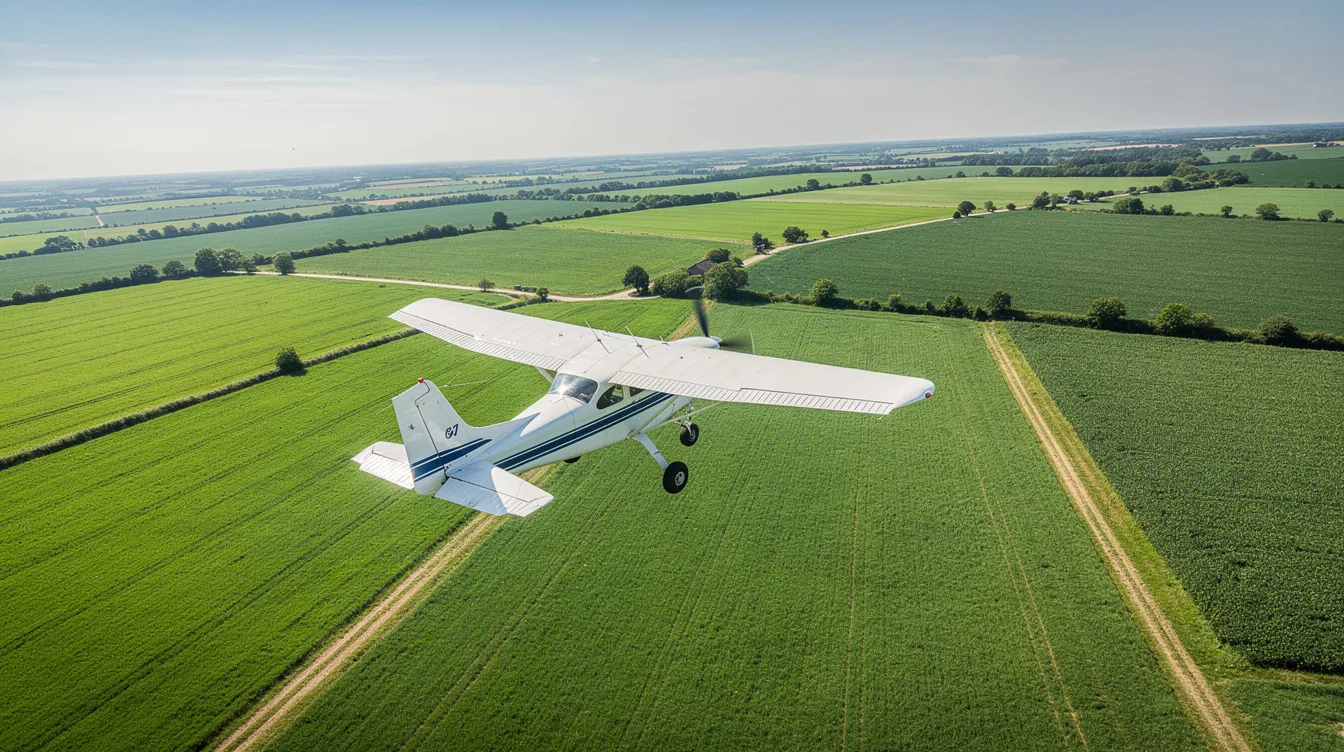
The Cessna 172 Skyhawk has been in production since the mid-1950s, with its first production model rolling off the line in 1956 and its first flight taking place that same year. It is the most produced aircraft in history, with more than 44,000 units built, and remains the global standard training aircraft used by flight schools and student pilots worldwide.
Here are the numbers that matter for range:
A Cessna 172 typically holds 56 gallons of fuel. The Cessna 172S has a fuel capacity of 56 gallons, with usable fuel of 53 gallons.
The Cessna 172 burns about 8–10 gallons of fuel per hour. More precisely, the Cessna 172 burns approximately 9.9 gallons per hour at 75% power.
Cruise speed sits around 120–125 knots for a modern 172S.
A Cessna 172 can fly approximately 600–800 nautical miles on a full tank. The maximum range of a Cessna 172 is about 640 nautical miles under favorable conditions. In miles, a Cessna 172 can cover about 575–735 miles on a full tank.
Realistic planning range for cross-country flights is more like 400–550 NM once you include legal reserves and weather margins. Weight significantly affects the range of a Cessna 172, and headwinds can decrease the range further.
Fuel management techniques help stretch practical distance. Adjusting the fuel mixture appropriately during cruise, flying at efficient altitudes like 6,000–8,000 ft, and removing unnecessary weight from the baggage area all contribute to maximizing range.
Typical use cases for the 172's range include regional hops for personal flying, flight training cross-country legs, and short repositioning trips. This is not an aircraft built for coast-to-coast non-stops. For those considering renting a Cessna 172, understanding these range limits is essential for smart flight planning.
The fuel capacity and load management greatly affect flight plans for every Cessna, from a 172 to a Citation jet. Fuel capacity and fuel consumption set the hard limits for range, and everything else—speed, altitude, payload—works within those boundaries.
Piston aircraft like the Cessna 172 depend heavily on careful mixture control and economy power settings to manage fuel burn and extend range. Using leaner fuel mixtures at cruise reduces fuel consumption per hour, and best economy power settings can add meaningful distance to each leg. Fuel mixture settings impact the fuel consumption of a Cessna 172 directly; pilots who manage these well consistently get more out of each tank.
Larger turboprops and jets use more fuel per hour but carry far more fuel overall, shifting the range equation. A Grand Caravan burns considerably more fuel than a 172 but carries roughly six times more usable fuel.
Fuel management best practices include:
Pre-flight fuel planning using current weather and load data
In-flight fuel checks against planned consumption rates
Using real-time fuel flow indications on modern glass cockpits
Conserving fuel by leaving conservative reserves beyond regulatory minimums
For charter passengers using platforms such as Jettly, range and fuel management are handled by certified operators and crews. But these factors still influence pricing, routing, and whether a non-stop flight is feasible.
The Cessna 172 is the entry point, but Cessna's piston lineup includes step-up models with greater range and payload. The Cessna 182 Skylane, with roughly 230 horsepower, offers significantly more capability for longer flights.
How they compare:
Cessna 172: ~53 gallons usable fuel, ~124 KTAS cruise, ~400–640 NM practical range
Cessna 182 Skylane: ~87 gallons usable fuel, ~145 KTAS cruise. The Cessna 182 Skylane reaches a maximum range of approximately 915 nautical miles under ideal conditions, with a useful load around 1,110 lb.
Turbocharged models like the Turbo Skylane maintain full power settings at higher altitudes, helping preserve cruise speed and fuel efficiency in thinner air. Operating at optimal altitudes can improve an aircraft's fuel efficiency—something turbocharged pistons handle better than naturally aspirated engines.
A competitor like the Piper Archer sits in a similar class to the 172 but with different handling characteristics and slightly different range numbers. For a deeper look at Cessna's full model range, including these step-up pistons, there are useful comparisons available.
These piston aircraft still fall well short of turboprops and jets in range and speed, which is why charter customers often move to other categories for business itineraries requiring multiple legs.
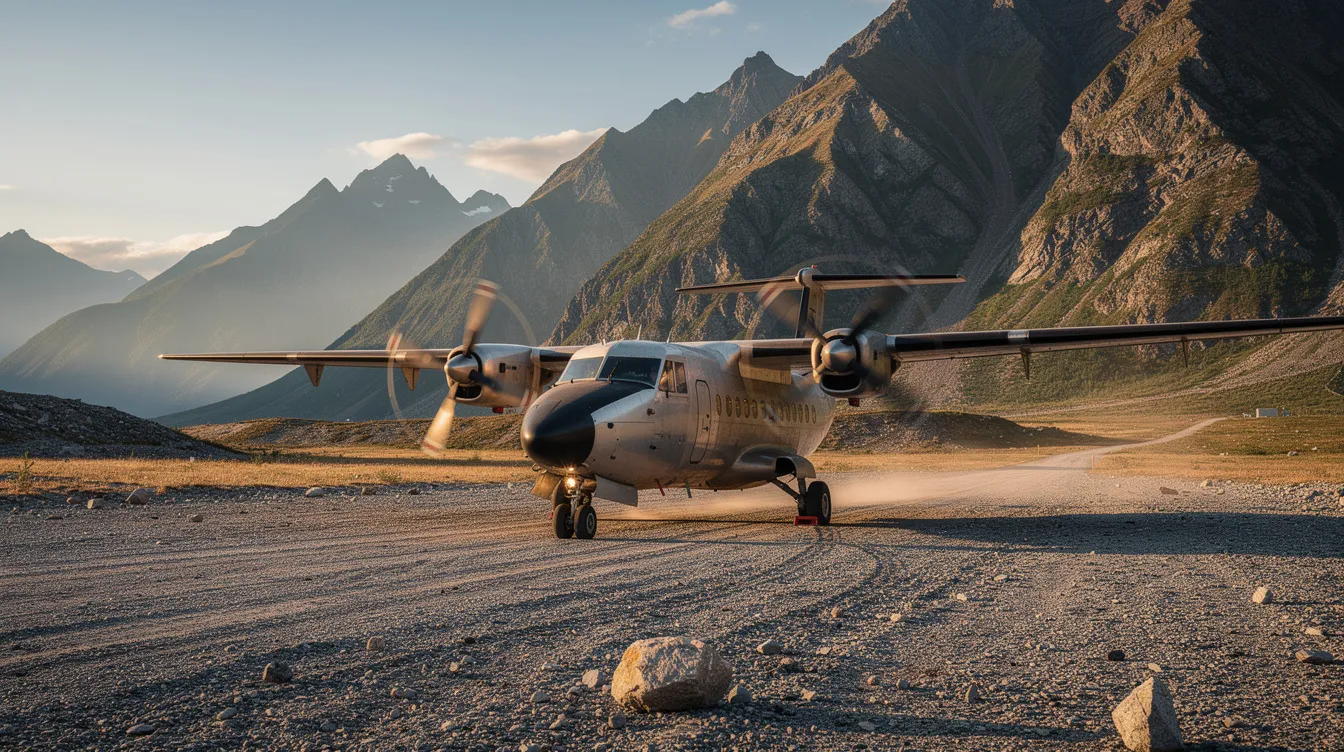
Utility turboprops bridge the gap between small pistons and jets. Cessna's Grand Caravan and Cessna SkyCourier are used worldwide for cargo, commuter, and charter operations where payload and runway flexibility matter as much as range.
The Grand Caravan EX, powered by a Pratt & Whitney PT6A engine, carries about 335 gallons of usable fuel and delivers a published maximum range around 912 NM. The Cessna Grand Caravan can transport up to 14 people with a range of around 900 nautical miles. At max cruise of approximately 185 KTAS (roughly 340 km/h), it can handle non-stop legs such as Dallas to Chicago under good conditions. However, with a seats-full load, practical range often drops to 500–750 NM. Flying with full tanks can limit available payload capacity—a trade-off operators manage constantly.
The Cessna SkyCourier is a twin-engine, clean-sheet utility turboprop. In passenger configuration, its maximum range reaches about 920 NM. The freighter version extends slightly further to around 940 NM. Cruise speed sits near 210 KTAS, and useful load exceeds 6,345 lb—figures that make it a serious workhorse. Maximum takeoff weight determines aircraft performance limitations, and the SkyCourier's generous MTOW supports heavy cargo missions.
Platforms like Jettly often feature Grand Caravan-class turboprops for regional missions where range plus rugged short-field performance matter more than pure speed. These aircraft offer easy access to remote airfields that jets simply cannot reach.
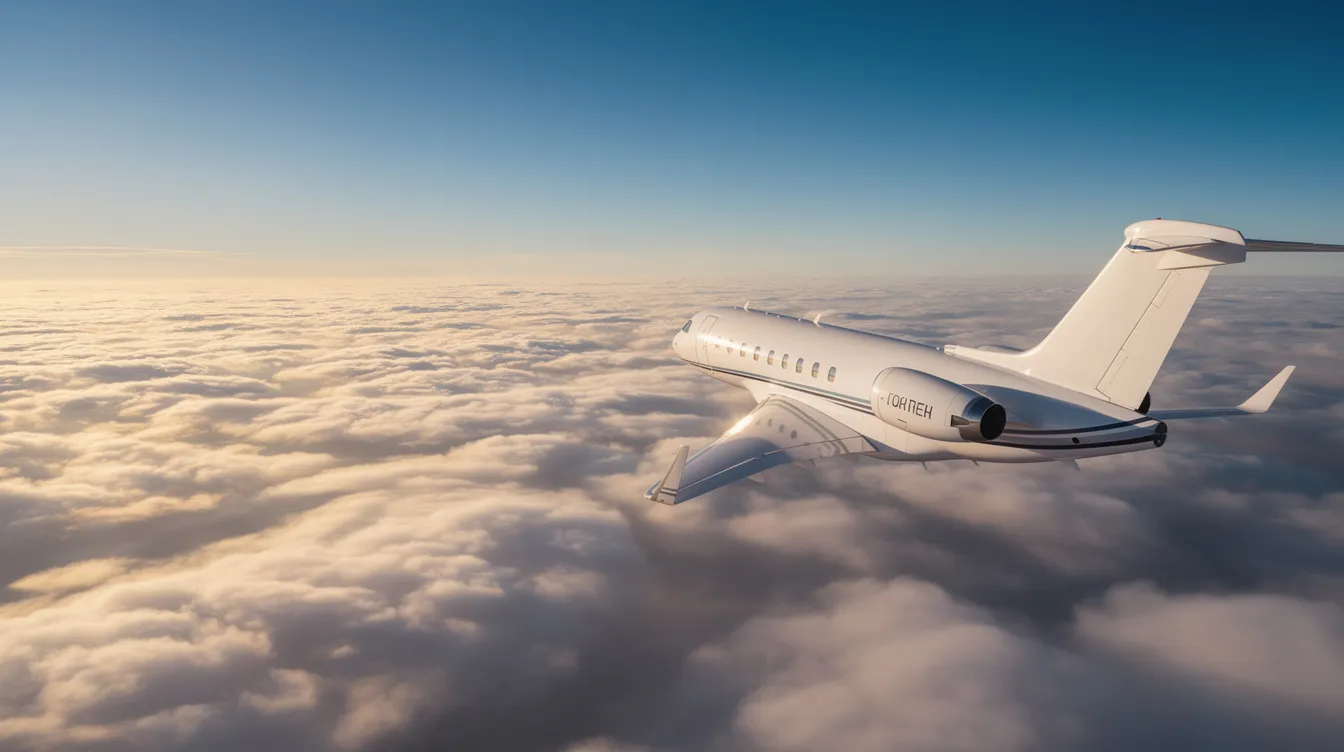
The Citation jet family represents Cessna's business jet lineup, spanning from light jets to super midsize jet models designed for fast, long-range travel. Cessna Citation jets can offer ranges up to 3,500 nautical miles—enough for most transcontinental and many transatlantic routes.
The Citation Longitude is the flagship. This super midsize jet delivers a maximum range around 3,500 NM with four passengers at Mach 0.80 long-range cruise, including NBAA IFR reserves. It cruises at approximately 483 KTAS with a service ceiling near 45,000 ft and carries about 2,166 gallons of usable fuel. The spacious cabin, standing over six feet in height, makes longer flights comfortable. Non-stop routes like Los Angeles to New York (~2,150 NM) or London to Dubai (~3,400 NM) are well within reach. A trip from New York to Las Vegas or similar cross-country missions takes about five hours or less.
Within the Citation family, range scales with size:
Citation M2 Gen3 and CJ series: roughly 1,500–2,000 NM
Cessna Citation Latitude has a published maximum range of 2,700 nautical miles
Citation Longitude: ~3,500 NM
Citation jets cruise at 400+ knots, so even when a turboprop can technically match a similar maximum range figure, jets cover that distance much faster. Jettly's inventory typically features many Citation jets, allowing charter clients to pick the right aircraft whose range and capacity match trips from regional business hops to transcontinental itineraries.
Range is not just about fuel capacity. Cruise speed and chosen flight profile—economy versus high-speed cruise—significantly affect how far any Cessna can travel.
Flying slightly slower than maximum cruise often improves fuel efficiency. For a Cessna 172, flying at best economy power settings rather than full power settings can add 50–100 NM of practical range by burning less fuel per hour. For a Citation Longitude, selecting long-range cruise (Mach 0.80) instead of high-speed cruise preserves hundreds of nautical miles of range.
Climb performance and profile matter too. Step climbs to optimal altitudes as the aircraft burns fuel and becomes lighter can improve the aircraft's performance over a long leg. Flying at higher altitudes increases fuel efficiency and range for both pistons and jets, though each type has a different ceiling. Aircraft weight impacts fuel consumption and required lift for flight, so the lighter the aircraft gets en route, the more efficient it becomes.
Fuel burn rates can be optimized by managing engine power settings throughout each phase of flight. Charter operators factor cruise speed choices into scheduling and pricing, while passengers mainly experience the result as total flight time and the possibility of flying non-stop versus making fuel stops.
Effective flight planning turns theoretical maximum range into safe, realistic trip legs. Without it, brochure numbers are just marketing.
Key planning elements include:
Route selection and direct route availability versus airway routing
Forecast winds aloft and expected ground speed
Expected fuel consumption at planned power settings and cruise altitude
Alternate airports and runway length at destination
Performance adjustments for destination elevation and temperature (hot-and-high conditions)
Consider a concrete example: a ~900 NM trip. In a Cessna 172, this requires multiple fuel stops—likely two, turning it into a full-day affair. In a Grand Caravan, it may work as one fuel stop or non-stop depending on wind conditions and payload. In a Citation Longitude, it is a comfortable non-stop with substantial fuel margin.
Modern avionics and flight management systems, especially in Citation jets, give real-time updates on remaining range, fuel at destination, and diversion options. Smart flight planning tools are available through resources like Jettly's flight planner guide, which can help align aircraft selection and routing with travel schedules.
Optimal power settings enhance the range of a Cessna 172 during cross-country flights, and the same principle applies across every Cessna category—planning fuel flow against distance is what separates an efficient flight from an anxious one.
The Cessna 172 is ideal for learning and short regional flights, but its limited range, speed, and capacity restrict its suitability for typical business or family trips over several hundred miles. Its useful load also limits how many passengers and how much baggage it can carry simultaneously with a full tank of fuel.
The contrast in flight time is significant. A 600 NM leg takes roughly five hours in a 172. A Grand Caravan covers the same distance in about three and a half hours. A Citation jet does it in under two. Excess weight, slower speed, and increased endurance requirements in a small piston all add up to longer, more tiring trips.
Private charter through digital marketplaces like Jettly lets travelers step up to turboprops or jets only when needed, without owning the aircraft or committing to jet cards. Jettly provides instant pricing and access to a large fleet—including many Cessna charter options—so users can filter by range, passenger count, and cabin type.
For coast-to-coast, transcontinental, or same-day multi-city itineraries, Citation-class jets with 1,500–3,500 NM range are usually the most efficient solution. Understanding how to book a private jet through a platform like Jettly makes this process straightforward.
Range is only useful if the aircraft can use airports near both origin and destination. Many Cessna models excel at operating from shorter or less busy fields, which is one of their biggest advantages.
Grand Caravan, SkyCourier, and many smaller Cessnas can use short, sometimes unpaved or remote runways with minimal ground roll requirements. This gives passengers easy access to areas outside major hubs—places where standard equipment at the airport may be limited but where these aircraft handle conditions confidently.
Consider using a Caravan for a remote safari lodge in East Africa or a short regional hop in Northern Canada. Runway limitations at these destinations would rule out larger jets even though jets offer greater range. A turboprop's combination of range, short-field landing capability, and payload capacity makes it the practical choice.
The best choice for any trip balances range, airport accessibility, and the mission profile rather than always chasing the aircraft with the largest maximum range. Jettly's global inventory and digital tools help travelers locate nearby airports and match them with aircraft suited to complete trips efficiently. Exploring the real cost of flying private can also help frame the value of choosing the right aircraft for each route.
The range of Cessna aircraft spans from a few hundred nautical miles in the Cessna 172 to around 3,500 NM in the Citation Longitude, with turboprops like the Grand Caravan and Cessna SkyCourier sitting in between at roughly 900–940 NM.
Fuel capacity, fuel consumption, cruise speed, payload, and weather are the main factors that narrow brochure maximum range into realistic planning numbers. Produced aircraft across decades, Cessna's lineup covers nearly every mission profile in private aviation.
When each category fits best:
Piston Cessnas (172, 182) for flight training, personal flying, and short regional hops
Utility turboprops (Grand Caravan, SkyCourier) for rugged regional service with strong payload and range
Citation jets for fast business travel and long-distance trips requiring non-stop capability
Travelers and flight departments can use Jettly's platform to compare aircraft by range, price, and mission fit before booking.
Ready to find the right aircraft for your next trip? Explore flight options or request a quote at https://www.jettly.com.
Although book values may show up to 640–800 NM, most pilots plan legs of 400–550 NM in a Cessna 172 to maintain fuel reserves and weather flexibility. Typical fuel consumption ranges from 8 to 10 gallons per hour, and factors like headwinds, passenger weight, and climb profiles further reduce real-world range compared to brochure figures. Planning shorter legs also improves options for diverting to alternates if conditions change en route—an important consideration for any produced aircraft used in cross-country flights.
Under favorable conditions and conservative loading, both Grand Caravan and SkyCourier can often handle routes around 900 NM without a fuel stop. Strong headwinds, hot-and-high airports, or heavy cargo loads may require shorter legs or one fuel stop. Operators use performance charts and real-time forecasts to decide whether to schedule a non-stop or add a planned stop. Extra weight from full passenger loads shifts the equation toward shorter legs.
With a maximum range around 3,500 NM, the Citation Longitude can cover most transcontinental routes and many transatlantic city pairs without refueling. Common airline legs such as New York to Los Angeles (~2,150 NM) or London to Dubai (~3,400 NM) are well within its capability. Using a super midsize jet for these routes offers schedule flexibility and time savings versus commercial connections, with standard equipment including advanced flight management systems.
Higher speed usually increases fuel burn per hour and can reduce maximum range, but there are exceptions. Faster cruise can help escape unfavorable winds or weather, potentially saving fuel overall. Most Cessna aircraft have recommended long-range or economy power settings that balance speed and fuel efficiency. Charter passengers can discuss timing versus cost with the operator, who may adjust cruise settings to optimize for the specific mission—sometimes arriving 20 minutes later saves enough fuel to skip a stop entirely.
Start with route distance in NM, desired non-stop capability, passenger count, and baggage or cargo requirements. Once these inputs are known, platforms like Jettly can present a shortlist of suitable aircraft—ranging from Cessna 172s and Grand Caravans to Citation jets—along with estimated flight time and pricing. Visit https://www.jettly.com to compare options and pick an aircraft whose range, comfort, and cost align with your travel priorities.
Understanding the range of Cessna aircraft is crucial for effective flight planning and selecting the right aircraft for each mission. From the reliable and widely used Cessna 172 trainer with a practical range of 400–640 nautical miles to the versatile Grand Caravan and SkyCourier turboprops offering around 900–940 nautical miles, and up to the Citation Longitude jet with a maximum range of approximately 3,500 nautical miles, each model serves distinct travel needs.
Factors such as fuel capacity, consumption, cruise speed, payload, and weather conditions all influence real-world range beyond brochure figures. Pilots and travelers should plan conservatively, considering reserves and operational variables to ensure safety and efficiency.
For longer trips requiring speed, comfort, and non-stop capability, private jet charters through platforms like Jettly provide flexible access to a broad fleet of aircraft tailored to the mission. Whether for training, regional hops, or transcontinental business travel, understanding Cessna range helps match travelers with the best aircraft option.
Ready to find the right aircraft for your next trip? Explore flight options or request a quote at https://www.jettly.com.
Share this post:
Jay Franco Serevilla
Oct 14, 2026
|
5
min read
Discover tips and trends in the industry.
5
min read
How Much Does It Cost to Fuel a Small Plane in 2026?
In 2026, fuel costs for small planes vary significantly based on aircraft type and fuel consumption rates. Single-engine pistons typically incur costs of $60–$80 per hour, while turboprops can reach $500–$600 per hour. Understanding these expenses is crucial for budgeting and flight planning for private pilots and aircraft owners.
Read More
5
min read
Private Jet Italy Guide: Routes, Costs, Airports and How Jettly Helps
Flying by private jet to Italy offers unmatched flexibility and speed, making it ideal for both business and leisure travelers. This comprehensive guide covers routes, costs, and how Jettly simplifies the booking process, ensuring a seamless travel experience. Discover the advantages of private aviation and how it can enhance your Italian journey.
Read MoreStay updated with our latest insights and tips to elevate your journey with us.
MEMBERSHIPS AND ASSOCIATIONS



Disclaimer: Jettly operates as a charter broker, offering access to a global digital jet charter marketplace. Jettly is not a direct air carrier and does not own or operate aircraft. All advertised flights are conducted by third-party air carriers that are fully licensed and hold the appropriate Part 135 or Part 121 certifications issued by the Federal Aviation Administration (FAA) or equivalent regulatory authorities under U.S. or foreign law. Jettly complies fully with the U.S. Department of Transportation's Part 295 and Part 298 Charter Broker regulations. Jettly does not carry additional liability insurance. Passengers are covered by aircraft operator insurance. TICO: 50023770


