



Login
Get Instant Pricing On 23,000+ Aircraft

>
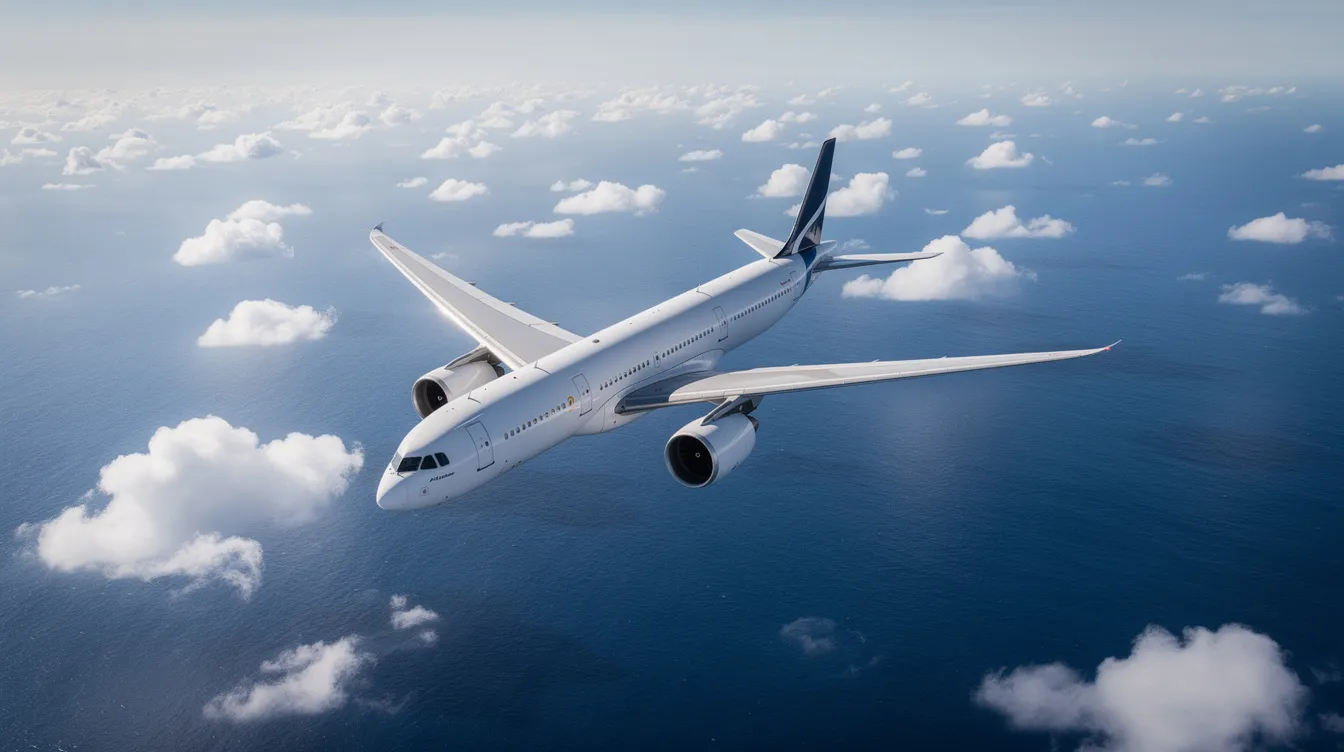
The Boeing 777 family spans one of the widest range envelopes in commercial aviation history. From the baseline 777-200 at roughly 5,240 nautical miles to the upcoming 777-8 at 9,500 nautical miles, the range of 777 variants covers nearly every long-haul mission profile an airline or charter operator could need. Here's a detailed look at how far each model can actually fly, what drives those numbers, and what it all means for travelers.
The range of 777 aircraft spans from about 5,240 nautical miles for the baseline 777-200 to approximately 9,500 nautical miles for the next-generation 777-8, covering virtually every intercontinental route.
The 777-200ER can fly between 6,000 and 7,700 nautical miles, while the 777-300ER reaches a maximum range of 7,930 nautical miles, making both models the backbone of long-haul fleets worldwide.
The Boeing 777-200LR has a range of 9,450 nautical miles, positioning it as the farthest-flying in-service variant for nonstop routes like Doha–Houston or Dubai–Los Angeles.
The 777-8 variant has an updated range of 9,500 nautical miles, though commercial service entry is expected near 2027.
These range capabilities directly shape nonstop routes and also open doors for high-capacity charter and private missions, relevant for platforms like Jettly that help travelers match aircraft to trip distance and group size.
The Boeing 777 is a twin-engine widebody airplane designed for medium- to ultra-long-haul flying. Across its variants, the range of 777 aircraft is a defining feature that has kept the model competitive for over three decades.
In aviation, range refers to the maximum distance an aircraft can fly without refueling. In statistics, the range describes the difference between the highest and lowest values in a dataset. Applied loosely here, a range of 777 indicates a significant spread between data values—the family's shortest-range model covers about 5,240 nautical miles while its longest-range variant reaches roughly 9,500 nautical miles.
Here is a comparison table of the main Boeing 777 variants and their approximate advertised design ranges:
|
Variant |
Typical Range (nautical miles) |
Notes |
|---|---|---|
|
777-200 |
~5,240 |
Baseline model |
|
777-300 |
~6,015 |
Stretched baseline |
|
777-200ER |
~7,065 |
Extended range; can fly 6,000–7,700 depending on payload |
|
777-300ER |
~7,370–7,930 |
Extended range; backbone of many long-haul fleets |
|
777-200LR |
~9,450 |
"Worldliner"; farthest-flying in-service variant |
|
777-8 (777X) |
~9,500 |
Next-generation; entry into service expected near 2027 |
|
777-9 (777X) |
~8,000 |
Next-generation; higher capacity, slightly less range |
These figures assume standard conditions. Real-world range varies with payload, weather, routing, and regulatory fuel reserves. The sections below break down each variant's capabilities, what drives those numbers, and how they translate into actual routes and missions. For a broader look at the full Boeing lineup, including narrowbody models such as the Boeing 737-800 specs and range, Jettly covers all Boeing planes from commercial airliners to business jets.
The number 777 carries cultural weight well beyond aviation. Three sevens are associated with jackpots in casinos, while in Unix-like systems, chmod 777 sets permissions for all users. Mathematically, 777 is an odd composite square-free natural number with a prime factorization of 3 × 7 × 37. It is classified as a Harshad number because it is divisible by the sum of its digits. The digit sum of 777 is 21 and reduces to 3. With 8 total divisors and a proper divisor sum of 439, 777 is a deficient number because the sum of its proper divisors is less than 777. It even represents spiritual perfection in biblical numerology.
But in aviation, the number defines one of the most successful aircraft programs ever built. Boeing Commercial Airplanes developed the original Boeing 777 in the late 1980s and early 1990s. The first flight took place on June 12, 1994, from Paine Field near Everett, Washington. After an extensive flight test program at Boeing Field and other locations, the airplane entered service in 1995.
The original Boeing 777-200 was designed to fill a gap between the 767 (a smaller twin-engine widebody) and the 747 (a four-engine long-haul giant). Airlines like United Airlines — the launch customer — along with British Airways and All Nippon Airways (Nippon Airways) helped shape requirements during collaborative design sessions. Their priorities included balancing passenger capacity with long range sufficient for routes like London–New York or Tokyo–Honolulu.
Early target ranges hovered around 5,200–6,000 nautical miles. These goals shaped wing size, fuel capacity, and the selection of powerful engines from GE, Pratt & Whitney, and Rolls-Royce. The design anticipated ETOPS rules that would favor efficient twin-engine jets over quad-engine aircraft for overwater operation. Later variants — the 777-200ER, 777-200LR, 777-300ER, and 777X — would systematically push range further to open nonstop city pairs previously dominated by 747s and other aircraft.
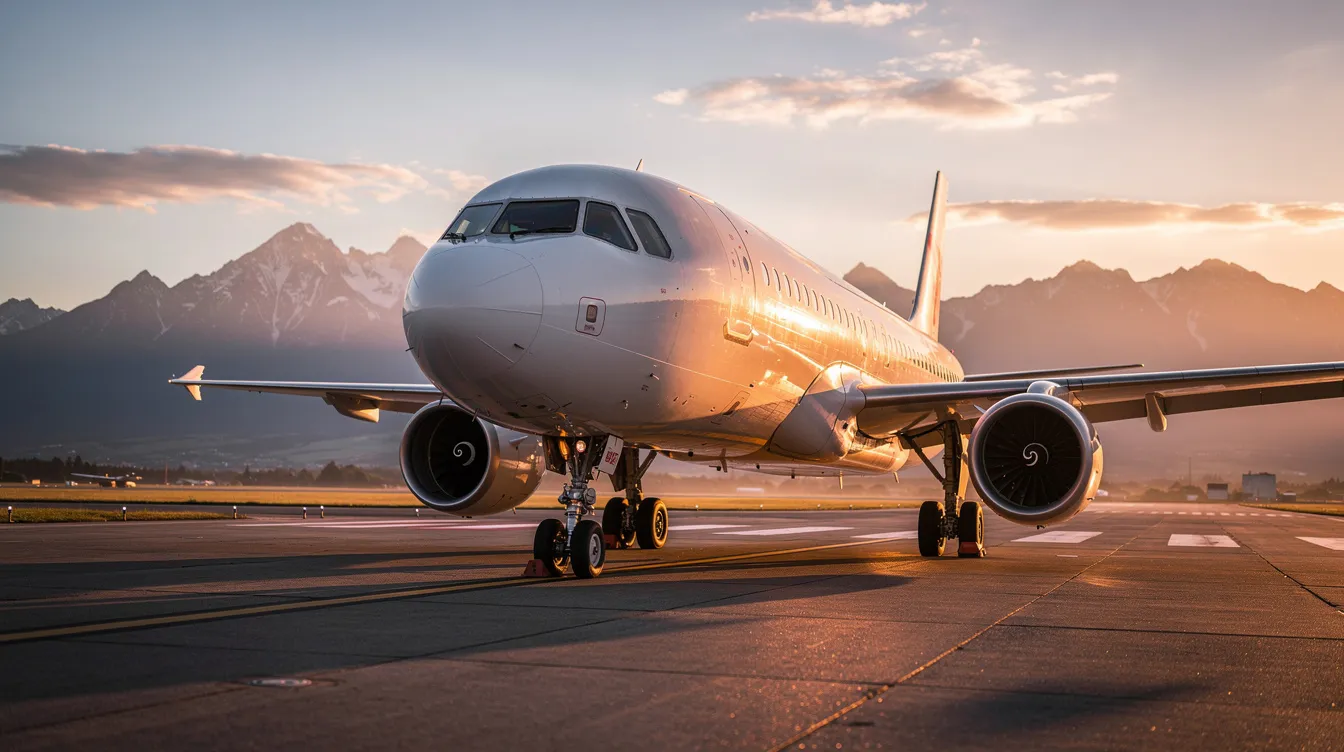
The first-generation Boeing 777-200 and the stretched 777-300 established the platform before the extended range and long-range versions arrived. These baseline models served dense, high-demand routes rather than ultra-long-haul missions.
The 777-200 can carry between 268 and 300 passengers in typical configurations, with a design range of about 5,240–5,800 nautical miles depending on engine choice and cabin layout.
The 777-300 has a fuselage stretch of 33 feet 3 inches over the 777-200. The 777-300 has a typical operating range of 6,015 nautical miles with a seating capacity that can accommodate 368–451 passengers depending on class configuration.
These ranges made both models suitable for dense transatlantic service and high-demand regional routes — London–New York for carriers like British Airways, Tokyo–Singapore for Japan Airlines and Singapore Airlines, or Dubai–Delhi for Emirates.
Passenger capacity directly affects practical range. More passengers mean more weight, more baggage, and more catering, which reduces fuel available for distance. Airlines serving shorter high-density routes could maximize seat count, while those pushing toward the upper end of the range envelope needed to manage the payload trade-off carefully.
Airlines including Cathay Pacific, Korean Air, and Air India operated baseline 777 models on routes well within these range bands, reserving longer missions for the ER and LR variants that followed.
The 777-200ER and 777-300ER became the backbone of long-haul fleets worldwide, thanks to improved fuel capacity, more powerful engines, and refined aerodynamics.
777-200ER: The 777-200ER features increased fuel capacity for longer range, giving it a typical range around 7,065 nautical miles. The 777-200ER can fly between 6,000 and 7,700 nautical miles depending on payload and conditions. Common routes include London–Tokyo, New York–Rome, and Los Angeles–Auckland. Typical three-class passenger capacity sits around 301–313 seats. Airlines like American Airlines, Air France, and Lufthansa have operated 777-200ER variants extensively.
777-300ER: The 777-300ER can carry up to 365 passengers in a typical three-class layout, with seating capacity often reaching 396 in denser configurations. The 777-300ER has a maximum range of 7,930 nautical miles, with typical published range around 7,370 nautical miles. It handles dense long-haul routes like Dubai–Sydney for Emirates, Paris–São Paulo for Air France, and Hong Kong–San Francisco for Cathay Pacific.
The increased maximum take off weight, GE90-115B engines (among the most powerful engines ever fitted to a commercial airplane), and raked wingtips allowed these ER models to match or surpass four-engine aircraft on both range and economics. For detailed weight breakdowns, see this guide to the weight of Boeing 777 variants.
For airlines and charter planners, these ER ranges offer strong flexibility. They can fly ultra-long-haul missions or operate shorter legs with heavy payloads and cargo using a mix of scheduled fleets and private charter aircraft. Qatar Airways, Emirates, Virgin Australia, Air New Zealand, Turkmenistan Airlines, and Pakistan International Airlines all operate or have operated 777-300ER fleets on intercontinental nonstop routes, while private travelers can access similar point-to-point flexibility through vetted operators such as Dexter Air Taxi and other private jet providers.
The Boeing 777-200LR - marketed as the "Worldliner" - was purpose-built for the longest nonstop commercial flights in the 2000s. Boeing released the 777-200LR to connect virtually any two cities in the world without a stopover.
The Boeing 777-200LR has a range of 9,450 nautical miles. That figure historically enabled city pairs like Doha–Houston for Qatar Airways, Dubai–Los Angeles for Emirates, and the record-setting test flight from Hong Kong to London via an eastbound great-circle route covering approximately 11,664 nautical miles under minimal-payload conditions.
Extra fuel tanks, a strengthened structure, and GE90-110B/115B engines give the 777-200LR substantially more maximum range than the 777-200ER and 777-300ER. For more on its cabin configurations, see this breakdown of 777-200LR seating capacity.
Typical passenger capacity sits in the 266–301 seat range in a three-class configuration. Airlines often trade seats for extra cabin space and comfort on these long missions, reducing seating density intentionally.
An aircraft like the 777-200LR can be attractive for special charter missions — large corporate delegations, government flights, or sports team travel — where nonstop intercontinental range is a priority, and the plane needs to carry a significant group of passengers and crew, often supported by premium services such as in-flight catering for private jets.
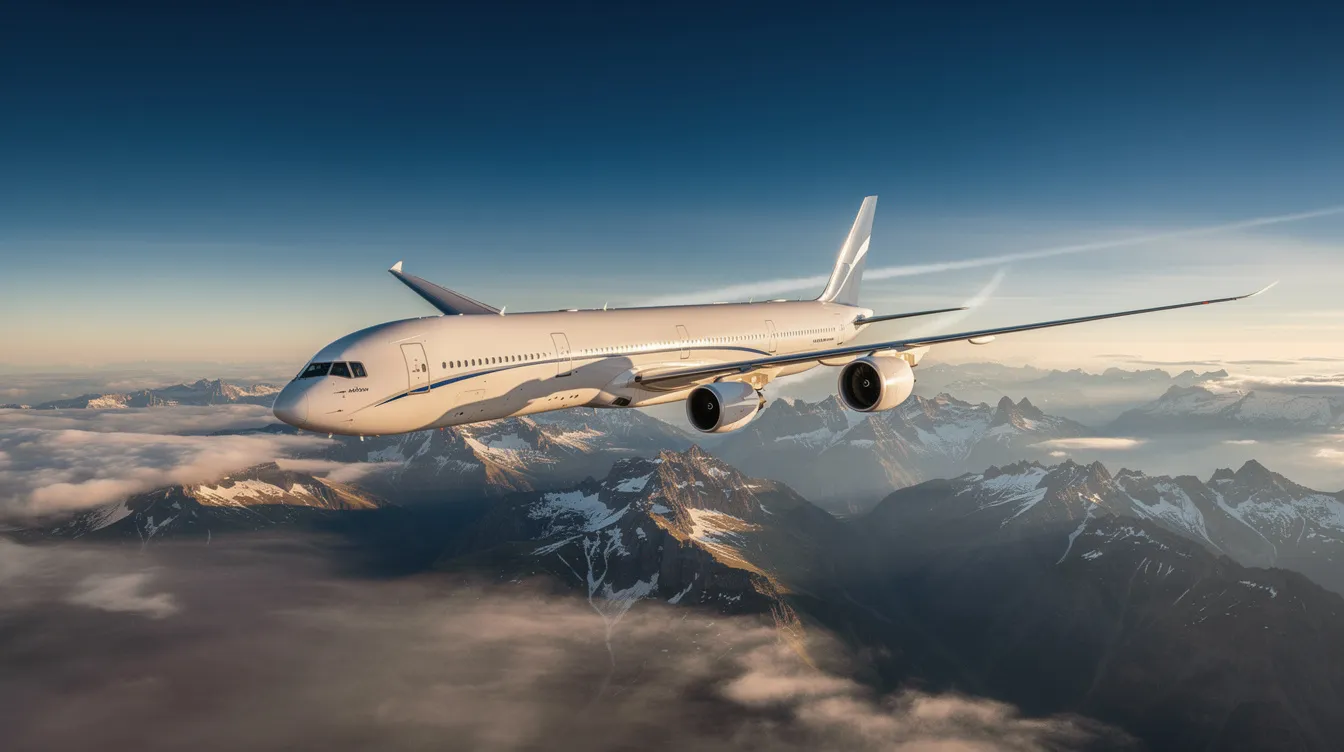
The Boeing 777X family — the 777-8 and 777-9 — is intended to replace older 777-300ER fleets with better fuel efficiency and extended range. These models use advanced technologies including the GE9X engine (roughly 10% more fuel-efficient than the GE90-115B) and a longer composite wing with folding wingtips for airport compatibility.
Boeing has quietly updated its advertised range for these models: the 777-8 variant has an updated range of 9,500 nautical miles, up from roughly 8,745 nautical miles in earlier specs. The 777-9 range increased from about 7,285 to around 8,000 nautical miles.
Updated seating capacity bands from Boeing's latest planning data show the 777-8 accommodating roughly 350–425 passengers and the 777-9 fitting roughly 375–450 passengers in typical two-class layouts.
That extra 700+ nautical miles of range matters. It allows more nonstop options — Sydney–London, Dubai–San Francisco, or Auckland–New York — and keeps the 777X competitive with the Airbus A350-1000ULR, which still leads by roughly 500 nautical miles in published range. For context on how the 777X compares to other aircraft with the longest range, and to locate suitable departure and arrival fields using an airport locator tool for private flights, the competitive landscape is tightening.
As of the mid-2020s, FAA certification has been delayed multiple times, with entry into service now expected near 2027. But the extended range figures are already shaping long-term fleet and route planning for airlines like Emirates, Lufthansa, and Singapore Airlines, all of which have significant 777X orders.
Published range assumes typical payloads. Actual achievable distance varies with passenger capacity, seating density, and cargo load. A fully loaded plane with maximum passengers, baggage, and freight burns through its fuel capacity faster and may not reach the brochure range.
Common layouts include three-class (first, business, economy), two-class (business and economy), and high-density single-class configurations. A 777-300ER in a three-class layout with 365 seats flies differently than one configured for 450 seats in a high-density arrangement.
Airlines and charter planners may configure cabins with fewer seats, more premium classes, or dedicated crew rest areas, which slightly changes weight distribution and thereby range.
Private or corporate-configured 777s - including Boeing Business Jet 777 concepts - might carry far fewer passengers but include heavy bespoke furnishings (meeting rooms, bedrooms, lounges), still requiring careful range planning and an understanding of affordable aeroplane rent costs and options.
For any specific mission, operators run performance calculations accounting for weather, alternate airports, cockpit crew duty limits, and regulatory reserves, rather than relying only on brochure numbers.
Incidents of airlines being forced to make unplanned fuel stops are rare but highlight that published range and operational range are different things. Pilots factor in real conditions during every flight plan.
An aircraft's range comes from a combination of technical specifications: fuel capacity, engines, aerodynamics, and structural design.
Shared design traits across Boeing 777 variants include a large supercritical wing with high aspect ratio, advanced turbofan engines with the largest fan diameters in commercial service, and high maximum takeoff weight supporting large fuel loads.
Key engine details:
GE90-94B powers many 777-200ER variants
GE90-115B powers the 777-300ER and 777-200LR - the most powerful jet engine in commercial production for years
GE9X powers the 777X family, delivering approximately 10% better specific fuel consumption than its predecessor
Aerodynamic refinements across the family — raked wingtips on ER/LR variants, improved flap systems, and, on the 777X, folding wingtips with a longer composite wing - reduce drag at cruising speeds around Mach 0.84–0.89.
The relationship between maximum fuel capacity (approximately 181,280 liters for the 777-300ER), typical cruise fuel burn per hour, and aircraft payload limits determines the realistic range envelope. More fuel means more range, but only if the airplane's takeoff weight limit isn't exceeded. This is a constant balancing act during production planning and airline-specific delivery configuration.
The Boeing 777's range capabilities reshaped long-haul airline networks from the late 1990s onward. Before the 777 family matured, most ultra-long-haul routes required four-engine aircraft or technical stops. The 777 changed that equation by offering twin-engine economics on intercontinental sectors and inspired new models of access to long-haul capacity, such as platforms that crowdsource private jet flights and share empty seats to improve utilization.
Concrete route examples by variant:
777-200ER: London–Hong Kong (British Airways), New York–Tokyo (American Airlines, Japan Airlines), Frankfurt–Denver (Lufthansa)
777-300ER: Dubai–Los Angeles (Emirates), Hong Kong–Dallas/Fort Worth (Cathay Pacific), Paris–Seoul (Air France)
777-200LR: Doha–Houston (Qatar Airways), Dubai–São Paulo (Emirates), enabling nonstop routes that previously required stops
The expanded range of the 777X (up to around 9,500 nautical miles for the 777-8) is expected to support ultra-long-haul routes connecting secondary cities without stopovers. Airlines evaluate not just maximum range but also economics — some carriers cap stage length below maximum range to optimize crew costs, maintenance cycles, and passenger comfort.
The market for the 777 remains strong. As of 2026, the fleet in service includes over 1,600 delivered aircraft operating with carriers on every continent, from Korean Air to Air India, from Virgin Australia to Turkmenistan Airlines, many of which rely on certified Part 135 charter companies and similar operators for supplemental lift and specialized missions.
Beyond scheduled airlines, the Boeing 777's long range supports VIP, government, and high-capacity charter roles. Boeing Business Jet 777 concepts — based on the 777-200LR or 777-300ER — offer long-range performance combined with fully customized interiors: meeting rooms, bedrooms, lounges, and high-capacity Wi-Fi.
The range of 777 allows nonstop charter missions such as Middle East to North America, Europe to East Asia, and trans-Pacific routes like Los Angeles–Shanghai or Vancouver–Tokyo with large groups, including region-specific options like private jet charter in Kolkata, West Bengal, though travelers still weigh these options against affordable private jet charter pricing on smaller aircraft types.
Jettly operates a digital private jet charter marketplace, primarily offering business jets, large jets, and other types, with optional private jet memberships for frequent flyers and opportunities to earn through its ultra-high-ticket affiliate program. Through its global network, the platform can help coordinate access to larger aircraft types where regulations and availability permit, connecting clients with instant-book operators like Zenflight and similar private jet services. Key benefits include transparent pricing, digital booking, and the ability to compare aircraft categories by range and capacity for group travel, often supported by tools such as a private jet charter cost estimator. Learn more about how charter airline companies work and explore a comprehensive list of charter airlines and private flight options to see where Jettly fits in.
For many private travelers, smaller long-range private jets — such as large-cabin Gulfstream or Bombardier models — may be more efficient than a 777, especially when comparing the best private jet charter companies and their services. But understanding the range of the 777 gives context for what's possible when organizing corporate events, sports teams, or large incentive trips through platforms like Jettly.
While Boeing 777s dominate scheduled long-haul travel, private flyers use Jettly to match trip distance, passenger count, and budget with the right aircraft category. The platform's inventory of 20,000+ aircraft covers everything from light jets to heavy long-range models and other private charter aircraft.
A traveler planning a long-range mission — say New York–Dubai at about 5,850 nautical miles or Toronto–Tokyo at roughly 6,000 nautical miles — would use Jettly to enter the route and dates, view instant pricing via a private jet charter cost estimator and aircraft options with stated ranges, and filter between light, midsize, and large jets or airliners depending on group size.
Heavy jets and some regional airliners in Jettly's inventory can cover many of the same routes that airlines operate with 777-200ER, 777-300ER, or 777-200LR, but with private schedules, dedicated terminals, and tailored service. Jettly emphasizes transparent, up-front pricing, jet card flight cost estimators, and comprehensive jet card programs instead of traditional fractional ownership — especially valuable for infrequent ultra-long-haul flyers. Explore the real cost of flying private or compare long-range flight options at jettly.com.
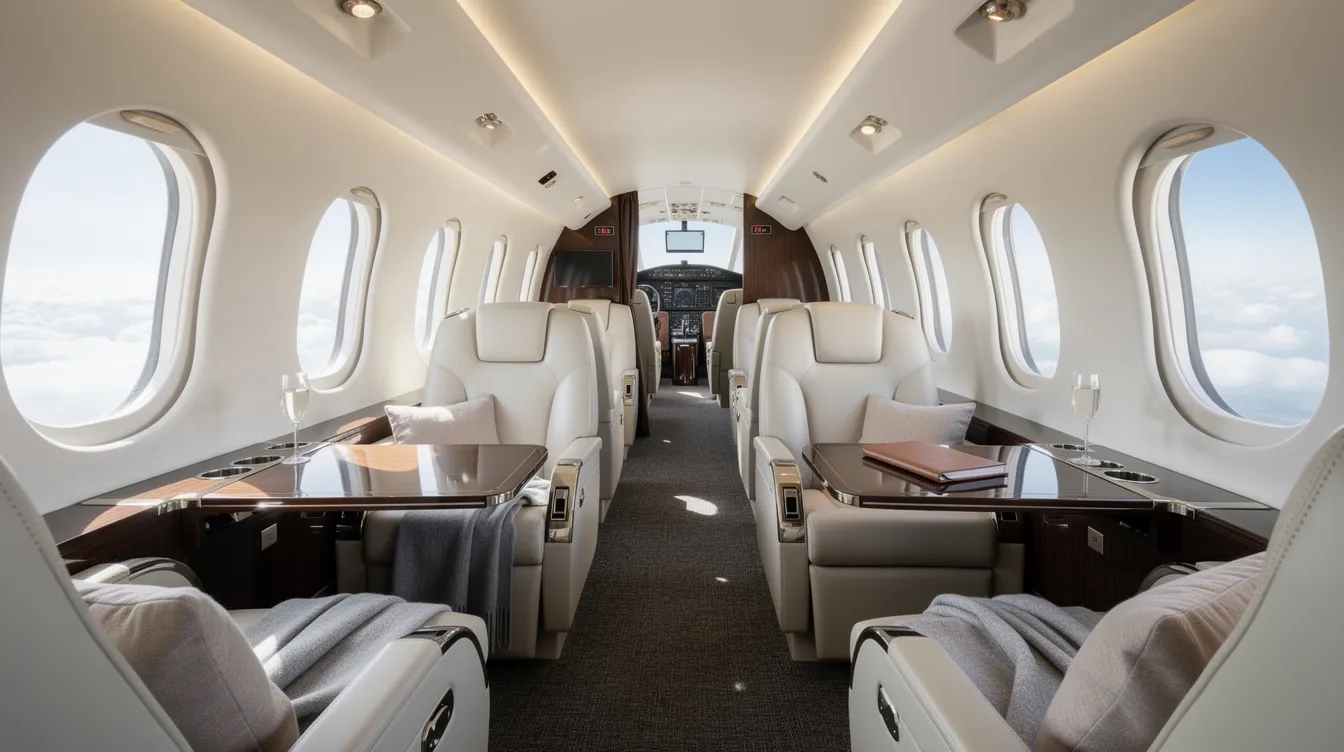
Among in-service models, the Boeing 777-200LR holds the longest certified range at about 9,450 nautical miles. The upcoming 777-8 in the 777X family is now advertised at around 9,500 nautical miles but has not yet entered commercial service. The first delivery of the 777-8 is expected around 2027 following FAA certification.
Range is calculated under standard atmospheric conditions with a typical passenger and cargo load, specific fuel reserves, and a defined cruise profile (usually around Mach 0.84). Real flights may see shorter distances due to headwinds, routing inefficiencies, or airline-specific alternate airport requirements. Ferry range — with minimal or no payload — can be significantly higher than published figures.
Routes like London–Perth (around 7,829 nautical miles great-circle) fall within the capability of the 777-200LR or future 777-8. However, airlines choose specific types based on economics, fleet strategy, and airport constraints. Currently, carriers like Qantas use the 787 or A350 for such missions.
Airlines often limit stage lengths to balance crew duty limits, maintenance planning, fuel costs, and passenger comfort. Some carriers prefer one-stop routings if demand patterns or yields make them more profitable than ultra-long-haul nonstops. Production and fleet scheduling considerations also play a role.
While the 777-200LR or 777-8 can exceed 8,500–9,500 nautical miles, many large-cabin private jets listed on Jettly — such as Gulfstream G650 and Bombardier Global models — routinely offer 6,000–7,500 nautical miles of range with far fewer passengers. Travelers weighing these choices often start by understanding how much a private jet really costs and why on-demand platforms like Jettly are a compelling NetJets alternative for flying private. This makes them ideal for most corporate and family trips booked through the platform. Ready to experience private travel on your terms? Explore flight options or request a quote at jettly.com.
The range of 777 aircraft exemplifies Boeing's commitment to meeting diverse long-haul travel needs, from the baseline 777-200 to the cutting-edge 777X family. These aircraft enable nonstop flights across continents and oceans, reshaping airline networks and offering unparalleled flexibility for both commercial and private travelers. For those seeking to charter long-range flights, platforms like Jettly provide seamless access to aircraft suited to any mission distance and group size, backed by transparent pricing and instant booking.
Understanding the range capabilities of each 777 variant helps travelers and operators optimize route planning and experience the convenience of private and commercial aviation on their terms.
Ready to experience private travel on your terms? Explore flight options or request a quote at https://www.jettly.com.
Share this post:
Jay Franco Serevilla
Oct 17, 2026
|
5
min read
Discover tips and trends in the industry.
5
min read
Boeing 737-700 Safety: What Passengers and Private Charter Flyers Should Know
The Boeing 737-700 boasts a strong safety record since its introduction in 1998, distinct from the 737 MAX series. Governed by the FAA and other global regulators, its safety is maintained through rigorous inspections and operator compliance. Passengers can trust the 737-700 for both commercial and private charters, as it lacks the controversial MCAS system found in the MAX models.
Read More
5
min read
Delta Comfort Plus Seating Chart: How to Choose the Best Seats (and When to Go Private)
Navigating the Delta Comfort Plus seating chart can enhance your travel experience by providing extra legroom and amenities. This guide details how to choose the best seats, understand aircraft layouts, and when to consider private jet charters for more comfort. Discover the benefits of Comfort Plus and how it compares to other classes, ensuring you arrive at your destination refreshed.
Read MoreStay updated with our latest insights and tips to elevate your journey with us.
MEMBERSHIPS AND ASSOCIATIONS



Disclaimer: Jettly operates as a charter broker, offering access to a global digital jet charter marketplace. Jettly is not a direct air carrier and does not own or operate aircraft. All advertised flights are conducted by third-party air carriers that are fully licensed and hold the appropriate Part 135 or Part 121 certifications issued by the Federal Aviation Administration (FAA) or equivalent regulatory authorities under U.S. or foreign law. Jettly complies fully with the U.S. Department of Transportation's Part 295 and Part 298 Charter Broker regulations. Jettly does not carry additional liability insurance. Passengers are covered by aircraft operator insurance. TICO: 50023770


