



Login
Get Instant Pricing On 23,000+ Aircraft

>
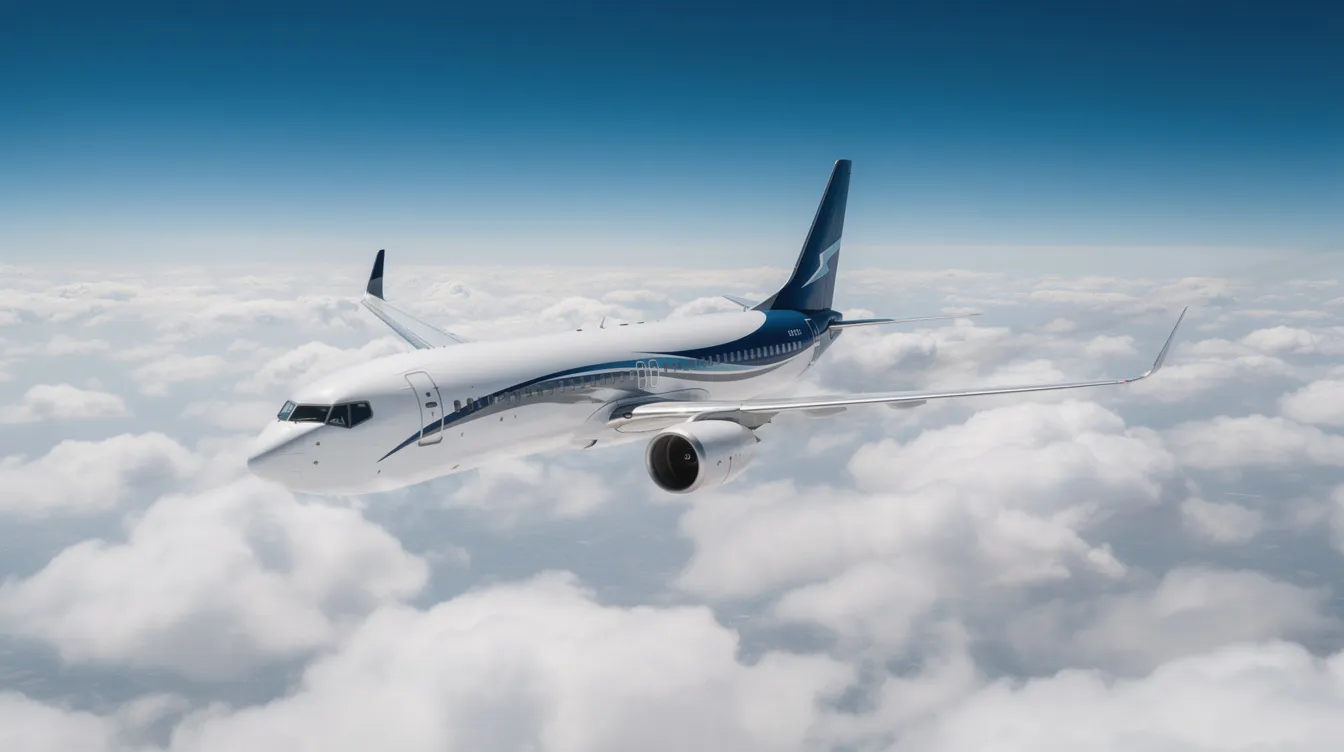
The Boeing 737 is the best-selling commercial aircraft in history, and understanding the range of 737 variants helps travelers, planners, and aviation enthusiasts make smarter decisions about how they fly. From short regional hops to coast-to-coast missions, different 737 models cover a surprisingly wide spectrum of distances. This guide breaks down the numbers by variant, explains what limits real-world range, and explores when chartering a private jet through Jettly may be the faster, more flexible option.
The range of the Boeing 737 family spans from roughly 1,500 to 3,850 nautical miles, depending on the generation, model, and configuration. The 737 Next Generation series covers medium-haul routes up to about 3,400 nm, while the 737 MAX pushes beyond 3,800 nm in its longest-range variant.
Different Boeing 737 models have varying fuel efficiencies and ranges. The overall range of Boeing 737 models varies from 1,500 to 3,850 nautical miles, with the MAX 7 sitting at the top and older Classic variants at the bottom.
Maximum range depends on several factors, including fuel capacity, payload weight, weather conditions, and airport elevation. Published figures assume optimal conditions that airlines rarely replicate on every flight.
Boeing Business Jet (BBJ) and BBJ MAX versions, configured as VIP aircraft with auxiliary belly fuel tanks and fewer passengers, can fly over 6,000 nautical miles nonstop, connecting city pairs like London–Los Angeles or New York–Tokyo.
Airlines like Alaska Airlines and Lion Air use the 737 range for both short-haul regional routes and long thin international routes, sometimes flying sectors that approach 7–8 hours on the MAX 8.
Private jet charters via Jettly can be more time-efficient than flying on a 737 despite similar stage lengths, by eliminating layovers, using smaller airports, and offering direct routing that cuts total door-to-door travel time.
The Boeing 737 family includes dozens of variants across four generations. Below is a data-driven snapshot of maximum range for the models most commonly seen in service today, measured in nautical miles under optimal conditions.
Next Generation (NG) Variants
|
Variant |
Max Range (nm) |
Typical Seats (Two Class) |
|---|---|---|
|
737-600 |
~2,900 |
108–130 |
|
737-700 |
~3,200–3,400 |
126–145 |
|
737-800 |
3,377 |
160–170 |
|
737-900ER |
~3,200+ |
175–215 |
|
737 MAX Variants |
||
|
Variant |
Max Range (nm) |
Typical Seats (Two Class) |
|
MAX 7 |
~3,800–3,850 |
135–160 |
|
MAX 8 |
~3,500 |
162–178 |
|
MAX 9 |
~3,300 |
175–195 |
|
MAX 10 |
~3,100 |
185–210 |
These "book" maximum range figures assume standard fuel reserves, light winds, and a typical two-class layout. Real-world airline operations often fly slightly shorter sectors due to headwinds, payload, and regulatory reserves.
Range is the maximum distance a 737 can fly from takeoff to landing on a full fuel load, including required legal reserves. It is not simply a measure of how much fuel the tanks hold. All published maximum ranges for Boeing 737 variants are planning specifications, not guaranteed distances for every flight.
There are three distinct ways to think about range:
Advertised maximum range is the figure Boeing publishes under ideal conditions: standard atmosphere, optimal cruise altitude, typical payload, and normal reserves.
Revenue-service range is what airlines actually schedule. With a full complement of passengers, baggage, and cargo, plus regulatory fuel reserves and alternate airport contingency fuel, this is typically 10–20% less than the book number.
Ferry range is the distance when flying empty or with minimal payload, often used for repositioning. It can exceed revenue range by 500 nm or more.
Weather and wind conditions impact the effective range of a Boeing 737 significantly. Jet streams can drastically alter a 737's ground range and flight time. Strong winter headwinds on westbound North Atlantic sectors, for example, can reduce the effective range by 300–500 nautical miles compared to eastbound flights on the same aircraft. Aircraft routing also influences fuel efficiency, since detours around weather or restricted airspace add distance.
Regulations require aircraft to carry extra fuel reserves for flight safety. Airlines must carry contingency fuel, fuel to reach an alternate airport, and holding fuel. These requirements reduce the distance airlines can actually schedule compared to brochure values.
A practical mental model: plan on roughly 10–20% less than the advertised maximum range for realistic commercial missions on a 737. Boeing 737's maximum range depends on operating conditions and weight, so the same aircraft can cover very different distances on different days.
The Boeing 737 spans four main generations, each reflecting shifts in engine technology, materials, and airline strategy.
The original 737-100 entered service in 1968 as the first airplane in Boeing's short-haul narrow-body lineup. Its maiden flight took place in 1967, and the first delivery went to Lufthansa. The launch customer, Southwest Airlines, later became synonymous with the type. These early models were optimized for regional routes under 1,500 nm with higher fuel burn per mile.
The 737 Classic series was produced from 1984 to 2000, covering the -300, -400, and -500 variants. The range improved modestly, and fuel-efficient CFM International engines improved economics. The generation series also found military applications in maritime patrol and transport roles. Over 100 countries operate some form of 737, and the Classic helped establish that global footprint.
The 737 Next Generation series was launched in 1993, with the first flight of the 737-700 in 1997. Boeing Commercial Airplanes introduced a redesigned wing, greater fuel capacity, and CFM56-7B engines that extended range beyond 3,000 nm. The Boeing Sky Interior, introduced later in the NG program, improved passenger comfort with sculpted sidewalls and LED lighting. This generation became the workhorse for medium-haul commercial aviation worldwide.
The 737 MAX entered service in 2017, featuring LEAP-1B engines with a higher bypass ratio, advanced winglets, and aerodynamic improvements that deliver 14–20% better fuel efficiency per seat versus the NG; because the 737 sits low to the ground, the larger engines also required changes around the nose landing gear geometry. These gains enable airlines to fly thinner long sectors—such as South America to Florida or Northern Europe to the Middle East—that once required widebodies.
Range varies significantly across generations and individual models. Mission profile evolution mirrors airline strategy: more point-to-point flying, longer narrow-body routes, and high-frequency services on dense short sectors.
The next generation series transformed the 737 into a true medium-range contender. Improved aerodynamics, higher fuel capacity, and fuel-efficient engines, rather than major landing gear changes across NG variants, made it possible to connect cities across continents on a single-aisle aircraft with industry-leading reliability.
737-600: The smallest NG variant, with a maximum range of approximately 2,900 nautical miles. Its modest fuselage length and seating capacity (108–130 passengers) made it suitable for thin routes with limited demand. Production was limited, and most operators have transitioned to larger models.
737-700: With a maximum range of roughly 3,200–3,400 nm and typical seating of 126–145 in a two-class layout, the -700 serves long-thin missions well. Its landing performance at higher-altitude airports gives it an edge where other variants face weight restrictions. Southwest Airlines, the launch customer for the NG program, operates a large fleet of -700s.
737-800: The Boeing 737-800 has a maximum range of 3,377 nautical miles. It typically seats 160 to 189 passengers depending on configuration, with six-abreast seating in economy class. The cruising speed of the Boeing 737-800 is approximately 453 knots, and its service ceiling is 41,000 feet. The aircraft is powered by two CFM56-7B turbofan engines. It became the backbone for carriers like Alaska Airlines and many low cost carriers around the world.
737-900ER: This stretched version features an extended fuselage, additional exit doors, and higher passenger capacity of up to about 215 in a single-class high density layout. With auxiliary fuel tanks, its extended range can exceed 3,200 nm, though at full capacity the usable range drops closer to 3,100 nm. The payload-range trade-off is most visible in this variant.
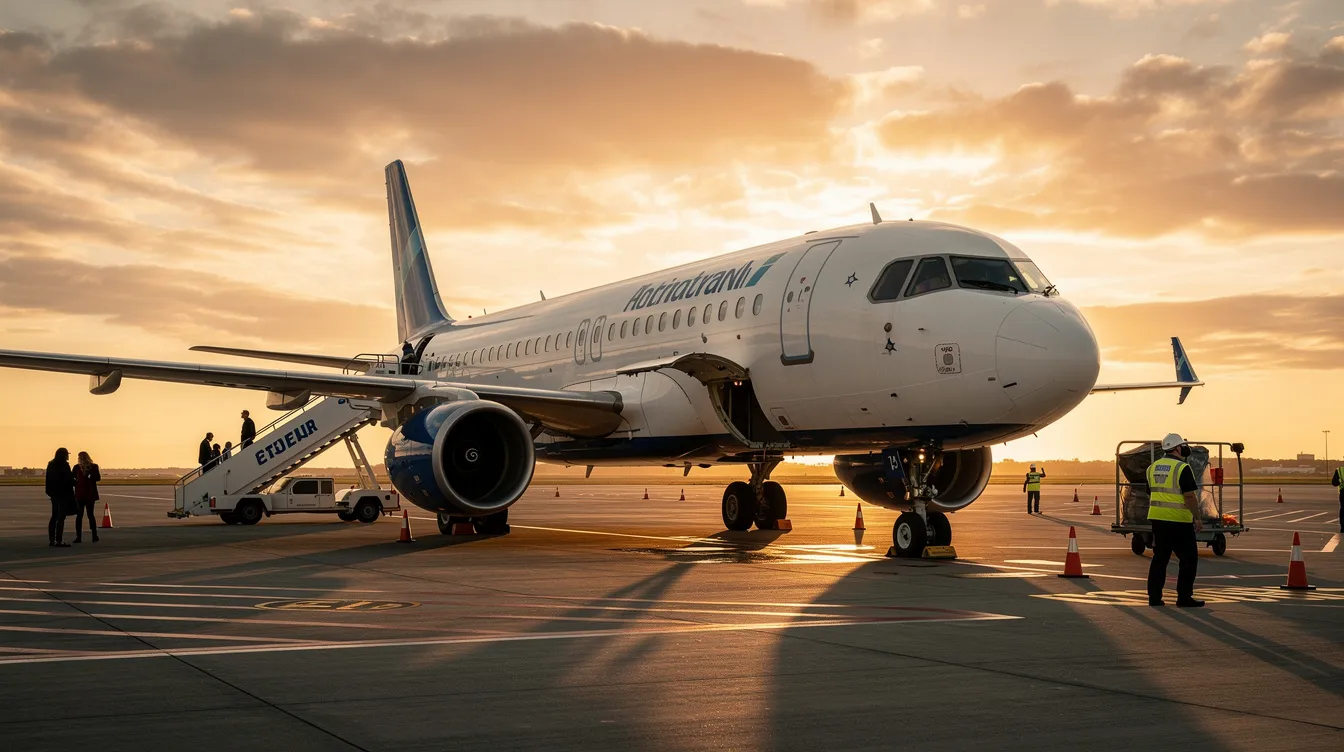
The 737 MAX series uses CFM LEAP-1B engines from CFM International, improved aerodynamics, and split-tip advanced winglets to reduce drag and deliver significantly better fuel efficiency than NG models, with landing gear-related accommodation also needed for the larger engines on the low-slung 737 platform.
737 MAX 7: The longest range variant in the MAX lineup, with a maximum range of approximately 3,800 nautical miles. After receiving FAA certification in August 2026, it is now positioned for operators flying from hot-and-high airports with fewer passengers. Its operational flexibility on long thin routes is a key selling point.
737 MAX 8: The most widely ordered MAX variant balances range and capacity. The 737 MAX 8 can fly up to approximately 3,500 nautical miles. A 737 MAX 8 can carry 162 to 210 passengers depending on layout. Real-world routes like GOL's Brasília–Orlando (~3,280 nm) demonstrate its long-range narrow-body capability on sectors approaching 7–8 hours.
737 MAX 9: A stretched version with more cabin space and a range around 3,300 nm. United Airlines and Alaska Airlines operate the MAX 9 on transcontinental US routes and Hawaii missions where range and premium seating options matter.
737 MAX 10: The highest seating capacity model, with fuselage length optimized for busy short-to-medium routes. It trades some range (~3,100 nm) for more seats and lower cost per seat, making it attractive for high-demand trunk sectors rather than the longest missions.
The Boeing 737 MAX offers a range of 3,800 nautical miles at the top end, a meaningful jump over the NG. This increased capacity for longer missions without a fuel stop is reshaping how airlines plan their networks.
Longer fuselage length generally means more seats and payload, which increases weight and drag. But longer variants do not just add seats; weight distribution across the fuselage and landing gear also affects structural limits and usable range. The result is often reduced maximum range compared with shorter variants built on the same aircraft wing.
Approximate fuselage lengths illustrate the trade-off:
|
Variant |
Approx. Length |
Typical Seats |
Max Range (nm) |
|---|---|---|---|
|
737-700 / MAX 7 |
~110 ft |
126–160 |
3,200–3,800 |
|
737-800 / MAX 8 |
~129 ft |
160–189 |
3,377–3,500 |
|
737-900ER / MAX 10 |
~138 ft |
185–215 |
3,100–3,200 |
Payload weight inversely affects the range of a Boeing 737. The payload-range trade-off works like this: adding passengers or cargo uses weight margins that could otherwise carry fuel. On a 3,200 nm route, a 737-800 may need to fly with slightly reduced payload—perhaps fewer bags in the hold or a handful of blocked seats—to maintain sufficient fuel reserves.
Airlines deliberately choose shorter 737 versions when they need extra range, and longer ones when route demand is strong and stage length is moderate. Payload weight directly influences the 737's fuel consumption and range, so operators must balance revenue from passengers who carry cargo against the distance they need to cover.
Fuel capacity and burn rate significantly affect the Boeing 737's range. These two variables—how much fuel the aircraft carries and how efficiently it burns that fuel—are the core technical drivers of how far any variant can fly on a given mission profile.
Fuel capacity: NG variants carry approximately 6,812 US gallons in standard configuration. Optional auxiliary fuel tanks in the lower cargo hold can increase capacity further, though they reduce space to carry cargo. MAX variants carry similar volumes but benefit from lower fuel consumption per mile. Airframe efficiency also includes factors like landing gear weight and drag, even if fuel load and engines remain the main range drivers.
Wing design and winglets: Modern Boeing 737 models are equipped with winglets to reduce drag. Blended winglets on the NG and split-tip advanced winglets on the MAX reduce induced drag at cruise, improving fuel-efficient operations and extending range by several percentage points. Aerodynamics and aircraft design significantly influence the range of the Boeing 737.
Engine technology: The LEAP-1B engines on the MAX feature a higher bypass ratio and improved thermodynamic cycle compared to the CFM56-7B. The 737 MAX reduces fuel consumption by 14–20% compared to the NG, lowering specific fuel burn and CO₂ emissions per seat. Higher cruise altitudes improve fuel efficiency for the Boeing 737 as well, since thinner air at altitude means less aerodynamic drag.
Real-time management: Airlines monitor real-time fuel burn versus the flight plan, adjusting cruise speeds and altitudes to protect range margins and arrival times. These decisions happen on every flight and can make the difference between a comfortable fuel reserve and a diversion.
How many passengers a 737 carries is often more important to its actual operational range than the brochure fuel capacity number.
Typical seating capacity by variant:
737-600 / 737-700: ~110–145 passengers
737-800 / MAX 8: ~160–189 passengers (the 737-800 has a maximum range of 3,377 nautical miles at typical loads)
737-900ER / MAX 10: ~185–230 passengers in high-density configurations
Higher seating means more weight, which shortens usable range on the longest routes. Airlines may block seats or limit payload on very long missions to ensure enough fuel reserves, especially from hot, high, or short-runway airports.
Consider two contrasting flights: a lightly loaded 737-700 can fly roughly 3,400 nm with comfortable reserves, while a full 737-900ER on a high-demand 2,500 nm sector carries maximum revenue but never approaches its theoretical range ceiling. It is all about matching the right aircraft size to the route.
Chartered 737s configured for VIP or corporate use can trade seating capacity for extra comfort and range, which aligns with premium group travel needs. Fewer passengers means less weight, more fuel margin, and more cabin space per person.
Airlines around the world test the edges of 737 range with long point-to-point routes that approach 3,000–3,500 nm. These missions prove the aircraft's capability on sectors once reserved for widebodies.
GOL (Brazil): Operates 737 MAX 8 between Brasília (BSB) and Orlando (MCO), approximately 3,280 nm. This is one of the longest regularly scheduled MAX flights in the world and pushes close to the MAX 8's published ceiling.
Lion Air and Southeast Asian operators: Lion Air deploys 737-800 and 737 MAX 8 on dense Southeast Asian routes and selective longer flights. Some sectors into the Middle East or South Asia approach 7 hours, requiring careful payload management. South Korea–based carriers also use 737s for medium-range international service.
Alaska Airlines: Operates 737-800 and MAX 9 on long domestic and Hawaii routes, including Anchorage–Chicago (~2,472 nm) and West Coast–Honolulu sectors where landing performance and range are both critical.
While these long missions are possible, the majority of 737 flights worldwide remain under 4 hours. Most operators focus on frequency rather than pushing maximum range, using the 737's operational flexibility on high-demand short and medium sectors.
Range is only useful if the aircraft can operate from the available runways. Performance limits can shorten practical range from challenging locations.
737s require runways of 6,000+ feet for takeoff in most configurations. A fully loaded 737-800 or MAX 8 often needs 7,000+ feet at sea level, and high elevation or hot weather can demand even more. Higher temperatures at airports can reduce the 737's takeoff performance, sometimes requiring weight penalties that translate to shorter range or fewer passengers. Carbon brakes on newer variants improve landing performance and reduce maintenance, but the 737’s low stance and main landing gear placement are also part of why runway and weight limits still matter on longer missions.
Many smaller regional airports used by private jets are not accessible to fully loaded 737 operations. Private jets can access over 5,000 airports in the US alone, compared to roughly 500 that can handle a 737. This access gap is where private charter creates real value.
Private jet categories—light, midsize, and large cabin—available through Jettly can operate into shorter runways closer to city centers, often cutting total door-to-door travel time even on comparable stage lengths, and Jettly's airport locator tool helps identify convenient airfields that may not be served by 737s. For travelers headed to a mountain resort, a coastal town, or a small city without major airline service, this flexibility matters more than raw airborne range.
Both airlines and modern travelers are increasingly focused on fuel efficiency and environmental impact when planning long-range missions.
The 737 MAX family offers up to about 14–20% better fuel efficiency per seat than older 737 generations, reducing average fuel burn and CO₂ per passenger-kilometer. On a per-seat basis, a full 737-800 or MAX is among the most fuel-efficient options in commercial aviation, thanks to high passenger counts and modern engines.
High load factors—many seats filled—improve per-passenger fuel efficiency. A 737 MAX 8 at 90% capacity is extremely efficient per traveler. But half-empty flights dilute these gains and raise emissions per person, narrowing the gap with private jet emissions.
Private jets use more fuel per passenger but can avoid extra emissions from connections, missed flights, and long ground transfers by flying direct to smaller airports. The total carbon footprint of a trip includes ground transportation and hotel stays during layovers, not just the flight itself.
Jettly can support carbon offsetting and, where available, sustainable aviation fuel (SAF) options, helping clients align convenience with environmental awareness, and many international private jet flights can be structured to minimize both travel time and regulatory friction compared to complex commercial routings.
A Boeing Business Jet is a VIP-configured version of the Boeing 737, designed for very long range with small passenger counts. The Boeing Company markets these through a dedicated program that caters to heads of state, chief executive officer-level corporate travel, and ultra-high-net-worth individuals.
BBJ1 (based on 737-700): Equipped with auxiliary belly fuel tanks, it offers around 6,000–6,200 nm range while typically carrying fewer than 20 passengers in a custom interior. This was the first airplane in the BBJ lineup and remains the most balanced for range versus cabin space.
BBJ2 and BBJ3 (based on 737-800 and 737-900ER): More cabin space for larger VIP configurations but slightly reduced range compared to BBJ1—still comfortably exceeding 5,000 nm in most setups. Learn more in the Boeing BBJ1 guide.
BBJ MAX variants (BBJ MAX 7, 8, 9): Ranges often quoted between roughly 6,330 and 6,600 nm, combining LEAP-1B fuel efficiency with auxiliary fuel tanks and low seat counts. The BBJ MAX 7 can fly approximately 6,330 nm nonstop, enabling intercontinental city pairs like New York–Tokyo or London–Singapore. For a deeper look at these aircraft, see the Boeing BBJ overview.
These are true VIP aircraft that allow nonstop global travel. However, similar missions can be fulfilled via Jettly's access to large-cabin private jets from manufacturers like Gulfstream and Bombardier, including ultra-long-range options such as the Boeing 777-200LR, without the complexity of owning or operating a full BBJ.
While many Boeing 737 variants can fly 3,000+ nm, private jets accessible through Jettly often match or exceed this range with far fewer passengers and much more flexible routing. Private jets typically have a range of 1,500 to 6,000+ nautical miles depending on category.
|
Metric |
737 MAX 8 |
Large-Cabin Private Jet |
|---|---|---|
|
Max Range |
~3,500 nm |
5,500–6,500+ nm |
|
Passengers |
162–210 |
8–19 |
|
Airports Accessible |
~500 (US) |
5,000+ (US) |
|
Legroom |
~30–34 inches |
50–80+ inches |
|
Runway Needed |
7,000+ ft |
4,000–5,500 ft |
Private jets offer more legroom, typically 50–80+ inches, along with club seating, lie-flat options, and tailored service. On long-range sectors, this translates to more productive and comfortable hours for small groups compared to a six-abreast seating airline cabin.
For travelers planning long-range private flights, models like the Gulfstream G700, Bombardier Global 7500, or other private charter aircraft in Jettly's network can cover intercontinental distances nonstop. A 737 MAX makes sense on high-traffic trunk routes. A Jettly-arranged private jet makes sense for regional or last-mile segments, or when schedule flexibility and airport access matter most.
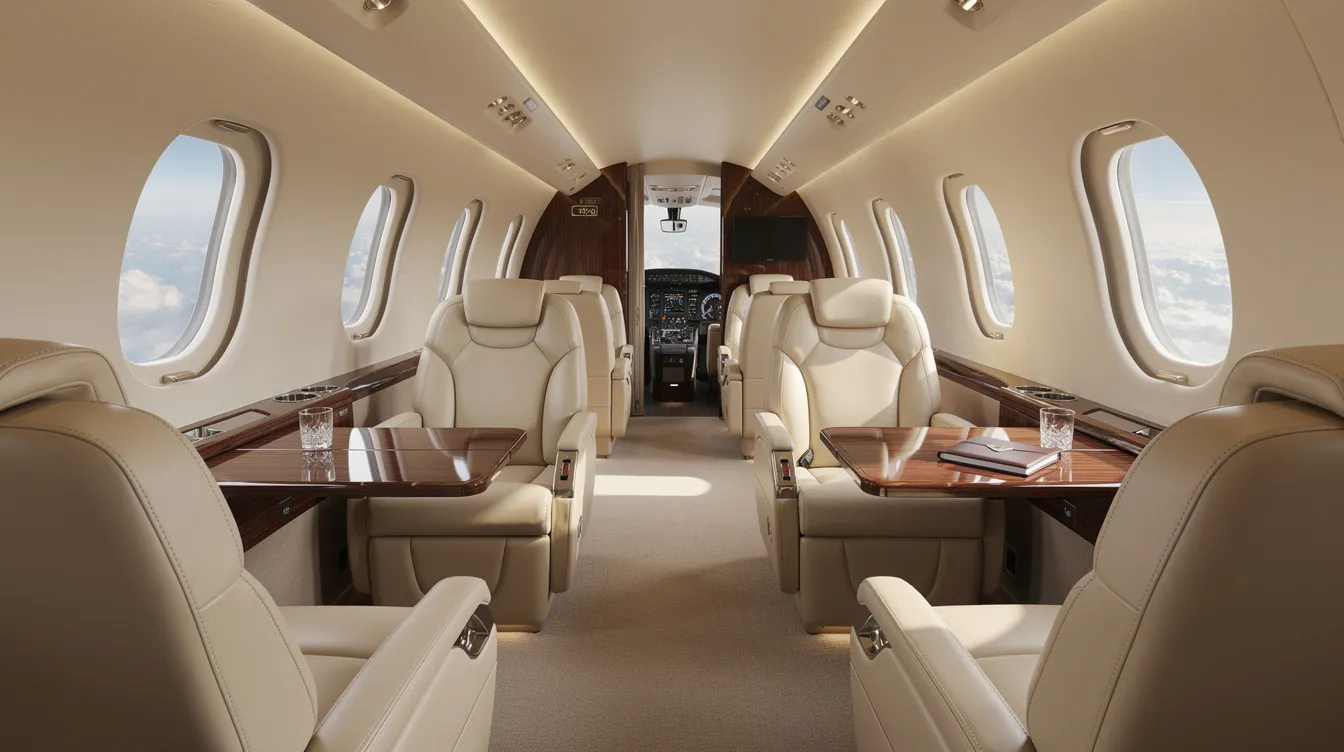
Advertised range does not account for time spent on the ground, which often dominates total trip time on commercial 737 flights.
A typical commercial journey involves arriving at the airport 1–2 hours early, boarding and deplaning queues, waiting for bags, and-on connecting routes-potential layovers that can double travel duration compared to pure flight time.
Private jet workflows through Jettly look different: arrival 20–30 minutes before departure, boarding directly via an FBO, and departures that wait for the client, with options to share or crowdsource private jet flights to reduce per-seat costs on some routes. There are no security lines, no gate changes, and no checked-bag carousels.
Consider a concrete example. A 2.5-hour 737 flight from New York to Miami, with connections and transfers, can become a 6–7 hour journey door to door; applying affordable private jet booking strategies such as empty legs or shared charters can narrow the cost gap while preserving time savings. A direct private jet leg with similar airborne range covers the same origin to destination in under 4 hours, including ground time on both ends, and there are now many ways to get a seat on a private jet easily without committing to full ownership.
For time-sensitive travelers, effective range is "point A to point B including ground" — not just the distance in the sky. On that measure, private charter often wins despite similar airborne distances.
Different airlines tailor their networks to the strengths and limits of 737 range. Two carriers illustrate contrasting approaches to the same aircraft family.
Alaska Airlines operates 737-800 and 737 MAX 9 aircraft on long domestic US routes, including Alaska-to-Lower-48 sectors and Hawaii missions, but many travelers on similar routes now compare these services with offerings from the best private jet charter companies for added flexibility. Routes like Anchorage–Chicago (~2,472 nm) require both range and runway performance, especially during winter operations. The carrier's first delivery of the MAX 9 expanded its ability to connect cities across diverse geography without widebody costs.
Lion Air deploys one of the world's largest 737 fleets across dense Southeast Asian routes and selective longer international flights. The carrier uses the MAX 8 on sectors that sometimes exceed 6 hours, reaching into the Middle East and South Asia. As a launch customer for the MAX, Lion Air's network demonstrates how 737 range enables low-cost carriers to serve markets once dominated by widebodies.
Many low cost carriers use 737 range primarily for high-frequency short sectors under 2 hours, prioritizing turnaround time and seat cost over stretching to maximum distance. Corporate and sports charters sometimes lease 737-800s for regional tours when how many passengers matter more than pushing the longest range—groups of 80–150 need space, not 3,500 nm legs.
The ideal Boeing 737 mission profile falls into three broad categories: high-demand short-haul, medium-haul trunk routes, and selected long thin routes within roughly 3,000–3,500 nm.
Domestic and regional missions like New York–Dallas, London–Athens, or Sydney–Perth sit comfortably within the 737's range and match its passenger capacity to typical demand. These are the bread-and-butter sectors where the 737's economics and industry-leading reliability shine.
Longer niche missions like transcontinental coast-to-coast flights or near-transatlantic sectors within MAX 7/8 limits let airlines leverage improved aerodynamics and fuel efficiency without deploying widebodies. The first flight of many new international routes now uses 737 MAX equipment.
Ultra-long-haul or multi-stop itineraries with many small airports are less suitable. For those, long-range private jets or widebody aircraft are better choices.
Think of 737 range as optimal for 1–7-hour sectors. Private jets are more adaptable across both short hops and ultra-long intercontinental legs.
For corporate travel planners, sports teams, or event organizers, the choice between a 737 charter and multiple private jets depends on group size, schedule needs, and airport access.
A chartered Boeing 737-800 can be cost-effective for very large groups—80–150+ passengers—on a single route within the aircraft's range and runway limits. Company off-sites, fan charters, and large incentive trips are classic use cases. At full capacity, the cost per seat drops significantly compared to booking individual private jets.
But for senior teams, VIPs, or staggered departures, multiple smaller private jets offer privacy, tailored schedules, and access to secondary airports closer to event venues. A chief executive officer flying separately from a larger team on a different timeline is a common scenario where private jet charter makes more sense.
Mission profile, stage length, and airport choice shape this decision. 737 charters work best into big hubs on well-defined routes, while a broad ecosystem of charter airlines and private operators can serve more specialized missions. Private jets via Jettly work best when flexibility, privacy, and proximity to the final destination matter most, and structured jet card programs can simplify budgeting for frequent users. Jettly's platform can quote both airliner-size options and smaller jets, helping clients compare charter costs for Boeing 737 solutions against alternative aircraft types transparently, and tools like Jettly's private jet charter cost estimator make it easy to model different scenarios.
Jettly is a digital private aviation marketplace that helps travelers compare airliner-style solutions with a wide range of private jets for trips within or beyond typical 737 range. With access to over 20,000 aircraft globally, the platform surfaces options from light jets to large-cabin aircraft that can replace or complement 737 segments.
The platform's instant pricing and global aircraft inventory let users see real quotes in minutes. Advisors can factor in mission profile, passenger count, runway length, and schedule constraints to determine whether a Boeing 737 charter, a BBJ, or a smaller private jet is the best fit.
For frequent flyers who often travel on routes commonly operated by 737s, Jettly offers both membership and on-demand access models, and its private jet memberships can optimize costs for repeated trips. Structured membership plans may save money and time for regular travelers on corridors like New York–Miami or Los Angeles–San Francisco, especially when paired with tools like Jettly's jet card flight cost estimator to benchmark expected spend.
Ready to see how private charter compares for your next trip? Explore flight options or request a quote at jettly.com or review city-specific services like private jet charter in Kolkata for more localized options.
These FAQs address common questions not fully covered above.
Certain 737 NG and 737 MAX variants can technically fly selected transatlantic routes. The 737 MAX 7, with its maximum range of approximately 3,800 nautical miles, can cover city pairs like Shannon (Ireland) to Newfoundland or Reykjavík to Boston under favorable conditions. Airlines prefer widebody aircraft for busy North Atlantic city pairs, but niche routes between smaller cities can be viable for 737s with appropriate ETOPS certification. Westbound limits are affected not only by reserve fuel needs but also by departure-weight constraints linked to the 737’s low-slung landing gear design at some airports.
Strong headwinds and reserve fuel requirements can limit westbound sectors. Some routes may require payload restrictions or a fuel stop on particularly windy days.
While a 737 MAX 8 offers about 3,500 nm of range with a full cabin, many large-cabin private jets on Jettly's platform can fly 5,500–6,500+ nm nonstop. These aircraft carry far fewer passengers but can link continents directly—New York to London, or Dubai to London—without refueling and with more flexible departure times.
For travelers planning intercontinental business trips, it is worth comparing these options side by side. Jettly's instant quoting tools make that comparison straightforward.
On a per-seat basis, a full Boeing 737-800 or 737 MAX is typically more fuel-efficient than a private jet, thanks to high passenger counts and modern fuel-efficient engines. But per-passenger fuel burn rises when many seats are empty, narrowing the efficiency gap.
Private jets can reduce total trip emissions by avoiding extra connecting flights and long ground transfers, flying direct to smaller airports closer to the traveler's origin and destination. The calculation depends on the specific mission.
Maximum advertised range figures assume typical, not maximum, load factors. Filling every seat plus cargo can reduce range margin on very long missions, and payload limits are also shaped by structural and landing gear loading on longer sectors. Airlines sometimes impose payload restrictions—fewer passengers or lighter cargo—on the longest 737 routes to maintain sufficient fuel reserves.
Charter customers should discuss expected passenger count and baggage with their broker so the operator can plan realistic range and, if needed, technical stops.
Private charter becomes attractive when commercial journeys on a 737 involve long layovers, inconvenient departure times, or airports far from city centers. Executive roadshows, last-minute trips, family holidays to remote resorts, and centres of emergency travel are all cases where time savings outweigh higher per-seat costs, and understanding how to buy a seat on a private jet can make these options more accessible.
Ready to experience private travel on your terms? Explore flight options or request a quote at jettly.com, especially if you're considering a NetJets alternative that offers more flexible, on-demand charter.
The range of the Boeing 737 family varies widely across its many models, from about 1,500 nautical miles in early variants to nearly 3,850 nautical miles in the latest 737 MAX 7. This flexibility makes the 737 suitable for a broad spectrum of routes—from short regional hops to long thin international sectors. However, real-world range depends heavily on payload, weather, airport conditions, and operational constraints.
For groups and businesses, chartering a Boeing 737 can be a cost-effective way to move large numbers of passengers on well-served routes within the aircraft's range and runway requirements. Meanwhile, private jet charters through platforms like Jettly offer unmatched convenience, flexibility, and access to thousands of airports, often saving significant total travel time despite similar airborne distances.
Understanding the range capabilities and limitations of the Boeing 737 helps travelers and planners choose the best aircraft solution for their mission. Whether flying large groups on a 737 or opting for the tailored experience of a private jet, Jettly’s digital marketplace connects travelers to the ideal aircraft for their needs.
Ready to experience private travel on your terms? Explore flight options or request a quote at https://www.jettly.com.
Share this post:
Jay Franco Serevilla
Oct 20, 2026
|
5
min read
Discover tips and trends in the industry.
5
min read
Passenger Airline Crashes: History, Safety, and What Modern Travelers Should Know
Passenger airline crashes are rare, with commercial aviation being the safest mode of mass transportation today. In 2023, there were zero fatal accidents involving passenger jets, highlighting the effectiveness of safety regulations and advancements in technology. This article explores the history of airline crashes, safety measures, and what travelers should know about aviation safety.
Read More
5
min read
Worldwide Jet Charter: A Practical Guide to Global Private Flights with Jettly
Worldwide jet charter has transformed private air travel into a practical solution for executives, families, and urgent travelers. With access to over 20,000 aircraft globally, Jettly offers flexible, efficient, and direct flights that save time and enhance the travel experience. This guide outlines how jet charter works, its benefits, and how to navigate the booking process seamlessly.
Read MoreStay updated with our latest insights and tips to elevate your journey with us.
MEMBERSHIPS AND ASSOCIATIONS



Disclaimer: Jettly operates as a charter broker, offering access to a global digital jet charter marketplace. Jettly is not a direct air carrier and does not own or operate aircraft. All advertised flights are conducted by third-party air carriers that are fully licensed and hold the appropriate Part 135 or Part 121 certifications issued by the Federal Aviation Administration (FAA) or equivalent regulatory authorities under U.S. or foreign law. Jettly complies fully with the U.S. Department of Transportation's Part 295 and Part 298 Charter Broker regulations. Jettly does not carry additional liability insurance. Passengers are covered by aircraft operator insurance. TICO: 50023770


