



Login
Get Instant Pricing On 23,000+ Aircraft

>
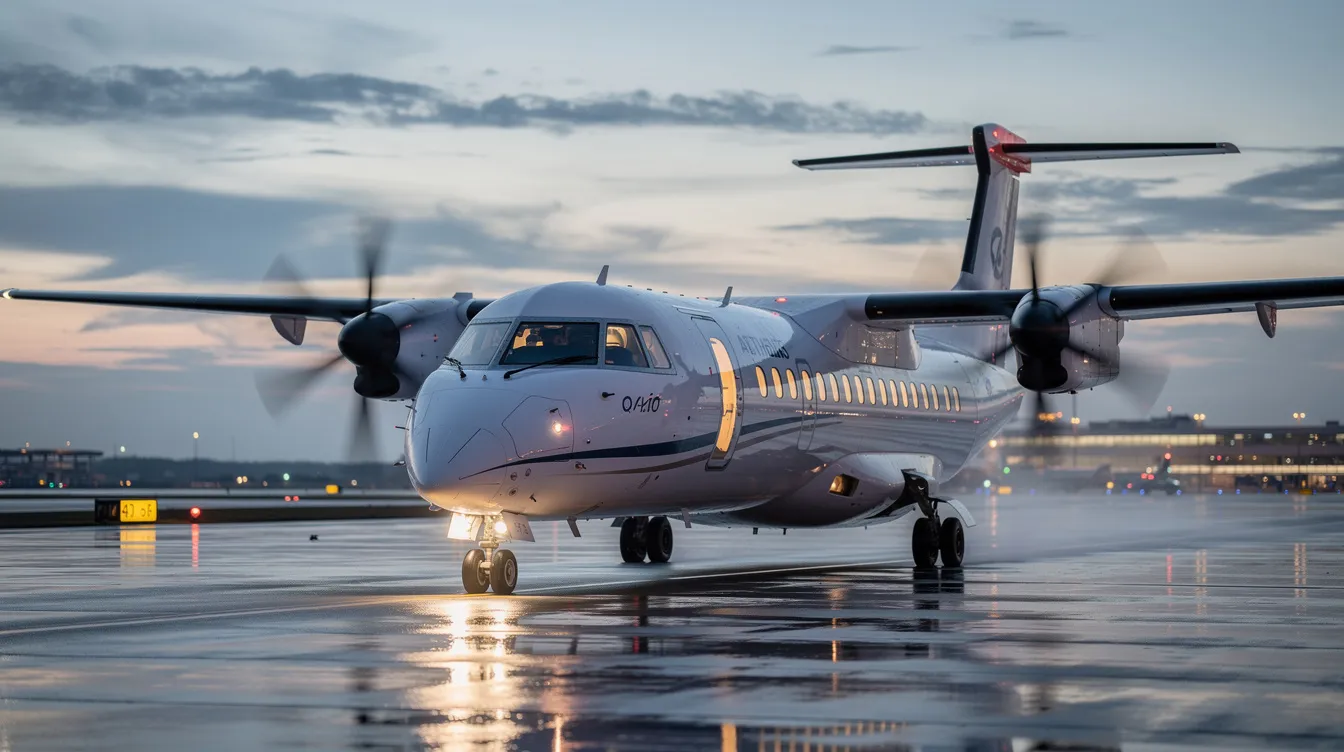
The Q400—formerly the Bombardier Dash 8 Q400, now the De Havilland Dash 8-400—is a fast, fuel-efficient regional turboprop that typically seats 70 to 90 passengers, bridging the gap between small commuter aircraft and full-size airliners. Built for speed, efficiency, and flexibility, it serves dozens of airlines worldwide and is also available for group charter through platforms like Jettly, making it a practical option for business and leisure travelers, from corporate teams to sports fans, who want airline-style capacity with private aviation convenience.
This guide explains the Q400’s technical specifications, development history, performance, operations, safety record, cabin experience, how it compares with regional jets and other turboprops, and what to expect when booking one for charter. For short- to medium-haul regional trips, the Q400 stands out for combining turboprop operating efficiency with near-jet speed, cost-effective group travel, and access to airports with shorter runways.
The Dash 8 Q400 (now marketed as the De Havilland Dash 8-400) is a fast, efficient regional turboprop widely used on short-haul routes and available through Jettly's private charter marketplace for groups of 70–90 passengers.
The Q400's twin PW150A turboprop engines, quiet Q series cabin with active noise and vibration suppression, and ability to operate from short runways make it a strong option for regional business and leisure travel.
Jettly can arrange charter flights on Dash 8 Q400 aircraft for larger groups who want private-style flexibility coupled with airline-level seating capacity.
The aircraft typically seats 70–90 passengers, cruises around 360 knots (approximately 667 km/h), and delivers lower fuel burn than comparable regional jets on sub-1,000 km sectors.
This article covers technical specifications, history, operations, safety record, and how to book a Q400 via Jettly, ending with FAQs and a clear call to action.

The Dash 8 Q400 is the flagship and highest-capacity member of the Dash 8 family. Introduced in the late 1990s and still central to regional fleet operations in 2026, it remains one of the most recognizable turboprops in the sky. The De Havilland Canada Dash 8-400 is a high-speed turboprop aircraft commonly referred to as the Bombardier Dash 8 Q400 or simply the Dash 8-400, with De Havilland Canada now owning and marketing the program.
The Q400 combines turboprop efficiency with near-jet regional performance. It fills a clear niche in regional air service on medium-range sectors of roughly 300–1,000 km routes like Toronto–Montreal, London–Edinburgh, or inter-island hops in the Caribbean, with Air Canada among the major operators on domestic sectors. On these shorter legs, block times are similar to regional jets, but fuel consumption and per-seat operating costs run meaningfully lower. The aircraft can also access shorter, secondary runways that larger jets may not use.
The quieter "Q series" branding originated from Bombardier's Active Noise and Vibration Suppression system, a significant improvement over earlier Dash 8 variants that made the cabin environment more suitable for business and leisure passengers alike. By July 2018, 844 Dash 8s were in airline service worldwide. Through Jettly, travelers can charter the Dash 8 Q400 on-demand, gaining commercial-airline capacity with private-aviation flexibility.
Understanding the Q400's lineage helps explain why it became a regional workhorse across six continents.
De Havilland Canada developed the original DHC-8 (Dash 8) in the early 1980s as a more efficient successor to the four-engine Dash 7, using two Pratt & Whitney Canada PW100 series engines instead. The first flight took place on June 20, 1983, and the Q400 entered service in 1984 with NorOntair. Early models—Series 100 (~37–40 seats), Series 200, and Series 300 (~50–56 seats)—established the platform's reputation for reliability.
Ownership changed hands several times. Boeing briefly held the program before Bombardier acquired De Havilland in 1992. Under Bombardier, the "Q series" designation was launched around 1996, adding cabin noise-reduction technologies to the existing variants (Q100, Q200, Q300) and introducing the entirely new Q400. The Dash 8-400 was a stretched, faster, higher-capacity evolution of the earlier Dash 8-300, featuring a modernized flight deck and improved aerodynamics.
A total of 672 Dash 8 classics were produced by 2005 when Series 100 production ended. Series 200 and 300 followed in 2009, leaving the Q400 as the sole production variant through the 2010s. The 1,000th Dash 8 was delivered in November 2010.
By the 2018 sale to Longview Aviation Capital, which revived the De Havilland Aircraft of Canada name in January 2019, 585 Q400S had been delivered. Production paused around 2021, marking the end of output for the time being, but by the mid-2020s, De Havilland announced plans to restart Dash 8-400 production at a new facility in Alberta and to support freighter and combi conversions, signaling an addition to the platform’s lifecycle.
Here is a high-level technical overview of the Dash 8-400's core specifications, organized for quick reference.
|
Parameter |
Value |
|---|---|
|
Length |
~32.8 m (107 ft 9 in) |
|
Wing span |
~28.42 m (93 ft 3 in) |
|
Height |
~8.34 m (27 ft 5 in) |
|
Fuselage width |
~2.69 m (8 ft 10 in) |
|
Seating (standard / high-density) |
70–78 / up to 90 passengers |
|
Engines |
2× Pratt & Whitney Canada PW150A (~5,071 SHP each) |
|
Propellers |
6-blade Dowty R408 composite |
|
Cruise performance (max) |
~360 knots (~667 km/h) |
|
Range (full payload) |
~2,040 km (1,100 nmi) |
|
Maximum operating altitude |
27,000 ft (8,200 m) |
|
Maximum takeoff weight |
30,481 kg (67,200 lb) |
|
Takeoff field length (MTOW, SL) |
~1,000 m / 3,280 ft |
The Q400 has a maximum passenger capacity of 90 in its high-density variant and a cruising speed of 360 knots (667 km/h). Its range is 2,040 km (1,100 nmi), and the Q400 is capable of operating from runways as short as 3,280 feet, giving it access to airports that many regional jets cannot reach.
The powerplant—two PW150A turboprops driving six-blade Dowty propellers—delivers about 5,071 SHP of power per engine, supporting both its short-field performance and strong cruise capability while keeping fuel burn per seat well below most comparable regional jets on sub-1,000 km sectors. This translates into real operating cost advantages for airlines and charter operators alike.
The avionics suite features a glass cockpit with a modern flight management system and full authority digital engine controls. The Active Noise and Vibration Suppression system differentiates the Q series cabin environment from conventional turboprops, making the aircraft more comfortable for passengers who might otherwise prefer jets.
The Dash 8 Q400 cabin is a high-wing, single-aisle layout with 2–2 seating and no middle seats. Many passengers find this more comfortable than denser regional jet cabins that squeeze in 2–3 configurations.
Standard configurations seat 70–78 passengers with a forward galley, lavatory, and overhead stowage sized for carry-on bags. Some operators run 90-seat high-density versions with slimline seating, certified since 2018. Cabin headroom in the main aisle allows comfortable standing for most adults, and the high wing with large oval windows provides good sightlines.
The Q400 incorporates an Active Noise and Vibration Suppression system for a quieter cabin. Compared to older turboprops, the difference is substantial—conversation, phone calls, and laptop work are all practical during typical one- to two-hour flights. Lighting and interior finishes vary by operator.
High-resolution 360° cabin tours are increasingly common across the industry, letting travelers and charter planners assess seat pitch, galley layout, and storage before booking. Jettly's platform focuses on accurate private charter aircraft information, photos, and layouts provided by operators to help customers evaluate their options.
For group charter, operators may offer customized interiors—higher-pitch seating for corporate shuttles, for example, or adjusted layouts for sports team travel. Jettly can help match customers to a cabin layout that fits their group size and comfort expectations.
The Dash 8 Q400 was designed to close the speed gap with regional jets while retaining turboprop efficiency. On 200–600 nautical mile routes, where climb and descent phases dominate total flight time, the Q400's block times often rival those of jets.
The aircraft performs well in hot and high conditions, remote airports, and runways shorter than many jets require. This makes it suitable for regions such as Western Canada, the Alps, India, and parts of Africa where ground infrastructure varies widely, especially when using Jettly's airport locator tool to identify suitable smaller fields.
Bombardier launched the 90-seat high-density Q400 variant in February 2016 at the Singapore Airshow. Certified in 2018 and delivered to launch customer SpiceJet, this version features increased payload, extended maintenance intervals (A-check escalated from 600 to 800 hours), and ultra-low unit costs for high-demand regional markets. European certification by EASA followed in March 2021, enabling operators in Europe to adopt high-density Dash 8-400 fleet configurations.
Typical airline use cases include frequent shuttle flights between city pairs, feeder routes into hub airports, and inter-island flights where quick turnarounds matter. These same characteristics translate well to charter scenarios: corporate roadshows across multiple regional cities, fan or sports team transport to smaller venues, and government or NGO missions to remote communities lacking large-jet infrastructure, where sharing or filling empty seats via crowdsourced private jet flights can help optimize costs.
Manufacturers have pushed the Dash 8 platform forward through both larger variants and alternative propulsion experiments.
Around 2007, Bombardier announced the proposed Q400X stretch, targeting roughly 90-seat regional markets with a new, longer fuselage. However, changing market conditions and engine technology shifts effectively shelved a full new stretched model. Competitive pressure from ATR and emerging regional jets shaped the decision to pursue incremental improvements instead, resulting in the certified 90-seat high-density Q400 variant rather than a radically new airframe.
In December 2021, De Havilland Canada and ZeroAvia announced a partnership to explore a hydrogen-electric ZA-2000 powertrain retrofit and possible line-fit options for Dash 8 aircraft as part of aviation's broader decarbonization effort. In May 2023, a DHC-8 Q400 testbed aircraft donated by Alaska Airlines was unveiled for hydrogen-electric trials—a forward step in demonstrating what hybrid or hydrogen-powered configurations could mean for future fuel burn and emissions.
As of 2026, these projects remain in testing and development stages, not yet part of mainstream commercial or charter operations. But they illustrate the long-term future of the Dash 8 platform and the continuing investment in regional turboprop innovation.
Like any widely used regional aircraft family, the DHC-8 series has experienced accidents and incidents over its long service history. The Q400 logged over 7 million flight hours by 2017, and the aircraft maintains a dispatch reliability over 99.5%.
Across all Dash 8 variants, the Q400 has been involved in 80 accidents and incidents, with 31 hull losses and 180 fatalities. These figures span decades of global operations across challenging environments.
The most high-profile incidents occurred in 2007. In September 2007, SAS grounded all Q400 aircraft after multiple landing gear failures in Scandinavia. Investigations found specific maintenance and component issues—corrosion on actuator components and an incorrectly installed O-ring in hydraulic restrictor valves. Bombardier, airlines, and regulators responded with fleet-wide inspections, service bulletins, and component replacements.
In 2017, a Flybe Q400 had a landing gear collapse at Belfast with no injuries. Investigation traced the failure to a proximity sensor harness damaged by fatigue. Additional incidents in 2011 involving propeller overspeed and inadvertent in-flight beta events led to mandatory beta lockout systems, improved pilot training protocols, and Transport Canada airworthiness directives.
By the late 2010s and 2020s, the Dash 8 Q400 maintained a solid safety record when operated and maintained under modern regulatory standards. Jettly only works with licensed, regulated operators that comply with relevant aviation authorities such as Transport Canada, FAA, EASA, or local equivalents.
Choosing between a Dash 8 Q400 and a regional jet or smaller turboprop depends on the mission. Here is a practical comparison for charter planning.
|
Factor |
Dash 8 Q400 |
Regional Jets (E-175/CRJ) |
ATR 72-600 |
|---|---|---|---|
|
Cruise speed |
~360 kn (667 km/h) |
~440–470 kn |
~275 kn (~510 km/h) |
|
Seats |
70–90 |
70–100 |
68–78 |
|
Fuel burn (per seat, short sectors) |
Lower |
Higher |
Lowest |
|
Runway required |
~1,000 m |
~1,500–1,800 m |
~1,000–1,200 m |
|
Cabin noise |
Low (ANVS equipped) |
Lowest |
Moderate |
Compared to regional jets like the Embraer E-175 or CRJ family, the Q400 delivers similar block times on short routes but burns less fuel and handles shorter runways. Against the ATR 72-600, the Q400 is meaningfully faster but trades a small noise advantage for quicker sector times.
For group charters on sectors up to about 1,000 km where airport options or runway lengths are limited, the Dash 8 Q400 is often the most practical choice. For longer legs or when extra cruise speed justifies higher fuel burn, jets make more sense, and travelers may want a broader overview of how much to rent a private jet to compare options. Jettly's digital platform allows users to search and compare options across the turboprop and jet spectrum by price, route, passenger count, and schedule before booking.
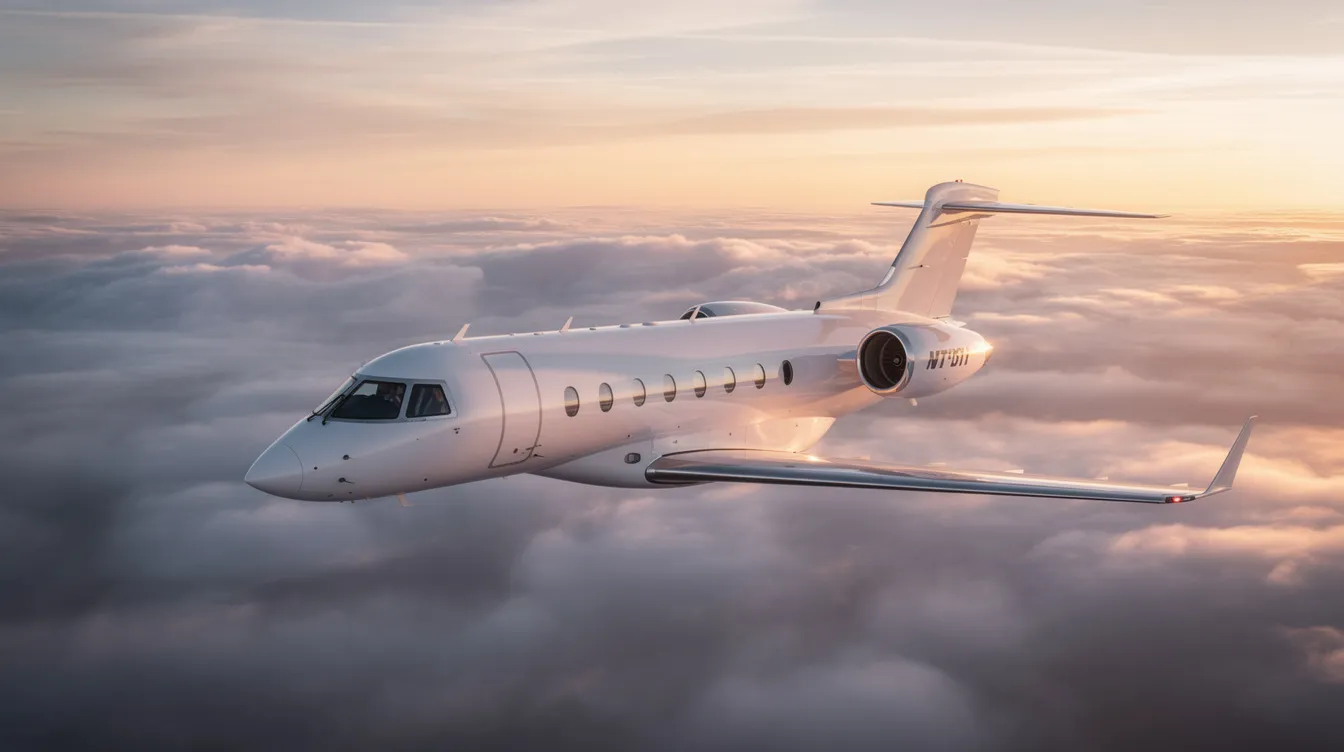
While best known as an airline workhorse, the Dash 8 Q400 also serves ad hoc charter, contract flying, and specialized missions accessible through platforms like Jettly.
Business-focused scenarios:
Corporate shuttles between regional offices
Large conference or event transfers
Multi-stop roadshows where 60–80 travelers need to move on a flexible, non-scheduled timetable
Crew transport to remote worksites
Leisure and lifestyle:
Sports team or fan group transport to major hubs such as private jet charter in Atlanta, Georgia
Ski trips to alpine airports with shorter runways
Island-hopping holidays where commercial airline charter schedules are limited or indirect, similar in planning complexity to booking private jet charter in Kolkata, West Bengal and other regional gateways.
The Q400 can be adapted for various roles including cargo and special missions—firefighting, freight, medical, and humanitarian transport all use the same robust airframe. Rather than ultra-luxury cabins for a handful of passengers, the Q400 offers airline-style seating for larger groups who value schedule control and privacy over bespoke interior finishes.
Jettly's marketplace can source Dash 8 Q400 aircraft from approved operators worldwide, present instant or rapid pricing estimates, and coordinate additional services such as ground transportation and tailored in-flight catering, with frequent flyers benefiting from Jettly's private jet memberships.
Booking a Dash 8 Q400 through Jettly follows a straightforward process and fits within the broader landscape of operators covered in Jettly's guide to charter airlines and private flights. Enter trip details—dates, origin, destination, and passenger count—then view available aircraft categories including turboprops like the Q400. Compare estimated pricing and flight times across options, keeping in mind the broader context of how much a private jet costs across ownership, fractional, and charter models.
Jettly works as a charter broker and digital marketplace, connecting users with a global network of licensed operators that operate Dash 8 Q400 aircraft alongside thousands of jets and other turboprops. The platform offers transparent, upfront pricing without long-term contracts, with options to tailor schedules, routing, and onboard service, positioning Jettly as a flexible NetJets alternative for flying private.
Key cost drivers for a Q400 charter include flight hours, positioning legs, airport and handling fees, crew duty limits, and optional extras such as in-flight catering or branded cabin elements for corporate events, many of which are factored into Jettly's private jet charter cost estimator. For a quick estimate, try the charter cost estimator or explore Jettly's guide on affordable private jet charter to understand what drives pricing.
Learn more about Jettly's charter options at https://www.jettly.com. Ready to fly a group on your schedule? Request a quote for a Dash 8 Q400 or compare it with other aircraft types on the website today, or explore Jettly's jet card programs if you anticipate frequent regional trips.
Even as new aircraft types enter the market, the Dash 8-400 remains relevant in regional networks and charter applications thanks to its economics and flexibility, and it often appears in comparisons of the best private jet charter companies and their fleets.
Post-2024 developments include De Havilland's announced restart of Dash 8-400 production, new sales and order commitments (seven Series 400 aircraft ordered at Farnborough 2024), and the launch of freighter and combi conversion kits that extend the platform's lifecycle into cargo and mixed-role operations. These continuing investments signal confidence in the category.
Macro trends support the Q400's position: growing demand for regional connectivity, expansion of point-to-point routes bypassing major hubs, and airline interest in lower-emission, fuel-efficient aircraft for short-haul flying, alongside continued growth in international private jet travel. The Q400's efficiency and short-field performance also align with increasing environmental and community noise concerns at smaller airports in Europe and beyond.
For Jettly's customers, this means strong availability for charter use on regional missions worldwide as long as airlines and operators keep Dash 8-400 fleets active, making it easier for travelers to get a seat on a private jet for regional trips. Hydrogen-electric trials and advanced avionics upgrades may further enhance the Q400's role in sustainable regional aviation over the coming decade, keeping this page of aviation history open for new chapters.
Most passenger-configured Q400 aircraft seat between 70 and 78 passengers in a standard 2–2 layout, while some high-density versions accommodate up to 90 passengers. For charter, the final usable seat count may be slightly lower depending on luggage weight, route length, and performance considerations, especially when you're looking to buy a seat on a private jet as part of a shared charter. Jettly provides exact seating details for each offered aircraft during the quote process and, for frequent flyers, offers a jet card flight cost estimator to understand per-trip pricing under membership programs.
The Dash 8-400 performs best on short- to medium-haul sectors of roughly 200–1,000 km, where its turboprop efficiency and quick climb/descent minimize time differences versus jets. Concrete examples include Toronto–Montreal, Los Angeles–Reno, Sydney–Canberra, or inter-island flights in Greece or the Caribbean. Its strong short-runway performance opens airports that jets cannot reach.
Earlier-generation turboprops were noticeably noisier, but the Q series' active noise and vibration suppression system makes the Dash 8-400 one of the quieter turboprops in service. Some propeller noise is still present—especially near the wing—but the overall cabin environment is suitable for working, conversing, or relaxing on typical one- to two-hour flights.
Yes. Operators can provide in-flight snacks or meals suited to the relatively short Dash 8 Q400 sectors, and Jettly can coordinate ground transportation at departure and arrival airports. Mention dietary needs, branding preferences, or transfer schedules during the quote process so these services can be bundled into the final proposal.
Per-person costs on a privately chartered Dash 8-400 are usually higher than standard economy fares but can be competitive with flexible or last-minute business-class fares when the total is spread across 60–80 travelers. The premium is justified by exclusive use of the aircraft, a custom schedule, access to smaller airports close to the final destination, and time savings from avoiding commercial check-in and security queues. For more posts on turboprop charter rates, visit Jettly's blog, including tips for booking the cheapest private jet flights.
Discover the freedom of private travel tailored to your schedule. Browse available flights or get a personalized quote at https://www.jettly.com.
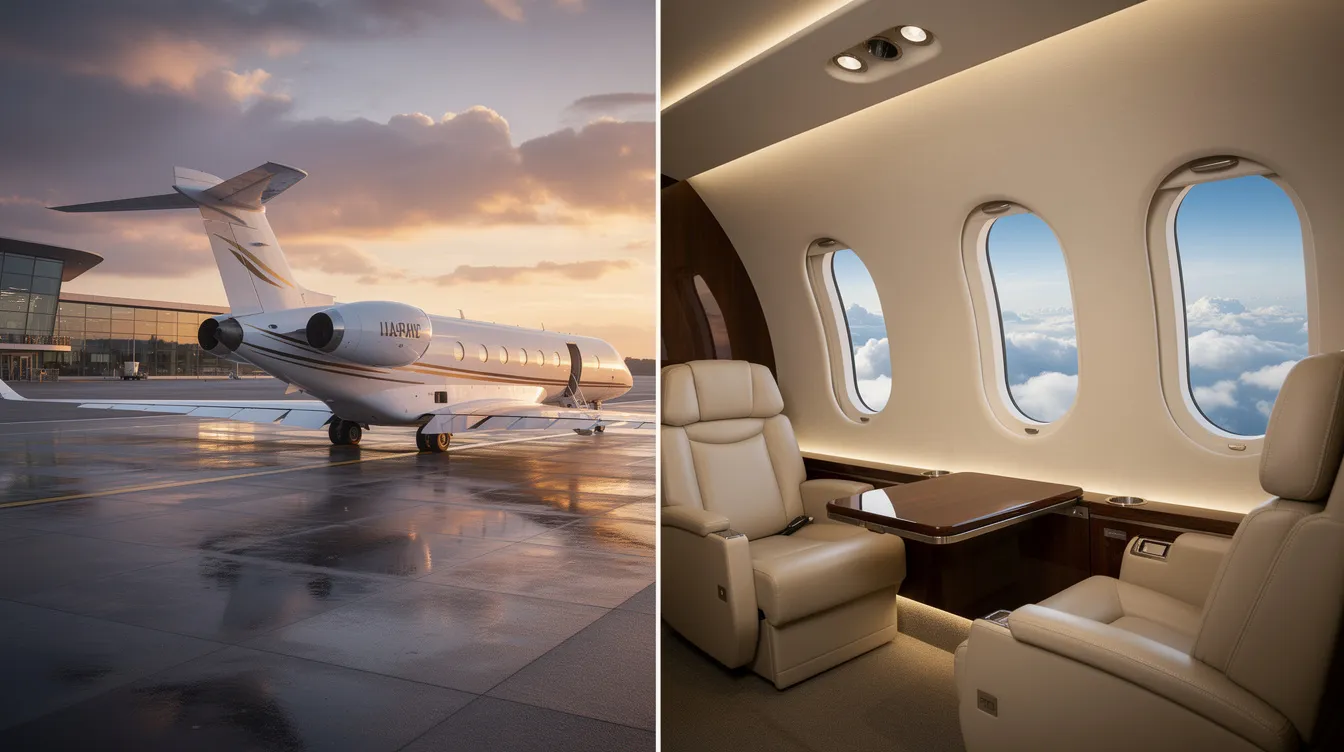
The Dash 8 Q400 remains a versatile and efficient choice for regional air travel, offering a unique balance of speed, capacity, and operational flexibility. Its ability to operate from shorter runways, combined with a quieter cabin and lower fuel consumption compared to regional jets, makes it well-suited for both commercial and private group charters. Through platforms like Jettly, travelers and organizations can access the Q400 for tailored private flights, benefiting from transparent pricing, instant booking, and a broad network of licensed operators.
Whether for business shuttles, sports team transport, or leisure trips to regional destinations, the Q400 delivers practical advantages without compromising comfort or convenience. As De Havilland Canada continues to support and develop this aircraft family, including future production and sustainability initiatives, the Dash 8 Q400 will remain a relevant and valuable option in the evolving landscape of regional aviation.
Ready to experience private travel on your terms? Explore flight options or request a quote for the Dash 8 Q400 at https://jettly.com/.
Share this post:
Jay Franco Serevilla
Jul 22, 2026
|
5
min read
Discover tips and trends in the industry.
5
min read
Jet Method: Modern Approaches to Aircraft Management, Ownership, and Charter
Choosing the right jet method is crucial for optimizing private aviation travel. This guide explores various options, including on-demand charters, memberships, jet cards, fractional ownership, and full ownership, helping travelers find the best fit for their needs.
Read More
5
min read
Dallas Helicopter Ride and Dinner: How to Plan an Unforgettable Night in the Sky
Experience the magic of Dallas from above with a helicopter ride followed by a delightful dinner. This unique package offers breathtaking views of the city skyline, making it perfect for romantic evenings or special celebrations. With options for custom routes and dining experiences, planning an unforgettable night in the sky has never been easier.
Read MoreStay updated with our latest insights and tips to elevate your journey with us.
MEMBERSHIPS AND ASSOCIATIONS



Disclaimer: Jettly operates as a charter broker, offering access to a global digital jet charter marketplace. Jettly is not a direct air carrier and does not own or operate aircraft. All advertised flights are conducted by third-party air carriers that are fully licensed and hold the appropriate Part 135 or Part 121 certifications issued by the Federal Aviation Administration (FAA) or equivalent regulatory authorities under U.S. or foreign law. Jettly complies fully with the U.S. Department of Transportation's Part 295 and Part 298 Charter Broker regulations. Jettly does not carry additional liability insurance. Passengers are covered by aircraft operator insurance. TICO: 50023770


