



Login
Get Instant Pricing On 23,000+ Aircraft

>

When considering private aviation, understanding private plane safety statistics is essential for making informed travel decisions. Private airplanes, which make up a large portion of general aviation, pose a higher risk of fatalities per flight hour compared to commercial aircraft—private aviation crashes are significantly more likely to be fatal than those in commercial aviation. Data from the National Transportation Safety Board and Federal Aviation Administration reveal a nuanced picture: general aviation, which encompasses most private planes, shows higher accident rates than commercial airlines, but professionally operated charter flights tell a different story.
Private plane safety statistics reveal notable differences between general aviation and commercial airline operations. While private flights have historically carried higher risks, especially among owner-flown small aircraft, regulated charter operations and corporate flight departments demonstrate much stronger safety records.
– Professionally operated charters under Part 135 regulations are significantly safer than private, owner-flown flights.
– General aviation accident rates have declined over the past two decades, aided by better training and technology.
– Most accidents in private aviation result from human error, emphasizing the importance of experienced pilots and recurrent training.
– Platforms like Jettly help travelers make safer choices by connecting them with vetted, certified operators and transparent safety data.
– Choosing flights with stringent oversight and professional crews lowers risk compared to informal or minimally regulated private flights.
This guide breaks down the data, compares operation types, and explains how platforms like Jettly—a flexible alternative to fractional ownership models like NetJets—help travelers access safer charter options.
General aviation records approximately 0.84–1.19 fatal accidents per 100,000 flight hours, compared to near-zero for scheduled commercial airlines in recent years, such as 2023.
Charter flights operated under FAA Part 135 regulations show significantly better safety metrics (0.76 accidents, 0.201 fatal per 100,000 hours) than purely private, owner-flown Part 91 operations.
Total GA accidents have declined by roughly 25% since 2002, with fatal accident rates reaching a decade-low of 0.87 per 100,000 hours in 2016.
Digital charter platforms like Jettly mitigate risk by connecting travelers with vetted operators holding appropriate commercial certificates and third-party safety audits.
When booked through regulated, professionally crewed operators, private flying compares favorably with everyday road transport, where fatality rates are approximately 1.12 per 100 million vehicle miles.
Private plane safety statistics primarily come from authoritative bodies, including the NTSB database in the U.S., the Federal Aviation Administration, and international organizations such as ICAO and EASA. These agencies compile accident data, conduct investigations, and publish rates normalized per 100,000 flight hours to enable meaningful comparisons.
Key distinctions matter when interpreting this data:
The comparison between Part 91 and Part 135 flight operations highlights key differences in regulatory oversight and safety standards. Part 91 covers private, non-commercial flights with minimal FAA oversight, where pilots hold private licenses that require fewer flight hours and self-managed training. Maintenance in this category is owner-managed and can vary in discipline, while operational oversight is minimal with pilots self-dispatching. In contrast, Part 135 governs on-demand charter flights that require commercial pilot licenses with higher minimum flight hours and mandatory recurrent training. Maintenance under Part 135 follows stricter protocols with regular inspections, and operational oversight includes professional dispatch and structured safety programs. Regulatory oversight is also more stringent for Part 135 operations, adhering to commercial standards to ensure higher safety levels.
Recent multi-year averages show general aviation fatal accident rates of around 0.9–1.1 per 100,000 hours, while major scheduled commercial airlines recorded zero passenger fatalities in 2017 and 2023.
The term “private jets” in media coverage often conflates light business jets, turboprops, and small piston aircraft—categories with very different safety profiles. A single-engine piston flown by a weekend pilot carries a different risk than a professionally crewed midsize jet operating under commercial standards.
Private aviation encompasses a wide range of aircraft and operations, and the types of accidents that occur reflect this diversity. According to the National Transportation Safety Board (NTSB), the most frequent type of aviation accident in private aviation is the landing accident, accounting for nearly half of all incidents. These typically involve hard landings, runway excursions, or loss of control during touchdown, and while many are non-fatal, they can still result in significant damage to the aircraft.
More serious aviation accidents, including fatal accidents, are often linked to factors such as pilot error, mechanical failure, or adverse weather conditions. Controlled flight into terrain (CFIT) remains a notable cause of fatal accidents, particularly when pilots lose situational awareness in poor visibility or challenging weather. The Federal Aviation Administration (FAA) reports that the fatal accident rate for private flights is considerably higher than for commercial flights, at 1.02 fatal accidents per 100,000 flight hours, compared to just 0.01 per 100,000 flight hours for commercial airlines. This stark difference underscores the importance of rigorous safety practices in private aviation.
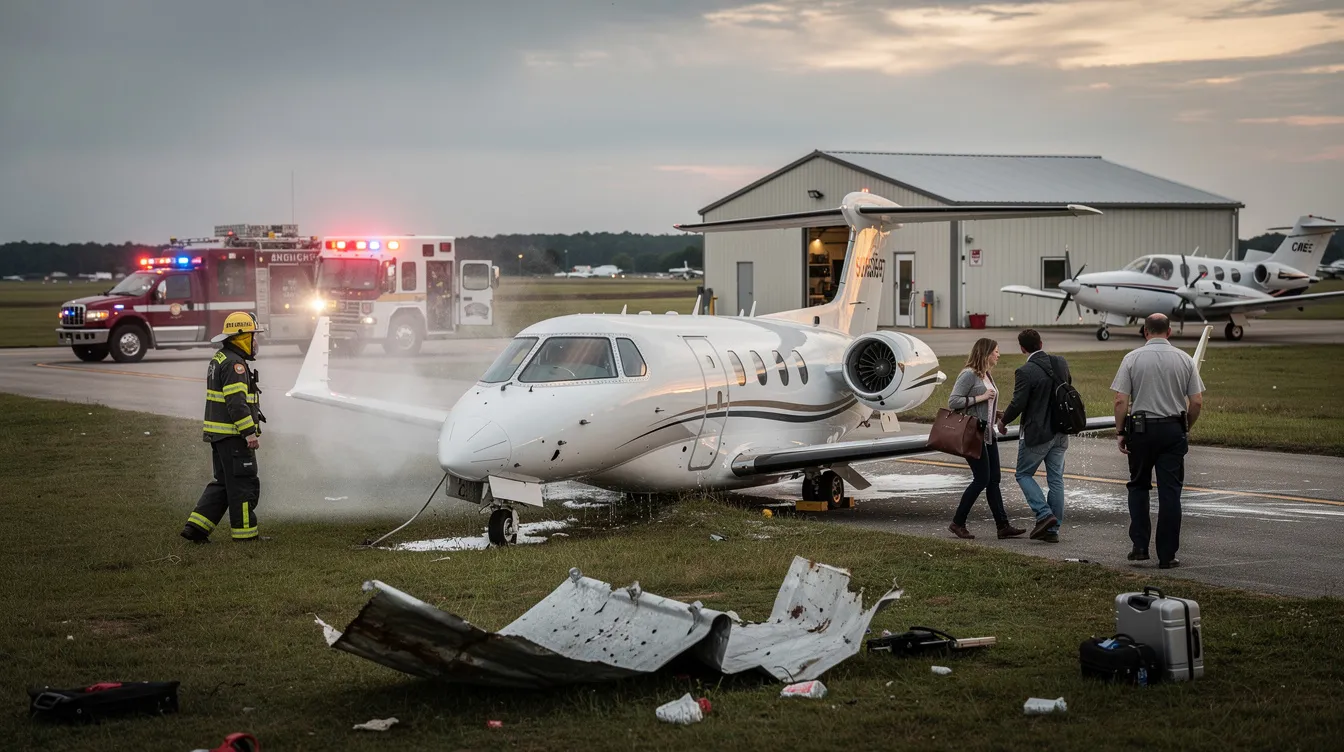
Pilot error is the leading cause of small-plane accidents, accounting for approximately 75% of incidents. Overall, human error contributes to up to 80% of all aviation accidents, with pilot error responsible for about 53%. Mechanical failures, often related to maintenance errors, contribute roughly 18% of general aviation accidents. Landing is the most dangerous phase of flight, responsible for more than four times as many accidents as takeoff, underscoring the critical need for careful procedures during approach and touchdown.
While top-tier private jets benefit from advanced technology and rigorous maintenance, smaller private aircraft remain more vulnerable to adverse weather conditions. Turbine and turboprop engines are associated with better safety records than piston-engine aircraft, reflecting differences in reliability and performance.
|
Cause |
Percentage of Total Accidents |
Percentage of Fatal Accidents |
|---|---|---|
|
Pilot Error |
75% |
53% |
|
Mechanical Failure |
18% |
10-18% |
|
Weather Conditions |
11% |
- |
|
Other Factors |
9% |
13% |
Direct comparison requires normalizing for exposure. Recent data shows:
|
Operation Type |
Accident Rate (per 100,000 flight hours) |
Fatal Accident Rate (per 100,000 flight hours) |
|---|---|---|
|
General Aviation (GA) |
5.67 (2017) |
0.87 (2016) |
|
On-Demand Charter (Part 135) |
0.76 |
0.201 |
|
Scheduled Commercial (Part 121) |
0.133 |
Near zero (multiple recent years) |
The gap between private aviation and commercial airlines reflects several factors that contribute to risk differences:
Commercial airplanes typically feature multi-engine redundancy, two commercial pilots with thousands of flight hours, recurrent simulator training, and formal standard operating procedures. Commercial pilots must have at least 1,500 flight hours to obtain an airline certificate, whereas private pilot licenses can be earned with as few as 40 flight hours. Many private flights involve single-pilot operations in smaller aircraft with less sophisticated avionics.
Commercial airlines face stricter FAA regulations on pilot rest, training, and maintenance than do general aviation operators. Airlines operate under extensive air traffic control coordination, mandatory safety management systems (SMS), and rigorous maintenance schedules. The Federal Aviation Administration (FAA) has implemented various safety regulations for commercial aviation, but similar regulations for charter and private flights have lagged behind, leading to calls from the National Transportation Safety Board (NTSB) for increased oversight. The NTSB has specifically urged charter flight operators to implement safety management systems and ensure proper pilot training to enhance safety standards in private aviation.
Commercial flights use major airports with precision approaches and dedicated ground crews. Private flights more frequently access smaller airports with non-towered operations.
Consider a New York–Miami trip: A chartered midsize jet uses controlled airports, often selected with the help of an airport locator tool, carries two pilots with type-specific experience, undergoes regular ARGUS audits, and operates under Part 135 dispatch. The same routing in an owner-flown piston aircraft might involve non-towered fields, single-pilot operations, and variable maintenance oversight.
Viewing accident statistics over a decade smooths out anomalies caused by isolated high-profile plane crashes. The broader trend shows improvement:
|
Year |
Total GA Accidents |
Fatal GA Accidents |
Business Jet Fatalities |
|---|---|---|---|
|
2016 |
- |
0.87 per 100,000 hours (rate) |
- |
|
2017-2018 |
1,233 – 1,275 |
97% of aviation fatalities |
- |
|
2019 |
~640 |
120 |
77 |
|
2020 |
1,085 |
205 |
- |
|
2023-2024 |
- |
Continuing downward trend |
21 (35% drop from 2019) |
The sharp decline in airline traffic during 2020-2021 significantly shifted the mix of flying hours. Private flights increased as travelers sought alternatives to crowded terminals, temporarily elevating GA’s share of total flight hours.
Preliminary data from recent years confirms the pattern: a 25% reduction in private flying accidents since 2002 according to NTSB figures, even as charter and business aviation have grown more popular.
Most aviation accidents are multifactorial, with human error identified as the leading cause in approximately 80% of cases, according to industry estimates. NTSB data consistently highlights these factors:
|
Factor |
Impact on Safety |
|---|---|
|
Pilot experience |
77% of fatal accidents occur in personal flights by private pilots |
|
Training recency |
Regular proficiency checks reduce risk |
|
Maintenance practices |
Stricter in Part 135; variable in owner-flown |
|
Operational environment |
Smaller runways, non-towered airports, and night flying increase risk |
|
Common accident causes |
Loss of control, CFIT, fuel mismanagement, and weather-related decisions |
Private aircraft operations span several distinct categories, each with different risk profiles. Owner-flown light aircraft carry the highest risk due to variable training, less formalized safety systems, and the realities of hobby flying. Notably, 73% of accidents and 77% of fatal accidents occur in personal flights, which operate under Part 91 with minimal regulatory oversight. These operations have the highest accident rates among private flights.
On-demand charter and air taxi services offer significantly better safety outcomes than purely private flying. These flights employ professional crews, benefit from dispatch oversight, and follow structured safety programs. They operate under Part 135 regulations, which require commercial certification and impose stricter oversight. The accident rate for this category is approximately 0.76 accidents per 100,000 flight hours.
Corporate flight departments represent the highest safety levels within private aviation. They maintain rigorous standards for pilot hiring, recurrent training, and maintenance. Often, corporate standards exceed those of Part 91 and Part 135 operations. The fatal accident rate for corporate and executive jets can reach near zero, reflecting their stringent safety culture.
Air tours and specialty flights present distinct risks due to factors such as aircraft age, mission profiles, and varying regulatory requirements. These operations often have higher accident rates than mainstream charter flights and may be subject to less stringent oversight.
|
Operation Type |
Regulation Part |
Accident Rate (per 100,000 hours) |
Notes |
|---|---|---|---|
|
Owner-flown light aircraft |
Part 91 |
Highest risk; 73% of accidents |
Minimal oversight, variable training |
|
On-demand charter & air taxi |
Part 135 |
0.76 |
Professional crews, stricter standards |
|
Corporate flight departments |
Often Part 91/135 |
Near-zero fatal rate |
Rigorous standards, high safety culture |
|
Air tours & specialty flights |
Variable |
Higher than mainstream charter |
Older aircraft, variable oversight |
This categorization highlights the importance of understanding the operational context when evaluating private plane safety statistics. Choosing flights operated under stricter regulatory frameworks and professional standards can substantially reduce risk.
Jettly focuses on professionally operated, regulated charter flights—not experimental aircraft, warbirds, or informal arrangements. The platform connects travelers with operators that meet commercial certification standards and offers private jet memberships to make accessing these services more predictable.
A strong safety culture is the foundation of accident prevention in private aviation. This means more than just following regulations—it involves a proactive commitment to safety at every level of an operation. Implementing comprehensive safety management systems (SMS) is a key step, allowing operators to systematically identify, assess, and mitigate risks before they lead to incidents. Regular recurrent training for pilots ensures that skills remain sharp and that crews are prepared to handle both routine and emergency situations.
The National Transportation Safety Board (NTSB) emphasizes the value of a safety-first mindset, recommending that private aviation operators foster open communication about hazards and encourage reporting of safety concerns without fear of reprisal. This approach mirrors the practices of commercial airlines, which have seen significant reductions in accident rates thanks to their robust safety cultures. By adopting similar protocols—such as regular safety meetings, hazard reporting systems, and continuous improvement initiatives—private aviation operators can create an environment where safety is always the top priority.
Ultimately, a strong safety culture empowers pilots, crew, and maintenance personnel to make decisions that prioritize the well-being of everyone on board, reducing the likelihood of accidents and enhancing the overall safety of private aviation.
Comprehensive training is essential for private pilots and crew to operate safely in a variety of conditions. The Federal Aviation Administration (FAA) sets minimum requirements for private pilot certification, including at least 40 hours of flight time, with a mix of dual instruction and solo flying. However, many pilots exceed these minimums to build confidence and competence, especially when flying more complex aircraft or in challenging weather conditions.
Recurrent training is a critical component of ongoing safety. Private pilots are encouraged—and in some cases required—to complete refresher courses every 6 to 12 months, covering topics such as emergency procedures, aircraft systems, and the latest regulatory updates. This recurrent training helps ensure that pilots remain proficient and prepared to handle unexpected situations, reducing the risk of accidents.
While commercial pilots undergo even more rigorous and frequent training, private pilots can benefit from adopting similar standards, including simulator sessions and scenario-based exercises. By investing in continuous education and skill development, private pilots and crew can significantly enhance their ability to manage risks and respond effectively to in-flight challenges.
Modern private planes are equipped with a range of safety equipment designed to protect passengers and crew in the event of an emergency. Federal Aviation Administration (FAA) regulations require essential items such as seat belts, shoulder harnesses, and emergency locator transmitters (ELTs) to be on board. Additional safety gear, including fire extinguishers, first aid kits, and emergency oxygen systems, further enhances preparedness for unexpected situations.
Many private aircraft also feature advanced avionics, such as GPS navigation, weather radar, and terrain awareness systems, which help pilots avoid hazards and make informed decisions during flight. The installation and upkeep of this equipment can be time-consuming, requiring regular inspections and maintenance to ensure everything functions correctly when needed most.
For private plane owners and operators, staying current with equipment requirements and maintenance schedules is vital for accident prevention. Properly maintained safety equipment not only meets regulatory standards but also provides peace of mind for everyone on board, reinforcing the overall safety of private aviation.
Adhering to established safety procedures is crucial for minimizing risks in private aviation. Before every flight, private pilots and crew conduct thorough pre-flight checks, inspecting the aircraft and verifying that all systems are operational. Following standard operating procedures (SOPs) ensures consistency and reduces the likelihood of errors, especially during critical phases of flight such as takeoff and landing.
Communication with air traffic control (ATC) is another key element of safe operations, providing pilots with real-time information about weather, traffic, and potential hazards. In the event of an emergency—such as engine failure or a medical issue—having clear, practiced procedures enables pilots and crew to respond quickly and effectively, safeguarding passengers and the aircraft.
The National Transportation Safety Board (NTSB) recommends that private aviation operators develop comprehensive safety protocols tailored to their specific operations. Regular training and drills help ensure that pilots and crew are familiar with these procedures and can execute them under pressure. By prioritizing adherence to SOPs and maintaining open lines of communication with ATC, private aviation operators can significantly reduce the risk of accidents and enhance the safety of every flight.
Private aviation safety has improved steadily through technological advancements and regulatory evolution, even as traffic volumes have increased:
Key technologies now common in charter jets—especially on instant-book private jet platforms—include:
GPS-based navigation enabling precise approaches
Terrain awareness and warning systems (TAWS) reduce CFIT risk
Traffic collision avoidance systems (TCAS) prevent mid-air conflicts
Digital weather tools provide real-time situational awareness
Advanced autopilots are reducing pilot workload
Regulatory developments:
Safety management systems originally mandated for airlines have expanded to Part 135 operators through FAA initiatives
Industry standards from organizations like IS-BAO, ARGUS, and Wyvern provide independent audit frameworks
Flight data monitoring programs (similar to FOQA) allow operators to detect unsafe trends before they lead to a serious crash
These improvements help explain the 25% reduction in GA accidents since 2002 despite increased private aviation activity.

Jettly operates as a digital private jet charter marketplace connecting travelers to aircraft operators—not as an aircraft operator itself. However, safety remains central to which operators and aircraft appear on the platform.
Access to over 20,000 aircraft globally, prioritizing operators holding appropriate commercial certificates (FAA Part 135 in the U.S. or equivalent)
Third-party safety ratings and audits (ARGUS, Wyvern, IS-BAO) factor into operator selection where applicable
Transparent information about aircraft type, age, and operator credentials
Aircraft age and maintenance status
Operator incident history
Crew experience and time in a specific aircraft type
Certification and audit status
Business trips between major hubs like New York and Miami
Family vacations to resort destinations
Last-minute flights to smaller regional airports
While no form of travel eliminates all risk, using a structured platform helps travelers avoid poorly regulated or inadequately maintained operations. Jettly’s standardized processes maintain consistent safety baselines across varied scenarios.
Safety considerations should inform booking decisions from the start, not serve as an afterthought. When evaluating options:
What certificate type does the operator hold (Part 135, equivalent)?
What are the pilot's total hours and time in this specific aircraft type?
When did pilots last complete recurrent training?
Does the operator hold ARGUS, Wyvern, or IS-BAO ratings?
What is the aircraft’s maintenance schedule and recent inspection history?
Favor two-pilot crews on jet and turboprop flights, especially for night operations or flights in challenging weather conditions
Accurately disclose the passenger count and baggage weight to respect weight and balance limits
Accept weather delays rather than pressing a risky departure—avoiding bird strikes and other hazards often requires flexibility
Consider that a slightly larger private aircraft or more experienced operator may add modest cost but significantly reduce risk, and use affordable private jet charter pricing guides to understand how those choices affect your budget
Platforms like Jettly provide transparent operator information, instant charter cost estimates, and support for comparing aircraft based on safety and performance—not just cost.
Safety, efficiency, and environmental impact increasingly overlap in modern private aviation:
Newer aircraft with modern engines burn fuel more efficiently, produce fewer emissions per passenger-mile, and offer better situational awareness tools for pilots—factors that indirectly support safety and are central to selecting private charter aircraft suited to each mission
Optimized routing from closer regional airports and minimizing repositioning flights (such as through empty leg matching) reduces both environmental footprint and exposure to unnecessary flight hours, and aligns with best practices outlined in guides to private and charter airlines, focusing on efficient operations
Carbon offset options are now commonly requested by charter customers, and responsible operators facilitate these choices
Disciplined flight planning—matching aircraft capabilities to mission requirements, avoiding unnecessary legs, and selecting appropriate airports—serves both environmental responsibility and safety.

General Aviation (GA) — Accident rate: 5.67 per 100,000 flight hours (2017), fatal accident rate: 0.87 per 100,000 hours (2016). Wide range of aircraft and variable pilot experience contribute to higher risk.
On-Demand Charter (Part 135) — Accident rate: 0.76 per 100,000 flight hours, fatal accident rate: 0.201. Operated by professional crews under stricter regulations and regular audits, resulting in better safety outcomes.
Scheduled Commercial (Part 121) — Accident rate: 0.133 per 100,000 flight hours, fatal accident rate: near zero in recent years. Features highly trained pilots, rigorous oversight, and advanced technology for maximal safety.
Owner-Flown Light Aircraft — Highest risk category, with 73% of accidents. Minimal oversight, variable maintenance, and less formal safety systems make this the riskiest type of private aviation.
Corporate Flight Departments — Very low accident rates and near-zero fatal accident rates. Known for rigorous standards, frequent recurrent training, and robust safety management systems.
When families book charter flights with certified, professionally crewed operators under Part 135, accident rates compare favorably with those of everyday road travel. The fatality rate for driving sits at approximately 1.12 per 100 million vehicle miles—a meaningful benchmark. A family member traveling on a vetted charter flight faces a lower statistical risk than the risk of a car accident on a comparable road trip. Vetting the operator, aircraft type, and crew qualifications matters more than whether the trip is for business or leisure. Using a curated marketplace like Jettly helps families avoid informal or poorly regulated operations that inflate general aviation statistics.
General aviation accidents disproportionately involve small piston aircraft rather than business jets. An airplane crash involving small planes can result in catastrophic damage and is a key concern in aviation safety statistics. The Transportation Safety Board NTSB data shows that small plane accidents occur primarily in private flying with less experienced private pilots.
There are approximately 5 small-plane accidents each day, underscoring the frequency of such incidents. In these accidents, injuries are categorized as fatal, serious, or minor, with fatal injuries representing the most severe outcome. Notably, 72% of US air travel deaths from 2003 to 2023 occurred in smaller planes or on-demand air taxis. Jets typically fly with more advanced avionics (TAWS, TCAS, autopilots), operate from better-equipped airports with air traffic control, and receive maintenance from specialized teams. A small-plane crash involving a weekend pilot in adverse weather conditions presents a different risk profile than that of a professionally crewed jet operating under commercial standards.
Start by verifying the operator holds appropriate commercial certification (FAA Part 135 for U.S. charter operations). Ask about third-party safety ratings from ARGUS, Wyvern, or IS-BAO. Search NTSB and FAA databases for past incidents involving the operator—though isolated minor incidents don’t necessarily indicate systemic problems. Review pilot hours and type-specific experience. Jettly’s team assists customers in understanding available safety information about participating operators when planning trips.
On a per-mile basis, well-run private aviation operations compare favorably with highway driving, particularly over long distances, where fatigue and road conditions increase the risk of serious injury. However, this comparison depends on the quality of the operation. Professionally crewed charter flights under commercial oversight demonstrate strong safety metrics, while informal flying with minimal training erodes that advantage. For frequent long-distance travelers, booking through reputable charter channels represents sound risk management compared to extended, time-consuming highway trips.
Safety in the air depends on the operator, the aircraft, and the crew—not on the booking website. However, responsible platforms heavily influence which operators travelers can access. Jettly’s role includes curating a network of compliant, vetted operators and providing transparency around aircraft options. This helps travelers avoid poorly regulated operations that might not meet an attorney-client relationship standard of due diligence. Note that this article provides general information and does not create an attorney-client relationship or constitute advice from any law firm regarding medical bills, serious injury claims, or legal matters following an airplane accident. Combining sound statistics with a carefully selected charter provider remains the most practical approach to managing private aviation risk.
What is the main cause of private plane accidents?
Pilot error is the leading cause, accounting for the majority of incidents, often due to lack of experience, insufficient training, or poor decision-making in challenging conditions.
Are private jets as safe as commercial airlines?
Professionally operated private jets under commercial regulations approach the safety standards of commercial airlines, but owner-flown private aircraft generally have higher accident rates.
How can travelers verify the safety of a private charter operator?
Travelers should check for valid commercial certification (e.g., FAA Part 135), inquire about third-party audits like ARGUS or Wyvern, review pilot qualifications, and examine maintenance records or incident history.
Does flying privately increase risk compared to driving?
When using regulated charter services, private flying can be statistically safer than driving long distances, but this advantage is not present with minimally regulated or hobbyist operations.
What safety equipment is required on private planes?
Essential safety equipment includes seat belts, shoulder harnesses, emergency locator transmitters, and often advanced avionics such as GPS, weather radar, and collision avoidance systems.
How has private aviation safety improved in recent years?
Advancements in technology, more rigorous training, and expanded regulatory oversight have led to a steady decline in accident rates and improved overall safety in private aviation.
Is booking through a digital charter platform safer?
While the booking platform itself does not affect in-flight safety, reputable platforms curate operators with strong safety records and provide transparency, helping travelers avoid risky or non-compliant providers.
What questions should I ask when booking a private flight?
Ask about the operator’s certification, pilot hours and training, recent safety audits, aircraft maintenance schedules, and whether two pilots will be on board for your flight.
Private plane safety statistics require context. General aviation—dominated by small piston aircraft and hobby flying—shows higher accident rates than commercial airlines. However, professionally operated charter jets maintain strong safety records within that broader category, with rates approaching those of commercial airlines.
Accident rates in general aviation have improved over the past decade. Technological advancements, enhanced training requirements, and expanded regulatory oversight have contributed to a 25% reduction in accidents since 2002. Meanwhile, 2023 marked one of the safest years in commercial aviation history.
Interpreting these statistics meaningfully requires considering aircraft type, operation (Part 91 vs. Part 135), pilot experience, and operator safety culture. A well-maintained private jet flown by professional pilots under commercial oversight poses a different risk than an owner-flown small-plane crash scenario involving minimal training and informal maintenance.
When reviewing private plane safety statistics, travelers gain confidence by selecting vetted operators through transparent platforms. Jettly’s approach—curating a network of certified operators, providing aircraft and crew information, and enabling informed comparisons—supports safety-conscious decision-making.
Ready to explore private travel on your terms? Compare charter options, review operator credentials, and request instant quotes at https://www.jettly.com.
Share this post:
Jay Franco Serevilla
Apr 14, 2026
|
5
min read
Discover tips and trends in the industry.

5
min read
Boeing 777-300 & 777-300ER Overview
The Boeing 777-300 and 777-300ER are advanced long-haul aircraft known for their efficiency and capacity. With significant upgrades in range and engine power, the 777-300ER has become a preferred choice for intercontinental flights. This guide provides insights into their features, cabin layouts, and comparisons with private jet charters, helping travelers make informed decisions.
Read More
5
min read
Range of 777: How Far Each Boeing Variant Can Fly
The Boeing 777 family features an impressive range, from 5,240 nautical miles for the 777-200 to 9,500 nautical miles for the upcoming 777-8. This extensive range allows airlines to operate virtually every long-haul route, making the 777 a staple in commercial aviation. Understanding these capabilities is essential for both travelers and operators in optimizing flight planning.
Read MoreStay updated with our latest insights and tips to elevate your journey with us.
MEMBERSHIPS AND ASSOCIATIONS



Disclaimer: Jettly operates as a charter broker, offering access to a global digital jet charter marketplace. Jettly is not a direct air carrier and does not own or operate aircraft. All advertised flights are conducted by third-party air carriers that are fully licensed and hold the appropriate Part 135 or Part 121 certifications issued by the Federal Aviation Administration (FAA) or equivalent regulatory authorities under U.S. or foreign law. Jettly complies fully with the U.S. Department of Transportation's Part 295 and Part 298 Charter Broker regulations. Jettly does not carry additional liability insurance. Passengers are covered by aircraft operator insurance. TICO: 50023770


