


Login
Get Instant Pricing On 23,000+ Aircraft

>
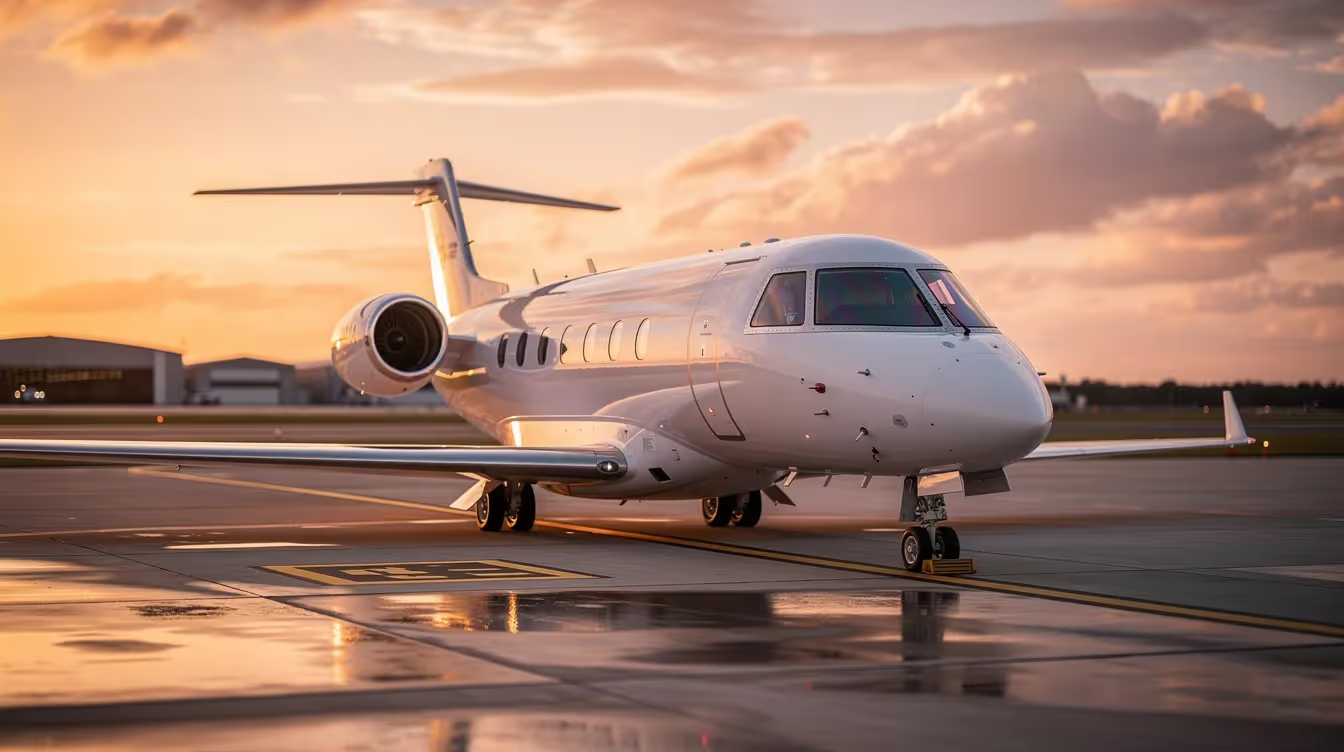
Private jet rideshare is transforming the world of private aviation by making luxury travel more accessible, flexible, and affordable than ever before. This innovative approach allows travelers—whether business professionals, families, or small groups—to connect with available aircraft and book flights in real-time, enjoying the perks of flying private without the traditional barriers of ownership or long-term commitments. Thanks to digital platforms like Jettly, individuals can take advantage of empty-leg flights, discounted private-jet travel, and a diverse fleet of aircraft suited to every need. Modern technology, including advanced digital booking platforms, enables real-time booking, transparent pricing, and streamlined flight management, bridging the gap between traditional private jet services and the expectations of today’s tech-savvy travelers. Whether you’re planning a spontaneous getaway or a business trip, private jet rideshare lets you book flights on your terms, maximizing convenience and value. With thousands of available aircraft and no significant upfront investment, resources on how to get a seat on a private jet make experiencing private aviation more accessible than ever. This article will guide you through the essentials of private plane rideshare, including how it works, who it’s for, cost considerations, and how Jettly makes it easy to experience private aviation. The following guide is designed for business travelers, families, small groups, and anyone interested in exploring the benefits of private jet rideshare, providing a comprehensive overview of the process, pricing, and practical tips for making the most of this modern approach to private aviation.
When considering private plane ridesharing, flight cost is an important factor to consider. Flights cost can vary widely depending on factors like aircraft type and booking options, and innovations such as empty leg flights and on-demand platforms are making flights cost more accessible and even comparable to regular travel expenses. Flight costs can vary widely depending on aircraft type, flight duration, and route, with more accessible options now available through empty leg flights and on-demand booking platforms. Affordable private flight options, such as empty-leg deals and on-demand apps, are making private aviation more accessible to more travelers.
Private plane rideshare refers to a model in which individual passengers share a private aircraft and pay per seat, rather than chartering the entire plane through top private jet charter companies. It closely aligns with other ways to buy a seat on a private jet, where travelers tap into shared jet services and empty-leg opportunities instead of booking the whole aircraft. Think of it as the aviation equivalent of Uber or Lyft—multiple travelers split the cost of a flight on routes like New York to Miami or Los Angeles to Las Vegas.
This approach differs significantly from full private charters, in which one party pays for the entire aircraft under the traditional jet charter model. Jet charter typically involves higher costs and less booking flexibility compared to rideshare, as the entire plane is reserved for a single group or individual. Private jet charters offer benefits such as maximum privacy, customization, and flexibility, but are significantly more expensive than shared flights. It also differs from commercial business class. With private plane rideshare, you still use private terminals called Fixed Base Operators (FBOs), skip TSA lines, and board directly from the lounge. There are no airline terminals, baggage carousels, or gate changes.
Since around 2015, digital aviation platforms have experimented with “Uber for jets” concepts. Multiple startups pioneered seat-sharing on fixed routes or repositioning flights, making private flying more accessible to travelers who previously assumed it was out of reach. Private plane rideshare services offer convenient online booking, often through quick app-based systems. Broader overviews of private and charter airlines in the modern market show how on-demand apps, jet cards, and fractional ownership have all contributed to this accessibility. Private aviation often offers convenience through quick app-based booking, compared to traditional charter flights, simplifying the experience for users.
Jettly operates as a global digital private aviation marketplace that supports rideshare-style use cases. Private plane ridesharing services typically involve a digital platform or broker that coordinates the logistics for booking seats on private jets. Rather than locking customers into rigid membership-only programs, Jettly enables shared charters, group bookings, and discounted empty-leg flights, making it easy to compare shared charter flights with full private charters when deciding how much privacy and flexibility you really need. Many digital private aviation platforms, such as Private Jets Inc., offer transparent pricing models that allow customers to see the total cost upfront, without hidden fees, unlike traditional private jet booking methods. Digital booking platforms for private jets are designed to simplify flight reservations, allowing users to browse available aircraft and book in real-time, much like rideshare apps. Travelers can access over 20,000 aircraft worldwide without mandatory memberships or long-term commitments. The rise of digital booking for private jets has made private aviation more accessible, enabling travelers to book individual seats on shared flights rather than chartering entire aircraft.
Private plane rideshare appeals to business travelers needing efficient day trips, families heading to vacation destinations who may benefit from guidance on the best private planes for families, and small groups who value time savings over airline loyalty points. The model works particularly well for those with flexible schedules who want to experience private aviation without the regular private airplane price of sole chartering. For leisure travel, private aviation enhances vacations and holidays by offering flexibility, convenience, and the ability to reach off-the-beaten-path destinations while avoiding crowds and reducing travel stress. Travelers planning longer journeys can benefit from insights into selecting the best cross-country flight for their needs. Rideshare flights often operate on popular routes and can land at smaller airports closer to travelers’ final destinations, enhancing convenience and accessibility.
Private plane rideshare means buying a seat on a shared private flight, rather than chartering the entire aircraft, similar to ground-based rideshare apps but applied to jets and turboprops.
Jettly focuses on on-demand charter and empty leg flights, enabling rideshare-style flying without long-term jet card or ownership commitments.
Shared flights can reduce per-seat cost by 40–70% compared with traditional private charter, depending on route and aircraft type.
Travelers benefit from time savings of 2–3 hours per trip by using private terminals (FBOs) instead of commercial airline hubs.
Operator-scheduled shuttles run fixed flights between popular destinations, allowing passengers to purchase individual seats.
Empty leg flights are repositioning flights where an aircraft is scheduled to fly without passengers to pick up its next group or return to base, often offered at discounted rates, making them a popular and cost-effective rideshare option.
Learn more about flexible private flight options at Jettly.
Three factors drive travelers toward shared private flights: time savings, schedule flexibility, and a more controlled environment than commercial airlines offer.
Using private terminals typically cuts 2–3 hours off each trip. There are no TSA lines, no boarding queues, and no waiting at baggage carousels. Passengers using shared private flights still arrive just 20–30 minutes before departure at airports like Teterboro (serving the New York area), Van Nuys (Los Angeles), or Fort Lauderdale Executive.
The booking process is straightforward, and the day-of experience moves fast. Park near the FBO, walk through minimal security screening, and board directly. Flights often depart within minutes once all passengers arrive.
For business executives, shared private flights offer quiet cabins, Wi-Fi connectivity, and space to hold meetings mid-flight. Instead of losing hours at crowded gates, travelers work productively while covering distance.
Families and leisure travelers appreciate fewer connections and closer access to resort destinations. Flying private means getting closer to places like Aspen, Napa, or the Florida Keys without routing through major hubs. During peak holiday periods, this reduces stress significantly compared to commercial flights.
Private charters depart when passengers are ready, not according to fixed airline schedules. This flexibility extends to shared arrangements where a group coordinates timing among themselves. For travelers who prioritize control over their travel plans, shared private flying delivers advantages that commercial airlines cannot match.
The process follows a simple flow: search, select, book, fly.
A traveler typically searches a digital platform like Jettly by entering departure airport, destination, date, and passenger count, often using an integrated airport locator tool to find convenient departure and arrival options. The platform returns a mix of whole-aircraft quotes, potential shared legs, and empty leg opportunities that can be organized through crowdsourced private jet flights and shared empty seats. From there, travelers compare aircraft options and pricing.
In a shared charter, one organizer books the aircraft through Jettly and then splits seats and costs among colleagues, friends, or other passengers. This works well on routes like Toronto to New York or Los Angeles to Las Vegas, where groups traveling together can divide expenses.
The organizer handles coordination—names, weights, baggage requirements, and timing must be finalized before departure to comply with aviation regulations. All passengers appear on a single charter manifest.
Empty leg flights are repositioning flights where an aircraft is scheduled to fly without passengers to pick up its next group or return to base. These flights are often offered at discounted rates, making them a popular and cost-effective rideshare option. A group can book an empty leg and share the cost internally, creating a rideshare-style experience at significant savings. The trade-off is flexibility: empty-leg deals may require adjusting travel plans to align with available aircraft schedules.
On departure day, passengers park near the FBO, go through a brief security check, and walk directly to the aircraft. There are no jet bridges or gate assignments. Once everyone arrives, the crew completes final preparations, and departure happens quickly—often within minutes.

Private plane rideshare takes several forms depending on the traveler's needs:
|
Setup Type |
Description |
Example |
|---|---|---|
|
Fully shared per-seat flights |
Platforms match passengers on fixed routes |
6-seat light jet, New York to Miami |
|
Private group charters |
One group books aircraft and splits costs internally |
Friends sharing a Los Angeles to Napa weekend flight |
|
Corporate shuttles |
Companies run regular routes between offices |
Weekly Toronto to Montréal shuttle on turboprop |
|
Empty leg deals |
Discounted repositioning flights shared within a group |
30-minute Seattle to Bend hop at reduced rates |
|
Jettly’s model does not lock customers into one approach. Travelers can mix per-trip charters, shared flights within their own group, and opportunistic empty legs to suit each journey. |
||
|
Coordination remains essential regardless of setup. Passenger names, baggage weights, and departure times must be confirmed before the flight to ensure regulatory compliance. |
Private jet charters offer travelers the ultimate in flexibility and personalized service, allowing you to tailor every aspect of your journey while understanding the cost of private jet flights and how pricing works behind each trip. When you charter a private jet, you have the freedom to choose the aircraft type that best fits your needs—whether it’s a nimble light jet for short flights, a spacious heavy jet for long-range travel, or something in between. This customization extends to departure times, destinations, and onboard amenities, ensuring a seamless experience for both business executives and leisure travelers. Travelers who want to dive deeper into how renting a plane actually works can explore detailed guidance on providers, requirements, and rental procedures. Private jet charters also provide access to exclusive services such as ground transportation and, in some cases, helicopter rides for last-mile connections. With a broad selection of aircraft and the ability to choose the right one for each trip, travelers can consult a complete guide to the best private airplanes in 2025 alongside an overview of the top 10 most luxurious private planes to understand how private flying becomes a truly bespoke experience, combining comfort, efficiency, and luxury for every journey.
Private aircraft pricing typically works on an hourly basis. Rates vary by aircraft type, route length, and demand. Flight costs can vary significantly based on these factors, making it important for travelers to compare options and apply tips for booking the cheapest private jet flights to keep budgets under control. The flight cost is highly variable, influenced by aircraft type, flight duration, and booking method, with affordable options like empty-leg flights making private plane ridesharing more accessible for many travelers. In North America, per-hour rates commonly range from about $2,000 for turboprops to $12,000 or more for heavy jets. Flight costs can vary significantly depending on the aircraft type, flight distance, and booking options such as empty-leg deals or on-demand services. A detailed guide to affordable airplane rental costs and options, alongside the cost to rent a private jet, can help travelers understand typical hourly rates and add-on fees, while a full breakdown of private jet operating costs offers deeper insight into the expenses behind each flight. For example, bargain prices for short trips may be available when booking empty leg flights.
Private jet rental prices typically range from $2,000 to over $20,000 per hour, depending on aircraft type, distance, and additional services. A broader breakdown of how much a private jet really costs clarifies how ownership, leasing, and chartering all compare financially, while a dedicated analysis of fractional jet ownership cost explains the specific investment and ongoing fees for shared ownership models, complemented by a detailed overview of fractional jet ownership pros, cons, and costs. Tools like Jettly’s private jet charter cost estimator and its dedicated jet card flight cost estimator help travelers understand these variables in advance. Factors influencing private jet travel costs include flight duration, airport fees, and optional add-ons such as catering and ground transportation services.
Rideshare reduces the cost per traveler by spreading that hourly rate across multiple passengers. A seat on a shared light jet might start in the low thousands on busy corridors, depending on timing and aircraft availability. The private jet charter model is substantially more expensive than rideshare or shared charter options.
Several variables influence what each passenger pays:
Aircraft type: Turboprops cost less per hour than light jets, which cost less than midsize or heavy jets
Route popularity: High-demand routes like New York to Miami generate more sharing opportunities
Date and timing: Holiday periods command premium pricing; midweek flights often cost less
Passenger count: More passengers sharing means lower per-person costs
Empty leg seats can be dramatically cheaper—often 40–70% below the cost of comparable on-demand charter flights. However, they require flexibility on exact departure times and dates, and broader guides to affordable private jet charter pricing can help set realistic budget expectations.
Jettly’s platform emphasizes transparent pricing with no hidden membership fees. Users see upfront pricing and can compare aircraft and charter rates before deciding whether to charter solo or share costs with others.
The following scenarios illustrate how sharing affects costs. Actual pricing depends on aircraft availability, seasonality, and operational details visible in Jettly’s instant quote system.
|
Scenario |
Aircraft |
Full Charter Cost |
Per-Person (4 passengers) |
|---|---|---|---|
|
Los Angeles to Las Vegas |
Light jet |
$10,000–$15,000 |
$2,500–$3,750 |
|
Miami to Nassau |
Turboprop |
$8,000–$12,000 |
$2,000–$3,000 |
|
Toronto to Vancouver |
Midsize jet (6 passengers) |
$30,000–$40,000 |
$5,000–$6,700 |
|
These examples show that splitting costs among 4–8 passengers meaningfully lowers individual out-of-pocket expenses compared with booking the entire aircraft. |
|||
|
For real-time quotes on specific dates and routes, travelers should use Jettly’s online tools rather than relying on averages. Flight prices fluctuate based on current availability and demand. |
Not every aircraft suits rideshare equally. Smaller private jets and turboprops typically prove more cost-effective for shared flights with flight durations of 2–3 hours.
|
Category |
Examples |
Best For |
Typical Capacity |
|---|---|---|---|
|
Turboprops |
Beechcraft King Air |
Short hops under 2 hours |
6–9 seats |
|
Light jets |
Phenom 300, Citation CJ3 |
Regional flights 2–3 hours |
6–8 seats |
|
Midsize jets |
Citation XLS+, Challenger 350 |
Cross-country 3–5 hours |
8–10 seats |
|
Heavy/Long-range jets |
Gulfstream G600, Global 6500 |
Transcontinental, international |
10–16 seats |
|
Turboprops and light jets work well for short flights, such as Portland to Boise or Dallas to Houston. Super midsize and long-range jets handle longer routes such as New York to Los Angeles or transatlantic flights, and understanding how many passengers a private jet can carry helps match group size to the right category. |
|||
|
Jettly’s marketplace connects travelers with over 20,000 aircraft globally, providing flexibility to choose the right aircraft for each shared or private itinerary through its private charter offering, while in-depth resources on private jet lease costs and the best private plane manufacturers for every budget explain when long-term leasing or purchasing might make sense instead of ad hoc charters. |
|||
|
Seat-sharing on very large jets is less common but possible on select high-traffic, long-haul routes when sufficient demand exists. |
|||
 |
Certain routes pair naturally with specific aircraft suited for the distance and passenger count:
New York to Miami: Light or midsize jet, approximately 2.5 hours
Los Angeles to Las Vegas: Light jet or turboprop, approximately 1 hour
Toronto to Vancouver: Super midsize jet, approximately 5 hours
Dallas to Houston: Turboprop, approximately 1 hour
New York to London: Long-range jet, 6–8 hours
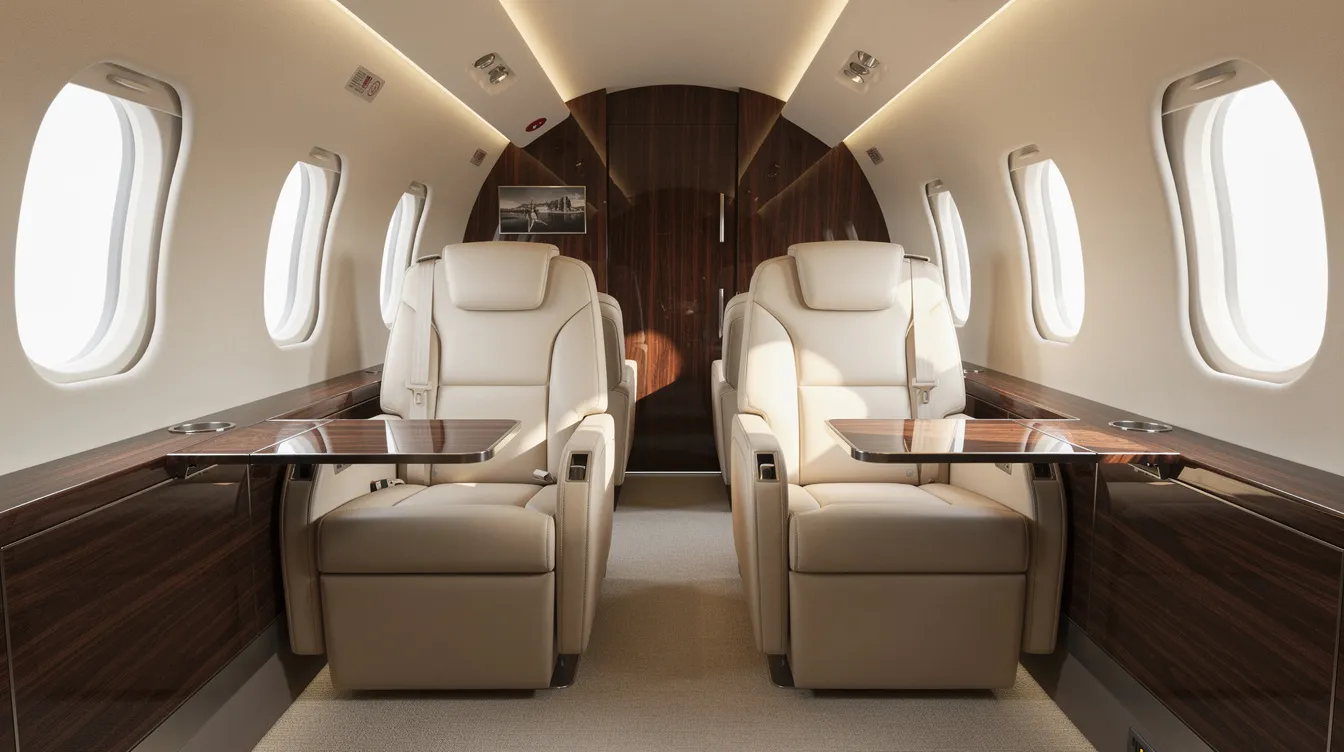
Jettly’s search filters help users quickly see which aircraft type fits their distance, passenger count, and budget. Even travelers new to private aviation can compare cabin size, luggage capacity, and in-flight amenities like Wi-Fi and refreshments.
For most rideshare scenarios, light jets offer the best balance of comfort, speed, and cost-efficiency. Travelers weighing aircraft types can explore the cheapest private aircraft options for every budget to see how cost and capability align. They provide modern amenities such as satellite internet, climate control, and ample cabin space for productive work or relaxation.
Private plane rideshare operates under the same safety regulations as traditional private jet charters. In the United States, this means FAA Part 135 certification. Other regions have equivalent standards. At the same time, analysis of private jet emissions and cleaner ways to fly highlights why fuller aircraft and smarter routing matter for reducing per-passenger environmental impact, and a look at the global fleet of private jets shows how widespread business aviation has become worldwide.
Certified charter operators must meet strict requirements for pilot qualifications (typically 1,500+ flight hours), maintenance schedules, and insurance coverage. These standards apply regardless of whether the flight is fully private or shared among multiple passengers, and understanding how Part 135 charter companies operate helps travelers evaluate operators confidently.
Jettly works with regulated operators and emphasizes safety vetting, including third-party audits where applicable. The platform avoids unlicensed “gray market” flights that lack proper certification.
Private jets emit approximately 15–16 million tonnes of CO2 annually, accounting for about 1.7–1.8% of civil aviation emissions while serving a very small fraction of passengers. They emit 5–14 times more CO2 per passenger-kilometer than commercial flights, largely due to low occupancy rates, which is why some owners consider the best, cheapest single-pilot jets for budget-conscious buyers and more efficient aircraft types to reduce both costs and emissions. A small group of ultra-wealthy individuals and corporations is responsible for the majority of private jet emissions, highlighting stark inequalities in carbon footprints.
Rideshare-style flying improves efficiency by ensuring aircraft carry more passengers per flight. A filled light jet cuts per-person emissions by 40–70% compared with a solo charter. Modern platforms, including Jettly, encourage efficient aircraft selection and routing. Where available, options such as carbon offsetting or Sustainable Aviation Fuel (SAF) for specific operators help address sustainability concerns. The private flight market continues to develop cleaner alternatives.
Passengers on a rideshare flight must all travel under a compliant charter arrangement with a licensed operator. Ad-hoc seat sales by private owners without proper certification do not constitute a legal commercial charter.
Customers can expect standard documentation steps:
Providing identification details before the flight
Passenger lists submitted for manifests
Payment completed prior to departure
Jettly’s brokerage model connects users only with properly authorized carriers. First-time private fliers should feel reassured that safety standards on shared flights match those of full charters. The difference lies in cost division, not regulatory compliance.
When booking, travelers can ask direct safety questions about the charter operator, pilot qualifications, and aircraft maintenance. Jettly’s team can clarify these aspects during the quoting process to prioritize safety.
Rideshare-style private flying works best on routes with consistent demand—connections between major business hubs and resort destinations, where frequent charter flights and empty legs create opportunities for sharing.
|
Route |
Typical Aircraft |
Flight Duration |
|---|---|---|
|
New York–Miami |
Light/midsize jet |
~2.5 hours |
|
New York–Boston |
Light jet/turboprop |
~1 hour |
|
Los Ángeles–Las Vegas |
Light jet/turboprop |
~1 hour |
|
Dallas–Houston |
Turboprop |
~1 hour |
|
Toronto–Vancouver |
Super midsize jet |
~5 hours |
Long-haul routes like London to Nice during summer holidays or New York to London for business occasionally support semi-private or corporate shuttle setups on larger jets.
Business executives: Multiple meetings in one day across different cities
Families: Ski trips to Colorado or British Columbia without hub connections
Small groups: Travel to major events like F1 races, international conferences, or sports tournaments
Jettly’s platform allows customers to search these routes on specific dates, then choose whether to book the entire aircraft or organize cost sharing within their own group based on budget and privacy preferences, which some frequent flyers compare with jet card cost structures and benefits when deciding how to pay for private travel.
Corporate shuttle program: A mid-size company runs monthly flights between New York and Chicago on a mid-size jet. Six team members share the cost, saving days versus commercial connections with layovers.
Friends weekend getaway: A group of four books a light jet from Los Angeles to Napa for a wine country weekend. They split a $12,000 charter cost, bringing it to approximately $3,000 each—comparable to business-class tickets but with far less hassle.
Family vacation with an empty leg: A family of four finds a Miami-to-the-Bahamas empty leg through Jettly at 60% off standard rates. They coordinate ground transportation at both ends and save significantly compared to booking a dedicated charter.
Sports teams travel: A youth hockey team uses a shared turboprop to reach smaller airports near tournament venues, avoiding connections through major hubs.
In each scenario, digital booking and instant pricing from Jettly simplify planning. Users see aircraft options, compare transparent pricing, and confirm flights in hours rather than days of phone calls. Baggage allowances for ski gear or golf clubs can be confirmed during the quote process, and Jettly can help coordinate ground transportation to and from FBOs.
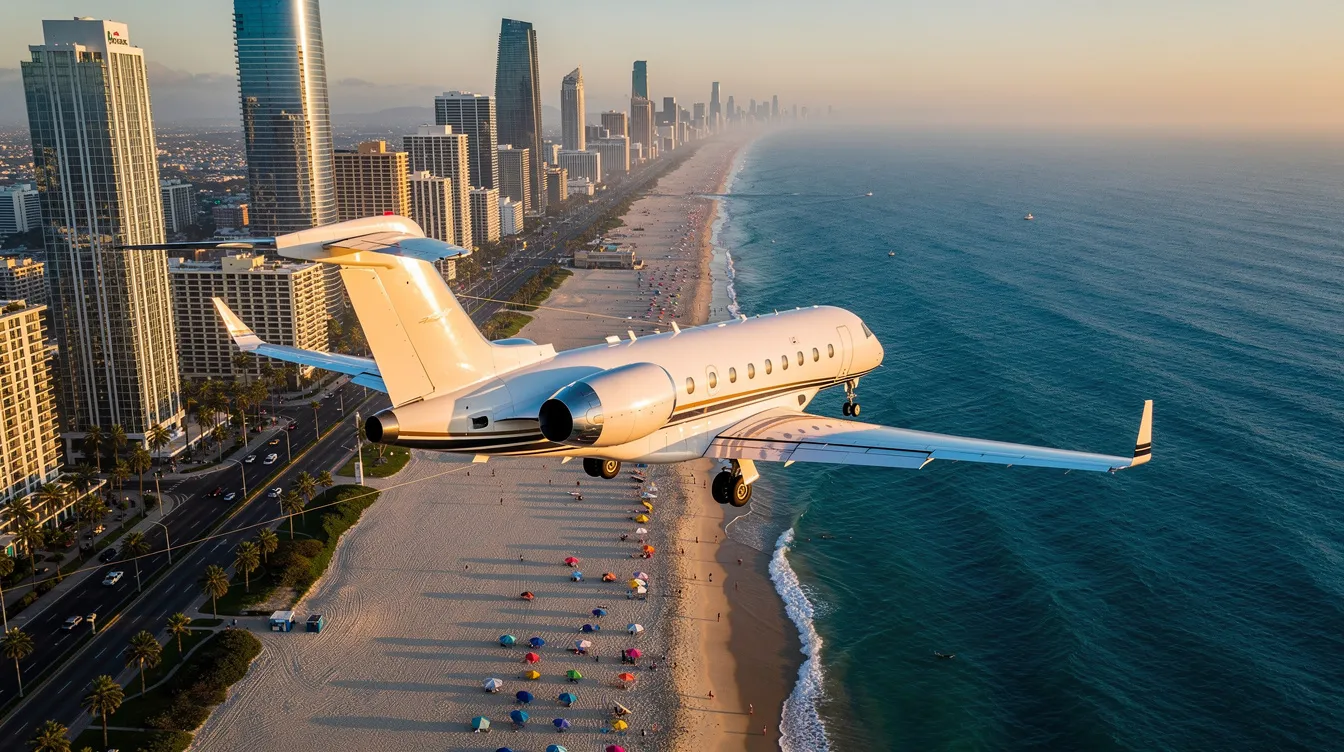
Booking a private plane ride has never been more straightforward, thanks to modern online platforms and mobile apps designed for private aviation. Travelers can easily browse available flights, compare options, and secure their booking in just a few clicks. Upfront pricing and transparent fees mean you always know exactly what you’re paying for, with no hidden costs or surprises along the way. Secure payment processing ensures a smooth transaction, and many platforms offer flexible payment models, including pay-as-you-go and optional membership programs to suit different travel habits and budgets. By streamlining the booking and payment process, private jet rideshare companies have removed traditional barriers, making it simple and stress-free to experience the benefits of private aviation.
Jettly is a technology-driven charter broker and marketplace that connects travelers to a diverse fleet of over 20,000 private aircraft for on-demand flights. Some travelers also compare this flexible, on-demand model with established fractional programs like NetJets, a leader in private aviation, and other top fractional jet ownership companies, before deciding how they prefer to access private flying. There is no requirement for fractional ownership, though frequent travelers can explore structured options such as jet card programs or evaluate the pros, cons, and costs of fractional jet ownership instead of traditional ownership.
Travelers can replicate the key benefits of private plane rideshare through Jettly in several ways:
Group charters: Book a suitable aircraft and split costs within a group of colleagues, friends, or family
Empty leg deals: Access discounted empty leg flights that function like semi-private hops on certain routes
Flexible booking: Choose from extensive fleets without membership fees or long-term commitments
Jettly’s platform offers, and complementary services like Jettly Eats in-flight catering for private jets, further enhance the onboard experience:
Instant pricing on more than 20,000 aircraft globally
Multi-leg trip planning for complex itineraries
Digital contracts that simplify group travel coordination
Personalized service from aviation specialists
Optional private jet membership programs can reduce per-hour costs or add services for frequent flyers. However, casual users can book on-demand for one-off shared trips without any commitment.
The platform maintains operational excellence through partnerships with vetted charter operators. Every flight meets regulatory standards, and Jettly provides access to safety information upon request.
Jettly differentiates from competitors through transparent pricing, no-commission quotes, and flexibility, which many travelers weigh against the good and bad of fractional private jet ownership when deciding how to structure their access to private aviation. Business travelers and leisure travelers alike benefit from a streamlined experience that prioritizes their time and budget, and those who share Jettly with their audiences can even participate in an ultra-high-ticket affiliate program that rewards referrals for new members and charter clients.
Ready to explore rideshare-style private flying? Compare aircraft options and get instant quotes at Jettly.
This section addresses practical questions about private plane rideshare that first-time and experienced private jet travelers commonly ask.
Jettly’s core model centers on full-aircraft charters and empty-leg flights rather than anonymous seat-by-seat matching with strangers. However, travelers can create rideshare-style trips by splitting charter costs among their own group.
On high-demand routes and dates, Jettly may help organize shared arrangements or suggest empty-leg offerings that feel similar to private-plane rideshares. All passengers on a given charter must appear on the same booking and manifest for regulatory compliance.
For groups planning ahead to share costs, confirm the charter at least 5–7 days before departure for popular routes. During peak periods, such as major holidays or big events, aim for 10–14 days' advance booking.
Empty leg opportunities often appear within 24–72 hours of departure. Travelers with flexible travel plans can check Jettly’s platform closer to their travel date for last-minute deals at significant savings.
Earlier booking generally provides wider aircraft options and better departure times—helpful when coordinating multiple passengers.
Safety standards are identical for shared and fully private flights when operated by licensed charter companies. Both must comply with regulations such as FAA Part 135 or equivalent international rules.
Pilots, maintenance procedures, and aircraft inspections do not change based on how passengers divide the cost. Jettly works only with certified operators meeting regulatory and insurance requirements.
Travelers can ask for operator details and safety credentials when booking. Jettly’s team clarifies these aspects during the quoting process to prioritize safety.
Pet and baggage policies vary by aircraft, operator, and passenger count. Confirm these details when requesting a quote from Jettly.
On smaller private planes, weight and balance limitations can restrict heavy bags or large pet carriers, especially when all seats are occupied. Sharing pet and luggage requirements with Jettly before booking allows the platform to recommend suitable aircraft and avoid issues at the FBO.
Charter flights offer more flexibility than commercial airlines, but delays still affect crew duty limits, airport fees, and operations. Extended waiting may incur additional fees.
On a private plane, a rideshare arranged within one group, the organizer decides whether to delay for late passengers. Coordination with Jettly and the operator in advance helps manage expectations.
All passengers should plan to arrive at the FBO 30–45 minutes before the agreed departure time to avoid schedule disruptions and extra costs.
Ready to experience private aviation on your terms? Explore flight options or request a quote at Jettly.
The future of private jet ridesharing is bright, with rapid technological advancements and evolving traveler expectations driving the industry forward. As private aviation continues to grow in popularity, companies are embracing advanced technology such as AI-powered booking systems and exploring sustainable aviation fuels to reduce environmental impact and operating costs. The integration of electric and hybrid aircraft promises even greater efficiency and a smaller carbon footprint, aligning with the industry’s commitment to operational excellence. With access to a global network of aircraft and a focus on personalized service, private jet rideshare platforms are poised to meet the needs of modern travelers—offering flexibility, convenience, and luxury at every turn. As the private flight market evolves, expect to see even more innovative solutions from leaders like Jettly, ensuring that private aviation remains accessible and appealing for years to come, alongside emerging shared-ownership models such as fractional ownership of Cessna 172 aircraft that broaden access for frequent flyers and pilots.
Jettly’s primary focus is fixed-wing aircraft, including private jets and turboprops. However, the platform may be able to assist with arranging helicopter rides for specific transfers, such as airport-to-city connections, and travelers can review a full guide to helicopter rental costs and pricing when budgeting these segments. Contact Jettly directly to discuss helicopter availability for your travel needs.
KinectAir's fees are included in the displayed prices, meaning KinectAir's fees are fully transparent and all-inclusive, with no additional membership or transaction fees beyond what is shown. This approach ensures cost clarity and a frictionless booking experience. While KinectAir offers per-seat pricing starting around $111 on select routes, Jettly focuses on full private charters, group charters, and empty leg flights, providing travelers with extensive options through its platform.
Private plane rideshare is reshaping private aviation by combining the convenience of digital booking with the benefits of private jet travel. Platforms like Jettly make private flying more accessible, flexible, and affordable by offering transparent pricing, instant quotes, and access to one of the most extensive fleets worldwide. Whether booking a shared charter, an empty leg, or a full private flight, travelers gain time savings, enhanced comfort, and personalized service.
Jettly’s commitment to operational excellence, safety, and customer support ensures a seamless experience from booking to landing. The platform’s technology empowers travelers to compare aircraft types, routes, and prices, enabling informed decisions tailored to individual needs. As private aviation evolves, rideshare models like those facilitated by Jettly will continue to democratize access to private travel, blending efficiency, flexibility, and luxury without the burdens of ownership or long-term commitments.
Ready to experience private travel on your terms? Explore flight options or request a quote at https://www.jettly.com.
Share this post:
Jay Franco Serevilla
Apr 11, 2026
|
5
min read
Discover tips and trends in the industry.
5
min read
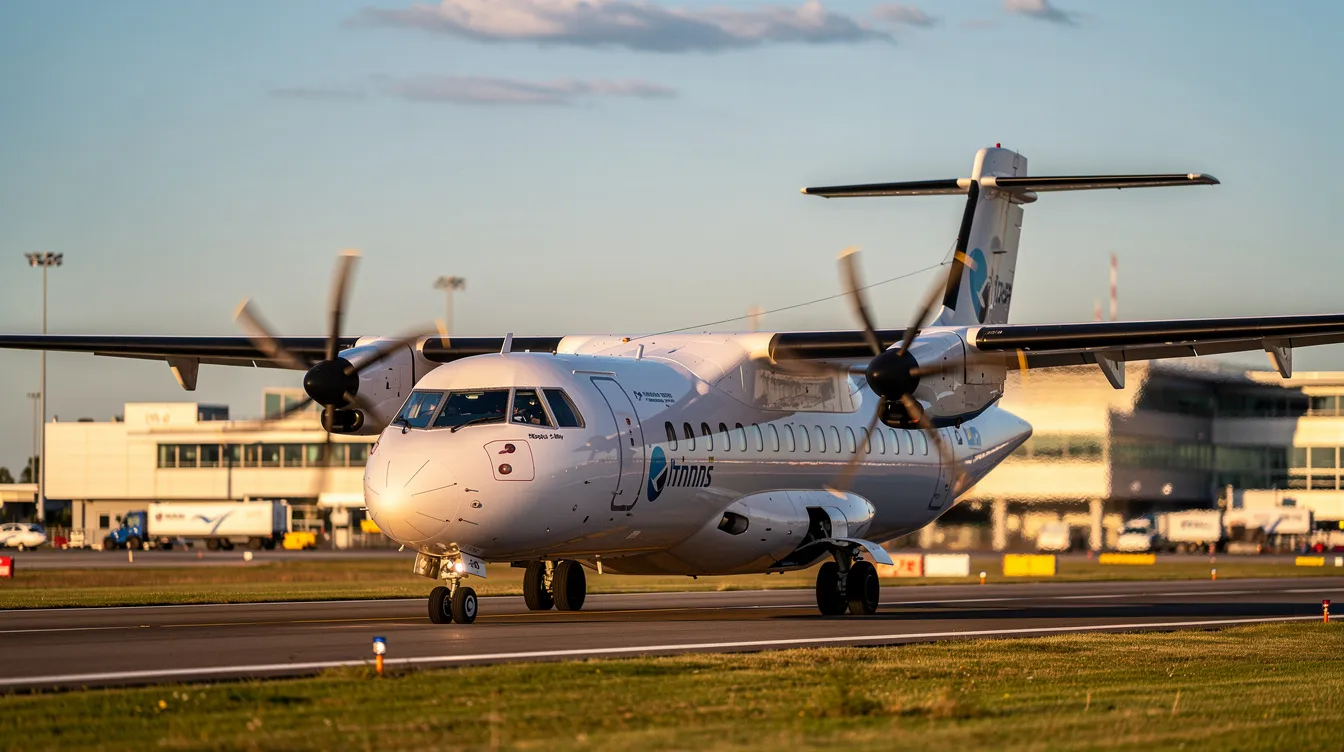
ATR 72: Guide to the Regional Turboprop (For Charter and Commercial Use)
The ATR 72-201 and ATR 72-202 are efficient turboprop aircraft designed for regional group charters, accommodating 66 to 72 passengers. With their reliable Pratt & Whitney engines and versatile landing gear, they excel in short- to medium-haul operations. Ideal for corporate shuttles, sports teams, and tour operators, these aircraft offer cost-effective alternatives to larger jets.
Read More
5
min read
Stebbins Aviation Inc: Charter Services, Location, and How Jettly Helps You Compare Options
Stebbins Aviation Inc, based at East Texas Regional Airport, has been providing charter services since 1987, specializing in Cessna Citation jets for short-haul flights. While it offers reliable local options, Jettly's digital marketplace provides access to a broader range of aircraft and instant pricing, making it a valuable resource for travelers with diverse needs.
Read MoreStay updated with our latest insights and tips to elevate your journey with us.
MEMBERSHIPS AND ASSOCIATIONS



Disclaimer: Jettly operates as a charter broker, offering access to a global digital jet charter marketplace. Jettly is not a direct air carrier and does not own or operate aircraft. All advertised flights are conducted by third-party air carriers that are fully licensed and hold the appropriate Part 135 or Part 121 certifications issued by the Federal Aviation Administration (FAA) or equivalent regulatory authorities under U.S. or foreign law. Jettly complies fully with the U.S. Department of Transportation's Part 295 and Part 298 Charter Broker regulations. Jettly does not carry additional liability insurance. Passengers are covered by aircraft operator insurance. TICO: 50023770


