



Login
Get Instant Pricing On 23,000+ Aircraft

>
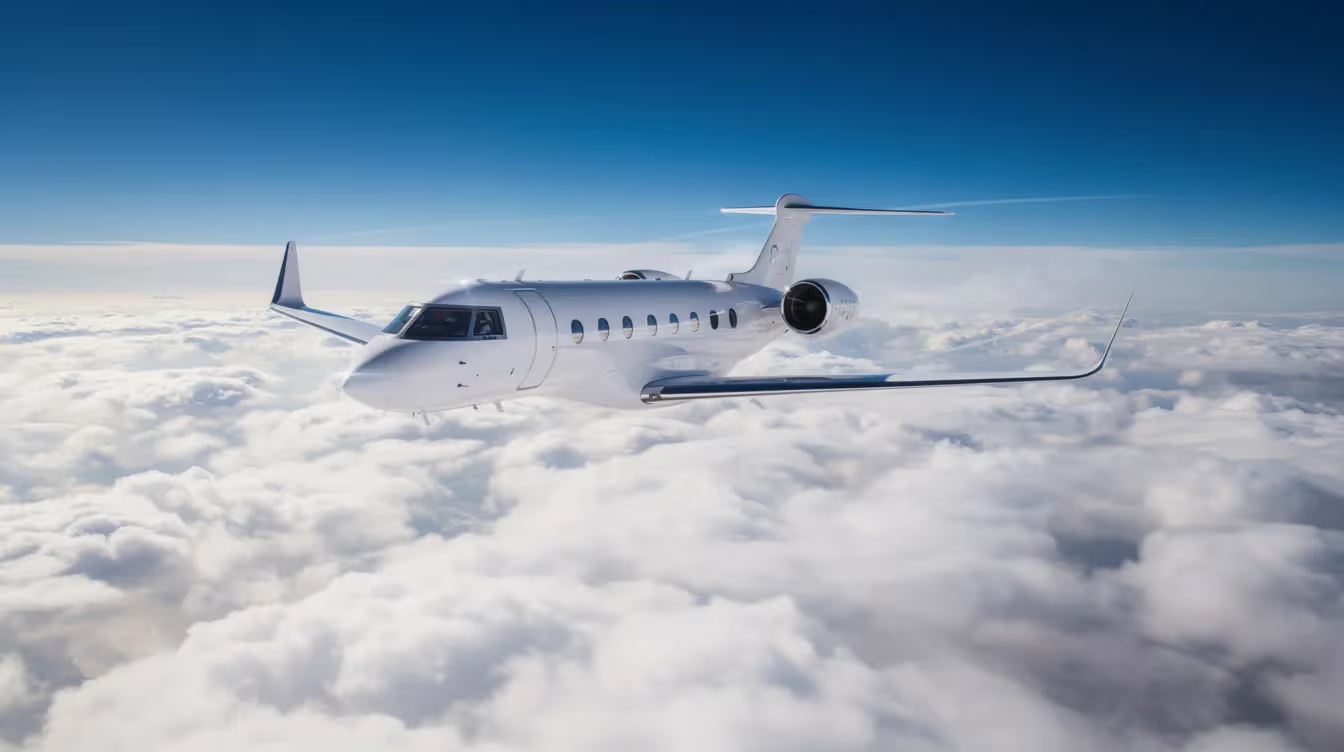
When comparing private jet charters to commercial airline flights, the decision centers on key factors like time savings, privacy, flexibility, and per-person cost. Private jets offer unmatched convenience and customization, while commercial airlines provide broad accessibility and lower fares—especially for solo travelers.
– Private jets significantly reduce total travel time by using smaller airports and avoiding long security lines.
– Commercial flights remain much less expensive per seat and offer more scheduled options worldwide.
– Private charters excel for groups, business travelers, or anyone needing flexible schedules and privacy.
– Both private and commercial aviation maintain stringent safety standards and similar accident rates.
– Environmental impact per passenger is higher on private jets, though efficient aircraft and group travel can help mitigate this.
In 2026, more travellers are weighing private jet vs commercial flights for routes like London–Paris, Los Angeles–Las Vegas, and New York–Miami. Rising commercial delays and growing demand for flexibility have pushed the private jet charter market toward an estimated $35 billion.
Commercial air travel refers to scheduled service on airlines such as Delta, American, Air Canada, or British Airways. A private jet charter is an on-demand private aircraft booked through platforms like Jettly.
Four factors typically drive the decision: time, cost, comfort and privacy, and flexibility. This article walks through each with specific examples, pricing, and practical guidance. It's important to note that commercial air travel is significantly cheaper per seat, especially for solo travellers.
Jettly operates as a broker and marketplace—not an airline—connecting travellers to over 20,000 aircraft worldwide with transparent pricing and instant quotes.
When comparing private jets vs commercial flights, travellers need to weigh time, cost, comfort, and flexibility for their specific trip. This article breaks down each factor with concrete examples and real-world pricing.
Private jets can cut total door-to-door travel time by 2–4 hours on routes like New York–Miami or Toronto–Vancouver by using smaller airports and avoiding long security lines.
Commercial flights operate on fixed schedules and rely on economies of scale, featuring per-seat pricing. While they remain cheaper per seat, private jet rentals versus first-class tickets for corporate travel show that private charters become competitive for groups of 4–8 passengers when compared to business-class or first-class fares.
Both private aviation and commercial airlines operate under strict safety regulations, with accident rates around 1 per million flights for each.
Private aircraft offer greater privacy, flexible scheduling, and customisation options that commercial travel cannot match.
Private jets generally provide a more private and secure environment compared to commercial flights.
Jettly is a digital marketplace that lets travellers compare private options and get instant charter pricing across 20,000+ aircraft globally.
When planning air travel, one of the first decisions travellers face is whether to fly private or choose a commercial airline. Private and commercial aviation represent two distinct approaches to getting from point A to point B, each catering to different priorities, budgets, and travel styles. Understanding the core differences between these options is essential for making the best choice for your next trip—whether you’re a frequent business traveller, planning a family vacation, or simply seeking the most efficient way to reach your destination.
Let’s break down what sets private aviation and commercial aviation apart, and why these differences matter for your air travel experience.
Private aviation refers to travelling on private aircraft—most commonly private jets—arranged for personal or business use rather than scheduled public service. Many private jets offer a level of flexibility and comfort that’s hard to match: you set your own schedule, skip long security lines, and enjoy a tailored experience from start to finish. Private jets offer luxurious amenities, from high-quality entertainment systems and gourmet catering to spacious, comfortable seating. Resources outlining the landscape of charter airlines and private aviation options help travellers see how these services have evolved from a niche luxury to a broader, more accessible market. This makes private aviation a popular choice for business trips where productivity and privacy are key, as well as for family vacations and special occasions where convenience and comfort matter most.
With private aviation, you’re not just booking a seat—you’re booking the entire aircraft, allowing for customised itineraries, direct flights to smaller airports, and a seamless journey that fits your needs.
Commercial aviation is the backbone of mass air travel, relying on commercial aircraft operated by major airlines to transport large numbers of passengers on fixed schedules. Commercial flights are available to the public, offering a wide range of routes and destinations at various price points. For most travellers, commercial airlines are the go-to option thanks to their affordability and accessibility.
However, flying commercial often means navigating long security lines, crowded terminals, and adhering to the airline’s fixed schedules. While commercial airliners provide a range of in-flight amenities—such as entertainment, meals, and snacks—the experience is generally less personalised and less flexible than flying private.
Private aviation stands out for its flexibility, comfort, and convenience. Private jets offer unmatched convenience, privacy, and time savings by using private terminals and customised schedules (Fact 1). They provide a more private and secure environment than commercial flights, as they are available only to the individual or company that has chartered or owns the aircraft (Facts 2, 3). In this context, privacy refers to the cabin's exclusivity—only invited guests are on board, allowing for confidential conversations and a personalised experience. Security means enhanced control over who is on the aircraft, reduced exposure to crowds, and discreet screening processes, which together create a safer and more controlled environment.
Private jets can often fly faster than commercial aircraft, and with fewer passengers on board, private jet travellers enjoy greater privacy and security. The ability to access smaller airports means you can often land closer to your final destination, reducing ground transportation time and avoiding the congestion of major commercial airports. For business travellers, the ability to hold confidential meetings in-flight or adjust departure times on short notice is a major advantage. Many private jets also offer luxury amenities and a tailored experience that simply isn’t available on commercial flights.
Commercial aviation, on the other hand, excels in affordability, reliability, and network reach. Commercial airlines operate on fixed schedules, making it easy to plan trips in advance and access a vast array of destinations worldwide. For solo travellers or those on a budget, commercial flights are typically the most cost-effective option. While commercial flights may involve long security lines and less flexibility, they remain the most accessible way to travel for most passengers.
When comparing private jets to commercial flights, it’s important to weigh factors like cost, convenience, comfort, and scheduling. Private aviation is generally more expensive, but offers unmatched flexibility and a premium experience. Commercial flights are more affordable and widely available, but come with trade-offs in terms of privacy and convenience.
Ultimately, the choice between private and commercial aviation depends on your unique travel needs and priorities. By understanding the strengths of each approach, you can make an informed decision and ensure your next air travel experience is the right fit for you.

Flying commercial means arriving 2–3 hours early at major airports like JFK, LAX, or Heathrow. Flying private typically requires just 15–30 minutes at an FBO (fixed-base operator) like Teterboro near New York or Van Nuys in Los Angeles.
This section covers the practical, step-by-step differences in check-in, security, and boarding that affect total journey time. Jettly-arranged charters typically use private terminals and can coordinate direct car-to-aircraft transfers.
The typical commercial process includes:
Online or airport check-in
Bag drop at the counter
TSA or airport security (shoes off, laptops out, liquid restrictions)
Zone-based boarding at the gate
Commercial flights operate on predetermined schedules, so travellers must plan their trips around fixed airline departure times and arrive at the airport well in advance.
Realistic timelines:
International flights: Arrive 2–3 hours before departure
Domestic flights: Arrive 1.5–2 hours before departure
Security and boarding queues: 30–60+ minutes
Common pain points include:
Crowded terminals
Overhead bin competition
Gate changes
Potential delays
Connecting flights through hub airports add more risk of missed connections. Even business class passengers with priority boarding still follow the airline’s fixed schedules.
Private jet passengers typically arrive 15–30 minutes before departure. The process looks different:
Park near the FBO entrance
Quick ID check (no public security lines)
Walk directly to the aircraft
Staff loads baggage
For charter flights with fewer than 61 seats, security is handled by the operator through discreet screening rather than long lines. Departures from smaller airports like London Biggin Hill or Opa-locka Executive avoid the congestion of Heathrow or Miami International.
Jettly’s operators can often adjust departure by 30–60 minutes if a client runs early or late, subject to airport slots and crew duty limits.
While modern commercial business class has improved, private flights still lead in privacy, layout flexibility, and the ability to work or relax without interruption. This section compares cabin design, seating, noise levels, and amenities using real aircraft examples.
Jettly lets users filter aircraft by cabin size, Wi-Fi availability, and layout to match specific needs.
A light jet like the Phenom 300 seats 4–6 passengers in club arrangements with swivel chairs and work tables. Large-cabin jets can include separate lounge, dining, and sleeping areas—comparable to or exceeding international first class suites.
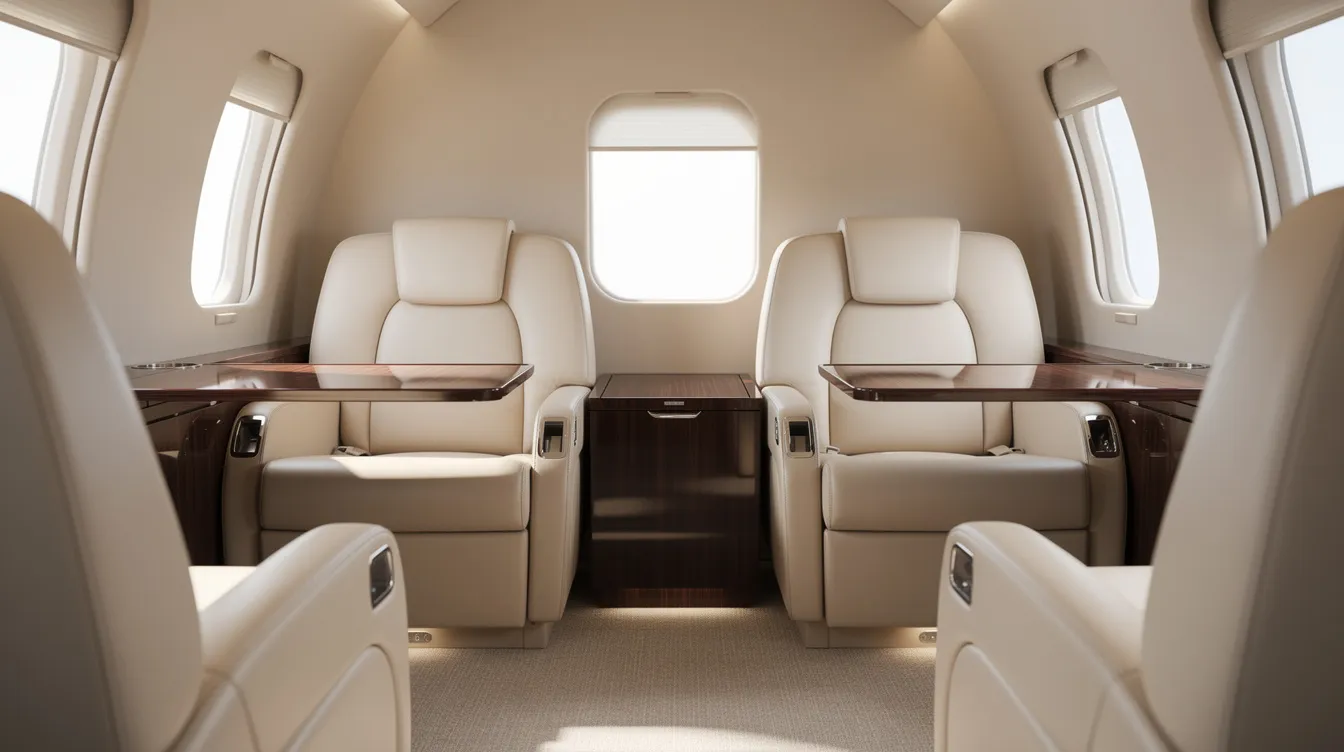
On commercial airline flights—even in business class—passengers sit near strangers with shared announcements and cabin noise around 75–85 dB. Fewer passengers and invited-only cabins on private charters enable confidential discussions for legal teams, investment bankers, or family conversations.
Lower cabin noise and fewer interruptions support better sleep on early-morning Toronto–Vancouver or overnight transatlantic trips. Many private jet travellers use the cabin specifically for board meetings or strategy sessions en route.
Commercial offerings:
Economy: Buy-on-board snacks
Business/First: Pre-set menus with limited customisation
Special meals require advance requests
Private flight options:
Bespoke catering from specific restaurants
Children’s menus, vegan options, and specific champagne brands
Lie-flat divans, high-quality entertainment systems, Nespresso machines
Showers on ultra-long-range jets
Jettly coordinates catering and ground transportation at origin and destination for a seamless end-to-end experience, supported by Jettly Eats in-flight catering for private jets across hundreds of airports.
Public commercial cabins, tray-table workspaces, and inconsistent Wi-Fi limit productivity—especially on short-haul flights packed with announcements. Many private aircraft offer better performance and amenities compared to commercial airliners, facilitating high-speed travel and enhancing work efficiency during flights.
Many private jets in Jettly’s network offer:
High-speed Ka-band or Ku-band Wi-Fi
Power outlets at every seat
Tables large enough for laptops and documents
Real-world use cases include teams reviewing pitch decks on San Francisco–Seattle flights or lawyers preparing for court while flying into Washington, D.C. This productive “working time” versus commercial “downtime” can offset higher charter costs for business travellers.
Private jets fly faster in some cases, but the real advantage is total journey time—not raw cruising speed. Private jet speed and flight time both contribute to overall time efficiency, as private jets can often travel faster and reduce total travel time compared to commercial flights by minimising ground delays and enabling more direct routing. This section addresses speed, altitude, direct routing, and airport access with specific examples.
Jettly’s platform optimises aircraft and airport selection to shorten both flight time and ground time, drawing on a global fleet of private charter aircraft matched to each route and supported by an airport locator tool for worldwide private terminals.
|
Aircraft Type |
Typical Cruising Speed |
Typical Altitude |
|---|---|---|
|
Commercial Airliners (e.g., 737, A320) |
Mach 0.78–0.82 (515–540 mph) |
31,000–38,000 ft |
|
Light Jets |
Mach 0.78 |
41,000–45,000 ft |
|
Large Jets (e.g., Gulfstream G650) |
Mach 0.85–0.90 (up to 590 mph) |
Up to 51,000 ft |
|
Private jets cruise above most airline traffic, reducing turbulence and air-traffic-control delays. The in-air time difference on a 2–3 hour leg might be only 10–20 minutes, but avoiding holding patterns adds to the advantage. |
Private jets have access to over 5,000 U.S. airports, compared with roughly 500 used by commercial airlines. Similar disparities exist in Europe and Canada.
Direct routing examples:
White Plains (HPN) to Nantucket (ACK)—no connections needed
Smaller Ontario airports to remote mining sites lacking airline service
Taking direct routes from Van Nuys to Henderson instead of LAX to Las Vegas
Jettly’s search identifies the closest practical airport to your final destination, often reducing 1–2 hours of ground transfer time.
|
Segment |
Commercial |
Private |
|---|---|---|
|
Drive to the airport |
60–90 min (JFK) |
30 min (Teterboro) |
|
Check-in/security |
90–120 min |
15 min |
|
Flight time |
3 hours |
2.5 hours |
|
Baggage/exit |
30–45 min |
5 min |
|
Total |
6–7 hours |
3–4 hours |
|
Los Angeles–Las Vegas: Using Van Nuys to Henderson saves 1–2 hours versus LAX to McCarran. |
||
|
For business trips requiring same-day returns, compressing meetings into one day can eliminate hotel overnights entirely. |
Commercial flights are generally cheaper per seat. But private jet charter can be surprisingly competitive for groups and time-sensitive trips.
Costs depend on aircraft type, distance, demand, and add-ons. Travellers weighing ownership versus charter can also consult detailed guides on the actual cost of owning and operating a private jet. Jettly offers an online private jet charter cost estimator with instant pricing and transparent breakdowns.
Sample round-trip fares (2025–2026):
|
Route |
Economy |
Business Class |
|---|---|---|
|
New York–Miami |
~$800 |
~$3,000 |
|
Los Angeles–New York |
~$400 |
~$2,500 |
|
London–Geneva |
~£200 |
~£1,500 |
|
Commercial airlines benefit from economies of scale—costs spread across 150–300 passengers. However, last-minute premium commercial fares can spike sharply, sometimes approaching the per-person costs of private charters. |
||
|
Extra fees add up: checked baggage ($30+), seat selection ($20+), and change fees ($200+) hit families and groups especially hard. |
Hourly charter rates:
Turboprops: $2,000–$3,000
Light jets: $3,000–$5,000
Midsize: $4,500–$7,000
Large-cabin/long-range: $8,000–$14,000+
Example pricing:
New York–Boston round-trip: ~$10,000–$15,000 (split among 6 = ~$2,000/person)
New York–Miami one-way: ~$20,000–$30,000 (split among 8 = ~$2,500–$3,750/person)
Private flight cost covers the aircraft, not per seat. For groups of 4–8, this often rivals business-class tickets, with comprehensive guides that explain how much to rent a private jet, alongside tools that break down affordable private jet charter costs and one‑off private flight pricing factors, to clarify the per-person value.
Key variables include:
Aircraft size and age
Total flight time
Overnight crew costs
Positioning legs (getting aircraft to origin)
Airport fees and de-icing
Peak season demand
Empty-leg flights—when aircraft reposition without private passengers—offer discounts for flexible travellers, and dedicated platforms for empty-leg flights with Jettly can unlock savings of up to 75% on select routes. Jettly displays these opportunities, enables travellers to crowdsource private jet flights and share empty seats, and offers private jet memberships with reduced rates for frequent flyers.
Both private and commercial jets operate under strict national and international aviation regulations and must adhere to the same safety standards, including the Federal Aviation Administration's (FAA) safety and maintenance requirements. Many travellers wonder if jets are safer than commercial flights; in fact, private jets are often considered safer due to their controlled environment, strict safety standards, and minimised security risks through enhanced safety measures and streamlined security processes. Both private jet pilots and commercial airline pilots undergo rigorous training and must be licensed according to FAA regulations, ensuring they have the necessary skills to operate their aircraft safely. Air travel is statistically one of the safest modes of transportation, with the injury rate for airline passengers in the United States close to 0 per 100 million passenger miles.
Jettly only lists operators meeting the required safety and certification standards.
In the U.S., commercial airlines operate under FAA Part 121; charter operators under Part 135. Similar frameworks exist under EASA in Europe and Transport Canada.
These safety regulations cover:
Maintenance intervals
Crew duty limits
Weather minima
Mandatory safety equipment
Both commercial airline safety and private charter safety show accident rates around 1 per million flights—far below road transport’s approximately 1.3 per 100 million miles, and travellers can review the best private jet charter companies and their safety standards when choosing a provider.
Both airline and private pilots hold commercial or airline transport pilot licenses with regular proficiency checks and simulator training. Many private jet pilots come from airline or military backgrounds, specialising in specific aircraft types such as the Citation, Gulfstream, or Bombardier, and leading operators such as NetJets and other major private aviation providers emphasise rigorous training and safety cultures.
Crew size varies—single-pilot operations are allowed on some smaller jets, while large commercial aircraft require multi-crew, but reputable private charter operators staff appropriately for each mission.
Commercial airline schedules offer high frequency on major routes but are vulnerable to system-wide disruptions from storms, ATC issues, or crew shortages.
Private aviation provides:
Control over departure timing
Same-day rerouting options
Ability to divert to alternative airports during weather
Access to 14,000+ U.S. airports for emergency landing options
Jettly’s support team assists with re-routing or sourcing alternative aircraft when issues arise.
The right choice depends on the trip profile: solo vs group, leisure vs business, flexible vs fixed schedule, and distance.
Private jet travel enables:
Multi-city roadshows (3–4 stops in one day)
Confidential deal team travel in finance, legal, and tech
Board meetings mid-flight
Cost offsets include fewer hotel nights, reduced risk of missed meetings, and higher in-flight productivity. Jettly supports recurring corporate itineraries and compares charter against the best jet card programs available today, as well as other jet card programs for frequent corporate travel, and provides detailed breakdowns of private jet card costs and pricing structures, as well as fractional ownership.
Benefits for family vacations include flexible departure times, easier handling of strollers and sports equipment, and access to airports closer to resorts, especially when choosing from the best private planes for families that balance comfort, range, and cabin layout, or consulting a dedicated guide to the best planes for a family of four.
Direct flights to Aspen, Jackson Hole, or Caribbean private strips eliminate the need for connecting flights through crowded hubs. Groups of 6–10 sharing a midsize jet may approach per-person costs similar to premium commercial fares during peak periods.
Use cases include:
Last-minute legal hearings
Emergency site visits
Medical transport (non-ambulance)
Sports teams and entertainment tours
The ability to depart within hours and fly directly to smaller airports can make all the difference. Jettly’s 24/7 platform arranges such missions quickly.
Private jets typically have a higher carbon footprint per passenger than commercial flying because of their lower seat counts. On a per-passenger basis, private jets often have a larger carbon footprint than high-occupancy commercial flights (Fact 1). This section balances environmental realities with efforts toward efficiency and offsetting.
Commercial airlines benefit from high load factors, spreading emissions across many passengers. A 4-passenger light jet produces roughly 2–3 tons of CO₂ per person over 1,000 miles versus 0.2–0.4 tons per commercial economy seat.
However:
Modern private jets use advanced aerodynamics, improving fuel burn
Full occupancy narrows the gap significantly
Direct routes avoid multiple commercial legs plus ground transfers
Carbon offset programs calculate emissions for specific charter flights and fund equivalent reductions through certified projects. Many operators available through Jettly offer optional offsetting.
Practical mitigation steps:
Fly in larger groups
Select efficient aircraft (turboprops for short legs)
Combine multiple meetings into a single trip
Jettly is a technology-driven private jet charter marketplace that simplifies exploring the private side of the private-jet vs commercial-flights decision and positions itself as a flexible NetJets alternative for flying private, helping travellers compare on-demand charter against NetJets card costs and program pricing, with tools like a jet card flight cost estimator for one-way routes.
Users enter origin, destination, dates, and passenger count to see real-time aircraft options side by side. Filters include aircraft type (turboprop, light jet, midsize, heavy, helicopter), Wi-Fi, and luggage capacity.
Transparent pricing shows base rate plus estimated taxes and fees, helping travellers understand value compared to premium commercial fares.
Jettly supports both one-off on-demand charters and membership options for frequent flyers. Memberships can offer lower per-hour rates, priority access, and reduced commissions—without the capital commitment of fractional ownership.
Jettly coordinates catering and ground transportation, assists with airport selection, and provides customs guidance on international trips. This support makes private flying predictably easy.
Ready to see how private compares? Explore flight options or request a quote at Jettly.
Cost (per person): Private jets are higher overall but competitive for groups, while commercial flights offer the lowest per seat cost, especially for solo travelers.
Time Savings: Private jets save 2–4 hours door-to-door with flexible scheduling; commercial flights have fixed schedules and longer airport/security wait times.
Privacy: Private jets provide an exclusive cabin for invited guests only; commercial flights have shared cabins with the general public.
Comfort & Amenities: Private jets offer custom seating, catering, and a tailored experience; commercial flights feature standardized seating and premium classes.
Airport Access: Private jets can use thousands of smaller airports; commercial flights are limited to major airports.
Flexibility: Private jet travelers depart on their schedule and can adjust timing; commercial travelers must adhere to airline schedules.
Environmental Impact: Private jets have higher CO₂ per passenger but offer offset options; commercial flights are more efficient for large groups.
Safety: Both options are strictly regulated and have similar accident rates.
These questions cover practical details for first-time private flyers not fully addressed above.
Many travellers fly commercial for long-haul legs (London–New York) and use private jets for regional hops (New York–Nantucket). Jettly can coordinate private segments to align with commercial arrival times. Plan at least 2–3 hours of buffer between the commercial arrival and the private departure for immigration and transfers.
Private jets limit luggage by total weight and hold volume rather than strict per-bag limits. Smaller jets may not easily accommodate large hard-shell suitcases. Share detailed luggage information with Jettly during quoting so the right aircraft is selected. Private flying offers more flexibility with golf clubs and skis, but must comply with safety requirements.
Many private jet operators allow pets in the cabin, avoiding cargo holds required on most commercial airline flights. Rules vary by operator and destination—some countries require health certificates and vaccinations. Inform Jettly about pets at inquiry so pet-friendly operators can be proposed.
Private charters can often be arranged within hours for domestic routes, but 24–72 hours' notice broadens choices and may reduce cost. Peak periods, such as major holidays and events, require earlier booking. Jettly shows both last-minute and advance options with demand-adjusted pricing.
Passports, visas, and entry permits remain required—private status does not exempt individuals from immigration rules. Customs is typically handled at designated arrival points, sometimes in more private facilities. Check destination requirements for minors, pets, and medical equipment before departure. Jettly’s support team can confirm documentation needs for specific routes.
What are the main reasons travelers choose private jets over commercial flights?
Travelers often choose private jets for time savings, privacy, flexible scheduling, comfort, and the ability to access smaller airports closer to their final destination.
Is flying private always more expensive than commercial?
While private jets are generally more expensive per person, the cost can be competitive with premium commercial fares for groups of 4–8 travelers or on time-sensitive trips.
How does the airport and boarding experience differ between private and commercial flights?
Private jet travelers usually arrive 15–30 minutes before departure at private terminals, experience minimal security checks, and board directly, whereas commercial travelers face longer check-in and security lines and must arrive much earlier.
Are private jets safer than commercial flights?
Both private jets and commercial airlines operate under strict regulations and have similar safety records, with rigorous pilot training and maintenance standards.
Can private jets help reduce total travel time?
Yes, by using smaller airports and offering direct routing, private jets often cut total trip time by several hours compared to commercial flights.
What are “empty-leg” flights and can they save money?
Empty-leg flights are discounted private jet trips available when an aircraft needs to reposition; they can offer savings of up to 75% for flexible travelers.
How do environmental impacts compare between private jets and commercial airlines?
Private jets have a higher carbon footprint per passenger, but travelers can offset emissions, choose efficient aircraft, and fly in groups to reduce impact.
When does flying private make the most sense?
Flying private is best for groups, business travelers with tight schedules, special missions, or travelers seeking maximum privacy and convenience.
Commercial flights win on per-seat cost and network reach. Private jets win on time savings, privacy, flexible scheduling, and customised service.
The choice between private jets vs commercial flights should be based on schedule pressure, group size, budget, and comfort priorities. For groups of 4–8 or time-sensitive business trips, private often competes more closely than expected.
Running real numbers for your specific route reveals whether flying private makes sense. Explore flight options or request a quote at Jettly to see how private charter compares for your next trip.
Share this post:
Jay Franco Serevilla
Apr 13, 2026
|
5
min read
Discover tips and trends in the industry.
5
min read
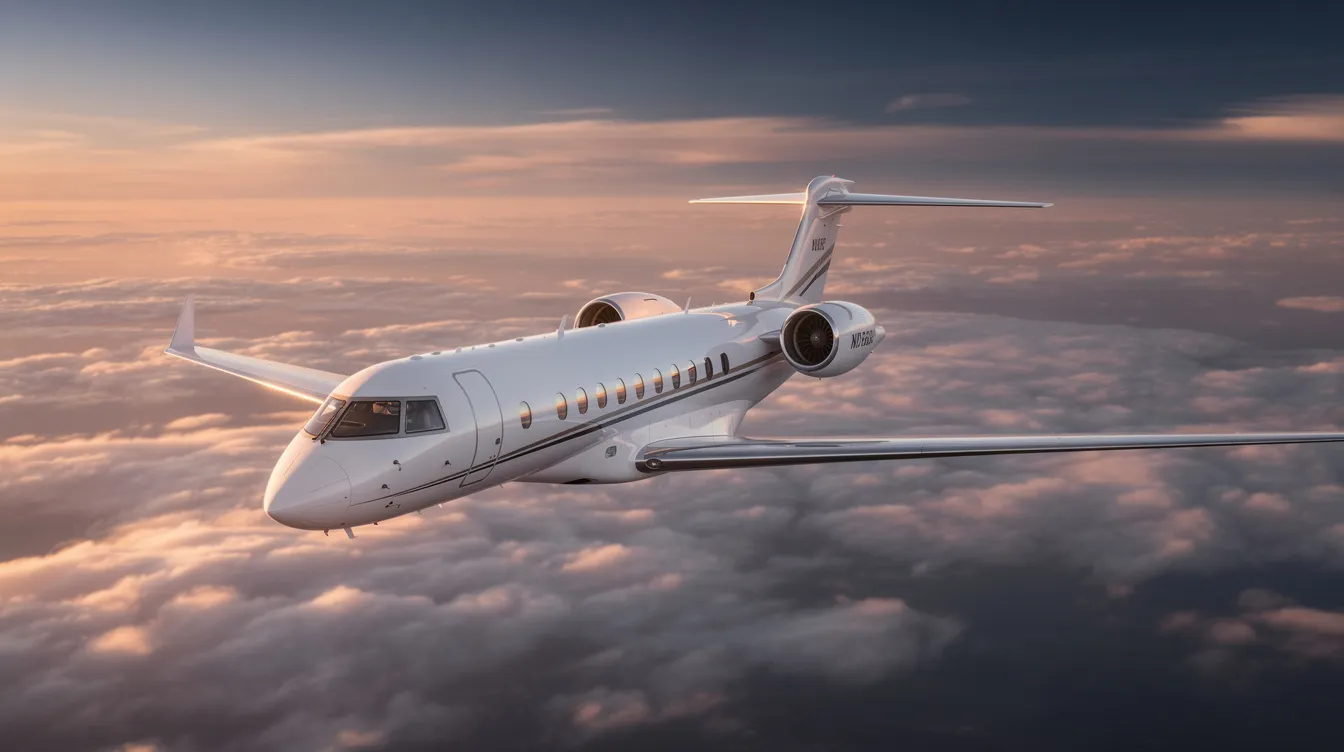
Private Plane Maintenance: A Practical Guide for Owners and Charter Flyers
Private plane maintenance is essential for ensuring safety, reliability, and the long-term value of aircraft. Owners and charter clients must understand maintenance costs and processes to make informed decisions. Platforms like Jettly provide access to well-maintained jets without the burdens of ownership.
Read More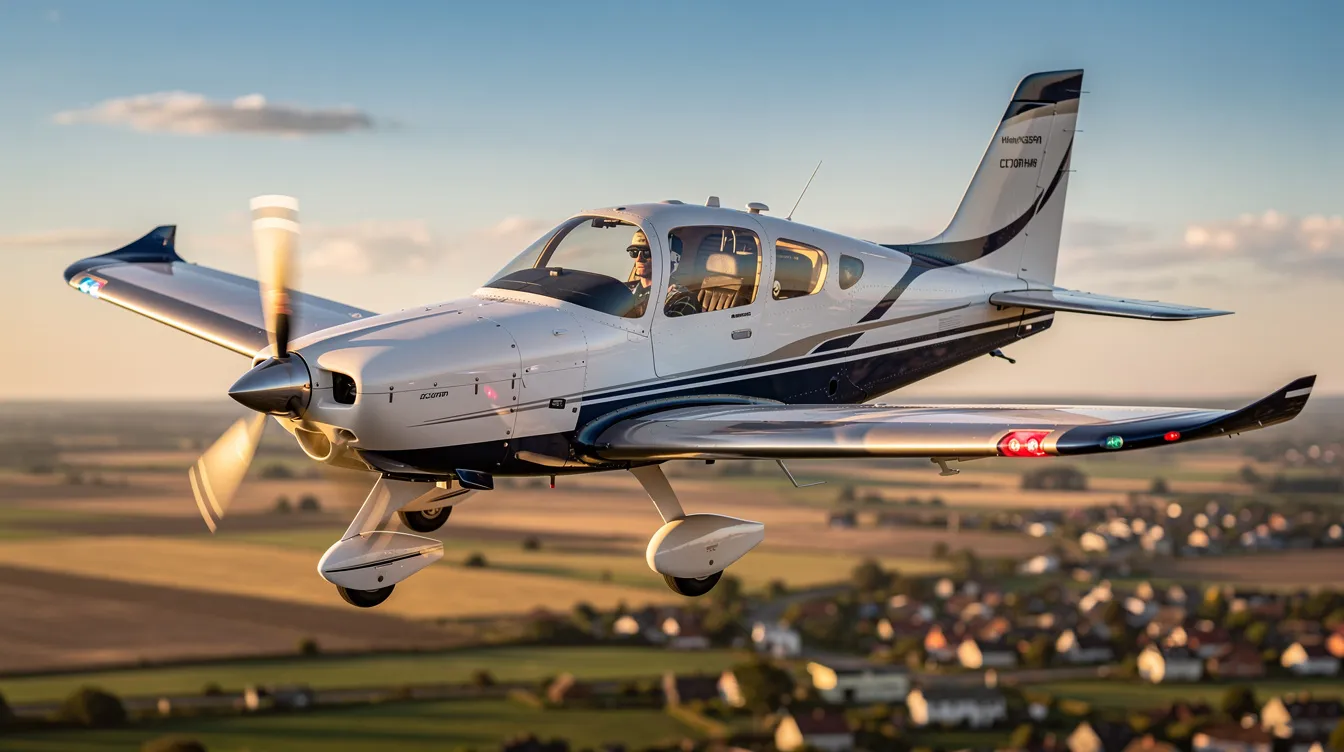
5
min read
Best Single-Engine Airplane for Cross-Country in 2026
Choosing the best single-engine airplane for cross-country flying in 2026 involves evaluating speed, range, comfort, and cost based on your flying needs. This guide highlights top piston aircraft and high-performance singles, comparing ownership with charter options to help you make an informed decision. Whether for business or leisure, the right aircraft can enhance your travel experience significantly.
Read MoreStay updated with our latest insights and tips to elevate your journey with us.
MEMBERSHIPS AND ASSOCIATIONS



Disclaimer: Jettly operates as a charter broker, offering access to a global digital jet charter marketplace. Jettly is not a direct air carrier and does not own or operate aircraft. All advertised flights are conducted by third-party air carriers that are fully licensed and hold the appropriate Part 135 or Part 121 certifications issued by the Federal Aviation Administration (FAA) or equivalent regulatory authorities under U.S. or foreign law. Jettly complies fully with the U.S. Department of Transportation's Part 295 and Part 298 Charter Broker regulations. Jettly does not carry additional liability insurance. Passengers are covered by aircraft operator insurance. TICO: 50023770


