


Login
Get Instant Pricing On 23,000+ Aircraft

>

This guide is designed for prospective buyers and charter users seeking to understand the 2026 private jet market, pricing, and smarter alternatives.
Private aviation represents the pinnacle of personalized travel, giving passengers the freedom to fly on their own schedule, access thousands of airports worldwide, and enjoy a level of comfort and privacy unmatched by commercial airlines. Whether you’re a business executive seeking efficiency or a family prioritizing convenience, private jets offer a tailored experience designed to meet a wide range of needs.
The private jet market is diverse, ranging from agile light jets ideal for short hops to large-cabin aircraft designed for long-range journeys with multiple passengers. Each jet is designed for specific missions, so understanding your travel patterns is key when beginning your search for private planes for sale.
Private jet brokers play a vital role in this process, acting as trusted advisors who connect buyers and sellers, guide you through the complexities of the market, and help ensure a smooth transaction. They assist with everything from identifying the right jets for sale to negotiating terms and overseeing the pre-purchase inspection.
When considering a purchase, it’s essential to factor in not just the acquisition price, but also ongoing operational costs, maintenance programs, and the aircraft’s suitability for your typical routes. Operational costs for private jets can range from $500,000 to over $1 million annually, in addition to the initial purchase price. Programs like Rolls-Royce CorporateCare are popular among owners, offering peace of mind by managing engine overhaul costs and helping to maintain the jet’s value and airworthiness.
New private jets offer the latest technology, full manufacturer warranties, and total customization, but depreciate faster than pre-owned jets. Pre-owned private jets require rigorous Pre-Purchase Inspections (PPIs) to assess maintenance history and potential damage. Before spending $25,000 to $75,000 on a pre-buy inspection, a disciplined buyer can eliminate most unsuitable aircraft by reviewing total airframe time, engine time since overhaul, and avionics status.
The private aviation market is dynamic, with new aircraft models and advanced technologies regularly introduced by leading manufacturers. Buyers can find private jets for sale through a variety of channels, including online marketplaces, private jet brokers, and direct from manufacturers. The purchase process typically begins with a thorough search, followed by a detailed pre-purchase inspection to ensure the aircraft meets your standards before the sale is finalized.
Whether you’re looking for a light jet for regional travel or a large-cabin aircraft for intercontinental flights, understanding the market and working with experienced professionals will help you make a confident, informed purchase.
The market for private jets for sale remains active in 2026, driven by sustained business travel demand and flexible work arrangements. But buying an aircraft is only one path to private aviation—and often not the most practical one.
Buyers can find private jets for sale through a variety of channels, including online marketplaces, private jet brokers, and direct from manufacturers. Buyers can view hundreds of private jets listed for sale on leading online platforms, providing a comprehensive overview of available inventory. Currently, 567 private jets are listed for sale worldwide, with an average price of $4,032,633, providing buyers with a benchmark for evaluating individual listings.
Private jet brokers play a key role in helping buyers navigate the complexities of the purchase process. Direct communication with the seller is essential, as buyers should assess the seller's credibility, negotiate to address any issues discovered during inspections, and finalize the purchase price.
Light business jets in 2026 typically list from about $3M–$12M, while large-cabin and long-range jets often exceed $40M–$80M new.
Full ownership usually makes financial sense above roughly 200–250 flight hours per year; below that, on-demand charter through a platform like Jettly is often more cost-efficient.
Total ownership cost includes fixed costs (hangar, crew, insurance, maintenance programs) and variable costs per flight hour (fuel, landing fees, catering).
Residual values are strongest for in-production aircraft with strong OEM support, such as the Gulfstream G650/650ER and the Bombardier Global series.
Jettly provides an alternative to buying: instant digital access to over 20,000 aircraft worldwide without long-term ownership commitments or jet card contracts.
The 2024–2026 surge in business travel and flexible work has kept demand for private planes relatively strong. Customers continue to show interest in manufacturer models from Gulfstream, Bombardier, and Dassault, which dominate both new-production and pre-owned inventory.
The market splits between new jets from OEMs and a large pre-owned sector featuring aircraft built from the early 2000s to mid-2010s. Demand for turboprop aircraft, such as the Pilatus PC-12, has also increased, driving up their market values, with many online marketplaces now featuring a dedicated section for turboprop listings. Here’s what typical 2026 price ranges look like:
|
Category |
Examples |
Price Range |
|---|---|---|
|
Light Jets |
Embraer Phenom 300E, Cessna Citation CJ4 Gen2, Cirrus Vision Jet |
$3M–$12M |
|
Midsize/Super-Midsize |
Cessna Citation Latitude, Bombardier Challenger 3500 |
$9M–$25M |
|
Large-Cabin/Long-Range |
Gulfstream G600, Dassault Falcon 8X |
$35M–$80M+ |
|
Residual values are strongest for in-production aircraft with large active fleets. The Gulfstream G650/650ER series, for example, retains over 80% of its value after five years. Gulfstream aircraft, particularly the G550, G650, and G650ER, consistently command premium residual values due to their strong factory support network and large global fleet. Owners of discontinued models, such as legacy Hawker jets, face escalating parts challenges and steeper depreciation. |
||
|
VREF and Aircraft Bluebook are the primary authorities for aircraft valuation and pricing data. |
||
|
While traditional buyers work through private jet brokers or manufacturer sales teams, digital charter platforms like Jettly focus on access rather than ownership—giving travelers flexibility without capital outlay. |
||
|
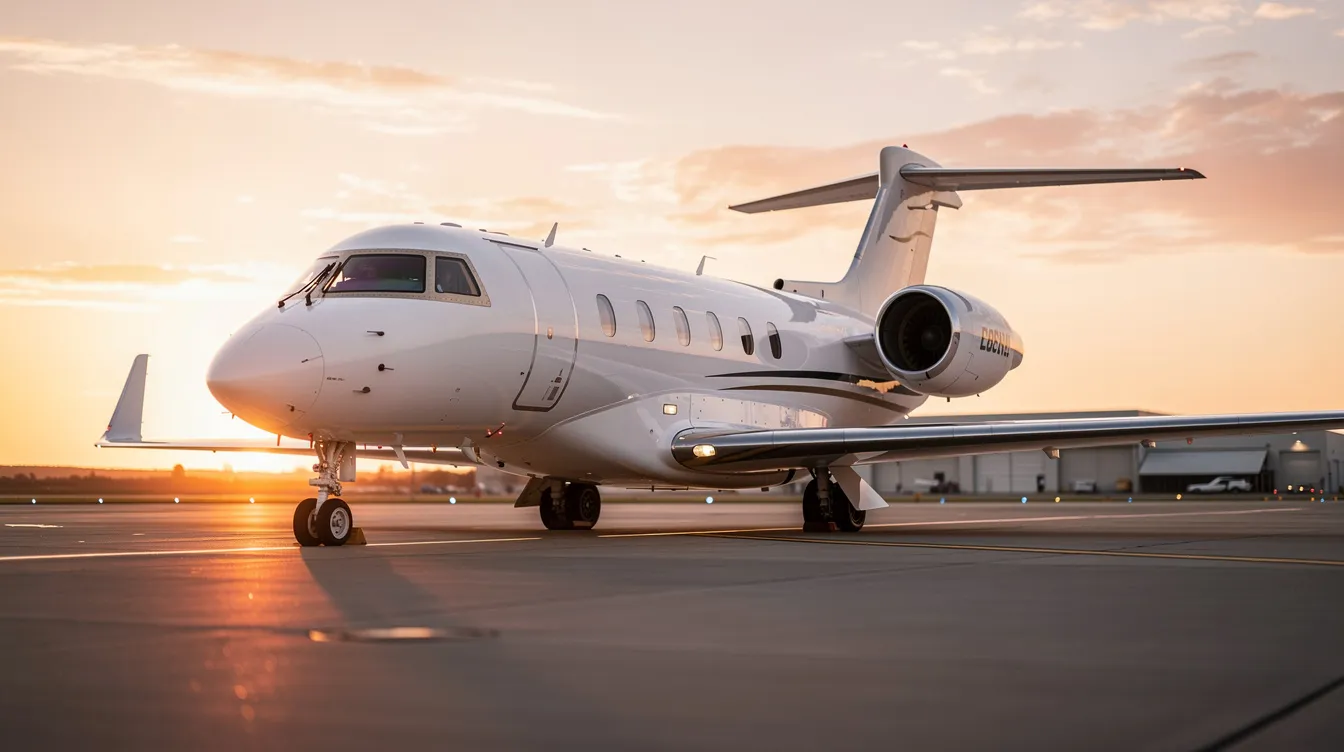
The landscape for private jet acquisition in 2026 centers on high-quality online marketplaces, accredited brokerage firms, and industry-standard valuation tools, with top platforms including Controller.com, Trade-A-Plane, and AircraftExchange.com. However, only about 5% of dealers have accreditation from the International Aircraft Dealers Association (IADA), which ensures a transparent, ethical, and expert-led transaction. The National Business Aviation Association (NBAA) also provides essential industry news, networking, and expert resources on regulatory compliance and tax implications for buyers. |
||
 |
The core decision comes down to ownership: fractional private jet ownership programs, such as Jettly’s jet card programs, or on-demand charter through platforms like Jettly.
Outright ownership tends to make sense around 200–250+ flight hours per year. Many executives and families actually fly closer to 50–150 hours annually—well below the threshold where buying pays off.
Pros of full ownership:
Complete control over cabin design, schedule, and crew
Potential tax benefits depending on jurisdiction and business use (consult a tax advisor or NBAA resources)
Faster dispatch from home-based airports
Downsides of owning:
High fixed annual costs, often ranging from $500,000 to over $1 million, regardless of usage
Resale risk if models are discontinued
Operational complexity: crew management, maintenance oversight, regulatory compliance
Fractional jet ownership programs:
Offer guaranteed availability and predictable costs
Come with per-hour rates that can significantly exceed the direct operating costs of whole ownership
On-demand charter with Jettly offers: Travelers can also consider buying individual seats on private jets via shared and empty-leg options when a full-aircraft charter is more than they need, drawing on a variety of ways to get a seat on a private jet.
No aircraft purchase cost or long-term debt
Access to over 20,000 private charter aircraft worldwide, from turboprops to long-range jets
Transparent pricing and the ability to switch aircraft size based on each mission
Decision guideline: Travelers flying fewer than 150 hours per year should run a detailed comparison between charter via Jettly and purchasing before committing capital.
Matching aircraft category to mission profile matters whether you buy or charter through Jettly.
|
Jet Category |
Best Use Cases |
Passenger Capacity |
Typical Range |
|---|---|---|---|
|
Light Jets |
Short trips (e.g., New York–Chicago, London–Geneva), regional business or leisure |
2–6 |
1,000–2,000 miles |
|
Midsize/Super-Midsize |
Coast-to-coast (e.g., Los Angeles–New York, Toronto–Vancouver), corporate shuttles, family vacations |
6–9 |
2,000–4,000 miles |
|
Large-Cabin/Long-Range |
Long nonstop legs (e.g., New York–London, Dubai–London, Hong Kong–Sydney), international business, luxury travel |
10–16 |
4,000–7,500+ miles |
|
Turboprops/Very Light |
Short runways, regional hops (e.g., Dallas–Austin, Paris–Geneva), lower environmental impact |
4–8 |
800–1,800 miles |
Light Jets
Examples: Embraer Phenom 300E, Cessna Citation CJ3+, HondaJet Elite II
Lower hourly operating costs (around $2,400/hour) but limited range and baggage capacity.
Midsize and Super-Midsize Jets
Examples: Cessna Citation Latitude, Bombardier Challenger 3500, Gulfstream G280
Comfortable for 6–9 passengers with coast-to-coast capability.
Large-Cabin and Long-Range Jets
Examples: Gulfstream G500/G600/G650ER, Bombardier Global 6500/7500, Dassault Falcon 8X
Many models offer dedicated bedrooms and full galleys.
Turboprops and Very Light Aircraft
Examples: Pilatus PC-12 NGX, Beechcraft King Air 250, Daher TBM 960
Lower fuel burn translates to better environmental footprint per passenger on short sectors.
Jettly’s platform allows travelers to select any category for each trip, even without owning one, and frequent users can benefit from flexible private jet memberships rather than committing to full ownership.
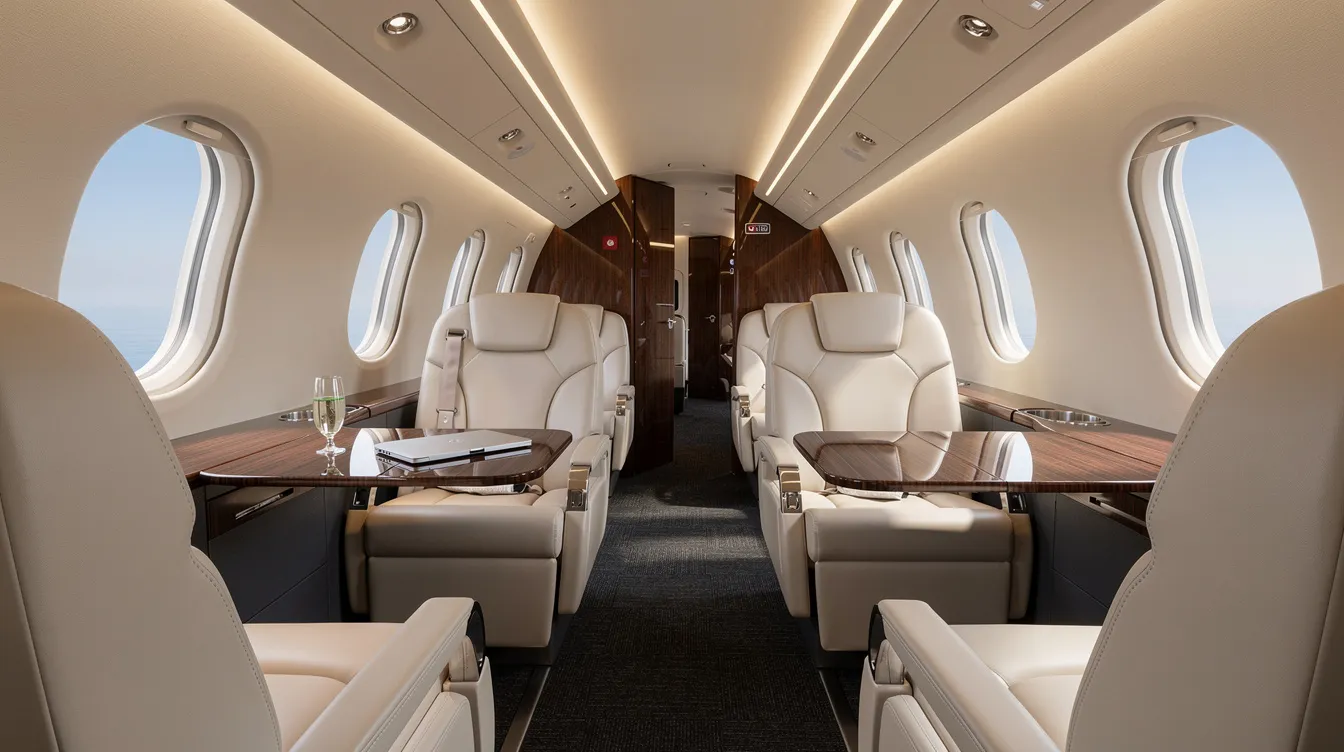
The purchase price is just the beginning. Owners must plan for both fixed and variable costs over the aircraft’s life, and many buyers start by benchmarking the true cost of a private jet across sizes and ownership models.
Crew salaries and training for two pilots: $300,000–$500,000+
Hangar space and insurance: $100,000–$250,000+
Maintenance tracking systems and navigation databases
Fuel, landing fees, handling, catering for private jets, and en-route charges
Hourly operating costs range from $2,200 for light jets to $5,000+ for large-cabin aircraft, aligning with typical private jet rental cost ranges
Engine and maintenance programs such as Rolls-Royce CorporateCare, Honeywell MSP, and JSSI stabilize overhaul costs but increase hourly expenses. Aircraft enrolled in these programs typically command higher resale prices.
A midsize jet purchased for around $10M might accrue $4–6M in operating costs over five years at 200 hours annually, plus potential depreciation.
Contrast with Jettly: Customers pay only for hours flown—no responsibility for hangar, crew payroll, or maintenance planning. Instant private jet charter cost estimates enable easy comparison of trip costs versus estimated ownership costs per hour.
Securing the right financing and insurance is a crucial step in acquiring a private jet. Most buyers, even those with significant resources, choose to finance their aircraft to preserve liquidity and take advantage of favorable lending terms, while others compare financing costs with those of fractional jet ownership. Specialized lenders in the private aviation market offer a range of financing solutions, from traditional loans to operating leases, each designed to suit different ownership structures and tax considerations.
When applying for financing, lenders typically evaluate the aircraft’s age, manufacturer, maintenance history, and enrollment in programs like Rolls-Royce CorporateCare, which can enhance the jet’s value and reduce risk. They’ll also assess the buyer’s financial profile and intended usage to tailor the loan terms accordingly. Working with experienced private jet brokers or financial advisors can help streamline this process and ensure you secure the most competitive rates.
Comprehensive insurance is equally important, protecting owners from risks such as damage, liability, and loss of use. Policies are customized based on the aircraft type, usage patterns, and passenger profiles, with coverage options ranging from hull and liability insurance to specialized programs for high-value jets. Insurers may also offer additional services, such as risk management consultations and claims support, to give owners peace of mind throughout their ownership journey.
Integrating financing and insurance planning early in your search and purchase process not only safeguards your investment but also helps you budget accurately for the total cost of ownership. By leveraging the expertise of industry professionals and reputable service providers, you can navigate the complexities of private jet acquisitions with confidence, ensuring your aircraft is protected and your purchase is as seamless as possible.
A well-executed private jet acquisition, from initial search to closing, typically takes 60 to 120 days, assuming the buyer approaches the process with discipline and the seller is cooperative. The process begins with mission analysis and budget definition to establish realistic performance and economic parameters before identifying a target aircraft.
Mission analysis: Define passenger count, range needs, and typical routes (e.g., frequent New York–Miami flights)
Budget setting: Align acquisition budget, operating budget, and expected yearly flight hours
Aircraft search: Scan global listings, manufacturer trade-ins, and off-market opportunities through brokers. Only 5% of dealers are accredited by the International Aircraft Dealers Association (IADA), and using an IADA-accredited dealer ensures a transparent, ethical, and expert-led transaction. AircraftExchange is the only marketplace exclusive to International Aircraft Dealers Association (IADA) accredited dealers. Top platforms include Controller.com and Trade-A-Plane.
Evaluation: Compare airframe hours, engine cycles, avionics upgrades, and service history
Offer and negotiation: Submit a letter of intent (LOI) outlining price and conditions. It is important to assess the seller's credibility and evaluate the seller's willingness to address issues discovered during inspections.
Pre-purchase inspection: Conduct a detailed review at a reputable maintenance facility. Before spending $25,000 to $75,000 on a pre-buy inspection, a disciplined buyer can eliminate most unsuitable aircraft by reviewing total airframe time, engine time since overhaul, and avionics status.
Closing: Complete title search, FAA N-number registration, and legal structuring
Travelers unsure about committing can use Jettly to simulate flying patterns over a year and assess whether ownership makes sense, especially when comparing it to a NetJets alternative with on-demand charter. They can also learn more about NetJets as a leading fractional provider and review top fractional jet ownership companies and costs.
While Jettly does not sell aircraft, the platform offers travelers many ownership benefits—control, flexibility, and privacy—without a capital outlay.
Core features:
Digital marketplace connecting travelers to 20,000+ aircraft worldwide, similar in scope to leading charter airlines and private flight operators
Instant online pricing for routes like Los Angeles–Las Vegas, New York–Miami, or London–Nice, using Jettly’s affordable private jet charter options
Options for one-off flights, memberships, and empty-leg deals, alongside structured private jet card pricing options
For potential owners: Charter specific models through Jettly to “test” them on real missions before committing to a purchase, then dive deeper with a guide to choosing the best personal plane for your needs.
Service and safety: Jettly connects customers only with licensed operators following strict regulatory oversight (FAA Part 135 or equivalent). Aircraft are maintained by certified organizations; crews meet commercial standards. For a more personalized touch, Jettly’s aviation experts can arrange tours or direct contact with aircraft, providing an immersive experience for clients interested in private jets for sale.
Convenience: Door-to-door planning with ground transportation and catering options, plus tools like an airport locator for private flights. Access to thousands of airports, including smaller airfields closer to final destinations.
Learn more and compare a sample charter quote with annual ownership costs at https://www.jettly.com.
Most jets are depreciating assets, not investments. Residual values depend on age, hours, maintenance programs, and model popularity. Buyers justify purchases based on time savings, privacy, and productivity—not on capital gains.
Straightforward transactions take 60–120 days. Complex international deals or large refurbishment plans significantly extend timelines. Many travelers use Jettly to bridge travel needs during the process, sometimes lowering costs further by sharing empty seats on private flights.
A jet broker advises on buying and selling aircraft. Jettly is a digital charter marketplace connecting travelers with licensed operators for individual flights without ownership transfer, comparable to other top private jet charter companies. Some buyers use both.
Many owners place their aircraft with management companies to generate charter revenue. However, charter income rarely covers all expenses and introduces additional wear and scheduling complexity.
Many operators accessed via Jettly offer carbon offset options. On-demand charter allows travelers to right-size aircraft per mission, potentially reducing fuel burn compared with flying an oversized owned jet on every trip, whether booking regional routes or arranging private jet charter in Kolkata and West Bengal.
Private jets for sale in 2026 span from efficient light jets to ultra-long-range flagships. Total ownership cost depends on both acquisition price and ongoing operating expenses. High-usage flyers may justify owning one, but many individuals and businesses find that on-demand charter offers greater financial flexibility.
Anyone researching private jets for sale should first tally their true flight hours and compare full ownership with modern digital charter options.
Ready to experience private travel on your terms? Explore aircraft categories, compare trip prices, and request an instant private charter quote at https://www.jettly.com, or estimate costs with Jettly’s jet card flight cost estimator and earn by referring new flyers through the ULTRA high ticket affiliate program.
Share this post:
Jay Franco Serevilla
Apr 11, 2026
|
5
min read
Discover tips and trends in the industry.
5
min read
Luxury Personal Jet: Ultimate Guide to High-End Private Aviation
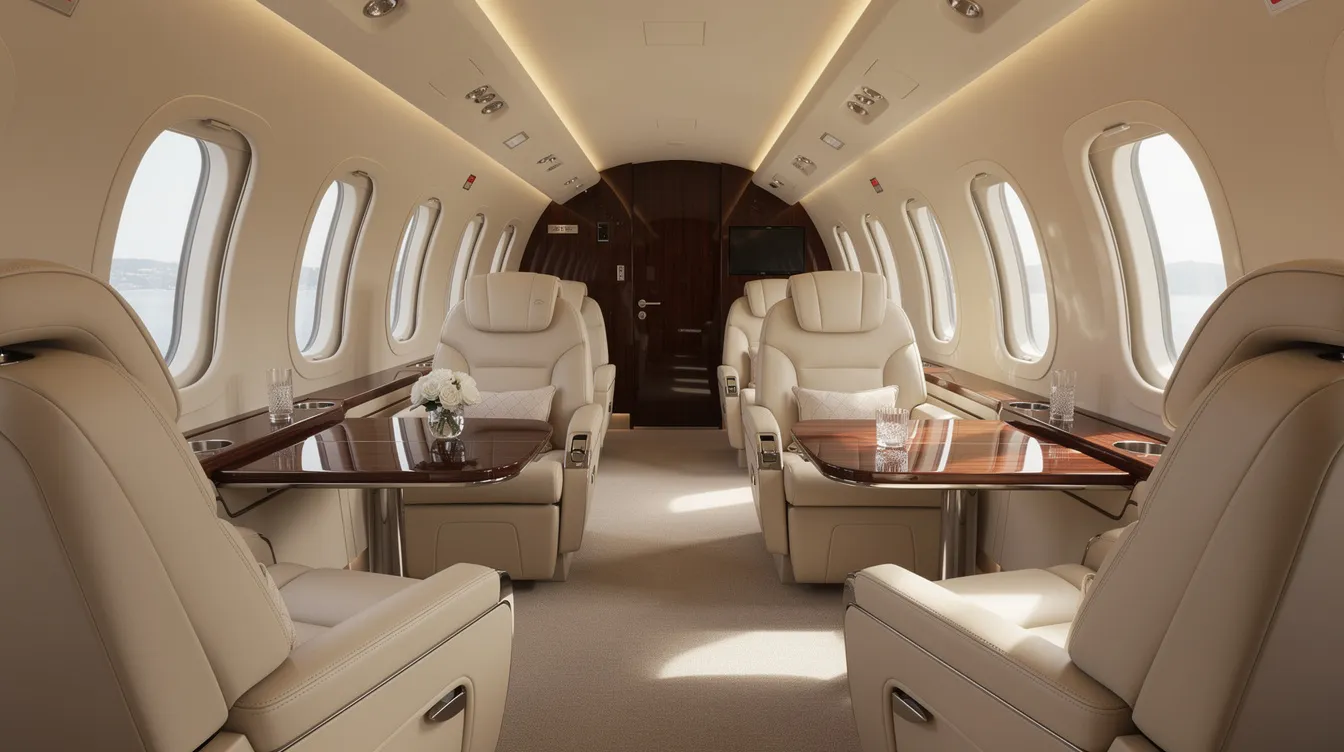
The luxury personal jet market is rapidly evolving, offering travelers access to high-end private aviation without the need for ownership. This comprehensive guide covers various categories of jets, from light jets to VIP airliners, and highlights key features, pricing, and the benefits of chartering through platforms like Jettly. Discover how to select the right aircraft for your mission and explore the future of luxury aviation.
Read More5
min read
Luxury Personal Jet: Ultimate Guide to High-End Private Aviation
The luxury personal jet market is rapidly evolving, offering travelers access to high-end private aviation without the need for ownership. This comprehensive guide covers various categories of jets, from light jets to VIP airliners, and highlights key features, pricing, and the benefits of chartering through platforms like Jettly. Discover how to select the right aircraft for your mission and explore the future of luxury aviation.
Read MoreStay updated with our latest insights and tips to elevate your journey with us.
MEMBERSHIPS AND ASSOCIATIONS



Disclaimer: Jettly operates as a charter broker, offering access to a global digital jet charter marketplace. Jettly is not a direct air carrier and does not own or operate aircraft. All advertised flights are conducted by third-party air carriers that are fully licensed and hold the appropriate Part 135 or Part 121 certifications issued by the Federal Aviation Administration (FAA) or equivalent regulatory authorities under U.S. or foreign law. Jettly complies fully with the U.S. Department of Transportation's Part 295 and Part 298 Charter Broker regulations. Jettly does not carry additional liability insurance. Passengers are covered by aircraft operator insurance. TICO: 50023770


