


Login
Get Instant Pricing On 23,000+ Aircraft

>
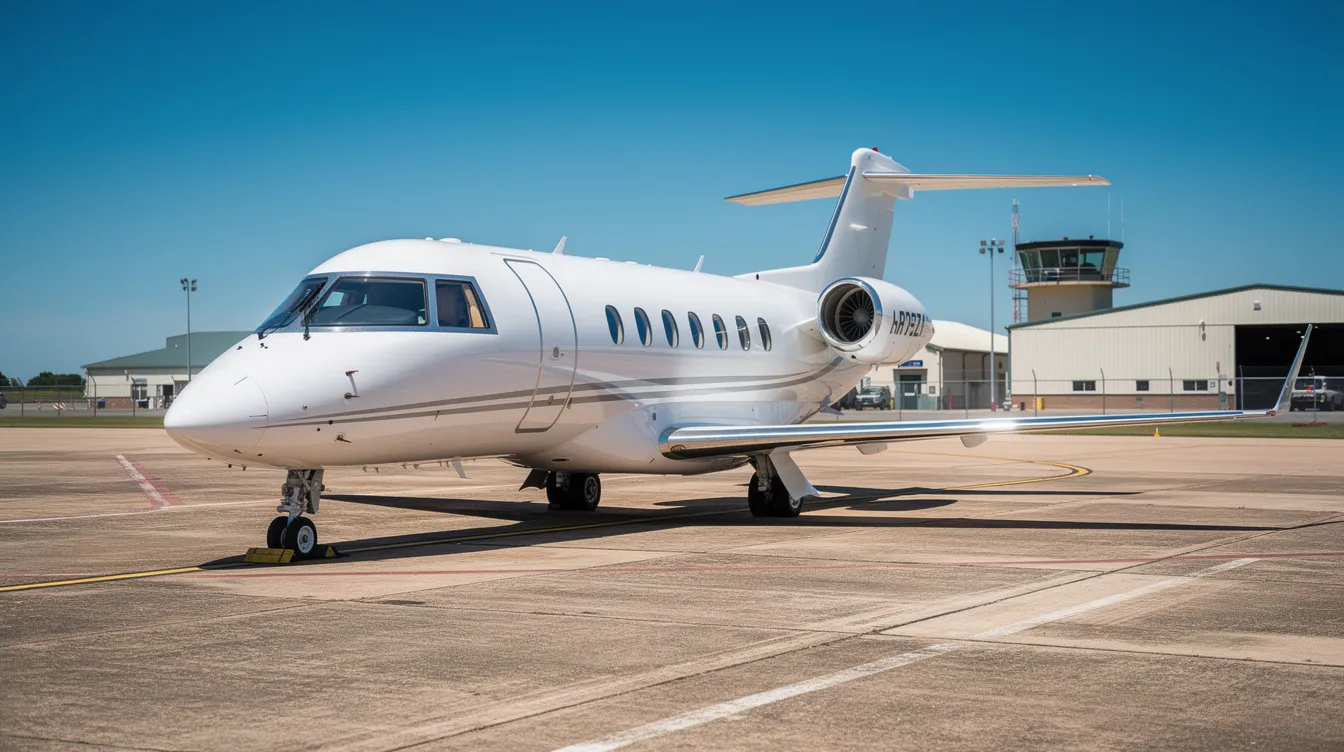
Comparing private jets before booking is the difference between paying for capacity you don't need and getting exactly the right aircraft for your trip. Aircraft vary widely—even within the same class—in range, cabin layout, cost per hour, and runway performance.
Jettly is a private aviation marketplace (not an owner-operator) offering access to over 20,000 private aircraft globally. The platform lets users compare aircraft before booking on-demand charters, with instant pricing and transparent details on every option.
This article walks through all major jet types, shows how to compare them on practical metrics, and explains when charter, membership, or fractional ownership makes the most sense.
Private jets are categorized into seven basic types: very light jets, light jets, super-light jets, mid-size jets, super-mid-size jets, large jets, and ultra-long-range jets—each suited to different trip lengths, group sizes, and budgets.
Jettly's digital platform works as an aircraft comparison tool, letting travelers compare aircraft side by side on price, range, cabin size, and availability before booking a charter flight.
Smaller light jets are cheaper for short hops (under three hours), while mid and super mid jets handle coast-to-coast and transcontinental routes. Large jets and executive airliners serve long-haul or VIP group travel.
Private aviation is categorized by range, capacity, and hourly costs—understanding these three factors is the fastest way to narrow down the right private jet for any mission.
Readers can get instant private jet quotes and explore options at https://www.jettly.com.
Every private jet comparison starts with four essentials: passenger count, range, baggage needs, and budget. Understanding real-world range is crucial for choosing the right aircraft—published specs don't always account for headwinds, payload, or altitude, and jets can perform differently in the air as cruise altitude and passenger load change.
Here's a checklist of key specs to evaluate when you compare aircraft:
Seating capacity: How many passengers can fly comfortably?
Range: Maximum nonstop distance in nautical miles or miles
Cruise speed: Determines actual flight time for your route
Runway requirements: Can the jet access your departure and arrival airports, and which nearby options show up when you use an airport locator tool?
Hourly charter rate: Base operating cost before positioning, taxes, and fees
Cabin height and width: Stand-up cabin or not? Room for working?
Baggage volume: Enough for golf bags, skis, or heavy luggage?
Onboard amenities: Wi-Fi, galley, lavatory type, power ports
Consider cabin size, performance, and runway access when comparing jets—not just the sticker price. For example, a light jet with 2,000 nmi range might seem fine for New York to Los Angeles, but that route requires roughly 2,150 nmi, meaning you'd need a fuel stop or a larger aircraft.
Passenger capacity and luggage space are critical in corporate jet selection. Jettly's private charter aircraft platform displays these details alongside photos and pricing, acting as a practical aircraft comparison tool during the quote and booking process.
Private jets are categorized into seven basic types. Each type is defined by its size, range, and typical mission profile. Here’s a clear breakdown:
Very Light Jets (VLJs): The smallest true jets, ideal for short regional flights with 2–4 passengers.
Light Jets: The backbone of private charter for 1–3-hour flights with small groups.
Super-Light Jets: Slightly more range and cabin space than standard light jets.
Mid-Size Jets: Stand-up cabins and solid range for coast-to-coast business trips.
Super Mid-Size Jets: Large-jet comfort with transcontinental or near-transatlantic range.
Large Jets / Heavy Jets: Multiple cabin zones, lie-flat beds, intercontinental capability.
Ultra Long Range Jets: Nonstop ocean crossings for 10–14+ hour flights.
Jettly also provides access to turboprop aircraft and helicopters, but this article focuses on jet comparison since that's where most charter demand lies. Each section below covers real-world examples, costs, and routes for each category—helping you choose the right private jet quickly.
|
Jet Category |
Seating Capacity |
Range (miles) |
Cruise Speed (mph) |
Hourly Charter Rate (USD) |
Typical Use Case |
|---|---|---|---|---|---|
|
Very Light Jets |
2–4 |
800–1,200 |
340–390 |
$3,500–$4,500 |
Short regional flights, small groups |
|
Light Jets |
6–8 |
1,400–2,500 |
430–500 |
$7,722–$8,502 |
Short to medium regional flights |
|
Super-Light Jets |
6–8 |
1,800–3,000 |
450–520 |
$8,000–$9,000 |
Longer range than light jets |
|
Mid-Size Jets |
7–9 |
3,000+ |
~530 |
$5,500–$7,500 |
Coast-to-coast business trips |
|
Super Mid-Size Jets |
8–10 |
3,000–4,400 |
Mach 0.82–0.90 |
$7,500–$9,500 |
Transcontinental and near-transatlantic |
|
Large / Heavy Jets |
Up to 13 |
5,500 |
~530 |
$9,500–$13,000 |
Intercontinental, multiple cabins |
|
Ultra Long Range Jets |
10–14+ |
Up to 8,000 |
~530 |
$13,000–$20,000+ |
Nonstop ocean crossings |
Very light jets are the smallest true private jets, bridging the gap between turboprop aircraft and light jets. They're ideal for short regional charter flights where speed matters more than cabin space. Within their class, they can manage short-runway and short-range missions efficiently.
Key specs:
Seating: Up to four passengers
Range: ~800–1,200 miles
Cruise speed: Around 340–390 mph
Cabin: Compact, often without a flight attendant; limited or no enclosed lavatory
Purchase price: Typically around $1.5 million new
Popular models include the Eclipse 500, Cessna Citation Mustang, Embraer Phenom 100, and HondaJet HA-420. In North America and Europe (as of 2024–2026), the HondaJet and Phenom 100EV are among the most commonly chartered in this class.
Charter pricing for VLJs typically runs $3,500–$4,500 per hour. That makes them a cost-effective option for city pairs like Los Angeles–Las Vegas or London–Geneva—routes where a larger jet would waste operating budget. Operational flexibility allows smaller jets like VLJs to access more airports, including those with short runways that larger aircraft can't use.
Light jets are the backbone of private charter, suited to flights under three hours. They consistently outperform larger jets on cost per hour for short missions—making them popular for small teams and family trips.
Standard specs:
Seating: Typically seats six to eight passengers
Range: ~1,400–2,500 miles
Cruise speed: Around 430–500 mph
Cabin: Enclosed lavatory, decent baggage room, but typically no dedicated flight attendant
Hourly charter rates: $7,722 to $8,502 depending on model and region
Light jets are best for short-to-medium regional flights under 3 hours. Well-known models include the Cessna Citation CJ2, CJ3, and CJ4, Embraer Phenom 300/300E, Learjet 40/45, and Gulfstream G100. The Phenom 300E stands out for its longer range and larger baggage compartment relative to other light jets.
When to choose a super-light over a standard light jet: if you need a bit more range and cabin volume but don't want to jump to mid-size jets. Example routes where light jets excel include New York–Miami, Toronto–Chicago, and Paris–Ibiza. Passenger comfort can be enhanced by features like Wi-Fi and power ports, which are available on many newer light jet models, especially when evaluating the best private planes for families who prioritize comfort and safety.
Mid-size jets hit the sweet spot for many business charter flights. They offer stand-up or near-stand-up cabins, enclosed lavatories, and solid range—all at a moderate price point compared to heavy jets.
Typical specs:
Seating: 7–9 passengers
Range: Over 3,000 miles at 530 mph
Cabin: Better noise insulation for working onboard; cabin comfort impacts passenger productivity during flights
Hourly rate: ~$5,500–$7,500/hr for charter
Purchase price: New mid-size jets cost around $21.8 million; used mid-size jets can range from $4.2 million to $12.2 million
Popular models for comparison include the Hawker 800XP/900XP, Cessna Citation XLS+, Citation Latitude, and Learjet 60, produced by some of the best private plane manufacturers in the industry. The Citation Latitude offers one of the widest cabins in the class, while the Hawker 800XP provides a strong balance of luggage volume and range.
Mid-size jets excel on multi-city corporate roadshows, North American coast-to-coast routes (Los Angeles–New York, Vancouver–Toronto), and medium-haul leisure trips like London–Canary Islands.
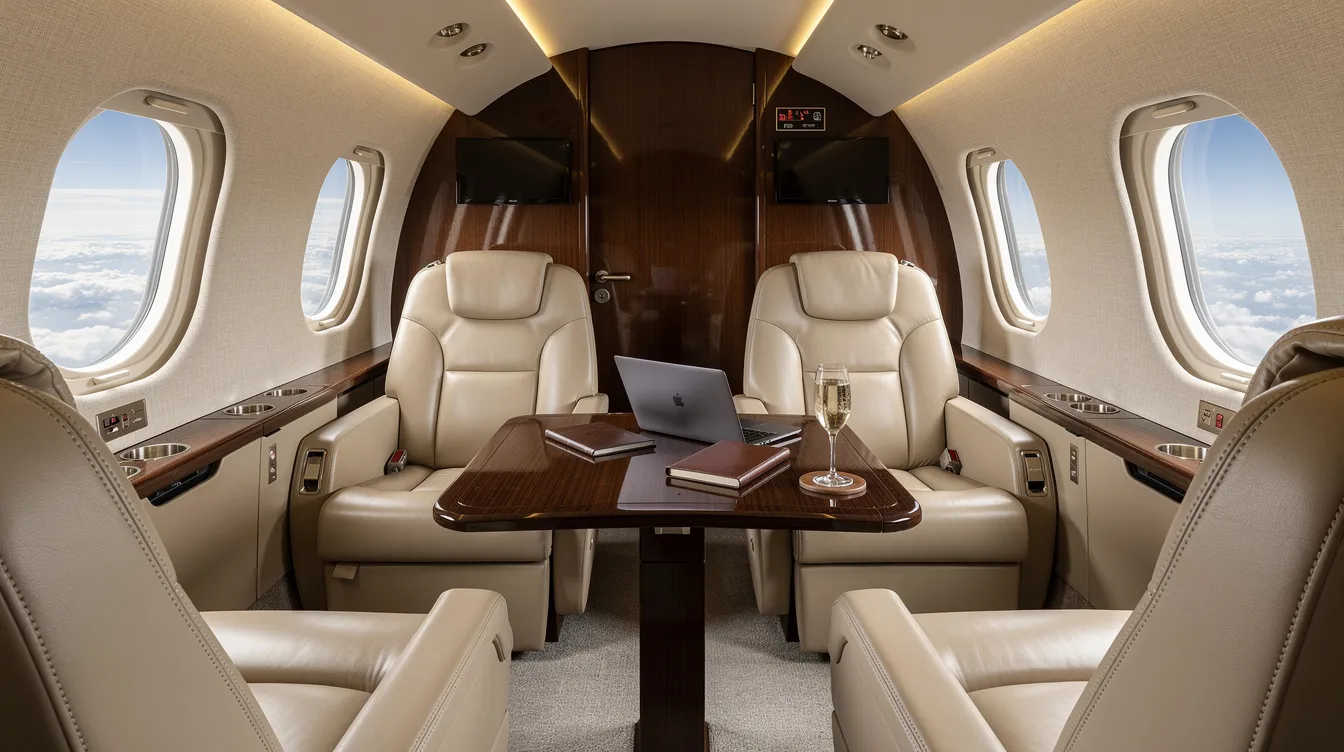
Super mid-size jets combine long-range performance with large-jet-style cabins. Many models offer transatlantic capability and advanced connectivity—making them a strong value play for frequent flyers who don't need the full footprint of a heavy jet.
Common specs:
Seating: 8–10 passengers; comfortable for up to eight passengers on longer legs
Range: ~3,000–3,800 nmi (up to ~4,400 miles)
Cruise speed: Near Mach 0.82–0.90
Cabin: Generous baggage capacity, quiet interior, flat floors
Hourly rate: ~$7,500–$9,500/hr
Key models for aircraft comparison: Cessna Citation X/X+, Citation Longitude, Bombardier Challenger 300/350, Gulfstream G280, and Dassault Falcon 2000 series. Some super mid jets—like the Challenger 350—can handle New York–London or Los Angeles–Hawaii nonstop under favorable conditions, while still competing well with the cheapest private aircraft options on a per-seat-mile basis for frequent travelers.
Many frequent flyers favor super mid jets over large jets because they deliver similar comfort for up to eight passengers at a lower hourly rate with better efficiency on long business trips.
Large jets (heavy jets) and ultra-long-range jets are built for long-haul comfort, multiple cabin zones, and nonstop intercontinental travel. Maximizing cabin space is essential for long-distance flights, and this is where these aircraft deliver.
General specs:
Seating: Heavy jets can carry up to 13 passengers and travel 5,500 miles; ultra-long-range models extend even further
Range: Ultra-long-range jets can fly up to 8,000 nautical miles—enough for 8–14 hours nonstop
Cabin: Stand-up height, lie-flat beds, full galley, multiple lavatories, flight attendants onboard, and premium service such as catering on heavy and ultra-long-range flights
Hourly rate: $9,500–$13,000/hr for heavy jets; $13,000–$20,000+/hr for ultra-long-range; heavy jets can cost up to $70,000 per hour to charter for the largest or most specialized configurations
Benchmark aircraft to compare: Gulfstream G450, G550, and G650ER; Bombardier Global 5000, 6000, and 7500; Dassault Falcon 7X and 8X. The Gulfstream G650ER is known for its ultra-long-range capability and wide cabin, while the Bombardier Global 7500 offers four distinct cabin zones. A wider cabin cross-section is one reason these jets feel more spacious on long flights, and it also plays into overall ownership economics when you evaluate how much a private jet costs over its lifecycle.
Typical missions include New York–London, Dubai–London, Los Angeles–Tokyo, or Sydney–Singapore. These jets are most efficient when the group size and route fully use their capacity and range.
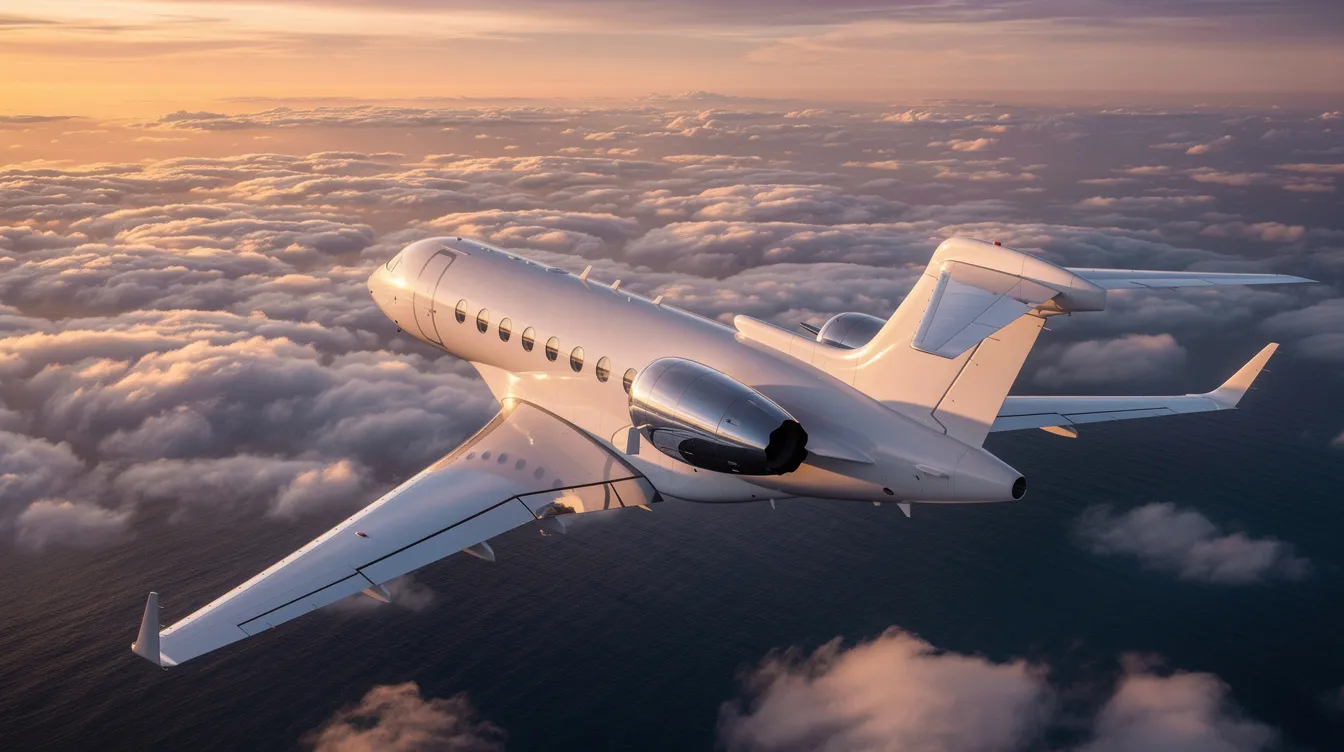
Executive airliners—also called bizliners—are converted commercial aircraft like the Boeing Business Jet (BBJ) or Airbus ACJ, fitted with apartment-like interior layouts for VIP groups that can be configured to create separate suites, lounge areas, or meeting spaces.
Key features:
Seating configurations range from 19 to 48 passengers
Separate bedrooms and offices
Full-size showers
Conference tables
Sometimes onboard staff beyond flight attendants (including chefs)
Pricing sits substantially higher than large jets—often $20,000–$30,000+ per hour depending on size and layout
Typical clients include heads of state, touring artists carrying large entourages, sports teams, and corporate groups needing massive cabin space and branding opportunities. While Jettly can source such aircraft on request in select regions, most private charter clients will find large jets or super mid jets more cost-effective for routine travel.
Three main access models exist in private aviation: owning a private jet outright, fractional jet ownership, and on-demand private charter through a platform like Jettly. Each model suits different flying patterns and budgets. Investing in a jet requires analysis of both fixed and variable costs—and it's important to evaluate the operating economics of each jet type instead of just purchase price.
Fractional ownership allows shared ownership of private jets.
Owners pay an upfront equity share for aircraft costs, plus monthly management fees and hourly usage charges.
Costs like maintenance are split among fractional owners.
For example, a quarter share means paying one-fourth of the aircraft price and receiving a proportional allocation of flight hours, and owners may be able to sell their share later, subject to program terms and market demand.
Fractional jet ownership costs can be regulated by FAA Part 91 or Part 135, depending on the program structure.
Aircraft owners in fractional programs typically fly 200+ hours per year to justify the investment.
On-demand charter through Jettly works differently: no asset purchase, no long-term contract, and access to multiple aircraft types instead of just one.
You pay per trip with transparent pricing that reflects how affordable private jet charter can be when optimized for route and aircraft type.
For travelers flying 25–150 hours per year, on-demand private charter typically delivers better value than fractional programs or jet cards.
For a detailed breakdown, see Jettly's jet card provider comparison.
Jettly memberships offer optional benefits like priority access and managed booking without requiring the upfront capital of ownership.
Travelers get access to private jet memberships with wholesale rates and no long-term contracts.
Jettly's platform functions as a practical aircraft comparison tool Jettly developed for anyone planning private flights. The tool compares over 300 aircraft types side by side, and users can view key specifications of three private jets simultaneously during the search process or use a dedicated jet card flight cost estimator to understand route-specific pricing. The comparison tool includes performance specs and cabin dimensions—the data points that matter most when selecting a jet, developed to help clients make faster, more informed decisions.
Here's how it works, whether you're booking trip-by-trip or exploring jet card solutions for more predictable hourly rates:
Enter your route and date: Input departure city, destination, travel date, and passenger count.
Review suggested aircraft classes: Jettly surfaces options across categories (light, mid, super mid, heavy) based on your route.
Compare pricing, range, and cabin layout: See hourly rates, aircraft photos, seating configurations, and amenities side by side.
Select and book: Choose the best match and book directly online.
The tool helps users make informed charter decisions by listing aircraft year, operator safety ratings, cabin photos, and amenities (Wi-Fi, pet-friendly policies, baggage capacity). This data-driven process removes guesswork from the booking experience.
Learn more about Jettly's charter options at https://www.jettly.com.
Private jets have a higher carbon footprint per passenger than commercial flights—a reality drawing growing attention from regulators and the public. An ICCT working paper notes that tax instruments in Europe could increase private flight costs by 10–60% depending on aircraft size and region.
Aircraft category and mission profile directly affect emissions. Smaller, efficient light jets or modern super mid jets on point-to-point routes generally burn less fuel per passenger than older heavy jets flown half-empty. Private jets vary in terms of fuel efficiency and maintenance costs—new aircraft with modern engines and aerodynamics tend to perform better on both fronts.
Industry responses include:
Carbon offsetting programs
Sustainable aviation fuel (SAF) adoption
Smarter flight planning to reduce unnecessary repositioning legs
Travelers comparing private aircraft on Jettly can factor efficiency into their decision by choosing newer, fuel-efficient models or right-sizing the jet for their passenger count and route, drawing on broader insights into charter airlines and private flights across the industry.
Choosing the right jet comes down to matching your mission profile to the aircraft class. Private jet selection depends on expected mission profiles—not just cabin luxury or brand name.
Here are high-level rules of thumb:
Short regional flights with 2–4 passengers: Very light or light jets
Up to eight passengers on coast-to-coast U.S./Canada routes: Mid or super mid jets
10–16 passengers or intercontinental trips: Large or ultra-long-range jets
20+ passengers or VIP groups needing custom space: Executive airliners
Beyond distance and headcount, consider:
Airport access (can a heavy jet land at your destination?)
Baggage needs (golf bags, skis, equipment)
Departure time flexibility
In-flight connectivity (especially for business travelers who need to maintain productivity in the sky)
Jettly's advisors and digital tools can help quickly shortlist the right aircraft class for each mission, taking the complexity out of the process and letting travelers focus on the trip itself, much like a buyer would when using a guide to choosing the best personal plane for long-term ownership.
Travelers should know their departure and arrival cities, preferred dates and departure time, passenger count, baggage details, and any special needs (pets, medical equipment, extra privacy) before using a private jet comparison tool. Having this information ready lets platforms like Jettly surface the most relevant options immediately.
Not necessarily. Super mid jets offer more range and cabin space, but they cost more per hour. For shorter flights under three hours, a mid-size jet is often more cost-effective while still offering strong comfort and performance. The right choice depends on distance, group size, and whether you need nonstop capability for longer routes or a flexible NetJets alternative like Jettly for routes such as private jet charter in Kolkata.
Booking 7–14 days in advance typically yields the best aircraft selection and pricing. That said, Jettly can source last-minute jets within 24–48 hours or less when operators and aircraft are available—though flexibility on aircraft type may be limited.
Yes. Travelers can estimate their annual charter spend based on hours flown and compare it to published fractional ownership fees (upfront equity, monthly management, hourly usage). Generally, clients flying fewer than 200 hours per year find on-demand charter through platforms like Jettly more economical than owning a share of an aircraft, but a detailed look at fractional jet ownership pros, cons, and costs can clarify whether a shared model suits frequent flyers.
No. Many mid-size, super mid, and large jets offer Wi-Fi, and some have lie-flat seating, but amenities vary by aircraft model and age. Light jets and VLJs may have limited connectivity. Jettly's platform lists available features for each aircraft so users can compare private jets based on onboard comfort and connectivity before booking.
Effective private jet comparison means matching aircraft class—light, mid-size, super mid, large jets—to route length, passenger count, and budget, while factoring in comfort and environmental impact.
Jettly simplifies private jet comparison by showing multiple options and transparent pricing in a single digital platform. No long-term commitment or fractional ownership is required to access Jettly's global fleet of 20,000+ aircraft.
Ready to experience private travel on your terms? Explore flights, compare aircraft for upcoming trips, or request a quote at https://www.jettly.com, and consider lowering your per-seat cost by sharing or crowdsourcing private jet flights when it fits your schedule.
Share this post:
Jay Franco Serevilla
Aug 12, 2026
|
5
min read
Discover tips and trends in the industry.

5
min read
What Days Are the Best Days to Buy Plane Tickets?
Tuesday and Wednesday are typically the best days to buy plane tickets, with Sunday evenings also showing competitive prices. However, dynamic pricing means that the best day can vary based on demand and route. Booking in advance and being flexible with travel dates are key strategies for securing lower fares.
Read More
5
min read
Plane Landings: Phases, Techniques, and What Matters Most
Plane landings involve distinct phases that are crucial for safety and passenger comfort. Factors such as wind direction and runway conditions influence landing techniques, particularly in private aviation where shorter runways are common. Understanding these phases and techniques enhances the flying experience, especially for travelers using charter services like Jettly.
Read MoreStay updated with our latest insights and tips to elevate your journey with us.
MEMBERSHIPS AND ASSOCIATIONS



Disclaimer: Jettly operates as a charter broker, offering access to a global digital jet charter marketplace. Jettly is not a direct air carrier and does not own or operate aircraft. All advertised flights are conducted by third-party air carriers that are fully licensed and hold the appropriate Part 135 or Part 121 certifications issued by the Federal Aviation Administration (FAA) or equivalent regulatory authorities under U.S. or foreign law. Jettly complies fully with the U.S. Department of Transportation's Part 295 and Part 298 Charter Broker regulations. Jettly does not carry additional liability insurance. Passengers are covered by aircraft operator insurance. TICO: 50023770


