



Login
Get Instant Pricing On 23,000+ Aircraft

>
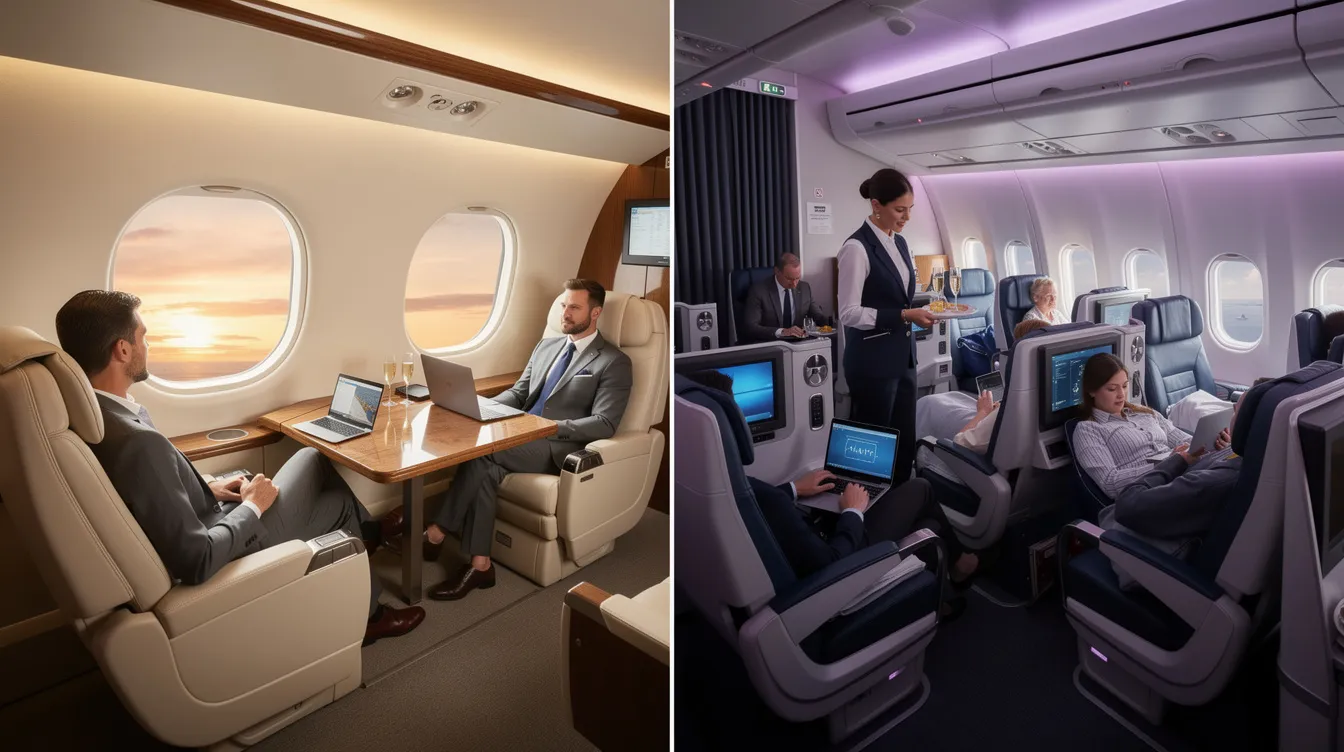
Choosing between a private jet and business class on a commercial flight is no longer just a question of budget. Private jet travel gives you the entire aircraft, on-demand scheduling, access to more airports, including regional fields, and a far more private experience, while business class gives you a premium seat on a shared commercial flight with fixed airline schedules. For corporate executives, high-net-worth travelers, and families who fly often, that trade-off can shape the cost, time, and stress of every trip.
This guide breaks down the main differences between flying private and flying commercial so you can decide what fits your next trip. You'll compare cost, convenience, privacy, scheduling flexibility, airport experience, and in-flight comfort, along with the situations where a private charter may justify the premium—or even make sense for groups or multi-stop itineraries—and how digital platforms like Jettly make booking private flights easier.
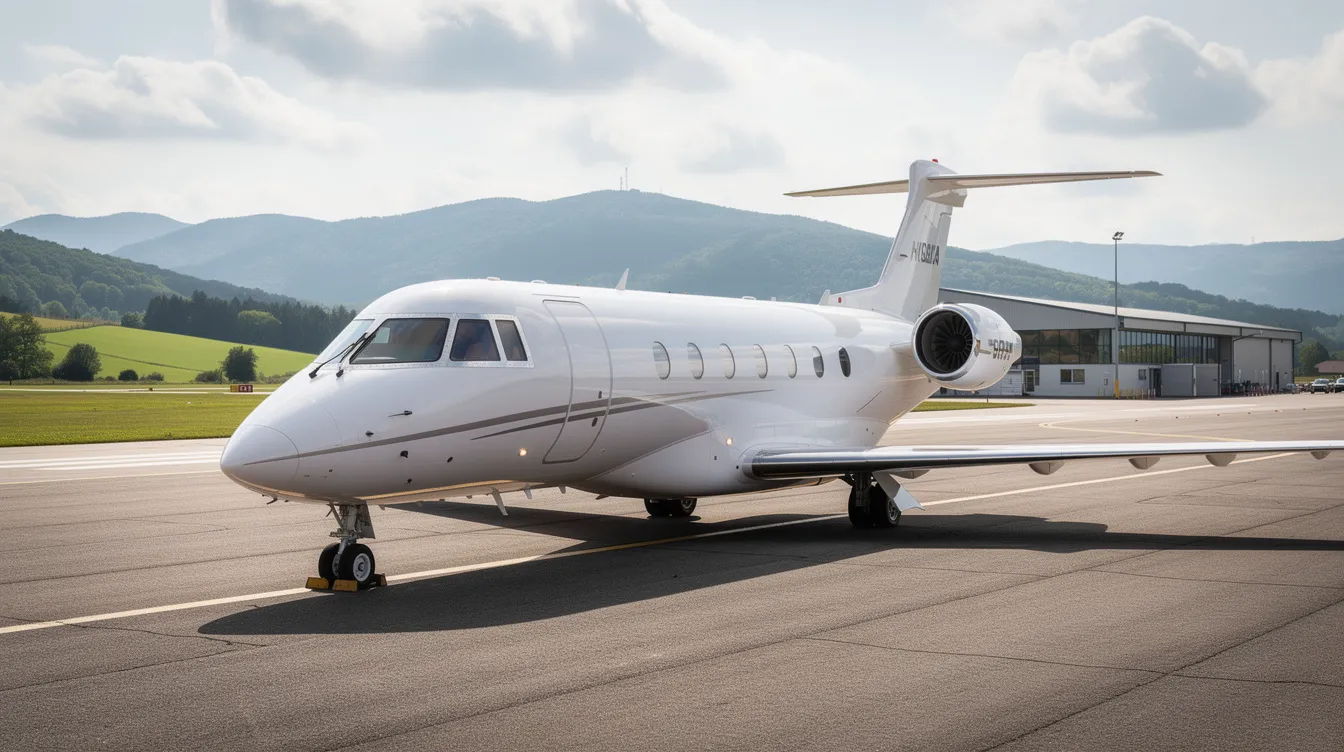
Business class and first class are premium options on commercial airlines, offering lie-flat seats, lounge access, and more amenities compared to economy class. Private jets, often booked through digital platforms like Jettly, give you the entire aircraft, a custom departure time, and access to over 10,000 airports worldwide — including smaller airports that commercial flights never reach.
Private jet travel is usually more expensive overall. However, costs can be competitive on a per-person basis when flying with a large group, covering multi-city itineraries, or when time savings justify the premium. Chartering a private jet costs $2,000 to $30,000 per hour, depending on aircraft size and route length.
Business class offers a premium travel experience at a lower cost than private jets and is typically the preferred choice for solo travelers focused on price. First-class flights are generally cheaper for solo travelers than private jets as well.
For business travelers with busy schedules who need to conduct meetings in transit or reach multiple destinations in a single day, flying privately optimizes time, privacy, and scheduling control.
On a commercial flight — whether you're in economy class, business class, or first class — you buy a seat on a shared commercial aircraft that follows the airline's schedule. With private aviation, you rent an entire aircraft through a charter broker or digital platform and set the schedule yourself.
Consider a New York–Los Angeles route. A business class ticket on a major airline runs roughly $2,000–$4,000 round trip, while a first class ticket on the same kind of route can cost significantly more. A midsize private jet charter for the same route costs around $28,000–$40,000 one way for the aircraft, but that price is split among all passengers. For a group of eight, the per-person math starts to look different.
Here's how the two options compare at a glance:
|
Factor |
Business / First Class |
Private Jet Charter |
|---|---|---|
|
What you buy |
A seat |
The entire aircraft |
|
Schedule |
Fixed airline timetable |
On-demand, your departure time |
|
Airports |
Major airports and hubs |
10,000+ airports, including regional fields |
|
Cabin |
Shared with other passengers |
Fully private experience |
|
Typical solo cost |
$2,000–$10,000+ per ticket |
$10,000–$100,000+ per trip |
Flying first class is often more luxurious than standard business class — with suites, premium service, and extra space — but it's still bound to commercial airline operations and major city hubs.
Once airborne, both business class and private jets deliver a comfortable flight. But they're built around different priorities: commercial aircraft optimize efficiency and scale, while corporate and private jets prioritize privacy and control.
Business class on a modern commercial airline typically includes lie-flat beds on many long-haul routes, premium bedding, amenity kits, large entertainment screens, and multi-course gourmet meals. First-class meals are designed by world-renowned chefs on carriers like Emirates and Singapore Airlines. First-class passengers also get personal space that approaches a small private room, though it remains part of a shared cabin.
A private jet cabin works differently. Depending on aircraft size, you might have club seating around conference tables, sofas, or even a private bedroom with an enclosed lavatory on heavier jets. Private jets offer customized catering options for meals — passengers can request specific brands, dietary menus, or local cuisine before departure. Private jets also provide access to advanced entertainment systems and allow for more generous baggage policies than commercial flying.
The service style is the key distinction. On first class and business class, cabin service follows a structured schedule. On a private charter, meals happen when you want them, the flight crew adapts to your preferences, and private jets allow for tailored in-flight services and amenities throughout the journey.
Jettly's marketplace lets travelers match cabin style — light jet, midsize, or heavy jet — to trip length and passenger count, making it straightforward to plan the in-flight experience around work or rest.
Much of the real difference between business class and private jet flying shows up on the ground, not in the air.
The business class ground journey on a commercial airline starts with arriving 2–3 hours before an international flight. Business class requires early arrival for check-in and security. Even with premium service perks, you still pass through security checks, wait at gates, and navigate busy terminals. Business class provides premium airport lounge access, and first-class passengers enjoy priority boarding and check-in — but first-class passengers still navigate crowded terminals and security lines alongside other passengers.
The private jet process is different in almost every way. Private jets allow arrival 15–20 minutes before departure at private terminals, known as fixed-base operators (FBOs). Private jet travelers avoid long security lines at airports entirely. Private jet travelers bypass TSA security for smaller aircraft, though operators still verify IDs and follow strict safety protocols. Private jet check-in processes are significantly faster than those for commercial flights — you walk a few steps from the lounge directly to your aircraft.
Private jets offer direct flights to smaller airports, and private jets can land at a wide variety of airports, accessing over 5,000 U.S. airports alone compared to the roughly 500 airports served by commercial airlines. This means private jets can land at smaller airports for faster access to your final destination, cutting ground transportation time considerably.
For example, a London–Geneva morning business trip in business class means getting to Heathrow two hours early, a 90-minute flight, then a 45-minute transfer from Geneva Airport. A charter jet departing from a private terminal near London can land at a regional Swiss airfield minutes from your meeting — saving two to three hours total. These kinds of trade-offs are central when comparing the best private jet charter companies and providers that serve major business routes.
Jettly's access to thousands of airports, as part of a broader network of charter airlines and private flight options, often means flying closer to final destinations, reducing the ground transfers that eat into productivity.

Time is often the decisive factor for executives and high-frequency travelers weighing private jet vs business class, and flight time is a major part of that advantage. Private aviation is often associated with significant time savings — not just in the air, but across the entire journey, which is why many companies compare jet rentals to first-class tickets for corporate travel when setting policy.
Commercial flights, even first-class flights, run on fixed airline timetables. Business class is bound to fixed airline schedules. If a meeting runs late or an event ends early, changing plans can mean standby lists, change fees, or overnight hotel stays.
Private jets allow scheduling based on passenger needs. Through platforms like Jettly, travelers can set their departure time, make same-day return trips, add or remove stops, and modify itineraries within crew duty limits — one of several practical strategies covered in guides on how to get a seat on a private jet easily. Private jets allow for last-minute itinerary changes without the penalties that come with commercial air travel.
Private aviation eliminates layovers and reduces check-in times. Private jets allow quicker departures and arrivals, and they enable direct access to destinations without layovers.
Consider a manufacturing executive who needs to visit three facilities across the U.S. Midwest in one day. Commercial flying would stretch that into a two- or three-day trip with connections and overnight stays. A turboprop or light jet makes all three stops feasible before dinner. Similarly, a family heading to Aspen for the weekend can fly directly to a regional airport with no commercial service — no connections, no airport crowds, no long lines.
Costs differ not just in amount but in structure. Commercial airlines sell individual class seats. Private jet charter sells aircraft hours. The cost for a private jet can vary widely depending on the length of the flight, aircraft category, and route, and travelers comparing premium options sometimes also explore the cheapest private aircraft categories to understand how aircraft type affects overall pricing.
Here are typical 2025-era hourly charter ranges:
|
Aircraft Type |
Hourly Rate |
Typical Passengers |
|---|---|---|
|
Turboprop |
$2,000–$3,000 |
4–8 |
|
Light jet |
$3,500–$5,500 |
4–8 |
|
Midsize jet |
$5,500–$7,500 |
6–9 |
|
Heavy / ultra-long-range |
$13,000–$23,000+ |
10–16 |
Private jets can cost between $1,300 and $13,000 per hour on the lower end of the market. A three-hour private jet flight to Palm Beach may cost $20,000. First-class tickets can range from a few hundred to several thousand dollars, depending on the route and airline.
On a New York–London business class route, expect $2,800–$4,500 round trip per seat. First-class costs on the same route can exceed $10,000. A heavy jet charter for that transatlantic crossing runs $120,000–$180,000 — clearly not cost-effective for one or two travelers.
But private jet costs can be comparable to group travel versus first class. A midsize jet from New York to Chicago for eight people might total $35,000–$45,000, or roughly $4,400–$5,600 per person — close to what separate business class tickets, hotels, and lost work hours would cost. For a broader view of how much a private jet costs, including ownership and charter, Jettly also breaks down long-term economics and savings strategies in detail and highlights ways Jettly offers affordable private jet charter for cost-conscious travelers. Business class is generally more affordable for solo travelers.
Additional cost factors include landing fees, overnight crew costs, and repositioning legs. Platforms like Jettly show these through a private jet charter cost estimator upfront. Savings options include empty-leg flights (30–60% off) and membership models that reduce hourly rates for frequent flyers.
Business class, first class, and private jets all provide a higher level of comfort compared to economy on commercial flights. But they support privacy and work very differently.
Business class cabins are shared spaces with other passengers. Even with semi-private pods or staggered seating, you share aisles with first-class travelers, hear announcements, and have limited ability to discuss confidential topics. First class offers more separation — suites with doors on select airlines — yet you're still in a shared cabin environment.
Private flights provide a completely private environment for discussions. Private jets are ideal for confidential discussions and business meetings. Private jets offer complete control over who boards the flight. You can spread laptops and documents across conference-style tables, take calls on cabin Wi-Fi without disturbing anyone, or use personal space to rest in a private bedroom on larger aircraft.
Productivity examples are practical: executives finalizing a quarterly report en route to an important meeting in New York, legal teams preparing court filings, or investors reviewing presentations during a series of same-day site visits — scenarios where commercial travel simply can't offer the same personalized attention.
Jettly's private charter aircraft inventory spans light jets optimized for short hops through to large jets with fully equipped workspaces for long-distance flight corporate missions.

Neither private planes nor business class is always better. The right choice depends on traveler type, route, group size, and trip purpose.
Solo executive on a fixed transatlantic route: Business class or first class travel on a commercial airline is usually the cost-effective move. Commercial airlines offer extensive route networks for travelers on standard long-haul corridors like Frankfurt–Tokyo.
Executive team on a multi-city tour: A charter jet saves days of travel time. In certain instances, the per-person cost rivals commercial premium fares.
Family with children and pets: Private jets allow pets to travel in the cabin with their owners — no cargo holds, no breed restrictions. This makes flying private a strong option for special occasions and family vacations. Learn more about traveling with pets on private flights.
Last-minute emergency or medical travel: Private aircraft offer unmatched speed and flexibility when schedules can't wait.
Scenarios where you should fly commercial are clear: predictable schedules, major city pairs with direct flights, loyalty program value, and corporate travel policies that favor commercial airports.
Scenarios favoring a charter: same-day returns for board meetings, time-critical negotiations, high-profile individuals needing discretion, or destinations poorly served by scheduled commercial flights.
One major shift since 2020 has been the rise of digital charter platforms, which make chartering a private jet nearly as straightforward as booking a commercial flight online.
The typical workflow with Jettly: enter your route and dates, view instant pricing across multiple aircraft types, filter by seating capacity, range, and aircraft age, and book directly. No long-term fractional ownership or jet cards required — though membership programs exist for frequent flyers who want lower hourly rates or priority access during peak periods.
Jettly's global aircraft inventory includes over 20,000 unique aircraft: light jets, midsize jets, heavy jets, turboprops, and helicopters. This breadth allows matching the right aircraft to missions ranging from New York–Miami to Toronto–Vancouver or Los Angeles–Las Vegas.
The platform also coordinates other benefits like in-flight catering, ground transportation on arrival, and special requests — pet travel, medical equipment, or specific seating configurations for onboard business meetings. It's a premium service layer that removes the logistical friction from private jet travel.
Both commercial airlines and reputable private jet operators follow strict national and international aviation safety standards. The regulatory frameworks differ in name but not in rigor.
Commercial airlines operate under airline transport regulations. Private jet charter operators typically fly under commercial charter rules such as Part 135 charter regulations in the U.S., with requirements for crew training, duty times, and maintenance that parallel commercial carrier standards. In 2022, Part 135 operators reported about 1.04 accidents per 100,000 flight hours in aggregate — and operators holding third-party safety certifications like ARGUS, Wyvern, or IS-BAO tend to have even lower incident rates. Travelers should ask brokers or platforms whether partner operators hold these credentials.
On environmental impact: private jet travel has a higher carbon footprint per passenger compared to commercial flights, due to fewer passengers sharing fuel costs, though newer aircraft from leading private plane manufacturers continue to improve fuel efficiency and emissions. However, some operators offer carbon offset programs, more efficient routing, and newer aircraft with lower emissions. Environmentally conscious travelers can choose newer jets, turboprops on short routes, or actively purchase offsets.
The decision comes down to five factors: cost per traveler, time savings, privacy level, route network, and how often you travel.
Business class is the default premium option for most international commercial flights — solid comfort, reasonable cost, fewer passengers in the cabin compared to economy. First class is for travelers prioritizing maximum comfort on a commercial airline. Private jet charter is for those whose schedules, group size, or privacy needs outweigh the higher overall price.
Consider these scenarios:
A CEO and leadership team find that a thousand dollars more per person on a charter jet saves two full workdays across a multi-stop trip.
A family weighing first-class seats against a light jet for a ski vacation discovers the charter lands them 20 minutes from the resort instead of two hours.
A professional alternates between business class for routine trips and private charter flights for time-critical events.
The private jet vs business class question doesn't have a universal answer. It depends on your priorities for each trip. For travelers ready to explore private aviation alongside commercial flights and first-class travel options, comparing real quotes is the best starting point.
Experience private travel tailored to your schedule. Discover flight options or get a personalized quote at jettly.com.
Yes — for solo travelers on well-served major routes, business class is almost always the more cost-effective option. A round-trip business class ticket from New York to London costs $2,800–$4,500, while chartering a heavy jet for the same route can exceed $120,000. The breakeven point for private charter typically requires five or more passengers sharing the cost.
Commercial premium tickets generally get cheaper the earlier you book — 3–8 weeks ahead is typical for good fares. Private jets can be booked with as little as a few hours' notice, though 48–72 hours gives operators time to source the best aircraft and pricing. Platforms like Jettly offer instant pricing that makes last-minute booking straightforward.
Private jets allow pets to travel in the cabin with their owners with no cargo hold restrictions. Most commercial airlines limit pets to small carriers under the seat in economy or cargo holds on long-distance flights, whereas many of the best private planes for families are designed with layouts and amenities that make traveling with children and pets much easier. For travelers with larger dogs or multiple pets, private aviation is often the only comfortable option.
Several. Empty-leg flights — when a jet is repositioning without passengers — can cut costs by 30–60%. Membership and jet card programs offer reduced hourly rates for frequent flyers. Booking smaller aircraft like a turboprop or light jet for shorter routes also keeps costs down. And splitting the cost among a large group makes private charter competitive with first class on a per-seat basis.
No. Private jet travelers bypass standard TSA screening for smaller aircraft, but private jet TSA and security procedures still apply in a streamlined, more personalized way. However, operators still verify passenger IDs, conduct safety inspections, and follow federal security protocols. The process is faster and happens at private terminals rather than commercial airports, so there are no long lines or airport crowds.
Choosing between private jet travel and business class depends on your priorities for cost, convenience, privacy, and flexibility. Private jets offer superior comfort, personalized service, and unmatched scheduling control, making them ideal for busy professionals, families, and groups who value time savings and privacy. Business class provides a premium experience at a lower cost, suited for solo travelers on fixed schedules and major routes.
For those seeking the best of private aviation with transparent pricing and instant booking, platforms like Jettly simplify access to a global network of corporate jets and aircraft. Whether you want to maximize productivity, enjoy superior comfort, or reduce travel stress, Jettly offers a seamless way to explore private jet options tailored to your needs.
Ready to experience private travel on your terms? Explore flight options or request a quote at https://jettly.com/.
Share this post:
Jay Franco Serevilla
Jul 15, 2026
|
5
min read
Discover tips and trends in the industry.
5
min read
Range of 737: How Far the Boeing 737 Flies, and When a Private Charter Makes More Sense
The Boeing 737 family offers a range from 1,500 to 3,850 nautical miles, making it versatile for various flight missions. While chartering a 737 can be cost-effective for large groups, private jet options through Jettly provide greater flexibility and access to more airports, often reducing total travel time. Understanding the range and capabilities of the 737 helps travelers make informed decisions about their flight options.
Read More
5
min read
How Many Planes Crashed This Year? (2026 Update)
In 2026, aviation safety continues to improve, with over 600 aviation accidents reported in the U.S. by September, primarily involving small general aviation aircraft. Fatal accidents remain rare in commercial aviation, with only a handful of incidents globally. Understanding the context of these numbers is crucial for travelers concerned about flying safety.
Read MoreStay updated with our latest insights and tips to elevate your journey with us.
MEMBERSHIPS AND ASSOCIATIONS



Disclaimer: Jettly operates as a charter broker, offering access to a global digital jet charter marketplace. Jettly is not a direct air carrier and does not own or operate aircraft. All advertised flights are conducted by third-party air carriers that are fully licensed and hold the appropriate Part 135 or Part 121 certifications issued by the Federal Aviation Administration (FAA) or equivalent regulatory authorities under U.S. or foreign law. Jettly complies fully with the U.S. Department of Transportation's Part 295 and Part 298 Charter Broker regulations. Jettly does not carry additional liability insurance. Passengers are covered by aircraft operator insurance. TICO: 50023770


