



Login
Get Instant Pricing On 23,000+ Aircraft

>
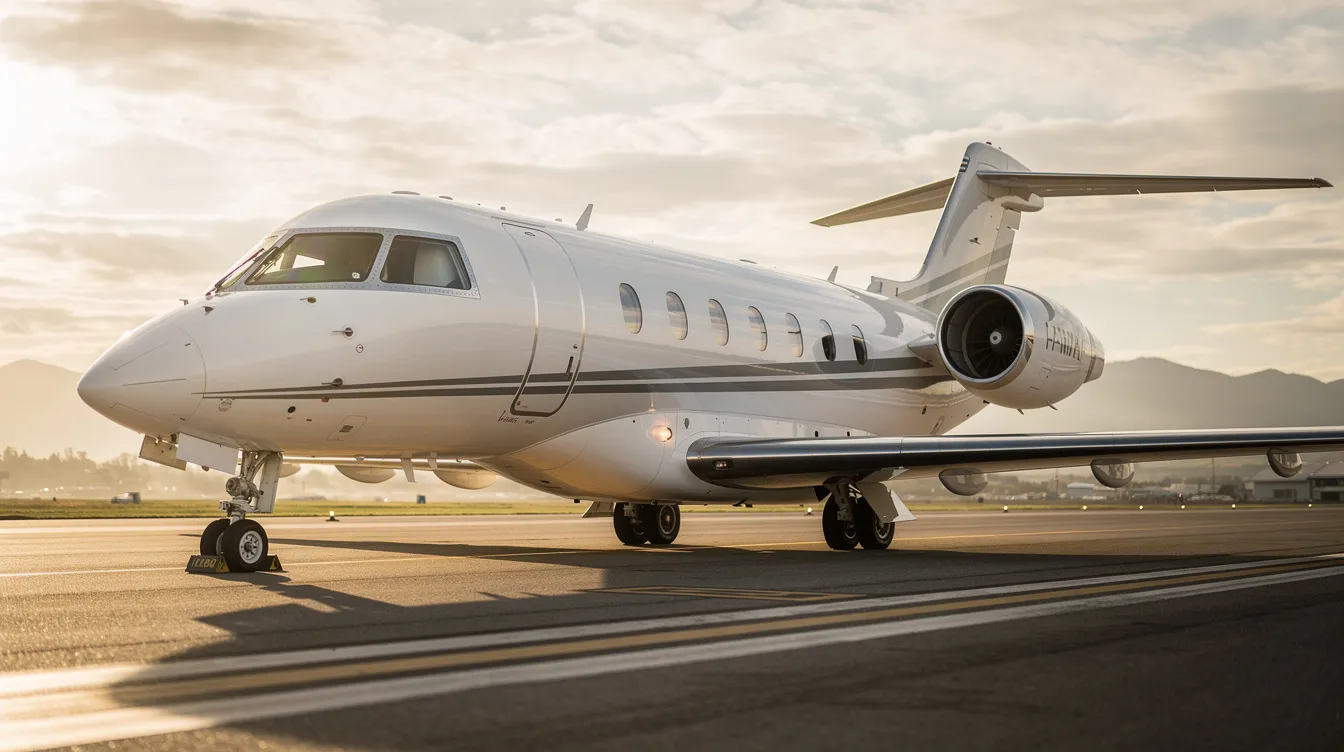
The private aviation market is projected to reach approximately $83.97 billion by 2026, and with 24,270 private jets in operation worldwide as of July 2024, the demand for high-quality private jet stock imagery has never been higher. Whether you run a charter brokerage, a digital booking platform, or an aviation service company, the visuals you choose shape how customers perceive your brand before they ever request a quote.
Private jet stock photos help brands, brokers, and charter platforms visually communicate private jets, business jets, and private planes without commissioning custom shoots every time new content is needed.
You will learn how to pick the right private jet stock images, where to source them, understand licensing basics, and customize visuals for websites, social media, and ads.
The focus here is on practical selection tips — angles, cabin vs. exterior, people vs. no people — and brand-fit, not generic design theory.
Examples reference real-world aviation use cases and Jettly's digital private jet charter marketplace to keep advice grounded and actionable.
Private jet stock refers to professionally produced visual assets — photographs, vector illustrations, and video clips — featuring private jets, business jets, and private planes. These are licensed (royalty-free or rights-managed) for use in digital marketing, editorial content, and branding. The business jet market was worth $25.87 billion in 2021 and is projected to reach $38.34 billion by 2029, making this a fast-growing space where visuals matter.
The private aviation sector has transitioned from pandemic recovery to a new structural demand, with global private jet departures increasing roughly 35% compared to 2019 levels. That growth means more brands competing for attention — and better imagery becomes a real differentiator.
Main image types: Exterior runway shots, in-flight cabin lifestyle scenes, cockpit close-ups with avionics displays, and aerial views of aircraft over destinations like New York, Miami, or the Alps.
Traditional vs AI sources: Agencies like Getty Images, iStock, Shutterstock, and Adobe Stock offer curated libraries with verified releases. Newer AI tools (Adobe Firefly, Midjourney, DALL·E) can generate custom business jet visuals from prompts, though licensing and release validity vary.
Specific vs generic: Some images accurately represent distinct models — a Gulfstream G650ER, a Bombardier Global 6000, a Cessna Citation Latitude — while others show generic private plane silhouettes better suited for mood or abstract branding.
Choosing the right style depends on your campaign goal. Here is a breakdown of the main categories:
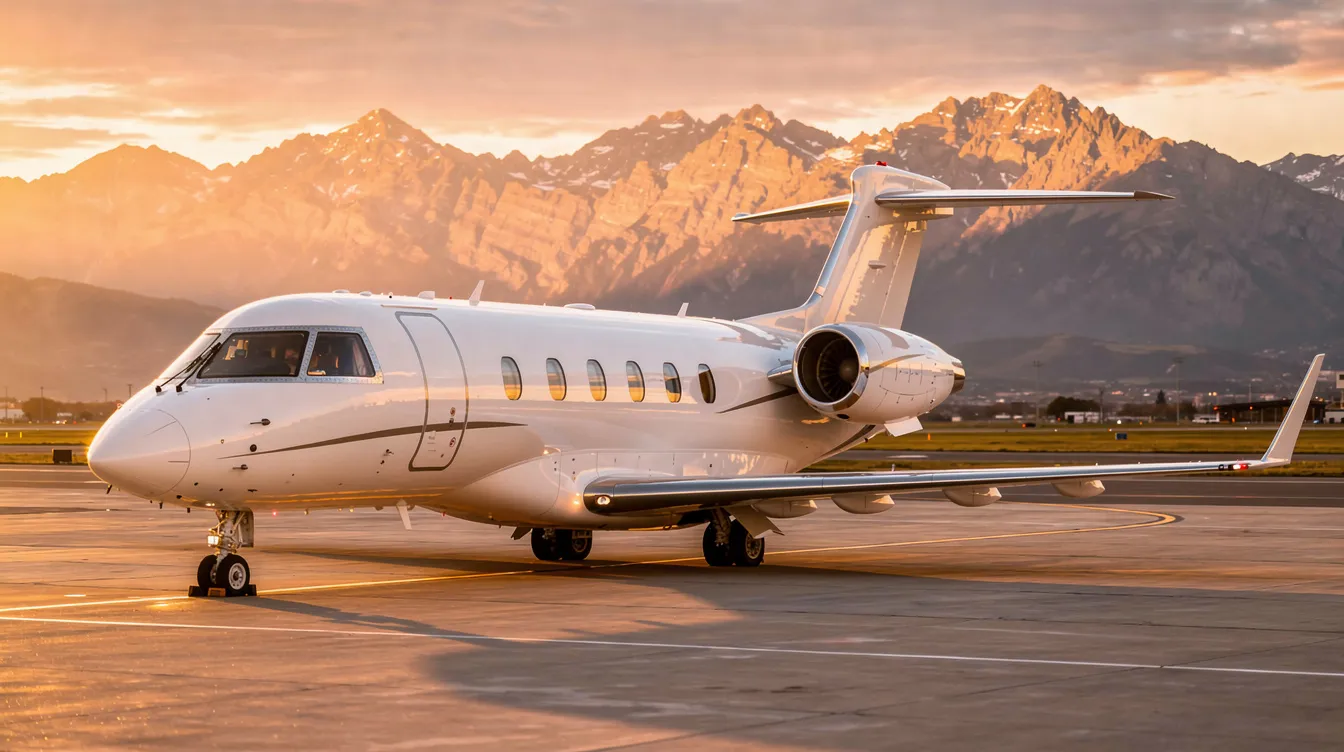
Side-on ramp views, takeoff and landing sequences, and hangar scenes. Ideal for showing specific business jets and tail numbers when property releases allow. Private jets range from $1 million to $80 million, and exterior shots help communicate which end of that spectrum your service covers.
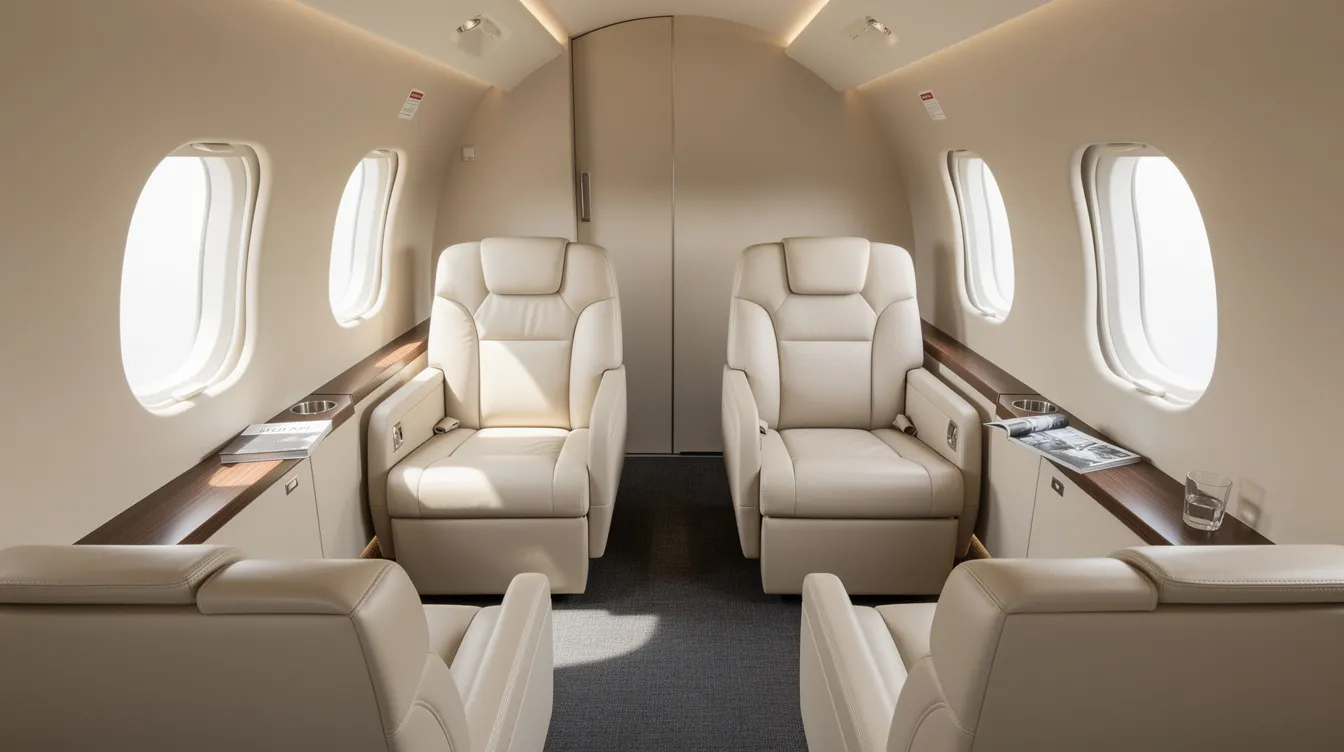
Club seating, conference layouts, lie-flat beds, and galley areas. These work well for pages describing cabin comfort, in-flight Wi-Fi, or long-range missions, while also helping customers picture how they arrive feeling fresh and ready for business. Private jet travel offers high levels of luxury and comfort, and interior shots communicate that instantly. Light and mid-sized jets represent the largest market segment, so cabin images for these categories are especially in demand.
Executives working on laptops, families boarding, couples enjoying in-flight dining. These humanize the experience and help passengers imagine themselves on board — whether for a business trip or weekend getaway.
Private jets on the ramp at Teterboro, Van Nuys, Toronto, Nice, or Dubai. Great for route pages, regional campaigns, and supporting tools like an airport locator for private jet travelers. Private jets access 10 times more airports than airlines, making destination visuals a strong selling point.
Avionics close-ups, jet engines, maintenance hangars, and crew in cockpits. These serve B2B aviation content about safety, operation, or private charter aircraft management.
Tip: Mix one to two styles per page - a hero lifestyle image plus clean cabin detail shots - rather than crowding multiple disjointed visuals together.
Not all sources deliver the same quality or legal clarity. Here is where to start your search:
|
Source |
Pros |
Cons |
Typical Use Case |
|---|---|---|---|
|
Major Stock Libraries |
Large selection, easy search, model/interior tags, affordable pricing |
Generic images, less unique, may lack latest models |
General marketing, websites, social media |
|
Niche Aviation Sources |
Unique angles, model-specific, detailed metadata |
Higher cost, limited selection, may require negotiation |
High-fidelity campaigns, model-specific promotions |
|
AI Image Generation |
Customizable, fast, unique scenes |
Licensing varies, authenticity/release issues, may lack realism |
Concept visuals, mood boards, rapid prototyping |
|
Custom Photography |
Fully authentic, brand-aligned, exclusive |
Expensive, time-consuming, requires access to aircraft |
Fleet branding, hero images, consistent visual identity |
Shutterstock, Adobe Stock, Getty Images, iStock, and Depositphotos host tens of thousands of private jet and business jet images, often tagged by model and interior type. Microstock prices range from under $10 to $50 per image; extended licenses can run into hundreds.
Specialized aviation photographers offer air-to-air photography and model-specific visuals with detailed metadata (aircraft type, registration, operator). These provide higher fidelity and more unique angles. In 2022, 712 business jets were delivered worldwide, up from 710 in 2021, marking a 6% growth — and major aircraft manufacturers have multi-year backlogs for high-demand models, which means fresh imagery of the latest aircraft is at a premium.
Tools like DALL·E, Midjourney, and Adobe Firefly let marketers prompt for specific scenes ("modern midsize business jet cabin with four executives in a meeting, neutral color palette, daytime lighting"). Review each platform's commercial license terms carefully, especially when visuals touch on topics like how much a private jet costs and ownership economics.
If a charter operator owns a fleet or a platform like Jettly needs consistent visuals across aircraft categories, commissioning a shoot ensures authenticity. Each private plane undergoes over 100 quality checks before sale, and documenting that care through custom imagery builds trust and reinforces your positioning among charter airlines and private aviation providers.
Understanding licensing protects your brand from copyright claims and ensures every image on your site or in your ads is used legally.
Royalty-free (RF): One-time fee, non-exclusive, usable across multiple media. Restrictions often apply to resale as standalone images, use in logos, or sensitive contexts. Check that model and property releases are included.
Rights-managed (RM): Licensed by geography, duration, medium, and sometimes circulation volume. Good for hero assets where exclusivity matters. Must re-license for different use. The supply of pre-owned business jets remains around 6.5% of the active global fleet, which means images of specific tail numbers can carry real market value and should align with realistic expectations around how much it costs to rent a private jet.
Editorial-only images: Many photos of recognizable airline liveries, airports, or people are tagged "editorial use only" and should not appear in commercial ads or sale pages.
Model and property releases: Images featuring identifiable passengers, crew, or private hangars require proper releases for commercial use, especially in ads or email campaigns. Operating expenses for business jets have significantly risen due to various factors, and legal missteps with imagery only add to that cost—just as misunderstanding inputs to a private jet charter cost estimator can skew budget planning.
Keep records: Maintain a simple log — file name, source, license type, purchase date — for every private jet stock asset on your site to ensure long-term compliance, and note whether engines or the APU are enrolled in MSP Gold when stock imagery is used for model-specific or resale-oriented aircraft content.
Image selection should align with brand positioning, audience, and conversion goals.
Brand tone: A tech-driven marketplace like Jettly favors clean, modern, minimally edited photos over highly stylized visuals. This communicates efficiency, transparency, and access — not exclusivity for its own sake. North America holds the largest share of the private aviation market at around 44–45%, with a market value of $9.23 billion, so imagery should feel relevant to that audience.
Audience fit: Corporate customers may respond better to images of business jets configured with meeting tables and productivity setups. Families connect with spacious cabins, pets, and relaxed dress codes. Corporate jet demand correlates with corporate profits and executive travel budgets, while high-net-worth individuals and corporate clients are driving broader growth. For many, choosing imagery goes hand in hand with choosing among the best private jet charter companies. Young tech entrepreneurs are entering the private aviation market at increasing rates, and private aviation demand has been boosted by wealth generation in technology sectors. Asia Pacific is the fastest-growing region for business jets, so consider regional imagery for campaigns targeting Europe or Asia as well.
Authenticity: Select images that reflect the actual aircraft categories offered — light jets, midsize, super midsize, large jets, turboprops — so the cabin size and layout match real charter options. Business aircraft users outperform non-users by 23% in revenue growth, and 38% of business aviation missions involve multiple stops. Imagery should reflect that productivity and flexibility, while also showing how private aviation gives travelers more control over timing and multi-stop itineraries across different private charter aircraft.
Regional relevance: Route-focused pages (say, "New York to Toronto private jet charter") should show airports, skylines, or landscapes recognizable to that route — not generic tropical islands.
A/B testing: Test two hero images on landing pages — an exterior ramp shot vs. an interior lifestyle cabin shot — to see which drives more flight inquiries or membership sign-ups. One UK charter case study saw 14,800 qualified inquiries over two years at a 5.67% conversion rate when landing page imagery matched audience expectations, particularly when combined with messaging about booking the cheapest private jet flights.

Strong imagery must also be technically optimized for speed, responsiveness, and clarity across devices and channels. Private jets reduce overall time away from home or office, and your site should load just as efficiently. Additionally, Sustainable Aviation Fuel (SAF) is becoming increasingly important to meet regulatory standards — and visuals supporting green initiatives can resonate with environmentally conscious customers.
Web optimization: Compress JPEGs or use WEBP format. Keep hero images under 300–400 KB. Use responsive image sizes (srcset) to maintain fast loading on mobile, where many people search for flights.
SEO: Use descriptive file names like "light-jet-private-plane-cabin-new-york-miami.jpg" and alt text mentioning "private jets" or "business jets" naturally — no keyword stuffing — and align on-page copy with topics such as affordable private jet charter pricing.
Social platforms: Instagram works best with 1:1 or 4:5 vertical crops for close-crop cabin or lifestyle images. LinkedIn favors 1.91:1 landscape for exterior or group shots. Facebook ads perform well with simple aircraft scenes.
Ad creative: Performance ads on Google Display or Meta do better with simple, high-contrast images showing one aircraft or one clear in-cabin moment plus clean overlay text, whether you are promoting traditional charters or crowdsourced private jet flights and shared empty seats.
Consistency: Build a reusable library of 20–40 core private jet stock assets that match in color grading and style, so all touchpoints — from search pages to remarketing ads — look cohesive and aligned with your private jet membership programs.
Jettly's digital charter marketplace provides a practical example of how to leverage private jet stock responsibly and effectively. Platforms also benefit from industry resources that provide market insight and actionable intelligence when planning visual content, especially when positioning themselves as a NetJets alternative for flying private. Fractional ownership models are among the fastest-growing segments in private aviation, and 100% bonus depreciation on aircraft purchases has driven increased buying activity — making it more important than ever for platforms to visually distinguish on-demand charter from owning.
Aircraft category pages: Imagery shows typical light jet, midsize, and larger cabin layouts so customers understand space, seats, and luggage capacity at a glance, which also supports tools like a jet card flight cost estimator where travelers compare categories.
Route and destination content: Photos of private jets at airports like Toronto Pearson, Van Nuys, or London Luton combined with city skylines illustrate common charter routes and help customers find what they need, particularly for private jets flying internationally or to secondary airports.
Membership and on-demand pages: Cabin lifestyle scenes reflect benefits like privacy, working in flight, and flying with family — not overt luxury for luxury's sake. These pages often introduce structured access products like jet card programs for private flyers. Private jet companies often rely on recurring revenue from maintenance and upgrades, and imagery that communicates ongoing service and care supports that model.
Safety and compliance content: Photos of pilots in modern cockpits, maintenance checks, and crew performing inspections visually support text about safety standards and security protocols. Operating margins in private aviation can be affected by fuel costs and inflation, making trust-building visuals even more critical.
Whenever Jettly showcases specific aircraft types from its 20,000+ aircraft inventory, photos should reasonably approximate the cabin and profile of those real-world private planes, even when using stock. This ensures the experience delivered matches what customers see on the site.
Learn more about Jettly's charter options at https://www.jettly.com.

These FAQs address practical questions that marketers and aviation businesses often have about using private jet stock images, including how visuals shape expectations for topics like how to buy a seat on a private jet.
No. Only images with a commercial license (royalty-free or rights-managed with commercial rights) and appropriate model and property releases should be used in ads. Editorial-only images — common for photos showing recognizable Boeing liveries, airline logos, or public figures — are not suitable for commercial promotion. Always check the specific license terms on the stock platform before running paid campaigns, brochures, or email marketing. The business jet market was worth $25.87 billion in 2021, and with that scale comes real legal scrutiny around image use.
Images should broadly match the aircraft category and general cabin experience. Using a Gulfstream G650ER interior to advertise an entry-level light jet creates unrealistic expectations around comfort, space, and price. Platforms like Jettly should include clear wording that photos are "representative of this aircraft class" when images are not tied to a specific tail number. This keeps the experience honest for customers while still providing attractive visuals and aligns expectations for travelers exploring easy ways to get a seat on a private jet.
AI tools typically grant usage rights under their own terms, but users must review each platform's license — especially for commercial use, trademarks, and recognizable manufacturers. While AI images avoid traditional copyright issues tied to a specific photographer, brands should still avoid generating visuals that copy recognizable liveries, logos, or the distinctive design language of specific manufacturers without authorization. Tools built on licensed datasets (like the Getty-Nvidia partnership) offer stronger legal footing.
JPEG and WEBP are the go-to formats for photography. PNG works for graphics with transparency. Hero images typically perform best at 1600–2000 px wide, compressed for fast loading. Fast-loading images improve user experience when customers are exploring listings, checking schedule availability, or comparing programs on digital platforms like Jettly.
Review imagery at least once per year, or whenever your brand, website design, or aircraft mix changes significantly. Incremental updates — swapping in new destination shots, updated cabin images, or seasonal content — keep marketing materials feeling current without requiring a full overhaul each time. With the market evolving quickly and new models entering the world fleet, staying visually current signals that your brand is ready to serve today's travelers who are also searching for tips on booking the cheapest private jet flights.
Choosing the right private jet stock imagery is essential for aviation brands and platforms aiming to communicate value, convenience, and trust to their customers. High-quality visuals that accurately represent aircraft categories, cabin experiences, and popular routes help set realistic expectations and enhance brand credibility. Whether sourcing from major stock libraries, niche aviation photographers, AI tools, or custom shoots, aligning images with your audience’s needs and your brand’s tone of voice makes a significant difference.
Jettly’s digital private jet charter marketplace exemplifies how thoughtful private jet stock use supports a seamless customer journey—from browsing aircraft options to booking flights instantly. With transparent pricing, a wide selection of aircraft, and a tech-driven approach, Jettly helps travelers experience private aviation with ease and confidence.
Ready to experience private travel on your terms? Explore flight options or request a quote at https://www.jettly.com.
Share this post:
Jay Franco Serevilla
Oct 14, 2026
|
5
min read
Discover tips and trends in the industry.

5
min read
How Far Out Should You Book International Flights? (And When It Really Pays Off)
Knowing when to book international flights can save you significant money. Generally, aim to book 3 to 6 months in advance for economy fares, and 6 to 9 months for peak seasons. Understanding the best booking windows and seasonal trends is crucial for securing the best deals.
Read More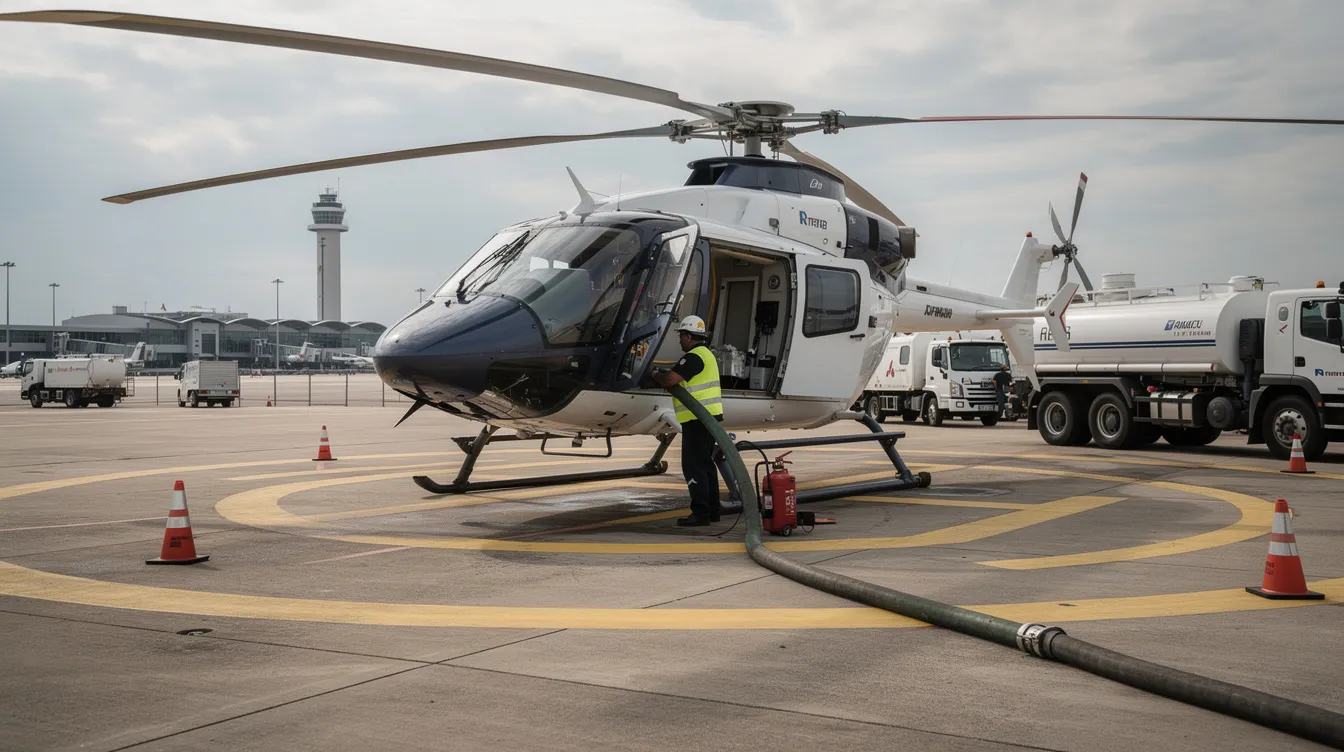
5
min read
What Type of Fuel Does a Helicopter Use? (Guide for Private Flyers)
Helicopters primarily use two types of fuel: aviation gasoline (AvGas) for piston engines and kerosene-based jet fuel for turbine engines. Understanding the fuel type is crucial as it affects operating costs, range, and availability at heliports, which are important factors for private flyers. With the rise of sustainable aviation fuels, the industry is also moving towards greener options without compromising performance.
Read MoreStay updated with our latest insights and tips to elevate your journey with us.
MEMBERSHIPS AND ASSOCIATIONS



Disclaimer: Jettly operates as a charter broker, offering access to a global digital jet charter marketplace. Jettly is not a direct air carrier and does not own or operate aircraft. All advertised flights are conducted by third-party air carriers that are fully licensed and hold the appropriate Part 135 or Part 121 certifications issued by the Federal Aviation Administration (FAA) or equivalent regulatory authorities under U.S. or foreign law. Jettly complies fully with the U.S. Department of Transportation's Part 295 and Part 298 Charter Broker regulations. Jettly does not carry additional liability insurance. Passengers are covered by aircraft operator insurance. TICO: 50023770


