


Login
Get Instant Pricing On 23,000+ Aircraft

>
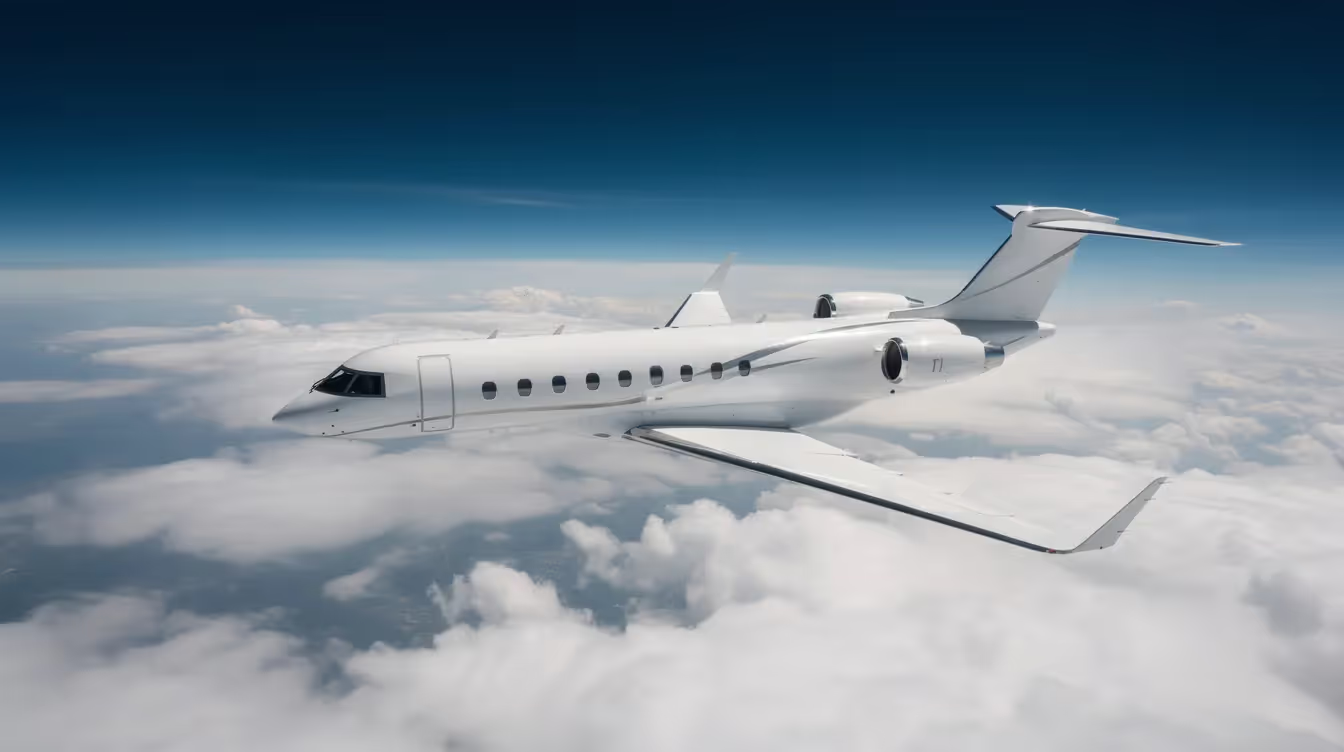
This guide explains how far different types of private jets can fly, what factors influence their range, and how to choose the right aircraft for your travel needs. Whether you're a frequent charter client, a business traveler, or simply curious about private aviation, understanding private jet range helps you plan efficient, nonstop journeys and avoid unnecessary fuel stops.
Private jet range refers to how far an aircraft can fly nonstop without refueling, which is crucial for efficient and convenient travel planning. The actual range depends on factors like aircraft class, passenger load, weather, and routing, so real-world figures are usually lower than the manufacturer's stated maximums.
– Aircraft classes range from very light jets (1,000–1,500 nm) to ultra-long-range jets (up to 7,700+ nm)
– Real usable range may be 5–20% less than brochure numbers due to operational factors
– Payload, weather, and required fuel reserves significantly affect how far you can fly nonstop
– Choosing the right jet for your route avoids fuel stops and saves time
– Jettly’s digital platform helps match your trip requirements with suitable aircraft and instant pricing
Private jet range is the maximum nonstop distance an aircraft can fly without refueling. Real-world range is typically 5–20% lower than manufacturer brochure figures due to payload, weather, and routing factors.
Range bands vary by class: very light jets cover about 1,000–1,500 nautical miles, light jets reach 1,500–2,200 nm, midsize jets fly 2,000–3,000 nm, super midsize jets handle 3,000–4,000 nm, and heavy and long-range private jets extend from 4,000 to 7,700+ nm.
Specific models illustrate these capabilities: the Embraer Phenom 300E can fly roughly 2,010 nm (Los Angeles to Dallas), the Gulfstream G650ER can fly up to 7,500 nm (New York to Tokyo), and the Bombardier Global 7500 can cover approximately 7,700 nm (New York to Hong Kong under favorable conditions).
Factors such as passenger count, baggage weight, headwinds, and air traffic control routing can significantly reduce a private jet's effective range, making expert flight planning essential.
Jettly’s digital charter marketplace helps travelers choose aircraft with the right range capabilities for their trips, offering instant pricing and access to over 20,000 aircraft worldwide.
Private jet range refers to the maximum distance a private aircraft can fly nonstop without refueling, measured in nautical miles under standardized test conditions. An aircraft's range is the maximum distance it can travel without refueling, making it a critical metric for long-distance flights, operational efficiency, and cost savings. These conditions assume a sea-level temperature of 15°C (International Standard Atmosphere), no wind, and an optimized configuration with minimal payload—typically four passengers and limited baggage.
Aircraft manufacturers publish maximum range figures based on these ideal scenarios. Manufacturers' stated ranges assume ideal conditions, but in real-world charter operations, the actual range can be affected by weather, payload, and environmental factors. Effective range shrinks with more passengers, heavier baggage, required fuel reserves, and routing constraints, all of which reduce how far a jet can actually fly on a single tank.
Consider the Bombardier Global 7500, advertised at approximately 7,700 nm. With a full passenger load, that drops closer to 7,000 nm—still enough for New York to Hong Kong under favorable winds, but potentially requiring a technical stop with headwinds. Similarly, a Cessna Citation CJ4 Gen2 at around 2,165 nm comfortably covers London to Dubai, whereas a light jet might require adjustments to the same route.
Understanding range matters because it determines whether your private flight can connect city pairs like New York to London or Dubai to Singapore nonstop. Fewer fuel stops mean faster gate-to-gate times, less hassle, and more productive travel hours.
Range is primarily determined by the aircraft's fuel capacity and engine efficiency. Technological advancements in private jets, such as more fuel-efficient engines and aerodynamic enhancements like streamlined fuselages and winglets, have enabled aircraft to travel longer distances without refueling. These improvements reduce drag, increase lift, and enable jets to fly farther on less fuel, significantly boosting the aircraft's range.
Jettly’s trip search simplifies this process. Users input their origin, destination, and passenger count, and the platform automatically filters aircraft whose practical range can cover the routing—no guesswork required, while tools like its airport locator help identify convenient departure and arrival points.
When planning a private flight, understanding how far your chosen aircraft can really fly is essential. But how is the range of a private jet actually measured? The answer involves a blend of science, engineering, and real-world variables—all of which play a crucial role in private aviation.
Units of Measurement: Nautical Miles and Beyond
In the world of private jets, range is most commonly expressed in nautical miles (nm), the aviation industry’s standard unit for measuring distance. For reference, one nautical mile equals about 1.15 statute miles or 1.85 kilometers. Aircraft manufacturers and private aviation experts may also reference kilometers or miles, but nautical miles remain the benchmark for comparing range capabilities across different aircraft models.
Fuel Capacity: The Foundation of Range
At the heart of every range calculation is fuel capacity. Simply put, the more fuel a jet can carry, the farther it can fly nonstop. For example, a long-range private jet like the Bombardier Global 7500 boasts a fuel capacity exceeding 50,000 pounds, enabling it to cover over 7,700 nautical miles without a fuel stop. In contrast, very light jets such as the Cessna Citation Mustang have much smaller tanks—typically around 3,000-4,000 pounds—limiting their range to about 1,000–1,500 nm. This key difference in fuel capacity separates a large-cabin jet designed for transcontinental flights from a light jet built for regional hops.
Fuel Efficiency and Modern Jet Engines
Fuel efficiency is another critical factor. Modern jets are equipped with more fuel-efficient engines and advanced aerodynamics, allowing them to fly longer distances on less fuel. Aircraft such as the Gulfstream G650ER and other large-cabin jets use cutting-edge technology to maximize fuel efficiency, making them ideal for long-haul flights. Improvements in wing design and lighter composite materials also contribute to better fuel efficiency, helping private jets fly farther with fewer stops.
Passenger Capacity and Payload Considerations
The number of passengers and the amount of baggage on board directly impact a jet’s range. More weight means more fuel is burned, which can reduce the aircraft’s range by hundreds of nautical miles. For instance, a mid-size jet flying with a full passenger load may need to plan for a fuel stop on longer routes, while the same aircraft with fewer passengers could fly nonstop. This is why private aviation experts always factor in passenger capacity and payload when planning a flight.
Weather Conditions and Route Optimization
Weather conditions, especially winds aloft, can make a big difference in how far a private jet can fly. Headwinds increase fuel consumption and reduce range, while tailwinds can extend it. Modern jets rely on sophisticated flight planning software and real-time weather data to optimize routes, ensuring the most fuel-efficient and time-saving path. Private aviation experts use these tools to help travelers avoid unnecessary fuel stops and maximize the aircraft’s range on every flight.
How Range Is Calculated
Manufacturers use a combination of computer simulations and actual flight tests to determine an aircraft’s maximum range. The calculation typically uses a formula that accounts for fuel capacity, fuel efficiency (measured in nautical miles per pound of fuel), passenger capacity, and cruise speed. A simplified version might look like this:
Range (nm) = Fuel capacity (lbs) × Fuel efficiency (nm/lb) × (1 - (Passenger capacity × Weight per passenger))
While this formula provides a baseline, the real-world range can vary due to weather, air traffic control, and the specific aircraft model in use. That’s why private aviation experts and operators rely on advanced modeling and up-to-date data to plan each flight.
Why It Matters for Your Next Flight
Understanding how private jet range is calculated empowers travelers to choose the right aircraft for their mission—whether it’s a quick regional trip in a very light jet or a nonstop transcontinental journey in a large-cabin jet. By considering factors such as fuel capacity, fuel efficiency, passenger load, and weather conditions, you can ensure your private flight is both efficient and comfortable, with fewer stops and more time at your destination.
With Jettly’s digital platform, you don’t have to be an expert in metric and imperial units or aircraft performance. Simply enter your route and passenger count, and the system matches you with private charter aircraft that can fly your itinerary nonstop—taking the guesswork out of private aviation and letting you focus on the journey ahead.
Several variables determine how far a business jet can actually fly on any given mission. Understanding these factors helps travelers set realistic expectations and work with charter specialists to optimize their itinerary.
Fuel Capacity
Fuel capacity correlates directly with range capabilities. Very light jets like the HondaJet Elite II carry approximately 3,500 pounds of usable jet fuel, supporting ranges around 1,547 nm. Super mid-size jets such as the Bombardier Challenger 3500 can carry over 14,000 pounds, enabling ranges of 3,400 nm or more. More fuel generally means longer distances, but fuel weight itself affects aircraft performance.
Payload Impact
More passengers and luggage increase weight, forcing operators to trade fuel for payload. Each additional 1,000 pounds—roughly four extra passengers with bags—can reduce range by 200 to 400 nm in midsize jets. An Embraer Phenom 300E drops from 2,010 nm lightly loaded to about 1,541 nm at max capacity with seven passengers.
Weather and Winds
Headwinds on westbound North Atlantic tracks can cut effective range by 300 to 500 nm when jet streams exceed 100 knots. Conversely, eastbound tailwinds can extend range by 500+ nm. Weather conditions and wind can also influence the aircraft's intended course, sometimes requiring route adjustments that impact both range and efficiency. Flight planning tools used by operators and Jettly’s partners optimize routes around weather conditions to maximize efficiency.
Altitude and Routing
Higher cruising altitudes (41,000–51,000 feet) reduce drag and fuel burn, but ATC constraints and storm deviations add track miles. Maximum range is typically achieved at high altitudes (above 40,000 ft) where air resistance is lower. Additionally, changes in the aircraft's course due to routing or weather can increase fuel consumption by 5–10%, affecting available range.
Safety Reserves
Operators must land with mandated fuel reserves—typically enough for 45 minutes of holding plus an alternate airport diversion. Not all tank fuel translates to usable range, which is why advertised specifications differ from dispatch range.
Jettly’s marketplace includes private jets across all major classes, each with typical range bands suited to specific mission profiles. The following breakdown covers what travelers can expect from each category.
|
Class |
Typical Passengers |
Range Band (nm) |
Example Models |
|---|---|---|---|
|
Very Light Jets |
4–6 |
1,000–1,500 |
HondaJet Elite II, Cessna Citation Mustang |
|
Light Jets |
6–8 |
1,500–2,200 |
Embraer Phenom 300E, Pilatus PC-24 |
|
Midsize Jets |
Up to 9 |
2,000–3,000 |
Cessna Citation Latitude, Embraer Praetor 500 |
|
Super Midsize Jets |
8–10 |
3,000–4,000 |
Gulfstream G280, Bombardier Challenger 3500 |
|
Heavy/Long-Range Jets |
12–19 |
4,000–7,700+ |
Gulfstream G650ER, Bombardier Global 7500 |
|
Executive Airliners |
20–50 |
6,000–11,600 |
Boeing Business Jet 777X, Airbus ACJ |
|
These are typical planning figures for charter operations, not absolute manufacturer maximums. Real-world usable range often runs 5–15% lower depending on conditions. |
|||
|
Jettly’s booking engine matches trip profiles—distance, passenger capacity, and budget—with appropriate aircraft models, ensuring travelers find the right fit. |
Very light jets offer efficient, entry-level private aviation for short regional hops covering roughly 1,000 to 1,500 nm. These private planes suit executives and small groups traveling between nearby cities without the cost of large cabin aircraft.
Popular models include:
HondaJet Elite II: approximately 1,547 nm range
Cessna Citation Mustang: around 1,150 nm range
Embraer Phenom 100EV: about 1,178 nm range
VLJs typically accommodate 4–6 passengers and excel on missions like New York to Chicago (700 nm), London to Berlin (500 nm), or Toronto to Halifax (800 nm)—all without a fuel stop.
These aircraft access shorter runways at smaller regional airports, expanding options to secondary cities that commercial airlines don’t serve directly. Jettly’s network includes many of these airports, saving travelers time on ground transportation.
Hourly charter rates for VLJs are 20–30% lower than those of light jets, though baggage capacity and cabin space are limited.
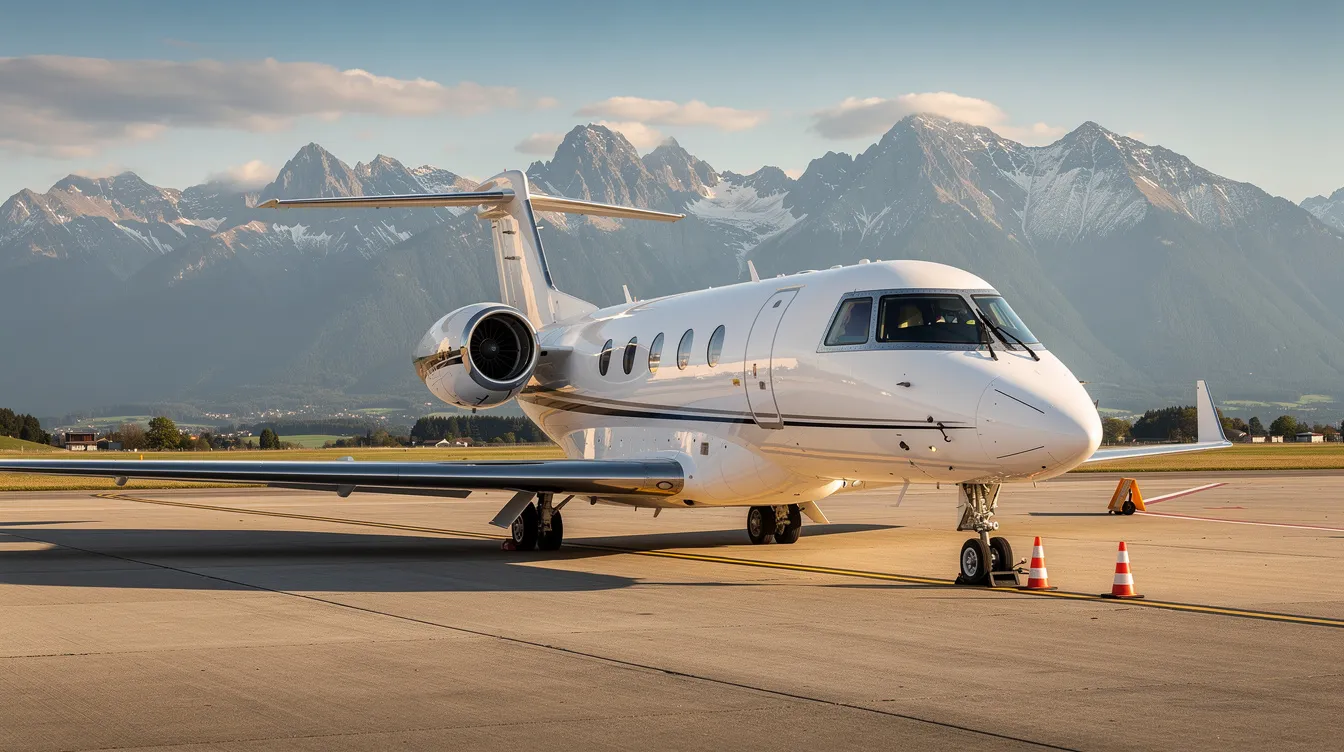
Light jets step up in both more space and range, typically covering 1,500 to 2,200 nm. They balance cost, cruise speed, and comfort for travelers flying private on routes under 2,000 nm.
Key aircraft models include:
Embraer Phenom 300E: approximately 2,010 nm (1,541 nm at max payload)
Pilatus PC-24: about 2,000 nm
Cessna Citation CJ3+: around 2,040 nm
These light jet options accommodate 6–8 passengers with increased legroom and small refreshment centers. Ideal missions include Los Angeles to Houston (1,200 nm), London to Athens (1,500 nm), or Dubai to Mumbai (1,300 nm).
Light jets access many smaller airports, offering time savings compared to flying commercial into congested hubs. This operational flexibility pairs well with Jettly’s point-to-point pricing model.
For travelers making frequent sub-2,000 nm trips, this class delivers excellent value.
Mid-size jets serve longer domestic or shorter transcontinental flights, with practical ranges of 2,000 to 3,000 nm. They offer more fuel-efficient engines and enhanced cabin amenities compared to lighter aircraft.
Notable models include:
Cessna Citation Latitude: approximately 2,700 nm
Embraer Praetor 500: about 3,340 nm max range (typically planned around 3,000 nm)
Hawker 800XP: roughly 2,540 nm
Midsize jets accommodate up to 9 passengers in stand-up cabins with enclosed lavatories and enhanced baggage capacity. Wi-Fi connectivity is standard on modern jets in this class.
Example routes include New York to Denver (1,500 nm), Miami to Seattle (2,400 nm), London to Moscow (1,500 nm), and São Paulo to Lima (2,100 nm). Most operate nonstop, though some longer legs may require fuel-stop planning, especially on private-jet flights operating internationally across oceans and multiple jurisdictions.
For small business teams or families, mid-size jets on Jettly often price competitively compared to purchasing multiple business-class commercial tickets on similar routings, especially when you understand how private jet charter costs are structured and the broader picture of how much a private jet really costs to own or charter.
Super mid-size jets represent the sweet spot for transcontinental flights and many transatlantic routes, with planning ranges of approximately 3,000 to 4,000 nm.
Leading aircraft models include:
Gulfstream G280: about 3,600 nm range
Bombardier Challenger 3500: approximately 3,400 nm
Cessna Citation Longitude: roughly 3,500 nm
These jets accommodate 8–10 passengers in flat-floor cabins and cruise at speeds of around Mach 0.80–0.85. They enable nonstop flights like New York to London (3,000 nm), Los Angeles to Honolulu (2,200 nm), and Dubai to Geneva (2,800 nm) under normal weather conditions.
Business travelers frequently choose this category for overnight transatlantic returns or coast-to-coast trips across North America. Super midsize options appear regularly on Jettly’s platform across major global routes.
Operating costs exceed those of midsize jets but are significantly lower than those of ultra-long-range jets, making them cost-effective for most long-haul business missions where range requirements don’t demand larger aircraft.
Heavy jets and ultra-long-range jets cover distances from approximately 4,000 nm up to 7,700 nm nonstop. These large jets carry more fuel and passengers while delivering an intercontinental range.
Key models and their headline ranges:
Dassault Falcon 7X: approximately 5,950 nm
Gulfstream G650ER: about 7,500 nm
Gulfstream G700: roughly 7,500 nm
Bombardier Global 7500: approximately 7,700 nm
These figures assume ideal conditions; loaded ranges typically drop 5–10%.
Long-range private jets typically carry 14–19 passengers across multiple cabin zones—work areas, dining sections, and sleeping quarters. They connect pairs like New York to Tokyo (4,800 nm), London to Los Angeles (4,700 nm), Dubai to New York (6,800 nm), and Hong Kong to San Francisco (5,900 nm) without stopping.
These business aircraft suit C-suite roadshows, global project teams, and high-net-worth families seeking to minimize layovers on long distances. Jettly provides on-demand access to this category without ownership commitments or jet cards, whether for global hubs or specific markets like private jet charter in Kolkata, West Bengal, or private jet charter in Bangalore, Karnataka.
Higher hourly charter rates apply, so matching max range to actual mission needs avoids paying for excess capability.
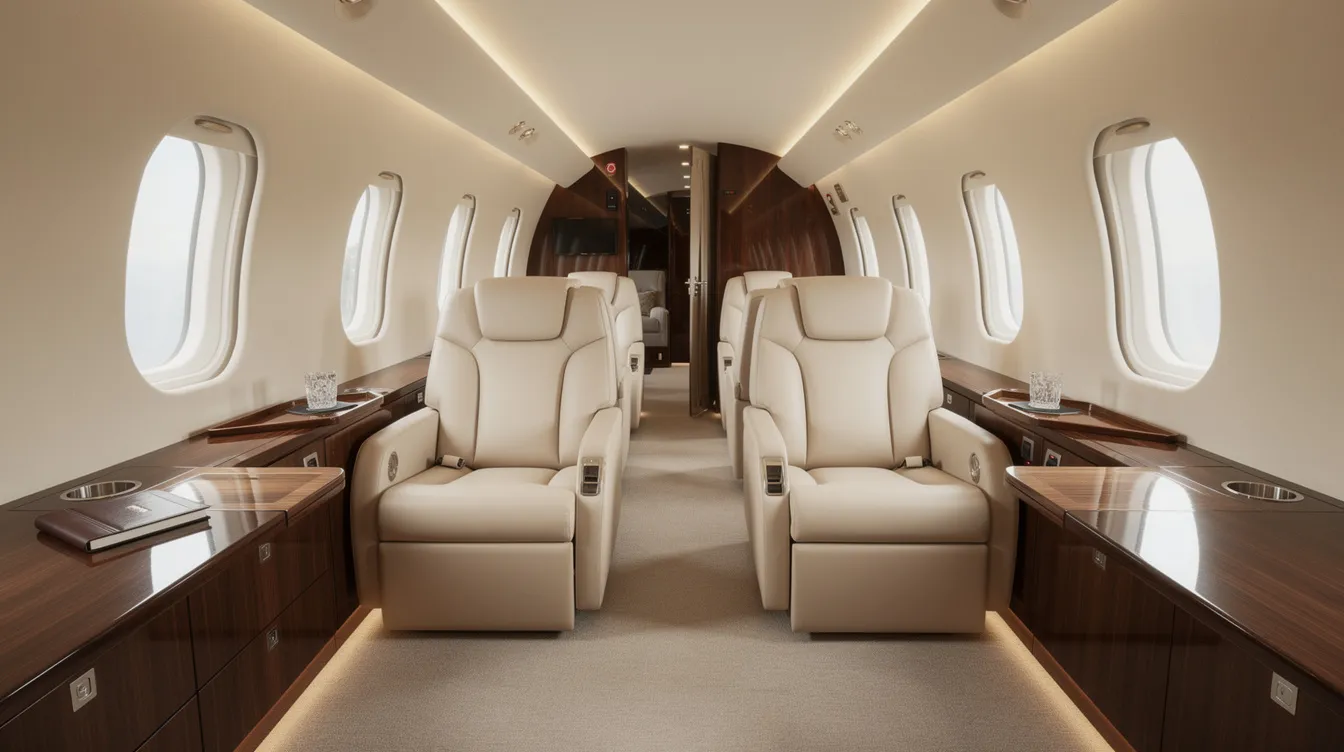
Executive airliners—converted commercial aircraft like the Boeing Business Jet 737 and 777 variants or Airbus ACJ family—offer custom VIP interiors and ranges often exceeding 6,000 to 11,600 nm.
The planned Boeing Business Jet 777X quotes a range of around 11,600 nm in metric and imperial units, enabling nonstop flights between almost any two cities on Earth.
These large cabin jet configurations accommodate 20–50 passengers in VIP layouts and suit specific use cases:
Government delegations
Corporate shuttle programs
Touring artists and production teams
Ultra-high-net-worth individuals
Operational constraints exist: bizliners require longer runways (often 10,000+ feet), face higher airport fees, and have limited access to airports compared to smaller jets. Jettly’s flight planning accounts for these factors when coordinating executive airliner charters, including complex trips into busy hubs, such as private jet charter services in Chennai, Tamil Nadu.
These remain niche options available on request through global charter networks rather than everyday charter selections, and many clients pair them with premium in-flight catering for private jets through Jettly Eats to match the onboard experience to the extended range of these aircraft.
Abstract nautical mile figures become meaningful when applied to actual city pairs that travelers commonly request. Here’s how different aircraft classes serve popular routes:
|
Route |
Distance (nm) |
Classes That Fly Nonstop |
|---|---|---|
|
New York – Miami |
~950 |
Very Light Jets, Light Jets, Midsize Jets, Super Midsize Jets, Heavy Jets |
|
Los Angeles – Chicago |
~1,500 |
Light Jets, Midsize Jets, Super Midsize Jets, Heavy Jets |
|
London – Dubai |
~3,400 |
Super Midsize Jets, Heavy Jets |
|
New York – London |
~3,000 |
Super Midsize Jets (wind-dependent), Heavy Jets |
|
Singapore – Sydney |
~3,900 |
Heavy Jets, Long-Range Jets |
|
Dubai – Tokyo |
~4,800 |
Long-Range Jets Only |
|
Los Angeles – Tokyo |
~4,800 |
Long-Range Jets Only |
|
Middle East to Asia corridor or transpacific routes |
Long-Range Jets or Ultra Long-Range Jets Only |
|
|
Note: Jettly’s booking flow streamlines aircraft selection by filtering aircraft based on range requirements and passenger count. Instant pricing and route-based recommendations are available at Jettly’s charter cost estimator. |
||
|
The time-saving benefits add up quickly. A nonstop heavy jet from New York to London saves 1–2 hours door-to-door compared to a one-stop commercial business-class flight, including security lines and boarding. Understanding how an established provider like NetJets operates as an industry leader in private aviation can help you compare those efficiencies with on-demand charter platforms. When flight time efficiency matters, flying private with the right aircraft’s range makes a big difference. |
Understanding the key differences between nonstop and direct flights helps travelers plan realistic itineraries.
Nonstop means no refueling—the aircraft departs from the origin and lands at the destination without stopping. Direct can include one or more fuel stops while remaining on the same aircraft.
Charter passengers typically prefer nonstop service, but strategic fuel stops sometimes make sense:
When the route distance approaches the maximum range
When weather conditions reduce the effective range
When budget constraints favor smaller aircraft
Each fuel stop typically adds 45–90 minutes to total journey time due to descent, landing, refueling, and climb-out—even at efficient FBO facilities.
Consider Los Angeles to Tokyo (4,800 nm). A super-midsize jet can handle this route with a fuel stop in Anchorage, Alaska, while a Bombardier Global 7500 covers it nonstop. The fuel stop option may cost 20–30% less fuel but adds roughly 90 minutes.
Jettly’s support team helps determine when fewer stops justify upgrading to a longer-range jet versus when a fuel stop offers better value for the mission. Sometimes accepting one stop means saving thousands of dollars without meaningful time loss, a tradeoff you can explore in advance with Jettly’s jet card flight cost estimator or by considering how to buy a seat on a private jet through shared and empty-leg options.
Aircraft manufacturers have pushed typical long-range jet capabilities from approximately 6,000 nm in 2010 to over 7,700 nm by 2025. The Bombardier Global 8000, expected to enter service soon, targets 8,000 nm certification.
Recent achievements include:
Bombardier Global 7500 (certified 2018): 7,700 nm range, enabling New York to Hong Kong or Singapore to San Francisco nonstop
Gulfstream G700 (entering service): 7,500 nm range with the industry’s largest cabin
Key technical innovations driving these gains:
More fuel-efficient engines like the Rolls-Royce Pearl 15 (SFC around 0.51 lb/lb/hr)
Advanced winglets reduce drag by approximately 5%
Composite materials cut structural weight by up to 20%
High-bypass turbofans deliver less fuel consumption per mile
Modern flight management systems (FMS) and satellite weather data allow operators to exploit favorable winds and optimize routing, effectively stretching usable range by 5–10%.
Environmental considerations matter increasingly. Better fuel efficiency means reduced CO₂ per passenger-mile, and more flexible access models that explain how to get a seat on a private jet easily through memberships, shared flights, and last-minute deals are encouraging travelers to right-size aircraft choice and reduce wasted capacity. Some operators on Jettly’s platform offer carbon offset options, and Sustainable Aviation Fuel (SAF) is available on select routes, improving efficiency by 20–80% in emissions terms compared to conventional jet fuel, and shared-flight models that crowdsource private jet flights and empty seats can further improve overall utilization, while Jettly’s ULTRA high ticket affiliate program lets partners earn by referring new flyers into these more efficient travel options.
Selecting aircraft with the appropriate range—rather than defaulting to the longest-range jet available—optimizes both cost and convenience.
Start by analyzing your most common travel requirements:
70% of trips under 1,500 nm (regional short-haul): VLJ or light jet serves well
2–3 annual transatlantic flights: Super-midsize or heavy jet
Occasional ultra-long-haul vacation: Long-range jet booked as needed
Budget interacts directly with range. Longer-range, larger jets carry higher hourly rates and minimum flight charges. Sometimes using an efficient midsize with a single fuel stop proves more economical than chartering a heavy jet for a route that barely exceeds super-midsize range.
Jettly’s platform and its private jet memberships simplify this decision process:
Instant pricing based on actual route and passenger count
Route-based aircraft recommendations filtered by realistic range
Operator safety ratings visible during selection
Membership options that reduce hourly costs for frequent flyers
Private aviation experts recommend matching aircraft to mission rather than buying excess capability. A midsize jet handles 90% of North American business travel needs at significantly lower cost than long-range alternatives, and structured jet card programs can lock in predictable hourly rates for frequent flyers.
Ready to see which jets can handle your next itinerary nonstop? Jettly’s marketplace makes the comparison straightforward.
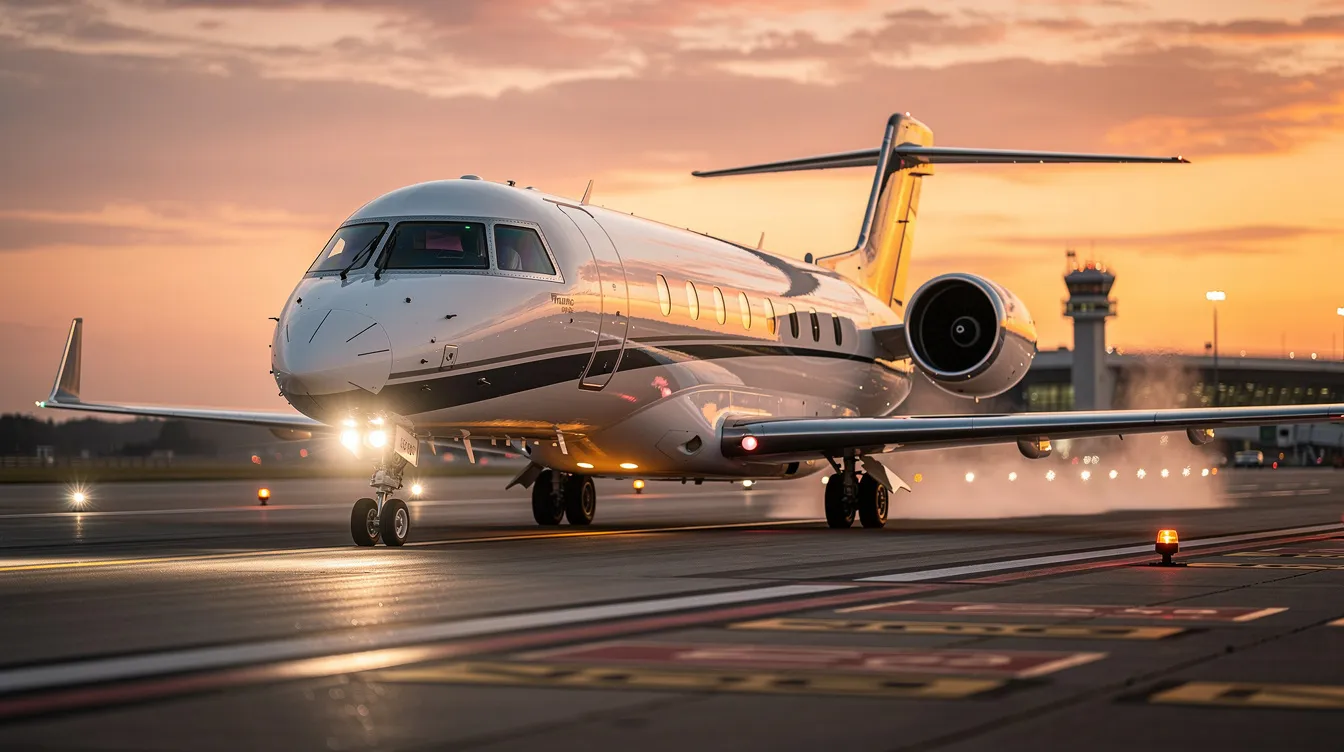
Very Light Jets — Seat 4–6 passengers and cover 1,000–1,500 nautical miles. Example models: HondaJet Elite II, Cessna Citation Mustang.
Light Jets — Seat 6–8 passengers and cover 1,500–2,200 nautical miles. Example models: Embraer Phenom 300E, Pilatus PC-24.
Midsize Jets — Seat up to 9 passengers and cover 2,000–3,000 nautical miles. Example models: Cessna Citation Latitude, Embraer Praetor 500.
Super Midsize Jets — Seat 8–10 passengers and cover 3,000–4,000 nautical miles. Example models: Gulfstream G280, Bombardier Challenger 3500.
Heavy/Long-Range Jets — Seat 12–19 passengers and cover 4,000–7,700+ nautical miles. Example models: Gulfstream G650ER, Bombardier Global 7500.
Executive Airliners — Seat 20–50 passengers and cover 6,000–11,600 nautical miles. Example models: Boeing Business Jet 777X, Airbus ACJ.
No current private jet can circumnavigate the globe nonstop. Even ultra-long-range jets like the Bombardier Global 7500 or Gulfstream G700 max out around 7,500–7,700 nm, while a full equatorial circumnavigation exceeds 21,600 nm.
Round-the-world itineraries typically require three to four legs—for example, New York to London to Dubai to Singapore to Tokyo to Los Angeles. Each segment falls well within aircraft range with margins for weather conditions and reserves.
Jettly can help design multi-leg charter itineraries balancing flight time, rest, and cost-efficiency across global journeys.
Payload significantly impacts effective range. Moving from a light load (4 passengers) to near-maximum capacity (10 passengers plus heavy baggage) can reduce usable range by several hundred nautical miles.
For example, a super-midsize jet advertised at 3,500 nm might dispatch at 3,000–3,200 nm when fully loaded and facing moderate headwinds. More weight means either carrying more fuel (reducing passenger capacity) or accepting a shorter range.
Jettly’s trip pricing and aircraft suggestions account for typical passenger and baggage assumptions to avoid overestimated range.
Most charter flights are considerably shorter than an aircraft’s theoretical maximum range. Operators often choose higher cruise speed settings to shorten flight time rather than stretching every available nautical mile.
On a 3,000 nm trip, a Gulfstream G650ER might cruise at Mach 0.85, while on a 7,000 nm mission with tighter fuel constraints, pilots may slow to Mach 0.80 for fuel efficiency. Both approaches operate aircraft safely within performance envelopes.
Jettly customers can request specific arrival windows, and operators adjust speed and fuel strategy within safety and efficiency constraints.
Range planning incorporates forecast winds and weather patterns reviewed by the operator’s dispatch team within hours of departure. This comparative analysis ensures realistic flight plans.
Strong jet-stream headwinds, thunderstorms, or reroutes can force altitudes or paths that reduce effective range. Occasionally, this makes a fuel stop necessary even when the original plan was nonstop.
Jettly users receive updates about any operational changes from the operator or support staff, with options to adjust departure time, routing, or aircraft if conditions require, whether you’re flying regionally or arranging private jet charter in New Delhi, Delhi, with full route support.
Jettly’s online platform effectively serves as a private jet range and pricing estimator. Users enter origin, destination, dates, and passenger count to see compatible aircraft and instant quotes.
The system filters for realistic ranges based on aircraft performance data and typical reserves rather than raw brochure maximums. This ensures the aircraft shown can actually operate on the requested route without impractical fuel stops.
Try a sample search—such as New York to London or Toronto to Vancouver—to see how different aircraft classes appear for the same route at https://www.jettly.com.
What is the typical range of a very light jet?
Very light jets usually have a range of about 1,000 to 1,500 nautical miles, making them ideal for short regional trips.
How do passenger numbers affect private jet range?
Increasing the number of passengers and baggage on board adds weight, which reduces the aircraft’s effective range and may necessitate fuel stops on longer routes.
Can all private jets fly internationally nonstop?
No, only certain aircraft classes like heavy jets and long-range jets can handle most intercontinental flights nonstop; smaller jets may require one or more fuel stops.
What factors most commonly reduce a jet’s real-world range?
Key factors include payload (passengers and baggage), weather conditions such as headwinds, air traffic control routing, and mandatory fuel reserves.
Is it more cost-effective to choose a jet with greater range than needed?
Not always; selecting a jet with just enough range for your route typically saves money and avoids paying for unnecessary capacity or higher hourly rates.
How can travelers easily find jets that fit their trip’s range requirements?
Platforms like Jettly allow users to enter their route and passenger count, then automatically suggest aircraft with the appropriate range and instant pricing.
Do fuel stops add a significant amount of travel time?
Yes, each fuel stop generally adds 45–90 minutes to the overall journey due to landing, refueling, and takeoff procedures.
Are newer jets more fuel efficient and capable of longer ranges?
Yes, advances in jet engine technology, aerodynamics, and materials have increased both fuel efficiency and maximum range in modern private jets.
Private jet range depends on aircraft class, fuel capacity, payload, and operating conditions. What manufacturers publish as max range rarely matches real-world dispatch figures—expect 5–20% reductions when accounting for passengers, weather, and required reserves.
Understanding the range spectrum—from very light jets at approximately 1,000 nm to ultra-long-range jets exceeding 7,700 nm—helps travelers avoid unnecessary fuel stops, save time, and select appropriate aircraft for business or leisure missions. The Cessna Citation Mustang suits New York to Chicago, while a Gulfstream G650ER connects Los Angeles to Tokyo without compromise.
Jettly’s digital platform simplifies aircraft selection by surfacing options with a suitable private jet range for each route. With transparent instant pricing, access to over 20,000 aircraft, and no ownership or jet card commitments required, travelers can focus on the trip rather than the logistics, making it a compelling NetJets alternative for flexible private flying.
Ready to experience private travel on your terms? Explore flight options or request a quote at https://www.jettly.com.
Share this post:
Jay Franco Serevilla
Apr 13, 2026
|
5
min read
Discover tips and trends in the industry.
5
min read
Luxury Personal Jet: Ultimate Guide to High-End Private Aviation
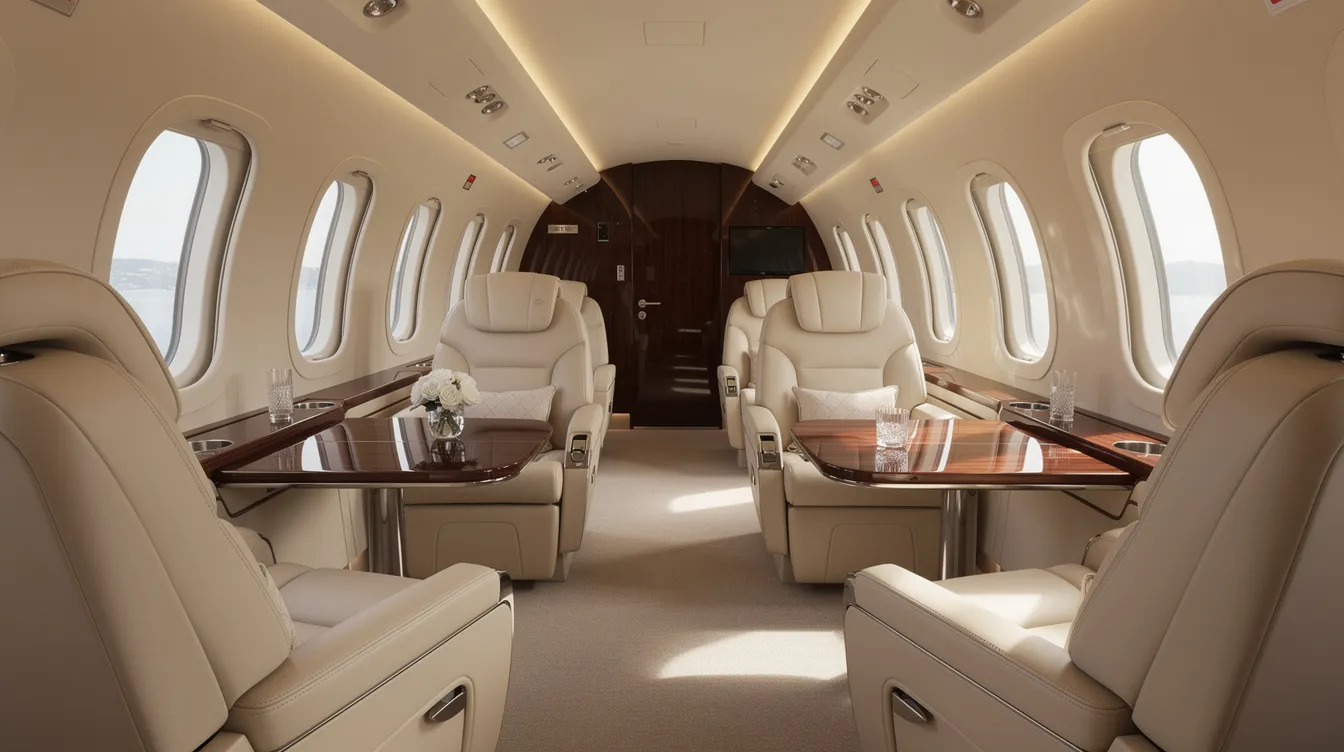
The luxury personal jet market is rapidly evolving, offering travelers access to high-end private aviation without the need for ownership. This comprehensive guide covers various categories of jets, from light jets to VIP airliners, and highlights key features, pricing, and the benefits of chartering through platforms like Jettly. Discover how to select the right aircraft for your mission and explore the future of luxury aviation.
Read More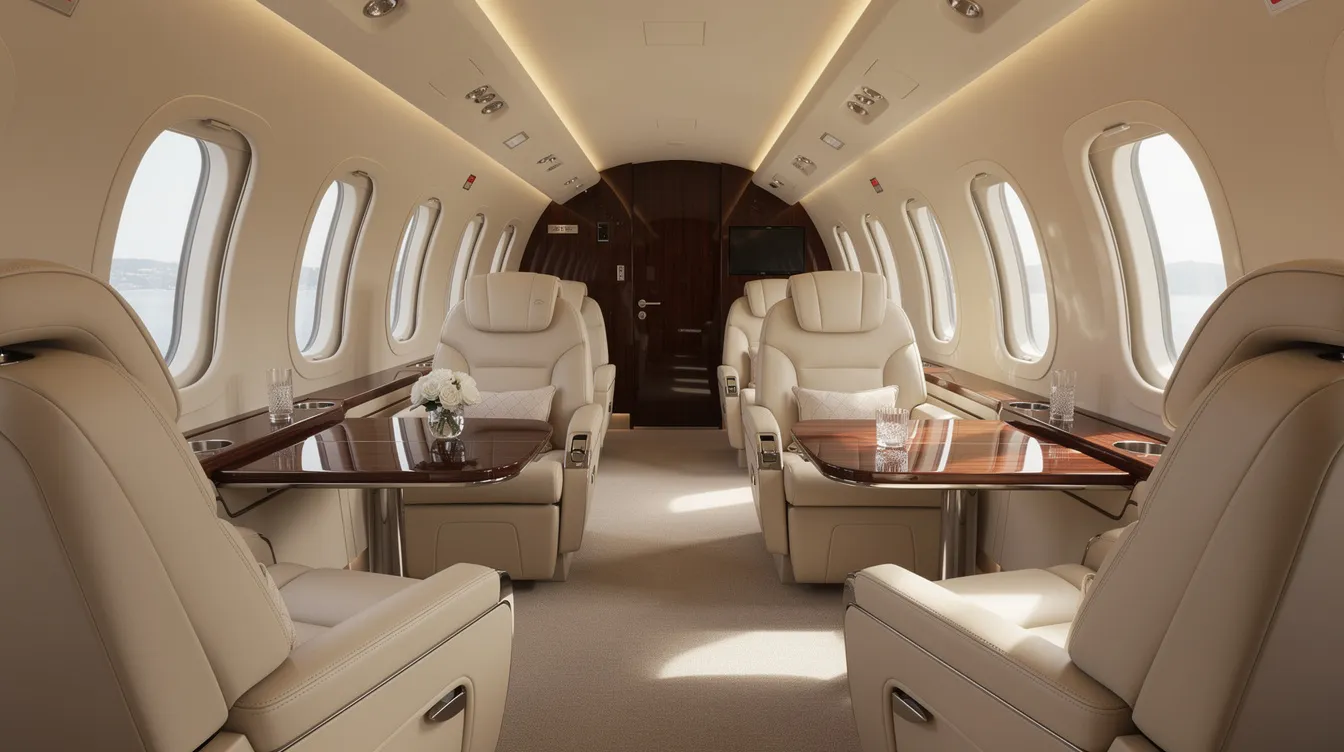
5
min read
Luxury Personal Jet: Ultimate Guide to High-End Private Aviation
The luxury personal jet market is rapidly evolving, offering travelers access to high-end private aviation without the need for ownership. This comprehensive guide covers various categories of jets, from light jets to VIP airliners, and highlights key features, pricing, and the benefits of chartering through platforms like Jettly. Discover how to select the right aircraft for your mission and explore the future of luxury aviation.
Read MoreStay updated with our latest insights and tips to elevate your journey with us.
MEMBERSHIPS AND ASSOCIATIONS



Disclaimer: Jettly operates as a charter broker, offering access to a global digital jet charter marketplace. Jettly is not a direct air carrier and does not own or operate aircraft. All advertised flights are conducted by third-party air carriers that are fully licensed and hold the appropriate Part 135 or Part 121 certifications issued by the Federal Aviation Administration (FAA) or equivalent regulatory authorities under U.S. or foreign law. Jettly complies fully with the U.S. Department of Transportation's Part 295 and Part 298 Charter Broker regulations. Jettly does not carry additional liability insurance. Passengers are covered by aircraft operator insurance. TICO: 50023770


