


Login
Get Instant Pricing On 23,000+ Aircraft

>
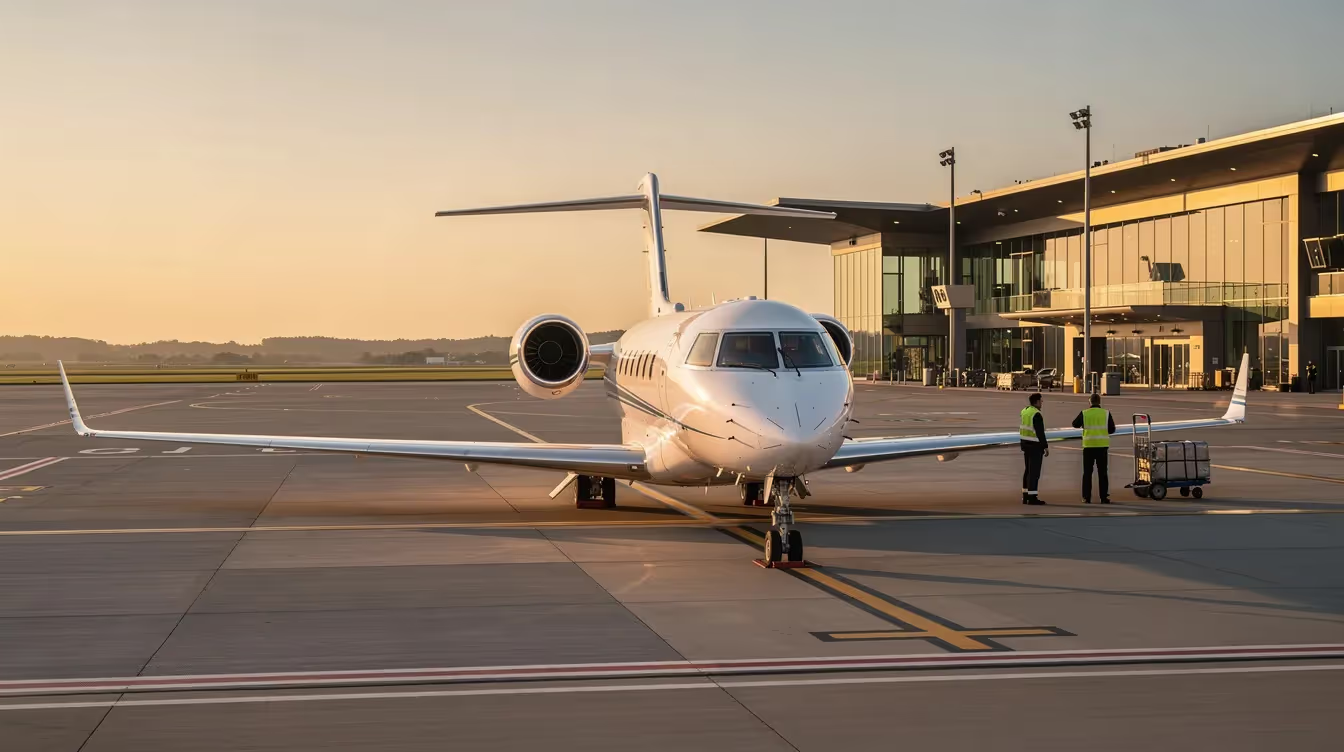
Private jet privacy is a critical consideration for travelers seeking more than just comfort and convenience. In today’s fast-paced world, protecting your identity, itinerary, and personal data during air travel has become a top priority. Privacy is one of the primary benefits of private jet travel, along with comfort and convenience, setting it apart from commercial flights. Unlike commercial flights, private jet travel offers an unparalleled level of privacy by combining exclusive ground services, discreet cabin environments, and secure digital platforms. Jettly’s innovative approach to private jet charters ensures that passengers enjoy not only a seamless travel experience but also robust privacy protections throughout their journey. This article explores how private jet privacy works in 2026, highlighting the measures taken on the ground, in the air, and online to safeguard your travel details and personal information.
Private jet privacy in 2026 covers three layers: physical seclusion from crowds, control over who knows your itinerary, and protection of digital data from booking to landing.
Fixed base operators provide private terminals where passengers board within minutes, avoiding commercial airport crowds and cameras, often featuring private VIP lounges that enhance the low-profile experience.
Flight crew and operators follow strict confidentiality practices, with 95% of Part 135 operators applying non-disclosure standards and requiring signed confidentiality agreements from cabin crew and pilots.
Jettly’s digital platform enables discreet booking with encrypted communications, instant pricing, and minimal data sharing—without the public exposure tied to aircraft ownership.
Private jet travel offers unparalleled flexibility, allowing passengers to schedule flights at their convenience, often with the ability to book as late as 24 hours before departure.
Private jets can fly directly to a vast number of airports worldwide, including smaller regional airports, significantly reducing travel time by eliminating layovers and additional connections—a flexibility explained in detail in guides on where private jets can land and airport access.
For detailed questions on paparazzi avoidance, NDAs, and conducting sensitive business in-flight, see the FAQ section below.
Private jet privacy is not a single feature. It is a system built on three distinct layers: physical privacy (who physically sees you), informational privacy (who knows where you are going and when), and data privacy (how your personal and financial details are stored, shared, and protected). Unlike commercial flights where private jet passengers move through busy terminals and appear on shared manifests, private aviation operates through separate channels designed to minimize exposure at every step.
In North America and Europe, most private jet travel now originates from private terminals operated by fixed base operators. Travelers book through brokers or digital platforms like Jettly to access a broad range of private charter aircraft, which limits the number of people who ever see trip details. This structure reduces public visibility from the moment a trip is quoted to the moment you land.
True private jet security comes from combining these elements: limited-access terminals, controlled passenger lists, discreet cabin crew, secure digital communications, and careful data handling by charter platforms and operators. Executives use this model to protect negotiations and M&A discussions. Families shield personal travel from public view. Medical travelers move discreetly between clinics. Each use case benefits from the same underlying framework.
This article covers ground-level privacy at FBOs, cabin confidentiality, crew discretion, digital security on platforms like Jettly, flight tracking management, and practical steps any traveler can take, complementing broader evaluations of the best private jet charter companies for travelers who prioritize discretion.
Fixed base operators like Signature Flight Support, Atlantic Aviation, and Jet Aviation are specialized aviation service centers that operate separately from commercial terminals. These facilities handle over 1.2 million private movements annually across 200+ global locations, according to Avinode performance metrics, which you can explore in more detail using an airport locator tool. They exist specifically to serve private aircraft owners and charter clients.
The experience differs dramatically from commercial air travel. Private jet passengers arrive curbside, walk into a small lounge with minimal foot traffic, often a private VIP lounge, and board their specific aircraft within 10-15 minutes. There are no long security lines, no baggage carousels, and no exposure to other passengers in public areas.
At high-traffic hubs like Teterboro near New York (170,000 annual operations), Van Nuys in Los Angeles, and Farnborough near London, high profile clients routinely use:
Side-gate entries
Blackout vehicle transfers
VIP lounges with one-way glass
Direct ramp access to the aircraft door
Passenger screening and customs at FBOs happen in soundproof booths or partitioned areas. Specialized personnel conduct private screening processes that are faster and more discreet compared to public TSA lines. For international flights, 80% of US-Europe trips now use digital pre-clearance via eAPIS. Identity checks comply with Federal Aviation Administration (FAA) and International Civil Aviation Organization (ICAO) standards, but occur in a quiet, private environment rather than a busy terminal. Passengers are required to present valid government-issued identification before boarding, helping verify identity and maintain a secure travel environment.
Privacy-conscious travelers should ask their Jettly representative to select FBOs known for discreet handling, especially in cities like Los Angeles, New York, Paris, and Dubai where paparazzi risk is higher.
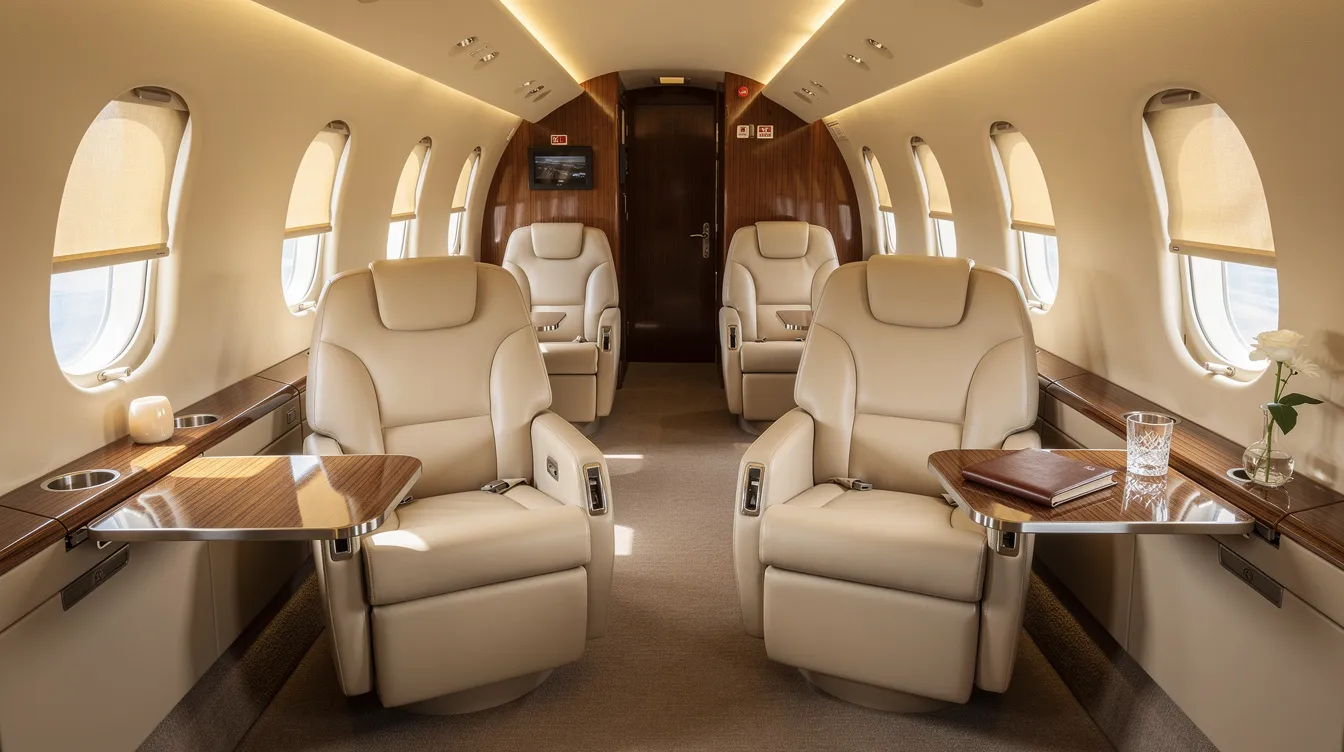
The private aircraft cabin functions as a secure meeting room in the sky. With fewer passengers on board, the cabin environment is exclusive, enhancing both comfort and privacy. Business executives use it for board-level discussions, contract negotiations, and strategy sessions where protecting privacy is essential. The space belongs entirely to your group—no strangers, no interruptions.
On most private jet charters arranged through platforms like Jettly, only the operator, crew members, and designated broker see the manifest and seating plan. Flight itineraries and manifests are treated as confidential and shared only with essential personnel on a need-to-know basis. Vetted passenger lists ensure that all passengers and guests are pre-approved and vetted by the charterer, preventing unauthorized individuals from boarding. This minimizes knowledge of who is on board and reduces the risk of information leaking beyond those who need it for safety and security purposes. Travelers evaluating specific cabin layouts and sound levels can reference broader guides to the best private airplanes or consult resources on choosing the best personal plane to align privacy needs with aircraft selection.
Modern midsize and large jets offer interior features designed for confidentiality, especially among models from leading private plane manufacturers for every budget:
|
Aircraft |
Range |
Privacy Features |
|---|---|---|
|
Gulfstream G450 |
4,350nm |
Zone-dividing bulkhead doors, club seating, convertible divans |
|
Bombardier Challenger 350 |
3,200nm |
Lie-flat beds, enclosed lavatories, conference layouts |
| Embraer Praetor 600 | 4,018nm | 50-55 dB cabin noise (vs. 70-80 dB commercial), separated zones | The sound-dampened cabins on these aircraft reduce the risk of conversations being overheard by crew at the front. For travelers planning sensitive in-flight meetings, specify your need for a divided cabin or conference layout when requesting quotes on Jettly. The platform can match you with aircraft that reflect your privacy preferences.
Professional discretion is embedded in training for corporate and charter flight attendants, pilots, and operations staff. This is not optional—it is a core part of what private jet services deliver.
According to Wyvern standards, 98% of trained cabin crew sign confidentiality agreements covering passenger identities, overheard conversations, and behaviors. NBAA audits recorded 12 dismissals in 2025 for violations of these policies. Private jet operators take protecting privacy seriously because their reputation depends on it.
Unwritten rules for crew include:
No photos or videos of passengers without triple consent (operator, owner, passenger)
No posting tail numbers, dates, or destinations on social media
No sharing stories about private flights, even in private settings
Pseudonyms on manifests for high profile individuals (e.g., “VIP1”)
For celebrity, sports, political, and royal flights, operators implement additional steps: special codes for ground staff, restricted internal access to flight plans, and compartmentalized briefings.
Discerning travelers can request that their charter be marked as “high confidentiality” when booking through Jettly. This signals the operator to apply enhanced protocols before assigning crew.
Much of private jet privacy in 2026 is digital. Most trips are quoted, priced, and confirmed online via platforms like Jettly using tools such as a private jet charter cost estimator rather than over the phone or in person. This creates efficiency—but also requires careful data handling.
Jettly’s marketplace model handles data through:
Secure HTTPS web sessions
AES-256 encryption for payment processing (Stripe-compliant)
SOC 2 Type II audited servers
Zero-knowledge profiles where only post-confirmation essentials reach operators
For regulatory compliance, certain personally identifiable information must be shared. International APIS submissions require full names and dates of birth. Customs authorities need passport details for destination country clearance. However, contact preferences, membership details, and historic trip data stay within the platform.
To maintain anonymity, some private jet operators allow flights to be chartered without linking the passenger's name to the aircraft's tail number. Operators may also use the FAA's Privacy ICAO Address program to assign temporary addresses to aircraft, preventing public tracking in real-time, while privacy-conscious travelers monitor exposure using the best tools for tracking private jets.
Unlike traditional jet ownership or fractional shares, Jettly’s charter model avoids the longer public paper trail. Aircraft ownership ties individuals to specific tail numbers searchable via the Federal Aviation Administration’s public database—1.5 million annual searches access these records, reflecting broader patterns in the global fleet of private jets. Chartering through Jettly rotates aircraft without creating permanent associations.
Practical steps for customers:
Use corporate emails rather than personal addresses for sensitive trips
Separate billing contacts from traveler manifests
Request that invoices avoid naming projects or deal codes
Many business travelers treat private jets as airborne offices. A private jet flight between New York and Miami or London and Zurich becomes productive time for video calls, document review, and secure communications.
Onboard connectivity in 2026 typically runs through Ku-band satellite (50-100 Mbps) or air-to-ground networks (10-20 Mbps). According to Honeywell, 70% of heavy jets are now VPN-ready, with segmented guest networks separate from crew systems.
Security levels vary by operator and aircraft age. Higher-end operators use encrypted VPN tunnels, firewalls, and protected SSIDs to secure email, banking portals, and corporate logins. However, 15% of aircraft routers remain vulnerable to attacks according to 2025 PenTest reports.
Best practices when flying private with Jettly-arranged aircraft:
Always use company VPNs for sensitive work
Avoid accessing highly confidential data on open cabin networks
Confirm in advance whether the aircraft supports secure Wi-Fi
Keep devices with you at all times rather than in checked luggage
Example: A CFO flying from Toronto to Vancouver (1,900nm, 4.5 hours on a Challenger 350) uses a Jettly-chartered midsize jet with encrypted Wi-Fi to review Q1 financials and join a confidential video call en route to a board meeting, leveraging the same on-demand access described in guides on how to get a seat on a private jet and detailed walkthroughs of how to buy a seat on a private jet.

Although private flights avoid crowds, aircraft can still be digitally tracked through tail numbers and flight-tracking platforms unless steps are taken to limit visibility.
Public ADS-B data feeds services like FlightAware (15 million daily users) and Flightradar24. These platforms display aircraft movements in near real-time. However, programs exist to reduce this exposure, and even when evaluating other providers such as XO charter flights and their alternatives, similar privacy considerations apply:
|
Program |
Region |
Effect |
|---|---|---|
|
LADD (Limit Aircraft Data Displayed) |
U.S. |
Blocks public tracking for enrolled aircraft |
|
PIA (Privacy ICAO Address) |
U.S. |
Temporary anonymized aircraft addresses |
|
EASA tools |
Europe |
Similar blocking for participating operators |
By 2026, 4,500 aircraft participate in LADD/PIA programs, reducing public visibility by 80-95% according to FAA data. 78% of North American private jet charters now utilize these programs
Common privacy tactics for high profile clients
Chartering instead of owning (rotates tail numbers) or using crowdsourced private jet flights and shared empty seats when appropriate
Scheduling departures at off-peak times (2-5 AM reduces spotters by 90%)
Using alternative airports away from celebrity hotspots
Coordinating ground transportation directly to the aircraft door
Paparazzi risk concentrates at a small number of airports: Van Nuys (25 incidents per quarter), Teterboro, and Nice during Cannes. Choosing quieter FBOs like Oxford or Morristown significantly reduces visibility and mirrors the low-profile strategies often discussed in looks at the best celebrity private jets and in guides to the charter airlines and private aviation market.
Clients concerned about tracking should discuss options with their Jettly representative, who can propose specific airports, departure times, and operators experienced in discreet operations.
Privacy expectations vary by trip type. An IPO roadshow has different needs from a family holiday or a same-day medical transfer.
Business travel: For executives planning cross-border deals, understanding private jets on international flights ensures privacy protections extend through customs and overflight procedures.
Unparalleled flexibility to schedule flights at your convenience, often booking as late as 24 hours before departure
Quiet cabins (52 dB) for negotiations
Conference tables and Wi-Fi for productivity
Crew trained to fade into the background
Allowing passengers to work on sensitive information without interruption
Private jet cabins offer a level of luxury and privacy that surpasses even first class on commercial airlines, ensuring an exclusive and comfortable environment for business travelers
Family travel: Discreet service can include tailored amenities and in-flight catering for private jets that respect dietary needs without drawing attention, especially when paired with the best private planes for families that prioritize comfort and safety.
Entire cabin to one group—no other passengers, with aircraft chosen according to how many passengers a private jet can carry
Flexible seating for children and elderly members
Private terminal access avoids gate stress, with private VIP lounges enhancing the experience, especially when coordinated through vetted operators such as Dexter Air Taxi private jet services
Complete control over the private jet journey, particularly when using instant-book marketplaces like Zenflight private jet charter
Passengers can request specific meals tailored to dietary needs or preferences, such as special meals for children or favorite dishes, enhancing comfort during the flight
Medical or sensitive personal travel: Patients sometimes compare major providers such as NetJets and other leading operators or explore a NetJets alternative like Jettly before choosing the privacy model that best fits their situation.
Discreet point-to-point travel without public exposure
Operators experienced with medical privacy and special requests
Medevac configurations with oxygen and privacy screens available
Minimal time spent in public areas
Private jet travel offers unique needs accommodation that commercial airlines cannot match. When submitting quote requests on Jettly, or choosing among different private jet memberships and comparing the best jet card programs today, be explicit about priorities: “no branding on the ramp,” “quiet boarding,” or “separate cabin zones for meetings and rest.”
Jettly is a digital charter marketplace providing on-demand access to over 20,000 aircraft without the visibility and commitments of ownership or jet cards. Unlike owning an aircraft, chartering through Jettly lets travelers access different aircraft for each trip, avoiding the long-term obligations and public visibility that come with owning their own aircraft. For frequent flyers who still want predictable pricing, jet card programs offer another structured option, and tools like Jettly’s Jet Card Flight Cost Estimator help calculate approximate pricing by route. This structure naturally supports privacy—travelers access different aircraft for different trips without creating permanent public associations.
The platform’s transparent, instant pricing allows users to compare options without lengthy email chains revealing personal details to multiple private jet operators at once. Traditional brokers often circulate proposals widely; Jettly limits operator access until confirmation, while also inviting partners to promote these services through its ULTRA High Ticket Affiliate Program.
User creates an account and submits trip details
Platform shows pricing options instantly
Only after flight confirmation are essential passenger details shared with the selected operator
Operators receive minimal information needed for safety checks and regulatory compliance
Jettly partners with regulated, safety-vetted operators (FAA Part 135, Transport Canada-compliant, EASA-approved) who already apply strict security protocols. Understanding how Part 135 charter companies operate helps travelers appreciate the regulatory backbone behind these privacy and safety measures. These operators achieve 99.9% safety ratings per ARGUS standards.
Learn more about charter options and membership models at jettly.com.
Apply these steps on your next charter to enhance your secure travel experience, while also considering how affordable private jet charter strategies and broader guidance on affordable aeroplane rent costs and options can fit within your security and privacy priorities:
Use separate email addresses for high-profile trips—corporate or burner accounts for ultra-sensitive bookings
Request NDAs for crew when appropriate (common for 15-20% of high-profile flights)
Limit itinerary access to need-to-know contacts only
Avoid real-time social posts showing tail numbers, FBOs, or departure times—delay posts 24+ hours
Choose low-traffic airports and FBOs, especially during events like Art Basel Miami, Cannes Film Festival, or Davos
Use encrypted storage (VeraCrypt or similar) for travel documents
Keep devices with you at all times—never in checked luggage
Speak openly with your Jettly representative about specific concerns so operators and crew can plan accordingly
These steps help high net worth individuals, business executives, and families maintain control over their travel plans without compromising safety, and complement broader planning around how much a private jet costs in different usage models.

Complete invisibility is rarely possible due to ADS-B broadcast requirements mandated by the Transportation Security Administration and aviation authorities. However, operators can enroll in blocking programs like the FAA’s LADD and PIA programs, which limit public tracking visibility by 80-95%. Chartering instead of owning aircraft further reduces traceability since your name is not permanently tied to a specific aircraft. Ask Jettly to match you with operators participating in available blocking programs.
Crew typically work under general confidentiality clauses with their employer, covering all flights. For especially sensitive trips, some operators will sign passenger-specific confidentiality agreements covering that private jet flight. This is more common for celebrity, political, or high-stakes corporate travel. Raise this requirement early in the booking process with Jettly so it can be built into the charter agreement.
Many companies conduct board-level meetings on private jets, using the cabin as a secure meeting space. Legal validity depends on corporate bylaws and local regulations—not the fact that the meeting occurs in the air. Delaware corporations, for example, affirm aerial quorums. Confirm with your legal counsel, then request aircraft with conference layouts, connectivity, and privacy features via Jettly.
Jettly uses PCI-DSS compliant secure payment gateways and AES-256 encryption to process credit cards and wire transfers. Operators handling the flight see only the billing details necessary to issue contracts and invoices. Internal access controls limit who can view sensitive information. Use business payment methods for corporate trips and review Jettly’s privacy policies for specifics on data retention.
Avoid posting real-time photos showing aircraft, FBOs, or tail numbers on social media. Do not mention flight times or routes publicly or use event hashtags that reveal your location. Delay social posts until 24+ hours after arrival and blur tail numbers in images. Coordinate with Jettly for low-profile departure times, quieter airports, and minimal ramp presence to support potential threats mitigation and background checks on who can access your information.
Private jet privacy encompasses physical seclusion from crowds, confidential service from trained crew, and digital data protection from booking to landing. It is a system built on multiple layers working together—not a single feature.
Platforms like Jettly make this level of privacy accessible on-demand. There is no need to own an aircraft or sign multi-year contracts. Users access 20,000+ aircraft globally while maintaining control over their data and visibility.
In 2026, serious private jet travelers treat privacy as a strategic business and personal priority. It protects negotiations, shields families, and enables confidential medical travel. Private jets offer an unforgettable experience that commercial flights simply cannot replicate—not just in comfort, but in unparalleled flexibility and discretion.
Ready to experience private travel on your terms? Explore flight options or request a quote at jettly.com.
Share this post:
Jay Franco Serevilla
Apr 22, 2026
|
5
min read
Discover tips and trends in the industry.
5
min read
What Day Is Best to Book a Flight? Data-Backed Timing Tips for Cheap Flights
Finding the best day to book a flight can be tricky, as there's no universal answer. While Sundays may offer slight savings, booking in advance and flying on midweek days like Tuesdays and Wednesdays generally yields better prices. This guide provides valuable insights into optimal booking windows and strategies for both commercial flights and private jet charters.
Read More
5
min read
When Is the Best Time to Order Plane Tickets? (And When to Charter Private Flights Instead)
Discover the best times to order plane tickets and when to consider chartering private flights. This guide outlines optimal booking windows for domestic and international flights, as well as private jet charters, helping travelers save money and time. Learn how to navigate fluctuating prices and maximize your travel experience.
Read MoreStay updated with our latest insights and tips to elevate your journey with us.
MEMBERSHIPS AND ASSOCIATIONS



Disclaimer: Jettly operates as a charter broker, offering access to a global digital jet charter marketplace. Jettly is not a direct air carrier and does not own or operate aircraft. All advertised flights are conducted by third-party air carriers that are fully licensed and hold the appropriate Part 135 or Part 121 certifications issued by the Federal Aviation Administration (FAA) or equivalent regulatory authorities under U.S. or foreign law. Jettly complies fully with the U.S. Department of Transportation's Part 295 and Part 298 Charter Broker regulations. Jettly does not carry additional liability insurance. Passengers are covered by aircraft operator insurance. TICO: 50023770


