


Login
Get Instant Pricing On 23,000+ Aircraft

>
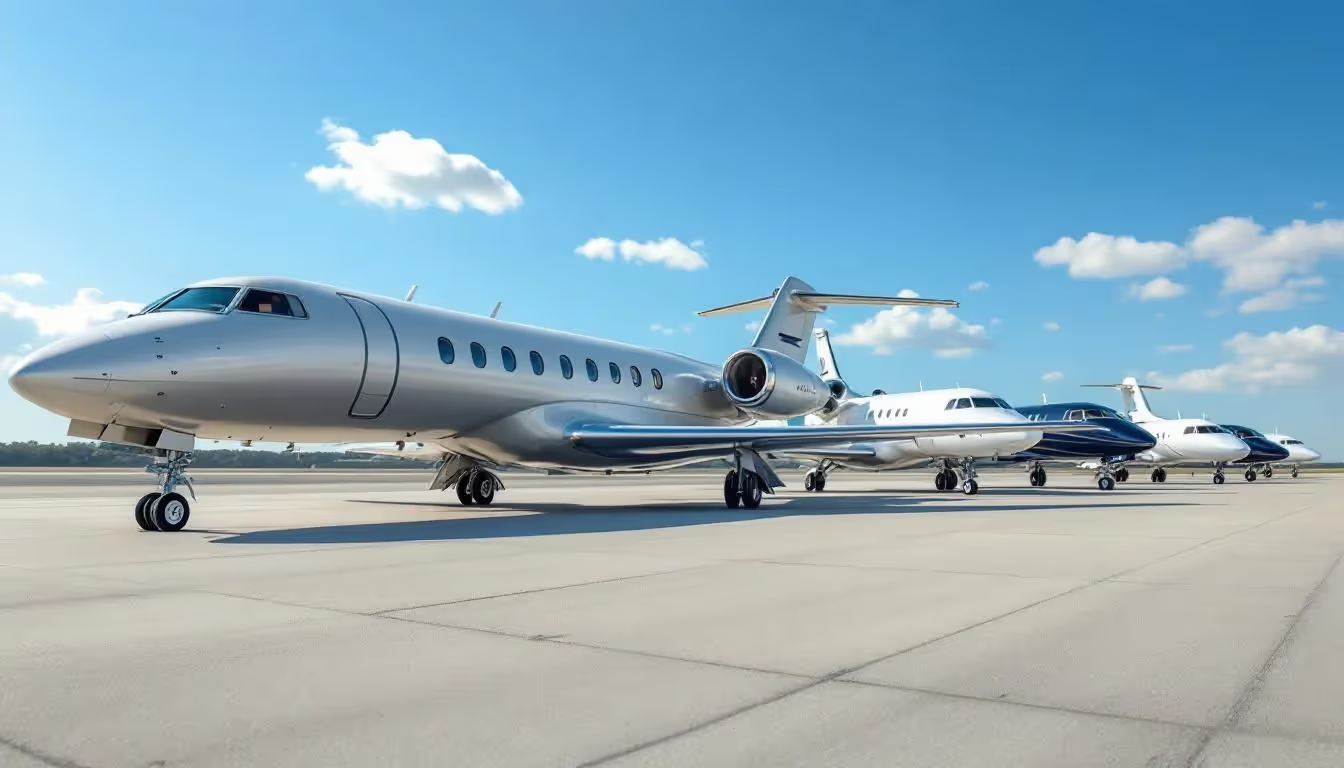
Private aviation has transformed from an exclusive luxury reserved for the ultra-wealthy into an accessible business tool that enhances productivity and efficiency. With over 22,000 active private aircraft in the global fleet, understanding your private jet options has never been more critical for making informed travel decisions. Privacy, comfort, and convenience are just some of the key benefits of flying on a private jet, allowing passengers to conduct business or relax without interruptions.
The private jet market offers seven distinct aircraft categories, each designed to serve specific mission profiles, passenger requirements, and budget considerations. From compact Very Light Jets perfect for regional business travel to spacious Executive Airliners capable of intercontinental journeys, today’s private aircraft deliver unprecedented flexibility compared to commercial airlines.
This comprehensive guide examines every private jet category, analyzes costs, and provides practical selection criteria to help you identify the right private jet for your travel needs. Whether you’re considering charter services or ownership, understanding these private jet options will ensure you make the most cost-effective and efficient choice for your private travel requirements.
Private jets are categorized into seven main types, from Very Light Jets (VLJs) starting at $4,290/hour to Executive Airliners costing up to $12,025/hour
Aircraft selection depends on passenger count (4-48 people), flight range (1,300-11,645 nautical miles), and specific amenities required
Mid-size jets offer the best balance of comfort, range, and cost-effectiveness for most business travelers
Charter services provide access to over 7,000 aircraft worldwide without ownership costs
Total ownership costs include purchase price, hangarage, insurance, crew, and operational expenses that often exceed the initial aircraft cost. The purchase cost of a very light jet like the HondaJet HA-420 ranges from $5 to $8 million.
Private aviation offers a unique and exclusive way to travel, delivering a level of flexibility, comfort, and convenience that commercial airlines cannot match. With a diverse selection of private jets available—from nimble very light jets to ultra-long range jets capable of intercontinental journeys—travelers can tailor their private jet experience to their specific needs and preferences. Whether you’re flying for business or leisure, private jet travel provides a personalized journey, allowing you to set your own schedule, avoid crowded terminals, and access thousands of airports worldwide.
Private aircraft, including renowned models from Gulfstream and Hawker, are designed with passenger comfort in mind. These jets feature spacious cabins, generous storage space for luggage, and advanced entertainment facilities, ensuring that every flight is as enjoyable as it is efficient. For long-haul flights, long-range jets and ultra-long-range jets offer the ability to fly non-stop between continents, making them ideal for global business travelers and those seeking the ultimate in private jet travel. With private aviation, you gain access to a world of convenience, privacy, and luxury that redefines the way you fly.
When considering private jets for your travel needs, it’s essential to understand the key characteristics that set each jet apart. The right private jet will depend on factors such as range, passenger capacity, and onboard amenities. By evaluating these features, you can ensure that your chosen jet or jets will provide the optimal balance of comfort, efficiency, and value for your specific travel requirements.
The range of a private jet refers to the maximum distance it can fly non-stop without refueling, while capacity indicates how many passengers the aircraft can comfortably seat. These two factors are crucial in determining which private jet is best suited for your travel plans. For instance, mid-size private jets like the Cessna Citation Latitude offer an average range of around 2,700 nautical miles and can comfortably seat up to nine passengers, making them ideal for cross-country trips and small group travel. Super mid-size jets provide increased range and capacity, allowing for longer trips and larger groups without sacrificing comfort.
For those requiring intercontinental travel, ultra-long-range jets such as the Bombardier Global 7500 can fly non-stop for up to 7,700 nautical miles, connecting distant cities with ease. These jets are perfect for business travelers who need to fly nonstop between continents or for anyone seeking the utmost in convenience and efficiency. By understanding the average range and passenger capacity of each jet category, you can select a private jet that aligns perfectly with your travel needs, whether it’s for short regional hops or extended international journeys.
Each private jet category features a range of aircraft models, each designed to meet specific travel demands. Very light jets, such as the HondaJet, are perfect for short-haul trips and can easily accommodate up to five passengers, offering a cost-effective and efficient solution for regional travel. Light jets like the Cessna Citation CJ4 provide a good range and can comfortably seat up to seven passengers, making them a popular choice for business travel and small group flights.
Mid-size jets, such as the Gulfstream G150, offer ample space and the ability to fly non-stop for up to five hours, making them suitable for longer domestic routes. Super mid-size jets, including the Bombardier Challenger 350, deliver increased range and capacity, making them ideal for business travelers who require flexibility and comfort on longer trips. For those seeking the ultimate in luxury and performance, heavy jets like the Gulfstream G650 feature large cabins, enclosed bathrooms, and advanced entertainment facilities, ensuring a premium experience on long-haul flights.
By exploring the various aircraft models within each category, you can find a private jet that not only meets your practical requirements but also enhances your overall travel experience with features such as spacious cabins, entertainment facilities, and the ability to fly nonstop to your destination.
The private aviation industry segments aircraft into seven primary categories based on size, passenger capacity, maximum range, and amenities. This classification system helps passengers quickly identify suitable private jet options that match their specific travel requirements and budget constraints. Private jets offer spacious cabins and more legroom compared to commercial airlines, enhancing the overall travel experience.
The evolution of private jets began with converted military aircraft after World War II and has progressed to today’s sophisticated aircraft featuring advanced avionics, noise reduction technology, and luxury appointments. Modern turboprop aircraft and private planes now incorporate fly-by-wire systems, enhanced fuel efficiency, and connectivity options that rival commercial airlines. Additionally, many private jets are equipped with advanced entertainment systems that include personal screens and high-quality sound systems, ensuring an enjoyable journey for passengers.
Key specifications differentiate each category and directly impact your travel experience. Passenger capacity ranges from four passengers in Very Light Jets to 48 in Executive Airliners. Maximum range varies dramatically, with some light jets limited to 1,400 nautical miles while ultra-long-range jets achieve 8,055 miles non-stop. Runway requirements also differ significantly, with smaller aircraft accessing shorter runways at thousands of airports unavailable to commercial aviation.
Aircraft manufacturers like Bombardier Challenger, Cessna Citation, Dassault Falcon, and Gulfstream have developed specialized models for each category. The mid-size jet category represents the most popular segment, offering an optimal balance between operating costs, ample space, and performance capabilities for typical business travel missions.
Understanding these categories allows you to match aircraft capabilities with your mission profile. Short-haul trips between nearby cities require different private jet options than intercontinental travel or large group transportation. The right private jet selection depends on accurately assessing your typical passenger count, flight distances, and required amenities.
Very Light Jets represent the most accessible entry point into private aviation, designed for small groups seeking cost-effective private travel without commercial airline restrictions. These compact private aircraft typically accommodate four to six passengers with limited baggage capacity, making them ideal for short-haul trips and regional business travel. Very light jets are the smallest type of private jet and can typically accommodate four to seven passengers. They are also ideal for short-haul trips and are often used in point-to-point air taxi services.
The defining characteristic of very light jets is their ability to operate with a single pilot, significantly reducing operational costs compared to larger aircraft requiring two pilots. Most VLJs do not have an enclosed lavatory, which means travelers have less privacy and comfort compared to larger jets, and they also lack flight attendant accommodations, focusing instead on efficiency and fuel economy for shorter journeys.
Popular models include the HondaJet HA-420, known for its innovative over-wing engine design and natural laminar flow technology that enhances fuel efficiency. The Cessna Citation Mustang offers proven reliability with excellent access to smaller airports, while the Embraer Phenom 100 provides slightly more cabin space and storage capacity. The Eclipse 500 pioneered the VLJ category with its twin-engine safety and advanced avionics.
Charter rates for very light jets range from $4,290 to $5,304 per hour, making them the most budget-friendly option in private aviation. These aircraft excel at connecting business centers within 1,300 nautical miles, such as New York to Chicago or Los Angeles to San Francisco, while accessing airports with shorter runways that commercial airlines cannot serve.
Light jets expand capacity and comfort while maintaining access to smaller airports and cost effectiveness for regional private travel. These aircraft typically seat five to eight passengers with enclosed lavatories, representing a significant amenity upgrade from very light jets while preserving operational flexibility.
The enhanced passenger capacity and range of 1,400 to 2,500 nautical miles make light jets suitable for coast-to-coast flights within the continental United States. Their ability to use shorter runways provides access to over 5,000 airports worldwide, far exceeding the destinations available through commercial airlines.
Key aircraft in this category include the Cessna Citation CJ2, offering reliable performance and established support networks globally. The aircraft Hawker 400XP provides spacious cabin accommodations with excellent baggage capacity for longer trips. The Dassault Falcon 10 delivers European engineering with exceptional short-field performance and fuel efficiency.
Charter pricing for light jets ranges from $5,850 to $7,176 per hour, providing excellent value for small groups requiring private aircraft flexibility. These jets comfortably seat passengers for business meetings while offering enough space for productive work during flight. Most light jet models feature fold-out divans that convert seating areas into comfortable rest spaces for longer journeys.
Super light jets bridge the gap between standard light jets and mid-size aircraft, offering enhanced cabin space and luggage compartment capacity while maintaining operational efficiency. These aircraft typically accommodate nine to eleven passengers with ranges approaching 2,500 nautical miles, suitable for transcontinental flights and international travel to nearby countries.
The additional cabin volume in super light jets allows for enclosed bathrooms, small conference areas, and service galley facilities that enhance passenger comfort. Enhanced storage space accommodates more luggage than smaller aircraft categories, addressing a common limitation of entry-level private aviation.
Notable models include the Embraer Phenom 300, which leads this category with exceptional performance and spacious cabin design. The Bombardier Learjet 45XR offers speed advantages with established global support networks. The innovative Pilatus PC24 combines jet performance with turboprop aircraft versatility, featuring the ability to operate from unpaved runways. Super light jets are also capable of operating from short runways, allowing access to more private airstrips and smaller airports.
Hourly charter rates for super light jets range from $4,875 to $5,980, offering excellent value for small groups requiring additional space and amenities. These aircraft provide an ideal solution for business travelers who need more comfort than traditional light jets but don’t require the full capabilities of larger aircraft.
Mid-size jets represent the most popular category in private aviation, delivering an optimal balance between comfort, range, and cost-effectiveness for typical business travel requirements. These aircraft accommodate six to twelve passengers with average range capabilities of 2,200 nautical miles, enabling non-stop flights across most continental routes.
The defining features of the mid-size jet category include stand-up cabins, ample luggage space, enclosed bathrooms, and fold-out divans that enhance passenger comfort during longer flights. Most models offer sufficient space for productive business meetings or relaxation, with enough room for passengers to move freely throughout the cabin. Private jets often have comfortable seating that can convert into lie-flat beds. Additionally, private jets feature cabin environment controls that allow for individual climate adjustments, ensuring a personalized and comfortable experience for all passengers.
Flight attendant service becomes available on select models in this category, providing professional hospitality and in-flight catering capabilities that enhance the travel experience. The spacious cabin design accommodates conference rooms and entertainment facilities that support business productivity during private flights. Many larger aircraft have spacious bathrooms, with some offering full showers for added convenience and luxury. Additionally, private jets often provide personalized service with dedicated flight attendants, ensuring a tailored and comfortable journey for passengers.
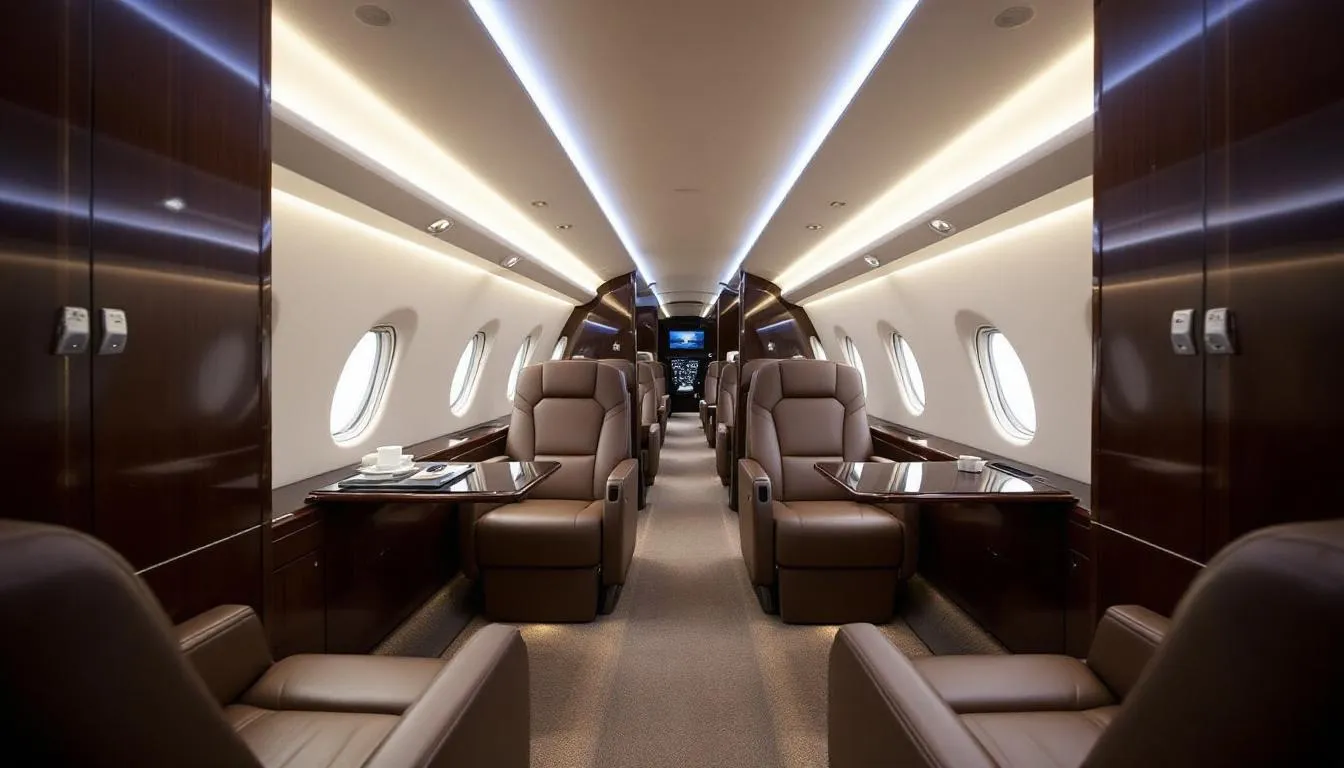
Leading aircraft include the Cessna Citation XLS, known for reliability and global support networks. The Learjet 60 offers exceptional speed performance for time-sensitive business travel. The Gulfstream G150 provides enhanced comfort with excellent fuel efficiency for cost-conscious operators.
Charter costs for mid-size jets range from $6,864 to $9,204 per hour, representing excellent value for small groups requiring comfort and flexibility. These aircraft excel at connecting business centers across continents while maintaining access to thousands of airports unavailable to commercial airlines.
A super mid-size jet extends range capabilities up to 3,600 nautical miles while maintaining the cost-effectiveness and operational flexibility that make this category attractive to business travelers. These aircraft bridge the gap between mid-size convenience and heavy jet luxury, offering enhanced cabin space and payload capacity for longer trips. A super mid-size jet can fly up to seven hours and typically covers an average distance of 3,500 miles.
The increased range enables non-stop transcontinental flights, such as New York to London or Los Angeles to Hawaii, without requiring fuel stops. Enhanced cabin space accommodates service galleys, lie-flat beds, and multiple bathroom options that approach the amenities found in heavy jets. Other features include spacious bathrooms, comfortable beds, and well-equipped service galleys, providing comfort and practicality beyond basic transportation.
These aircraft typically feature advanced avionics, enhanced fuel efficiency, and improved cabin altitude systems that reduce passenger fatigue during long-haul flights. The spacious cabin design allows for productive work environments with high-speed connectivity and entertainment facilities. On-board Wi-Fi is available on larger jets like super-midsize aircraft, allowing travelers to maintain productivity during flights and stay connected throughout their journey.
Popular choices include the Bombardier Challenger 350, offering exceptional comfort with proven reliability. The Cessna Citation Latitude provides excellent fuel efficiency with spacious cabin accommodations. The Gulfstream G280 delivers impressive range with luxury amenities typically found in larger aircraft.
Pricing ranges from $8,580 to $10,920 per hour for charter services, positioning super mid-size jets as cost-effective alternatives to heavy jets for many business travel missions. These aircraft provide the increased range necessary for intercontinental travel while maintaining operational flexibility for accessing smaller airports.
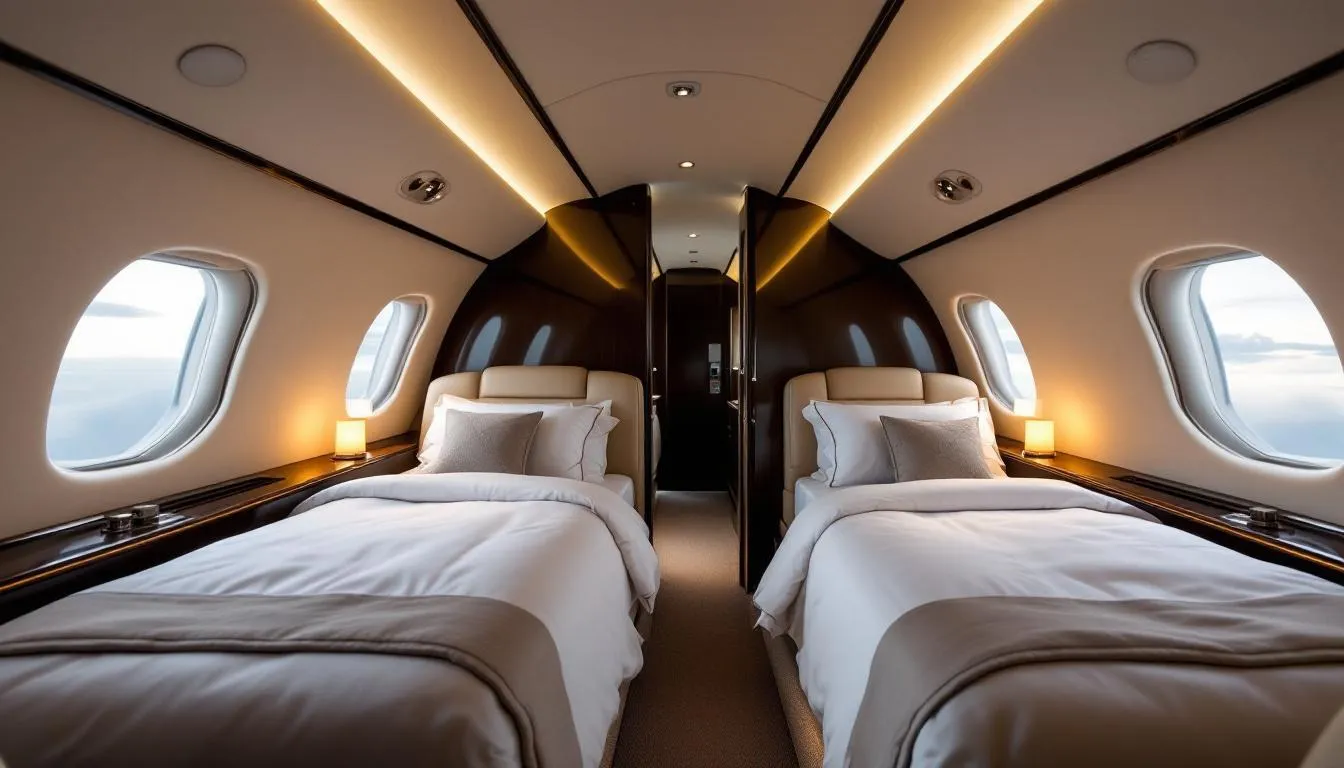
Heavy jets deliver luxury accommodations and full-service amenities for ten to nineteen passengers, representing the premium tier of private aviation below ultra-long-range aircraft. These larger aircraft feature lie-flat beds, comprehensive entertainment systems, full kitchens, and multiple lavatories that create hotel-like comfort during flight. Gourmet dining on private jets often involves meals that are prepared by skilled chefs and tailored to personal preferences.
Some larger private jets even come with enclosed bedrooms that include beds and high-quality linens, offering unparalleled comfort for long journeys. Passengers can enjoy gourmet dining tailored to their preferences while flying on a private jet, further enhancing the luxurious experience. Full-service galleys for in-flight catering are standard on heavy jets, along with ample passenger capacity and entertainment facilities.
The enhanced passenger capacity makes heavy jets ideal for large groups, corporate delegations, or families requiring private travel with maximum comfort. Flight ranges around 4,000 miles enable up to nine hours of non-stop travel, connecting most business centers worldwide without fuel stops.
Dedicated crew areas and space for two flight attendants ensure professional service throughout the journey. Full galleys support elaborate in-flight catering options, while spacious cabins accommodate conference rooms and entertainment areas for business productivity or relaxation.
Top models include the Bombardier Challenger 605, offering proven reliability with spacious cabin design. The Gulfstream 450 provides exceptional range with industry-leading comfort. The Dassault Falcon 900 delivers European engineering with excellent short-field performance for accessing smaller airports.
Charter rates range from $11,856 to $17,550 per hour, reflecting the enhanced capabilities and luxury amenities these aircraft provide. Heavy jets represent the optimal choice for business travelers requiring maximum comfort, productivity, and flexibility for domestic and international travel.
Ultra-long-range jets achieve maximum range capabilities of 6,000 to 8,055 miles, enabling non-stop intercontinental flights that eliminate fuel stops and reduce total travel time. These aircraft connect any two cities worldwide, such as New York to Dubai or Los Angeles to Hong Kong, without intermediate stops. Ultra-long-range jets can fly distances of 6,000 to 7,500 nautical miles.
The extended range capabilities transform global business travel by eliminating the fatigue and delays associated with fuel stops during long-haul flights. Ultra-long range aircraft feature luxury amenities, including master suites, conference rooms, entertainment areas, and full galleys that create productive work environments during extended flights.
Advanced cabin management systems provide high-speed connectivity, satellite communications, and entertainment options that maintain productivity throughout intercontinental journeys. Enhanced fuel efficiency and quiet operation reduce environmental impact while delivering exceptional passenger comfort.
Leading aircraft include the Bombardier Global 6000, offering industry-leading range with exceptional cabin comfort. The Gulfstream G650 provides unmatched speed and luxury appointments. The Dassault Falcon 8X delivers European engineering with excellent fuel efficiency for global access.
Hourly costs range from $9,880 to $12,025, positioning ultra-long-range jets as premium options for time-sensitive global business travel. These aircraft eliminate the need for commercial airlines on international routes while providing unmatched privacy, comfort, and schedule flexibility.
Executive Airliners represent converted commercial aircraft designed for heads of state, sports teams, large corporate groups, and ultra-high-net-worth individuals requiring maximum space and luxury. These aircraft accommodate 19 to 48 passengers with unprecedented luxury features and customization options.
The massive cabin space enables private suites, conference rooms, showers, cocktail lounges, and formal dining areas that create flying offices or luxury hotels. Custom interior configurations support specific mission requirements, from government transport to sports team travel or corporate retreats.
Maximum ranges of around 6,000 to 11,645 nautical miles enable non-stop global travel between any destinations worldwide. The large passenger capacity and cargo space accommodate extensive luggage, equipment, or supplies required for extended international missions.
Examples include the Airbus ACJ319, offering wide-body comfort with excellent fuel efficiency. The Boeing Business Jet 787 provides the latest technology with exceptional range capabilities. The Airbus ACJ380 delivers unprecedented space and luxury for the most demanding missions.
Operating costs vary significantly based on customization and mission requirements, often requiring dedicated flight crews and specialized support teams. These aircraft represent the pinnacle of private aviation for organizations requiring maximum space, range, and luxury amenities.
Understanding the financial implications of private jet options requires careful analysis of charter rates versus ownership expenses, as the optimal choice depends on annual flight hours, mission requirements, and financial preferences. Charter services provide immediate access to private aircraft without ownership responsibilities, while ownership offers long-term control and potential cost advantages for frequent travelers. Hiring a private jet typically allows for simpler logistics and fewer administrative responsibilities compared to ownership. Additionally, ownership of a private jet can offer significant tax benefits in some jurisdictions, further enhancing its appeal for certain buyers. Owning a private jet provides complete control over flight schedules and aircraft usage, offering unmatched flexibility for frequent travelers.
Charter hourly rates vary significantly across aircraft categories, ranging from $4,290 for very light jets to $17,550 for heavy jets. These rates typically include aircraft operation, crew expenses, and basic insurance, providing predictable costs for occasional users. Charter services also offer access to over 7,000 aircraft worldwide through global network providers, ensuring availability for time-sensitive travel requirements.
Purchase prices for new aircraft range from $5-8 million for very light jets to $110+ million for executive airliners, representing substantial capital investments that require careful financial planning. Used aircraft pricing typically runs 50% less than new models, offering cost savings for budget-conscious buyers willing to accept older technology and higher maintenance requirements. This significant price difference makes used private jets an attractive option for those looking to enter the private aviation market without the high upfront costs of new models. Used private jets can cost up to 50 percent less than brand-new models, depending on condition and mileage, making them a viable option for many buyers.
Fractional ownership and jet card programs provide middle-ground alternatives that combine ownership benefits with reduced financial commitment. These programs offer guaranteed availability and consistent aircraft standards while sharing ownership costs among multiple users, making private aviation accessible to businesses with moderate annual flight requirements.
Break-even analysis typically shows charter advantages for users flying less than 150-200 hours annually, while ownership becomes cost-effective for higher utilization levels. However, ownership also provides intangible benefits, including guaranteed availability, custom interior configurations, and complete control over aircraft operations and maintenance standards.
Aircraft ownership involves numerous ongoing expenses beyond the initial purchase price, often totaling 50-100% of the aircraft’s value over a typical ownership period. Understanding these costs prevents budget surprises and enables accurate comparison with charter alternatives for making informed private jet options decisions.
Hangarage costs represent a significant ongoing expense, ranging from hundreds to thousands of dollars monthly, depending on location and aircraft size. Major business centers command premium pricing, while secondary airports offer cost savings for owners willing to accept reduced convenience. Climate-controlled hangarage protects aircraft value and reduces maintenance requirements, justifying higher costs in most markets. For custom-built hangars, costs can escalate to millions, reflecting the premium nature of private jet ownership and the importance of safeguarding these valuable assets. Hangarage costs for private jets can range from a few hundred dollars monthly to millions for a custom-built hangar, depending on the level of customization and location.
Insurance expenses typically average 14% of hull value annually, ranging from $10,000 for light jets to $500,000+ for heavy jets and executive airliners. Coverage includes hull insurance, liability protection, and crew coverage, with rates varying based on pilot experience, aircraft age, and operational territories. Additional coverage for international operations or high-risk destinations increases insurance costs significantly.
Crew expenses scale with aircraft complexity and operational requirements, starting with single-pilot operations for very light jets and progressing to dedicated flight departments for heavy jets and executive airliners. Pilot salaries, benefits, training, and recurrent certification create substantial ongoing costs that increase with aircraft sophistication and operational demands.
Operational expenses, including fuel, maintenance, management fees, and regulatory compliance, often exceed aircraft purchase prices over typical ownership periods. Professional aircraft management companies charge 2-6% of aircraft value annually while providing comprehensive operational support, maintenance oversight, and regulatory compliance that simplifies ownership responsibilities. The operational expenses of private jets include fuel, maintenance, and insurance, among other costs, which can add up significantly over time and should be carefully considered when evaluating ownership.
Selecting the optimal private jet option requires thorough analysis of your typical travel patterns, passenger requirements, and operational preferences to ensure aircraft capabilities match mission demands. This assessment process identifies the most cost-effective and efficient aircraft category for your specific private travel needs.
Typical passenger count represents the primary selection criterion, as aircraft categories align closely with seating capacity requirements. Business travelers flying solo or with small teams benefit from very light jets or light jets, while corporate groups or families require mid-size jets or larger aircraft. Consider both normal passenger loads and occasional requirements for larger groups to avoid operational limitations.
Average flight distances directly determine required aircraft range capabilities, with different private jet options optimized for specific route structures. Regional business travel within 1,000 miles suits very light jets, while transcontinental routes require mid-size jets or larger aircraft. International travel demands ultra-long-range jets or heavy jets with sufficient range for non-stop flights.
Departure and arrival airport requirements significantly impact aircraft selection, as runway length and airport facilities vary dramatically worldwide. Smaller airports with shorter runways limit aircraft choices to light jets and turboprop aircraft, while major airports accommodate all aircraft categories. Access to preferred airports often determines the right private jet category more than other factors.
Required amenities influence aircraft selection as passenger expectations vary from basic transportation to luxury accommodations. Essential features like enclosed lavatories, lie flat beds, conference facilities, or entertainment systems narrow aircraft choices to categories providing these amenities. Flight attendant service becomes necessary for formal dining or complex catering requirements during longer flights.
Different travel scenarios align with specific private jet options that optimize cost-effectiveness, comfort, and operational efficiency. Understanding these applications helps identify the right jet category for your predominant travel patterns while considering occasional requirements that might influence aircraft selection.
Regional business travel between nearby cities benefits from very light jets and light jets that provide cost-effective private aviation access. These aircraft excel at connecting business centers within 1,500 miles while accessing smaller airports unavailable to commercial airlines. Single-pilot operations reduce costs while maintaining schedule flexibility for time-sensitive business requirements.
Transcontinental flights require super mid-size jets to heavy jets that provide sufficient range and comfort for coast-to-coast travel. These aircraft eliminate fuel stops while offering amenities necessary for productive work or comfortable rest during longer journeys. Enhanced baggage capacity accommodates extended business trips or leisure travel requirements.
International travel demands ultra-long-range jets capable of non-stop intercontinental flights that minimize travel time and eliminate immigration delays during fuel stops. These aircraft provide the luxury amenities necessary for extended flights while offering global access that transforms international business operations.
Large group transport scenarios favor heavy jets and executive airliners that accommodate corporate delegations, sports teams, or family groups requiring private travel. The spacious cabins and multiple amenity zones support diverse passenger needs while providing cost advantages compared to chartering multiple smaller aircraft. Many private jets provide ample storage space for luggage, including specialized areas for delicate or oversized items, ensuring that all passengers' needs are met during travel.
Time-sensitive travel situations benefit from charter services that provide immediate availability and flexible routing options. Charter providers maintain ready access to thousands of aircraft worldwide, enabling last-minute departures and schedule changes that support dynamic business requirements.
Choosing the right charter provider significantly impacts your private aviation experience, as service quality, safety standards, and aircraft access vary dramatically among operators. Professional charter brokers offer advantages, including global fleet access, safety vetting, and trip management services that enhance convenience and reliability.
Safety certifications represent the most critical selection criterion, with ARGUS and Wyvern approval standards providing independent verification of operator safety practices. These third-party auditing services evaluate maintenance procedures, pilot qualifications, insurance coverage, and operational standards that ensure consistent safety across charter providers.

Fleet access determines available aircraft options and pricing flexibility, with leading charter brokers providing access to over 7,000 aircraft worldwide. This extensive global network ensures availability for immediate departures, exotic destinations, and peak travel periods when aircraft demand exceeds supply in specific markets.
24/7 support and trip management services distinguish professional charter providers from basic aircraft operators. Comprehensive support includes ground transportation coordination, catering arrangements, customs handling, and real-time flight tracking that eliminates travel complications and ensures seamless private travel experiences.
Empty leg opportunities provide significant cost savings for flexible travelers willing to adjust schedules around aircraft positioning flights. Professional charter brokers maintain databases of empty leg flights that offer 25-50% discounts compared to standard charter rates, making private aviation accessible for budget-conscious travelers.
Real-time positioning software enables efficient pricing and scheduling by identifying nearby aircraft and optimizing routing for cost-effectiveness. Advanced charter brokers utilize sophisticated systems that consider aircraft location, crew duty times, and maintenance schedules to provide accurate pricing and reliable availability for private flights.
Very Light Jets offer the lowest hourly charter rates at $4,290-$5,304 and are perfect for regional travel with 4-6 passengers, making them ideal entry points into private aviation.
Light jets have maximum ranges of 2,500 nautical miles, making them unsuitable for transatlantic or transpacific travel but perfect for regional international routes like the US to Canada or Mexico.
Charter provides on-demand access with hourly fees and no ownership responsibilities, while fractional ownership offers guaranteed availability to specific aircraft types with upfront investment and monthly management fees.
For optimal aircraft selection and pricing, book 2-4 weeks ahead, though many charter companies can accommodate same-day requests depending on availability and route.
Additional fees may include fuel surcharges, catering, ground transportation, overnight crew expenses, and international handling fees, typically adding 10-30% to base charter costs.
Choosing the right private jet option is essential to maximize comfort, efficiency, and cost-effectiveness for your travel plans. Whether you require a very light jet for short regional trips, a mid-size or super midsize jet for longer journeys, or an ultra-long-range jet for intercontinental flights, understanding the categories and features of private aircraft helps you make informed decisions tailored to your needs.
For those seeking flexible access to a broad range of private jet options without ownership commitments, charter services like Jettly offer an excellent solution. Jettly provides a user-friendly platform connecting travelers with a global network of private jets, ensuring seamless booking, competitive pricing, and access to premium amenities. Leveraging such services can simplify your private travel experience, delivering convenience and luxury on demand.
By carefully assessing your passenger capacity, flight range, and desired amenities, and considering reputable charter providers like Jettly.com, you can confidently select the right private jet to enhance your business travel or leisure journeys.
Share this post:
Jay Franco Serevilla
Aug 27, 2025
|
5
min read
Discover tips and trends in the industry.
5
min read
Small Private Jet Price: What It Really Costs to Fly vs Own in 2026
In 2026, the cost of small private jets varies significantly based on whether you choose to charter or own. Charter rates for very light jets range from $2,000 to $3,000 per hour, while ownership costs can exceed $1 million annually. This guide provides a comprehensive breakdown of purchase prices, operating costs, and the advantages of chartering versus owning a private jet.
Read More
5
min read
Delta Carrier Code: DL Airline Code, DAL ICAO & How They Affect Your Flights
Understanding Delta's carrier code, DL, and its ICAO code, DAL, is essential for navigating flight bookings and connections. These codes are crucial for identifying Delta flights across various systems, ensuring travelers can manage their itineraries effectively. Whether flying commercially or coordinating private charters, knowing these identifiers enhances the travel experience.
Read MoreStay updated with our latest insights and tips to elevate your journey with us.
MEMBERSHIPS AND ASSOCIATIONS



Disclaimer: Jettly operates as a charter broker, offering access to a global digital jet charter marketplace. Jettly is not a direct air carrier and does not own or operate aircraft. All advertised flights are conducted by third-party air carriers that are fully licensed and hold the appropriate Part 135 or Part 121 certifications issued by the Federal Aviation Administration (FAA) or equivalent regulatory authorities under U.S. or foreign law. Jettly complies fully with the U.S. Department of Transportation's Part 295 and Part 298 Charter Broker regulations. Jettly does not carry additional liability insurance. Passengers are covered by aircraft operator insurance. TICO: 50023770


