


Login
Get Instant Pricing On 23,000+ Aircraft

>
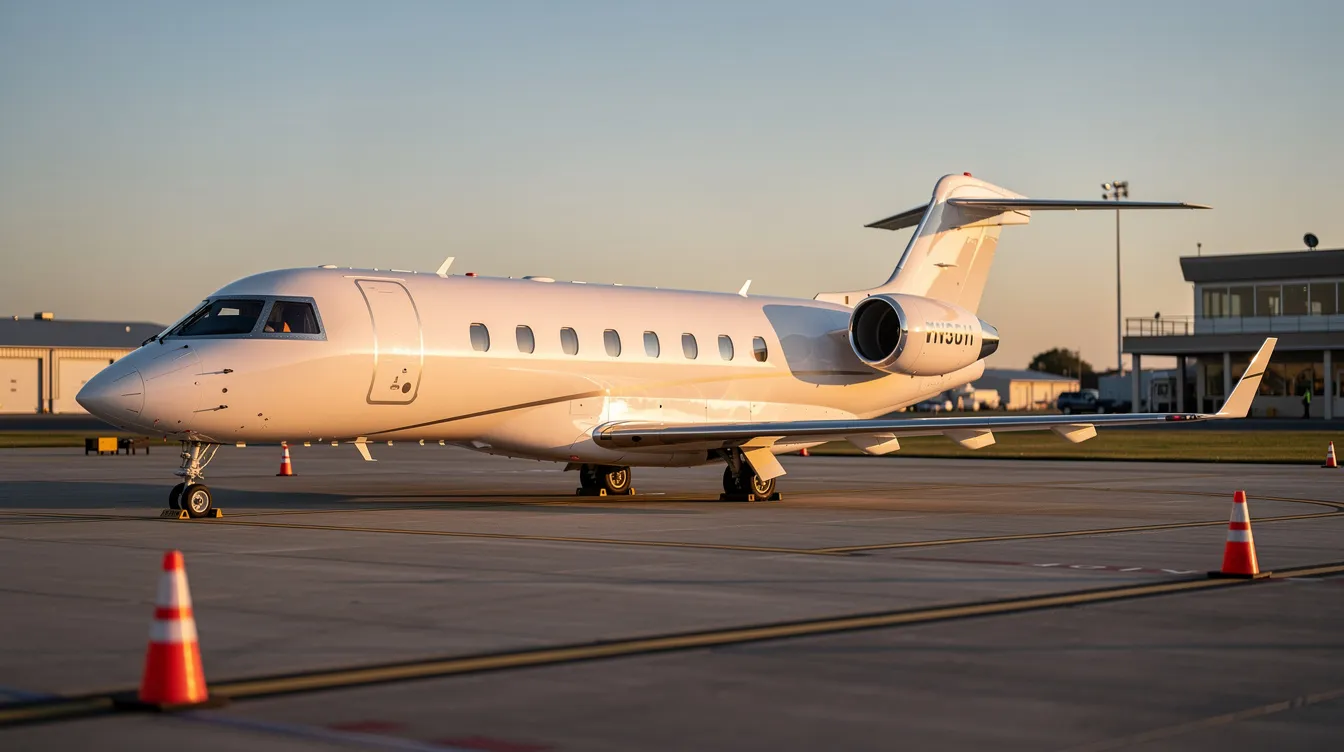
A private jet model refers to a specific aircraft type - think Cessna Citation CJ3+, Gulfstream G700, or Bombardier Global 7500 - each defined by its cabin size, range, speed, and seating configuration. Understanding models matters because even aircraft in the same category can deliver very different experiences in terms of flying time, comfort, and cost.
Private jets are grouped by size and range into very light jets, light jets, mid-size jets, super midsize jets, heavy jets, ultra long range jets, and large VIP airliners, plus niche options like turboprops and helicopters. Private jets typically offer more privacy and comfort compared to commercial airlines, and passengers can arrive just 15 to 30 minutes before departure rather than hours early. Unlike commercial flights, which operate on fixed schedules and routes, private jets can bypass TSA security and offer faster boarding processes. Passengers can also usually retrieve their luggage immediately upon arrival. Chartering a private jet can be significantly more expensive than commercial aviation, but the time savings and flexibility often justify the cost for business and high-frequency travellers. Jettly is a global digital charter platform that lets users filter by aircraft type, passenger capacity, and range across over 20,000 unique aircraft, since model selection depends on several aspects of the trip. It sits within a wider ecosystem of private charter airlines and platforms that have helped make business aviation more accessible.
This guide compares private jet models by size, range, and use case, with a focus on chartering through Jettly's digital marketplace rather than ownership. Here's what matters most:
Very light jets, light jets, mid-size jets, super midsize jets, heavy jets, ultra long range jets, and VIP airliners each serve different trip lengths, passenger counts, and budgets. Choosing the right category can save hours of travel time and thousands of dollars.
Jettly's digital marketplace gives access to over 20,000 private aircraft globally, allowing travellers to select the best model for each mission without long-term commitments while still benefiting from affordable private jet charter pricing driven by transparent, on-demand quotes.
Advanced technology in modern business jets improves fuel efficiency, cabin comfort, connectivity, and safety - but these features vary significantly by model and year of manufacture.
The sections below explain when to choose each jet type, rough charter price expectations, and how to compare options on Jettly for both business aviation and leisure trips.
Manufacturers, operators, and charter brokers classify private aircraft based on three core metrics: maximum takeoff weight, cabin size, and nonstop range. These technical specs translate into traveller-friendly labels that make selection easier.
The main categories include:
Very light jets (VLJs): 4–6 seats, shortest range, typically under the 10,000-pound maximum takeoff weight limit
Light jets: 6–9 seats, regional reach
Midsize jets: 7–10 seats, transcontinental flights possible
Super midsize jets: 8–12 seats, edge-of-transatlantic capable
Heavy jets: 10–16 seats, intercontinental
Ultra long range jets: 12–19 seats, global range
VIP airliners: 20–100+ seats, converted commercial aircraft
Turboprops and helicopters also play a role in business aviation for short-range or point-to-point missions. Categories overlap - some mid-size jets have ranges approaching super midsize jets, and some heavy models now perform close to ultra long range jets on shorter missions. Payload (number of passengers plus bags) and weather also affect practical range, so published maximum range numbers are best-case scenarios. Jettly's search tools let users filter by both category and hard specs like range and seats, so travellers don't need to memorise technical classifications to find a suitable aircraft.
Very light jets are the smallest jet-powered private aircraft in the charter fleet. They typically seat 4–6 passengers with a maximum range of about 1,200 nautical miles, optimised for flights under roughly 2.5 hours. The NBAA defines VLJs as jets with a gross weight of 10,000 pounds or less, often certified for single-pilot operation.
Key advantages include the ability to operate from small airports with short runways - private jets frequently use smaller airports not accessible to commercial airlines - plus lower charter cost per hour and quick turnarounds for same-day trips. Tools like Jettly's airport locator help travellers identify convenient departure and arrival points for these missions.
Notable models:
|
Model |
Passengers |
Range (nm) |
Cruise Speed |
|---|---|---|---|
|
HondaJet HA-420 |
4–5 |
~1,223 |
~422 KTAS |
|
Embraer Phenom 100EV |
4–5 |
~1,178 |
~390 knots |
Ideal use cases include short regional business meetings and quick leisure trips like Los Angeles–Las Vegas or London–Geneva. Charter rates for VLJs typically run $2,000–$4,500 per hour. On Jettly, VLJs are usually the most cost-effective jet option for small groups of 2–4 travellers on sub-1,000 nm flights.
Light jets step up from VLJs with room for 6–9 passengers and ranges of 1,500 to 2,500 nautical miles, suitable for 3–4 hour flights. They typically feature a small enclosed lavatory, more generous baggage capacity, a basic refreshment centre, and cruise speeds around 430–450 knots.
Popular models:
|
Model |
Passengers |
Range (nm) |
Notes |
|---|---|---|---|
|
Cessna Citation CJ3+ |
Up to 9 |
~2,040 |
Widely used for US regional legs |
|
Learjet 45XR |
~8 |
~1,970 |
Known for high cruise speed |
These jets fit missions like multi-city business day trips, regional charters such as New York–Chicago, or short international hops within Europe or the Middle East. Charter costs for light jets range from roughly $3,500–$6,000 per hour, which can compare favourably to owning one of the cheapest private aircraft for similar missions. On Jettly, light jets often deliver the best cost-benefit for groups of 4–6 who want jet speed without the price tag of midsize or larger jets. For a deeper look at pricing, try the Private Jet Cost Calculator.
Midsize jets hit a sweet spot for many charter clients. They offer stand-up or near stand-up cabins, seating for about 8–10 passengers, and typical ranges up to 3,500 nautical miles. The cabin experience includes club seating plus divan, better soundproofing, and often upgraded in-flight connectivity - strong for productivity in the air.
Concrete examples:
Hawker 900XP: Around 8 passengers, ~2,700 nm range, widely chartered globally since the late 2000s.
Cessna Citation Latitude: Flat-floor cabin with 6 ft stand-up height, ~2,700 nm range, notable for its modern avionics suite.
Ideal routes include US transcontinental flights with one or no fuel stops, intra-Europe routes like London–Athens, and medium-haul corporate roadshows carrying 6–8 executives plus luggage. Hourly rates run $5,000–$8,500, and prospective frequent flyers can use Jettly's jet card flight cost estimator to understand how fixed-rate programs compare with standard charter pricing. On Jettly, midsize jets are frequently chosen when cabin comfort and nonstop reach matter more than the lowest possible price.
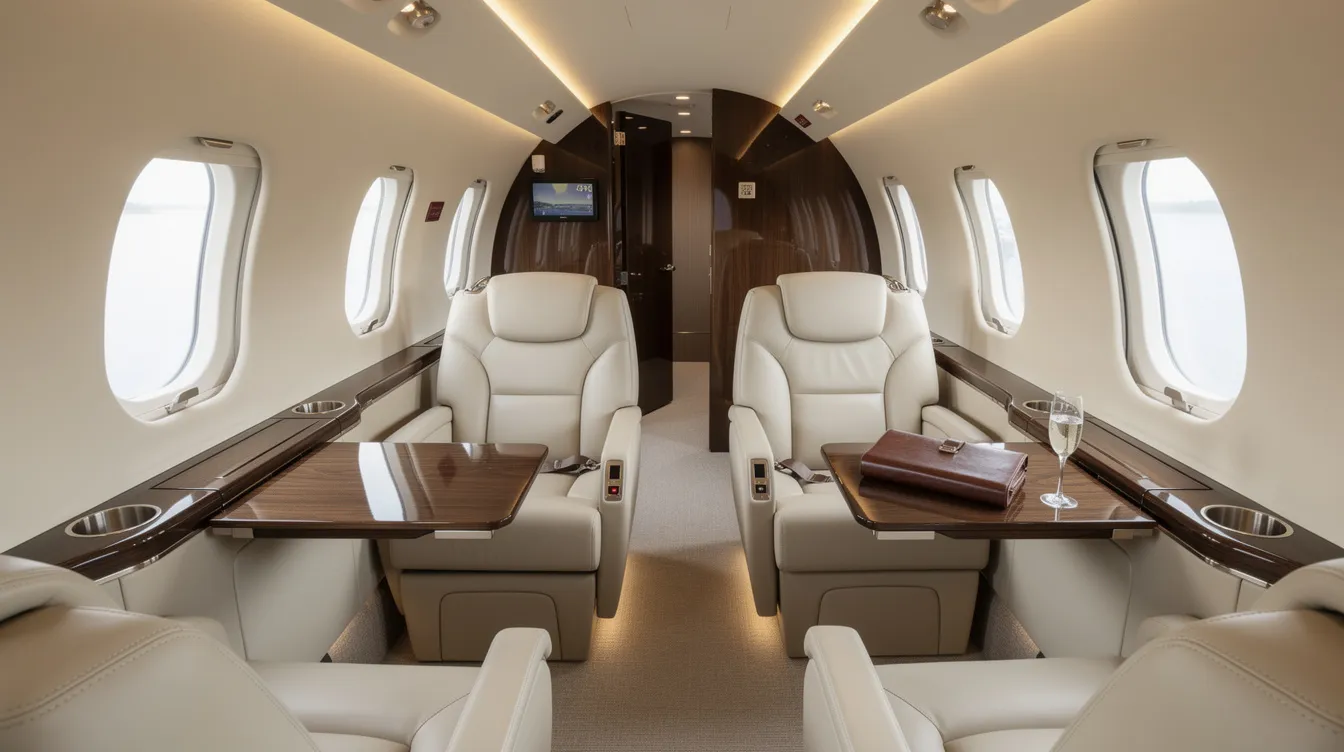
Super midsize jets push the boundaries of the midsize category with seating for 8–12 passengers and ranges reaching 4,000 nautical miles - edge-of-transatlantic capable under favourable conditions. Cabin upgrades include true stand-up space, improved galley and lavatory configurations, and better cabin altitude that reduces fatigue on longer legs.
Key models:
Bombardier Challenger 350 / 3500: Typically 9–10 passengers, ~3,200 nm range, one of the most chartered super midsize jets in North America for nonstop coast-to-coast trips.
Gulfstream G280: Up to 10 passengers, ~3,600–3,900 nm range, with an advanced technology flight deck derived from larger Gulfstream models.
These jets suit coast-to-coast US or Canada flights, transcontinental flights between Europe and the Middle East, and premium leisure where passengers want heavy-jet comfort without heavy-jet cost. Charter rates fall between $6,500–$11,000 per hour. For travellers who prefer predictable pricing, structured jet card programs for super midsize and larger jets can complement on-demand charter. On Jettly, super midsize jets often represent the best value for executives who regularly fly 5+ hour sectors and value speed, cabin comfort, and Wi-Fi connectivity.
Heavy jets are large-cabin business aircraft typically carrying 10–16 passengers. They are designed for long international flights with ranges of roughly 4,000–6,000 nautical miles, featuring spacious interiors and premium amenities. Cabin layouts usually include multiple living zones: forward club seating, mid-cabin conference or dining area, aft divan or bedroom, full-service galley, and large lavatories with improved sound insulation.
Representative models:
Gulfstream G450 / G550: 14–16 passengers, ranges ~4,350–6,750 nm, popular corporate fleet choices for transatlantic and long-haul missions.
Dassault Aviation Falcon 7X: A tri-jet with ~5,950 nm range, fly-by-wire technology, service ceiling of ~51,000 ft, and strong short-runway performance for its size class.
For high-profile individuals, heavy jets offer unparalleled flexibility and luxury on missions like transatlantic crossings with 8–12 passengers, multi-leg international tours, or family travel between continents, including routes to major business hubs such as Kolkata in West Bengal via private charter. On Jettly, heavy jets command hourly rates of $8,500–$14,000 but can eliminate fuel stops, saving several hours on routes like New York–London (typically $75,000–$115,000 one-way).
Ultra long range jets sit at the top tier of the business jet world. They connect cities over 7,000 nautical miles without refuelling - think New York–Hong Kong or London–Singapore nonstop.
Flagship models:
|
Model |
Range (nm) |
In Service Since |
Cabin Zones |
List Price |
|---|---|---|---|---|
|
Bombardier Global 7500 |
~7,700 |
2018 |
4 zones + bedroom |
~$75–80M |
|
Gulfstream G700 |
~7,500 |
Mid-2020s |
Multiple + panoramic windows |
~$78–82M |
VIP airliners ("bizliners") occupy a separate tier. These are converted commercial aircraft like Boeing Business Jets (BBJ series) and Airbus Corporate Jets (ACJ A319/A320). VIP airliners can carry 20–100+ passengers and often include luxurious amenities such as lounges, offices, and master suites, making them ideal for travellers researching how many passengers different private jet sizes can carry. Some private jet users in this segment travel over 350,000 km annually, while others simply buy a single seat on a private jet for occasional access to this level of comfort and privacy.
Ideal use cases include nonstop corporate or government missions, global roadshows, and touring sports teams needing maximum privacy and onboard space, though individuals can also get a seat on a private jet easily through membership, shared flights, or last-minute deals. On Jettly, ultra-long-range jets and VIP airliners sit at the top of the pricing spectrum ($12,000–$20,000+ per hour for ULR; $25,000–$40,000+ for bizliners) but can prove more efficient than multiple first-class commercial tickets when factoring time savings and schedule control.
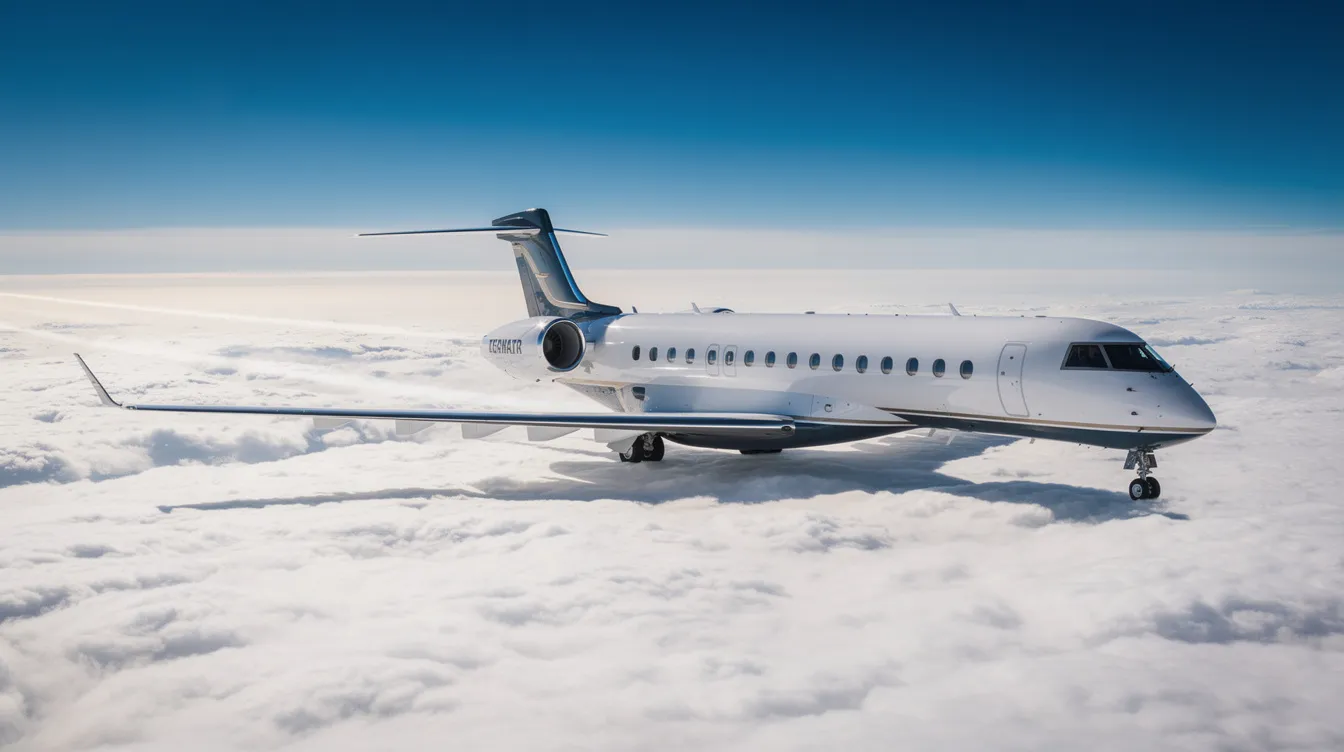
New aircraft from manufacturers like Gulfstream, Bombardier, and Dassault Aviation focus on efficiency, safety, and connectivity. Technology differences between models can significantly impact the charter experience.
Avionics and safety: Glass cockpits with synthetic vision, automatic emergency descent, and data-linked weather systems enhance predictability. Private aviation may have a higher accident risk due to varied operating environments, but modern avionics and strict operator certification help manage that risk.
Cabin tech: High-speed Ka-band Wi-Fi, noise-reduction design, and lower cabin altitudes (~4,500–6,000 ft on models like the Global 7500 and G700) reduce jet lag and support video calls, VPN use, and in-flight productivity.
Sustainability: Winglets, composite structures, and more efficient engines cut fuel burn. However, private jets emit significantly more CO2 than commercial flights, and private jet travel generates thousands of tons of CO2 emissions yearly. Tracking private jet movements has gained widespread media attention, pushing the industry toward sustainable aviation fuel (SAF) adoption. Understanding how leading private jet manufacturers and their latest models tackle efficiency and emissions can further refine aircraft selection. Jettly's platform allows users to compare aircraft by year of manufacture, helping tech-focused travellers choose models with modern features and better efficiency.
When choosing the best private jet model, travellers should keep several factors in mind, including route length, passenger count, luggage, budget, and whether the trip is business-focused, family-oriented, or time-critical. Private jets may have customised scheduling and personalised in-flight services, which means the right aircraft can transform a trip.
Quick selection guide:
|
Trip Profile |
Best Fit |
Why |
|---|---|---|
|
2–6 passengers, sub-3-hour regional |
Very light jets or light jets |
Lower cost, access to small airports |
|
6–10 passengers, 3–6 hour flights |
Mid-size or super midsize jets |
Cabin space, nonstop reach |
|
8–16+ passengers, overnight or intercontinental |
Heavy or ultra long range jets |
Sleep capability, no fuel stops |
|
20+ passengers, delegation or team travel |
VIP airliners |
Cabin zones, offices, conference space |
A Toronto–Vancouver business trip for 5 travellers might fit a midsize jet. A New York–London overnight with 10 executives may justify a heavy jet. A Europe–Middle East family holiday with bulky luggage might need a larger baggage hold on a heavy or super midsize jet, since different trip purposes can make one aircraft category a better fit than another. Jettly simplifies selection by offering instant quotes showing aircraft type, seat count, and operator details. Travellers can also use Jettly's platform to crowdsource private jet flights and share empty seats, further reducing per-passenger costs on select routes. Travellers can also look for empty leg flights on specific models when flexibility allows, sometimes accessing larger jets at lower one-way costs.
Jettly is a B2C digital charter marketplace - not a jet card or fractional ownership provider. It positions itself as a flexible NetJets alternative for flying private, giving users on-demand access to thousands of aircraft worldwide with no long-term contracts.
Typical booking flow:
Enter route and dates on the Jettly website
View instant pricing across multiple private jet categories
Filter by seat count, range, and aircraft year
Review aircraft photos, specs, and operator details
Confirm and pay securely online
The pay-as-you-fly model charges clients only for used flight hours, keeping costs transparent. For frequent flyers, Jettly also offers structured private jet memberships that can unlock wholesale rates and added benefits on this same fleet. Jettly's fleet includes VLJs, light jets, mid-size and super midsize jets, heavy jets, ultra-long-range jets, and VIP airliners. Service features include ground transportation integration on request, in-flight catering coordination, and use of only regulated operators that meet relevant safety standards (FAA Part 135, EASA ops). For a step-by-step walkthrough, see How to Book a Private Jet.
Compare specific aircraft models for upcoming business or leisure trips at www.jettly.com, where Jettly showcases its global private charter aircraft inventory across all major jet categories.
These questions cover practical charter concerns not fully addressed in the sections above.
For flights under 500–700 nm with 2–4 passengers, very light jets like the HondaJet HA-420 or Embraer Phenom 100EV - or efficient turboprops like the Pilatus PC-12 - typically provide the best balance between speed and cost. If the group climbs to 5–7 passengers, light jets such as the Citation CJ3+ may become more economical per seat despite higher hourly rates. Jettly's instant-pricing results let users compare actual costs between categories on specific dates, including airport and handling fees.
Baggage capacity varies widely even within the same category. Some very light jets have limited external holds, while mid-size and heavy jets typically handle skis, golf bags, and multiple large suitcases, even on busy city-pair routes such as private jet charter to and from New Delhi. Travellers with oversized or heavy luggage - film equipment, sports gear - should choose at least a mid-size jet or consult Jettly support to confirm that a chosen model's baggage compartment fits all items, similar to the diligence recommended when renting a plane for custom missions.
Airworthiness depends on maintenance standards and regulatory compliance, not just the calendar age of the aircraft. Many jets from the 1990s and 2000s remain in frontline charter service with modernised avionics. Newer models may offer additional safety features and efficiency, but operators must meet strict safety oversight regardless of aircraft age. Travellers who prefer newer private jet models can filter by year of manufacture on Jettly, just as prospective owners might research the best personal plane for their needs before committing to a specific model.
Jettly typically quotes specific aircraft, including make, model, and often year, so travellers know whether they're booking a Citation Latitude or a Hawker 900XP. While availability may sometimes require substitutions, any change is to an equal or better category and clearly communicated before departure. Clients with strong preferences - for example, a Bombardier Global versus a Gulfstream - can note this in their quote request or use platform filters.
Charter is pay-per-trip with no long-term financial commitment, ideal for those flying fewer hours per year or needing maximum flexibility in aircraft model selection. Fractional ownership allows sharing costs among multiple owners - a quarter share costs one-fourth of the aircraft price, and owners receive a certain number of flight hours or usage rights tied to that share, but fractional ownership also includes monthly management fees and incidentals. The unlimited usage model has been discontinued by most private jet companies, so most fractional programs now charge per hour flown. Travellers comparing these models may benefit from a broader overview of how much a private jet really costs across ownership, leasing, and charter options. Jettly focuses on on-demand charter and membership rather than fractional programs, giving clients access to a broad range of private jet models without ownership complexity, while its ULTRA high-ticket affiliate program rewards partners who refer new flyers into these services.
Understanding the basic categories of private jets helps travellers align aircraft choice with mission profile, comfort expectations, and budget. From very light jets for regional hops to ultra-long-range jets and VIP airliners for nonstop global travel, each model class plays a specific role in modern business aviation today.
Advanced technology, cabin interior, configuration, and year of manufacture all matter - especially for travellers who prioritise connectivity, work productivity, or rest on board. The right private jet model is the one that meets your route, group size, and purpose without overspending. Use Jettly's digital platform to quickly compare options, view pricing, and find the aircraft that fits your next trip.
Experience private travel tailored to your needs. Discover flight options or request a quote at https://www.jettly.com.
Share this post:
Jay Franco Serevilla
Jul 20, 2026
|
5
min read
Discover tips and trends in the industry.

5
min read
Busy airports for private jets during back-to-school season
Late August to early September triggers a surge in private aviation as summer travel ends, corporate travel resumes, and families transport students to major universities. Key hubs like Teterboro Airport (KTEB) and Dallas Love Field (KDAL) experience significant congestion, tight landing slots, and higher rates. To navigate these seasonal bottlenecks, charter operators must plan logistics and crew schedules in advance to accommodate flyer demand and ensure seamless travel.
Read More
5
min read
Destin Airport FL: Complete Guide to Destin–Fort Walton Beach (VPS) & Private Jet Charter
Destin–Fort Walton Beach Airport (VPS) is the main airport serving Florida's Emerald Coast, providing access to Destin and Fort Walton Beach. This guide covers essential information about VPS, including airlines, routes, and private jet charter options through Jettly for a more flexible travel experience.
Read MoreStay updated with our latest insights and tips to elevate your journey with us.
MEMBERSHIPS AND ASSOCIATIONS



Disclaimer: Jettly operates as a charter broker, offering access to a global digital jet charter marketplace. Jettly is not a direct air carrier and does not own or operate aircraft. All advertised flights are conducted by third-party air carriers that are fully licensed and hold the appropriate Part 135 or Part 121 certifications issued by the Federal Aviation Administration (FAA) or equivalent regulatory authorities under U.S. or foreign law. Jettly complies fully with the U.S. Department of Transportation's Part 295 and Part 298 Charter Broker regulations. Jettly does not carry additional liability insurance. Passengers are covered by aircraft operator insurance. TICO: 50023770


