


Login
Get Instant Pricing On 23,000+ Aircraft

>
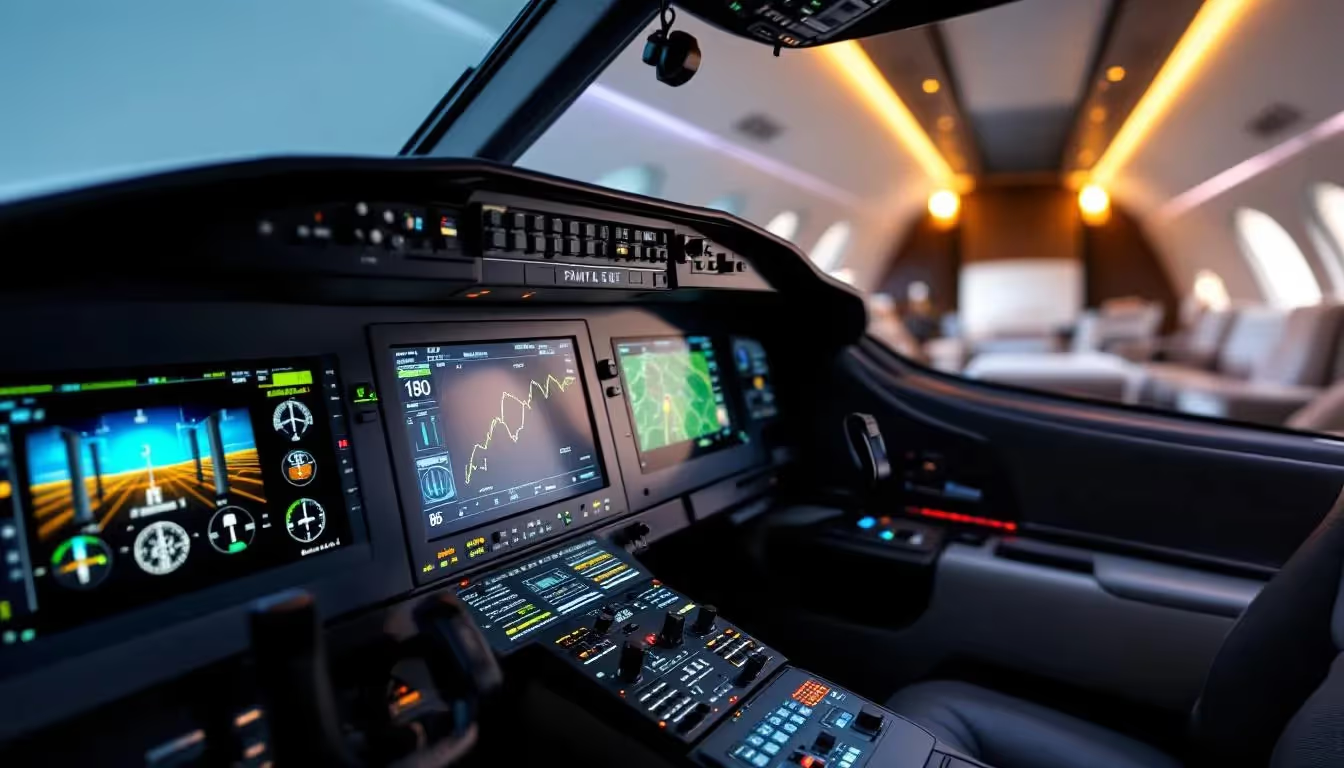
Business aviation plays a pivotal role in the world of executive and luxury travel, offering a tailored, efficient, and private alternative to commercial airlines. Unlike traditional carriers, business jets prioritize convenience, time efficiency, and personalized service. Business jets are generally designed for faster air travel than commercial aircraft. At the heart of this sector are leading aircraft manufacturers, companies that engineer and produce state-of-the-art aircraft for discerning clients.
Business aviation is the specialized sector dedicated to private jets and aircraft for business travel, offering unparalleled flexibility, privacy, and efficiency. Unlike commercial airlines, it allows executives, entrepreneurs, and high-net-worth individuals to travel on their own schedules, access remote destinations, and maximize productivity while in the air.
The private jet industry has experienced remarkable growth, driven by increasing demand for convenience and luxury. Leading manufacturers such as Dassault Aviation, Bombardier, and Gulfstream have set standards for innovation, safety, and performance, producing a diverse worldwide fleet tailored to various business travel needs. Bombardier Aerospace, a Canadian aircraft manufacturer founded in 1937 by Joseph-Armand Bombardier, has restructured its focus solely on the business travel segment after major changes in 2019. From agile light jets designed for short regional hops to spacious large jets capable of intercontinental journeys, the market offers solutions for every mission profile.
In 2022, there were 712 business jets shipped, indicating a strong recovery and interest in private aviation despite previous downturns. North America accounts for approximately 61% of the global demand for private jets, highlighting its dominance in the market. The private aviation sector is growing, with significant market activity in North America, Europe, and Asia. The expected delivery of private jets over the next decade is forecasted to reach 8,683 units, indicating continued growth in private aviation. The increase in wealth among high-net-worth individuals is driving further growth in the private jet market. Economic uncertainty and global events have impacted the private jet market, but recovery trends have shown resilience in demand for luxury travel options.
The introduction of the first private jet, the Learjet, in 1963 marked a turning point in business aviation, ushering in a new era of speed and exclusivity. Since then, manufacturers have continuously pushed the boundaries of technology and comfort, making private jets essential tools for global business leaders. As private aviation evolves, the world’s best private jet manufacturers remain at the forefront, delivering aircraft that combine luxury, performance, and reliability for discerning travelers worldwide.
The concept of private jet travel began in the late 1950s and early 1960s, a period that marked the birth of modern business aviation.
1957: The Lockheed JetStar became the first purpose-built business jet, demonstrating the potential of private aviation for executives. Early business jets like the JetStar were powered by turbojet engines, which enabled higher speeds and longer ranges.
1963: The Learjet 23, often credited as the first true private jet, revolutionized air travel for businesspeople with its sleek design and unmatched speed at the time.
1966: The Gulfstream II had its first flight, marking a significant milestone in business jet history. As one of the earliest large business jets, the Gulfstream II featured advanced specifications such as a high MTOW and powerful turbojet engines, and served as a precursor to Gulfstream's long-range aircraft family. The light jet category, which emerged during this era, is suitable for short to medium distances and typically accommodates 6-8 passengers. The Falcon 7X has a very long range of 11,000 km and can carry up to 16 passengers.
Since then, the industry has seen continuous innovation:
Dassault Aviation, established in 1929 by François Marcel Dassault, used its military aircraft and fighter aviation expertise to produce high-performance business jets like the Falcon 20 in the 1960s. Dassault Aviation entered business aviation in 1963 with the Falcon 20.
Cessna, an American aircraft manufacturer based in Wichita, Kansas, was founded by Clyde Cessna, a pioneer in aircraft construction and aviation innovation.
Beechcraft has a storied legacy shaped by Olive Ann Beech, who played a pivotal role in the company's growth and reputation. The brand later became part of Hawker Beechcraft, known for its diverse range of business and military aircraft.
Honda Aircraft Company, founded in 2006, represents a new generation of manufacturers, integrating cutting-edge efficiency into compact aircraft such as the HondaJet Elite.
Embraer, established in 1969, initially focused on the manufacture of military aircraft before entering the private jet market in 2002 with its Legacy model, marking a milestone in its history and establishing its presence in the executive jet market.
Pilatus Aircraft, based in Stans, Switzerland, specializes in turbine engines for private aircraft, further solidifying its reputation as a leader in the aviation industry.
Over the decades, manufacturers have pushed the limits of speed, safety, comfort, and efficiency, making private jets an integral part of global business infrastructure.
Super midsize jets provide even greater range and luxury. The Bombardier Challenger 350 and Gulfstream G280 are among the most popular aircraft in this segment, favored for their spacious cabins and advanced avionics. Midsize jets offer more range than light jets and can typically accommodate 8-10 passengers. These jets combine the capabilities of both midsize and large jets, often featuring wide-body cabin space and long-range capabilities. Large jets are designed for long-haul travel and often offer more luxurious accommodations for around 10-19 passengers. The Embraer Legacy 500 can carry up to 12 passengers and has a range of 5,790 km.
Light jets are ideal for short to mid-range trips and can access airports with shorter runways. The most popular aircraft in this segment include the Embraer Phenom 300 and Cessna Citation CJ3+, both known for their efficiency and comfort. The Cessna Citation Longitude can carry 12 passengers and has a maximum cruise speed of 483 knots. The Cessna Citation Latitude can carry up to 9 passengers over nearly 5,000 km.
Midsize jets offer more cabin space and range, making them suitable for longer journeys. The most popular aircraft in this category are the Hawker 800XP and the Citation XLS+, which are popular aircraft among business travelers for their performance and reliability. The Hawker 800XP has a range of 4,260 km and can accommodate up to 8 passengers.
Super midsize jets provide even greater range and luxury. The Bombardier Challenger 350 and Gulfstream G280 are among the most popular aircraft in this segment, favored for their spacious cabins and advanced avionics.
Turboprops are valued for their efficiency and ability to operate from short runways and small unpaved runways, making them popular aircraft for accessing remote locations. Cessna, an American company based in Wichita, Kansas, belonging to the Textron Aviation group, has a long history of manufacturing light turboprop aircraft. Cessna has produced models like the Cessna 208 Caravan, which is one of the most popular aircraft in this category.
The Pilatus PC24 can carry up to 11 passengers and has a range of 3,769 km, further showcasing the versatility of turboprops in this segment. Additionally, the Phenom 100, a light jet, can carry 4 passengers and has a range of 2,182 km, making it a popular choice for short regional trips.
Single-engine turboprops, such as the Pilatus PC-12, are known as super versatile jets capable of operating from very small unpaved runways and transporting cargo as well as passengers. These popular aircraft are especially suited for rugged terrains and isolated areas, with the PC-12 being one of the most popular aircraft in its class. Very light jets (VLJs), the smallest type of private jets, accommodate 4-6 passengers and are designed for shorter flights.
Each aircraft category balances range, comfort, capacity, and operating costs, enabling buyers and charter clients to find an ideal match.

When compared to commercial travel, private jets offer a range of benefits:
Privacy and Comfort: No crowded cabins or noisy terminals.
Flexible Scheduling: Choose exact departure times and direct routes.
Exclusive Airport Access: Private jets provide access to smaller or remote airports often inaccessible to commercial airlines.
Customization: Interiors and services are personalized, from catering to seat configuration.
While commercial aviation provides greater affordability and more route options, private jets excel in efficiency, exclusivity, and time-saving convenience. Even the Boeing Company, known for large commercial aircraft, has entered the private space with the Boeing Business Jet (BBJ)—an ultra-luxury version of its commercial models. Boeing launched its business jet series in the late 1990s and utilizes commercial airframes from its iconic airliners.
Private jets are renowned for offering amenities typically reserved for five-star hotels. Common features include:
Spacious, convertible seating for sleeping or working
High-speed internet for business or entertainment
Gourmet kitchens for fine dining onboard
Advanced avionics for smooth navigation
Noise-reducing cabins for comfort and focus
Windows with an elongated oval shape enhance both the aesthetics of the cabin and the passenger experience
For example, the Dassault Falcon 8X boasts:
Three lounge areas
A shower-equipped lavatory
A state-of-the-art flight management system
Bombardier’s Global Express range includes wide-cabin space, full-sized beds, and satellite connectivity—ideal for long-haul comfort. The Global Express can fly between New York and Tokyo or Paris and Singapore without any stopovers.
For clients who regularly fly between continents, range is a critical factor. The following jets are among the best for intercontinental travel:
Gulfstream G650ER
Range: 7,500+ nautical miles
Speed: Mach 0.925
The G650ER is a long-haul private jet and serves as the flagship model of the Gulfstream lineup.
Range: 7,700+ nautical miles
Features: Four living spaces, a full kitchen, and a dedicated crew suite
The Global 7500 is the latest model in Bombardier's long-range jet family.
Dassault Falcon 8X
Range: 6,450+ nautical miles
Efficient tri-jet configuration and flexible cabin layouts
Gulfstream G800
Range: 8,200 nautical miles (15,186 km)
The G800 has the longest range of any business jet, making it ideal for ultra-long-haul travel.
These aircraft allow non-stop flights from New York to Tokyo or London to Buenos Aires in optimal luxury.
Private aviation has drawn criticism for its carbon emissions and fuel usage. High-profile individuals and executives who own private jets contribute significantly to the overall environmental footprint of private aviation. According to the European Commission, aviation must reduce greenhouse gas emissions by 55% by 2030 to meet global climate goals.
Private jet users are increasingly seeking more environmentally friendly options, prompting manufacturers to innovate in sustainable aviation technology. Private jet pricing has been influenced by various economic factors, including inflation and supply chain issues, leading to higher operational costs.
Private jet manufacturers are adapting:
HondaJet Elite is recognized for its fuel efficiency, thanks to over-wing engine mounts and lightweight materials.
Many operators now offer carbon offset programs to mitigate environmental impact.
R&D is ongoing for electric and hybrid-electric propulsion systems, promising a more sustainable future.
Sustainability is increasingly influencing aircraft design and consumer preference.
Private jet ownership models vary depending on travel frequency and budget, and these models apply to both private and executive jets. Fractional ownership of aircraft allows multiple parties to share the costs and usage of a single jet.
Rental and charter services have gained popularity as cost-effective alternatives for users who may not want to purchase private jets outright. Charter operators manage private jets for multiple clients and can handle all aspects of aircraft operation.
Suitable for high-usage clients
Offers maximum control and customization
Costs can exceed $70 million, excluding operational expenses
Shared ownership through providers like NetJets
Lower cost than full ownership with guaranteed access
Prepaid hours on specific aircraft types
Popular for occasional travelers
Pay-per-flight model
Best for flexible or one-time travel needs
Short-term or long-term lease agreements
Offers flexibility without the capital investment of ownership
Jettly supports charter options that make private aviation more accessible than ever.
When evaluating private jet manufacturers, consider the following for both private jets and business aircraft:
Range: Will the aircraft support long-haul, regional, or short hops?
Comfort: Cabin size, layout, and amenities
Operating Costs: Fuel efficiency, maintenance, and crew expenses
Resale Value: Some manufacturers retain value better than others
Technology: Modern avionics, connectivity, and environmental considerations
The residual value level for a five-year-old aircraft is approximately 56% of the list price, reflecting the depreciation of private jets over time.
It's also important to check when a particular model entered service or is expected to enter service, as this affects operational readiness and access to the latest features.
Taking demo flights and consulting experienced charter platforms like Jettly can help streamline the decision-making process.
Known for: Falcon 7X, Falcon 8X
The Falcon range, Dassault's series of private jets, is renowned for its advanced technology and plays a significant role in the private jet market.
Legacy in military aviation contributes to aerodynamic and performance excellence
Offers high customization and cutting-edge flight technology
Known for: G650ER, G500, G280
Renowned for long-range jets with large cabins and luxury finishes
Gulfstream is a subsidiary of General Dynamics, a major aerospace and defense contractor.
The Gulfstream II, first flown in 1966, was a significant milestone in the evolution of Gulfstream's long-range jet family.
Gulfstream Aerospace started as a subsidiary of Grumman, developing its first turboprop military aircraft in 1957.
Gulfstream specializes exclusively in the production of corporate jets and is based in Savannah, USA.
Exceptional customer support and performance pedigree
Known for: Global 7500, Challenger 350
Bombardier, a Canadian aircraft manufacturer, underwent a major restructuring to focus solely on business jets.
Offers both large cabin and midsize jets
Known for advanced safety and smooth ride technology
Bombardier has three product lines: Learjet, Challenger, and Global.
Known for: Cessna Citation series, Beechcraft King Air, and Hawker Beechcraft jets
Textron is the parent company of Cessna and Beechcraft, including the Hawker Beechcraft brand.
Recognized as the best private jet manufacturer in the small jet and light turboprop aircraft market
Strong presence in light and midsize jet categories
Offers reliable, cost-effective aircraft
Cessna's Citation family is considered the largest fleet of private jets with a variety of models.
Known for: HondaJet Elite
Emphasizes innovation and efficiency
Best for short-haul regional travel with modern features
Each manufacturer brings unique strengths, making it essential to match the aircraft to your mission profile and travel frequency. Companies that use private jets produce a higher earnings growth rate than those that strictly use airlines.

Safety is paramount in private aviation, upheld through:
Stringent FAA and international regulations
Advanced safety features like enhanced vision systems, TCAS, and autopilot redundancies
Rigorous maintenance programs and frequent inspections
Highly trained pilots and cabin crew, often exceeding commercial standards
Manufacturers such as Gulfstream and Bombardier lead the industry with integrated safety technologies that set benchmarks for performance and peace of mind. They also ensure the highest quality in structural components and mechanical parts, maintaining strict standards to guarantee safety and reliability in every aircraft.
Business jets may face operational restrictions based on runway length or local noise restrictions.
Stringent FAA and international regulations
Advanced safety features like enhanced vision systems, TCAS, and autopilot redundancies
Rigorous maintenance programs and frequent inspections
Highly trained pilots and cabin crew, often exceeding commercial standards
Manufacturers such as Gulfstream and Bombardier lead the industry with integrated safety technologies that set benchmarks for performance and peace of mind. They also ensure the highest quality in structural components and mechanical parts, maintaining strict standards to guarantee safety and reliability in every aircraft.
Private jets are designed to serve as mobile sanctuaries, offering:
Personalized interior design
Flat beds, personal workspaces, and luxury finishes
In-flight chefs and premium service options
Custom noise insulation and climate control
For example, Gulfstream’s G650ER offers a spa-like lavatory, panoramic windows, and high-end material finishes.
Luxury is not just about amenities—it's about a seamless, tranquil journey tailored to your preferences.
Private jet travel offers:
On-demand flight scheduling
Access to over 5,000+ airports in the U.S. alone—far beyond commercial reach
Last-minute changes without penalties
Quick turnarounds at private terminals (FBOs)
For time-sensitive travel, complex itineraries, or remote destinations, private aviation ensures maximum control and minimal disruption.
In the world of business aviation, the best private jet manufacturers offer far more than just transportation—they provide an experience defined by luxury, convenience, and performance. Private jets can also be adapted for other roles, such as casualty evacuation or express parcel deliveries. Airbus, founded on December 18, 1970, is known for producing large jets that can also be converted into corporate versions, further expanding the options available for business aviation.
Notably, Piaggio Aerospace stands out as the only aircraft manufacturer in the world that produces aircraft, engines, and structural components, and is also a supplier for Whitney engines. Piaggio Aerospace was founded in 1915 and is known for its unique capabilities in producing these components. It's important to note that Piaggio Aerospace and Piaggio & C. Spa are two companies: one focused on aircraft manufacturing, the other on motorcycles and scooters.
Embraer, another industry leader, has developed military aircraft for the Brazilian government, such as the KC390, in addition to its commercial offerings. Business airliners are larger converted aircraft that can carry many passengers and are often used for group travel.
Whether prioritizing:
Speed and distance (Gulfstream)
Cabin luxury (Bombardier)
Innovation and efficiency (HondaJet)
Reliability and value (Textron)
A 2010 study found that small and midsize companies using private jets experienced a 219% higher earnings growth rate.
… there is a perfect aircraft for every traveler.
Those considering ownership or charter can benefit from platforms like Jettly, which simplifies access to a wide range of aircraft across all categories and manufacturers. With personalized flight services, on-demand booking, and competitive pricing, Jettly is redefining access to private aviation for luxury-focused travelers.
Ready to experience the world’s leading private jets? Explore your travel options with Jettly today →
Share this post:
Jay Franco Serevilla
Sep 2, 2025
|
5
min read
Discover tips and trends in the industry.
5
min read
Arrow Jets: How Jettly Makes Private Jet Travel Simple, Fast, and Transparent
Jettly revolutionizes private jet travel by offering a digital platform that simplifies the booking process for over 20,000 aircraft worldwide. With instant pricing and transparent cost breakdowns, travelers can easily access fast, direct flights tailored to their needs. This on-demand model eliminates the complexities of traditional jet ownership, making private aviation more accessible and efficient.
Read More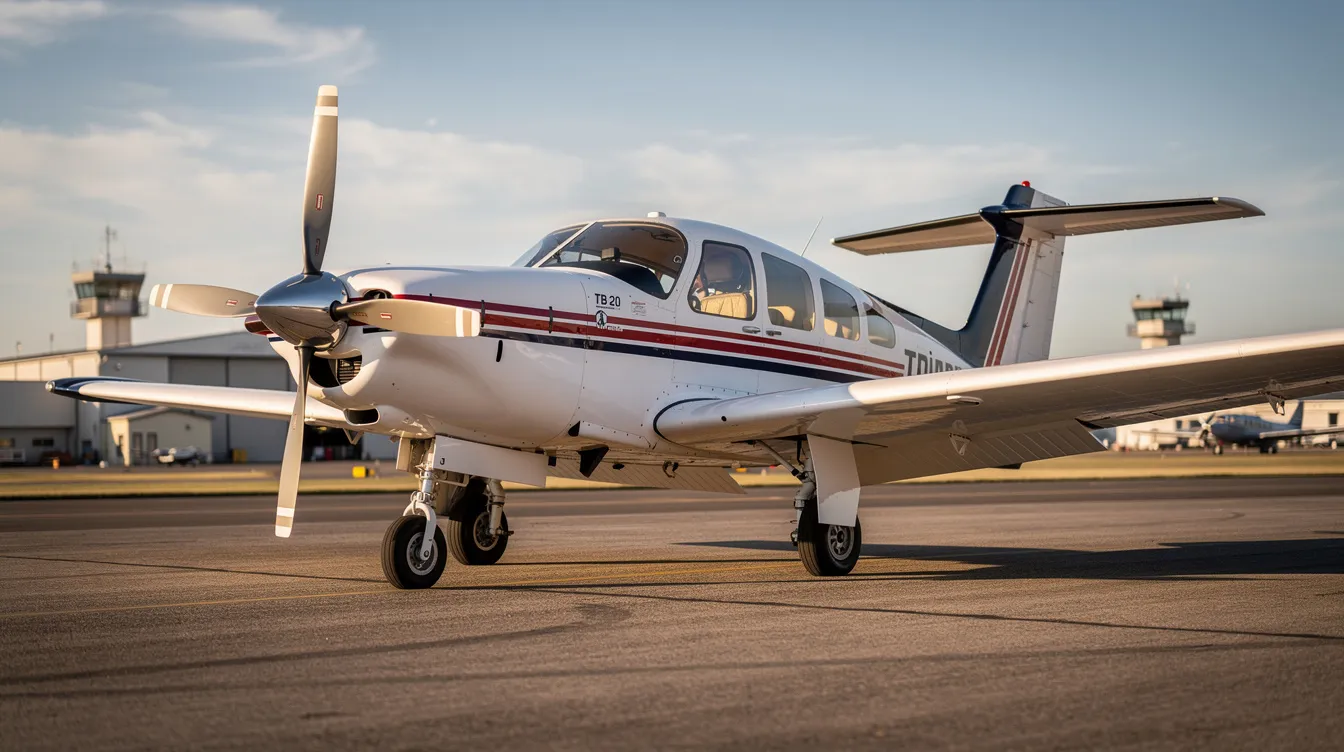
5
min read
Socata TB Series Guide: TB 20 Trinidad and Related Models
The Socata TB series, particularly the TB 20 Trinidad, is a renowned family of French single-engine aircraft designed for touring and training. With its spacious cabin and retractable landing gear, the TB 20 is favored by private pilots and flight schools for its performance and comfort. This guide explores the TB series' features, variants, and its relevance in modern private aviation.
Read MoreStay updated with our latest insights and tips to elevate your journey with us.
MEMBERSHIPS AND ASSOCIATIONS



Disclaimer: Jettly operates as a charter broker, offering access to a global digital jet charter marketplace. Jettly is not a direct air carrier and does not own or operate aircraft. All advertised flights are conducted by third-party air carriers that are fully licensed and hold the appropriate Part 135 or Part 121 certifications issued by the Federal Aviation Administration (FAA) or equivalent regulatory authorities under U.S. or foreign law. Jettly complies fully with the U.S. Department of Transportation's Part 295 and Part 298 Charter Broker regulations. Jettly does not carry additional liability insurance. Passengers are covered by aircraft operator insurance. TICO: 50023770


