


Login
Get Instant Pricing On 23,000+ Aircraft

>
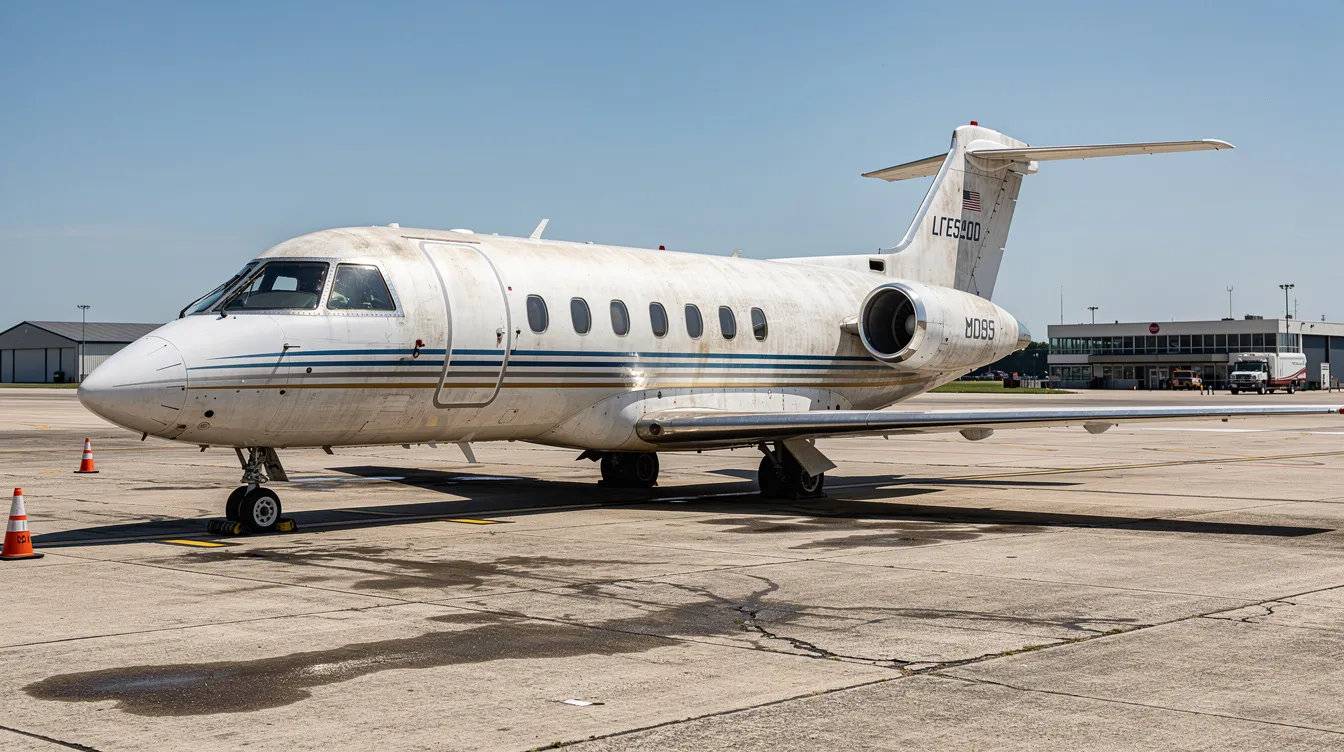
The idea of buying a private jet for sale under 1 million dollars appeals to anyone tired of commercial airport lines and rigid schedules. But what does that price tag actually buy in today's market? This guide breaks down the aircraft available, the real costs of private jet ownership, and when chartering through a platform like Jettly makes more financial sense than signing a purchase agreement.
Most private jets for sale under one million dollars are 20 to 40 years old. Expect 1970s and 1980s light jets like the Cessna Citation 500 (roughly $500,000 to $800,000) and Learjet 35A (around $525,000 to $850,000), plus a few well-used King Air turboprops near $900,000 to $1.1 million. Purchasing a private jet for under $1 million generally involves older pre-owned turboprops or very light jets, not factory-new aircraft.
Most jets under $1 million are older light jets with high hours. Finding a functional airworthy private jet for under $1 million is rare; only a small fraction of the global fleet trades in this price bracket in any given year.
Total aircraft ownership costs, including maintenance, crew management, hangar, fuel, and insurance, can easily exceed $200,000 to $800,000 per year, even when the purchase price sits below one million dollars. Annual operating costs for sub-$1 million jets commonly run between $400,000 and $700,000.
For most travelers flying under 150 to 200 hours per year, chartering via a platform like Jettly is usually more cost-efficient than owning an older business jet. Most analyses suggest ownership breaks even around 150 to 200 hours per year.
The sections below compare aircraft types, detail ownership vs. charter (including fractional ownership and jet cards), and explain how Jettly provides flexible direct access to private aviation without tying up capital.
As of August 2026, buyers can find several business jets priced under $1 million. These are almost exclusively older light jets and a handful of mid-size jets from the 1970s through early 1990s. New private jets cost anywhere from $5 million to over $80 million, so the sub-$1M bracket consists entirely of pre-owned private jets that have depreciated over decades.
Modern very light jets like the Cirrus Vision Jet or HondaJet list between $2 million and $5 million new. Early-generation very light jets occasionally dip into the $800,000 to $1,100,000 range, but most still sit above the $1M line. The Cirrus Vision, for instance, falls into the very light jet category and seats only a few passengers; even used examples rarely drop below $1.2 million yet.
How many private jets exist worldwide? Approximately 34,900 business jets and turboprops were in active operation as of early 2025. Of those, only about 1,015 were listed for sale in Q1 2026, and a fraction of that inventory falls below $1M. Pre-owned jets can depreciate to below $1 million after several years, but sub-$1 million jets are typically vintage or entry-level pre-owned jets with high airframe hours.
Pros and cons of shopping in this bracket:
Pro: Depreciation has already been absorbed. Price volatility is lower on a maintained airframe enrolled in an engine program.
Pro: For owner-operators comfortable managing upgrades, these aircraft deliver genuine utility for short business trips and regional travel.
Con: Many sub-$1 million aircraft may require expensive retrofits to meet modern FAA EASA mandates (ADS-B Out, WAAS/LPV, RVSM).
Con: Older jets often require significant refurbishment before flying. Cabins lack modern avionics, in-flight connectivity, and the cabin comfort of newer aircraft.
Con: Resale values are weak; financing and insurance are harder to arrange for older jets.
Actual asking prices shift daily, but mid-2026 examples from Controller.com and other pre-owned aircraft for sale databases illustrate what buyers encounter:
1976 to 1982 Cessna Citation 500/501: Cessna Citation 500 models can be found for $500,000 to $800,000, depending on total time, avionics condition, and engine status. A Cessna Citation II from 1979 occasionally appears as low as $350,000 to $450,000 for high-time examples. Classic vintage light jets can sometimes be found for between $400,000 and $900,000.
1980s Beechjet 400A / Hawker 400: Commonly listed at $600,000 to $900,000. These seat up to 7 or 8 passengers, offer better cruise speeds than the Citation 500 series, and appeal to buyers seeking a reliable jet with a pressurized cabin. MSP mechanical APU-equipped examples command premiums.
Older Learjet 35A: Late-1970s and 1980s examples trade between $525,000 and $850,000. A 1980 Learjet 35A with roughly 8,000 hours on the airframe and engines enrolled in Honeywell MSP was recently listed around $525,000. Listings with RRCC enhanced APU upgrades or JSSI parts only head programs trend higher. Older business jets occasionally appear near the upper boundary of $1 million if they carry fresh inspections.
Turboprop alternatives: Many buyers with a $1 million budget pivot to high-performance turboprops. Early-1980s Beechcraft King Air 200 and King Air 100 models list around $800,000 to $1.1M. Turboprops can offer more cabin space and potentially lower operating costs than older jets, plus the ability to access smaller airports with shorter runways.
Asking price vs. reality: Many of these aircraft have deferred maintenance or upcoming heavy checks that can add $200,000 or more soon after purchase. A Bombardier Tucson or Guardian Jet listing that looks cheap on paper may carry engine hours near overhaul limits, effectively pushing the true all-in cost past $1M.
Evaluating older jet aircraft for sale under 1 million requires attention to factors that rarely matter when buying a newer private plane.
Condition and maintenance history. Complete logbooks are non-negotiable. Corrosion checks matter especially on airframes stored in humid climates. Verify recent major inspections, whether the airframe has had a 12-year or "D" check, and whether mandatory ADs (airworthiness directives) are current. Buying a private jet requires careful consideration of ongoing maintenance costs. Many private jets need to pass annual inspections to operate legally.
Avionics and regulatory compliance. Many sub-$1 million jets lack modern cockpit upgrades, requiring investment of $50,000 to $300,000 for ADS-B Out, WAAS/LPV approach capability, RVSM certification, and modern flight management systems. Without these, the aircraft cannot legally fly certain routes or altitudes.
Engines and programs. Older jets can require large expenditures for engine inspections and avionics upgrades. A single engine overhaul on an older jet can cost between $250,000 and $500,000. Check time-since-overhaul and time-before-overhaul carefully. Aircraft with engines enrolled in programs like Rolls-Royce CorporateCare or Honeywell MSP spread overhaul risk through hourly fees, but unenrolled engines carry concentrated financial exposure.
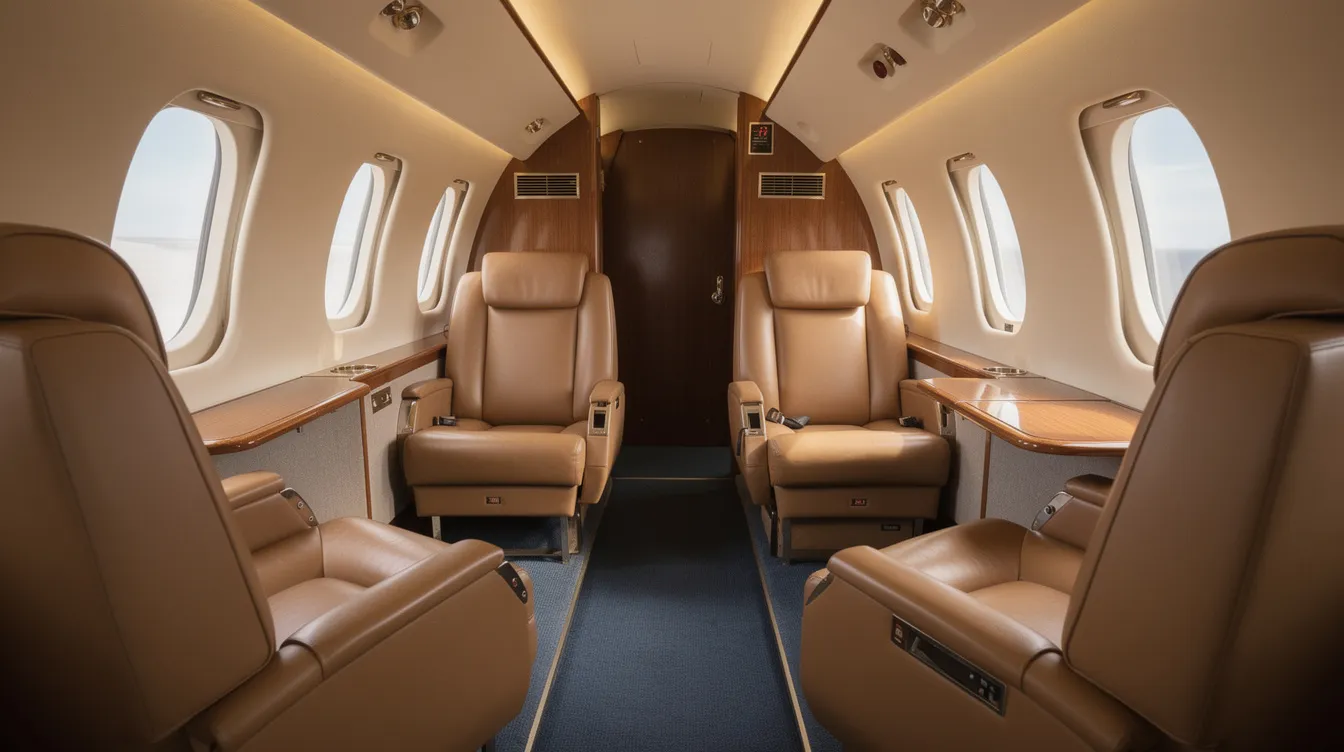
Interior and cabin volume. Older cabins typically have smaller lavatories, dated seat layouts, limited cabin size, and no in-flight Wi-Fi. Refurbishment of soft goods and cabin mods can run $100,000 to $400,000. These aircraft offer less cabin comfort and more space constraints than modern large cabin jets like a Dassault Falcon 2000 or Boeing Business Jet.
Legal and regulatory. Work with an experienced aircraft broker, an aviation attorney, and an independent technical consultant. Title searches, lien checks, escrow management, and regulatory filings protect buyers from costly surprises. Look into whether the jet was a one-owner aircraft or passed through multiple operators, as charter histories can mean higher cycle counts.
A thorough pre-buy inspection is the single most important step when purchasing any private jet under $1 million. Many buyers overlook the need for a comprehensive pre-buy evaluation before purchasing; the consequences of skipping it can include six-figure repair bills within months of closing.
Typical scope of a pre-buy:
Detailed airframe inspection for corrosion, skin condition, and structural integrity
Engine borescope, hot-section checks, and logbook verification against actual component serial numbers
Avionics functionality tests confirming ADS-B Out compliance, autopilot operation, weather radar, and terrain awareness
Cabin systems check covering environmental control, pressurization, seats, galley, and lavatory
A pre-buy inspection can cost between $15,000 and $50,000. For light jets, the typical range is $15,000 to $40,000; complex or cross-border inspections can exceed $50,000.
Findings from the pre-buy are routinely used to renegotiate the purchase price or require the seller to correct discrepancies before closing. Skipping this step on aircraft with previous charter histories or high cycle counts is especially risky, since wear patterns differ from low-utilization private ownership.
Acquiring a private jet for under $1 million is only the first step. Annual operating costs can exceed $200,000 to $800,000, and for many older light jets, operating costs run between $500,000 and $700,000 per year when all expenses are accounted for.
Fixed annual costs (regardless of hours flown):
Hangar and parking: roughly $20,000 to $60,000 per year at US or Canadian airports
Insurance for private jets typically costs $25,000 to $50,000 annually, rising toward the upper end for high-usage or older airframes
Crew salaries and training: a captain and first officer plus recurrent simulator training can exceed $150,000 to $250,000 per year for full-time crew; this is the highest fixed cost for most private jet owners
Maintenance management and compliance reserves: $30,000 to $80,000 per year
Variable costs per flight hour:
Fuel costs for private jets can average $1,000 per hour. Older light jets like the Cessna Citation or Learjet 35A burn $800 to $1,200+ per hour at mid-2026 Jet-A prices
Maintenance costs for older jets can range from $20,000 to $50,000 annually in routine items, plus maintenance reserves of $500 to $1,500 per flight hour accruing toward overhauls
Navigation, landing, and handling fees: $500 to $2,000 per hour depending on airports
Total cost per flight hour for an older light jet, when fully loaded, runs $2,500 to $4,000. Ownership costs can exceed $200,000 annually even in the most optimistic scenario. Factor upcoming engine overhauls or major checks into the first three-year budget; a single overhaul can cost $250,000 to $500,000. Use Jettly's Private Jet Cost Calculator to evaluate these figures against charter pricing for your specific routes.
Your mission profile, meaning typical route lengths, passenger count, baggage needs, and preferred airports, determines which private jet under $1 million actually fits, if any.
Very light jets typically seat 2 to 5 passengers and handle legs of roughly 1,000 to 1,200 nautical miles. Light jets can accommodate up to 7 passengers and cover popular business travel routes like New York to Miami, Toronto to Chicago, or Los Angeles to Las Vegas. Mid-size jets offer increased cabin space for longer trips, and large jets support higher passenger counts and intercontinental flights; both aircraft category groups rarely fall under $1M.
Cruise speeds on sub-$1M light jets range from 350 to 430 knots. For short business trips with four passengers, a Cessna Citation II or Beechjet 400A can handle the job. But cabin comfort trade-offs are real: many of these aircraft lack full galleys, flat beds, or the quiet, wide cabins of modern large-cabin jets. Cabin space is limited; headroom is lower; noise is higher. They still deliver the key advantages of this type of travel: privacy, schedule control, and the ability to access smaller airports compared with scheduled airlines.
Experts recommend considering heavy-duty turboprops over jets for low-utilization owner-operators. Turboprops provide better fuel efficiency, lower operating costs, and often more space than an older light jet at the same purchase price. For some travelers, exploring affordable aeroplane rent options can be a smarter first step than jumping straight to ownership. Travelers who prioritize large jets for cross-country travel or intercontinental trips should realistically expect higher acquisition costs; chartering those missions via Jettly's Aircraft Class Guide is more practical.
The number of annual flight hours a traveler logs usually determines whether buying a private jet under 1 million makes financial sense. For owners flying less than 200 hours annually, chartering may be more cost-effective than ownership.
Charter pricing bands through platforms like Jettly:
Turboprops: around $2,000 to $3,500 per flight hour in North American markets
Light jets: roughly $3,500 to $6,000 per hour depending on route and date
Large cabin jets: $7,000 to $12,000+ per hour on long-range missions
Chartering costs range from $2,000 to $14,000 per hour across all aircraft categories. Through Jettly, travelers access more than 20,000 aircraft in operation worldwide on an on-demand basis, paying only for trips they actually fly. No hangars, no crew management, no extra operating costs sitting idle in a hangar.
Empty leg flights listed on Jettly's Empty Leg Flights page offer steep discounts for flexible passengers, sometimes 50% or more off standard charter rates. For frequent flyers who want cheap private jet charter prices, this is one of the most practical approaches.
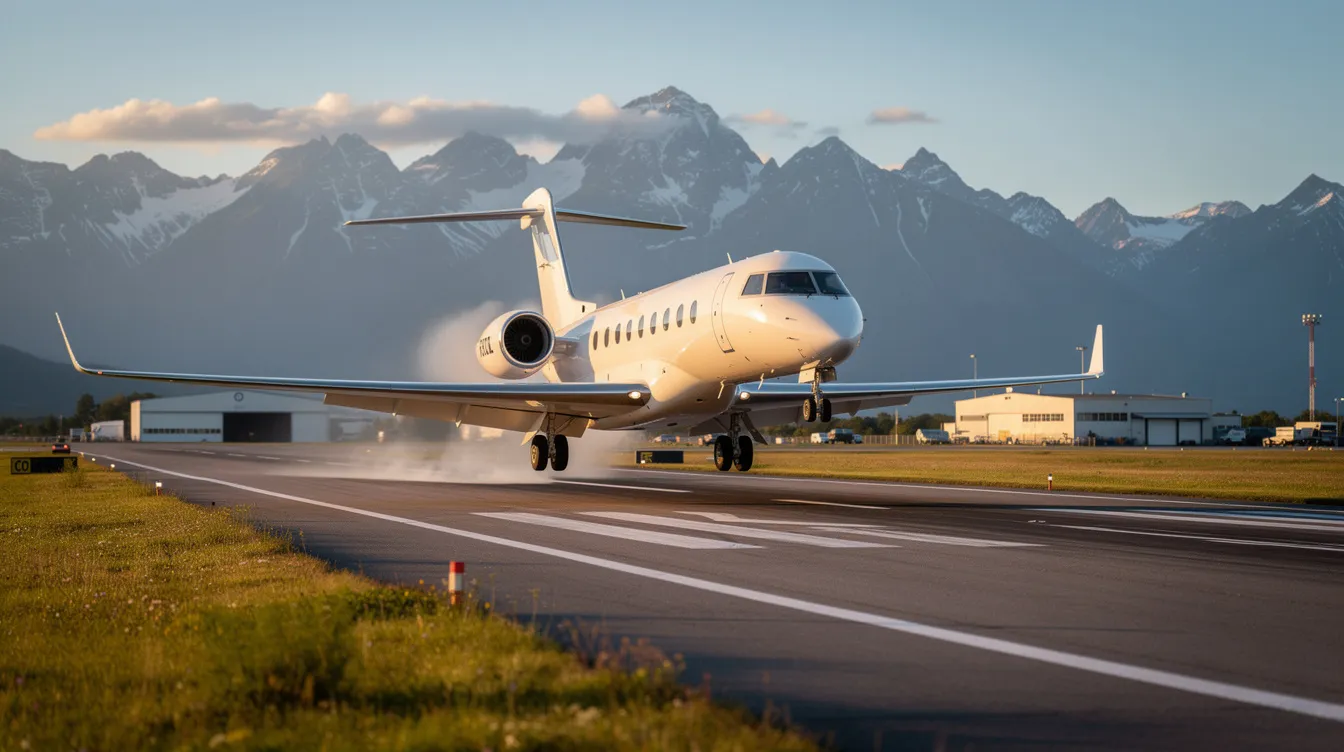
Fractional ownership and jet cards sit between full private ownership and pure on-demand charter. Both are worth evaluating before committing capital to a private jet for sale under 1 million, and a detailed breakdown of fractional jet ownership cost helps clarify where these programs make financial sense.
Fractional ownership means purchasing a share, typically 1/16th or 1/8th, of a specific jet aircraft. Fractional ownership starts from 1/16th of a jet, translating to roughly 50 hours per year. Buyers pay an upfront capital outlay, monthly management fees, and occupied-hour charges. The trade-off: depreciation still applies, contracts typically run 3 to 5 years, and flexibility is limited to the aircraft category you bought into. Jet membership programs through companies like NetJets or Flexjet operate on this model, and understanding the good and bad of fractional private jet ownership is essential before signing a multi‑year contract.
Jet cards offer prepaid blocks of flight time. Jet cards typically offer 25 or 50 hours of flight time at fixed or capped hourly rates with guaranteed availability. They require less capital than fractional ownership but may include blackout dates, fuel surcharges, and membership fees. Travelers comparing options should also review Jettly's world-class corporate jet card programs. See Jettly's Jet Card Pricing & Rates Guide and Fractional Ownership and Jet Cards Guide for a deeper comparison.
Jettly focuses on transparent, tech-driven access: instant pricing, wide aircraft choice across every aircraft category, and no requirement to commit to a single fleet or long-term contract. Readers who like predictable hourly rates can use Jettly's jet card flight cost estimator to compare jet cards to the true all-in cost of owning an older jet under $1M before deciding.
A growing share of travelers who once shopped for older business jets under $1 million now choose digital charter platforms like Jettly. The reason: complexity and capital risk.
Jettly's core offering:
Access to a global inventory of over 20,000 aircraft, from turboprops and light jets to large cabin jets, matching aircraft to each mission rather than forcing every trip into a single airframe
Instant online pricing and booking without the opaque quoting process of traditional brokers
Transparent cost structures with no long-term commitments
Typical use cases:
Corporate executives booking same-day out-and-back trips to regional airports that lack convenient airline service
Families using light jets for school holidays, ski trips, or island vacations where cabin comfort and schedule control matter more than ownership status
Emergency and last-minute executive travel where 24/7 availability and the ability to access smaller airports save hours versus commercial options
Jettly works with certified Part 135 (or local equivalent) operators, meaning audited safety standards, experienced crews, and properly maintained aircraft. Travelers curious about these regulations can read more about Part 135 charter companies and why they matter. The platform helps customers sidestep the sustainability, maintenance, and technology challenges of operating older sub-$1M jets. For anyone new to private travel, Jettly's guide on how to book a private jet walks through the process.
These three scenarios use realistic 2026 cost data to compare private ownership against chartering.
Scenario 1: 60 flight hours per year
A buyer purchases a Cessna Citation 500 for $500,000. Annual fixed costs (hangar, insurance, crew, maintenance management) total roughly $250,000 to $350,000. Variable costs at 60 hours add another $100,000 to $150,000. Total annual ownership cost: approximately $400,000 to $500,000.
Charter via Jettly for 60 hours on light jets at ~$4,500/hr: roughly $270,000
Charter saves $130,000 to $230,000 per year, with zero capital at risk and no crew management burden
Scenario 2: 200 flight hours per year
Same aircraft. Fixed costs remain ~$300,000. Variable costs at 200 hours climb to $400,000 to $500,000. Total: $700,000 to $800,000, before any engine overhaul reserve.
Charter via Jettly for 200 hours at ~$4,500/hr: roughly $900,000
Ownership starts to approach cost parity. But it carries capital risk, downtime, and management effort. Many buyers at this volume still prefer charter for fleet flexibility, since they can switch between turboprops, light jets, and large jets as the mission demands.
Scenario 3: Mixed mission needs
A traveler flies 100 short business hops per year with four passengers but twice per year needs a large cabin Dassault Falcon or Global 5000 for transatlantic trips. Owning a single small private plane under $1M cannot cover this mission mix. A broader look at how much a private jet really costs often shows that flexible access beats owning one airframe. Through Jettly, the traveler books light jets for routine trips and reserves a heavy jet for long-haul legs, paying only for what is needed. Compare costs using Jettly's small private plane cost calculator.

The decision comes down to annual flight hours, financial priorities, tolerance for operational complexity, and desired cabin comfort.
Consider owning if you:
Expect 200+ annual flight hours on similar routes
Are comfortable managing crews, maintenance, and regulatory obligations (or hiring a management company)
Are prepared to invest in modern avionics and cabin upgrades on an older airframe
View the cheapest private aircraft options as a smart investment in time savings for business travel
Consider chartering with Jettly if you:
Fly fewer than 150 to 200 hours annually
Value flexible access to many aircraft types, from Cirrus Vision-class VLJs to large cabin jets, without long-term commitments
Prefer clear digital pricing, quick comparisons, and concierge support without owning metal
Need to mix aircraft categories (turboprops for short hops, large jets for intercontinental flights) and want to compare top private jet charter companies before choosing a provider
Quick self-assessment:
How many trips did you take last year, and how many total hours?
Do you need large jets or large cabin jets for some flights?
Are you prepared for surprise maintenance bills of $100,000 or more?
Would tying up $500,000+ in a depreciating asset affect other investments?
If the answers point toward chartering, explore Jettly's private jet search platform to price your most common routes before committing capital to any jet aircraft purchase.
|
Model |
Era |
Price Range (USD) |
Range (Nautical Miles) |
Seating Capacity |
Notes |
|---|---|---|---|---|---|
|
Cessna Citation 500/501 |
1970s–1980s |
$350,000–$800,000 |
~1,200 |
5–6 |
Classic vintage light jet |
|
Cessna Citation II |
1979–1985 |
$395,000–$900,000 |
~1,400 |
6–8 |
Popular older light jet |
|
Learjet 35A |
Late 1980s |
$525,000–$850,000 |
~2,000 |
6–8 |
Reliable older business jet |
|
Learjet 60 |
1990s |
Under $1,000,000 |
~2,400 |
7–8 |
Larger mid-size jet, rare under $1M |
|
Beechcraft King Air 200 |
Early 1980s |
$800,000–$1,100,000 |
~1,500 |
7–9 |
High-performance turboprop alternative |
This table summarizes typical models available under $1 million, highlighting their era, price range, range, seating, and key notes to help buyers compare options quickly.
Safe, practical jets do exist in this bracket. Well-maintained Cessna Citation 500s, Citation IIs, and Learjet 35As from the late 1970s and 1980s can be the cheapest private jet options that still fly reliably. But safe operation depends far more on maintenance history, pre-buy inspection results, and current avionics than on sticker price alone. The aircraft must be airworthy, compliant with current mandates, and enrolled in (or recently through) required inspections. A cheap purchase price means nothing if the engines need a $400,000 overhaul within 200 hours.
Around 34,900 business jets and turboprops are in service worldwide as of 2025 to 2026. Only about 1,015 were listed for sale globally in Q1 2026, and a small subset of those, primarily older light jets and turboprops, list under $1M. Exact counts fluctuate monthly as aircraft move on and off the market.
Placing the aircraft with a charter operator under Part 135 (or equivalent) can generate revenue, but it comes with trade-offs. Higher utilization means faster accumulation of maintenance cycles, scheduling constraints when you want the aircraft yourself, and the need to meet stricter regulatory standards. Insurance premiums also rise. Owners often compare this route with simply using on-demand private charter aircraft services instead. The revenue rarely covers full operating costs unless the aircraft flies 300+ charter hours per year in addition to personal use.
Jettly's network includes many comparable light jets, both older and newer, as well as turboprops and large cabin jets. Travelers choose an aircraft class based on mission and budget without owning any specific jet. The platform provides private travel on demand across its global inventory of 20,000+ aircraft.
List your last 12 to 24 months of trips: routes, passenger counts, dates. Estimate total annual hours. Then obtain sample charter pricing via Jettly's instant quote tools at jettly.com. Compare that total with quotes from aircraft managers or consultants on ownership costs, including fixed costs, variable costs, and reserves for engine overhauls and major inspections.
A private jet for sale under 1 million usually means an older light jet, 20 to 40 years old, with higher operating and upgrade costs. These are not brand-new Cirrus Vision Jets or modern large cabin aircraft. Older jets typically cost under $1 million precisely because they carry the accumulated costs of age.
Careful due diligence, thorough pre-buy inspections ($15,000 to $50,000), and realistic budgeting ($400,000 to $700,000 per year in operating costs) are essential for safe, sustainable private ownership.
For most business and leisure travelers flying fewer than 150 to 200 hours per year, chartering through a digital platform like Jettly delivers the benefits of private aviation, including time savings, flexibility, and cabin comfort, without the burdens of ownership, fractional ownership, or jet cards.
Experience private travel tailored to your needs. Discover flight options or get a personalized quote at https://www.jettly.com.
Share this post:
Jay Franco Serevilla
Aug 12, 2026
|
5
min read
Discover tips and trends in the industry.
5
min read
Best Time to Buy International Airline Tickets to Europe
Finding the best time to buy international airline tickets to Europe can save travelers hundreds of dollars. Booking 3 to 7 months in advance typically yields the best prices, especially during shoulder seasons. This guide offers insights on timing, fare tracking, and alternative airports to maximize savings and flexibility.
Read More
5
min read
When Do Plane Tickets Get Cheaper? Timing Your Booking for Better Flight Prices
Understanding when plane tickets get cheaper is essential for travelers looking to save on airfare. Generally, booking domestic flights 1 to 3 months in advance and international flights 2 to 8 months ahead yields the best prices. Factors like travel dates, day of the week, and seasonality significantly impact ticket costs, making it crucial to stay flexible and track fare changes.
Read MoreStay updated with our latest insights and tips to elevate your journey with us.
MEMBERSHIPS AND ASSOCIATIONS



Disclaimer: Jettly operates as a charter broker, offering access to a global digital jet charter marketplace. Jettly is not a direct air carrier and does not own or operate aircraft. All advertised flights are conducted by third-party air carriers that are fully licensed and hold the appropriate Part 135 or Part 121 certifications issued by the Federal Aviation Administration (FAA) or equivalent regulatory authorities under U.S. or foreign law. Jettly complies fully with the U.S. Department of Transportation's Part 295 and Part 298 Charter Broker regulations. Jettly does not carry additional liability insurance. Passengers are covered by aircraft operator insurance. TICO: 50023770


