


Login
Get Instant Pricing On 23,000+ Aircraft

>
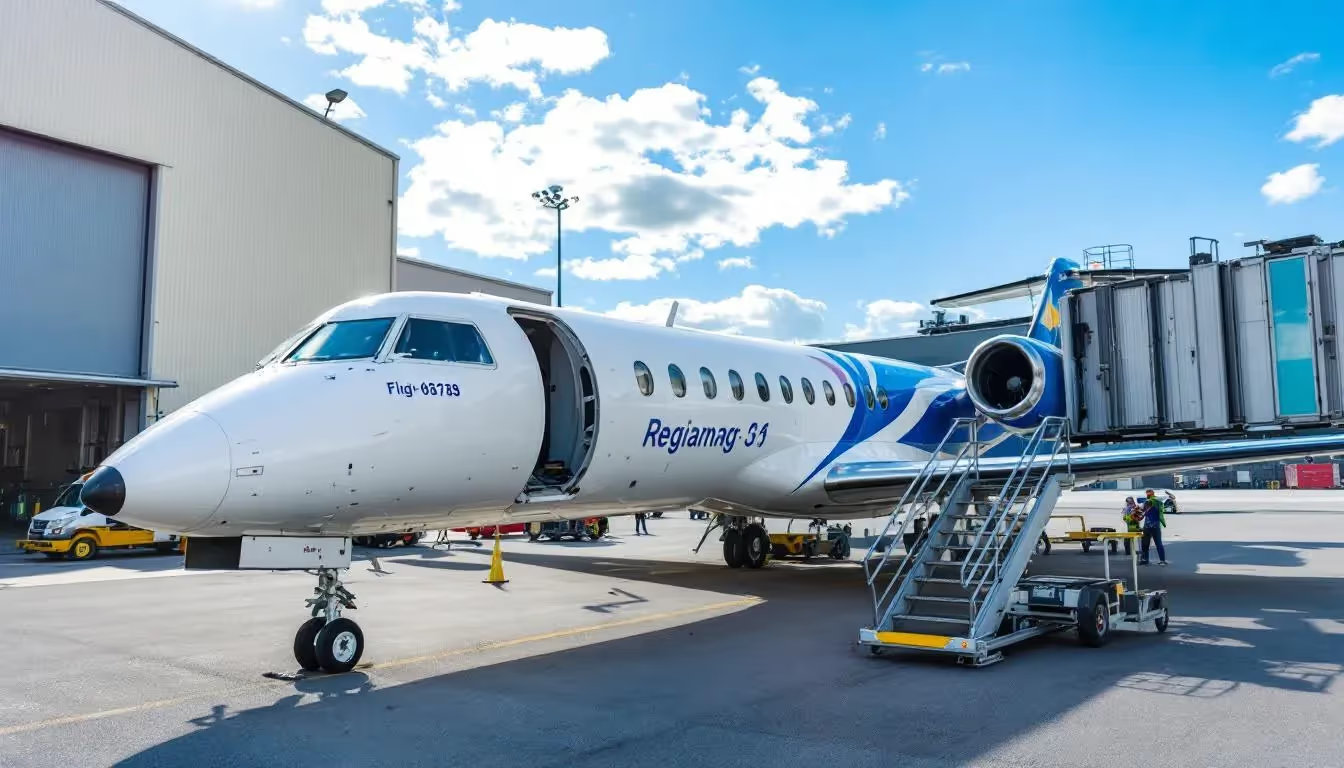
Private jet charter offers a truly luxurious and flexible way to travel, setting itself apart from commercial airlines by providing a tailored experience for every journey. With a wide array of aircraft categories available—ranging from light jets and midsize jets to VIP airliners—private jet charter can accommodate virtually any travel needs or group size. Light jets start around $5,000 per hour and seat 4 to 8 passengers. Most standard charter arrangements on private jets accommodate 4-19 passengers, ensuring flexibility for various group sizes. Whether you’re planning a quick business trip or an extended range adventure, private jet charter allows you to fly on your own schedule, bypassing the crowds and delays of commercial airlines. Guests traveling on private jets can often enjoy a stress-free airport experience with private lounges.
For instance, a light jet such as the Citation Excel is perfect for short domestic flights, offering comfort and efficiency for smaller groups. If your group requires more cabin space or plans to travel longer distances, consider midsize jets, which generally seat 6 to 10 passengers and offer additional range compared to light jets, ensuring a smooth and enjoyable flight. Midsize jets begin around $8,000 per hour and seat 6 to 10 passengers. VIP airliners, on the other hand, deliver the ultimate in luxury and capacity, making them ideal for larger groups or high-profile events. No matter the aircraft, private jet charter ensures that passengers enjoy a seamless, private, and comfortable experience from takeoff to landing. Learn more about how fast private jets fly.
A group size of exactly 50 passengers represents a specialized segment in private aviation, bridging traditional business jets and commercial airlines.
This passenger count offers a balance of luxury, flexibility, and cost-effectiveness for large group travel.
Ideal for corporate events, sports team transport, and special occasions.
Many factors influence the best aircraft and charter choices for your specific needs.
Most light jets and midsize jets cannot accommodate 50 passengers.
Regional aircraft certified for 50 passengers are the primary options for this market.
These aircraft typically serve commercial airlines but can be chartered for private use.
This guide covers aircraft options, charter costs, booking considerations, and strategies to maximize value in the 50-passenger private jet charter market.
Coordinating group travel can be a logistical challenge, but private jet charter streamlines the process, making it both efficient and enjoyable. With access to a large fleet of aircraft, private jet charter companies can accommodate groups of all sizes, from small executive teams to large-scale events. For example, a group of executives heading to a conference in Las Vegas can charter a midsize jet, enjoying ample cabin space and onboard amenities.
Sports teams or event organizers can opt for larger planes, ensuring everyone travels together on the same aircraft and arrives at the destination refreshed and ready. Super midsize and large cabin jets range from $12,000 to over $20,000 per hour, seating 8 to 16 passengers and offering luxurious amenities. Additionally, private jet charter companies offer bespoke corporate branding options for group flights, allowing organizations to customize their travel experience further.
Chartering a private jet for group travel not only enhances the journey but can also be more cost-effective than booking multiple seats on commercial airlines, especially for larger groups. The ability to customize the flight schedule, select the most suitable aircraft, and enjoy exclusive amenities means that every aspect of the trip is tailored to your group’s needs. Ultra-long-range and VIP airliners start at $20,000 per hour and can exceed $100,000 per hour for specific models.
The Dassault Falcon 7X can accommodate up to 16 passengers over distances exceeding 11,000 km. Long-range aircraft, such as the Bombardier Challenger 605, typically seat 10-12 passengers. The specific aircraft selected directly impacts private jet rental costs, with larger or more luxurious planes commanding higher fees. Larger aircraft with extended range and lavish amenities command significantly higher rental fees compared to smaller jets. Whether it’s a corporate retreat, a family celebration, or a special event, private jet charter provides a unified, productive, and memorable travel experience.
The aircraft categories suitable for 50-passenger charters differ significantly from traditional private jets. While very light jets and light jet options typically accommodate 4-8 passengers, and super midsize aircraft handle up to 12-16 passengers, achieving 50-passenger capacity requires regional aircraft designed for short to medium-haul commercial operations. Large jets, such as jumbo jets like the Boeing 747, are sometimes used for even larger groups or luxury travel, but are not typical for 50-passenger charters. Top-tier aircraft such as the Global 7500 can accommodate up to 19 passengers. The Bombardier CRJ 900 is comfortable and can carry a group of 90 passengers over a distance of 2700 km. The Airbus ACJ319 can seat 19-50 passengers depending on configuration, with many operators limiting it to 19 for regulatory reasons.
Regional jets and turboprop aircraft dominate this market segment, offering the perfect balance of passenger capacity, operational flexibility, and charter accessibility. These larger planes provide cabin space comparable to commercial airlines while maintaining the scheduling flexibility and personalized service that define private aviation. While regional jets and turboprops are suitable for short to medium distances, ultra-long-range jets are designed for much longer non-stop flights, offering exceptional range and luxury amenities, but are not commonly configured for 50 passengers. The Beechcraft 1900 Beechliner is a turboprop that can fly short and medium distances, accommodating up to 19 passengers.
The choice between jet and turboprop aircraft depends primarily on your travel needs, including flight distance, budget constraints, and airport access requirements. Jets offer higher cruising speeds and extended range capabilities, making them ideal for longer routes and multiple time zones. Midsize aircraft offer improved cabin height and amenities, providing a more comfortable experience for passengers. Turboprops excel on shorter routes, providing cost-effective solutions with access to smaller airports that larger jets cannot serve.
The Embraer ERJ 145 represents the gold standard for 50-passenger private jet charter operations. This aircraft delivers exceptional performance with its 2,400-kilometer range and cruising speeds reaching 833 kilometers per hour, making it suitable for medium-haul flights across continents and between major metropolitan areas.
The ERJ 145’s cabin features stand-up headroom throughout the passenger compartment, with seating configurations that can be customized for enhanced comfort. Business-class style seating arrangements provide significantly more space than typical commercial airline economy configurations, while maintaining the 50-passenger capacity that makes group travel efficient and cost-effective.
Typical charter rates for ERJ 145 operations range from $18,000 to $25,000 per hour, depending on the specific route, departure time, and seasonal demand. The aircraft’s fuel efficiency and operational costs make it an attractive option for budget-conscious groups seeking the benefits of private aviation without the premium pricing associated with larger aircraft. A light jet may be available for a few thousand dollars per hour, while a VIP 747 could cost well over $100,000 per hour to charter.
The ERJ 145 excels on routes connecting major cities with regional destinations, providing access to airports that commercial airlines may not serve with convenient schedules. This aircraft type commonly serves routes like New York to Las Vegas, Chicago to Miami, or London to Barcelona, offering direct connections that eliminate the need for complex ground transportation arrangements at connection points.
The Bombardier CRJ series offers two distinct options for 50-passenger charter operations, each with unique advantages for different mission profiles. The CRJ 200 provides a cost-effective solution with its 2,000-kilometer range and excellent fuel efficiency, making it ideal for shorter regional routes and budget-conscious charter operations.
The CRJ 200’s compact design allows access to shorter runways and smaller airports, expanding your destination options beyond what larger aircraft can serve. This flexibility proves valuable for corporate retreats, sporting events, or special occasions in locations with limited airport infrastructure. Operating costs are typically lower for smaller jets, resulting in charter rates in the $15,000 to $20,000 per hour range.
For longer missions requiring extended range and enhanced passenger comfort, the CRJ 900 delivers superior performance. While capable of seating up to 90 passengers in high-density configurations, charter operators typically configure these aircraft for 50 passengers, offering enhanced cabin amenities such as increased legroom, upgraded catering facilities, and improved entertainment systems.
The CRJ 900’s 2,700-kilometer range extends your destination options significantly, enabling non-stop flights across longer distances without fuel stops. This capability proves essential for transcontinental routes or international flights where range limitations could compromise schedule efficiency or increase overall charter costs through additional fuel stops.
Turboprop aircraft offer compelling advantages for 50-passenger charter operations, particularly on shorter routes where jet speed advantages become less significant. The Saab 2000 accommodates exactly 50 passengers in its standard configuration, boasting a 1,500-kilometer range that efficiently and cost-effectively covers most regional and short-haul mission requirements.
Turboprops excel in fuel efficiency, typically consuming 30-40% less fuel than comparable jets on routes under 1,000 kilometers. This efficiency translates directly to lower charter costs, with hourly rates typically ranging from $12,000 to $18,000, making turboprops attractive for budget-conscious groups or frequent charter users seeking to maximize their travel budget.
The ATR 72 provides additional flexibility with its 50-70 passenger capacity, allowing operators to optimize configurations based on specific group requirements. Some charter operators configure these aircraft with enhanced business-class seating for 50 passengers, while others offer higher-density seating for larger groups when maximum passenger capacity takes priority over individual comfort.
Turboprops access shorter runways than jets, opening destination possibilities that jets cannot serve. Many corporate retreat locations, resort destinations, and regional airports feature runways too short for regional jets but perfectly adequate for turboprop operations. This access advantage can eliminate ground transportation requirements and reduce total travel time despite lower cruising speeds.
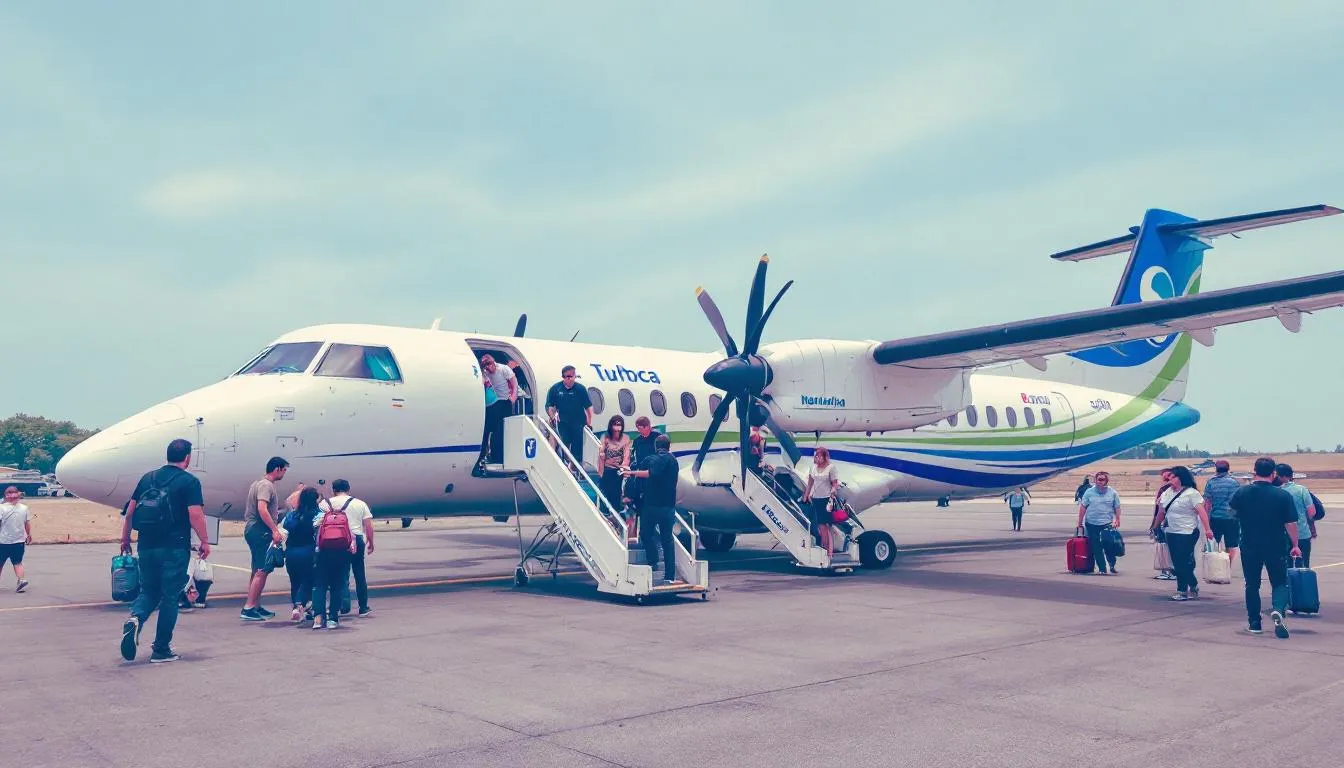
Jet charter services are designed to deliver maximum flexibility, luxury, and convenience for every passenger.
With private jet charter, you have the freedom to choose your departure time, destination, and preferred aircraft type, ensuring that your travel experience aligns perfectly with your specific requirements. Light jets typically seat 4 to 8 passengers and are ideal for short domestic hops, making them a popular choice for quick and efficient travel.
Entry-level private aviation accommodates smaller groups efficiently. Whether you need a jet with extended range for international travel or a particular cabin layout for business meetings, private jet charter companies can accommodate your needs.
In addition to flight customization, many private jet charter companies offer a suite of premium services to enhance your journey. Ground transportation can be arranged to whisk you from the airport to your final destination in style, whether by luxury car or even helicopter for time-sensitive trips.
Catering options are also highly customizable, with menus tailored to dietary preferences and special requests, ensuring every passenger enjoys a personalized dining experience onboard. From the moment you depart to your arrival at your destination, jet charter services are designed to provide a seamless, luxurious, and stress-free journey.
Charter costs for 50-passenger aircraft vary significantly based on aircraft type, route characteristics, and operational requirements. Hourly rates typically range from $15,000 to $30,000, with turboprops commanding the lower end of this range and regional jets reaching the higher end, depending on specific aircraft specifications and charter market conditions. Group fares can also vary depending on group size, timing, and seasonal demand, so it is advisable to contact the airline or broker early to secure the best rates.
Understanding the full cost structure requires consideration of additional expenses beyond the base hourly rate. Fuel surcharges can add $2,000 to $5,000 per flight hour, particularly on longer routes or during periods of elevated fuel prices. Airport fees, handling charges, and overnight crew expenses contribute additional costs that can total $3,000 to $8,000 per trip, depending on destination airports and trip duration. Chartering a private jet for 50 passengers can save money compared to booking multiple commercial airline tickets for a group, offering better value for group travel.
Peak travel times significantly impact charter pricing, with rates increasing 20-50% during holiday periods, major sporting events, or peak business travel seasons. Summer months typically command premium pricing for leisure destinations, while business travel peaks during conference seasons can drive up rates for corporate destinations. Having a plan to book early and avoid higher fares during peak periods is essential for securing the best pricing. Planning around these peak periods can deliver substantial cost savings for flexible groups.
Aircraft availability plays a crucial role in pricing, as the limited number of aircraft configured for exactly 50 passengers creates supply constraints that can drive up rates during high-demand periods. Operators with large fleet holdings may offer more competitive rates and greater scheduling flexibility, while smaller operators might provide more personalized service but with limited availability and potentially higher prices.
Schedule flexibility represents the primary advantage of private jet charter for 50-passenger groups. Unlike commercial airlines that operate on fixed schedules designed to maximize aircraft utilization, private charters depart according to your timeline, eliminating the need to adjust business schedules or event planning around airline departure times.
Direct routing capabilities provide significant time savings by avoiding connection delays and allowing access to airports closer to your final destination. Commercial airlines often require connections for groups traveling to secondary markets, adding hours to total travel time and increasing the risk of delays or missed connections that could disrupt carefully planned business events or time-sensitive occasions.
Group cohesion benefits prove invaluable for corporate teams, sports organizations, or event groups where maintaining team unity and coordination matters. Private charters ensure your entire group travels together, arrives simultaneously, and maintains consistent energy levels throughout the journey. This coordination eliminates the logistical challenges of managing multiple commercial flights and the risk of partial group arrivals that could compromise event effectiveness.
Productivity advantages become particularly valuable for business groups conducting important meetings or strategic planning sessions. The private cabin environment enables confidential discussions, presentations, and collaborative work that would be impossible on commercial airlines. Many charter clients report that flight time becomes productive work time, effectively extending their available business hours rather than representing downtime.
Privacy and security considerations appeal to high-profile executives, entertainment personalities, or government officials who require discretion and controlled access during travel. Private terminals, dedicated security screening, and confidential passenger manifests provide protection levels that commercial airlines cannot match, making private charters essential for certain types of business or celebrity travel.

Corporate retreats and executive team meetings represent prime applications for 50-passenger charter flights, particularly when companies need to transport leadership teams from multiple locations to a single destination. The ability to conduct business discussions during flight time, combined with coordinated arrival times, makes private charters more efficient than commercial alternatives for high-value executive time.
Sports team travel has become increasingly common in the 50-passenger charter market, accommodating professional and collegiate teams with players, coaching staff, and essential support personnel. Teams value the ability to maintain consistent travel standards, ensure player rest quality, and eliminate the scheduling constraints that could affect game preparation or performance.
Entertainment industry applications include touring groups, production crews, and artist entourages requiring coordinated transportation between venues or filming locations. The entertainment sector often operates on tight schedules with substantial financial consequences for delays, making the reliability and schedule control of private charters worth the premium cost.
Government and military charter needs frequently involve official delegations, diplomatic missions, or ceremonial occasions requiring secure, reliable transportation for exactly 50 participants. These applications often involve international destinations, security considerations, and protocol requirements that commercial airlines cannot accommodate effectively.
Special events, including destination weddings, family reunions, corporate celebrations, and incentive travel programs, benefit from the group coordination and arrival timing that private charters provide. Event planners increasingly recognize that transportation coordination can make or break event success, particularly for destination events where commercial airline schedules may not align with event timing.
Lead time recommendations for 50-passenger charter flights require careful planning, with minimum booking windows of 2-4 weeks for optimal aircraft selection and competitive pricing. When booking, it is important to select the right plane for your group's needs and ensure that it is available for your preferred dates. The limited number of aircraft configured for exactly 50 passengers means that popular routes and peak travel periods may require even longer lead times to secure appropriate aircraft.
Passenger manifest requirements involve detailed documentation for all travelers, including full names, birthdates, and citizenship information for international flights. Security screening procedures vary by operator and destination, but generally involve less intensive screening than commercial airlines while maintaining appropriate security standards for private aviation operations.
Baggage capacity planning requires coordination with charter operators to understand weight limitations and cargo space availability. While 50-passenger aircraft offer substantial baggage capacity, groups with extensive equipment, promotional materials, or special cargo requirements should verify capacity limitations during the planning process to avoid last-minute complications.
Catering options range from simple refreshment service to full meal programs with specialized dietary accommodations. Many charter operators maintain relationships with high-quality catering companies at their primary operating bases, but catering at remote destinations may require advance planning and coordination to ensure quality and availability meet group expectations.
Ground transportation coordination becomes critical for 50-passenger groups, as standard airport transportation options may not accommodate large groups efficiently. Charter operators often provide ground transportation coordination services or recommendations for bus companies, luxury coaches, or multiple vehicle arrangements to ensure seamless transfers from aircraft to final destinations.
Part 135 charter regulations govern 50-passenger operations, requiring operators to maintain higher safety standards and operational procedures than smaller aircraft operations. These regulations mandate specific crew training, aircraft maintenance protocols, and operational oversight that provide additional safety assurance for large group operations.
Crew requirements include a minimum of two pilots for all 50-passenger charter operations, with additional considerations for flight attendant coverage depending on specific aircraft type and route requirements. International flights often require crew members with specific training and certifications for customs and immigration procedures.
Aircraft maintenance standards for 50-passenger charter operations exceed those required for smaller private jets, with more frequent inspections, detailed maintenance tracking, and operator certification requirements that ensure aircraft reliability and safety performance. Verifying operator certifications and safety records becomes essential when selecting charter providers for large group operations.
Insurance coverage and liability protection require careful review for 50-passenger operations, as the increased passenger count and charter costs necessitate higher coverage levels than typical business jet operations. Understanding insurance terms, coverage limitations, and liability exclusions helps ensure adequate protection for all group members and charter organizers.
Runway length requirements for 50-passenger regional jets typically necessitate airports with paved runways of at least 5,000 feet, though specific requirements vary by aircraft type, weather conditions, and operational weight. This requirement limits airport options compared to smaller jets but still provides access to most major airports and many regional facilities. When planning a group charter, selecting the right course or itinerary is crucial to ensure efficient and convenient travel for all passengers.
Airport facility considerations include passenger handling capabilities, customs and immigration services for international flights, and ground support equipment appropriate for regional aircraft operations. Not all airports that can accommodate the aircraft physically have the infrastructure to handle 50-passenger charter operations efficiently.
Alternative airport options for major destinations can provide significant advantages by avoiding commercial traffic delays and congestion at primary airports. Many metropolitan areas feature multiple airports suitable for charter operations, with secondary airports often providing faster processing times and more convenient access to certain destinations.
International flight planning involves securing diplomatic clearances, overflight permits, and fuel stops for extended range missions. These requirements can add complexity and cost to international charter operations, making experienced operators essential for navigating regulatory requirements and ensuring smooth international operations.

Ground transportation is a vital component of the private jet charter experience, ensuring that your journey is smooth from start to finish. Private jet charter companies often provide a range of luxury ground transportation options, including executive cars, limousines, and even helicopters, to suit different preferences and budgets. For example, a passenger arriving at a busy airport can be met by a chauffeur-driven luxury car, while a group of executives might choose a helicopter transfer to bypass city traffic and reach their destination quickly.
These services are carefully coordinated to ensure that ground transportation is ready and waiting upon your arrival, minimizing wait times and providing a seamless transition from air to ground. Whether you’re traveling solo or as part of a large group, private jet charter companies can tailor ground transportation arrangements to match your itinerary and preferences, delivering a truly hassle-free and luxurious travel experience.
The expertise and experience of private jet charter companies are crucial in delivering a safe, efficient, and enjoyable journey. With deep industry knowledge, these companies guide clients through every step of the charter process, from aircraft selection to flight planning and beyond. For instance, an experienced charter company can help you choose the ideal aircraft based on passenger count, range, and desired level of luxury, ensuring that your travel needs are met precisely.
Beyond aircraft selection, private jet charter companies offer valuable insights on cost optimization, taxes, and route planning, helping you fly efficiently and within budget. Their expertise extends to arranging special equipment or amenities on board, accommodating unique requirements for business, leisure, or special events. With a focus on safety, comfort, and personalized service, experienced private jet charter companies ensure that every flight is tailored to your needs, providing peace of mind and a superior travel experience from start to finish.
Empty leg opportunities represent significant savings potential for flexible groups willing to adjust travel dates or destinations to match aircraft positioning flights. Charter operators occasionally offer empty leg flights at 25-50% discounts when aircraft must reposition for other charter commitments, though availability remains unpredictable and requires schedule flexibility.
Multi-leg trip planning can optimize costs for groups requiring round-trip transportation or multiple destinations during a single charter period. Round-trip charters often provide better value than one-way flights, as operators can avoid positioning costs and offer discounted return flights when aircraft utilization improves.
Group size flexibility around the 50-passenger target can sometimes provide cost advantages or aircraft availability benefits. Some aircraft configured for 45-55 passengers may offer competitive alternatives, particularly during peak demand periods when exactly 50-passenger configured aircraft become scarce.
Seasonal pricing considerations reveal substantial cost variations throughout the year, with shoulder seasons offering the best value for price-sensitive groups. Avoiding peak holiday periods, major sporting events, and traditional vacation seasons can reduce charter costs by 20-40% while providing the same service quality and aircraft options.
Long-term charter agreements benefit organizations with recurring group travel needs, providing rate stability, aircraft availability priority, and customized service levels that improve with operator familiarity. Companies conducting quarterly meetings, annual events, or seasonal travel programs often achieve better value through preferred operator relationships.
Consider partnerships with other organizations to share charter costs for compatible travel needs. Industry groups, professional associations, or companies with similar travel patterns sometimes coordinate charter flights to reduce individual costs while maintaining private aviation benefits.
Most 50-passenger aircraft offer ranges between 1,500-2,700 kilometers, with turboprops on the lower end and regional jets providing extended range capability. This range covers most regional routes and some transcontinental flights, though very long international routes may require fuel stops depending on specific aircraft and route requirements.
Book at least 2-4 weeks in advance for optimal aircraft selection and competitive pricing. Peak travel periods, international destinations, and specific aircraft requirements may necessitate even longer lead times, sometimes 6-8 weeks for popular routes during high-demand seasons.
Yes, many 50-passenger aircraft, particularly turboprops, can access regional airports with runways as short as 4,000-5,000 feet. This capability provides significant advantages over commercial airlines, allowing direct access to destinations that would otherwise require ground transportation from major airports.
Reputable charter operators maintain relationships with multiple aircraft owners and operators to provide backup options when mechanical issues or unforeseen circumstances affect the primary aircraft. However, the limited availability of 50-passenger configured aircraft means backup options may involve different aircraft types or additional costs.
Yes, weight and balance considerations can affect maximum passenger capacity, particularly on longer flights requiring maximum fuel loads. Groups with heavy baggage, extensive equipment, or cargo requirements should discuss weight limitations during planning to ensure the full 50-passenger capacity remains available for their specific mission requirements.
Chartering a private jet for 50 passengers offers unparalleled flexibility, comfort, and efficiency for large group travel. Whether for corporate events, sports teams, or special occasions, private jet charter enables groups to travel together seamlessly, enjoy customized amenities, and access airports beyond the reach of commercial airlines. With a variety of suitable aircraft categories—from regional jets like the Embraer ERJ 145 and Bombardier CRJ series to efficient turboprops—groups can select the perfect aircraft to match their travel needs, budget, and schedule.
For those seeking a reliable and expert partner in private jet rental, Jettly stands out as a leading private jet charter provider. Known for its extensive fleet, transparent pricing, and exceptional customer service, Jettly ensures that every group charter flight is tailored to deliver a luxurious and stress-free experience. By choosing Jettly, travelers gain access to industry expertise, a broad network of aircraft options, and personalized planning that maximizes value and convenience for large group travel.
Whether embarking on short hops or longer journeys across multiple time zones, private jet charter with Jettly offers the ultimate solution for groups of 50 passengers seeking to fly in style, comfort, and privacy.
Share this post:
Jay Franco Serevilla
Aug 31, 2025
|
5
min read
Discover tips and trends in the industry.

5
min read
Private Jet Charter Colorado Springs: Fly Smarter with Jettly
Private jet charter in Colorado Springs offers a convenient and flexible travel solution for business and leisure travelers. With access to over 20,000 aircraft through Jettly, booking a flight is quick and hassle-free, allowing you to bypass commercial airline delays and enjoy tailored services. Experience the benefits of private aviation, including direct airport access and personalized itineraries.
Read More
5
min read
Boise Charter Flights with Jettly: Private Jets, Pricing & Top Routes
Boise charter flights with Jettly offer travelers a flexible and efficient way to fly in and out of Idaho's capital. With access to over 20,000 aircraft, Jettly provides personalized scheduling, enhanced privacy, and direct routing to numerous destinations, making it ideal for both business and leisure travel.
Read MoreStay updated with our latest insights and tips to elevate your journey with us.
MEMBERSHIPS AND ASSOCIATIONS



Disclaimer: Jettly operates as a charter broker, offering access to a global digital jet charter marketplace. Jettly is not a direct air carrier and does not own or operate aircraft. All advertised flights are conducted by third-party air carriers that are fully licensed and hold the appropriate Part 135 or Part 121 certifications issued by the Federal Aviation Administration (FAA) or equivalent regulatory authorities under U.S. or foreign law. Jettly complies fully with the U.S. Department of Transportation's Part 295 and Part 298 Charter Broker regulations. Jettly does not carry additional liability insurance. Passengers are covered by aircraft operator insurance. TICO: 50023770


