



Login
Get Instant Pricing On 23,000+ Aircraft

>

Private jet ferry flights happen every day across the globe, moving aircraft without passengers from one location to the next. For travelers who understand how these repositioning movements work, they represent one of the smartest ways to reduce the cost of flying privately. This guide breaks down the mechanics, pricing, and practical strategies behind ferry flights and empty legs—and how Jettly's marketplace helps travelers take advantage of both.
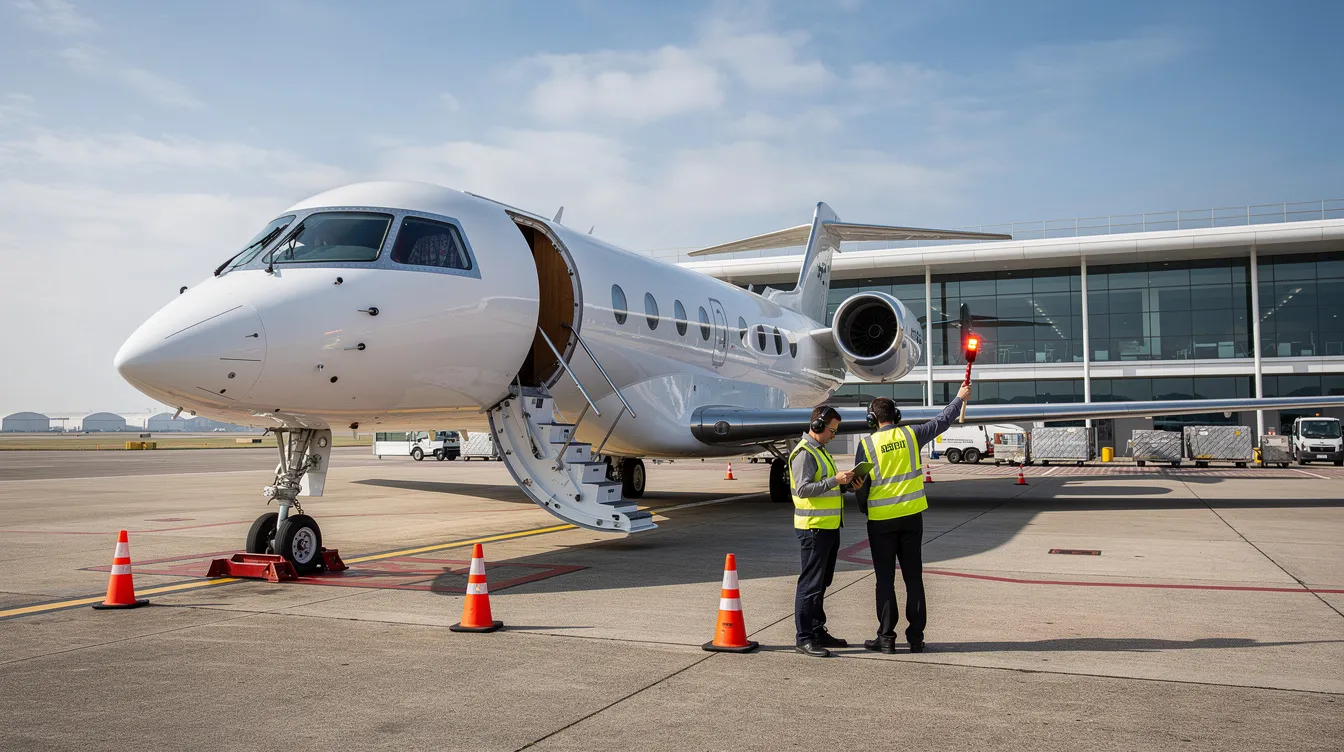
A ferry flight, also called a positioning flight, is when a private jet flies without passengers to reach its next mission, return to base, or head to maintenance. Many empty-leg flights originate from these repositioning needs—they are simply ferry legs that operators offer for sale.
On Jettly's digital marketplace, travelers can often access these empty legs at discounts of 30–75% compared with a conventional private jet charter, while still getting the entire aircraft to themselves.
Ferry flights normally increase charter costs when an aircraft must be repositioned just for one customer. But smart routing, flexible dates, and choosing airports with dense traffic can significantly reduce or eliminate ferry fees.
Jettly's platform shows transparent pricing—including any ferry component—offers instant quotes on 20,000+ unique aircraft worldwide, and lets users compare standard charters vs. empty legs side by side.
Private jets fly to over 3,000 airports worldwide, offering unmatched convenience and access compared to commercial flights.
Below, this article covers how ferry flights work, how they relate to empty leg opportunities, typical pricing scenarios with real examples, and how to use Jettly to find the most efficient option for your next trip.
A ferry flight is a private flight operated without paying passengers. Its purpose is straightforward: move the aircraft to where it needs to be next. That might mean flying from a home base like Teterboro, NJ to pick up clients in Boston, or returning an empty aircraft to Florida after a one-way flight from Los Angeles to Las Vegas.
The terminology can be confusing. Here's the quick breakdown:
Ferry flight/positioning flight: any non-revenue leg that repositions the plane.
Deadhead leg: the same concept, viewed from the crew or operator perspective (learn more about what deadhead flights involve).
Empty leg: a ferry flight that the operator has published for sale at a discounted rate.
Not every ferry flight becomes an empty leg. Many repositioning segments are held back due to schedule risk or simply flown empty. Industry data suggests that roughly 30–40% of all private aviation movements are repositioning flights, which means a significant portion of the fleet is in the air without passengers at any given time.
Common reasons for ferry flights include crew duty limits requiring a return to base, airport slot availability at the destination, scheduled maintenance at a certified facility, and seasonal demand shifts that push fleets toward different regions.
Every private jet charter quote accounts for positioning—whether the customer sees it or not. When you book a charter flight, the price covers the "live legs" (when passengers are on board) plus any ferry legs the operator must fly to get the aircraft into position and return it afterward.
For example, a midsize jet charter from New York (Teterboro) to Miami might quote $18,000–$26,000 one way. But if the aircraft is based in White Plains and must ferry to Teterboro before departure, and then reposition from Miami to its next set of passengers in Fort Lauderdale, those extra segments add fuel, crew time, and landing fees to the overall cost.
Charter pricing starts at roughly $4,000 per hour for turboprops, $5,700 per hour for occupied Pilatus PC-12s, $6,000 per hour for light jets, $7,000 per hour for midsized jets, and $10,000 per hour for large cabin jets. Each ferry hour adds directly to the operator's expenses—and ultimately to the customer's quote. Charter costs also fluctuate based on peak travel days and routes, and tools like Jettly's private jet charter cost estimator help travelers understand these variables in advance.
Round-trip bookings within a tight window (e.g., 24–48 hours) often minimize ferry legs because the aircraft waits at the destination. One-way trips and long gaps between outbound and return journey legs tend to generate more repositioning needs. You can estimate these costs using Jettly's private jet cost calculator, which factors in repositioning automatically and presents transparent, all-in pricing.
|
Aircraft Type |
Hourly Rate (Occupied) |
Typical Passenger Capacity |
Common Use Cases |
|---|---|---|---|
|
Turboprop |
$4,000 |
6-8 |
Short regional trips, cost-efficient |
|
Pilatus PC-12 |
$5,700 |
6-8 |
Versatile, efficient, regional travel |
|
Light Jet |
$6,000 |
4-7 |
Business trips, small groups |
|
Midsize Jet |
$7,000 |
6-9 |
Longer trips, more cabin space |
|
Large Cabin Jet |
$10,000 |
10-16 |
Long-range, luxury, larger groups |
An empty leg flight is a ferry flight that has been published for sale because the aircraft must fly that route anyway. One of the main benefits for travelers is that the operator already bears the cost of repositioning, so selling the leg at a discount recovers some revenue while giving travelers access to private jet travel at a fraction of the standard price.
Empty-leg flights can save up to 75% on standard pricing. Realistically, discounts typically range from 30–75% depending on the route, aircraft type, and timing. In May 2026, AceJet's Market Index tracked roughly 14,198 new empty leg listings with an average asking price of about $11,427. On competitive corridors like Miami–New York, midsize jet empty legs often list at $8,250–$11,250 versus $18,000–$26,000 for a standard private charter flight, and Jettly's dedicated empty leg flight search makes it easy to surface these discounted repositioning legs.
The trade-offs are real. Empty-leg flights have fixed routes and departure windows. Flexibility is necessary when booking empty-leg flights due to fixed schedules. There's also a cancellation risk if the original client's itinerary changes. But passengers enjoy the entire aircraft to themselves—privacy, baggage allowance, and in-flight services remain the same as on any private charter.
Passengers often book empty-leg flights through charter companies or online platforms like Jettly, which aggregates thousands of empty-leg flights worldwide and supports alerts so travelers can monitor leg opportunities between favorite city pairs. These flights are ideal for travelers with flexible schedules looking to explore destinations at a lower price.
Not every booking shows a separate "ferry fee" line item, but the cost of positioning the aircraft is always built into the quote. It becomes especially significant in these situations:
Remote airports with little private aviation traffic force the operator to fly a long distance just to reach you.
Last-minute trip bookings where the nearest available aircraft is far from your departure date and location.
Asymmetrical routing that strays the plane far from its normal operating region—for example, a Canadian-based jet left in Central America.
Practical strategies to reduce ferry cost:
Choose busier airports near major metro areas (Teterboro, Van Nuys, Fort Lauderdale Executive), using tools like Jettly's airport locator for private jet travelers to identify convenient nearby fields.
Be flexible on departure date or time by even a few hours; this can align your trip with an aircraft already in the area.
Consider a different aircraft type—a light jet stationed nearby may cost less overall than a midsize jet that must reposition 500 miles.
Structure the trip as a same-day or next-day return to keep the aircraft productive.
Here's a concrete example: shifting a departure from a small rural strip to a regional hub 30 miles away might cut 45 minutes of positioning time. At $7,000 per hour for a midsize jet, that saves roughly $5,000 in ferry cost alone. Jettly's charter team and algorithms can propose alternative airports or timings during the quote stage so customers see side-by-side options. For a broader breakdown of pricing and savings tactics, explore Jettly's guide on affordable private jet charter costs and, for more on reducing private jet costs, see how to fly private for less.
Not all ferry flights relate to passenger charters. Many are purely operational:
Maintenance positioning: moving aircraft to certified facilities for scheduled inspections (A, B, and C checks), avionics upgrades, or airworthiness directives. For example, Airshare operates as an FAA Part 145 Repair Station, handling maintenance in-house, while other operators ferry jets to hubs like Wichita or Fort Lauderdale. Airshare has also received IS-BAO Stage 3 and ARGUS Platinum designations for its commitment to safety.
Seasonal fleet rebalancing: many private jets relocate from Europe to the Caribbean each winter, then return to the Northeast and Canada in late spring. These movements follow demand patterns and generate empty leg opportunities on predictable routes.
Regulatory compliance: FAA and international crew duty limits, rest requirements, and airport slot restrictions sometimes force repositioning at odd hours.
Operators are vetted to ensure a strong safety record. Tradewind Aviation operates under FAA Part 135 certification and holds ARGUS Gold and Wyvern Wingman safety ratings.All Tradewind charter flights operate with two pilots, a standard that most reputable charter operators follow.
These maintenance and seasonal ferry flights usually aren't sold as charter flights, but they can create additional empty leg opportunities when combined with revenue legs on either side. Operators draw on broad private charter aircraft fleets to position the right jet where demand is emerging, which in turn generates more repositioning segments.
Ferry flights carry an environmental cost. Every mile flown without passengers adds to fuel burn and emissions that don't directly serve a customer. A Transport & Environment study found that up to 41% of private flights in certain European markets were non-revenue repositioning legs.
Better planning and marketplace dynamics can reduce unnecessary repositioning:
Matching one-way clients traveling in opposite directions on the same route.
Publishing empty legs widely so more of them get booked, turning an empty aircraft into a revenue flight, and using crowdsourced private jet flight sharing to fill otherwise empty seats.
Using data-driven dispatch tools to minimize deadhead miles across a diverse fleet.
Industry trends include carbon offsetting programs, more efficient aircraft types (modern turboprops and lightweight jets with lower fuel burn), and predictive analytics that forecast repositioning before legs are officially listed. Jettly's large network of 20,000+ aircraft increases the chance of finding a jet already near the requested origin, which cuts deadhead miles and lowers both the environmental impact and cost. Environmentally conscious travelers should ask about routing efficiency and offset options when planning their journey.
Jettly operates as a digital private aviation marketplace—not a single operator—giving travelers instant access to a diverse fleet across every aircraft type, from turboprops and light jets to long-range heavy jets. Private jet charters connect travelers to over 3,000 airports and offer access to over 20,000 unique aircraft around the world.
The booking flow is an easy way to get started:
Enter your route, departure date, and passengers, often beginning with an airport locator tool to find the most convenient departure and arrival points.
Compare aircraft options and prices (ferry components already calculated).
Filter by cabin size, range, or availability.
Confirm and pay securely online or with help from Jettly's aviation experts.
Customers can search specifically for empty leg flights, subscribe to an empty leg program for preferred city pairs, and compare an empty leg against a fully flexible charter on the same route. Jettly offers both pay-as-you-go options and structured private jet membership plans with cost transparency and minimized commissions—valuable for frequent flyers who often book one-way private jet charters.
The platform also coordinates ground transportation, in-flight catering through Jettly Eats, and ground services, and provides access to smaller airports that reduce door-to-door travel time versus commercial flights. Booking through the platform adds practical benefits, with customized in-flight services tailored to each client's travel needs and schedule. Learn more about Jettly's charter options at https://www.jettly.com.
Business executive, Toronto to Chicago. A CEO needed to fly for a last-minute trip to a board meeting. A midsize jet was already positioned nearby after completing a Montreal charter. Because the plane didn't need to depart from a distant base, the ferry component was minimal, and the final quote came in competitively against a last-minute commercial business class ticket—with the added freedom of departing from a private terminal on schedule. Travelers weighing different providers can consult guides to the best private jet charter companies when deciding how to approach similar time-sensitive business trips.
Family vacation, London to Ibiza. A family with flexible plans found an empty leg outbound at roughly 60% off the standard price for the same aircraft type. They booked a standard return charter for the journey home. Even with the return at full price, the combined cost was significantly below that of two conventional private jet charter bookings. They were able to board the plane with luggage and pets, enjoying the privacy of the entire aircraft. Empty-leg flights generally occur after booked one-way trips on busy routes like this one—perfect for a special event or holiday getaway, especially for travelers who have learned how to get a seat on a private jet easily.
Corporate roadshow, multi-city U.S. tour. A team of 12 from a tech company needed to hit Dallas, Denver, and San Francisco in five days. Groups larger than eight typically require super-midsize or heavy jets, which generate more repositioning between cities. Jettly's team optimized routing to limit deadhead miles by sequencing stops efficiently and matching two legs with available empty leg opportunities, reducing overall cost by nearly 30%. Private jet charters can save time compared to commercial flights, especially on multi-stop itineraries where connections would add days, and resources like an ultimate list of charter airlines help companies understand the range of operators that can support complex tours.

These FAQs cover practical details around reliability, baggage, and booking logistics for empty legs and repositioning flights.
Empty legs depend on another customer's primary charter. If that customer changes timing or cancels, the empty leg may shift or disappear. Operators communicate changes as early as possible, and once confirmed, they work to maintain stable schedules. That said, travelers booking these flights should keep some flexibility or backup options for time-critical trips. Jettly monitors schedule changes with operators and can help find alternatives—whether a different empty leg or a standard charter—if the original repositioning flight is no longer available. Travelers comparing options like empty legs, shared charters, and semi-private services can benefit from guides on how to buy a seat on a private jet. Booking empty-leg flights requires flexible travel dates and times.
Most empty legs have fixed routing and a defined departure window because the aircraft must be at a specific location at a specific time for its next mission. Minor adjustments—like shifting departure by an hour or using a nearby airport along the route—may be possible. Significant changes usually convert the trip into a standard charter with different pricing. Tools such as Jettly's jet card flight cost estimator can illustrate how alternative routings and products affect pricing. Discuss any requested changes with Jettly's charter team in advance so they can confirm what's operationally feasible with the operator.
An empty leg booking gives you exclusive use of the entire aircraft. It's not shared seating unless a specific shared-charter product is advertised separately. Cabin privacy, baggage allowances, and core in-flight services are the same as on a regular private charter flight for the same aircraft type. Ferry flights can include significant operational savings for travelers without any reduction in the onboard experience, and those who prefer shared options can look at crowdsourced private jet flights and shared empty seats to reduce costs further.
Changes or cancellations after a charter involving ferry legs is confirmed may incur fees because the operator has already allocated aircraft time, crew, and repositioning segments. Exact terms—including cancellation windows, change penalties, and refund conditions—are included in the charter agreement Jettly presents before payment. Travelers who expect possible schedule changes should discuss more flexible structures with Jettly's team in advance, including whether a jet card program with fixed hourly rates and defined terms might better match their needs.
Baggage capacity is determined by the aircraft type and safety limits, just like any other charter. Passengers should share baggage details and the number of pilots aboard during booking so the right plane is selected. Standard amenities—snacks, beverages, Wi-Fi where installed—are typically available, though elaborate catering may require extra planning through services like Jettly Eats in-flight catering. Many aircraft are pet-friendly, but operators may have specific rules or cleaning fees. Jettly can confirm pet policies for each leg of the program or standard charter before the trip is finalized.

Ferry flights are a normal part of private jet operations. They can add cost when an aircraft must reposition just for one trip, but they also create discounted empty leg opportunities for travelers willing to adapt. Private jet charters offer access to over 20,000 unique aircraft, and a significant portion of those planes are repositioning on any given day—creating real savings for informed clients.
The practical advice is straightforward: be flexible on dates and airports when possible, compare aircraft types, and consider empty leg options in advance to reduce overall charter prices without compromising the privacy and convenience of a private flight. Contact Jettly's team to discuss details around any upcoming trip.
Jettly's role is simple: a global, tech-driven marketplace that exposes both standard charter flights and discounted empty legs with transparent pricing, letting travelers choose the mix of flexibility and savings that fits each journey, often positioning itself as a flexible NetJets alternative for those who prefer on-demand access over fractional ownership.
Ready to experience private travel on your terms? Explore flight options or request a quote at https://www.jettly.com, consider structured private jet memberships if you fly frequently, or even join Jettly's ULTRA high-ticket affiliate program to earn commissions by referring new private flyers.
Share this post:
Jay Franco Serevilla
Jul 15, 2026
|
5
min read
Discover tips and trends in the industry.
5
min read
Jet Number: How Private Jet Tail Numbers, Registration, and Tracking Really Work
Every private jet has a unique jet number, also known as a tail number, which serves as its identification in the aviation world. This alphanumeric code is crucial for air traffic control, legal records, and flight tracking, ensuring safety and compliance. Understanding jet numbers can enhance the private jet booking experience, providing travelers with essential information about the aircraft.
Read More
5
min read
KGRK: Robert Gray Army Airfield & Fort Hood Regional Travel Guide
Robert Gray Army Airfield (KGRK) serves as a vital joint-use airfield for Fort Hood and the Killeen area, facilitating both military and commercial aviation. With a 9,997-foot runway and 24-hour operations, it supports a range of aircraft and offers direct access to Central Texas. This travel guide provides essential information for military personnel, families, and business travelers using KGRK.
Read MoreStay updated with our latest insights and tips to elevate your journey with us.
MEMBERSHIPS AND ASSOCIATIONS



Disclaimer: Jettly operates as a charter broker, offering access to a global digital jet charter marketplace. Jettly is not a direct air carrier and does not own or operate aircraft. All advertised flights are conducted by third-party air carriers that are fully licensed and hold the appropriate Part 135 or Part 121 certifications issued by the Federal Aviation Administration (FAA) or equivalent regulatory authorities under U.S. or foreign law. Jettly complies fully with the U.S. Department of Transportation's Part 295 and Part 298 Charter Broker regulations. Jettly does not carry additional liability insurance. Passengers are covered by aircraft operator insurance. TICO: 50023770


