



Login
Get Instant Pricing On 23,000+ Aircraft

>
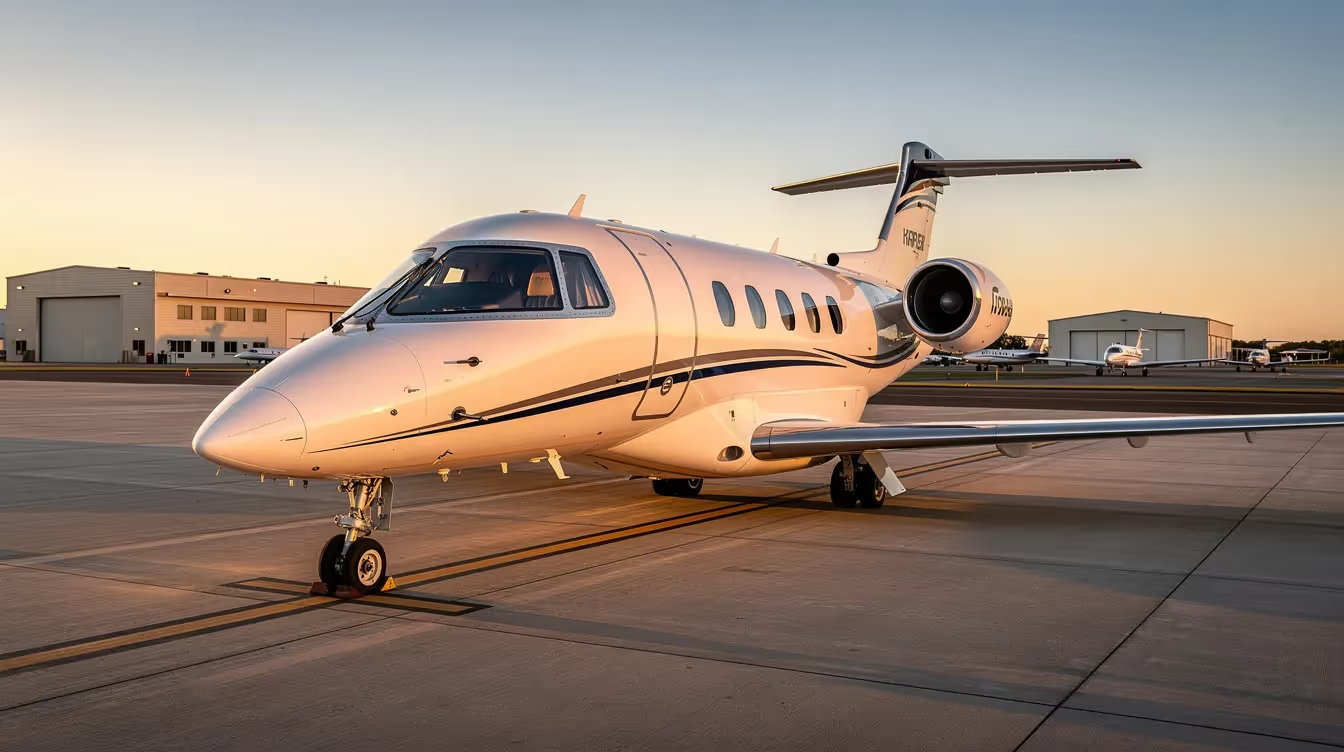
Private airplane rental cost is a crucial consideration for anyone looking to experience the efficiency, luxury, and flexibility of private jet travel in 2026. Whether you’re a business executive, a frequent traveler, or a family seeking a seamless journey, understanding what you’ll really pay to fly private is essential for making informed decisions. This article is designed for travelers who want to know exactly how private airplane rental costs are calculated, what factors influence pricing, and how to optimize value without sacrificing comfort. We’ll break down the true costs of chartering a private jet—including hourly rates, taxes, positioning fees, and seasonal surcharges—so you can confidently compare options and avoid surprises. By the end, you’ll have a clear picture of what to expect when booking a private jet in 2026, along with practical strategies to reduce costs and maximize your travel experience.
Private jet travel has redefined the way business and leisure travelers approach air transportation, offering a blend of luxury, flexibility, and efficiency that commercial airlines simply can’t match. With private jet charter services, travelers gain access to a vast network of over 5,000 airports worldwide—far surpassing the limited reach of commercial airlines, which typically serve only about 500 destinations. This expanded access means you can fly closer to your final destination, reducing ground transportation time and maximizing convenience.
Understanding private jet charter costs is key to making informed decisions about private aviation. As a complete guide to how much it costs to rent a private jet explains, the cost to rent a private jet in 2026 generally ranges from $2,000 to $14,000 per billable flight hour, depending on the aircraft type, size, and mission requirements. Whether you’re booking a light jet for a quick regional hop or an ultra-long-range jet for intercontinental travel, private jet charter services offer transparent pricing models that reflect the true value of time saved and comfort gained, and similar pricing principles apply when evaluating helicopter rental costs for shorter aerial trips.
One of the standout advantages of private jet travel is the ability to fly on your schedule, bypassing the delays and layovers common with commercial flights. This on-demand flexibility is especially valuable for business travelers who need to maximize productivity, as well as for families and groups seeking a seamless, personalized journey. Private jets are equipped with advanced amenities—think gourmet catering, bespoke interiors, and attentive crew—ensuring every flight is tailored to your preferences.
For those considering private aviation, understanding the factors that influence charter costs—such as billable flight hours, aircraft type, and additional services—empowers you to choose the right solution for your needs, especially when you break down the cost of a private jet flight before booking. As private jet charter becomes increasingly accessible, more travelers are discovering the unmatched benefits of flying private, from time savings to elevated comfort and privacy.
Now, let’s dive into the key takeaways and details you need to know about private airplane rental costs in 2026.
Private jet flight costs in 2026 typically range from $2,000 to $16,000+ per flight hour, depending on aircraft size, with turboprops at the entry level and ultra-long-range jets at the top.
Total trip cost usually runs 20–40% higher than the base hourly rate once taxes, airport fees, crew costs, and aircraft positioning are factored in.
Popular routes show wide price variation: a New York–Miami round trip on a light jet runs approximately $18,000–$28,000, while a New York–London one-way on an ultra-long-range jet costs roughly $90,000–$140,000.
Strategic choices like right-sizing the aircraft, flying off-peak, and booking empty leg flights can reduce private jet charter costs by 25–50% in many cases.
Jettly operates a digital marketplace with access to over 20,000 aircraft globally, offering instant pricing and transparent quotes. Travelers can explore options and request quotes at https://www.jettly.com.
Next, let's explore what factors determine these costs in detail.
Private airplane rental cost refers to the total expense of chartering a private aircraft for a specific trip, encompassing hourly flight rates plus associated fees, taxes, and services. The cost and affordability of flying on a private plane can be significantly more accessible through rental compared to the long-term financial commitment of owning a private plane, allowing travelers to enjoy the benefits of private aviation without the ongoing costs of ownership, though some travelers may still compare this with options like private jet leasing costs. In 2026, charter rates span a wide band depending on aircraft category, route complexity, and market conditions.
Here are the typical hourly ranges travelers encounter, reflecting both common and more precise market data; if you’re also comparing charter to full or fractional ownership, it helps to understand the broader picture of how much a private jet costs.
|
Aircraft Category |
Typical Hourly Rate (USD) |
Passenger Capacity |
Typical Mission Profile |
|---|---|---|---|
|
Turboprops |
$2,500 – $4,000 |
4 – 8 |
Regional missions, 150–800 nautical miles |
|
Very Light Jets (VLJs) |
$2,000 – $3,000 |
4 – 7 |
Short regional trips |
|
Light Jets |
$2,600 – $3,500 |
6 – 8 |
Domestic trips under 3 hours |
|
Midsize Jets |
$5,000 – $8,500 |
8 – 10 |
Coast-to-coast travel |
|
Super Midsize Jets |
$6,000 – $9,000 |
8 – 10 |
Extended range, larger cabin |
|
Heavy Jets & Ultra-Long-Range Jets |
$8,000 – $16,000+ |
8 – 19 |
Intercontinental travel |
|
VIP Airliners (BBJ, ACJ) |
$18,000 – $25,000+ |
20 – 50+ |
Large groups, ultra-luxury |
Rental rates for private aircraft vary widely based on aircraft type, size, and luxury level, spanning from approximately $1,200 to over $20,000 per hour, and broader guides to affordable airplane rent options show similar patterns across different rental providers. Smaller planes like turboprops are the most cost-effective, while light jets, midsize jets, and heavy jets progressively increase in price.
Most aircraft operators apply daily minimums of 1.5–2 hours for smaller jets and 2–3 hours for midsize jets and larger aircraft. A quick 45-minute hop is rarely billed as less than 1–1.5 hours of flight time.
To make these hourly rates tangible, here are typical 2026 trip costs:
New York (Teterboro) to Miami (Opa-Locka) on a light jet: Generally $18,000–$28,000 round trip, depending on dates and aircraft availability.
Los Angeles (Van Nuys) to Las Vegas on a light or midsize jet: Light and midsize jets are popular, cost-efficient options for scheduled flights on this route, with prices often $9,000–$18,000 for a same-day return.
New York (Teterboro) to London (Luton) on a long-range jet: Roughly $90,000–$140,000 one way, including permits, fuel, and handling.
Jettly’s private jet charter cost estimator surfaces these trip-level estimates instantly rather than just hourly rates, making it easier to compare total costs before booking.
With a clear understanding of typical costs, let’s break down how these prices are calculated and what factors can influence your final invoice.
Private jet pricing combines a base hourly rate with multiple variable and fixed charges. Understanding each component helps travelers anticipate their total invoice and identify opportunities to reduce costs.
Billable flight hours: Airborne time multiplied by the aircraft’s hourly rate. Most Part 135 aircraft operators bill from wheels-up to wheels-down, with minimums per leg and per day. Typical minimums run 1.0–1.5 hours per leg and 2–3 hours daily for midsize jets and heavy jets.
Longer routes cost more overall but often less per mile because of fewer takeoff/landing cycles and better aircraft utilization. Conversely, short regional flights may trigger minimum charges that inflate the per-mile cost.
A 2.0-hour New York to Toronto turboprop flight would likely be billed at exactly 2.0 hours.
A 35-minute hop from Los Angeles to Palm Springs might be billed at a 1.0–1.5 hour minimum due to short-leg fees.
Aircraft positioning fees: The cost of flying the plane empty to or from your departure/arrival airports. Positioning flights represent the cost of flying an aircraft empty to your chosen departure airport or back to its home base after your trip. These legs are often billed at the same hourly rate as passenger flights.
Positioning fees can add 15-40% to the total cost of a private jet charter when the aircraft must reposition to pick up passengers.
Example: Chartering from a small city where few jets are based can add 1–3 extra billable flight hours just to position the plane, potentially adding $5,000–$15,000 to the total invoice.
Fuel and fuel surcharges: Base fuel costs plus potential surcharges when jet-A prices exceed operator baselines. Fuel surcharges fluctuate based on volatile fuel prices, with larger, less fuel-efficient planes costing more.
Airport fees: Landing fees, ramp charges, and ground handling. Landing fees at airports can range from $100 to $1,500 per flight, depending on the airport's size and location, with major airports typically charging more.
Crew costs: Pilot and flight attendant per diems, overnights, and meals. Crew expenses include overnight accommodation, meals, and per diems, often costing $300 to $800 per crew member per night, significantly impacting the total charter cost for multi-day trips.
Additional fees: Deicing fees can vary widely, ranging from $1,500 to $15,000 depending on the size of the aircraft and specific winter operation requirements.
The total cost of renting a private jet can increase by 20-40% due to additional fees such as positioning fees, fuel surcharges, and landing fees.
Jettly focuses on itemized, upfront quotes so travelers see each component before confirming a charter flight.
With these components in mind, let’s look at how route profile and aircraft type further influence your costs.
Routing through congested airports like JFK, LAX, or Heathrow can increase taxi time and associated charges. Nearby executive fields—Teterboro, Van Nuys, or London Luton—often prove more cost-efficient with lower airport fees and faster turns, especially when using an airport locator tool to identify convenient alternates.
Jettly’s platform automatically calculates realistic block times and minimums when producing instant quotes, eliminating guesswork.
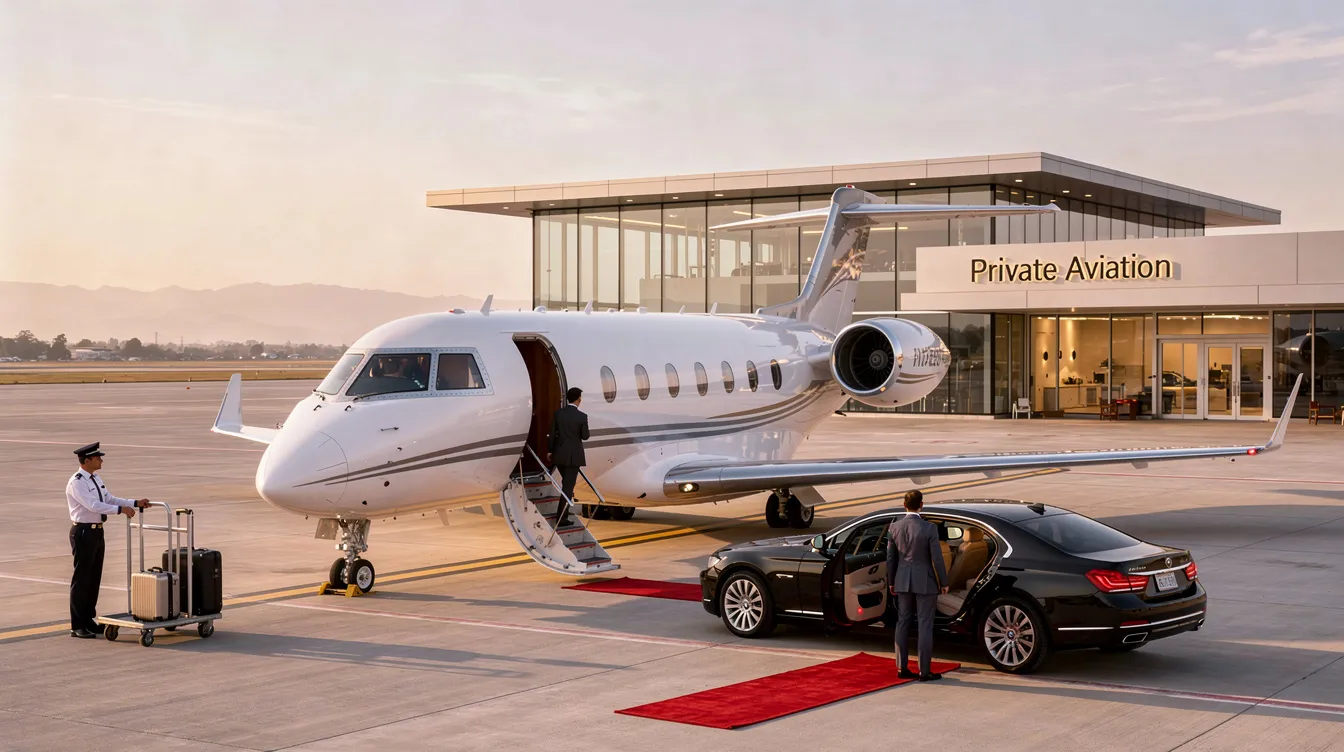
Aircraft size is one of the biggest levers affecting private airplane rental cost. It determines hourly rate, fuel burn, crew requirements, and which airports the plane can access.
Each category serves different missions:
Turboprops (Pilatus PC-12, King Air 250): Best for 1–3 hour regional trips and smaller airports with shorter runways, costing around $2,500 to $4,000 per hour.
Very Light Jets (VLJs): Efficient for short regional trips with 4–7 passengers, typically costing $2,000 to $3,000 per hour.
Light jets (Citation CJ3+, Phenom 300): Ideal for up to 3-hour flights and 6–8 passengers, with hourly rates from $2,600 to $3,500.
Midsize jets and super midsize jets (Hawker 800XP, Challenger 350): Good for coast-to-coast flights or 4–5 hour missions with stand-up cabins, with midsize jets ranging from $5,000 to $8,500 per hour.
Heavy jets and ultra-long range jets (Gulfstream G600, Global 6500): Designed for transcontinental and intercontinental private jet travel, with rates exceeding $10,000 per hour and ultra-long-range jets costing $12,000 to $18,000 per hour.
VIP airliners (BBJ, ACJ): For large groups of 20–50+ passengers on charter events or corporate roadshows, starting at $18,000 per hour.
Matching the aircraft to the mission can easily swing the total trip cost by 30–50% without sacrificing comfort. Jettly’s private charter aircraft search lets users filter by seat count, range, and hourly cost to align budget with requirements.
Aircraft availability tightens significantly during peak seasons and major events:
Christmas and New Year in South Florida
Super Bowl week
Cannes Film Festival
Art Basel Miami
During these periods, private jet charter prices can rise 20–40% above normal rates. Flexible departure dates and using airports with strong operator presence can reduce both positioning costs and seasonal premiums.
Jettly’s marketplace model helps locate nearby aircraft, minimizing empty legs and associated charges, and gives travelers direct access to discounted empty-leg flights.
With the main cost drivers covered, let’s break down the specific taxes, fees, and extras you should expect.
Beyond base flight costs, travelers should budget for several additional categories. Understanding how renting a plane works makes it easier to anticipate these line items.
Mandatory fees for private jet charters include a 7.5% Federal Excise Tax on domestic flights and segment fees of approximately $4.50 per passenger per leg.
International head taxes ($20–$25 per passenger range for flights to/from the U.S.)
Additional small taxes for flights to Alaska and Hawaii
Many other countries assess value-added tax (VAT) or similar charges on charter segments, particularly within the EU and UK. These can add 8–15% to the base rental cost, depending on routing.
Jettly’s pricing engine includes applicable taxes in instant estimates, allowing clients to view all-in numbers for comparison.
Landing fees at airports can range from $100 to $1,500 per flight, depending on the airport's size and location, with major airports typically charging more.
Ramp and handling fees from fixed base operators usually run $150–$600 per stop.
Winter operations add costs with deicing fees from $1,500 to $15,000, and hangar storage costs $500–$1,500 per night.
Crew overnights cost $200–$800 per crew member per night, depending on location.
Fuel surcharges vary with market prices, adding several hundred dollars per flight hour during high fuel price periods.
Daily minimums require 2–3 billable hours per day for midsize and larger jets, affecting short-trip economics.
Deicing fees can vary widely, ranging from $1,500 to $15,000 depending on the size of the aircraft and specific winter operation requirements.
These extras typically add 20–40% to the base private jet cost and vary based on geography, season, and airport selection.
Next, let’s look at optional services and in-flight experience costs that can further affect your total.
Many Jettly trips include standard amenities, with higher-end requests quoted in advance, and frequent flyers can often capture better value through private jet memberships that package access and services together.
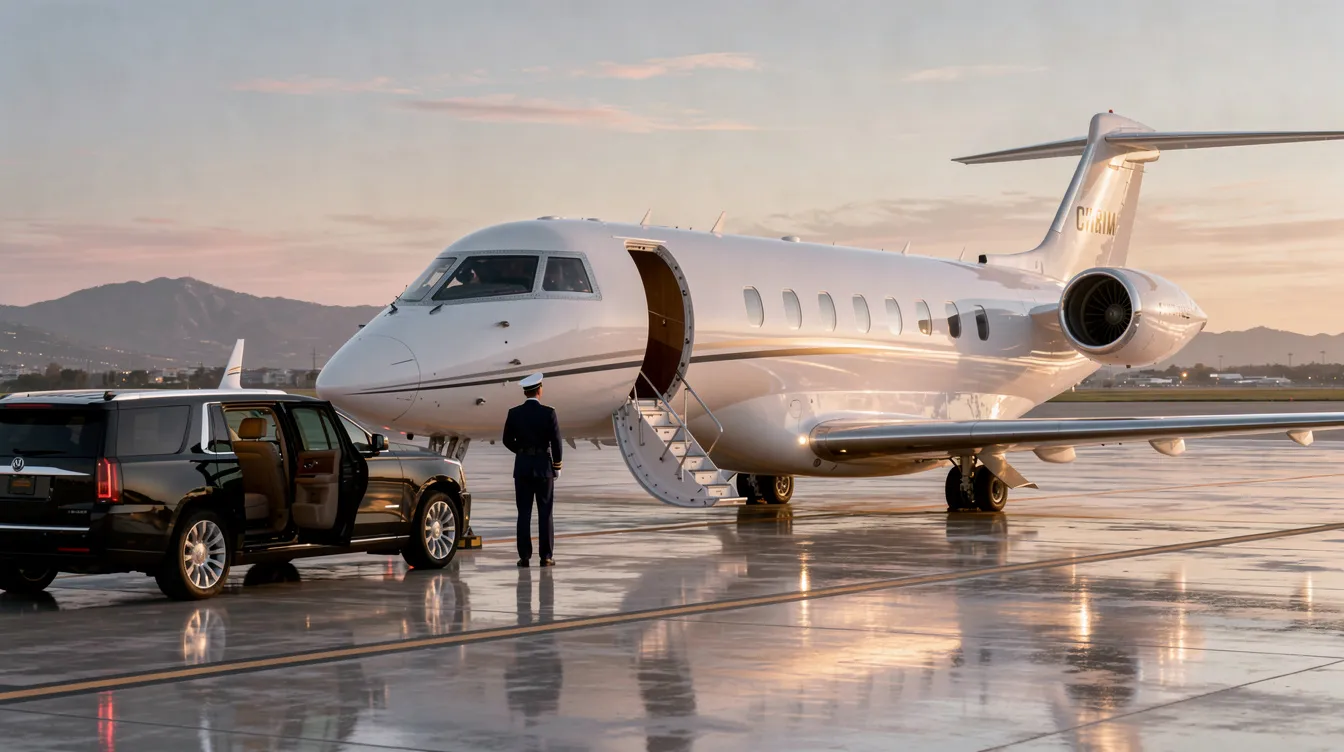
Catering beyond basic snacks: $250–$2,000+ per leg.
Premium Wi-Fi: $250–$1,000+ on long-haul flights.
Special cleaning fees after pets or smoking: $250+.
Ground transportation coordination: $200–$1,000+ per transfer.
With a full understanding of costs, let’s explore the broader advantages of private jet travel beyond just the price.
Private jets can access over 5,000 airports worldwide, compared to approximately 500 served by commercial airlines, enabling travelers to reach remote locations and conduct same-day multi-city meetings. Private aviation offers enhanced privacy and flexibility, making it ideal for business executives who require confidential discussions and the ability to adapt travel plans without penalties, unlike commercial flights. Private jet travel can save 4-6 hours per trip compared to commercial flights due to reduced security lines, boarding delays, and connection inefficiencies, allowing for more productive use of time.
Private aviation also offers enhanced privacy and flexibility, ideal for business executives requiring confidential discussions and the ability to adapt travel plans without penalties—advantages commercial flights cannot match, as demonstrated by industry leaders like NetJets and its private aviation model.
Cost-saving options like empty leg flights offer discounts ranging from 25% to 75% off standard charter prices, making private jet travel more accessible for flexible travelers. Jet card programs provide fixed hourly rates and guaranteed aircraft availability, helping frequent travelers manage costs while enjoying private aviation benefits.
Now that you know the advantages, let’s summarize the key points and how to make the most of your private jet experience.
Crew tips are generally not included in quoted charter prices and remain entirely discretionary. Common practice suggests $50–$150 per crew member on short domestic flights and $200+ per crew member on long-haul or multi-day trips when service is strong. Tipping is never mandatory, and professional service standards are maintained regardless. Jettly’s invoices do not automatically add gratuities, leaving this at the client’s discretion.
Basic operator insurance for the aircraft and liability is included in standard charter pricing, but optional trip or cancellation insurance is a separate purchase. Third-party policies typically add 3–8% of trip value to protect against last-minute changes for medical or business reasons. Operators’ own cancellation policies vary, with stricter terms and higher penalties on peak dates or for larger aircraft. Always ask Jettly or the operator for written cancellation terms before confirming a charter.
For standard domestic trips, booking 7–21 days in advance typically yields the best balance of availability and pricing. For major holidays or events, booking 4–8 weeks out is recommended because aircraft near popular destinations sell out early and prices rise. Last-minute charters within 24–48 hours are often possible but may cost more, especially if aircraft positioning is required. Jettly handles both urgent and long-range bookings, but clients planning ahead usually have more choice and leverage on price.
Many private aircraft are pet-friendly, but policies depend on the operator, aircraft owner, and destination country. Additional cleaning fees or security deposits may apply, particularly for large animals or multi-flight itineraries. Travelers should provide pet details—species, size, carrier requirements—during the quoting process so Jettly can match them with suitable aircraft. International routes may require extra paperwork or handling for pets, adding modest administrative costs.
Changing departure times, destinations, or passenger counts after confirmation can alter the private airplane rental cost, especially if changes affect positioning, crew duty limits, or flight distance. Small time shifts on the same day may incur little or no extra cost, while adding legs or overnights can significantly change the invoice. Notify Jettly as early as possible about potential changes so options and any incremental costs can be reviewed before committing. Clear terms around changes and penalties are included in the charter agreement—review these before signing.
When evaluating the value of private jet charter versus commercial flights, it’s important to look beyond the sticker price and consider the full spectrum of travel costs, time, and productivity. While commercial flights may appear more affordable for solo travelers, private jet charter prices can be surprisingly competitive for groups of two to four passengers—especially when factoring in the hidden costs of commercial air travel.
Take, for example, a round-trip journey from New York to Los Angeles. In 2026, a business-class ticket on a commercial airline can range from $8,000 to $12,000 per person. In contrast, an affordable private jet charter for the same route typically costs between $20,000 and $30,000 for the entire aircraft, depending on the aircraft type and specific mission requirements. For a group of four, the per-person cost of flying private can approach that of commercial business class, with the added benefits of privacy, comfort, and flexibility.
Private jet travel also delivers significant time savings. By avoiding lengthy security lines, boarding delays, and layovers, travelers can save 4–6 hours per trip. For business executives, this reclaimed time can translate into $50,000 or more in revenue per flight hour, thanks to uninterrupted productivity and the ability to conduct meetings in-flight. Additionally, private aviation provides access to smaller airports, reducing ground transportation time and allowing for more direct routes—advantages that commercial airlines simply can’t offer.
As the private aviation market continues to expand, understanding private jet charter costs in relation to commercial airline expenses is essential for making smart travel decisions, especially when you look at the broader list of charter airlines and private flight options available today. Whether you’re seeking efficiency for business or a seamless experience for leisure, private jet charter offers a compelling alternative to traditional commercial flights, combining cost-effectiveness for groups with unmatched convenience and service.
Understanding private airplane rental cost comes down to a few key principles:
Typical 2026 rates span roughly $2,000–$16,000+ per flight hour, depending on aircraft size and mission requirements.
The total invoice usually runs 20–40% above the base rate after taxes, landing fees, hangar fees, and positioning are included.
Strategic choices around aircraft type, airports, timing, and empty legs can significantly reduce spend while preserving comfort and productivity.
A transparent, data-driven broker or marketplace is essential to avoid surprises and optimize value on each trip.
Flying private doesn’t have to mean flying blind on costs. When travelers understand how private airplane rental costs are calculated—from billable flight time to operational costs and optional extras—they make better decisions and get more value from every flight.
Ready to compare aircraft, explore routes, or request a customized quote? Visit https://www.jettly.com for instant, itemized pricing tailored to specific dates and passenger counts.
For more details, see the frequently asked questions below.
Share this post:
Jay Franco Serevilla
Apr 18, 2026
|
5
min read
Discover tips and trends in the industry.
5
min read
Flight Track by Tail Number: How It Works, What You Can See, and How Jettly Uses It
Flight tracking by tail number allows users to monitor specific aircraft using their unique registration codes. This method is particularly useful in private aviation, where flights often lack public schedules. Jettly utilizes this technology to enhance safety, operational efficiency, and customer communication for charter services.
Read More
5
min read
Flight Timing: How to Read, Plan, and Optimize Your Private Jet Schedule
Understanding flight timing is crucial for optimizing private jet travel. This guide covers essential aspects like departure windows, time zones, and how to leverage platforms like Jettly for efficient scheduling. By mastering these details, travelers can significantly reduce wasted time and enhance their overall travel experience.
Read MoreStay updated with our latest insights and tips to elevate your journey with us.
MEMBERSHIPS AND ASSOCIATIONS



Disclaimer: Jettly operates as a charter broker, offering access to a global digital jet charter marketplace. Jettly is not a direct air carrier and does not own or operate aircraft. All advertised flights are conducted by third-party air carriers that are fully licensed and hold the appropriate Part 135 or Part 121 certifications issued by the Federal Aviation Administration (FAA) or equivalent regulatory authorities under U.S. or foreign law. Jettly complies fully with the U.S. Department of Transportation's Part 295 and Part 298 Charter Broker regulations. Jettly does not carry additional liability insurance. Passengers are covered by aircraft operator insurance. TICO: 50023770


