


Login
Get Instant Pricing On 23,000+ Aircraft

>
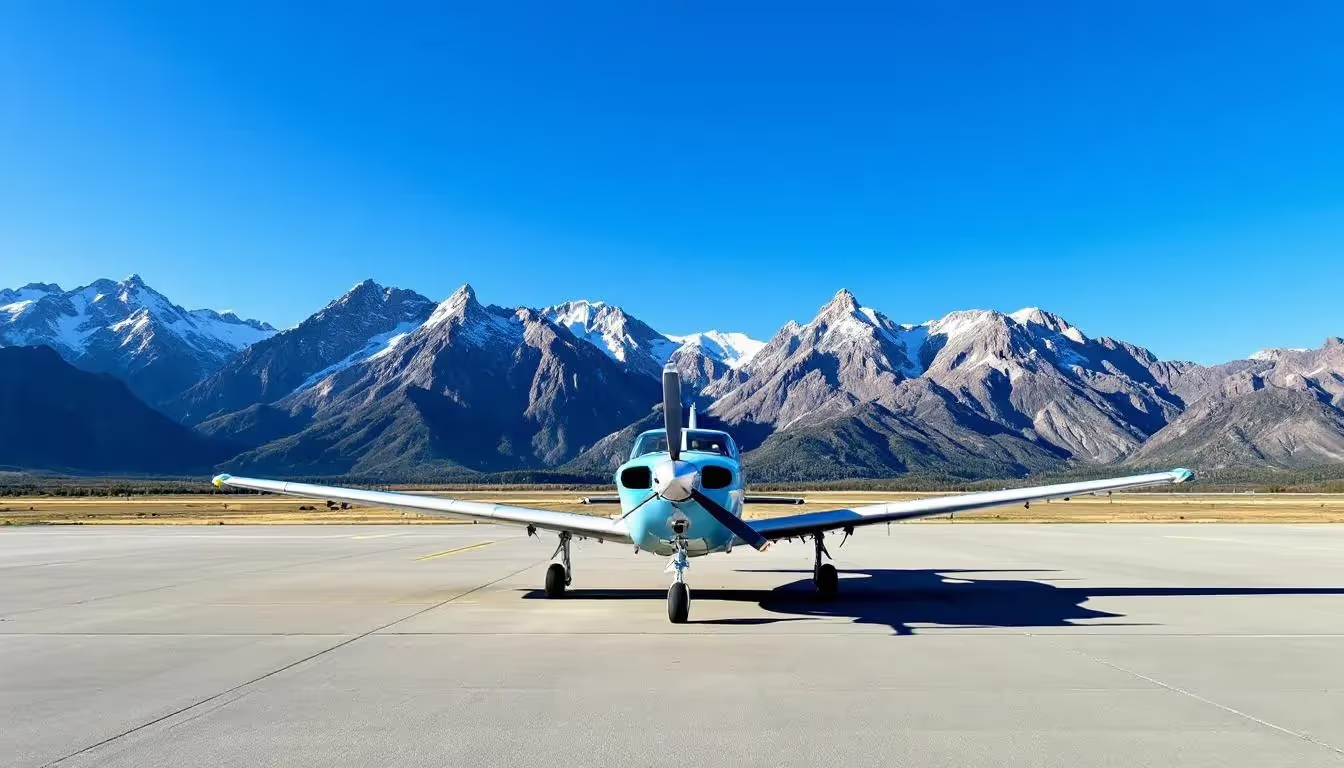
Owning a small aircraft costs an average of $30,000 annually—but that’s just the beginning of understanding true plane ownership costs. Whether you’re considering your first airplane purchase or evaluating an upgrade, the financial commitment extends far beyond the initial purchase price.
Many prospective aircraft owners focus primarily on the acquisition cost, only to discover that annual operating expenses can equal or exceed their monthly mortgage payment. From hangar fees and insurance premiums to engine overhauls and unexpected repairs, the associated costs of plane ownership require careful planning and budgeting.
This comprehensive guide breaks down every aspect of aircraft ownership expenses, helping you make informed decisions about private aviation investment. We’ll explore purchase financing, fixed annual costs, variable operating expenses, and often-overlooked hidden costs that can significantly impact your budget.
Understanding aircraft ownership costs requires examining both predictable and variable expenses that aircraft owners face throughout their ownership experience.
Essential Cost Benchmarks:
Small plane owners typically spend $30,000 annually on operating costs, including maintenance, fuel, insurance, and storage
Initial purchase price ranges from $50,000 for older aircraft to $300,000+ for newer models
Fixed costs include hangar fees averaging $250-$400 monthly, insurance premiums of $500-$3,000 yearly, and annual inspections costing $600-$1,200
Variable expenses encompass fuel consumption of 5-10 gallons per hour, maintenance reserves, and landing fees
The true cost of airplane ownership becomes cost-effective compared to rental when you fly frequently—typically 100-150 flight hours per year. Below this threshold, alternatives like flying clubs or fractional ownership often provide better value.

The aircraft purchase journey begins with understanding how purchase prices vary based on aircraft type, age, and condition. These initial expenses set the foundation for your long-term ownership costs.
Popular Single-Engine Aircraft Pricing:
Cessna 172 (Older Models): $50,000-$150,000 for 1970s-2000s aircraft
Cessna 172 (New G1000 Models): $400,000-$500,000
Piper Cherokee: $45,000-$120,000 for older models; $350,000+ for new variants
Beechcraft Bonanza: $120,000-$250,000 for vintage models; $900,000-$1,000,000+ for new G36 variants
Jet Aircraft Investment Levels:
Very Light Jet: $2-$5 million new; used models start below $2 million
Light Jet: $4-$9 million new
Midsize Jet: $9-$20+ million new
For those interested in alternative options to full private jet ownership, learn more about NetJets card costs and jet card prices.
Most aircraft loans require a 15-20% down payment, with financing terms typically ranging from 10 to 20 years. Interest rates currently fluctuate between 6-12%, depending on your creditworthiness, aircraft age, and intended use.
Older aircraft, experimental models, or those with discontinued manufacturer support often require larger down payments and face higher interest rates. Lenders view these as higher-risk investments due to parts availability and resale value concerns.
Before finalizing any aircraft purchase, budget for essential pre-buy inspections costing $1,500-$5,000+ for piston aircraft. These inspections verify airworthiness, examine maintenance records, and identify compliance issues with Airworthiness Directives.
Additional transaction expenses include:
Escrow services: $300-$1,000
Title search and transfer: $100-$500
FAA registration: $5 (though broker fees often increase total costs to $150-$500)
State sales or use taxes: 4-8% in applicable jurisdictions
Fixed costs represent unavoidable annual expenses that every aircraft owner faces regardless of flying hours. These ongoing expenses form the baseline of your ownership budget.
Storage costs vary dramatically by location and significantly impact your annual budget:
Regional Hangar Cost Variations:
Urban/High-Demand Airports: $350-$1,200+ monthly for T-hangars
Smaller Regional Airports: $200-$350 monthly
Outdoor Tie-Down Options: $100-$200 monthly
California and East Coast metropolitan areas command premium rates, with T-hangar space often exceeding $700-$1,500 monthly. Texas and Oklahoma offer more affordable options, typically $250-$450 monthly, while Florida falls in the middle range at $550-$900 monthly.
For private jet ownership, hangar requirements expand significantly. Climate-controlled hangars with amenities can cost $2,000-$4,000 monthly, adding $24,000-$48,000+ to annual costs.
Aircraft insurance premiums depend on hull value, pilot experience, and coverage limits. For piston singles like the Cessna 172, expect annual premiums of $500-$3,000, while newer or high-value models often require $5,000-$10,000 yearly.
Key Insurance Factors:
Hull coverage typically covers 80-100% of aircraft value
Liability coverage minimum recommendation: $1 million with $100,000 per passenger sub-limits
Pilot experience and training directly influence premium costs
Claims history significantly impacts future rates
For larger jets, insurance premiums typically range 1-3% of hull value annually. A $20 million jet might require $200,000-$600,000 in annual insurance coverage.
Annual regulatory compliance includes various fees and subscriptions:
FAA registration renewals and state-specific fees
Annual property taxes in applicable states (1-2% of assessed value)
Avionics database subscriptions: $300-$1,000 yearly for GPS navigation and weather updates
Pilot currency requirements: medical certificates, recurrent training, and proficiency checks
Variable expenses fluctuate based on your flying hours and operational patterns. These aircraft operating costs directly correlate with how frequently you use your airplane.
Fuel represents one of the largest variable expenses for aircraft owners. Small planes typically consume 5-10 gallons per hour, with specific rates varying by aircraft type:
Fuel Consumption by Aircraft:
Cessna 172: 7-9 gallons per hour
Beechcraft Bonanza: 12-15 gallons per hour
Piper Cherokee: 8-10 gallons per hour
With avgas prices averaging $5-$8 per gallon in 2024, an owner flying 100 hours annually might spend $3,500-$7,500 on fuel costs alone. Metropolitan airports often charge premium rates, sometimes exceeding $8 per gallon.
Oil changes represent regular maintenance requirements every 50 flight hours or 4-6 months, typically costing $150-$300 per service, including oil and filters. High-usage aircraft or training operations may require more frequent changes.
Beyond oil changes, routine maintenance includes regular inspections, minor repairs, and parts replacement that vary based on the aircraft's age and condition.
Many regional airports charge no landing fees for small piston aircraft, but busier commercial airports may assess $30-$300 per landing. Additional airport expenses include:
Ramp and overnight parking: $15-$60 for small aircraft
Transient overnight fees: $10-$40 per night
Ground handling services are provided when required
These fees escalate significantly for jet aircraft, with some premium locations charging $200-$500+ per night for hangar space and services.
Aircraft maintenance represents both scheduled and unscheduled expenses that aircraft owners must budget carefully. These costs can vary dramatically based on aircraft age, usage patterns, and unexpected issues.
Federal regulations require annual inspections for all Part 91 aircraft, with costs varying by aircraft complexity:
Typical Annual Inspection Costs:
Cessna 172/Piper Cherokee: $600-$1,200
Beechcraft Bonanza (complex aircraft): $1,500-$3,000
Light twins and turbines: $3,000-$8,000+
If inspections reveal significant issues or require compliance with new Airworthiness Directives, costs can increase substantially. Aircraft used for commercial operations also require 100-hour inspections, typically costing $800-$2,000 for light singles.
Smart aircraft owners establish maintenance reserves for major overhauls. Piston engines typically require an overhaul every 1,800-2,200 hours, costing $25,000-$40,000 for common Lycoming or Continental engines.
Financial experts recommend reserving $15-$25 per flight hour for engine overhaul costs. For jets and turbines, maintenance reserves increase dramatically to $300-$800+ per hour, reflecting the complexity and cost of turbine engine maintenance.
Propeller overhauls occur every 2,000-2,400 hours or 5-7 years, typically costing $5,000-$12,000. While less frequent than engine maintenance, these expenses require advance planning.
Airframe overhauls become necessary as aircraft age, potentially involving structural repairs, corrosion treatment, and component replacement. These costs vary widely based on aircraft condition and can range from several thousand dollars to tens of thousands for extensive work.

Aging aircraft often face mandatory equipment upgrades that can significantly impact operating costs:
Common Upgrade Requirements:
ADS-B Out compliance (mandatory since 2020): $3,000-$8,000
GPS and glass cockpit installations: $30,000-$75,000 for major upgrades
Transponder and navigation equipment updates: $5,000-$15,000
Beyond mandatory upgrades, many owners choose to modernize older aircraft with contemporary avionics, potentially spending $25,000-$250,000 depending on the scope of improvements.
Aircraft insurance provides essential protection against liability and hull damage, but premiums vary significantly based on multiple factors that owners must understand.
Hull Insurance: Covers direct aircraft damage, typically providing 80-100% of appraised aircraft value. This coverage protects your investment against accidents, weather damage, and theft.
Liability Insurance: Industry standard for piston aircraft includes $1 million liability limits with $100,000 per passenger sub-limits. Jet aircraft often require higher thresholds due to increased risk exposure.
Premium Calculation Factors:
Pilot experience and total flight hours
Aircraft make, model, and value
Geographic location and home airport
Intended use (personal, business, training)
Claims history and safety record
Most insurance providers offer annual payment plans, though monthly options may be available with additional service fees. Maintaining a clean safety record and pursuing recurrent training can significantly reduce premiums over time.
Experienced pilots with strong safety records often receive substantial discounts, particularly when they maintain current certifications and participate in annual safety programs.
Understanding alternatives to full ownership helps determine the most cost-effective approach based on your flying patterns and financial objectives.
Flying clubs offer shared aircraft access with lower financial commitment:
Initial equity buy-in: $2,000-$15,000+
Monthly dues: $50-$200
Hourly rates (wet): $80-$170 for small piston singles
Clubs eliminate major capital requirements and distribute maintenance costs among multiple members, making them attractive for pilots flying fewer than 100 hours annually.
Fractional ownership provides access to newer aircraft with professional management:
Initial acquisition: $50,000-$500,000+ depending on share size
Monthly management fees plus hourly flight charges
Programs like NetJets or PlaneSense handle maintenance, crew, and scheduling
These programs work well for business users who need reliable access but don’t require full-time aircraft availability.
Aircraft partnerships involve 2-4 owners splitting both capital and ongoing expenses proportionally. Success requires clear operational agreements covering scheduling, cost sharing, and exit strategies.
Partnerships can reduce individual financial exposure while maintaining more control than club membership, making them popular among serious recreational pilots.
Hourly wet rental rates for training aircraft typically range $140-$170, including fuel and insurance. The break-even point for ownership versus rental occurs around 100-150 flight hours annually, factoring in the opportunity cost of capital.
Below this threshold, rental or club participation often provides better financial value, while ownership becomes attractive for higher-utilization pilots who value schedule flexibility and aircraft familiarity.
Aircraft ownership involves numerous costs that don’t appear in initial budgets but can significantly impact your total expenses throughout the ownership experience.
Aircraft on Ground (AOG) emergencies can generate substantial unexpected costs. Mechanical failures away from your home base might require emergency repairs, parts shipping, or aircraft transportation, potentially costing several thousand dollars beyond normal maintenance expenses.
Weather delays and unexpected overnights can add hotel fees, additional hangar charges, and extended travel costs that impact your overall ownership budget.
Federal aviation regulations periodically require equipment upgrades that create mandatory expenses:
Transponder upgrades and certifications
Navigation equipment modernization
Communication system updates
These regulatory changes can force owners to invest thousands of dollars in equipment upgrades to maintain legal airworthiness status.
Aircraft exteriors require periodic paint maintenance to prevent corrosion and maintain appearance, typically costing $8,000-$20,000 for small aircraft. Interior refurbishment, including new upholstery, carpeting, and panel updates, can add $5,000-$15,000+ to maintenance expenses.
While not always mandatory, these improvements often become necessary to maintain aircraft value and passenger comfort over time.
Older aircraft may require extensive avionics upgrades to remain practical for modern flying:
GPS navigation system installations
Weather detection and display systems
Engine monitoring and display upgrades
Autopilot system modernization
These improvements can exceed $50,000 for comprehensive modernization of legacy aircraft, representing a significant additional investment beyond purchase price.
Geographic location dramatically affects many aspects of aircraft ownership costs, from storage fees to fuel prices and maintenance rates.
High-Cost Regions:
California (Los Angeles/Bay Area): $700-$1,500 monthly for T-hangars
East Coast metropolitan areas: $600-$1,200 monthly
Resort destinations: Premium seasonal pricing
Moderate-Cost Regions:
Texas/Oklahoma: $250-$450 monthly
Midwest locations: $300-$500 monthly
Southeast (excluding Florida): $400-$600 monthly
Lower-Cost Options:
Rural airports: $200-$350 monthly
Smaller regional facilities: $250-$400 monthly
Metropolitan airports and resort destinations often charge substantial premiums for avgas, sometimes 30-50% above national averages. Remote locations may also have higher prices due to transportation costs and limited supply.
Planning fuel stops at airports with competitive pricing can significantly reduce operating costs for longer trips.
Labor rates vary significantly across regions:
Coastal/urban areas: $120-$180 per hour
Central U.S./rural locations: $85-$120 per hour
These differences can substantially impact annual maintenance costs, particularly for extensive repairs or modifications.
Insurance premiums reflect regional risk factors:
Hurricane-prone areas (Florida, Gulf Coast): Higher hull coverage premiums
Wildfire regions (California): Increased risk assessment
High-traffic airspace: Elevated liability considerations
International flying: Additional coverage requirements and permit fees
What is the cheapest plane to own and operate?
Vintage two-seat trainers like Aeronca or Cessna 140 models represent the most affordable ownership options, often available for under $30,000 purchase price with annual operating expenses as low as $4,000-$8,000 for owners flying 30-50 hours yearly.
How many hours per year make ownership cost-effective?
Most financial analyses indicate ownership becomes advantageous over rental at 100-150 flight hours annually. Below this threshold, flying clubs or rental arrangements typically provide better value.
Can I finance 100% of an aircraft purchase?
Full financing is extremely rare for aircraft purchases. Most lenders require a minimum of 15-20% down payments, though some fractional ownership programs may offer alternative financing structures.
What happens if I can’t afford maintenance costs?
Aircraft cannot legally fly unless current on required maintenance and Airworthiness Directives. Deferred maintenance can ground your aircraft, reduce its value, and potentially void insurance coverage.
How do I budget for engine overhaul costs?
Experts recommend reserving $15-$25 per flight hour for piston engine overhauls. Establishing a separate savings account for this major expense helps avoid financial surprises when an overhaul becomes necessary.
Is aircraft ownership tax-deductible for business use?
Aircraft used for legitimate business purposes may qualify for depreciation deductions and expense write-offs under specific IRS guidelines. However, aggressive business use claims can trigger audits, so consult qualified tax professionals.
What insurance coverage do I need as a new owner?
Minimum recommended coverage includes $1 million liability with appropriate hull coverage for your aircraft’s value. New pilots often face higher premiums and may require additional training or higher deductibles.
How much should I budget for unexpected repairs?
Industry experts suggest maintaining a contingency fund equal to 5-10% of your annual operating expenses for surprise repairs and modifications beyond routine maintenance.
Understanding plane ownership cost requires careful analysis of both predictable annual expenses and variable costs that fluctuate with usage patterns. The $30,000 average annual cost for small aircraft ownership reflects a complex mix of fixed expenses, operational costs, and unexpected maintenance requirements.
Successful aircraft ownership depends on realistic budgeting that accounts for hangar fees, insurance premiums, fuel costs, routine maintenance, and the inevitable surprises that accompany any mechanical device. Whether you’re considering a vintage trainer or modern single-engine aircraft, thorough cost analysis ensures your aviation investment enhances rather than strains your financial situation.
Before making any aircraft purchase decision, calculate your specific usage patterns, research local costs in your area, and consider alternatives like fractional ownership or flying clubs if your annual flying hours fall below the ownership break-even point. With proper planning and realistic expectations, aircraft ownership can provide years of safe, enjoyable flying while maintaining financial stability.
Share this post:
Jay Franco Serevilla
Aug 21, 2025
|
5
min read
Discover tips and trends in the industry.
5
min read
Private Jet Charter Colorado Springs: Fly Smarter with Jettly
Private jet charter in Colorado Springs offers a convenient and flexible travel solution for business and leisure travelers. With access to over 20,000 aircraft through Jettly, booking a flight is quick and hassle-free, allowing you to bypass commercial airline delays and enjoy tailored services. Experience the benefits of private aviation, including direct airport access and personalized itineraries.
Read More
5
min read
Boise Charter Flights with Jettly: Private Jets, Pricing & Top Routes
Boise charter flights with Jettly offer travelers a flexible and efficient way to fly in and out of Idaho's capital. With access to over 20,000 aircraft, Jettly provides personalized scheduling, enhanced privacy, and direct routing to numerous destinations, making it ideal for both business and leisure travel.
Read MoreStay updated with our latest insights and tips to elevate your journey with us.
MEMBERSHIPS AND ASSOCIATIONS



Disclaimer: Jettly operates as a charter broker, offering access to a global digital jet charter marketplace. Jettly is not a direct air carrier and does not own or operate aircraft. All advertised flights are conducted by third-party air carriers that are fully licensed and hold the appropriate Part 135 or Part 121 certifications issued by the Federal Aviation Administration (FAA) or equivalent regulatory authorities under U.S. or foreign law. Jettly complies fully with the U.S. Department of Transportation's Part 295 and Part 298 Charter Broker regulations. Jettly does not carry additional liability insurance. Passengers are covered by aircraft operator insurance. TICO: 50023770


