


Login
Get Instant Pricing On 23,000+ Aircraft

>
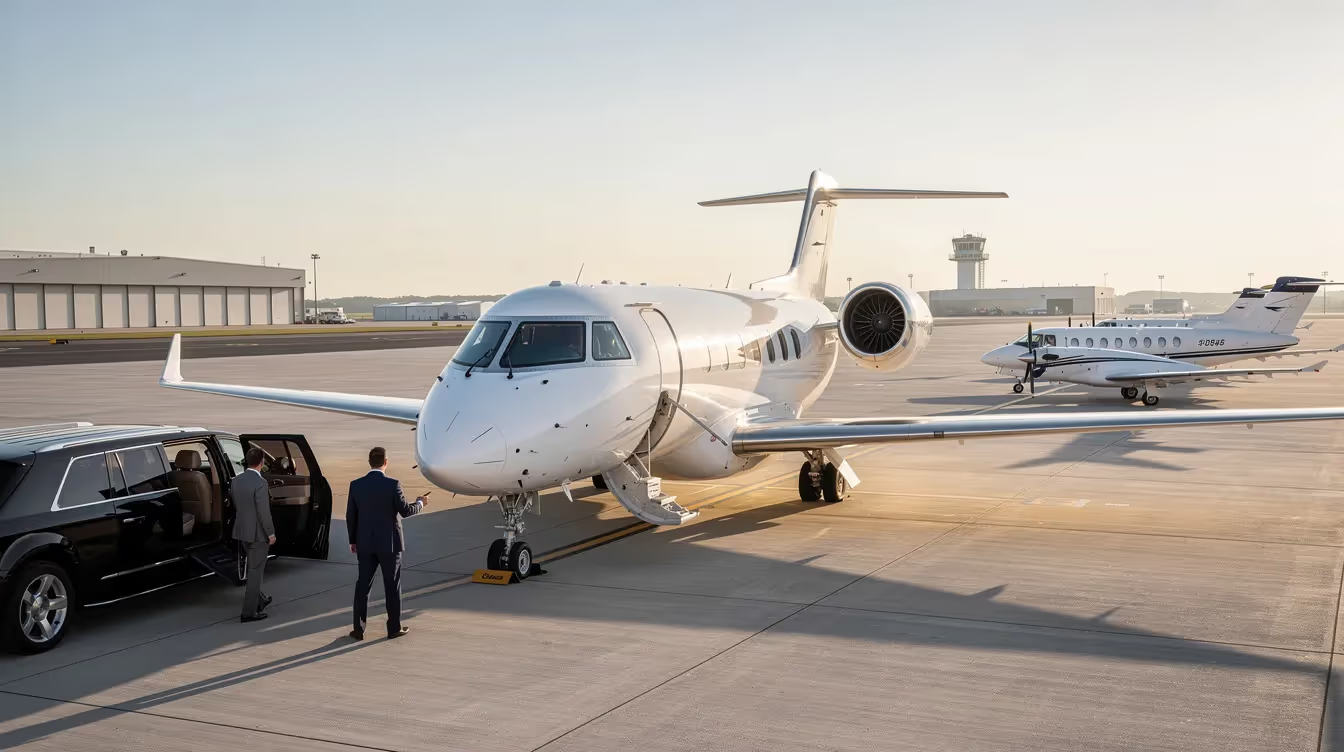
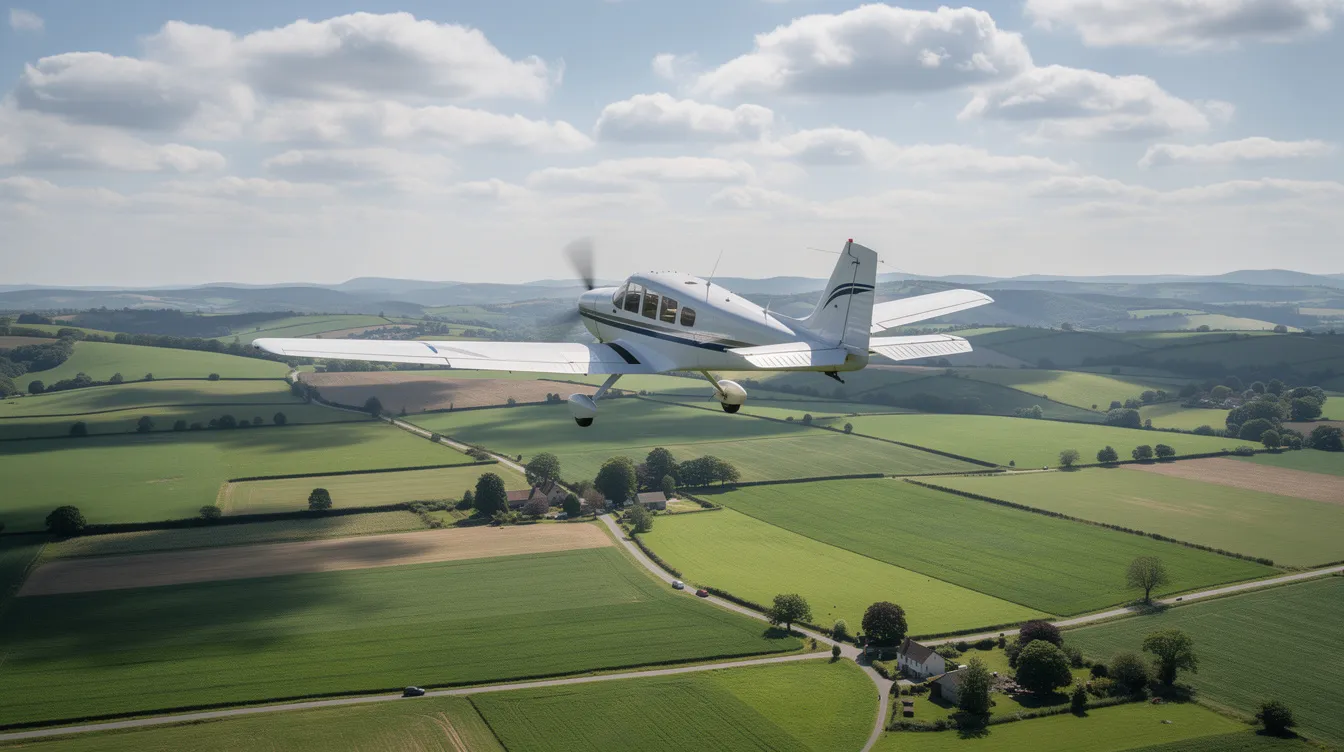
The Piper Warrior PA28 remains one of the most recognized training aircraft in general aviation. With decades of production history and thousands of units flying worldwide, this four-seat single-engine aircraft continues to serve flight schools, flying clubs, and private owners who value predictable handling and reasonable operating costs.
The Piper Warrior PA28 is a four-seat, single-engine member of the Piper Cherokee family, widely used for flight training, rental, and personal travel since the 1970s. Its all-metal construction and fixed landing gear make it a reliable platform for students and private pilots alike.
Key Warrior variants include the PA-28-151, PA-28-161 Warrior II, and PA-28-163 Warrior III, typically powered by 150–160 hp Lycoming engines, with cruise speeds of 110–130 knots and ranges of roughly 500–600 nm.
The tapered wing design, stabilator tail, and forgiving flight characteristics are the main reasons the Piper Warrior PA28 is a staple in flight schools around the world. The wing washout ensures ailerons remain effective even during stall recovery.
While Jettly focuses on private jet and turboprop charter, understanding aircraft like the Warrior helps renters, owners, and student pilots compare training aircraft with charter options for different mission profiles.
This guide covers history, variants, performance data, training roles, ownership costs, and how the Warrior contrasts with chartering via Jettly for time-sensitive travel.
The Piper Warrior PA28 is a low-wing, tricycle-gear, four-seat light aircraft developed by Piper Aircraft as an evolution of the original Cherokee line. The aircraft comprises all-metal, unpressurized, single-piston-engined airplanes with low-mounted wings and tricycle landing gear, making it well-suited to training environments and varied weather conditions.
Core design elements include:
Single Lycoming O-320 series horizontally opposed, air-cooled engine
Fixed-pitch propeller
Single cabin door located on the co-pilot side for passenger and pilot entry, which can be less convenient than multiple doors found on some high-wing aircraft
Low-mounted wings with a semi-tapered wing design
Steerable nose wheel and fixed landing gear with toe brakes
The term “Piper Warrior” generally refers to the PA-28-151 and PA-28-161 models within the broader PA-28 Cherokee family that first received its type certificate from the Federal Aviation Administration in 1960 and remains in production to this day. This Cherokee family consists of two-seat and four-seat light aircraft manufactured by Piper Aircraft, designed for uses such as air taxi, flight training, and personal transportation.
Typical mission profiles include primary and instrument flight training, time-building for commercial licenses, local sightseeing, and short cross-country flights. Compared to the Cessna 172—which fills a similar role with its high-wing configuration—the Piper Cherokee Warrior offers different handling characteristics that some pilots prefer for developing coordination skills.
Piper expanded the original PA-28 Cherokee series introduced in the early 1960s into multiple variants to meet market demand for improved performance and handling. The Cherokee family originated with constant chord wing planforms—the distinctive Hershey Bar wing, named for its resemblance to a Hershey chocolate bar.
Poor sales of lower-power Cherokee models prompted Piper to reconsider the design. Market demand for better climb, cruise performance, and stall handling led Piper to reintroduce the 150-hp configuration with significant changes. The result was the semi-tapered wing that became the Warrior’s distinguishing feature.
Key development milestones:
1974: PA-28-151 Warrior enters production with 150 hp Lycoming O-320-E3D engine and new wing design
1977: PA-28-161 Warrior II follows with 160 hp, improved wheel fairing aerodynamics, and enhanced cruise performance, achieving approximately 115–120 knots cruise speed and a maximum speed of 127–133 knots
Late 1980s–1995: Warrior III model arrives with updated avionics and trainer-focused interiors
Late 1980s–1994: Cadet variant introduced as a stripped-down trainer with an austere trim package for flight schools
Derivatives of the PA-28, including Archer and Warrior-based trainers, remained in production into the 21st century. The Warrior became particularly entrenched in North American and European training fleets due to parts availability and mechanic familiarity.
Regulatory and market influences shaped production. The 1980s liability crisis and 1990s general aviation slowdown impacted volume, but the Warrior’s reputation as an inexpensive airplane with lower manufacturing costs kept it competitive in the trainer market.
Understanding the differences between Warrior variants helps buyers and students choose the right aircraft for their needs. Each version offers incremental improvements in power, avionics, and role specialization.
Warrior PA 28 151 (1974–1977)
150 hp Lycoming O-320-E3D engine
Semi-tapered wing replacing earlier Cherokee wings with constant chord wing planforms
Cruise speed around 109–115 knots
Maximum takeoff gross weight of 2,325 lbs (1,055 kg)
Production totaled 1,898 units
Cherokee Warrior II / PA-28-161 (1977 onward)
160 hp Lycoming O-320-D3G or -D2A engine
Warrior II advertised improved cruise speeds of 115–120 knots and maximum speeds up to 133 knots at 75% power
Streamlined wheel fairings were introduced in 1978, improving cruise performance
Gross weight increased to 2,440 lbs (1,110 kg) post-1982, boosting useful load above 900 lbs
Demonstrated direct crosswind capability of 17 knots, making it suitable for training in varied weather conditions
Warrior III Model (1995–2017)
Similar specifications to Warrior II
IFR-capable avionics as standard
Standardized trainer interiors for professional flight organizations
Glass cockpit options like Garmin G1000 in later production
Cadet Variants
Two- or four-seat built configurations
Simplified VFR/IFR instrument panel
Reduced equipment to keep training costs low
Popular with budget-conscious flight schools
Avionics packages vary widely in the used market. Older Warriors may have round-dial analog panels, while upgraded examples feature Garmin G5 or G500/600 glass cockpits with WAAS GPS and ADS-B compliance.
Within the Cherokee family, Warriors slot below 180-hp Archers (128 knots cruise), the Piper Cherokee Arrow with retractable gear and 200+ hp, and six-seat Dakotas. Each step up adds capability but also complexity and cost.
The Warrior’s design balances docile handling for student pilots with sufficient performance for cross-country use. This combination explains why flight schools worldwide rely on the aircraft for primary training.
The double-tapered wing planform combines an inboard portion with constant chord and outer panels tapering toward the tips. This approach increased wingspan by approximately two feet compared with the Hershey bar shape of earlier Cherokee wings.
The higher aspect ratio contributes to several benefits:
Lower induced drag during cruise
Improved climb performance (10–15% better than constant-chord designs)
Better lift-to-drag ratio for cross-country efficiency
Wing washout near the tips—where the leading edge angle decreases relative to the wing root area—ensures the outer portion stalls last. This keeps ailerons effective during an aerodynamic stall, providing better roll control and a predictable stall break. The wing continues to generate lift at the root while the tips remain flying, making recovery straightforward.
The entire horizontal tail pivots as one to act as the elevator, a design called a stabilator or flying tail. This differs from conventional elevators and simplifies manufacturing while enhancing low-speed pitch response.
An antiservo tab provides control feel and prevents over-controlling. The system provides pilots with immediate feedback on pitch changes, making the aircraft more predictable during landings and stall recoveries.
Fixed tricycle gear features oleo struts, a steerable nose wheel connected to rudder pedals, and toe brakes. The configuration forgives sink rates up to 900 fpm and provides good forward visibility during taxi.
Students appreciate the forgiving landing characteristics when flaring slightly high or fast—the wing design helps prevent excessive floating compared to earlier constant-chord wings.
The low-wing design requires pilots to manually switch fuel tanks, reducing fuel-management workload compared to some high-wing aircraft. The PA-28 features a manual 'Johnson Bar' flap system noted for its mechanical robustness and near-impossibility to break, valued in training environments.
Dual control yokes with logical six-pack analog panels (upgradable to glass)
Flap lever positioned amidships (Johnson Bar)
Trim wheel for stabilator incidence adjustment
Single cabin door requiring pilot entry over the wing
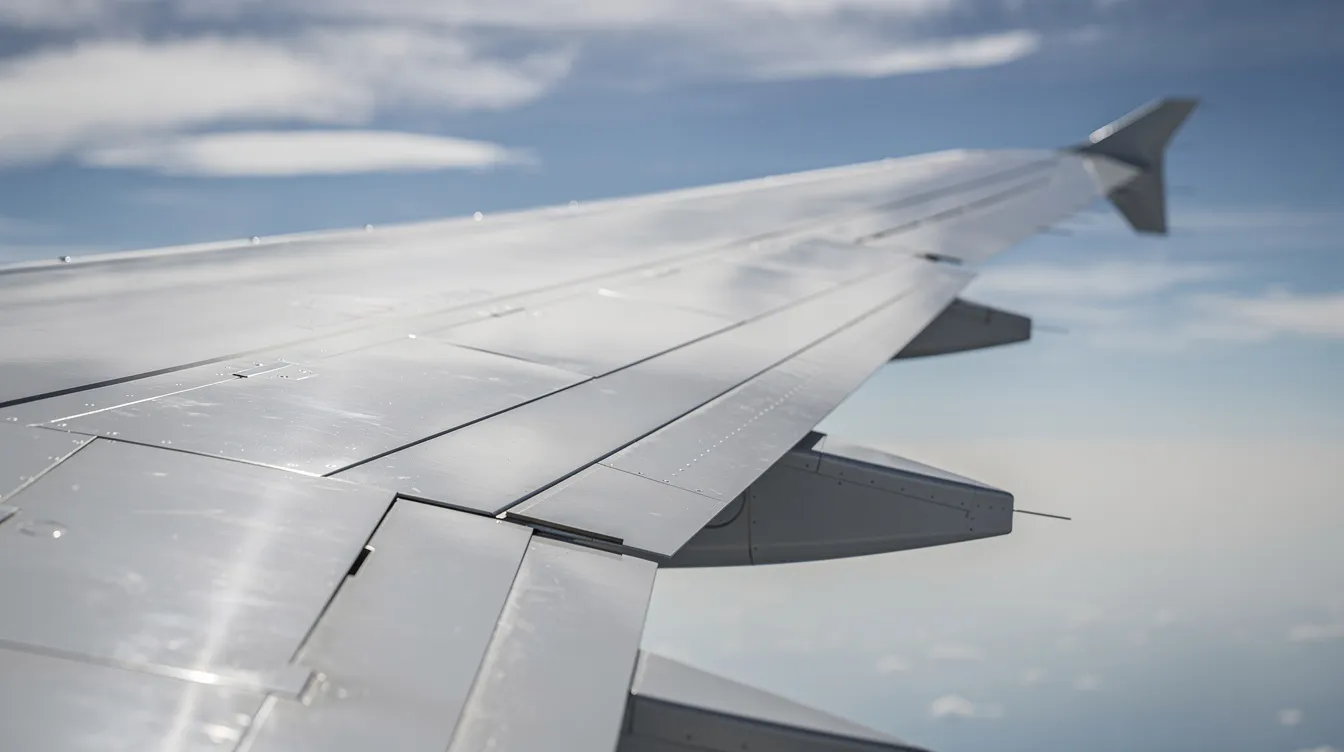
Pilots generally describe the Warrior as stable in pitch and roll with moderate control forces. The benign stall behavior—wings level with minimal drop—makes it exceptional for primary flight training. Crosswind capability reaches approximately 17 knots, suitable for most training scenarios.
Actual performance varies by model year, engine condition, and propeller. The following figures for a mid-1980s PA-28-161 Warrior II provide a useful reference.
Engine and Power
Lycoming O-320-D3G, 160 hp at 2,700 RPM
Carbureted with an auxiliary electric fuel pump
Fixed-pitch Sensenich propeller
TBO: 2,000 hours
Speed and Range
Maximum cruise speed: 127–133 knots at 75% power
Typical training cruise: 115–120 knots
Range: 500–633 nm, depending on power setting and reserves
Fuel capacity: 48 usable gallons in wing tanks (approximately 50 total)
Takeoff and Landing
Takeoff distance over 50-ft obstacle: 1,600–1,800 ft at sea level
Landing distance over 50-ft obstacle: 1,300–1,500 ft
Stall speed flaps down: approximately 50 knots
Weights
Maximum takeoff weight: 2,325–2,440 lbs (depending on year)
Typical empty weight: 1,391–1,539 lbs
Useful load: 650–972 lbs, depending on configuration
With full fuel (288 lbs), a Warrior may carry approximately 650 lbs for passengers and baggage—typically two to three adults with light bags or two adults, two children, and moderate luggage.
Climb and Ceiling
Climb rate: 700–900 ft/min at sea level when lightly loaded
Service ceiling: 11,000–14,000 ft
Density altitude significantly impacts performance. Expect climb rates to decrease 200–300 fpm above 5,000 ft on hot days. Always consult the Pilot’s Operating Handbook (POH) for specific airworthiness-critical numbers.
The Warrior serves as a versatile workhorse across multiple aviation roles, from primary training to weekend getaways.
Warriors dominate primary and instrument training environments:
Primary training for Private Pilot Licences (PPL) and LAPL
Instrument rating training due to stable IFR handling
Time-building toward commercial licenses with relatively low hourly costs ($100–150/hr wet)
Regularly flown in 50-hour and 100-hour inspection cycles at flight schools
The docile flight characteristics and predictable stall behavior make it ideal for students learning fundamental skills.
Private owners favor the Warrior for:
Short regional trips of 200–400 nm for business or leisure
Day trips and weekend getaways with 2–3 occupants
First aircraft purchases when transitioning from rentals to ownership
The Warrior’s moderate acquisition cost ($44,500–178,000, depending on age and condition) and predictable operating expenses appeal to new owners. It typically costs 20% to 25% less to purchase than a comparable Cessna 172 of the same year, but those considering business travel may also want a private jet charter cost estimator to understand the economics of upgrading to on-demand charter.
Some specialized operations utilize Warriors:
Aerial survey and photography with stable low-altitude handling
Pipeline patrol and environmental monitoring
Training fleets for university aviation programs
Flying clubs in North America, the UK, and Europe operate Warriors as core trainers, citing 95%+ dispatch reliability and straightforward maintenance, while aviation professionals and influencers sometimes join high-ticket affiliate programs to monetize referrals for premium charter services.
While highly capable in its category, the Warrior cannot match the speed or comfort of turbine aircraft. Travelers needing faster, longer-range, or weather-flexible options frequently choose private jet or turboprop charters through platforms like Jettly, often starting their planning with an airport locator tool for private jet charter and comparing specific aircraft types such as the high-capacity Boeing 737-800 for larger groups, high-performance Piper Aerostar 600 charters, or longer-range Piper Matrix single-engine options.
Operating a Piper Warrior PA-28 involves predictable, direct, and fixed costs that vary by region and utilization rate.
Typical direct operating costs for the Piper Warrior PA28 include:
Fuel burn: 8–10 US gallons per hour
Fuel cost (at $6–8 per gallon): $48–80 per hour
Oil and routine maintenance: $15–25 per hour
Total direct cost: $60–100 per hour
Hangar or tie-down: $3,600–12,000 annually
Insurance: $1,500–3,000 annually
Annual inspection: $2,000–4,000 annually
Overhaul reserve: $20–30 per flight hour
Warriors carried over decades remain available at various price points:
1970s–1980s basic examples: $44,500–60,000
Low-time Warrior III with modern avionics: $100,000–150,000+
Upgraded panels with G1000 or similar: Premium pricing
Always obtain a pre-purchase inspection by an experienced A&P mechanic and review logbooks for corrosion, engine times, and AD compliance.
Flexibility and pride of ownership versus capital tie-up
Higher utilization spreads fixed costs but accelerates wear
For pilots flying fewer than 100 hours annually, chartering through Jettly may prove more cost-effective
Run realistic annual utilization projections before committing. Compare ownership costs against flying clubs, partnerships, or on-demand air taxi charter options.
While the Piper Warrior PA28 excels for training and regional personal flying, travelers with time-sensitive schedules often find affordable private jet charter more practical.
Cruise speed: Piper Warrior cruises at 110–130 knots, while light/midsize jet charters cruise between 300–450 knots.
Range: Piper Warrior has a range of 500–600 nautical miles, compared to 1,000–3,000+ nautical miles for light/midsize jets.
Cruise altitude: Piper Warriors typically cruise below 14,000 feet, whereas jets fly at flight levels above FL350 to avoid weather.
Passengers: Piper Warrior accommodates 3 passengers plus the pilot, while light/midsize jets carry 4 to 12 passengers, depending on the aircraft.
The Warrior’s compact four-seat cabin offers limited baggage capacity and exposure to turbulence at lower altitudes. Charter aircraft provide pressurized cabins, stand-up room in larger jets, lavatories, and workspace for productivity.
Student pilots' learning or building hours
Owners who enjoy hands-on flying on short hops
Very short local sectors where hourly cost matters most
Multi-city itineraries in a single day
Business travel requiring arrival rested and ready, often complemented by in-flight catering for private jets
Family vacations where comfort and schedule control matter
Distances exceeding 500 nm where jet speed saves hours, including popular long sectors to hubs like private jet charter in New Delhi, private jet charter to Chennai in Tamil Nadu, private jet charter services in Hyderabad, private jet charter in Mumbai, Maharashtra, and private jet charter services in Islamabad, Pakistan
Jettly offers on-demand access to a global fleet across categories—light jets, midsize, heavy, turboprops, and helicopters. The platform provides transparent pricing without maintenance planning, hangar arrangements, or insurance management, and its private jet memberships give frequent travelers predictable access without long-term ownership commitments, whether they’re evaluating private jet lease cost and contract options or planning complex international private jet flights that cross borders and oceans.
Many pilots train in Warriors but turn to platforms like Jettly for business or family trips, where door-to-door efficiency outweighs the flying experience itself, especially when compared to NetJets as a NetJets alternative without the complexity of fractional ownership, detailed further in this overview of NetJets and its private aviation model, a breakdown of NetJets jet card pricing options, and broader guidance on fractional jet ownership pros and cons as well as fractional private jet ownership advantages and disadvantages, including a detailed fractional jet ownership cost breakdown and comparisons of the best fractional jet ownership companies.
Ready to experience private travel on your terms? Alongside on-demand charter, Jettly’s Jet Card programs provide fixed hourly rates and added benefits for frequent flyers, and travelers comparing options can review private jet card costs and pricing structures as well as a primer on what a jet card is and how it works. Explore flight options or request a quote at https://www.jettly.com.
These questions address practical topics about the Piper Warrior PA-28 that are not fully covered above, focusing on training decisions, safety, and operations.
The Warrior is frequently recommended as a first aircraft due to forgiving handling, moderate operating costs ($10,000–20,000 annually at 100 hours), and wide support networks. Transition training remains essential—even experienced rental pilots should complete several hours with an instructor familiar with the type.
Buyers should match the aircraft to their mission profile. Mostly local flights and short trips suit the Warrior well. Frequent long-range or high-passenger-load trips may justify a different aircraft type or on-demand charter through Jettly; in such cases, understanding the best private jet charter companies helps ensure the right match of safety, service, and fleet.
Accident statistics for Warriors align with those of other Part 23-certified training aircraft. NTSB and AOPA data indicate approximately 70% of incidents involve pilot error—fuel mismanagement, weather decisions, or approach control—rather than design flaws.
Adherence to the POH, proper maintenance, and conservative decision-making matter far more to safety outcomes than choosing between a Warrior and alternatives like the Cessna 172.
Many Warriors are fully certified for IFR and night flight when equipped with appropriate avionics, lighting, and instruments. Required equipment typically includes pitot heat, navigation and communication radios, attitude instruments, and position lights.
Check the specific aircraft’s equipment list, maintenance status, and regulatory approvals before planning IFR operations. GPS approach capability, WAAS certification, and ADS-B Out compliance (mandatory since 2020 in many airspace categories) affect operational flexibility.
In most jurisdictions, a single-engine piston aircraft like the Warrior requires a Private Pilot Licence (PPL) with a single-engine land class rating. Some regions allow operation under a Light Aircraft Pilot Licence (LAPL) for aircraft weighing up to 2,000 kg, subject to specific operational limits.
Night Rating and Instrument Rating are required for night or IFR flights, respectively. Time logged in the Warrior counts toward advanced licenses and ratings, including Commercial Pilot Licence requirements. Andrew Joseph and other aviation educators note the Warrior’s value in efficiently building foundational skills.
Chartering through Jettly becomes more practical when travelers need to cover distances exceeding 500 nm quickly, require multi-city itineraries in a single day, or value cabin comfort and the ability to work in flight, especially when leveraging options for buying a seat on a private jet instead of chartering an entire aircraft.
Pilots may enjoy training or recreational flying in Warriors, but time-critical business travel, family holidays, and occasions demanding schedule control and comfort often favor charter. Jettly provides transparent pricing, instant booking, and access to aircraft matched precisely to mission requirements—no ownership hassles required, whether booking directly through Jettly or via partners like Bajaj Aviation Pvt. Ltd. as a private jet operator.
The Piper Warrior PA28 remains a highly respected aircraft in the general aviation community, offering reliable performance, forgiving flight characteristics, and affordability that make it a favorite for flight training and personal use. However, for travelers seeking speed, flexibility, and enhanced comfort on longer or more complex trips, chartering through platforms like Jettly offers a compelling alternative. With Jettly’s extensive network of private jets and turboprops, seamless booking experience, and tailored flight options, pilots and passengers alike can enjoy the benefits of private air travel without the costs and responsibilities of ownership. Whether training in a Warrior or flying on-demand with Jettly, aviators have access to solutions that fit their unique flying needs.
Share this post:
Jay Franco Serevilla
Mar 31, 2026
|
5
min read
Discover tips and trends in the industry.
5
min read
ATR 72: Guide to the Regional Turboprop (For Charter and Commercial Use)
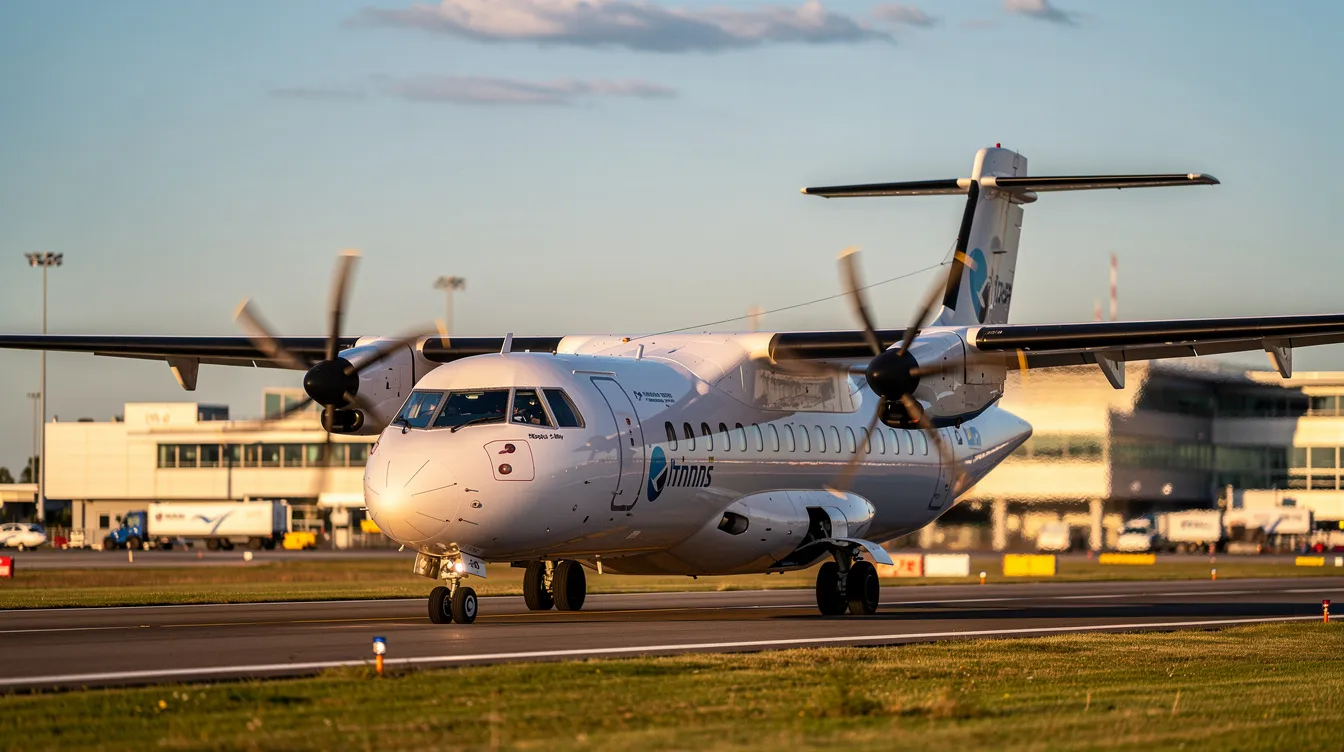
The ATR 72-201 and ATR 72-202 are efficient turboprop aircraft designed for regional group charters, accommodating 66 to 72 passengers. With their reliable Pratt & Whitney engines and versatile landing gear, they excel in short- to medium-haul operations. Ideal for corporate shuttles, sports teams, and tour operators, these aircraft offer cost-effective alternatives to larger jets.
Read More
5
min read
Stebbins Aviation Inc: Charter Services, Location, and How Jettly Helps You Compare Options
Stebbins Aviation Inc, based at East Texas Regional Airport, has been providing charter services since 1987, specializing in Cessna Citation jets for short-haul flights. While it offers reliable local options, Jettly's digital marketplace provides access to a broader range of aircraft and instant pricing, making it a valuable resource for travelers with diverse needs.
Read MoreStay updated with our latest insights and tips to elevate your journey with us.
MEMBERSHIPS AND ASSOCIATIONS



Disclaimer: Jettly operates as a charter broker, offering access to a global digital jet charter marketplace. Jettly is not a direct air carrier and does not own or operate aircraft. All advertised flights are conducted by third-party air carriers that are fully licensed and hold the appropriate Part 135 or Part 121 certifications issued by the Federal Aviation Administration (FAA) or equivalent regulatory authorities under U.S. or foreign law. Jettly complies fully with the U.S. Department of Transportation's Part 295 and Part 298 Charter Broker regulations. Jettly does not carry additional liability insurance. Passengers are covered by aircraft operator insurance. TICO: 50023770


