


Login
Get Instant Pricing On 23,000+ Aircraft

>
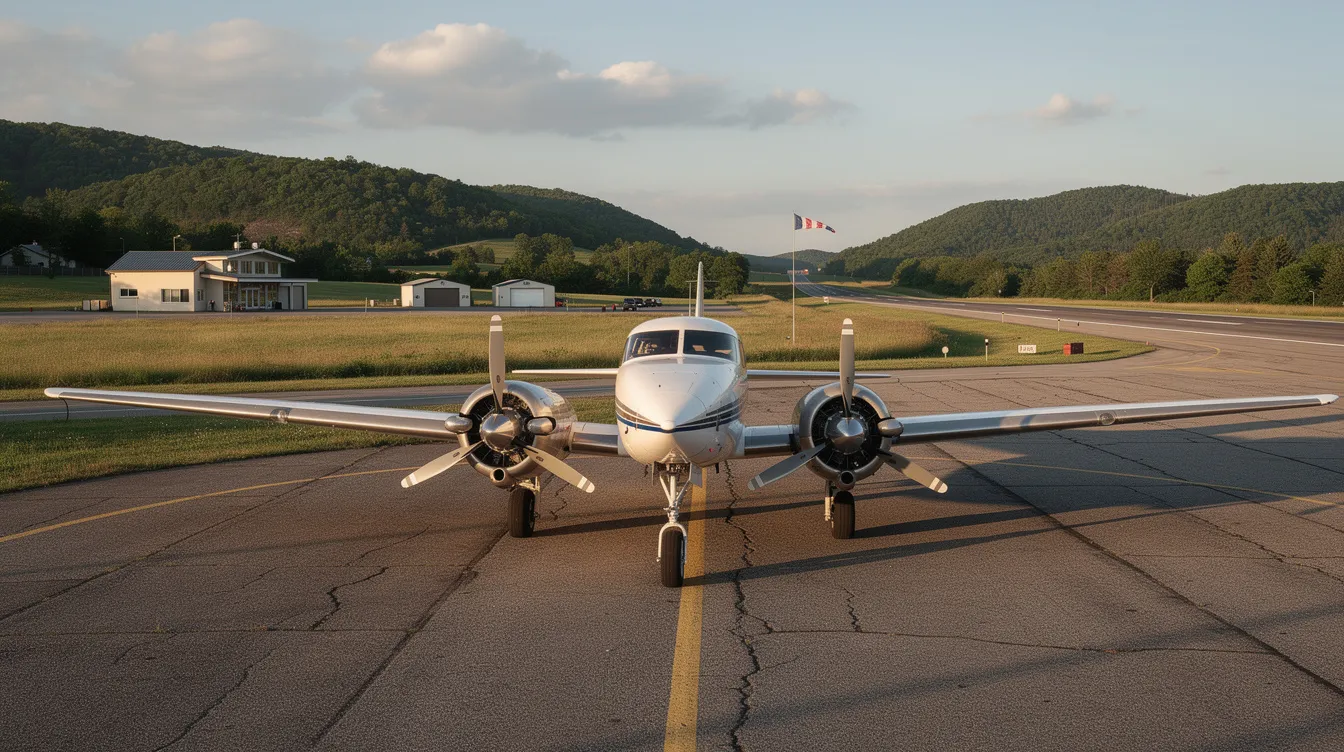
The Piper PA‑31‑350 Navajo Chieftain is one of the most recognized piston twins in regional charter aviation. Whether you're evaluating it for a business trip, comparing it against light jets, or simply researching Piper Chieftain specs before booking a flight, this guide covers everything from cruise speed and range to cabin layout and operating costs.
The Piper Chieftain is a twin-engine piston aircraft introduced in 1973 and manufactured through 1984, serving regional charter, air taxi, cargo, and private travel missions worldwide.
Typical cruise speed is 205 to 225 knots, maximum range is approximately 855 to 950 nautical miles, seating is for up to 10 passengers, and gross weight is 7,045 lbs.
The PA-31-350 is an upgraded, stretched version of the earlier Navajo B, featuring more powerful 350 hp engines, a longer fuselage, and counter-rotating propellers for improved handling.
The Navajo Chieftain fills a niche between smaller piston twins and light jets, offering cost-efficient private charter for short-haul sectors where airport access and group size matter most.
Jettly connects travelers with Piper Navajo Chieftain aircraft globally, providing instant pricing, on-demand booking, and transparent charter options through its digital platform.
The Piper Navajo Chieftain, or PA‑31‑350, is a twin-engine piston aircraft in the PA‑31 series introduced around 1973, with core Piper Chieftain specs that include cruise speeds of about 205–225 knots, a range of roughly 855–950 nautical miles, seating for up to 10 passengers, and a gross weight of 7,045 lbs. Developed by Piper Aircraft Corporation as a higher-capacity, higher-power derivative of the original PA‑31 Navajo, it remained in production through 1984 and earned a reputation across commuter airlines, corporate shuttle operations, air taxi services, cargo haulers, medevac providers, and private owners.
The PA-31-350 Chieftain was a stretched version of the Navajo B.
The naming can get confusing. "Piper Chieftain," "Piper Navajo Chieftain," "PA‑31‑350," and "PA 31 350" all refer to the same core airframe - a stretched version of the Piper Navajo with more powerful engines. For business and leisure travelers comparing private charter options before booking regional flights, the aircraft's appeal is straightforward: it combines cost-efficient twin-piston operating economics with access to smaller airports and short-haul routes that commercial airlines often cannot serve.
This overview focuses on the specs that matter when choosing a charter aircraft: performance figures such as cruise speed, range, runway requirements, cabin layout and passenger capacity, engine and system details, operating costs, charter availability, and how the Chieftain compares with similar aircraft. The aircraft features a low-wing configuration, a rear airstair door for passenger boarding, and flexible seating layouts that support business or mixed passenger-cargo operations.
This section summarizes the main Piper Chieftain specs for quick comparison with other aircraft on the Jettly platform.
|
Specification |
Value |
|---|---|
|
Type |
Twin-engine piston, low-wing, non-pressurized |
|
Manufacturer |
Piper Aircraft Corporation (USA) |
|
Model |
Piper PA‑31‑350 Navajo Chieftain |
|
Crew |
1–2 pilots |
|
Passenger capacity |
7–9 typical; up to 10 including cockpit seats |
|
Production years |
1973–1984 |
|
Certification |
Normal/commuter, IFR-capable |
|
Cabin height |
Approx. 4 ft 3 in |
|
Cabin width |
Approx. 4 ft 2 in |
|
Cabin length |
Approx. 10 ft 10 in (some sources list 12 ft 6 in depending on measurement method) |
|
Cabin volume |
120 cubic feet |
|
Baggage capacity |
Up to 700 lbs of cargo across: <ul><li>Nose compartment</li><li>Wing lockers</li><li>Internal space</li></ul> |
Charter operators often tailor interiors with club seating, work tables, or cargo configurations. Exact layouts vary between individual PA‑31‑350 aircraft listed on Jettly.
Understanding size and weight helps charter clients judge comfort, loading, and airport compatibility.
|
Dimension |
Value |
|
|---|---|---|
|
Length |
34 ft 8 in (10.57 m) |
|
|
Wingspan |
40 ft 8 in (12.40 m) |
|
|
Height |
13 ft (3.96 m) |
|
|
Max takeoff weight |
7,045 lb |
|
|
Typical empty weight |
4,200–4,300 lb |
|
|
Useful load |
2,600–2,700 lb |
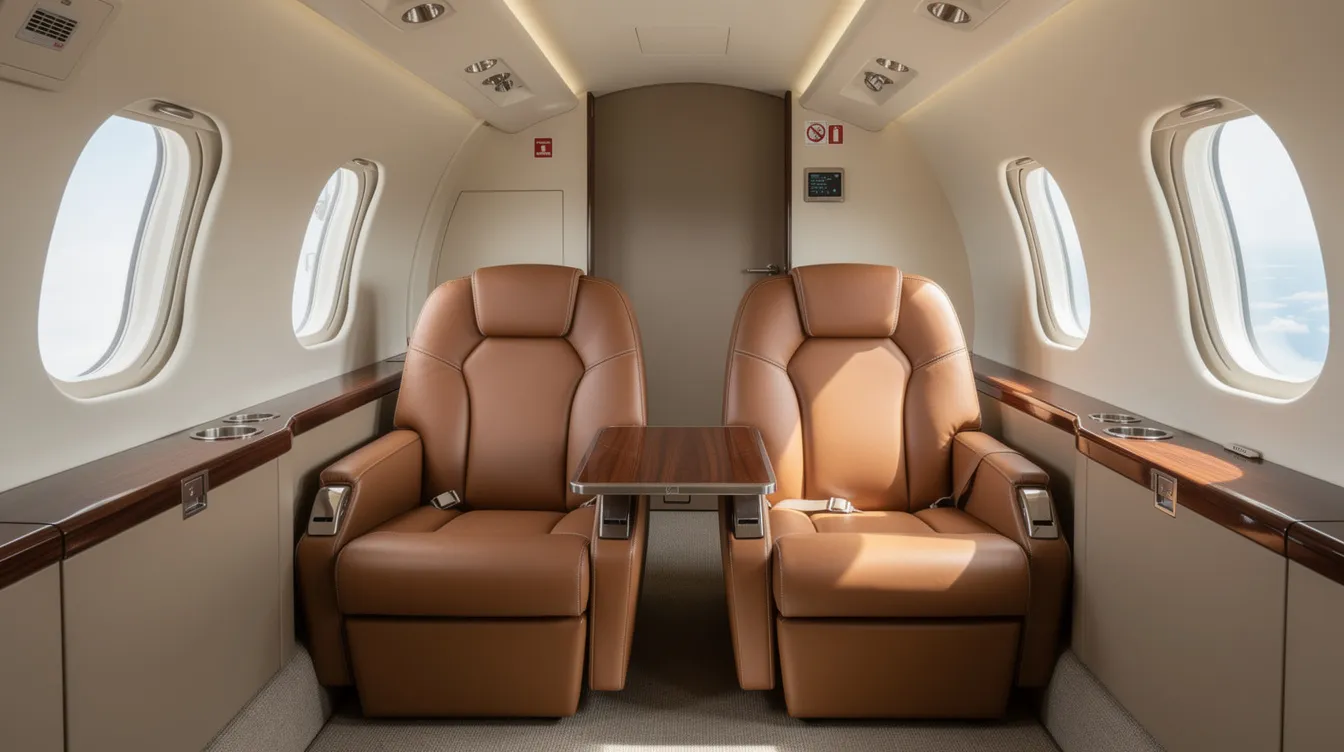
The cabin offers a width just over 4 ft 2 in and a length that supports a central aisle with facing club seats plus additional forward or rear seats. Standing height is limited at roughly 4 ft 3 in, so passengers move through the cabin seated or crouching. Most charter configurations feature: <ul><li>6–8 passenger club seating with fold-out tables</li><li>Similar in concept to other <a href="https://jettly.com/private-jet/piper-aerostar-600">Piper twin-engine charter aircraft like the Aerostar 600</a></li><li>Some operators have fitted a 9th seat where the rear luggage area would normally sit</li></ul>
Baggage is typically distributed as follows:
Nose compartment for suitcases
Wing lockers for additional bags
Small internal zone
Soft-sided bags are easier to load; rigid cases can be difficult to maneuver through the door.
One of the main upgrades from the original Piper Navajo to the Piper Navajo Chieftain is engine power and counter-rotating propellers.
The aircraft is powered by two Lycoming tio 540 j2bd (left engine) and LTIO‑540‑J2BD (right engine) turbocharged, fuel-injected, six-cylinder engines. Each produces approximately 350 horsepower. The counter-rotating configuration eliminates the critical engine effect, meaning the aircraft handles more predictably if one engine fails - a significant safety advantage for pilots flying in demanding conditions.
Propellers are typically Hartzell three-blade, constant-speed, full-feathering units. This setup improves climb efficiency and provides better single-engine safety margins compared with earlier PA 31 variants. The prop-driven platform of the Chieftain has proven durable across decades of commercial service and sits within Jettly's wider private charter aircraft fleet.
Fuel capacity sits around 190–200 US gal usable, supporting the aircraft's range capabilities. De-ice equipment - boots, heated propellers, and heated windshield panels - is commonly installed on charter-configured Chieftains for all-weather regional operations. Many aircraft have also been retrofitted with glass cockpit avionics such as Garmin or Aspen systems, enhancing IFR capability.
Individual PA‑31‑350 aircraft may have different engine times and overhaul histories, which influence performance, dispatch reliability, and charter pricing.
Performance figures determine how well the Chieftain fits a given trip. Here's what matters for charter customers.
The typical cruise speed is approximately 205 knots true airspeed at mid-altitude settings. The aircraft features a maximum cruise speed of about 225 knots, depending on weight, temperature, and engine power - roughly 230 to 260 mph for those who prefer statute miles. Economy cruise settings reduce speed but extend range and lower fuel burn.
The Piper PA-31-350 has a range of approximately 1,018 to 1,392 nautical miles according to some factory references, though practical maximum range under charter loading with reserves is closer to 855 to 950 nautical miles. Typical charter stage legs run 200–500 NM, which the aircraft handles comfortably without fuel stops.
The rate of climb is approximately 1,120 feet per minute at sea level on both engines. Service ceiling reaches 24,000 feet, while single-engine service ceiling sits in the low teens under favorable conditions. The stall speed of the Piper Chieftain is 74 knots - a relatively low figure that contributes to its short-field capability.
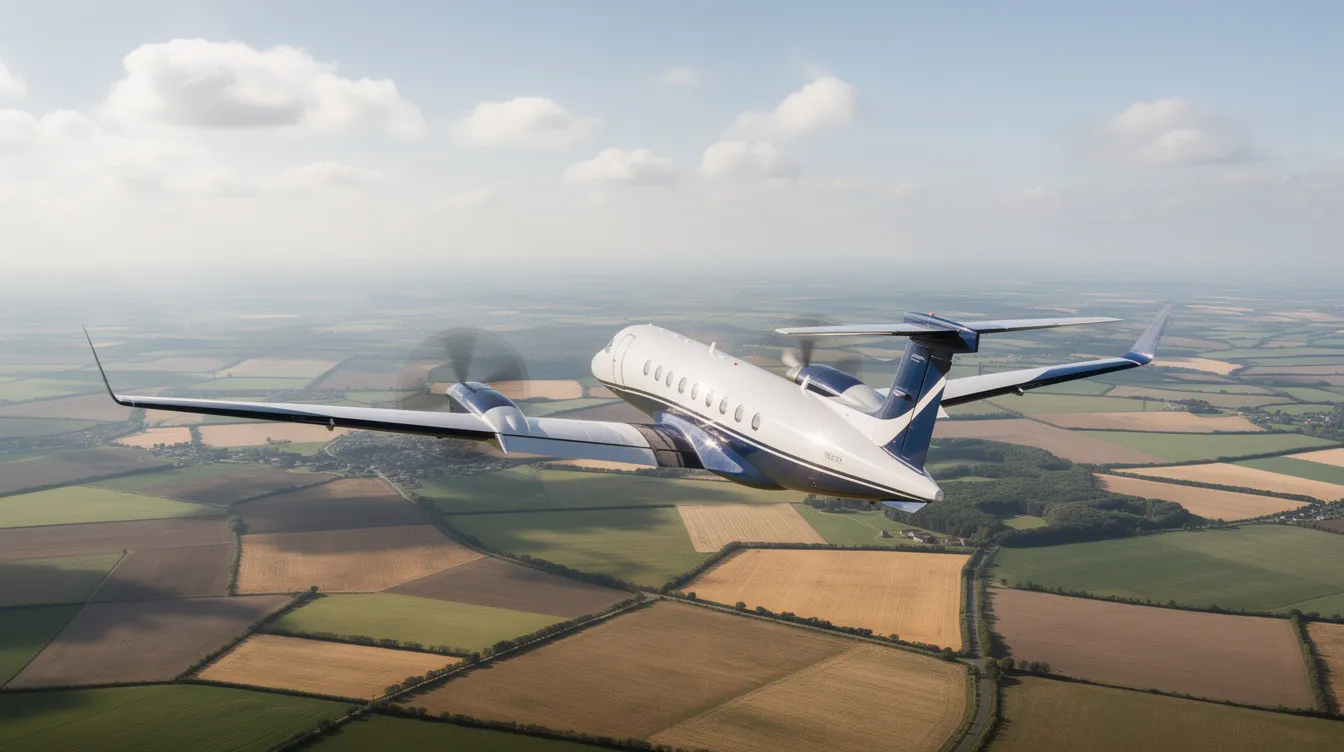
Typical en route profiles involve climbing to 10,000–18,000 ft based on weather and ATC clearances, cruising at economy or high-speed settings depending on schedule, and descending gradually. Actual flight time and fuel burn for a given route are calculated by operators and presented transparently to Jettly clients in quotes, aligning with Jettly's focus on affordable private jet charter pricing and cost breakdowns.
The PA‑31‑350 Navajo Chieftain is valued for its ability to use shorter runways than many light jets, helping it land where some light jets cannot and expanding airport options for charter travelers. The Piper Chieftain has rugged construction known for its durable landing gear and robust airframe, which allows it to operate effectively from relatively short runways.
Representative figures based on standard conditions help charter planners match the Chieftain's runway needs with suitable airports, often using tools like Jettly's airport locator platform:
Takeoff distance over a 50 ft obstacle: approximately 1,300–1,500 ft at sea level
Landing distance over a 50 ft obstacle: approximately 1,700–1,900 ft
Ground roll on takeoff: around 1,300–1,400 ft
These numbers shift with weight, runway surface, temperature, and wind. On hot days at high-elevation airports, operators trade fuel for payload to stay within max takeoff weight limits and maintain safe climb margins.
Professional operators working with Jettly use certified performance data and current weather when planning each departure and landing. This aircraft can serve small regional airfields near business centers, resort strips, and remote strips that lack scheduled airline service, allowing it to access smaller airfields and reducing total door-to-door travel time compared to flying commercial into a major hub.
The PA‑31‑350 is more than a list of numbers. It's a practical travel solution for small groups in the private charter space, and the Piper Chieftain is known for its strong performance as a piston twin.
The cabin provides a climate-controlled environment (note: the standard PA‑31‑350 is not pressurized) with large, low-wing windows for outside views. Club-style seating arrangements enable face-to-face conversation and informal meetings. Basic in-flight amenities typically include:
Refreshments
Reading lights
Headset audio
Ideal mission profiles include:
Short-haul business trips (200–400 NM) between regional cities
Corporate shuttle flights for up to 7–9 team members are carried to a single destination
Leisure trips to remote lodges, island destinations, or resorts with short runways
Medical or urgent transport where speed and airport flexibility are crucial
Compared with light jets, the Chieftain is more cost-efficient on short legs for 3–8 passengers. It offers more range and speed than many single-engine turboprops while providing twin-engine redundancy. It's not as fast or quiet as modern business jets, but it delivers strong value on regional hops. For travelers focused on lowering per-seat costs even further, Jettly also supports crowdsourced and shared private flights with empty-seat sharing. Some owners have also explored the Colemill Panther conversion, which modifies similar Piper aircraft for improved climb and cruise performance.
On Jettly, customers select desired dates and route, compare PA‑31‑350 options with turboprops and light jets, review seating layout and photos, then book instantly. A small law firm flying from Toronto to Ottawa, or a family traveling from Phoenix to a nearby regional airport, would find the Chieftain's specs well matched to these missions.
While Jettly focuses on charter pricing, many clients are curious about ownership and operating cost context for the PA‑31‑350 and may compare that with flexible private jet membership options.
Used Piper PA-31-350 Chiefs cost around $260,000 on the current market. Prices vary by total airframe and engine hours, avionics, and maintenance history - one 1984 Navajo Chieftain is listed for as low as $119,900 at the time of writing, while aircraft with recent overhaul work, modern panels, and low-time engines can command prices well above $400,000. Production ended in 1984, so the supply is finite, and well-maintained examples hold their value.
For owner-operators, key cost drivers include:
Fuel
Engine overhaul reserves
Insurance
Hangar fees
Crew salaries
A total annual budget depends heavily on flight hours and whether the aircraft is operated commercially or privately owned, which is why some high-utilization flyers consider structured jet card programs with fixed hourly rates.
For charter customers, pricing through Jettly is structured per hour or per trip. Charter rates depend on journey length and airports, but per-hour rates are generally lower than comparable light jets. Jettly provides transparent quotes including positioning fees, landing fees, and taxes using its charter cost estimator and a dedicated jet card flight cost estimator for one-way routes.
Piper Chieftains remain in operation worldwide - particularly in North America, Latin America, Australia, and parts of Europe. Some have even been manufactured under license and built for specific regional deliveries. Whether flying from London to a UK regional field, between Caribbean islands, or on busy hubs like private jet charter routes to and from Atlanta, Georgia, availability depends on operator base locations and regulatory approvals.
The Piper Navajo (PA‑31) and the Piper Navajo Chieftain (PA‑31‑350) share a common lineage but differ in key specs.
|
Feature |
PA‑31 Navajo |
PA‑31‑350 Chieftain |
|---|---|---|
|
Fuselage |
Standard length |
~2 ft longer |
|
Engines |
300–325 hp (varies) |
350 hp tio 540 variants |
|
Propellers |
Same rotation on many models |
Counter-rotating, 3-blade |
|
Cruise speed |
Lower (similar category) |
205–225 KTAS |
|
Payload |
Reduced capacity |
Higher useful load |
The chieftain's stretched fuselage provides more cabin space and baggage room. Its counter-rotating props reduce asymmetric thrust, destroying the "critical engine" handling problem that affects same-rotation twins. The PA‑31‑350 burns slightly more fuel but carries more passengers and luggage without severely compromising range - making it better suited for charter use with 7–9 passengers.
Earlier Navajo variants remain capable aircraft for lighter loads or when operating costs are prioritized. On Jettly, both "Piper Navajo" and "Navajo Chieftain" may appear in search filters. The platform's aircraft details page shows whether a listing is a PA‑31 or PA‑31‑350, along with its specific interior layout, and may also highlight comparable singles such as the Piper Matrix with its long-range, fuel-efficient performance. Piper also manufactured the Cheyenne series as a turboprop alternative in a similar size class - worth considering if speed is the priority.
Customers choosing between the two should consider:
Passenger count
Baggage needs
Route length
Jettly's advisors can help with guidance.
The Piper Chieftain complements other aircraft on Jettly - sitting alongside light jets, turboprops, and helicopters as a practical regional option. Its first flight decades ago launched a legacy that continues in daily charter operations.
Key advantages of booking a PA‑31‑350 through Jettly:
Access to regional and local airports that larger jets can't use
Cost-efficient per-seat pricing for groups on short hops
Flexible cabin suited to both business and leisure flying
The booking process is straightforward. A customer enters the desired route, date, and passenger count. The platform displays available options, including PA‑31‑350s and similar aircraft. Users compare cruise speed, range, cabin size, and price, then instantly book or request a quote for tailored arrangements.
Jettly works with operators flying under appropriate commercial certificates (e.g., FAA Part 135 or local equivalents). PA‑31‑350 aircraft must be maintained to regulatory standards, with crew training and recurrent checks meeting national aviation authority requirements. The PA‑31‑350 is often one of the most practical choices on regional routes where speed, cost, and airport access all matter.
Below are common questions for charter customers considering a Piper Navajo Chieftain for their next flight.
While the PA‑31‑350 can be configured for up to 10 seats including the cockpit, most charter layouts seat 6–8 passengers for comfort and baggage flexibility. Final seating depends on the specific aircraft, interior refurbishment, and whether a separate baggage area has replaced one row of seats.
Normal cruise speed sits around 205 KTAS, with maximum cruise reaching approximately 225 KTAS. Range under favorable conditions can stretch toward 855–950 NM. Actual figures on any given day depend on weather, passenger and baggage load, and fuel reserves - all factored into Jettly's trip planning.
The PA‑31‑350 is IFR-capable and often equipped with de-ice systems, making it suitable for many adverse-weather operations when flown by qualified crews. In mountainous regions, operators plan routes and altitudes carefully. If conditions or payloads exceed prudent limits, they may recommend a different aircraft type via mail or direct consultation.
A light jet will usually be faster and quieter, but a Piper Navajo Chieftain often offers significantly lower charter cost for small groups on short sectors. The Chieftain can access smaller airports closer to many final destinations, which can offset the jet's speed advantage in total door-to-door time. For more on how private jet sizes compare, Jettly's guide breaks down the differences.
Visit Jettly's website, enter departure and arrival airports, dates, and passenger count, then review results to see if a PA‑31‑350 or similar aircraft is available for sale of flight time on your route.
Ready to explore private travel on your terms? Check real-time availability or request a custom quote for a Piper Chieftain flight at https://www.jettly.com.
The Piper PA‑31‑350 Navajo Chieftain remains a practical and reliable choice for regional private charter flights. Its combination of efficient twin-engine piston performance, flexible cabin space for up to 10 passengers, and ability to access smaller airports makes it ideal for short-haul business and leisure travel. With competitive operating costs and solid availability on platforms like Jettly, the Chieftain offers travelers a cost-effective alternative to light jets without sacrificing comfort or convenience. Whether flying corporate teams, families, or urgent cargo, the Piper Chieftain’s proven specs and versatility continue to meet diverse travel needs. Ready to experience private travel on your terms? Explore flight options or request a quote at "https://www.jettly.com"
Share this post:
Jay Franco Serevilla
Jul 1, 2026
|
5
min read
Discover tips and trends in the industry.
5
min read
Jet Stream Turbulence: What Private Fliers Need to Know
Jet stream turbulence is a common challenge for private fliers, occurring unexpectedly in clear skies and often causing discomfort. Understanding its causes and effects can help travelers manage their flights more effectively, especially as climate change is projected to increase turbulence severity. This article outlines practical strategies for navigating jet stream turbulence, including flexible routing and aircraft selection.
Read More
5
min read
Turbulence in Planes: What It Is, How Pilots Handle It, and Why Private Jets Feel Different
Turbulence is a common concern for air travelers, often misunderstood but generally not dangerous. This guide explains the science behind turbulence, how pilots manage it, and why private jets can offer a smoother experience. Understanding turbulence can help alleviate anxiety and enhance confidence during flights.
Read MoreStay updated with our latest insights and tips to elevate your journey with us.
MEMBERSHIPS AND ASSOCIATIONS



Disclaimer: Jettly operates as a charter broker, offering access to a global digital jet charter marketplace. Jettly is not a direct air carrier and does not own or operate aircraft. All advertised flights are conducted by third-party air carriers that are fully licensed and hold the appropriate Part 135 or Part 121 certifications issued by the Federal Aviation Administration (FAA) or equivalent regulatory authorities under U.S. or foreign law. Jettly complies fully with the U.S. Department of Transportation's Part 295 and Part 298 Charter Broker regulations. Jettly does not carry additional liability insurance. Passengers are covered by aircraft operator insurance. TICO: 50023770


