


Login
Get Instant Pricing On 23,000+ Aircraft

>
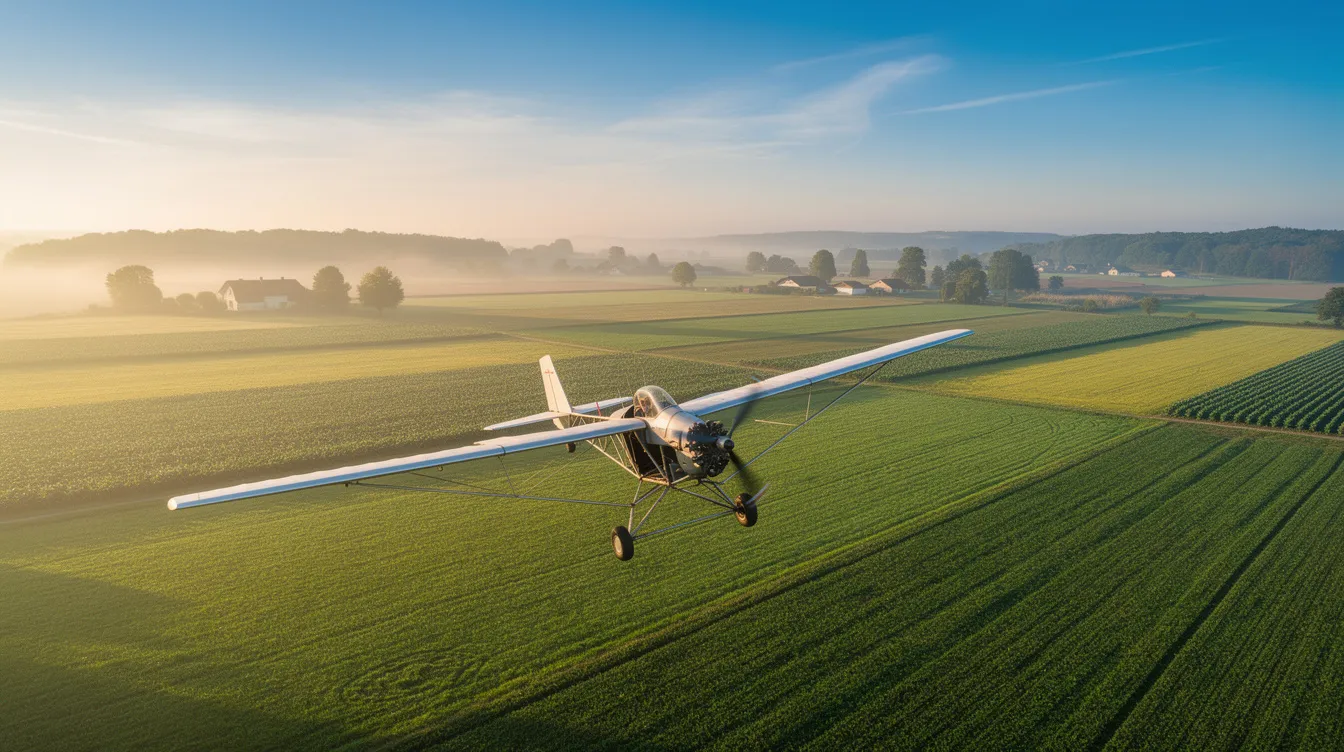
For aviation enthusiasts who split their time between chartered jets and weekend flying, the personal ultralight aircraft occupies a unique niche. These minimal, single-seat machines let pilots experience flight at its most raw - low, slow, and hands-on - without the regulatory overhead of traditional aircraft.
This guide is for private jet travelers, aviation enthusiasts, and prospective ultralight buyers interested in how personal ultralight aircraft fit into a modern travel lifestyle. It covers regulations, model options, costs, and how ultralights complement private jet use in 2026.
A personal ultralight aircraft under FAA Part 103 requires no pilot license, no medical certificate, and no aircraft registration. Ultralights must weigh under 254 pounds empty, carry no more than 5 gallons of fuel, and can only be used for sport or recreational purposes.
Popular 2025–2026 models include the Aerolite 103 (kits from about $23,000), the Quicksilver MX103 (fully assembled from roughly $18,000), the Kolb Firefly (quick-build kits from $17,270 excluding engine), and the Hummel Ultracruiser (build kits at $28,442 excluding engine). Basic used ultralights typically range from $6,000 to $20,000.
No pilot's license is required for true Part 103 machines; a sport pilot certificate covers most light sport aircraft, and professional crews handle chartered private jets booked through platforms like Jettly.
Ultralight ownership complements on-demand private jet charter: ultralights serve local, low-and-slow enjoyment, while Jettly covers time-critical, multi-city, or international trips where speed and passenger capacity matter.
A personal ultralight aircraft is a very light, usually single-seat, recreational flying machine classified as an "ultralight vehicle" under federal aviation regulation Part 103 rather than as a standard aircraft. Many ultralights are designed for solo recreational flying only, and they provide a close connection to nature during flight thanks to their open cockpit designs and minimal airframes.
Under FAA Part 103, the U.S. limits for powered ultralights are strict:
Maximum empty weight of 254 pounds (155 lb for unpowered, like a hang glider)
Top speed no greater than 63 mph (55 knots) in straight-and-level flight
Power-off stall speed of 24 knots or less
Fuel capacity limited to a maximum of 5 gallons
Single occupant only
Common ultralight types include powered fixed wings (aircraft with a rigid wing structure and an engine for propulsion), trikes (weight-shift aircraft), powered parachutes (aircraft with a flexible parachute-style wing and a motorized cart), and powered paragliders (which use a backpack-mounted engine for flight). Gyrocopters (which use an unpowered rotor for lift and a conventional engine for thrust) also fall into the broader ultralight aviation conversation. Electric propulsion prototypes are emerging but remain niche.
Typical performance across most ultralights sits around 45–65 mph cruise, 50–150 miles of practical range, and fuel burn of 1.5–3 gallons per hour. These are planes built for local, low-altitude recreational flying, not cross-country transport.
Buyers and travelers often blur the lines between these types of planes, so a clear comparison helps.
|
Feature |
Ultralights (Part 103) |
Light Sport Aircraft (LSA) |
Private Jets |
|---|---|---|---|
|
Pilot License Required |
No |
Yes (Sport Pilot Certificate) |
Yes (Professional Pilot License) |
|
Maximum Occupants |
1 |
1-2 |
Multiple (varies by aircraft) |
|
Maximum Empty Weight |
254 lbs (155 lbs unpowered) |
Up to 1,320 lbs |
Varies widely (several thousand lbs) |
|
Maximum Speed |
63 mph (55 knots) |
100–140 mph |
400–600+ mph |
|
Typical Range |
50–150 miles |
300–600 miles |
1,500–5,000+ miles |
|
Medical Certificate Required |
No |
Yes or valid driver's license |
Yes |
|
Registration & Certification |
Not required |
Required |
Required |
|
Operational Airspace |
Mainly uncontrolled, ATC clearance needed for controlled airspace |
Controlled and uncontrolled airspace |
Controlled airspace |
|
Flight Conditions |
Day VFR only |
Day VFR and some IFR |
All conditions |
|
Cost Range |
$6,000–$50,000+ |
$50,000–$200,000+ |
$2 million and up |
The key insight: ultralights and light sport aircraft appeal to hands-on pilots seeking the joy of flight. Chartered private jets serve time-sensitive business or family trips. Many high-net-worth aviation enthusiasts use both - an ultralight airplane on weekends, and Jettly for a Monday morning meeting three states away.
The lack of regulation makes ultralight flying accessible, but that freedom carries real personal responsibility. Compared with the structured world of private jet charter, ultralight operations rely almost entirely on the pilot's own judgment.
FAA Part 103 basics: No pilot license, no medical certificate, no FAA registration, and no annual inspection are required - if (and only if) the aircraft meets all weight limits, fuel, speed, and single-seat criteria. Violate any limit, and the machine falls into a more regulated category requiring a private pilot license or, at minimum, a sport pilot certificate.
Core operating restrictions:
Day VFR only - no night flying, no instrument conditions
Ultralight aircraft are prohibited from flying over congested areas without prior permission
Most ultralight operations occur in uncontrolled airspace (Class G); entering controlled airspace like Class B, C, or D requires ATC authorization
Visual reference to the surface must be maintained at all times
Training: While no license is legally mandated, ultralight pilots are recommended to seek professional flight training. Industry guidance suggests 5–15 hours of dual instruction in a two-seat trainer, which is significantly fewer hours than the roughly 20-hour minimum for a sport pilot certificate. Many countries outside the U.S. - including the UK and EU nations - require a microlight license, registration, and medical self-declaration even for very light machines.
Safety considerations center on conservative weather conditions decisions, thorough pre-flight walk-arounds, respecting weight and balance, wearing helmets and harnesses, and joining local clubs for mentorship rather than learning entirely solo. Safe operation starts with discipline, not regulation.
Here are four models that buyers and aviation enthusiasts will encounter in current listings, each offering a distinct approach to ultralight flight.
Aerolite 103: A classic Part 103 fixed-wing pusher. Aerolite 103 kits start at about $23,000 for the airframe quick-build, and the Aerolite 103 can be assembled in less than 50 hours. Fully assembled Aerolite 103 planes start at about $28,000, reaching $36,000+ with higher-output two-stroke engines and options. An optional electric propulsion package adds roughly $10,000 for limited-endurance local flights.
Quicksilver MX103: An open cockpit, open-frame design with strut-braced wings - one of the most recognizable small aircraft in ultralight history. Quicksilver MX103 fully assembled versions start as low as $18,000 on the used market, depending on engine and fabric condition.
Kolb Firefly: A folding-wing, tail-boom design with a metal airframe, ideal for owners who need to trailer their aircraft. Kolb Firefly quick-build kits start at $17,270, excluding the engine. Powered by a Rotax 447, typical empty weight lands at about 253 lb - right at the Part 103 ceiling - with a stall speed near 27 mph and cruise around 70 mph.
Hummel Ultracruiser: An all-metal single-seat ultralight with a "mini-classic" aesthetic and detachable wings for transport. Hummel Ultracruiser build kits cost $28,442, excluding the engine (commonly a VW-derived four-stroke). Ready-to-fly builds run above $35,000.
Many ultralights can be built from kits in under 50 hours for the simplest designs, though more complex projects may require several hundred hours, especially when owners are also evaluating the broader economics of how much a private jet costs in contrast.

Ultralight ownership is dramatically cheaper than maintaining a certified light sport aircraft - and it is a rounding error compared with owning private jets.
Acquisition costs:
Basic used ultralights typically range from $6,000 to $20,000
Modern kits (airframe plus basic engine): $15,000–$35,000
Fully assembled factory builds: $25,000–$50,000+
Major cost drivers include engine choice, analog vs. glass-panel instruments, ballistic parachute systems, and whether the aircraft meets true Part 103 limits or is registered as experimental.
Operating costs: Ultralights generally offer low operating costs compared to conventional aircraft. Most ultralights burn 1.5–3 gallons of fuel per hour. Add periodic engine maintenance, propeller inspections, tires, and brakes. Ultralights can be stored in a garage or trailer, reducing hangar costs significantly. Hull and liability insurance is optional and not always widely available. Ultralights typically have a limited range due to the 5-gallon fuel capacity, keeping flights local and fuel bills modest, especially when compared with affordable private aircraft options across categories.
Build vs. buy: Kits save money and deepen mechanical understanding; many simple quick-builds take under 50 hours. Paying for a fully assembled aircraft trades cash for convenience.
Contrast with private jet access: Instead of multimillion-dollar acquisition plus crew salaries and maintenance reserves, Jettly users pay per flight or via membership, accessing a broad range of private charter aircraft while investing personal funds in a relatively modest ultralight project and still enjoying global jet travel when needed.
The typical flying environment for ultralights is local, hands-on, and low-altitude - very different from the controlled, high-altitude world of private jets departing from executive terminals.
Most ultralight pilots operate from rural grass strips, non-towered smaller airports, farm fields with proper permissions, or dedicated ultralight parks. Some airfields restrict ultralight operations to certain daylight hours or specific runway patterns.
Pilots tend to fly during calm morning and evening hours to avoid thermal turbulence, with flights often lasting 30–60 minutes. Ultralights cannot exceed a top speed of 63 mph, so staying within gliding distance of the field is standard practice. Ultralight aircraft are sensitive to wind and weather conditions, making them seasonal machines in many climates - late spring through early fall in colder regions.
Lower fuel burn and smaller engines make ultralights relatively quiet. They provide a close connection to nature during flight that no airliner cabin can replicate. The contrast with private jet missions is stark: jets booked through Jettly depart from larger terminals, climb quickly, and connect cities in a single hop, while the same traveler might fly an ultralight for weekend exploration around a local home base.
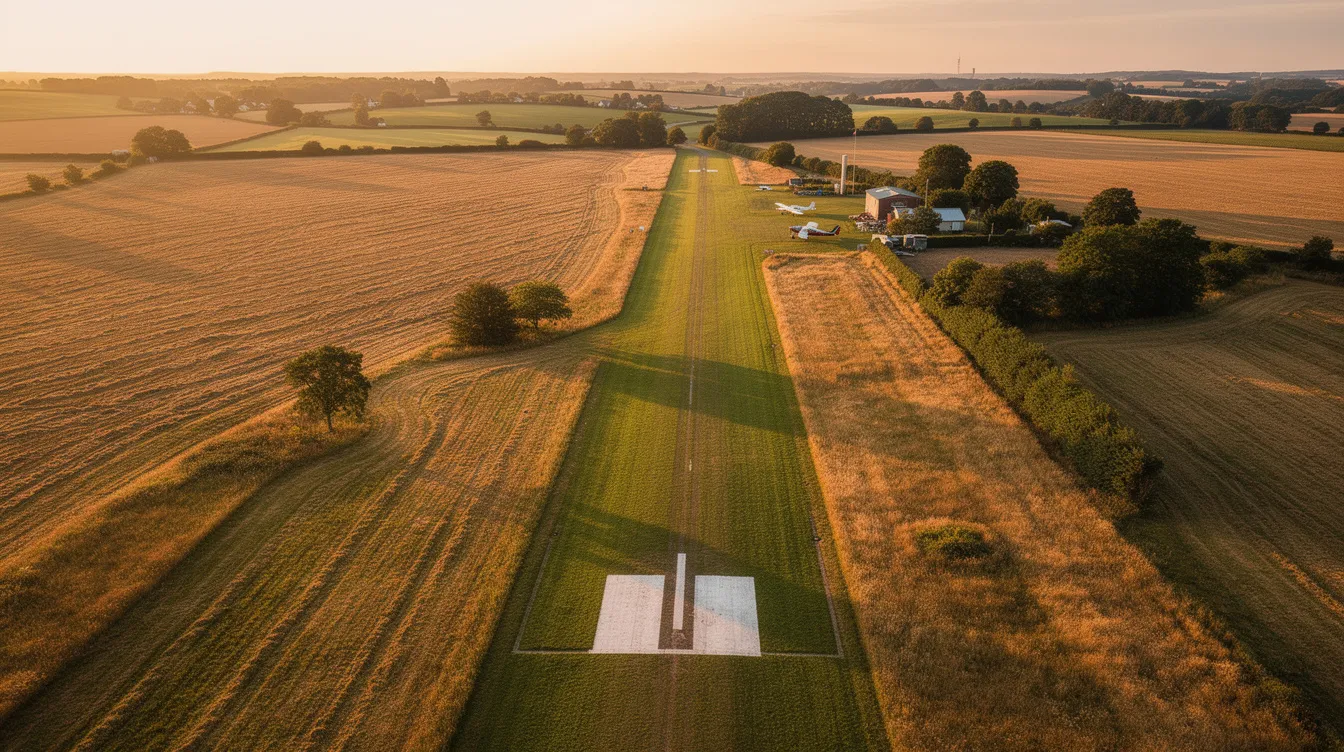
Even though no pilot license is legally required for U.S. Part 103 flying, joining an aviation community and pursuing structured training is the single best investment a new ultralight pilot can make.
Start by connecting with organizations like the Experimental Aircraft Association and its EAA ultralight chapters, local flying clubs, and type-specific owner groups for models like the Aerolite 103 or Kolb Firefly. These communities provide mentorship, hands-on experience, aircraft advice, and access to instructors who understand ultralight operations.
A practical getting-started path looks like this:
Take an introductory flight in a trainer or two-seat light sport aircraft
Complete 5–15 hours of dual instruction covering airspace, weather, and basic maneuvers
Transition to a personal ultralight aircraft under supervision
Build confidence with solo flights near your home field
Some buyers eventually move into light sport aircraft and pursue a sport pilot certificate or full private pilot license, gaining night privileges and cross-country capability, and may even evaluate the best cross-country planes for longer journeys. Others combine ultralight weekends with chartered private jet trips for more distant events or business obligations, coordinating through digital platforms and community fly-out calendars.
Budget time for ongoing learning: recurrent safety seminars, crosswind practice, and staying current on NOTAMs and temporary flight restrictions.
Ultralights' naturally low fuel burn - 1.5–3 gallons per hour - makes them among the lightest-footprint powered aircraft in the sky. Modern small four-stroke and fuel-injected engines improve efficiency further.
Electric propulsion is gaining traction. Part 103-compliant electric fixed-wing prototypes now use removable battery packs for 20–40 minute flights with near-silent operation and zero in-flight emissions. Battery energy density and extra weight constraints remain barriers, but the technology is advancing.
In private jet travel, sustainability takes a different form: efficient routing, newer aircraft with lower fuel burn per seat-mile, and voluntary carbon offset programs. Platforms like Jettly can help travelers choose appropriate aircraft categories - from turboprops for shorter routes to light jets for longer legs - and consider offsets when planning trips, even on international private jet flights where regulatory planning and route efficiency matter most.
An environmentally conscious traveler can balance short, low-impact local flights in a personal ultralight with carefully planned, offset-supported private jet journeys for longer business or family missions, often taking advantage of affordable private jet charter pricing strategies. Jettly gives frequent flyers flexible access to the right aircraft without ownership, freeing personal budgets for ultralight projects while aligning with modern sustainability expectations.
Below are common questions not fully covered in the sections above.
No pilot license is required for ultralights under FAA Part 103, and ultralights do not require FAA registration or an airworthiness certificate - provided the machine meets all weight, fuel, speed, and single-seat limits. That said, skipping formal instruction is risky. Seek dual training and treat ultralight flying with the same discipline as licensed aviation, just as you would when evaluating the best private jet charter companies for more complex travel.
It depends on local rules. Many towered airports with regular jet traffic restrict or prohibit ultralight operations. In practice, ultralight pilots typically fly from nearby non-towered fields, while private jets use the larger, controlled airport accessible through Jettly and the broader ecosystem of private and charter airlines.
Most ultralights have a practical range of 50–150 miles per flight due to fuel limits and low cruise speeds. Light jets and turboprops on Jettly's platform routinely cover 800–1,500+ nautical miles nonstop at several hundred miles per hour, and tools like Jettly's airport locator for private flights make it easy to see which fields are realistically reachable for your mission.
For most people, no. Ultralights are too weather-sensitive, slow, and limited to a single occupant to serve as reliable daily transport. A hybrid approach works better: enjoy ultralights for recreation while relying on private jet charter via Jettly for time-critical or poor-weather missions, using strategies such as memberships, empty legs, and flight-sharing outlined in Jettly's guide to getting a seat on a private jet easily.
An entire ultralight project often costs less than a single year of fixed costs on an owned jet. Many travelers treat ultralights as a hobby alongside on-demand charter. Use Jettly's transparent per-flight pricing, jet card flight cost estimator, or membership options to forecast travel costs, then allocate remaining funds to building or upgrading a personal ultralight aircraft.
Personal ultralight aircraft offer a direct, tactile connection to flight - minimal regulation under Part 103, modest costs, and local, low-and-slow fun - while light sport aircraft and private jets fill very different transportation and comfort roles. Understanding regulations, model options like the Aerolite 103, Kolb Firefly, Quicksilver MX103, and Hummel Ultracruiser, and real-world costs is essential before purchasing or flying.
Jettly serves as a natural complement: pilots and aviation enthusiasts can enjoy personal ultralight flying near home yet rely on Jettly's global private jet charter platform for business travel, family vacations, or long-range trips where speed, capacity, and schedule control matter. One hobby feeds the other.
Experience private travel tailored to your needs. Discover flight options or request a quote at https://www.jettly.com. Learn more about Jettly’s charter options at https://www.jettly.com.
Share this post:
Jay Franco Serevilla
Jul 29, 2026
|
5
min read
Discover tips and trends in the industry.

5
min read
Best Airline to Fly to Key West in 2026: Commercial vs. Private Jet Options
Choosing the best airline to fly to Key West in 2026 involves evaluating your departure city, budget, and travel preferences. This guide compares commercial airlines like American, Delta, and Allegiant with private jet options through Jettly, helping you find the ideal route to paradise. Whether you prioritize cost, convenience, or time savings, there are options to suit every traveler.
Read More
5
min read
Fly Atlanta to Key West: Cheap Flights, Private Charters, and Smart Booking Tips
Flying from Atlanta to Key West offers various options for travelers, from affordable commercial flights to private jet charters. Delta Air Lines provides the most nonstop flights, while Jettly allows for flexible private travel. Booking in advance and being flexible with dates can lead to significant savings.
Read MoreStay updated with our latest insights and tips to elevate your journey with us.
MEMBERSHIPS AND ASSOCIATIONS



Disclaimer: Jettly operates as a charter broker, offering access to a global digital jet charter marketplace. Jettly is not a direct air carrier and does not own or operate aircraft. All advertised flights are conducted by third-party air carriers that are fully licensed and hold the appropriate Part 135 or Part 121 certifications issued by the Federal Aviation Administration (FAA) or equivalent regulatory authorities under U.S. or foreign law. Jettly complies fully with the U.S. Department of Transportation's Part 295 and Part 298 Charter Broker regulations. Jettly does not carry additional liability insurance. Passengers are covered by aircraft operator insurance. TICO: 50023770


