



Login
Get Instant Pricing On 23,000+ Aircraft

>

Passenger airline crashes and plane crashes dominate headlines when they occur, but they are among the rarest catastrophic events in modern transportation. Air travel has just 0.01 deaths per 100 million miles traveled, making commercial aviation the safest mode of mass transportation today. The odds of dying as a passenger on an airplane sit at roughly 1 in 188,106-far lower than the lifetime risk from car travel.
In 2023, commercial aviation recorded the lowest number of accidents in its history. Zero fatal accidents involved passenger jet aircraft globally that year, and the overall accident rate dropped to about 1.87 per million departures. For business and leisure travelers weighing commercial flights or private options, those numbers matter because they put fear-driven headlines in context and show how rare fatal crashes really are.
This article examines the history of passenger airline crashes, what data reveals about when and why aviation accidents happen, how iconic disasters changed regulations, how crash investigations work, the broader global context behind passengers killed or injured, and how both commercial airlines and private charter platforms like Jettly approach flight safety today.
An aviation accident, as defined by agencies such as the National Transportation Safety Board and ICAO, means an event during aircraft operation in which someone is killed or injured, resulting in fatal or serious injuries, significant aircraft damage, or loss of the aircraft. That definition is narrower than most people assume and differs from an "incident," which affects safety without meeting the accident threshold.
Commercial air travel is the safest mode of mass transportation today, with odds of dying as a passenger at roughly 1 in 188,106 and just 0.01 deaths per 100 million miles traveled.
General aviation aircraft are involved in 78% of all crashes in the U.S., while scheduled passenger airline crashes have become extremely rare events since the 1980s.
Nearly half of all aviation crashes occur during landing or takeoff, yet landing accidents carry a fatality rate of under 2%, while cruise phase crashes are far deadlier when they happen.
Iconic disasters like American Airlines Flight 191, TWA Flight 800, and American Airlines Flight 587 reshaped regulations, aircraft design, and pilot training standards across the industry.
Professionally operated private charter flights, like those arranged through Jettly, follow strict commercial safety standards that are distinct from casual general aviation flying.
Not every rough landing or engine warning light, or a temporary issue with aircraft engines, qualifies as an aviation accident. The NTSB and ICAO apply specific criteria that center on three outcomes: someone sustains fatal or serious injuries, the aircraft is destroyed or substantially damaged, or the airplane goes missing.
Key distinctions matter when reading crash statistics:
Commercial air transport includes scheduled airline flight operations (Part 121 in the U.S.) and charter operations (Part 135). These face the highest levels of regulatory oversight.
General aviation covers private pilots, flight training, air taxi operations, and business aircraft not on airline schedules. This category accounts for the vast majority of aviation crashes in raw data.
Military aviation follows entirely separate rules and reporting structures.
Most crashes reported in annual datasets involve small general aviation aircraft-single-engine planes like a Cessna 172 or Piper Cherokee-not large passenger jets built by Boeing or Airbus. Human factors account for 80% to 88% of all commercial aviation incidents, and the majority of passenger airline accidents stem from a chain of events rather than a single catastrophic failure.
Injuries in accident databases are categorized as fatal injuries, serious injuries, or minor injuries. These classifications help investigators spot trends and prioritize safety improvements across the industry.
The short answer is yes-dramatically. From 1982 to 2018, 7,816 aviation crashes occurred in the U.S., but the overall trajectory has been a steep decline. Total aircraft accidents fell by more than 50% between the early 1980s and the late 2010s, with commercial airline fatal crashes becoming extraordinarily rare.
The last fatal U.S. scheduled passenger airline crash was Colgan Air (Continental Connection) Flight 3407 in February 2009 near Buffalo, New York. In 2018, the NTSB investigated 1,581 aviation accidents, killing 847 people-but the overwhelming majority involved general aviation, not scheduled airlines.
Over the long term, about 20% of aviation crashes involved at least one fatality from 1982 to 2018. Fatality counts fluctuate year to year, with spikes in years like 1996 driven by high-profile disasters rather than systemic safety decline.
Globally, 2023 stood out as the safest year on record for scheduled commercial flight. IATA reported an all-accident rate of just 0.80 accidents per million sectors. The fatality rate dropped to approximately 17 people per billion passengers. By any measure, air travel has become one of the safest modes of transportation in the world.
Every flight passes through distinct phases: taxi, takeoff, climb, cruise, descent, approach, and landing. Risk is not evenly distributed across these stages.
Nearly half of all aviation crashes occur during landing or takeoff-the two shortest phases of any flight. Proximity to the ground, configuration changes, and speed transitions make these moments demanding.
Landing accidents are the most frequent but rarely fatal. The fatality rate for landing accidents sits at under 2%, with most events involving runway excursions or gear collapses that result in minor injuries rather than deaths.
Takeoff accidents have a 15.7% fatality rate, partly because aircraft carry full fuel loads and have less time to recover from failures.
Maneuvering phase crashes are deadlier still-39% of crashes during maneuvering phases are fatal, often involving loss of control at low altitude.
Cruise phase crashes are uncommon for large airliners but carry significant consequences. About 30% of cruise phase crashes result in fatalities due to high speed, altitude, and limited recovery options.
For passengers aboard scheduled airlines, the statistical risk during any single phase remains extremely small. Most crashes that do occur in these phases involve general aviation, not commercial jets.
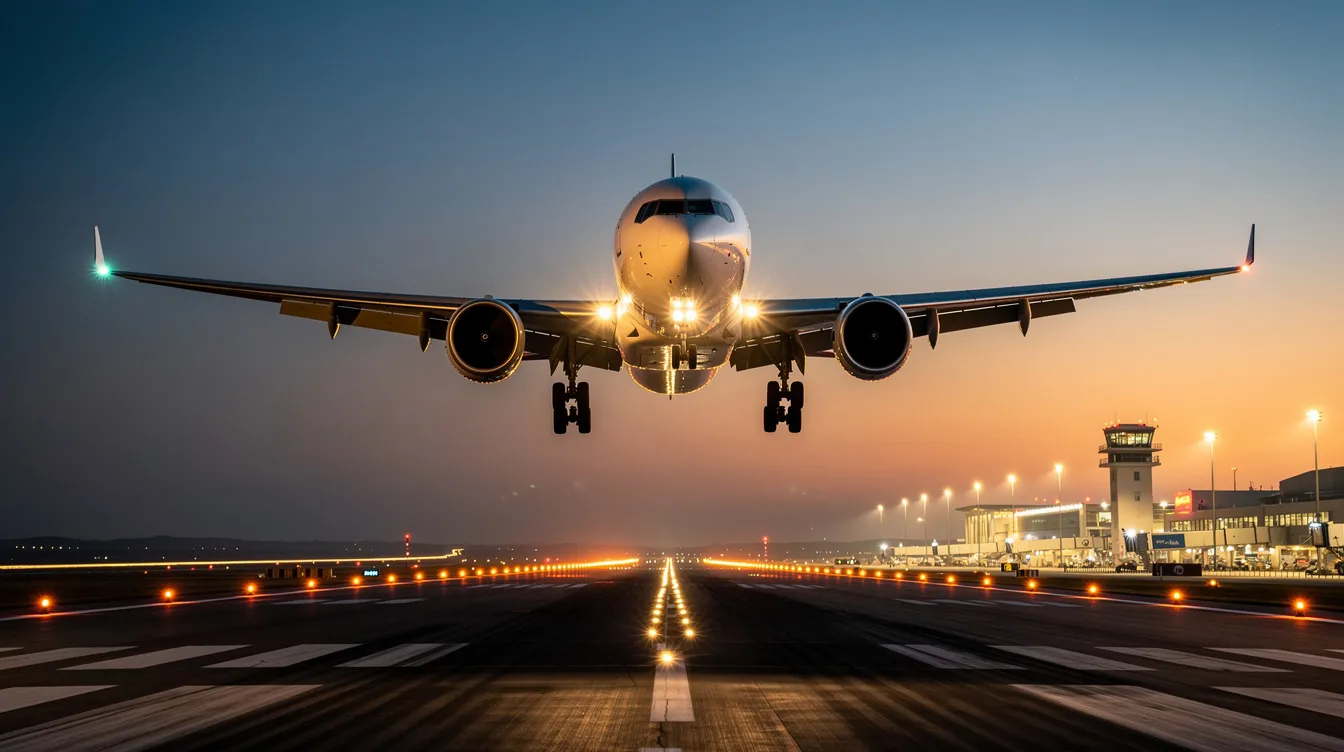
General aviation aircraft were involved in 78% of crashes in long-term NTSB datasets. This distinction matters because raw aviation accident numbers can be misleading when applied to scheduled airlines.
General aviation includes everything from single-engine training aircraft and private piston planes to business turboprops and some privately flown jets. Single-engine aircraft types like many Cessna and Piper models account for the majority of accidents and a high share of fatal crashes. Factors include lower-experience pilots, visual flight rules in poor weather, varied maintenance standards, and less robust avionics.
Scheduled passenger airlines-operating multi-engine jets such as the Boeing 737 or Airbus A320-fly under Part 121 regulations with redundant systems, professional crew training, and continuous oversight. Their accident rates per million departures are a fraction of general aviation rates. The FAA reports general aviation fixed-wing aircraft experience roughly 3.86 accidents per 100,000 flight hours, with a fatal rate of about 0.65 per 100,000 hours.
Private charter platforms like Jettly occupy a middle ground-charter and on-demand operations flown by certified Part 135 operators that must meet commercial safety standards distinct from casual private flying.
Several catastrophic disasters reshaped how the aviation world thinks about safety. Each exposed vulnerabilities and triggered lasting reforms.
This McDonnell Douglas DC-10 crashed shortly after takeoff from Chicago O'Hare when its number-one engine and pylon separated due to improper maintenance, causing the plane to lose control. American Airlines Flight 191 crashed in 1979, killing 273 people aboard and two on the ground. The disaster led to the temporary grounding of all DC-10s and major changes to engine-pylon maintenance procedures. Wind shear detection systems became mandatory on commercial airliners after similar incidents, and the FAA increased scrutiny of airflow and mounting design.
A Boeing 747 operated by TWA exploded over the Atlantic Ocean off Long Island when vapors in the center fuel tank ignited-likely from a short circuit. All 230 passengers and four crew members aboard were killed, with no injured survivors. Fuel tank safety regulations were overhauled after TWA Flight 800 exploded, leading to fuel tank inerting technology and wiring upgrades across many large jets. The wreckage was recovered from the ocean floor and reconstructed in one of aviation history's most extensive investigations.
An Airbus A300 departing New York lost its vertical stabilizer after aggressive rudder inputs in the wake of a preceding Boeing 747. American Airlines Flight 587 crashed in 2001, resulting in 265 deaths in Queens, New York. The disaster prompted training changes around rudder use, design reviews for rudder control loads, and stricter wake turbulence separation rules.
This McDonnell Douglas MD-82 crashed after takeoff from Detroit when flaps and slats were not properly set, and the takeoff warning system was not powered. The crash killed 154 people, with only one survivor-a four-year-old girl. The disaster influenced checklist discipline and warning-system redundancy design.
The aircraft hit a microburst wind shear during takeoff in Kenner, Louisiana, crashed into a neighborhood, and was destroyed on the ground. The disaster accelerated adoption of improved weather radar and predictive wind-shear detection at airports.
Additionally, improperly stored hazardous materials can ignite onboard fires-a lesson reinforced by ValuJet Flight 592 in 1996, when oxygen generators in the cargo hold caused a fire that killed all aboard. Each of these disasters has memorials: Lake Opeka for Flight 191, Rockaway Park for Flight 587, and Shirley, New York, for TWA 800. Behind every statistic is a life lost and a lesson learned.
The deadliest aviation disasters in history extend well beyond U.S. borders and involve not just mechanical failures but also terrorism, bombings, and military actions.
The Tenerife Airport Disaster in 1977 resulted in 583 fatalities when two Boeing 747s collided on a foggy runway in the Canary Islands. It remains the deadliest accident in aviation history and led to standardized radio phraseology that reduces miscommunication in aviation operations worldwide.
Japan Airlines Flight 123 crashed in 1985, killing 520 people after a catastrophic cargo door failure and loss of hydraulic control. Only four crew members and passengers were among the survivors. It was the single deadliest single-aircraft disaster ever.
The two Boeing 737 MAX 8 crashes-Lion Air Flight 610 in 2018 and Ethiopian Airlines Flight 302 in 2019-killed 346 people combined. These events led to the worldwide grounding and recertification of the MAX family, highlighting how automation design failures can have global consequences.
These events, along with incidents involving planes shot down in conflict zones, reshaped security protocols, crew procedures, and airport screening across the world.
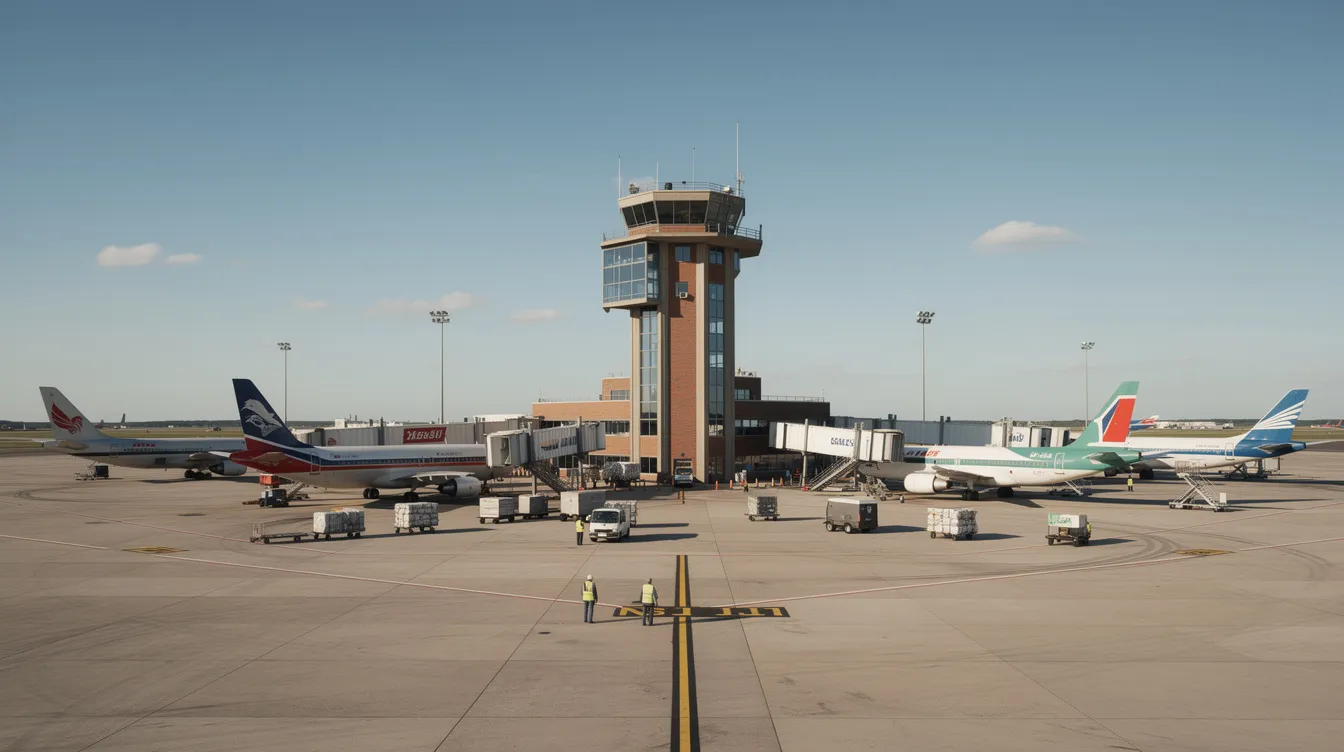
Aviation safety is largely based on the analysis of past tragedies. Every major disaster triggered specific improvements that made the next generation of flights safer.
Stronger pilot requirements: The 2010 Airline Safety and FAA Extension Act raised minimum flight hours for airline first officers from 250 to 1,500 hours and tightened duty-time rules. Rigorous training and oversight have been implemented to prevent pilot fatigue.
Aircraft technology: Modern jets feature redundant flight control systems, fly-by-wire controls, and improved fire suppression. Traffic Collision Avoidance Systems (TCAS) help prevent mid-air collisions. Improved weather radar and wind shear detection have increased flight safety across all phases of flight.
Data-driven safety programs: Airlines systematically collect safety data to introduce preventive measures. Programs like FOQA and ASAP let operators identify risk before accidents happen. Safety improvements must be continuously maintained and updated to remain effective.
Crew training: Crew Resource Management (CRM) encourages junior officers to question authority when they spot a problem. Crew training emphasizes clear communication and teamwork in the cockpit, reducing the chain-of-error scenarios that once led to most crashes.
Regulatory coordination: The Federal Aviation Administration (FAA), established by the Federal Aviation Act of 1958, works alongside ICAO and IATA to harmonize maintenance, licensing, and operational standards for airlines flying over the Atlantic Ocean, Pacific routes, and everywhere in between.
Accidents lead to improved pilot training, maintenance standards, and aircraft design. That feedback loop-from disaster to investigation to regulation-is what makes modern flying as safe as it is.
Major accidents often expose vulnerabilities in technology and human factors. The investigation process is designed to uncover every contributing factor.
Site security: The National Transportation Safety Board secures the crash site, documents wreckage distribution, and begins gathering physical evidence.
Data recovery: Flight data recorders and cockpit voice recorders-the "black boxes"-are recovered and analyzed. Investigators use that data to determine what happened to the aircraft and its systems, including engines when relevant, in its final moments.
Interviews and records: Investigators interview pilots, air traffic controllers, witnesses, and ground crew. Maintenance logs, training records, and operational data are reviewed.
Reconstruction: In complex cases, the wreckage is physically reconstructed. TWA Flight 800's fuselage was reassembled from pieces recovered from the Atlantic Ocean floor.
Findings and recommendations: Investigations into crashes trigger regulatory changes in aviation. The NTSB issues probable cause findings and safety recommendations that often lead to new FAA rules, airworthiness directives, or global design standards.
Crashes over the ocean or in remote areas-like Alaska or northern Canada-can take years to fully investigate. But even delayed findings eventually produce changes that make the entire system safer.
The safety framework for private jet charter differs from scheduled airlines in structure but not in rigor. In the U.S., charter operators fly under Part 135 regulations, which mandate specific pilot qualifications, maintenance intervals, insurance requirements, and operational standards. This is a world apart from casual general aviation flying.
Jettly operates as a digital marketplace connecting travelers with vetted operators that maintain safety ratings, current insurance, and documented maintenance histories. Typical safety measures in quality charter include experienced captains, type-rated crew, recurrent training checks, and strict duty-time and rest requirements.
Through the platform, travelers can view transparent information about aircraft type, operator credentials, and safety standards-whether booking a light jet for a Las Vegas trip, a midsize aircraft for San Diego, or a heavy jet for a transatlantic route to Canada or York, England.
Scheduled airlines have massive fleets and ultra-low accident rates. Quality charter operators also maintain strong records, especially when flights are professionally crewed and properly maintained. The key difference for travelers is access to due diligence-something platforms like Jettly simplify by aggregating only licensed, audited operators.
Safety evaluation does not require technical expertise. A few practical steps go a long way:
For airlines: Check an airline's standing through IATA safety audit results, the EU's air safety list, and government databases. Context matters-one incident decades ago means little if the carrier has operated safely since.
For charter: Verify that an operator holds a valid Air Operator Certificate, uses professionally trained crew, and participates in third-party audits such as ARGUS, Wyvern, or IS-BAO.
On board: Pay attention to safety briefings. Know exit locations. Crew training prepares them to manage emergencies-even though severe events are statistically unlikely.
On platforms: Digital marketplaces like Jettly simplify this process by presenting vetted operators with clear aircraft and operator details within the booking interface, so travelers do not need to conduct independent research from scratch.
Large scheduled airlines hold the lowest accident rate due to scale, fleet size, and regulatory intensity. However, professionally operated charter jets under commercial regulations such as Part 135 also maintain strong safety records. The highest accident rates appear in non-commercial general aviation-owner-flown single-engine planes, not charter jets or airliners. Using a platform like Jettly to book through vetted operators helps ensure private flights meet rigorous safety standards.
The odds of dying as an airline passenger sit at approximately 1 in 188,106. These odds continue to improve as technology, training, and oversight advance. Multiple layers of redundancy exist on modern jets. For comparison, the lifetime risk of dying in a car accident is roughly 1 in 100, making flying dramatically safer than driving for any given trip.
No. Statistically, most aviation accidents occur near airports during takeoff, climb, approach, or landing. Crashes over the Atlantic Ocean or Pacific receive intense media coverage partly because they are harder to investigate, but they are not the most common type of event. Modern satellite tracking and communication systems have significantly improved situational awareness on long-haul flights.
Investigations typically find a combination of factors. Human factors-including pilot decision-making, maintenance errors, organizational issues, and mechanical problems such as failures involving engines-feature in the majority of accident reports. Advances in automation and CRM training have sharply reduced classic pilot error accidents compared with earlier decades. Modern safety systems are designed to catch and mitigate human mistakes before they escalate.
Jettly works as a digital marketplace that lists flights only from licensed, audited operators meeting regulatory requirements for maintenance, pilot training, and insurance. Aircraft records, crew qualifications, and safety ratings are checked so customers see options that comply with commercial safety standards. Learn more about specific aircraft categories, operators, and safety practices at jettly.com.
Passenger airline crashes, while devastating when they happen, have become exceptionally rare. From 1982 to 2018, the U.S. saw a dramatic decline in accidents, and 2023 marked one of the safest years in commercial aviation history globally. The safest form of long-distance travel remains flying, whether on a scheduled carrier or a professionally operated private jet.
The majority of aviation accidents still occur in general aviation. Scheduled airlines and quality charter operators benefit from layers of oversight, advanced technology, and decades of lessons learned from past disasters. For modern travelers, air travel remains one of the safest modes of transportation available.
Ready to experience private travel on your terms? Explore flight options or request a quote at jettly.com.
Share this post:
Jay Franco Serevilla
Oct 20, 2026
|
5
min read
Discover tips and trends in the industry.
5
min read
Cessna 182 Cost of Ownership in 2026: Fixed Costs, Operating Costs, and Realistic Budgets
In 2026, owning a Cessna 182 Skylane involves navigating fixed and variable costs that can range from $180 to $350 per flight hour. Fixed costs typically amount to $6,500 to $19,500 annually, while variable costs, including fuel and maintenance, can add another $100 to $200 per hour. Understanding these expenses is crucial for pilots considering ownership versus alternatives like chartering.
Read More
5
min read
US Military Base Oman: Strategic Access, RAFO Thumrait, and Travel Options
Oman hosts U.S. military access through key facilities like RAFO Thumrait, Masirah Island Airbase, and Duqm Port, but does not have sovereign U.S. bases. This strategic partnership enhances regional security and logistics while maintaining Omani sovereignty. Travelers can utilize civil airports in Muscat and Salalah for access, with private jet services available through Jettly.
Read MoreStay updated with our latest insights and tips to elevate your journey with us.
MEMBERSHIPS AND ASSOCIATIONS



Disclaimer: Jettly operates as a charter broker, offering access to a global digital jet charter marketplace. Jettly is not a direct air carrier and does not own or operate aircraft. All advertised flights are conducted by third-party air carriers that are fully licensed and hold the appropriate Part 135 or Part 121 certifications issued by the Federal Aviation Administration (FAA) or equivalent regulatory authorities under U.S. or foreign law. Jettly complies fully with the U.S. Department of Transportation's Part 295 and Part 298 Charter Broker regulations. Jettly does not carry additional liability insurance. Passengers are covered by aircraft operator insurance. TICO: 50023770


