


Login
Get Instant Pricing On 23,000+ Aircraft

>
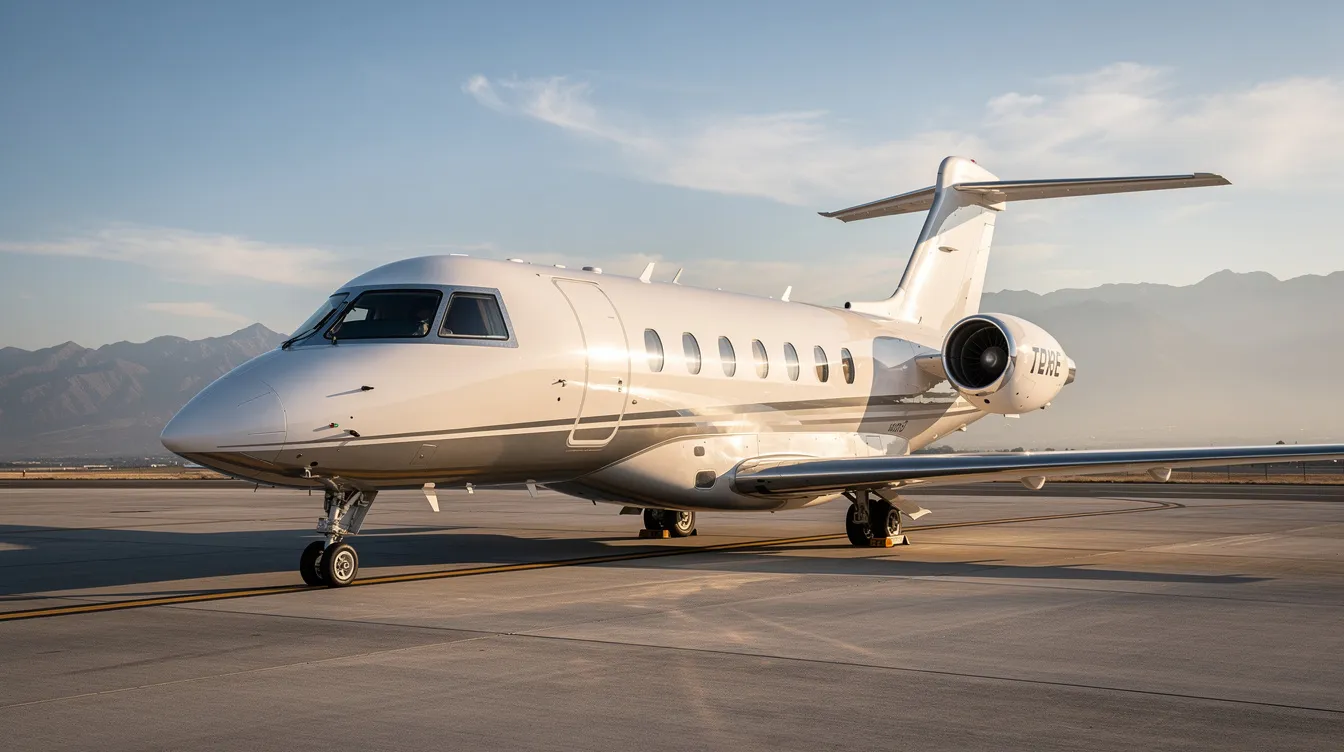
NetJets’ net worth is best estimated in the $9 billion to $11 billion range as of 2026, based on its fleet assets, revenues, and long-term customer contracts, though there is no official standalone valuation because it is a wholly owned subsidiary of Berkshire Hathaway with no stock ticker, no separate market cap, and no quarterly earnings call. NetJets is the largest operator of business jets on the planet, but its financial details are folded into a larger reporting segment, which makes pinning down a precise value surprisingly tricky.
For current and prospective private aviation customers, investors, high-net-worth individuals, and business executives, that estimate is useful because NetJets’ financial scale shapes how you compare fractional ownership, jet cards, and other private jet access options. This article breaks down what we actually know, what we can reasonably estimate, and how NetJets makes money, what its fleet and assets suggest about valuation, how its safety and training standards fit into the business, and how it compares with more flexible on-demand charter platforms such as Jettly as private aviation evolves in 2026.
NetJets does not have an official net worth because it is a private subsidiary of Berkshire Hathaway, so any figure is an informed estimate rather than a published number. Based on Berkshire's service group revenues, fleet asset values, forward aircraft orders, and recurring cash flows from fractional ownership and jet card programs, analysts and industry observers place the NetJets net worth in the range of $9–11 billion as of 2026.
NetJets is valued at over $9 billion as of 2026, with an enterprise value estimated between $9 billion and $11 billion based on revenue scale, fleet assets, and OEM commitments.
Fleet: Over 1,100 aircraft globally, serving more than 3,100 airports and roughly 12,500 customers. Holds a 13.3% share of total U.S. private aviation activity and commands approximately 70% of fractional ownership market sales.
Investment: Investors cannot buy NetJets stock directly - exposure is only available through Berkshire Hathaway (BRK.A or BRK.B). Travelers looking for private jet access without equity commitments can use on-demand charter platforms like Jettly.
Business Model Comparison: Later sections compare NetJets' fractional ownership and jet cards with asset-light charter models, showing how net worth and financial risk are distributed differently across private aviation business models.
The NetJets net worth, expressed as enterprise value, sits in the $9–11 billion range as of 2026. Because NetJets is a wholly owned subsidiary of Berkshire Hathaway, it has no standalone market cap and does not file separate public financial statements. That said, a reasonable valuation band can be constructed from available data.
Estimated annual revenue: $6 billion to $8 billion from fractional ownership contracts, management fees, and occupied flight hours.
Fleet: Over 1,100 aircraft globally; replicating that fleet at current list prices would cost tens of billions.
Forward orders: Multi-billion-dollar commitments with manufacturers like Embraer.
Recurring cash flow: Long-term fractional and jet card programs.
Scale: Serves over 3,100 airports in 150 countries, with 12,000–13,000 owners and cardholders.
Market share: 13.3% of U.S. private aviation activity and 70% of fractional ownership net sales.
It is worth clarifying that "net worth" here refers to enterprise value, or what NetJets might reasonably sell for as a standalone business. It is not simple book equity. Any number is an informed estimate, not an official Berkshire figure.
NetJets functions as a vertically integrated private jet platform. It combines fractional ownership, leases, jet cards, and ancillary services into multiple recurring revenue streams—a model that generates predictable, contract-backed income year after year.
Fractional Ownership
Jet Card Programs
Leases and Whole-Aircraft Management
Ancillary Services
These revenue streams directly support the NetJets net worth by creating long-duration cash flows that analysts can model with reasonable confidence. Multi-year fractional contracts, prepaid block hours, and operating leases all reduce revenue volatility compared with pure on-demand operators.
The original and still dominant engine of NetJets' business.
Customers purchase a share of an aircraft, entitling them to a set number of flight hours per year.
Typical shares:
1/16 share: ~50 annual flight hours
1/8 share: ~100 hours
1/4 share: ~200 hours
Fee structure includes:
Upfront aircraft share acquisition (often millions for large cabin jets)
Fixed monthly management fees
Variable occupied hourly charges for each flight
NetJets commands approximately 70% of fractional ownership market sales by value.
Multi-year contracts, switching costs, and operational lock-in make this the foundation of NetJets' recurring cash flows and perceived net worth.
Prepaid block of flight hours (typically 25–100 hours) at a fixed hourly rate.
Price ranges:
$160,000+ for a 25-hour light-jet card
$300,000–$350,000+ for super-midsize or large cabin access
No upfront capital commitment comparable to buying a share.
Popular among travelers flying 25–75 hours per year.
Contributes to NetJets net worth by generating upfront cash, improving fleet utilization, and supporting brand loyalty.
Operating leases and whole-aircraft management programs for corporations, family offices, and flight departments.
NetJets retains operational control and maintenance responsibility.
Clients gain guaranteed access, often with tax and accounting benefits compared with direct ownership.
Operating lease liabilities and shared aircraft repurchase liabilities have grown substantially—from around $6.9 billion in 2021 to roughly $9.9 billion in 2024.
Aircraft management through Executive Jet Management
Pilot training and maintenance operations
Dedicated European division
Deep collaboration with FlightSafety International for simulator and recurrent training
NetJets Europe serves as a revenue contributor and strategic presence on the continent
This multi-layered model contrasts with asset-light on-demand charter brokers and digital platforms like Jettly, which generate margins from arranging flights rather than owning aircraft.
Pioneered by Rich Santulli in 1986 under Executive Jet Aviation.
Shared aircraft programs where access is defined by flight hours rather than seats.
Typical share increments:
1/16 share: ~50 hours
1/8 share: ~100 hours
1/4 share: ~200 hours
Fee stack includes:
Upfront aircraft share acquisition
Fixed monthly management fees
Variable occupied hourly charges
NetJets commands approximately 70% of fractional ownership market sales by value.
Network scale and bargaining power with aircraft manufacturers and suppliers.
Guaranteed availability (as few as 10 hours' notice).
Access to a diverse fleet across multiple aircraft type categories.
Multi-year contracts and operational lock-in support recurring cash flows and perceived net worth.
For those who want the mission profiles of private air travel without purchasing equity in a plane, resources that explain fractional private jet ownership pros and cons help clarify tradeoffs, while Jettly provides on-demand access to thousands of aircraft globally through its charter platform.
A prepaid block of flight hours (often 25 or 50 hours) granting access to a specific cabin category at a fixed hourly rate.
Programs offer 25–100 hours, depending on provider and tier.
Price varies by aircraft type:
~$160,000+ for a 25-hour light-jet card
$300,000–$350,000+ for super-midsize or large cabin access
Pricing fluctuates with fuel surcharges, demand, and fleet availability.
No upfront capital commitment comparable to buying a share.
Popular among travelers flying 25–75 hours per year.
Generates upfront cash
Improves fleet utilization during off-peak times
Supports brand loyalty
Travelers interested in private jet card comparisons between providers or in on-demand charter through Jettly can often find similar flexibility without long-term contracts or large prepayments.
NetJets offers operating leases and whole-aircraft management for corporations, family offices, and flight departments.
Expands addressable market beyond pure fractional owners and cardholders.
NetJets retains operational control and maintenance responsibility.
Clients gain guaranteed access, often with specific tax and accounting benefits compared with direct ownership.
Operating lease liabilities and shared aircraft repurchase liabilities have grown from ~$6.9 billion in 2021 to ~$9.9 billion in 2024.
Capital-intensive model contrasts with Jettly's asset-light charter brokerage approach.
Aircraft management through Executive Jet Management
Pilot training and maintenance operations
Dedicated European division
Collaboration with FlightSafety International for simulator and recurrent training
NetJets Europe as a revenue contributor and strategic presence
Combined with NetJets' core operations within Berkshire's service group, these aviation services generate additional billions in annual revenue, reinforcing the company's overall net worth.
Berkshire Hathaway purchased Executive Jet Aviation, which was later renamed NetJets, for about $725 million in cash in 1998. Warren Buffett positioned it as an early bet on the long-term economics of executive jet aviation.
|
Period |
Phase |
Key Developments |
|---|---|---|
|
1998–2007 |
Rapid growth |
Aggressive fleet and customer expansion |
|
2008–2011 |
Crisis & restructuring |
Deep losses (~$700M+ pre tax loss in 2009), leadership changes |
|
2012–2019 |
Disciplined growth |
Restored profitability, tighter cost controls |
|
2020–2025 |
Post-COVID surge |
Record demand, cost pressures from fuel and labor |
NetJets is grouped inside Berkshire's "service" businesses together with FlightSafety and others. Investors only see aggregated revenue and pre tax earnings in the annual report, not a separate NetJets line item. Service group revenues rose from about $19.0 billion in 2022 to around $20.7 billion in 2024, with aviation services revenues an important contributor.
Buffett's public comments have evolved from early enthusiasm about "huge potential" to candid criticism of his own oversight during loss years—he called the financial mismanagement his biggest mistake. Later statements confirmed that structural problems had been resolved and NetJets continues to operate profitably within Berkshire.
Interpreting Berkshire's consolidated data and narrative disclosures offers a window into NetJets' profitability and cost pressures over time. NetJets has access to Berkshire Hathaway's financial resources, allowing for significant investment in fleet and infrastructure that standalone competitors cannot easily match.
Aviation services revenues: Grew approximately 9.1% in 2024 over the prior year.
Pre tax earnings: For the service group declined about 23% in 2024—primarily attributable to higher flight crew, maintenance, fuel, and depreciation costs across aviation services.
Major cost drivers:
Acquisition and depreciation of 1,100+ aircraft
Higher maintenance interval costs and parts
Crew costs including pilot hiring and training
Hangar, terminal, and infrastructure expenses
Insurance and regulatory compliance across multiple jurisdictions
These fixed costs create a high operating leverage profile: when utilization is strong, margins expand; when demand softens, losses can mount quickly. The 2009 episode—when the service group recorded roughly $700 million in pre tax losses largely from aviation—illustrates this dynamic.
Asset-light charter platforms like Jettly focus costs on technology, customer support, and vetting third-party operators rather than financing aircraft fleets, resulting in a fundamentally different risk profile.
A significant portion of NetJets net worth is physically embodied in its aircraft fleet, OEM purchase commitments, and supporting infrastructure. NetJets operates the world's largest private jet fleet with over 1,100 aircraft globally.

Total aircraft: Over 1,100 globally
Airports served: More than 3,100 worldwide
Customer base: Approximately 12,000–13,000 owners and cardholders
Market share: 13.3% of U.S. private aviation activity, 70% of fractional ownership net sales
Light jets:
Cessna Citation XLS
Embraer Phenom 300
Midsize and super-midsize:
Citation Latitude
Embraer Praetor 500
Large cabin and long-range:
Bombardier Global 6000/7500
NetJets' fleet includes Cessna Citation and Bombardier Global jets among its most prominent aircraft.
The company plans to add up to 250 Praetor 500 jets under a framework agreement with Embraer worth over $5 billion at list prices, with deliveries starting in 2025.
Individual list prices:
Praetor 500: ~$19–20 million
Global 7500: ~$70–80+ million
Strategic ground assets include private terminals and lounges at busy hubs like Teterboro, Palm Beach, and Las Vegas, along with maintenance bases and crew facilities.
NetJets expects to take delivery of over 80 new aircraft in 2026 alone, adding more aircraft to an already dominant fleet.
Travelers using Jettly access a similarly wide range of private charter aircraft types—light jets, mids, heavies, turboprops, and helicopters—through a digital platform aggregating 20,000+ aircraft without owning them.
Warren Buffett's personal use of NetJets aircraft, candid shareholder letters, and public endorsements boosted the NetJets brand's credibility among corporate leaders and high-net-worth individuals in ways that advertising alone could not replicate.
Fleet scale: the largest operator of corporate jets worldwide
Global reach across 3,100+ airports
Integration with FlightSafety for pilot training
Safety culture and operational excellence
Berkshire's balance sheet backing long-term investments
This intangible brand equity and perceived safety and service premium allow NetJets to charge robust rates for fractional ownership and jet cards, supporting its net worth beyond the book value of assets. For balance, tech-driven platforms like Jettly are building their own moat around transparent pricing, instant digital booking, and vast aircraft choice—a different value proposition in private aviation.
How do different private aviation access models compare in terms of capital, risk, and flexibility? The answer directly affects both customer choice and how corporate net worth accumulates across the sector.
Upfront Cost: $5M–$75M+
Best For: 200–400+ flight hours/year
Risk Profile: Owner bears all depreciation, crew costs, and maintenance
Upfront Cost: $500K–$10M+ per share
Best For: 50–200 hours/year
Risk Profile: Shared costs, but significant upfront investment
Upfront Cost: $160K–$350K+ per 25-hour block
Best For: 25–75 hours/year
Risk Profile: Lower capital, locked rates, but limited flexibility
Upfront Cost: Pay per trip
Best For: Variable/occasional flyers
Risk Profile: No ownership risk, full aircraft type flexibility
|
Model |
Upfront Cost |
Best For |
Risk Profile |
|---|---|---|---|
|
Full ownership |
$5M–$75M+ |
200–400+ flight hours/year |
Owner bears all depreciation, crew costs, and maintenance |
|
NetJets fractional ownership |
$500K–$10M+ per share |
50–200 hours/year |
Shared costs, but significant upfront investment |
|
Jet card |
$160K–$350K+ per 25-hour block |
25–75 hours/year |
Lower capital, locked rates, but limited flexibility |
|
On-demand charter (Jettly) |
Pay per trip |
Variable/occasional flyers |
No ownership risk, full aircraft type flexibility |
NetJets' fractional ownership requires significant upfront investment. Full ownership of two jets or more only makes economic sense for the highest-volume operators. Jet card programs bridge the gap, offering a prepaid block of flight time without fractional shares.
On-demand charter through platforms like Jettly involves no long-term commitment and, for many travelers, serves as a NetJets alternative for flying private at lower cost. Travelers pay per trip with transparent pricing and the ability to choose from many operators and aircraft types—ideal for occasional or variable-pattern flyers.
NetJets' net worth is fundamentally tied to its owned and financed fleet and long-term contracts. Jettly's business value, by contrast, is more closely linked to data, software, network scale across 20,000+ aircraft, and customer acquisition efficiency.

Investors and customers now evaluate private aviation providers on safety track record and environmental approach alongside cost and convenience. NetJets has a reputation for operational excellence and safety that supports premium pricing.
NetJets pilots receive extensive training at least twice a year.
Pilots fly only one aircraft type, reinforcing type-specific expertise.
Deep collaboration with FlightSafety International for simulator-based recurrent training.
Operational standards stronger than FAA requirements.
Investment in Sustainable Aviation Fuel agreements.
Carbon offset programs.
Fleet modernization toward more fuel-efficient jets.
Continuous renewal of fleet to protect residual values.
These intangibles help preserve the NetJets share of premium customers and indirectly support its net worth. Modern charter platforms like Jettly also increasingly emphasize safety vetting and options for fuel-efficient aircraft selection when booking.
Private aviation demand is rising as it provides alternatives to commercial flights on niche routes, and several structural tailwinds support continued growth. Corporate profitability cycles, expanding high-net-worth populations, and hybrid work patterns pushing more point-to-point business trips all favor the industry.
Constraints: Aircraft OEM production bottlenecks, pilot shortages, environmental regulation, and competition from tech-driven charter platforms could limit margin expansion.
Opportunities: If aviation services revenues compound at 6–8% annually and fleet and card programs remain fully utilized, NetJets' enterprise value could push past the current $9–11 billion band by 2030.
Market evolution: Customers now have a broader menu of access models—from NetJets fractional ownership and jet cards to asset-light, on-demand charter via platforms like Jettly—which may redistribute how value accrues across the sector.
Jettly operates as a digital private jet charter marketplace connecting travelers to a global inventory of 20,000+ aircraft, including light jets, midsize jets, larger jets, turboprops, and helicopters. Unlike NetJets, Jettly does not own the aircraft—it offers on-demand private jet charter, instant pricing, and transparent cost breakdowns through a tech-driven platform.
Key advantages: No long-term contracts, no fractional ownership commitments, and the flexibility to choose aircraft by trip rather than by program.
No management fees, depreciation, or share resale.
Serves both business and leisure travelers: From last-minute executive trips to family holidays and time-sensitive missions.
Emphasis: Convenience, time savings, and flight time efficiency.
Ready to enjoy private travel tailored to your needs? Browse flight options or get a quote at https://www.jettly.com.

No. NetJets is not publicly traded. It is a wholly owned subsidiary of Berkshire Hathaway, so investors seeking exposure must purchase Berkshire Hathaway shares (BRK.A or BRK.B).. Only NetJets' parent company trades on public markets, and NetJets accounts for just one piece of a much larger conglomerate. There is no way to isolate NetJets' performance in your portfolio.
All NetJets net worth estimates are approximations. They rely on Berkshire's segment disclosures, fleet valuations, order books, and industry benchmarks like aerospace EBITDA multiples. No external analyst has complete internal data on cash flow, depreciation schedules, or contract-level margins. Figures like the $9–11 billion range should be treated as informed estimates rather than precise valuations. Estimated payments on liabilities and forward orders add further uncertainty.
NetJets fractional shares typically suit travelers flying 50–200+ flight hours per year who value guaranteed availability, fixed service standards, and are willing to commit capital. On-demand charter through platforms like Jettly often better serves those flying fewer hours or whose needs vary widely by trip—making it possible to fly without the financial and contractual lock-in of the NetJets program.
It depends on usage. High-frequency travelers may achieve lower effective hourly rates with fractional jet ownership or certain jet card programs despite upfront commitments. Occasional flyers—those under 25–50 hours per year—usually save money with pay-per-trip charter and avoid depreciation, exit fees, and monthly management fees. Using a private jet charter cost estimator and [comparing costs directly](LINK 10) based on your specific travel pattern is the most reliable way to decide.
Travelers can use on-demand charter platforms like Jettly to book a private jet, turboprop, or helicopter as needed through flexible private jet membership options, paying only for each flight. The platform lets you compare aircraft categories, prices, and operators instantly online—no fractional shares, no jet card deposits, and no long-term contracts required. Learn more about how to book a private jet through Jettly's marketplace.
NetJets generates revenue primarily from fractional ownership contracts, management fees, and occupied flight hours, commanding approximately 70% of the fractional ownership market sales. Fractional ownership requires customers to make significant upfront aircraft share acquisitions along with monthly management fees, reflecting the capital-intensive nature of this model.
Jet card programs, which offer prepaid flight hours ranging from 25 to 100 hours, provide a flexible alternative without the need for upfront capital commitment. NetJets generates an estimated annual revenue ranging from $6 billion to $8 billion through its various revenue channels.
To expand its addressable market, NetJets also offers operating leases, providing corporations and flight departments with dedicated aircraft access without full ownership.
As a private subsidiary of Berkshire Hathaway, which acquired NetJets in 1998 for $725 million, NetJets benefits from access to significant financial resources enabling substantial investment in fleet expansion and operational excellence. However, NetJets does not have an official net worth since it is not publicly traded; industry estimates value the company at over $9 billion as of 2026.
NetJets operates the world's largest private jet fleet, with over 1,100 aircraft globally, including models like Cessna Citation and Bombardier Global jets. The fleet serves more than 3,100 airports worldwide and holds a 13.3% share of total U.S. private aviation activity. The company plans to add up to 250 Embraer Praetor 500 jets, further strengthening its fleet capabilities.
Recognized as a global leader in fractional ownership and private jet programs, NetJets meets rising private aviation demand, which increasingly serves as an alternative to commercial flights on niche routes, while shared-seat platforms that crowdsource private jet flights and empty seats aim to make this access more affordable.
In contrast, companies like BlackJet offer jet card programs without fleet ownership, appealing to travelers seeking flexibility without upfront capital investment.
NetJets pilots undergo extensive training at least twice annually, collaborating closely with FlightSafety International. Pilots fly only one aircraft type to ensure type-specific expertise, and the company maintains operational standards that exceed FAA requirements. This commitment to safety and operational excellence has earned NetJets a strong reputation in the industry, even as more cost-conscious travelers explore how to buy a seat on a private jet via shared and semi-private options.
NetJets stands as a dominant force in private aviation, with an estimated net worth exceeding $9 billion as of 2026. Its extensive fleet, commanding approximately 70% of the fractional ownership market and a 13.3% share of U.S. private aviation activity, reflects both substantial physical assets and a loyal customer base. Supported by Berkshire Hathaway's financial strength, NetJets continues to invest in fleet expansion, safety, and operational excellence, maintaining its leadership in a competitive and evolving industry.
While fractional ownership requires significant upfront investment and long-term commitments, it offers unmatched availability, safety, and service quality. Jet card programs and operating leases provide flexible alternatives within the NetJets ecosystem, catering to varying customer needs. Meanwhile, asset-light platforms like Jettly offer on-demand charter options without ownership burdens, while in-depth guides all about NetJets as a private aviation leader highlight how its model differs, underscoring the diverse pathways available in private aviation today.
For travelers and businesses seeking reliable, convenient, and premium private jet access, NetJets remains a benchmark of value, safety, and scale. Understanding its financial structure and market position helps clarify the costs and benefits of private aviation models in 2026 and beyond.
Ready to experience private travel on your terms? Explore flight options or request a quote at https://www.jettly.com.
Share this post:
Jay Franco Serevilla
Sep 5, 2026
|
5
min read
Discover tips and trends in the industry.

5
min read
Helicopter Flying Time: How Long Your Helicopter Flight Really Takes
Helicopter flight time is a crucial factor for travelers considering charter services, influenced by distance, weather, and operational factors. This guide explains how flight time is calculated, typical durations for various trips, and the differences between airborne and block time. Understanding these elements helps passengers set realistic expectations for their helicopter journeys.
Read More
5
min read
Rent Helicopter Price: What It Really Costs to Charter a Private Helicopter
Renting a helicopter can range from $900 to over $8,000 per hour, depending on various factors like aircraft type and route. This guide details the costs associated with helicopter charters, including hidden fees and real-world examples, helping you understand what to expect in 2025–2026. Jettly's platform offers transparent pricing and easy comparisons to find the best helicopter rental for your needs.
Read MoreStay updated with our latest insights and tips to elevate your journey with us.
MEMBERSHIPS AND ASSOCIATIONS



Disclaimer: Jettly operates as a charter broker, offering access to a global digital jet charter marketplace. Jettly is not a direct air carrier and does not own or operate aircraft. All advertised flights are conducted by third-party air carriers that are fully licensed and hold the appropriate Part 135 or Part 121 certifications issued by the Federal Aviation Administration (FAA) or equivalent regulatory authorities under U.S. or foreign law. Jettly complies fully with the U.S. Department of Transportation's Part 295 and Part 298 Charter Broker regulations. Jettly does not carry additional liability insurance. Passengers are covered by aircraft operator insurance. TICO: 50023770


