


Login
Get Instant Pricing On 23,000+ Aircraft

>

For private aviation users eyeing southeast England, MSE airport represents both a planning challenge and a future opportunity. The former Kent International Airport sits dormant for scheduled services, yet its redevelopment into a freight-led hub promises renewed relevance for charter operators and business travelers by the end of this decade.
MSE Airport (IATA: MSE, ICAO: EGMH) is the former Kent International / Manston Airport in Kent, England, currently under redevelopment with plans to reopen primarily as a freight-led hub by around 2028.
Manston Airport features one of the widest and longest runways in the UK, measuring 2,752 meters (approx. 9,029 feet) in length, with historical significance as a World War II and Cold War airfield, offering strategic positioning for UK–Europe and London-access flights.
Passenger and private jet operations are currently limited, but the site supports search-and-rescue operations and aviation maintenance, with future potential for business and charter flights.
There are no large official terminal car parks in regular passenger use today, so travelers typically rely on regional ground transport and nearby parking alternatives.
Jettly helps travelers route private flights via nearby alternative airports while Manston is being redeveloped, and can incorporate MSE into route planning once it opens through its digital charter platform.
MSE is the IATA code for Kent International Airport, also known as Manston Airport or London Manston Airport, located near Ramsgate in Kent, southeast England. The exact identifiers are IATA code MSE, ICAO code EGMH, and country code GB. Flight plans and tickets display local time as GMT in winter and GMT+1 during British Summer Time.
As of 2026, Manston Airport is undergoing redevelopment to become a major airfreight hub by 2028. Commercial passenger flights ceased in April 2014, and as of 2026, Manston Airport has no active scheduled commercial passenger airlines. RiverOak Strategic Partners is leading the cargo-led redevelopment, with targeted reopening dates shifting from initial 2025 estimates to 2028.
While not yet a mainstream passenger hub, MSE’s redevelopment is relevant to private jet users planning future access to Kent, London, and cross-Channel routes. Jettly monitors infrastructure changes at MSE to add it to routings once regular business and charter operations become available.

Manston Airport sits on the Isle of Thanet in Kent, close to Manston village and the seaside resort of Ramsgate. Kent International Airport, also known as Manston Airport, is located at geographical coordinates 51.344858° N latitude and 1.345809° E longitude. The airport is situated approximately 1 km from the town of Ramsgate, a seaside resort in the United Kingdom.
Manston Airport is situated in the parish of Minster-in-Thanet within the Thanet district of Kent, England, roughly 13 miles (20 km) northeast of Canterbury. Manston Airport is located in Kent, England, and is surrounded by several parks, including Brookhill Country Park and Oaklands Park.
Primary road access includes proximity to the A299 (Thanet Way), which links to the M2 and then the M25, with typical drive times to Canterbury of about 30 minutes and to central London around 2 hours, traffic-dependent. Private flyers can also use Jettly’s airport locator tool to compare runway performance, handling options, and transfer times across alternative southeast England airports when planning their trips.
With no dedicated passenger terminal service operating, private flyers typically use nearby commercial airports for access to Kent and East London today. For those comparing options, Manchester Airport is a much larger hub with extensive parking facilities and direct rail links, but it is significantly farther from Kent, making the listed airports more convenient for local access and private charter.
|
Airport |
Code |
Distance from Manston |
Best For |
|---|---|---|---|
|
London City |
LCY |
~65-75 miles |
Central London business travel |
|
London Biggin Hill |
BQH |
~55-65 miles |
Dedicated business aviation |
|
London Gatwick |
LGW |
~75-85 miles |
Long-haul international connections |
|
London Southend |
SEN |
~60-70 miles |
Continental European routes |
|
Lydd Airport |
LYX |
~35-45 miles |
Turboprops and light jets |
|
Manchester |
MAN |
Over 250 miles |
Major UK hub, extensive parking, rail links |
When considering alternative airports or booking travel, online booking links for parking and travel options are available for these airports, allowing travelers to compare facilities, access, and pricing before making a decision.
Future business and charter access at MSE will depend on final redevelopment plans, airspace design, and published opening dates confirmed by the airport and UK authorities.
MSE has one of the most storied histories of any UK airfield, from a First World War landing ground, through the Battle of Britain, to civil charter and cargo operations. Manston Airport was originally established in 1916 as RAF Manston and later operated as a commercial airport with a significant civilian runway. While previous attempts to grow traffic at MSE were not always successful, recent redevelopment efforts have been strongly supported by local stakeholders and investors, aiming to ensure the airport's long-term viability.
During the Second World War, Manston Airport served as a forward base for numerous squadrons and was frequently targeted and heavily bombed during the Battle of Britain
The airfield at Manston became a graveyard for heavy bombers and less-damaged aircraft during World War II, providing spare parts for Allied aircraft in need of repair
On 27 July 1944, RAF 616 Squadron stationed at Manston became the world's first operational Allied jet-equipped squadron, utilizing Gloster Meteors to intercept German V-1 flying bombs
The long, wide runway welcomed damaged aircraft returning from continental missions
During the Cold War, the United States Air Force used Manston as a Strategic Air Command base for its fighter and fighter-bomber units until their withdrawal in 1960. The airfield then evolved into a joint RAF and civil airport.
Manston Airport was officially designated as Kent International Airport in 1989, marking its transition to a civilian airport while still retaining some military functions. A new terminal was constructed, and inclusive-tour charter flights began to Mediterranean destinations such as Mallorca and parts of then-Yugoslavia.
From the 1990s to closure in 2014, the airport saw civil ownership changes and attempts to grow budget and regional traffic. The airport has historical significance, with low-cost carriers and charter airlines operating flights from Manston before its closure, including services by EUjet, Flybe, and KLM to Amsterdam, reflecting broader trends in charter airlines and private aviation across Europe during that period.

From the early 2000s, Manston sought to position itself as a regional passenger and freight gateway for Kent and the wider southeast of England.
Notable former airline operations included:
KLM’s Amsterdam route (the last scheduled passenger service, ending April 2014)
Cargo operations by carriers like Cargolux and Saudia Cargo
Charter, freight, and ad hoc flights using the long runway
The April 2014 closure decision reflected financial losses, competition from larger London airports, and the challenge of attracting sustainable passenger volumes. Many scheduled flights were canceled due to these financial losses and persistently low passenger numbers. After closure, competing proposals emerged for mixed-use redevelopment with housing versus aviation-led plans to retain the airfield, while regional travelers increasingly turned to leading private jet charter companies for flexible access to London and the southeast.
In July 2019, RiverOak Strategic Partners announced plans to restart operations at Manston Airport by 2022, focusing on short-haul and cargo flights. The company acquired the site and planned to invest roughly £500 million to reopen Manston primarily as an air freight hub with aircraft recycling and maintenance. Previous business models went wrong due to intense competition and insufficient demand. Note: Reopening timelines are subject to change based on regulatory and financial developments.
A Development Consent Order (DCO) is a UK planning mechanism for nationally significant infrastructure projects. Manston’s redevelopment was required due to its scale and strategic importance.
Key regulatory milestones:
2020: Initial DCO approval granted
2021: DCO quashed following legal challenge
In August 2022, RiverOak Strategic Partners received the redetermined Development Consent Order from the Department for Transport, with an expected investment of £500 million to restart flights by 2028, subject to funding
A Judicial Review challenging the reopening and redevelopment of Manston Airport was rejected by the Court of Appeal in May 2024, confirming the validity of the Development Consent Order
The intended focus is on creating a modern, net-zero-carbon freight airport that reduces cargo trucking distances in southeast England. Later phases may support business aviation and limited passenger services. Timelines have shifted from original targets around 2025 toward a revised aim closer to 2028, subject to construction, regulatory milestones, and market conditions, and any charter activity will need to comply with the same robust standards that govern Part 135 charter operators and their international equivalents.
Private jet flyers and brokers, including Jettly, should treat reopening dates as indicative until final operational notices and NOTAMs are published.
One of MSE’s key strengths is its physical layout and runway, originally designed to handle heavy military aircraft and later wide-body civilian jets.
The main runway characteristics:
Length: 2,752 meters (approx. 9,029 feet), one of the longest in the UK
Width: historically around 61 meters with additional paved shoulders
Pavement strength suitable for fully loaded cargo aircraft and large-cabin business jets
Capable of supporting a high volume of arrivals and departures for both cargo and passenger operations
The airport’s layout allows for faster Curb-to-Gate times for passengers, significantly improving efficiency compared to major London airports. This benefits potential large-cabin business jets and freighters.
Historically, companies like AvMan Engineering have used the large hangar for BAe-146 and engine maintenance under UK Civil Aviation Authority approval. Non-passenger operations remain on and around the airfield, including helicopter maintenance and radio services for overflying aircraft, with certain maintenance and radio services still running on the airfield, and future business aviation will likely draw on a diverse mix of private charter aircraft types suited to the long runway and freight facilities.
Aviation heritage attractions on the northern edge of the field include the RAF Manston History Museum and Spitfire and Hurricane memorial, marking the airport’s role in UK aviation history.
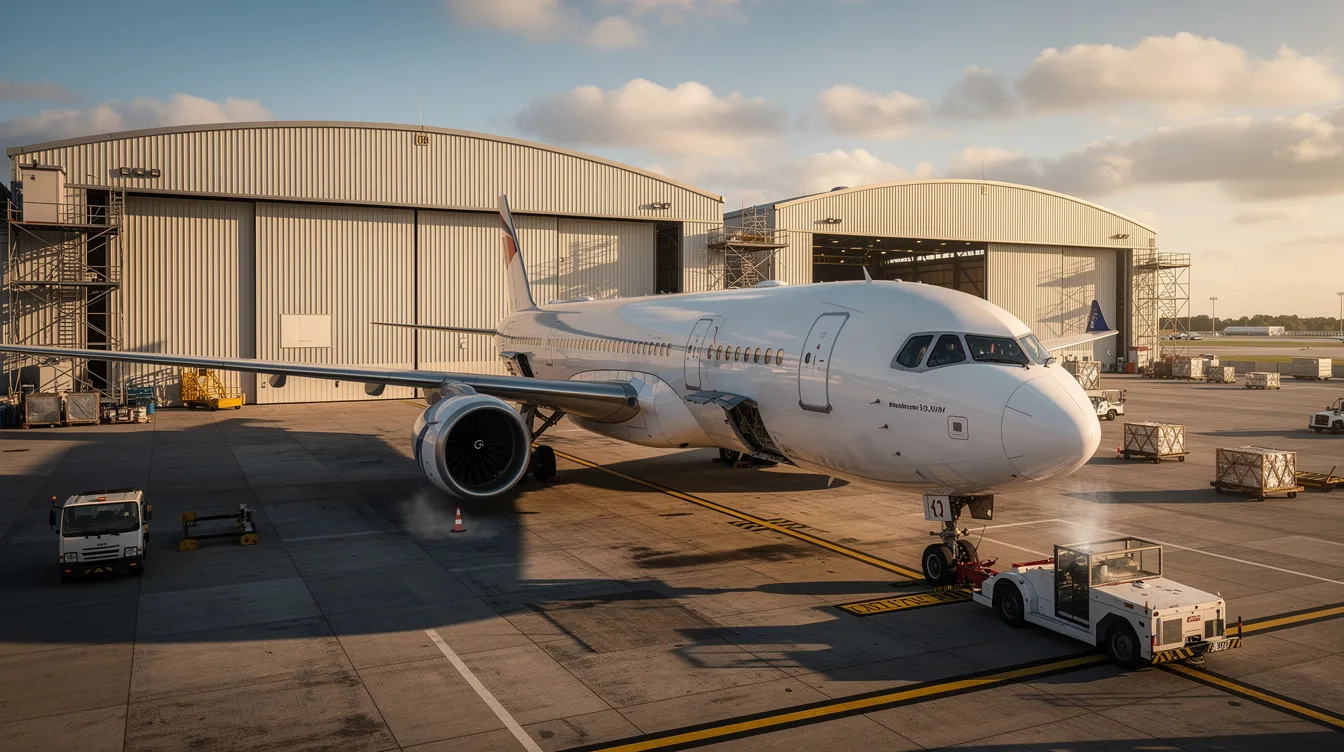
As of mid-2026, Manston does not operate regular scheduled passenger services and has no routine private charter schedule, but supports limited aviation activities. The return of scheduled services will depend on the progress of redevelopment, and on the first day of reopening, special procedures or events may be in place to mark the occasion.
Since shutting down, the site has served as an emergency lorry park for cross-Channel traffic, a general aviation fly-in ground, and a major filming set. These uses highlight the site’s versatility even during the redevelopment period. Once services resume, it is recommended to book or plan travel at least one month in advance—March is often a key month for booking airport services due to seasonal demand. The airport welcomes community suggestions to improve future airport services and parking options.
RAF SAR presence operated from the 1960s to the 1990s
Bristow’s contracted missions in the 1970s provided helicopter support
From January 2026, Bristow Group AW139 helicopters working on behalf of HM Coastguard have used Manston as a support location for crew changes and refueling
The airport’s airspace design is currently undergoing consultation, including Stage 3 airspace consultation announced by RiverOak Strategic Partners. This process is necessary to establish final approach and departure procedures for the planned freight hub.
Future operations are expected to focus on dedicated air freight, aircraft recycling and maintenance, with potential for business aviation to benefit from spare slots, long runway, and uncongested airspace once the site fully reopens, especially for travelers comparing Jettly as a NetJets alternative for flexible private flying.
RiverOak’s stated aim is to create a net-zero-carbon airport, including commitments to more efficient freight handling that could reduce CO2 emissions by shortening trucking distances for cargo that would otherwise travel to and from other London airports like Heathrow.
Modern freight-led facilities can incorporate energy-efficient buildings, sustainable ground operations, and support for lower-emission aircraft. Jettly supports options such as carbon offsetting and efficient routing where possible, including opportunistic use of discounted empty leg flights where these align with traveler schedules. Environmentally conscious travelers should watch how Manston’s final design integrates sustainability when considering future charter routings via MSE.
Unlike major UK passenger hubs such as Heathrow or Gatwick, MSE currently has no large public terminal car parks in active daily use, as regular passenger services remain suspended.
Historic on-site car parks served charter and scheduled passengers when Kent International Airport operated flights. Different types of airport parking include on-site, off-site, and meet-and-greet services, each with varying price structures and levels of convenience. On-site airport parking is typically more expensive due to high demand and limited supply, as it is the closest option to the terminal. Note that airport parking prices often vary, with the first day usually more expensive than subsequent days.
For travelers visiting the Manston area today, typical alternatives include:
Regional railway stations (Ramsgate and Canterbury) with daily parking
Local council-run car parks in nearby towns
Pre-booked taxi or chauffeur services
Booking airport parking in advance can save travelers a significant amount of money—sometimes up to 60% to 70% compared to on-the-day pricing. Travelers planning private flights should likewise use a private jet charter cost estimator to understand how factors like route length, aircraft size, and timing affect total trip cost before committing. Note: Always check the cancellation policy for your parking reservation in case your travel plans are canceled or changed unexpectedly, as some providers offer flexible rebooking or fee waivers.
For future reopening, airport planners may develop dedicated long-stay and short-stay car parks and freight vehicle parking areas, but detailed layouts, tariffs, and booking systems have not been confirmed publicly. If a table of parking rates is provided in the future, it will help compare prices and available discounts. Check official Manston or Kent International Airport channels for updates on car parks, drop-off zones, EV charging points, and coach services once an opening date is announced.
While MSE is not yet a live option for most private charters, Jettly enables travelers to access Kent and the southeast through a network of alternative airports and aircraft types, and its guidance on affordable private jet charter pricing can help optimize budgets for these substitute routings.
Jettly’s platform connects users to more than 20,000 aircraft globally, allowing instant pricing and on-demand booking for routes such as European city pairings into London City, Biggin Hill, Gatwick, Southend, or Lydd. Users can access booking links and additional resources directly from the Jettly page for a seamless experience, or choose from tiered private jet membership plans if they fly frequently in and out of southeast England. If the booking or map page fails to load, users should check their internet connection or try again later.
For business travelers heading to Kent’s ports, logistics centers, or service hubs, Jettly can recommend the closest practical airport today and, once available, may include MSE in route planning for freight-linked or time-sensitive missions.
Jettly’s charter specialists advise on aircraft categories suited to the region, drawing on its global private charter aircraft database to match performance and comfort to each mission:
Turboprops and light jets for shorter hops from Europe
Mid and heavy jets for longer-haul sectors to North America or the Middle East
Helicopters for direct point-to-point access within southeast England
Travelers should consider factors beyond airport parking alone: slot availability, runway length, customs and immigration facilities, and ground transport integration arranged through Jettly.

Logistics scenario: A company inspecting operations in Kent and continental Europe on the same day could fly into an alternative Kent-area airport today, potentially using MSE directly once it opens as a freight hub
Family trip: Passengers flying privately from mainland Europe to London City or Biggin Hill, then traveling by car to a coastal destination near Ramsgate, reducing total journey time
Urgent travel: Last-minute attendance at a meeting in Canterbury, where on-demand charter via Jettly and car transfer beats rail connections for door-to-door speed
Jettly’s instant pricing model helps travelers compare different routings and aircraft types. For cargo-related charters, MSE’s future freight focus may attract shippers needing specialist or outsized loads, which Jettly can help coordinate, potentially alongside crowdsourced and shared-seat charter options on compatible routes.
As with all UK airports, operations at MSE will be regulated by the UK Civil Aviation Authority. All commercial flights chartered through Jettly use operators that meet strict safety standards, with partners such as Dexter Air Taxi and other vetted operators providing the aircraft and crews under robust regulatory oversight.
Current information about Manston’s airspace, including TAFs and NOTAMs, is available through standard aviation channels and will become more detailed as the airspace redesign progresses.
Private jet passengers booking via Jettly do not need to manage these technicalities themselves. The platform’s partner operators handle flight planning, clearances, and compliance, including any special procedures at MSE when it reopens.
Accident and incident reports, such as the 2010 DC-8 tailstrike at Manston, are used in aviation to enhance training and safety practices across the industry. Safety-conscious readers should ask their charter broker about operator certifications, audit standards, and crew experience when considering flights to lesser-used or newly reopened airports, and also weigh whether shared charter flights or full aircraft charters best fit their risk profile and budget.
MSE’s redevelopment is a long-term project. Travelers considering using Kent International / Manston for private flights should think in terms of future planning rather than near-term trips.
Practical steps for staying updated:
Monitor official RiverOak Strategic Partners and government announcements
Follow local news in Kent
Review aviation authority publications for firm opening timelines
Business travelers and logistics planners should factor MSE into multi-year location or network strategies, especially if they rely on air freight, aircraft maintenance, or rapid connections to European markets.
Jettly can pre-plan indicative routings and cost ranges assuming MSE becomes available, while providing confirmed alternatives at currently open airports to ensure business continuity. Travelers who expect to use the region frequently may benefit from structured jet card programs that lock in hourly rates and simplify budgeting. Infrastructure, car parks, terminal services, and route permissions at MSE will evolve over time, so flexibility and early engagement with a charter platform offer planning advantages.
Ready to find private flight options to Kent and southeast England? Explore current routes or request a quote at https://www.jettly.com, and consider adding bespoke in-flight dining via Jettly Eats private jet catering for longer missions or VIP itineraries.
As of mid-2026, Kent International / Manston Airport is not handling regular scheduled passenger services and has no routine private jet traffic published in timetables
Limited aviation uses, such as helicopter support operations and maintenance, take place on or near the airfield under controlled arrangements
Any future passenger or business aviation activity depends on the completion of redevelopment works and regulatory approvals
Travelers should rely on alternative southeast England airports for now and consult Jettly’s platform for current routing options, including opportunistic use of discounted empty leg flights where suitable
Initial plans talked about reopening around 2025, but more recent estimates suggest a later target closer to 2028
Exact dates can shift due to construction, environmental conditions, financing, and regulatory milestones within the DCO framework
Flyers and logistics planners should treat all dates as indicative until the airport operator publishes an official opening schedule
Review official updates and use Jettly’s advisory support for long-term planning that may involve future use of MSE
Modern freight and potential passenger airports in the UK typically include structured on-site car parks, freight vehicle areas, and designated drop-off zones
Detailed public information about exact layouts, capacities, and tariffs for Manston’s future car parks has not been released
Any car park and ground transport information should come from official airport communications once the designs are finalized
Private flyers arranging charters through Jettly can integrate ground transfers and avoid relying solely on drive-up parking
Jettly can only route flights to airports that are open, published, and available for the type of operation requested under applicable regulations
Once MSE reopens and is published as available for business aviation or charter operations, Jettly expects to include it in routing options, subject to aircraft performance and operator approval
Until then, Jettly proposes nearby alternatives offering efficient access to Kent and southeast England
Contact Jettly or use its online tools to explore current options and flag interest in future flights via MSE
Monitor official Manston Airport or RiverOak Strategic Partners announcements, local Kent news, and UK aviation authority updates
Sign up for aviation or logistics newsletters tracking infrastructure developments in southeast England
Create a Jettly account and check the platform periodically for newly available airports and routes
Learn more about Jettly’s charter options and request tailored advice at https://www.jettly.com, or explore its ULTRA high-ticket affiliate program if you advise clients on travel and aviation services
MSE Airport, also known as Kent International or Manston Airport, has significant potential to become a future freight and business aviation hub in southeast England. Although currently inactive for scheduled passenger flights, its redevelopment aims to leverage the airport’s long runway, strategic location, and net-zero-carbon goals to support cargo operations and, by around 2028, private jet access. Until then, travelers and private flyers can rely on nearby airports and Jettly’s comprehensive digital charter platform to find flexible, transparent, and convenient private flight options serving Kent and the wider London area.
Stay informed on MSE’s progress and explore alternative private jet routes through Jettly’s platform at https://jettly.com/. Ready to experience private travel on your terms? Explore flight options or request a quote today.
Share this post:
Jay Franco Serevilla
May 15, 2026
|
5
min read
Discover tips and trends in the industry.
5
min read
Royal Air Freight Inc: Chartering Alternatives with Jettly
Royal Air Freight Inc. has been a trusted name in charter and air freight services since 1961, specializing in expedited cargo and passenger flights across North America. Jettly, a digital charter broker, offers a broader marketplace for comparing private jet and cargo flight options, providing travelers with greater flexibility and instant pricing.
Read More
5
min read
Jet Aviation Bozeman: Private Jet Access to Big Sky Country with Jettly
Jet Aviation Bozeman provides private jet access to the stunning landscapes of Big Sky Country, located at Bozeman Yellowstone International Airport. With a full-service FBO and Jettly's digital charter marketplace, travelers can easily book flights and enjoy seamless ground transportation to popular destinations like Big Sky Resort and Yellowstone National Park.
Read MoreStay updated with our latest insights and tips to elevate your journey with us.
MEMBERSHIPS AND ASSOCIATIONS



Disclaimer: Jettly operates as a charter broker, offering access to a global digital jet charter marketplace. Jettly is not a direct air carrier and does not own or operate aircraft. All advertised flights are conducted by third-party air carriers that are fully licensed and hold the appropriate Part 135 or Part 121 certifications issued by the Federal Aviation Administration (FAA) or equivalent regulatory authorities under U.S. or foreign law. Jettly complies fully with the U.S. Department of Transportation's Part 295 and Part 298 Charter Broker regulations. Jettly does not carry additional liability insurance. Passengers are covered by aircraft operator insurance. TICO: 50023770


