


Login
Get Instant Pricing On 23,000+ Aircraft

>
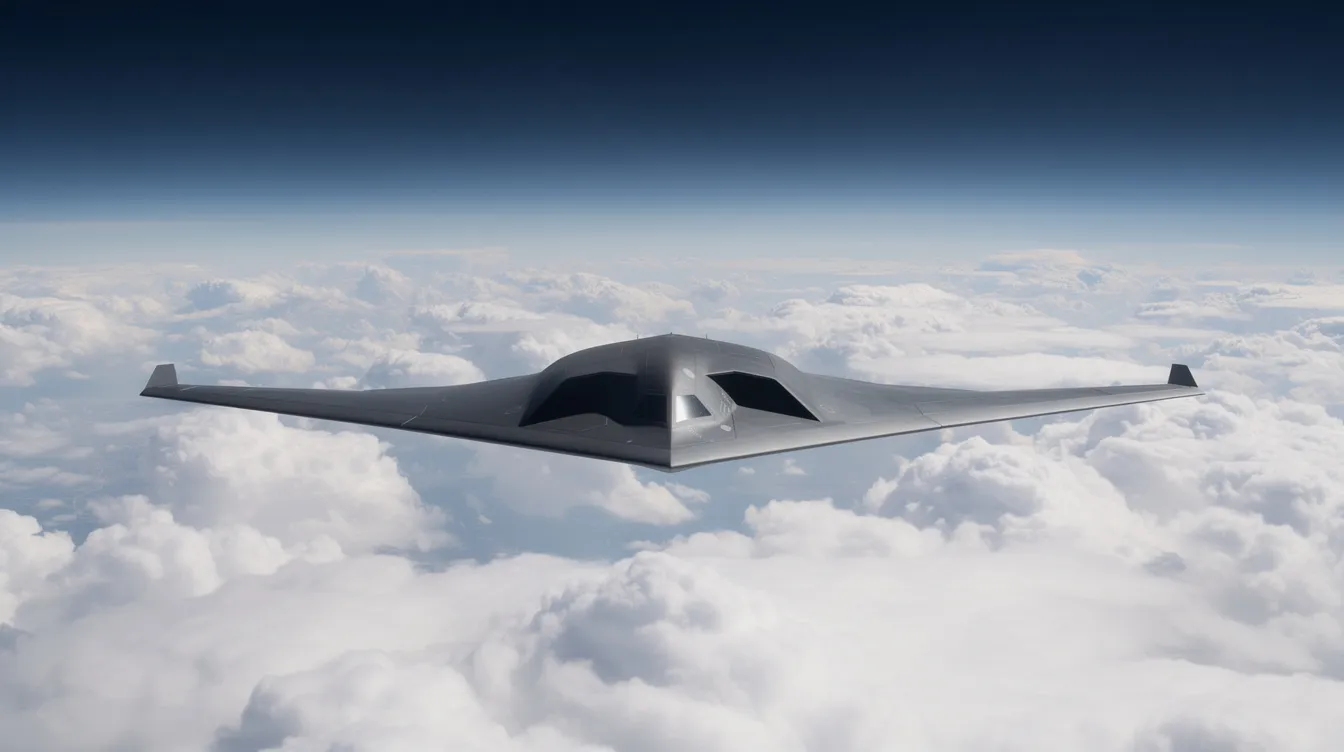
The most expensive airplane ever built didn't carry passengers or fly commercial routes. It was a stealth bomber designed to slip past radar undetected. From multi-billion-dollar military jets to record-setting cargo planes and private aircraft fitted with bedrooms and conference rooms, the cost of building and operating the world's priciest planes is staggering. This article breaks down what makes these aircraft so costly, ranks them across military, commercial, and private categories, and shows how modern travelers can access high-end flight experiences without the price tag.
The B-2 Spirit stealth bomber is widely regarded as the most expensive aircraft ever built, costing over $2 billion per unit when R&D and infrastructure are included across just 21 airframes.
The F-22 Raptor holds the title of most expensive fighter jet at approximately $350 million per unit on a program-cost basis.
Commercial giants like the Airbus A380 (over $400 million) and Boeing 747-8F ($419.2 million) rank among the costliest non-military planes, while the Antonov An-225 Mriya carries estimates between $500 million and $3 billion.
"Most expensive airplane" depends heavily on how cost is measured: flyaway price, total program cost, or customized VVIP configuration can change the ranking entirely.
Travelers don't need to own an expensive plane to fly on premium aircraft. Charter platforms like Jettly provide access to large-cabin, long-range jets without ownership burdens.
The phrase "most expensive airplane" can mean very different things depending on who's counting and what's included. Here's how the aviation industry typically breaks it down:
Flyaway cost: The price to build and deliver one aircraft, covering the airframe, engines, and basic mission systems. This excludes R&D and long-term support. For example, the F-22 Raptor's flyaway cost was about $143 million per jet in later production lots.
Program cost per airplane: Adding research, testing, upgrades, and infrastructure can push per-unit cost into the billions. The B-2 Spirit's program cost reached roughly $2.1 billion per aircraft because only 21 were built.
Commercial list prices: Airbus and Boeing publish catalog prices for airliners like the Airbus A380 and Boeing 777, but airlines negotiate discounts that can reach 30–50% below sticker price.
Private and VVIP jets: Heads of state and ultra-high-net-worth individuals can spend hundreds of millions refitting Airbus or Boeing airframes with security suites, bedrooms, and communications systems. These custom interiors are separate from base aircraft prices.
This article covers expensive aircraft in three buckets: strategic bombers and special-mission aircraft, fighter jets, and large commercial, cargo, and VIP planes.
The B-2 Spirit stealth bomber remains the benchmark for the most expensive military aircraft in history. Its cost per unit exceeds $2 billion when the full program is factored in.
Role: A long-range stealth bomber designed during the Cold War to penetrate dense air defenses carrying nuclear or conventional weapons. It is operated exclusively by the United States Air Force.
Cost details: The flyaway cost was approximately $737 million in late-1990s dollars. But total program cost reached about $2.1 billion per aircraft because only 21 B-2 Spirits were built, spreading massive R&D spending across a tiny fleet. The B-2 Spirit was first publicly unveiled in 1988.
Technical cost drivers: The B-2 Spirit utilizes a radical flying wing design with no traditional fuselage or tail. It uses stealth technology to evade radar detection through radar-absorbent materials and precise shaping. Specialized avionics systems in the B-2 combine navigation, communications, and targeting technologies. The B-2 Spirit requires complex fly-by-wire systems for stable flight. The stealth characteristics of the B-2 require specialized climate-controlled storage facilities. The aircraft requires about 119 hours of maintenance for each hour of flight.
Operational history: First flight in 1989, entering service in 1997. It has flown combat missions over Kosovo, Iraq, Afghanistan, and Libya, and continues serving as a critical nuclear deterrent platform.
Replacement: The B-21 Raider is the forthcoming stealth bomber designed to be more affordable per unit thanks to digital design tools and larger planned production batches.
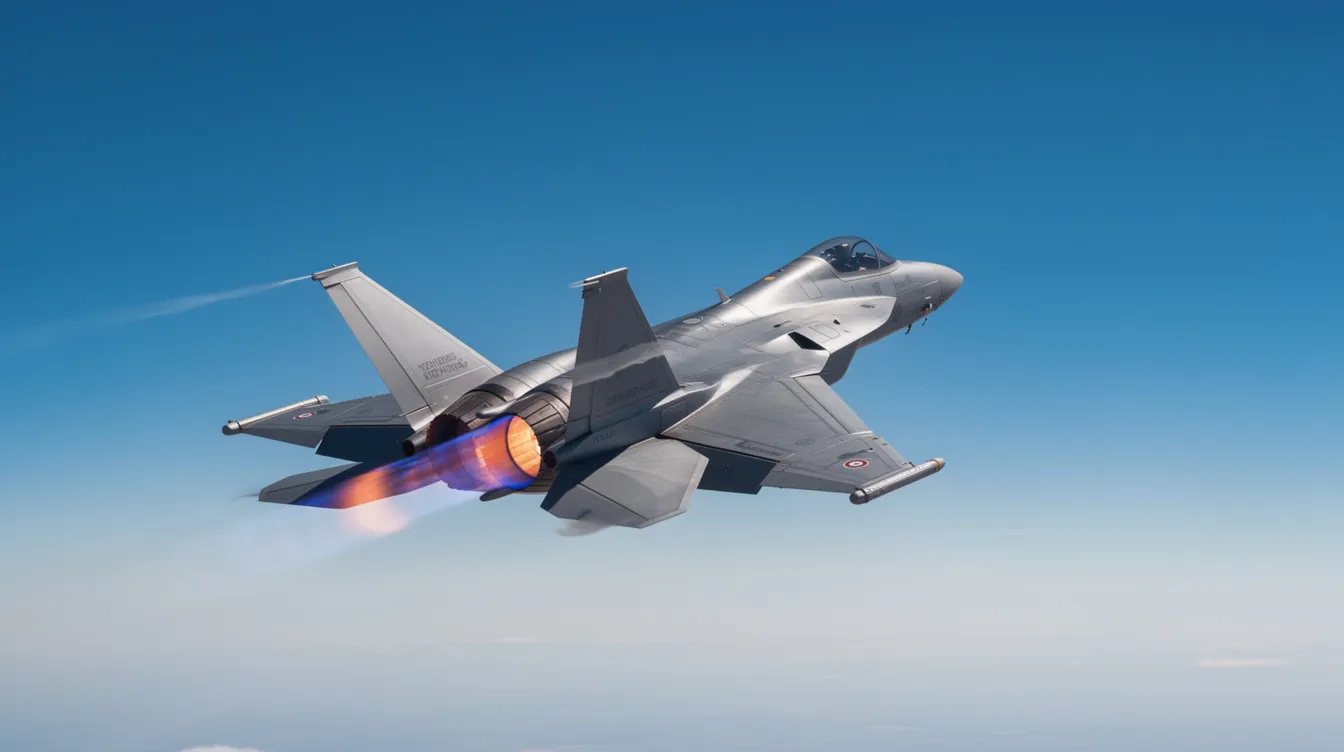
The F-22 Raptor is the most expensive fighter jet ever built. The F-22 Raptor costs approximately $350 million each when total program costs are divided across the fleet.
Role: A fifth-generation air superiority fighter for the U.S. Air Force, entering service in 2005 and optimized to dominate any adversary in the sky.
Capabilities: Stealth shaping, internal weapon bays, supercruise capability over 1,500 mph (sustained supersonic flight without afterburner), and F-22 Raptor features thrust-vectoring for enhanced maneuverability. Its advanced radar and sensor fusion provide pilots with unmatched situational awareness.
Cost drivers: Cutting-edge stealth materials, two Pratt & Whitney F119 engines (one Pratt per side), complex avionics, and a decision to cap production at 187 operational jets all drove up the unit cost. Originally, the Air Force planned to buy roughly 750, but budget pressure reduced that number dramatically.
Compared to rivals: The f 22 remains the most expensive fighter by total program cost. The F-35 Lightning II costs between $115–130 million per unit thanks to higher production volumes. The Eurofighter Typhoon sits around $100–120 million flyaway, and the Dassault Rafale at $90–100 million. Massive defense initiatives like the F-35 program have higher total lifetime costs but not per-unit costs compared to the B-2.
Beyond the b 2 and f 22, several specialized platforms rank among the world's most expensive military and government aircraft.
B-21 Raider: Estimated unit cost in the $639–692 million range in recent dollars, designed as a next-generation stealth bomber to replace the B-1B Lancer (which itself costs around $317 million per aircraft) and the B-2 Spirit. Still pre-full-rate production with at least 100 planned.
VC-25B "Air Force One": The next presidential aircraft is based on the Boeing 747-8. The VC-25B, or Air Force One, costs $1.9 billion per aircraft when the total program of roughly $3.9 billion for two jets is divided. Modifications include extensive communications, self-defense, and command-and-control systems.
Airborne early warning aircraft: Platforms like the Boeing E-3 Sentry (~$270 million) and E-7 Wedgetail (>$230 million) use powerful advanced radar and battle-management suites to guide entire formations of military jets during missions across Europe, the Middle East, and the Pacific Ocean.
P-8A Poseidon: A maritime patrol aircraft derived from the Boeing 737-800 with a unit cost close to $200 million. Its specialized anti-submarine sensors show how mission systems raise prices far above standard airliners.
These aircraft are purchased in small numbers and carry highly classified electronics, which explains their position among the most expensive aircraft even without stealth bomber features. Many serve with both Air Force and Marine Corps units worldwide.
|
Aircraft Name |
Category |
Approximate Cost (USD) |
Role/Use |
Country of Origin |
|---|---|---|---|---|
|
B-2 Spirit |
Stealth Bomber |
$2.1 billion |
Strategic stealth bomber |
USA |
|
F-22 Raptor |
Fighter Jet |
$350 million |
Air superiority fighter |
USA |
|
VC-25B Air Force One |
Presidential Jet |
$1.9 billion |
Presidential transport |
USA |
|
Antonov An-225 Mriya |
Cargo Aircraft |
$500 million–$3 billion |
Heavy cargo transport |
Ukraine |
|
Airbus A380 |
Commercial Airliner |
$400+ million |
Commercial passenger aircraft |
Europe |
|
Boeing 747-8F |
Cargo/Passenger |
$419.2 million |
Freight carrier |
USA |
|
Boeing 747-400 LCF Dreamlifter |
Cargo Aircraft |
$230–260 million |
Aircraft parts transport |
USA |
|
Eurofighter Typhoon |
Fighter Jet |
$100–120 million |
Multirole fighter |
Europe |
|
Dassault Rafale |
Fighter Jet |
$90–100 million |
Multirole fighter |
France |
|
Gulfstream G700 |
Private Jet |
$75–80 million |
Ultra-long-range business jet |
USA |
Here's a ranked overview of the world's most expensive fighter jets by approximate flyaway cost in 2024–2026 USD, covering current or recent-service aircraft:
F-22 Raptor – ~$150M+ flyaway, ~$350M program cost. The undisputed most expensive fighter.
F-35B Lightning II – ~$120M. Short-takeoff/vertical-landing variant used by the Marine Corps and allied nations.
F-35C Lightning II – ~$120M. Carrier-capable variant. The F-35 Lightning II features advanced AN/APG-81 AESA radar across all three variants.
Chengdu J-20 – ~$110M estimated. China's fifth-generation stealth aircraft with limited public cost data.
Eurofighter Typhoon – ~$100–120M. A fourth-generation fighter evolved into a 4.5-gen multi-role platform. The Eurofighter Typhoon has a maximum speed of 1,550 mph and serves air forces across Europe.
Dassault Rafale – ~$90–100M. France's multi-role fighter, capable of carrier and land-based operations.
F-35A Lightning II – ~$90–95M. The most produced variant, benefiting from economies of scale.
Su-57 Felon – ~$80–100M estimated. Russia's troubled fifth-gen program with very limited production.
Su-35 Flanker-E – ~$65–85M. An advanced 4.5-gen fighter with high maneuverability and long combat radius.
Saab JAS 39E Gripen – ~$85M. Sweden's cost-conscious alternative popular with smaller air forces.
These expensive military aircraft are not available for private ownership due to regulations and operating costs. Many remain in service into the 2030s, meaning lifecycle sustainment costs for fuel, maintenance, and upgrades can dwarf the initial acquisition price. Pilots who fly these planes train for years in specialized programs before they ever reach top speed in combat-ready aircraft.
The Antonov An-225 Mriya was the heaviest airplane ever built and one of the most expensive planes to operate. The Antonov An-225 Mriya costs between $500 million to $3 billion, depending on how unfinished airframes and program costs are counted.
Design: A six-engine strategic airlifter built in the Soviet Union to carry the Buran space shuttle. Maximum payload exceeded 250 tonnes, and its wings spanned over 88 meters. It was capable of covering long distances with outsized cargo that no other aircraft could carry.
Iconic missions: Transporting power-plant turbines, locomotives, and humanitarian aid across the world, making it a unique asset for global logistics.
Destruction: The aircraft was destroyed in 2022 during fighting in Ukraine. Rebuilding or completing a second airframe has been discussed, but cost estimates could exceed those of many commercial widebodies, and many components are now obsolete.
Comparisons: Other cargo planes like the Boeing 747-400 LCF Dreamlifter and the Airbus Beluga XL are costly, but none match the single-airframe uniqueness of the An-225. Niche cargo aircraft rank among the world's most expensive aircraft due to low production runs and specialized structural modifications.
The most expensive commercial and freight aircraft by list price are long-range wide-body jets that transformed global air travel.
Airbus A380: The Airbus A380 costs more than $400 million at the end of production. Its double-deck configuration seats up to 850 passengers in an all-economy layout. Four engines, airport compatibility costs, and the market shift toward point-to-point routes made it too expensive for many airlines. Private luxury jets like the Airbus A380 can exceed costs of $600 million after customization for VVIP use.
Boeing 747-8F: The Boeing 747-8F costs $419.2 million. It serves as a high-capacity freighter for carriers like UPS and Cathay Pacific Cargo. Cargo variants often cost more than passenger models due to strengthened floors and cargo systems.
Modern twin-engine widebodies: The Boeing 777 costs around $300 million. Newer models like the Boeing 787-10, Airbus A350-1000, and Airbus A330neo sit in the mid-to-high $300 million range, making them among the most expensive airliners ever offered while being far more fuel-efficient than older four-engine jets.
Actual transaction prices can be 30–50% below catalog prices due to bulk purchase discounts, but the headline figures still show where commercial aviation's most expensive plane orders land in the market.
Outsized-cargo aircraft with unusual designs and limited production runs are among the most expensive planes per airframe in the aviation industry.
Boeing 747-400 LCF Dreamlifter: Only four were built to support the 787 Dreamliner supply chain. The Boeing 747-400 LCF Dreamlifter costs $230–$260 million per aircraft, with an overall program cost of about $1 billion. Modifications include an extended fuselage, swing-tail cargo door, reinforced floor, and pressurization changes. Converting existing 747-400s into Dreamlifters dramatically raised per-unit cost.
Airbus Beluga XL: Priced around €183 million, this popular aircraft features a whale-like shape built on an A330 platform. It carries Airbus wings and fuselage sections between European production sites.
Both the Dreamlifter and Beluga XL operate within controlled industrial networks rather than general cargo markets. These purpose-built logistics airplanes demonstrate that the most expensive airplane is often about fulfilling a narrow, critical role rather than carrying the most passengers or reaching maximum speed.
Private, corporate, and head-of-state aircraft can rival military jets in cost once VIP interiors and communications suites are added. The results and costs associated with private jets vary significantly based on their design and customization.
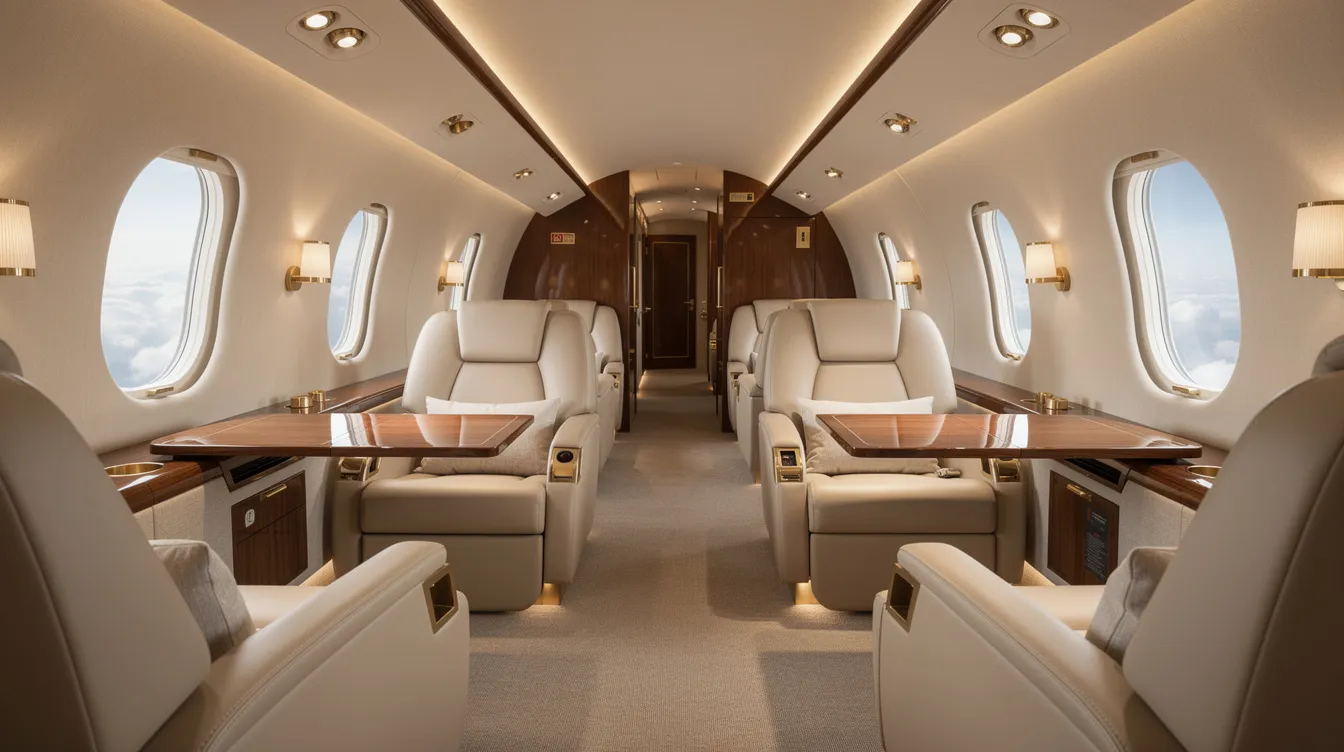
Large business jets: The Gulfstream G700/G800, Bombardier Global 7500, and Dassault Falcon 10X represent top-end private jet options with list prices commonly between $70–$80+ million before interior customization. The Dassault Falcon 7X and 8X are long-range trijets popular among corporations and governments for intercontinental missions, similar in many ways to the high-end fleet operated by industry leaders like NetJets, with price ranges that can exceed $60 million.
VVIP airliners ("Bizliners"): Airbus ACJ and Boeing BBJ families start from green-airframe costs of $100+ million and can reach $300–$500 million or more once personalized interiors, bedrooms, conference rooms, and security systems are installed, often complemented by premium services such as dedicated in-flight catering for private jets. Customized private jets often feature bespoke interior architecture and advanced technology.
State aircraft: Customized Boeing 747s, 777s, or Airbus A340s used by royal families and presidents across the world carry final price tags that are rarely public but often place them among the most expensive planes ever produced, whether they are serving routes into major hubs or regional centers like Kolkata via private jet charter. Some might call their owners insane billionaires, though sovereign wealth often funds these airplanes.
Charter vs ownership: High-net-worth travelers increasingly favor charter and on-demand access through platforms like Jettly, which offer similar in-flight cabin experiences without tying up capital in an $80 million jet, whether they are flying between global capitals such as New Delhi by private charter or smaller cities.
Several factors push aircraft into "most expensive plane" territory, whether military or civilian:
R&D and low production volume: Stealth bombers, advanced fighter jets, and niche cargo planes spread massive development costs across very few airframes. The B-2 program cost $44.7 billion for just 21 jets.
Materials and manufacturing: Titanium, advanced composites, radar-absorbent coatings, high-precision machining, and hand-built components all add millions of dollars per unit in production costs.
Avionics and sensors: AESA radars, electronic warfare systems, secure datalinks, and integrated glass cockpits are essential for expensive military aircraft but extremely costly to develop and install. These systems must work flawlessly at speed and altitude during demanding missions.
Certification and regulation: Commercial and private aircraft face long test campaigns, safety requirements, and global airworthiness standards that add years and hundreds of millions to development cost before a single aircraft can carry passengers or fly to airports worldwide.
Operating environment: Harsh combat demands on air force platforms differ from long-haul reliability requirements for commercial airlines, which differ again from the bespoke customization of private cabins, especially when using instant-book platforms like Zenflight for private jet charter. Each adds expense in distinct ways, from fuel consumption to landing gear durability to Rolls-Royce or Pratt & Whitney engines built for specific range and capacity profiles.
While no one can charter an F-22 or B-2, many technologies developed for expensive aircraft-composites, fly-by-wire controls, advanced engines-have filtered into modern airliners and high-end business jets that travelers actually fly on, whether they are booking directly or even promoting flights through an ultra-high-ticket affiliate program.
Travelers who want comfort and flexibility without a flight disrupted by commercial hassles can access premium planes through private jet charter rather than owning them outright, using tools like a private jet charter cost estimator to understand pricing before they book. No overbooked flight, no flight delays, no lost luggage.
Jettly is a digital private jet charter marketplace that connects users to a global inventory of over 20,000 aircraft, from light jets to large-cabin models similar to those used by heads of state, and offers practical options for getting a seat on a private jet easily.
Typical use cases include executives chartering a long-range jet for transoceanic meetings, families booking a midsize jet for multi-city vacations spanning nautical miles of ocean, or last-minute flights arranged when a disrupted flight leaves travelers stranded at busy airports through broad private charter aircraft options.
Consider the math: buying an $80 million jet means covering crew salaries, hangar fees, insurance, maintenance, and fuel whether the aircraft flies or sits. Booking on-demand charters via Jettly with transparent pricing and guidance on how much to rent a private jet and no long-term ownership commitment often makes far more financial sense-even for those who could afford to spend the money.
Jettly's core value is simple: experience the convenience and comfort of premium aircraft without investing in the world's most expensive airplane, positioning itself as a flexible NetJets alternative for flying private for less.
On-demand charter: Users search routes, see instant pricing, and book flights digitally. The platform offers light jets, midsize jets, heavy jets, turboprops, and helicopters worldwide-no need to negotiate with brokers.
Membership vs pay-as-you-go: Jettly offers membership plans for frequent flyers and flexible options for occasional travelers, avoiding rigid jet card programs or fractional ownership structures.
Aircraft variety: Availability includes Challenger, Global, Gulfstream, and Dassault Falcon models, giving customers access to cabins and performance close to the most expensive planes in business aviation and letting them benefit from the best private plane manufacturers across budgets and mission profiles. Whether the trip is a short hop or covers long distances across the Pacific Ocean, there's an aircraft that fits.
Operational benefits: Private terminals, flexible departure times, shorter check-in windows, and access to smaller airports closer to final destinations save hours compared with commercial air travel, especially when choosing from a wide range of charter airlines. No staff sergeant checking credentials-just a smooth, efficient boarding process.
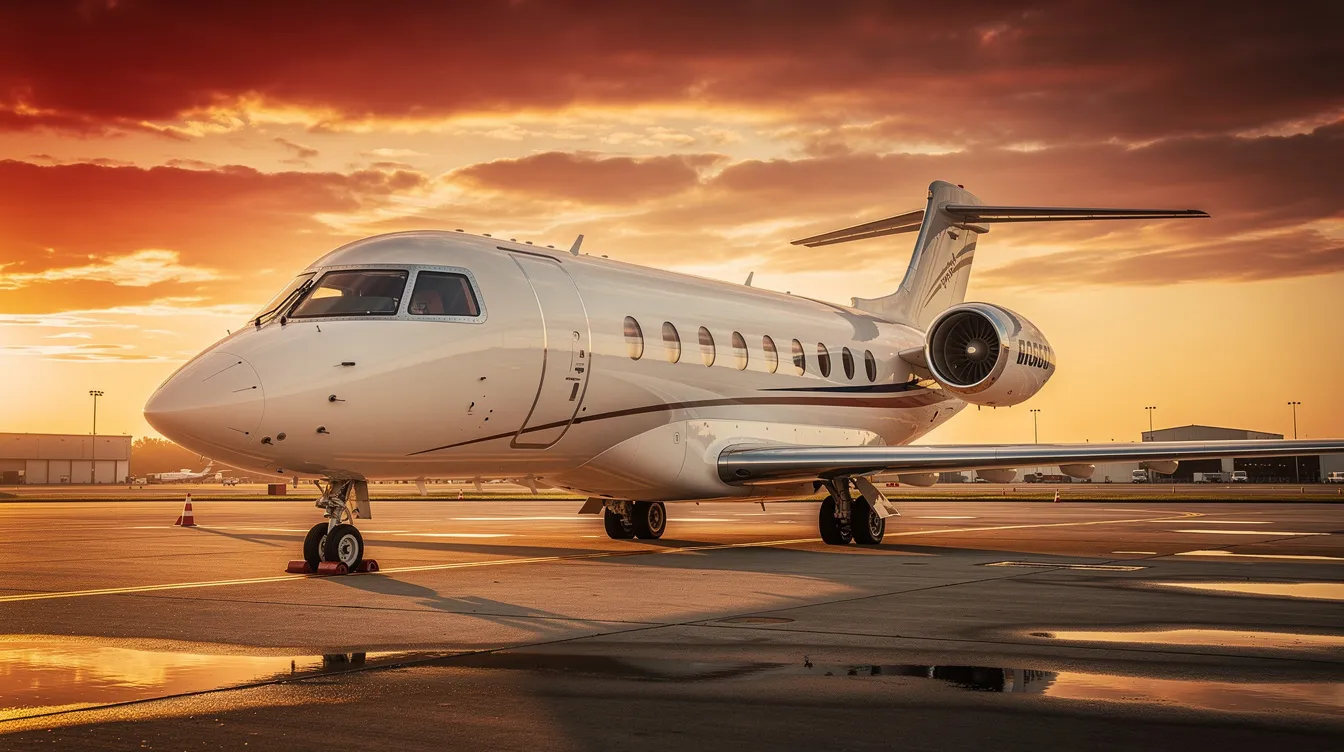
Ready to experience private travel on your terms? Explore flight options, request a quote at Jettly, or lower your costs by joining crowdsourced and shared private jet flights.
These FAQs address common questions about aircraft cost, access, and practicality across both military and private aviation, complementing broader guides to the best private jet charter companies.
By widely cited program cost, the Northrop Grumman B-2 Spirit stealth bomber tops the list at roughly $2.1 billion per aircraft once development and support infrastructure are included. In simple flyaway terms, its unit cost was lower (~$737 million), but the combination of limited production-only 21 aircraft-and enormous R&D spending makes it the clear record-holder among all planes ever produced.
On a program-cost basis, the F-22 Raptor is more expensive because only 187 combat jets were built, pushing per-aircraft totals well above $300 million dollars. F-35 variants (A, B, and C-three variants total) have flyaway costs mostly under $130 million thanks to higher production volumes, even though the overall F-35 program budget is larger in absolute terms.
Modern frontline fighter jets like the F-22, F-35, or Eurofighter Typhoon are restricted to military operators and are not sold to private citizens. Privately owned ex-military jets are usually older trainers or retired fourth-generation fighter aircraft stripped of weapons and advanced systems. They are extremely expensive to maintain, and few pilots are capable of operating them safely, which is why most individuals instead look at affordable aeroplane rental options if they want hands-on flying experience.
By catalog price, the Airbus A380 and Boeing 747-8 have been among the most expensive passenger jets, each exceeding $400 million when last listed. Newer, highly efficient widebodies like the Airbus A350-1000 and the forthcoming Boeing 777X also sit in the upper $300 million range, though actual sales prices are typically discounted, just as with private jet purchase and operating costs.
Most travelers who use private aviation do so through charter and membership platforms, not ownership. This avoids acquisition, crew, and maintenance costs that can run into tens of millions of dollars annually compared with options like leasing a private jet. Services like Jettly let customers book trips on modern business jets with transparent pricing, or even buy a single seat on a private jet, offering many of the benefits of flying on premium aircraft without buying an expensive plane.
The title of "most expensive airplane" encompasses a diverse range of aircraft, from stealth bombers costing billions to highly customized private jets and massive cargo planes. While military programs like the B-2 Spirit and F-22 Raptor showcase the extreme costs of cutting-edge technology and limited production, commercial and private aviation offer their own high-value options tailored for efficiency, comfort, and flexibility.
For travelers and businesses, owning the most expensive airplane is rarely necessary or practical. Platforms like Jettly provide access to premium aircraft worldwide, combining convenience, transparency, and variety without the upfront investment or ongoing costs of ownership. Whether flying a midsize jet for business or chartering a large cabin aircraft for a family vacation, private aviation is becoming more accessible and cost-effective.
Understanding the factors behind aircraft cost helps appreciate the engineering marvels and operational complexities involved. At the same time, technology and digital marketplaces are democratizing access to some of the world’s most sophisticated and comfortable flying experiences—making private jet travel a realistic option for many, not just the ultra-wealthy.
Ready to experience private travel on your terms? Explore flight options or request a quote at https://www.jettly.com. Learn more about private jet charter and discover how to choose the best midsize jet or large cabin aircraft for your needs.
Share this post:
Jay Franco Serevilla
Aug 12, 2026
|
5
min read
Discover tips and trends in the industry.
5
min read
Jet Right: How to Choose and Book the Right Private Jet with Jettly
Jet Right is about selecting the ideal private jet that aligns with your trip's needs, balancing aircraft type, route, and pricing. Jettly simplifies this process by providing access to over 20,000 aircraft, instant pricing, and a transparent booking experience, ensuring travelers can jet right without the hassle of traditional ownership. This guide covers essential decisions like aircraft selection, pricing models, and efficient booking strategies.
Read More
5
min read
Cost to Fly Private Jet to Europe: 2026 Pricing Guide
Flying private to Europe in 2026 can cost between $60,000 and over $350,000, depending on various factors like departure city and aircraft type. This comprehensive guide helps travelers understand the pricing structure, key cost drivers, and how to get accurate quotes for their specific routes. With insights on aircraft categories and tips for reducing costs, it’s essential for anyone considering private jet travel across the Atlantic.
Read MoreStay updated with our latest insights and tips to elevate your journey with us.
MEMBERSHIPS AND ASSOCIATIONS



Disclaimer: Jettly operates as a charter broker, offering access to a global digital jet charter marketplace. Jettly is not a direct air carrier and does not own or operate aircraft. All advertised flights are conducted by third-party air carriers that are fully licensed and hold the appropriate Part 135 or Part 121 certifications issued by the Federal Aviation Administration (FAA) or equivalent regulatory authorities under U.S. or foreign law. Jettly complies fully with the U.S. Department of Transportation's Part 295 and Part 298 Charter Broker regulations. Jettly does not carry additional liability insurance. Passengers are covered by aircraft operator insurance. TICO: 50023770


