


Login
Get Instant Pricing On 23,000+ Aircraft

>
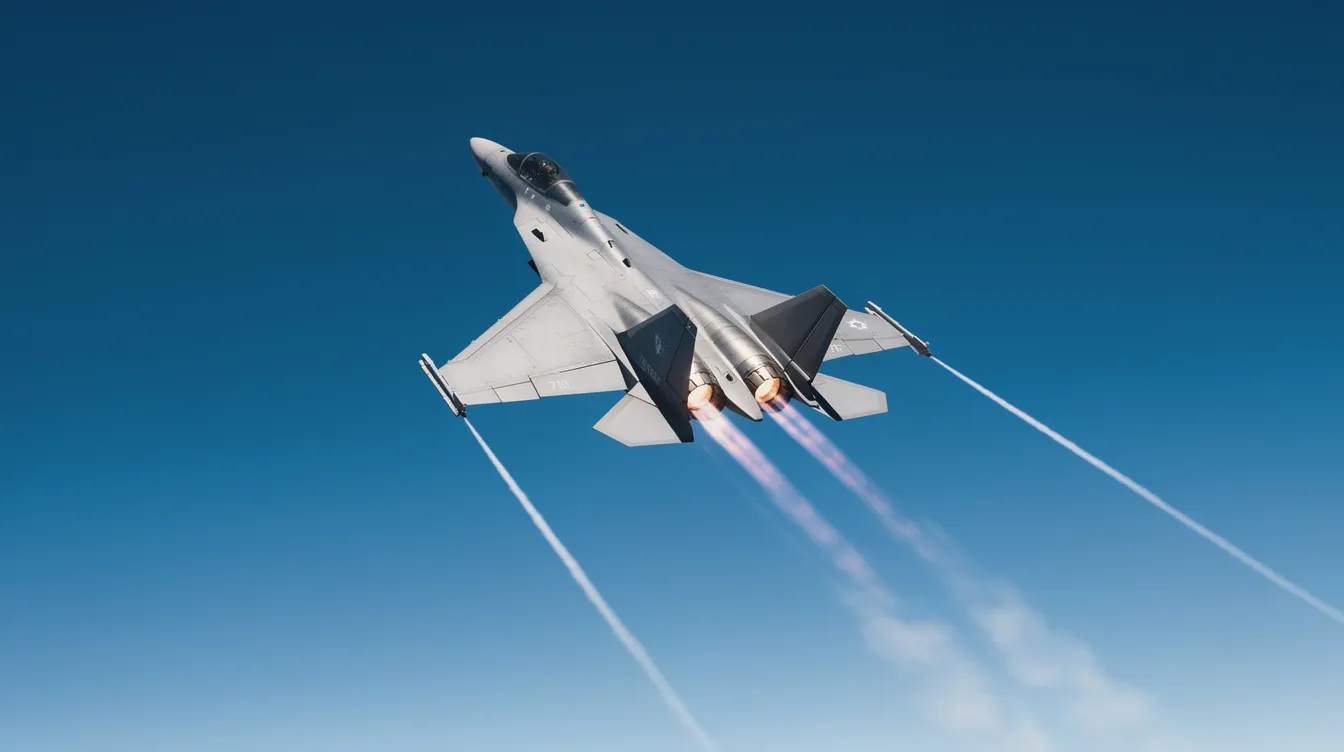
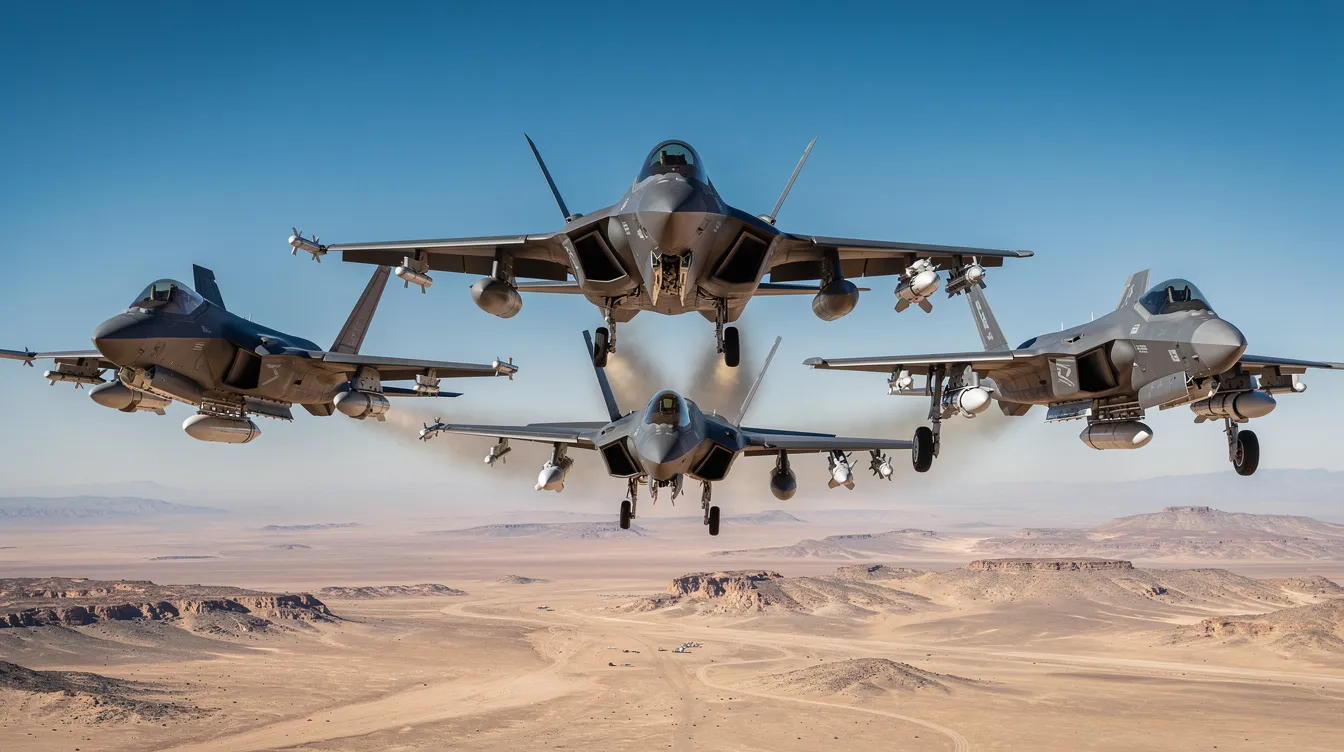
The world of modern jet fighter aircraft is defined by stealth, speed, sensors, and the relentless pursuit of air superiority. From the F-22 Raptor to the F-35 Lightning II, today's fighters are less about raw dogfighting and more about detecting threats first, shooting first, and surviving. This article breaks down the technology, mission roles, and generational leaps that define the skies today—and explains how those same innovations shape the private jets available to civilian travelers.
Modern fighter jets are highly agile, sensor-rich combat aircraft like the F-22, F-35, Eurofighter Typhoon, or Dassault Rafale. The pursuit of air superiority drives every major design decision, from stealth shaping to avionics architecture.
There is no single best fighter jet. Whether an aircraft leads depends on its assigned role—air superiority fighter, multirole strike platform, or electronic warfare asset.
Fifth-generation fighters emphasize stealth, sensor fusion, and internal weapon carriage over raw speed. The F-22 and F-35 are built to detect and engage threats before being seen, not to win a Mach-number contest.
European platforms like the Eurofighter Typhoon and Dassault Rafale stay competitive through continuous upgrades in avionics, advanced radar, and electronic warfare suites. Aircraft configurations and capabilities can vary significantly by production batch and upgrades.
Advances in engines, composite materials, and flight management systems developed for fighters now improve safety and efficiency in private aviation, directly benefiting travelers who book through platforms like Jettly.
Modern jet fighter aircraft are categorized by technological generations, each representing a leap in capability. A modern fighter is typically a post-Cold War design featuring integrated avionics, digital fly-by-wire controls, precision-guided missiles, and advanced electronic warfare suites. Fighter jets are typically grouped into generations—fourth, 4.5, and fifth—based on their sensor, stealth, and networking capabilities.
The concept of air superiority remains central: modern air superiority fighters are optimized to detect, engage, and defeat enemy aircraft before being detected themselves. Beyond-visual-range combat relies on effective sensor systems and target tracking, shifting the emphasis from close-in dogfighting to information dominance.
Current designs prioritize "first see, first shoot, first survive" through stealth technology, better situational awareness, and secure data links. Modern fighters use tactical data links to exchange information with other military systems, creating a networked picture of the battlespace. These same avionics and situational awareness advances have filtered into high-end business jets, improving safety margins for civilian passengers.
The term "generation fighters" is an informal but widely used way to group aircraft by technology era. The first-generation jet fighters appeared in the late 1940s, and the pace of development has only accelerated since.
Third generation (1960s–1970s): Aircraft like the F-4 Phantom II and MiG-21 introduced radar-guided missiles and sustained supersonic flight. The F-86 Saber was used in the Korean War, marking an earlier milestone in jet combat before this era matured.
Fourth generation (late 1970s–1990s): Fourth-generation fighters typically focus on high maneuverability and advanced radar. The F-16 Fighting Falcon has over 2,100 units in operation worldwide, making it one of the most produced fighters in history. The F/A-18 Hornet and Su-27 added multirole flexibility and fly-by-wire controls.
4.5 generation (1990s–2010s): The terms fifth-generation and 4.5-generation denote major advances in fighter technology. Platforms like the Eurofighter Typhoon and Dassault Rafale gained AESA radars, improved electronic warfare, and reduced radar signatures.
Fifth generation (mid-2000s onward): The F-22 Raptor, F-35 Lightning II, Su-57, and Chengdu J-20 brought stealth shaping, internal weapons bays, and deep sensor fusion. Fifth-generation aircraft feature low-observable designs and advanced sensor fusion.
Sixth generation (emerging): Sixth-generation programs are expected to enter service in the 2030s. The future of fighter jets is shifting towards sixth-generation systems and integrated combat, with U.S. NGAD and Europe's GCAP/Tempest programs exploring manned–unmanned teaming, adaptive engines, and AI-driven mission management.
Modern fighter jets are designed around three core mission profiles: air superiority, multirole strike, and electronic warfare support. The mission determines every trade-off in a fighter's design.
Air superiority: Air superiority fighters dominate air combat against enemy aircraft. The F-22 Raptor and the F-15 Eagle are both designed for air superiority missions, prioritizing agility, high thrust-to-weight ratios, and long-range missiles.
Multirole strike: Many contemporary fighters have multirole capabilities for various missions. Multirole fighters perform both air-to-air and air-to-ground missions. The F-35, F-16, and Dassault Rafale combine strike, reconnaissance, and ground attack with air-to-air combat in a single airframe.
Electronic warfare: Electronic warfare involves disrupting an opponent's radar and communications. Even aircraft not dedicated to EW—like the Rafale and F-35—carry self-protection suites and offensive jamming capabilities that shape modern air combat tactics, including suppression of enemy air defenses.
The parallel to private aviation is straightforward: just as militaries match the right jet to each mission, private travelers choose between light, midsize, and heavy jets depending on range, passenger count, and route profile.
The F-22 Raptor was the first operational fifth-generation fighter, entering US Air Force service in 2005 after development through the Advanced Tactical Fighter program. It remains the most advanced fighter jet in service today and a premier air superiority fighter.
Key capabilities set the F-22 apart:
Stealth: The F-22 Raptor has a radar cross-section comparable to a marble, making it nearly invisible to enemy radars.
Supercruise: The F-22 Raptor can supercruise at Mach 1.8 without afterburner, sustaining supersonic speed with lower fuel burn and reduced infrared signature.
Agility: Thrust-vectoring nozzles on its twin Pratt & Whitney F119 engines deliver extreme maneuverability for air-to-air combat.
Weapons: Internal bays carry AIM-120 AMRAAM and AIM-9 Sidewinder missiles, plus precision ground attack munitions.
Only 187 combat-ready aircraft were built before the production line closed, and U.S. law prohibits export. This exclusivity sustains the Raptor's edge but raises sustainment costs—roughly $80,000 per flight hour. The effectiveness of modern fighters is also influenced by pilot training and supporting systems, and the USAF invests heavily in both to keep the F-22 at peak operational readiness.
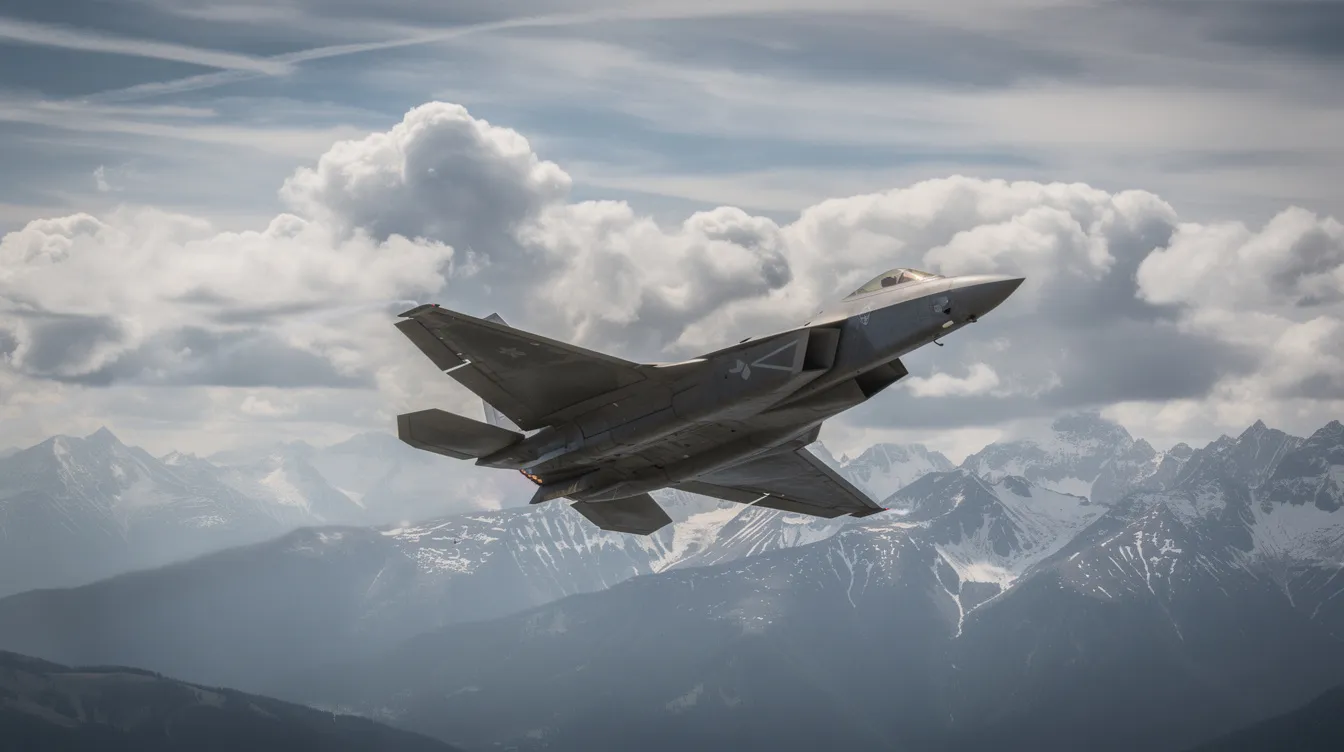
The F-35 Lightning II can perform air superiority and strike missions, making it the most versatile modern fighter jet in service today. It achieved initial operational capability in the mid-2010s and is projected to fly into the 2070s across three variants.
|
Variant |
Role |
Key Trade-off |
|---|---|---|
|
F-35A |
Conventional takeoff (USAF, allied air forces) |
9g maneuvering, best speed/altitude ceiling |
|
F-35B |
STOVL (U.S. Marine Corps, Royal Navy) |
Reduced internal fuel, 7g limit |
|
F-35C |
Carrier-based (U.S. Navy) |
Larger wings, reinforced gear, heavier structure |
The F-35 has a combat range of 590 nautical miles and a radar cross-section equivalent to a golf ball. It functions as a flying sensor, fusing data from radar, infrared, and offboard sources into a single tactical picture for pilots. The F-35 Lightning II performs air superiority and multirole missions across coalition operations worldwide.
High costs of modern fighters include development and long-term maintenance expenses. The F-35 program's estimated lifetime cost is $1,196.4 billion when factoring in procurement and sustainment through the 2080s. Multinational cooperation across partner nations helps spread these costs, though readiness and spare parts remain ongoing challenges.
The Eurofighter Typhoon and Dassault Rafale represent Europe's most advanced non-stealth fighters and continue receiving upgrades that keep them competitive against newer platforms.
Eurofighter Typhoon is a twin-engine, canard-delta 4.5-generation fighter built by a consortium of the UK, Germany, Italy, and Spain. The Eurofighter Typhoon can fly at a top speed of Mach 2.0 and can supercruise at Mach 1.5. Its high thrust-to-weight ratio delivers an impressive climb rate, and it handles air policing across NATO skies daily.
Dassault Rafale follows France's "omnirole" doctrine: one plane for nuclear deterrence, carrier operations, expeditionary strike, and reconnaissance. Its SPECTRA electronic warfare system is one of the most mature self-protection suites in the world. The Rafale carries an AESA radar (RBE2) and has proven its capabilities in combat over Libya, Mali, Syria, and Iraq. Export customers include India, Egypt, and Qatar.
Both fighters integrate with fifth-generation aircraft in coalition operations, and ongoing radar, engine, and weapons upgrades ensure they remain capable well into the 2040s and beyond.
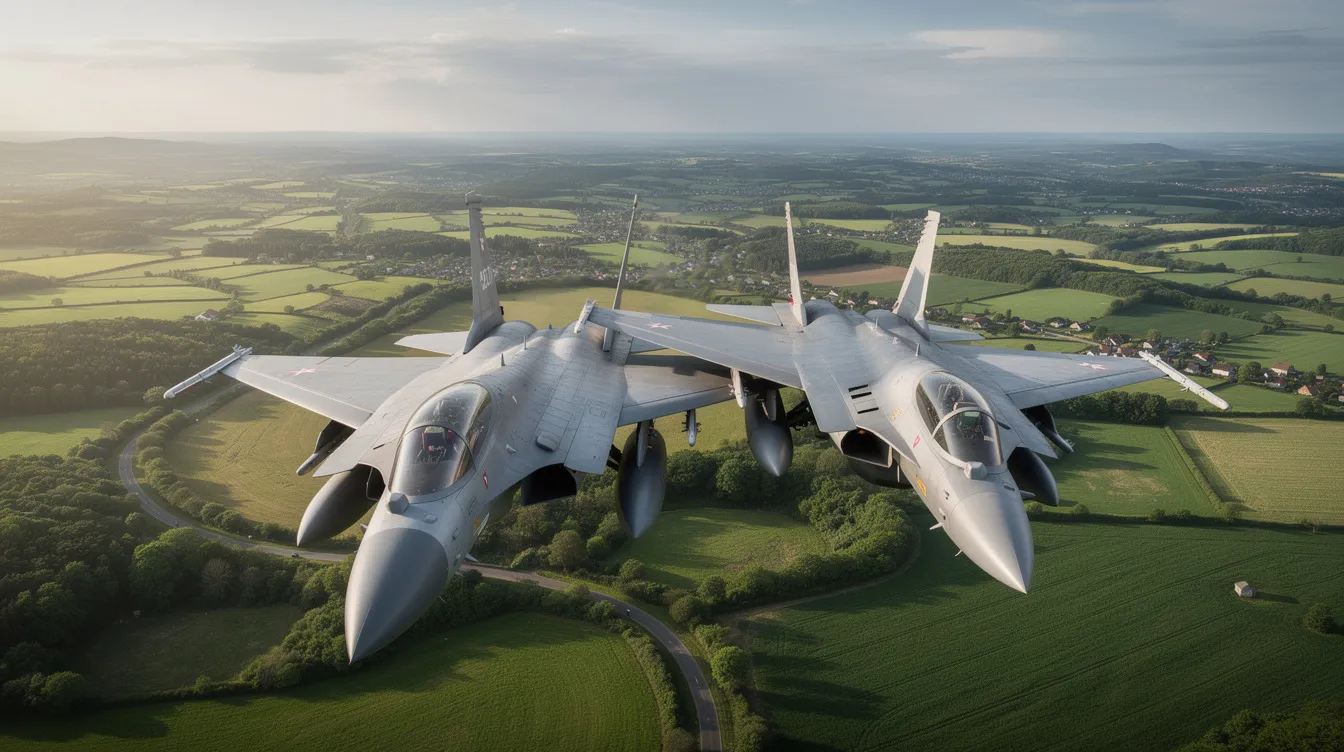
Russia and China have fielded their own modern fighter jets to challenge Western air superiority across key regions.
Russia's Su-57 is a twin-engine stealth-oriented fighter with 3D thrust-vectoring and internal weapons bays. Production remains limited—around 42 built, including prototypes—and new engine development continues.
China's Chengdu J-20 is a large, long-range stealth fighter designed to engage high-value targets like AWACS and tankers. The Chengdu J-20 has a weapons payload of 24,000 lbs, and production rates are growing, with over 300 aircraft reportedly delivered.
The J-31/FC-31 is a lighter Chinese stealth design under development, likely aimed at export markets and possible carrier operations as new aircraft enter the pipeline.
These programs accelerate great-power competition in the air, influencing NATO planning and allied fighter procurement. Collaborative combat concepts involve uncrewed aircraft operating alongside crewed fighters—drones serving as loyal wingmen to extend the reach and survivability of manned jets in contested environments.
Modern fighter performance depends less on raw speed and more on how well the aircraft senses, processes, and manages the electromagnetic spectrum. Artificial intelligence is influencing combat decisions in military jets, from threat prioritization to sensor management.
Stealth designs use radar-absorbent materials and internal weapons bays to minimize detection. Stealth technology enhances survivability in contested airspace by reducing radar, infrared, and visual signatures.
Fighters like the F-22, F-35, Rafale, and Typhoon use AESA radars for fast beam steering, multiple target tracking, and low probability of intercept modes.
Fifth-generation fighters focus on low observability and sensor fusion. Sensor fusion combines data from onboard radar and external information for pilots, creating a single intuitive tactical picture.
Systems like Rafale's SPECTRA and the F-35's integrated EW suite jam enemy radars, deceive incoming missiles, and geolocate threat emitters for later strike.
These technologies transfer to civilian aviation. Modern business jets use weather radar, collision avoidance, satellite communications, and digital flight management systems derived from military research—tools that benefit every type of plane in Jettly's inventory.
The Mikoyan-Gurevich MiG-25 Foxbat has a top speed of Mach 3.2, making it historically one of the fastest fighter jets ever built. But modern aircraft typically operate around Mach 1.6–2.5. Extreme speeds reduce stealth, increase thermal stress on airframes, and rarely match the tactical advantage of superior sensing and long-range missile capability.
|
Aircraft |
Top Speed |
Supercruise |
Combat Radius |
|---|---|---|---|
|
F-22 Raptor |
~Mach 2.25 |
Mach 1.8 |
~460 nm |
|
F-35A |
~Mach 1.6 |
N/A |
~590 nm |
|
Eurofighter Typhoon |
Mach 2.0 |
Mach 1.5 |
~750 nm |
Operational reach of fighters depends on internal fuel capacity and engine efficiency. Weapons include:
Beyond-visual-range missiles
Short-range IR missiles like the AIM-9 Sidewinder
Precision-guided bombs
Stand-off cruise missiles
Non-stealth bombers and heavy fighters like the F-15EX can carry nearly 30,000 lbs of ordnance, acting as "missile trucks" that support stealthier jets in the fight.
For private jets, the priority flips: optimal cruise speed, fuel efficiency, and range matter far more than extreme Mach numbers.
Decades of investment in military aviation have created technologies that now improve safety, reliability, and comfort in civilian aircraft.
Jet engine efficiency improvements and composite materials from fighter programs produce lighter, stronger airframes for business jets. These same advances enable longer-range platforms to fly farther on less fuel.
Military-grade GPS, satellite communication, and flight management systems underpin the routing tools on many business jets available through Jettly's global inventory.
Situational awareness tools inspired by fighter cockpits—large glass displays, integrated traffic and terrain warnings, advanced weather overlays—enhance safety for private jet passengers.
These technology benefits connect directly to Jettly's value proposition: instant access to a wide range of aircraft, transparent pricing, and the ability to choose aircraft types that leverage modern avionics for efficient point-to-point travel.
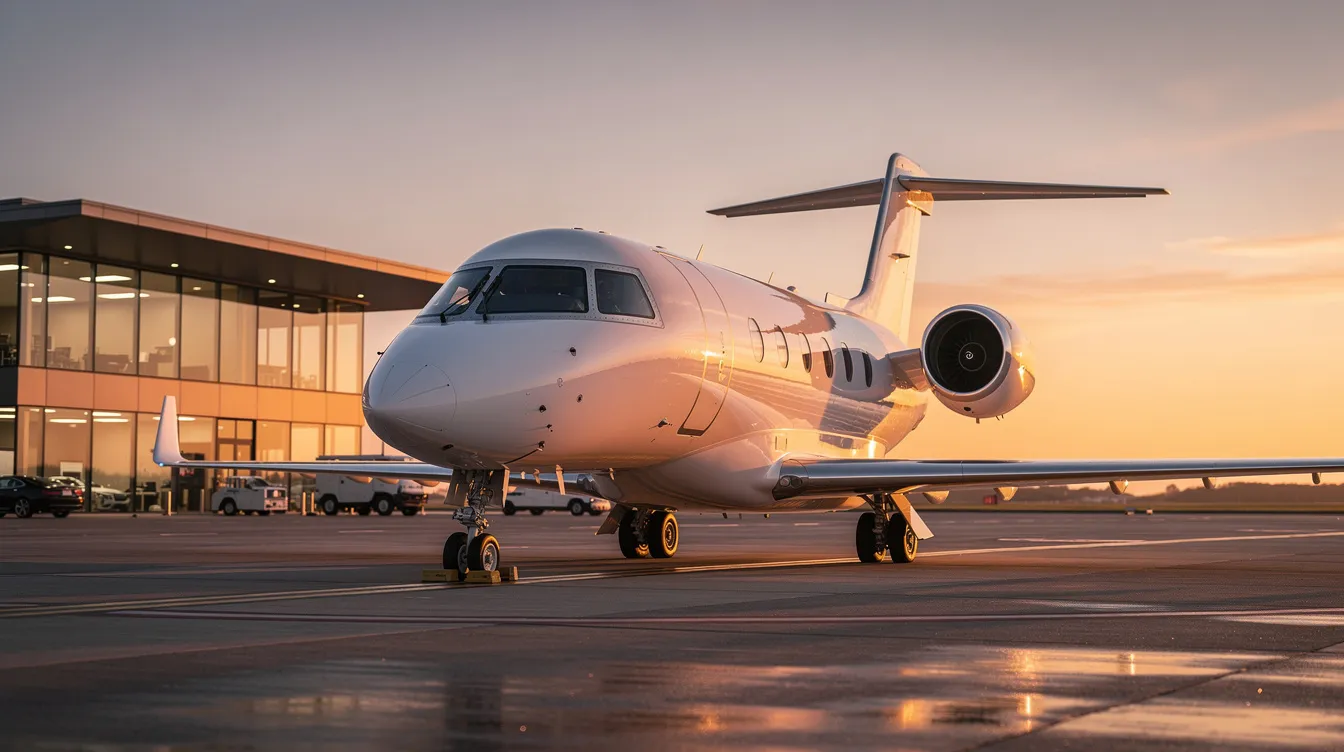
While both military and private jets share airspace and technology roots, their missions, regulations, and operating concepts differ fundamentally. Military fighters focus on combat readiness, high-G maneuvering, and weapons employment. Private jets prioritize passenger comfort, noise reduction, cabin space, and fuel efficiency.
Private jet charter through platforms like Jettly is regulated under civil aviation authorities (FAA Part 135 or international equivalents), with strict standards for safety management, pilot duty time, and maintenance oversight. Jettly connects travelers with thousands of private charter aircraft—from light jets to long-range business jets and turboprops—none of which carry weapons or fly combat profiles.
The customer journey includes instant pricing, route planning (New York–Miami, London–Geneva), aircraft selection, and integrated services like catering or ground transportation. Tools like Jettly’s airport locator and jet card flight cost estimator support these decisions. Unlike the rigid deployment cycles of fighter squadrons, on-demand private charter offers flexible scheduling, airport choice, and direct routing tailored to each traveler's timetable, whether you prefer shared charter flights or full charters.
Ready to experience private travel on your terms? Explore flight options, compare affordable private jet charter costs, or choose from flexible private jet memberships and request a quote at https://www.jettly.com.
Front-line fighters such as the F-22 and F-35 are restricted to military use. Civilians cannot book flights in these aircraft due to security classifications, training requirements, and safety protocols. Limited civilian experiences sometimes exist in demilitarized trainer jets like ex-L-39 Albatros airframes, but these are specialty operations outside normal charter platforms. Jettly focuses exclusively on certified civilian aircraft built for business and leisure travel—not experimental aircraft or combat trainers — and serves as a NetJets alternative for many travelers comparing leading private aviation providers like NetJets.
An air superiority fighter is optimized to control the skies by defeating enemy aircraft, prioritizing detection range, agility, and air-to-air weapons. Multirole fighters balance air-to-air and air-to-ground tasks, accepting some trade-offs in pure dogfighting raw performance to gain strike and reconnaissance flexibility. The F-22 is the clearest air superiority example; the F-35 and Dassault Rafale prove the multirole concept, handling everything from strike to ISR in a single airframe.
Extreme speeds above roughly Mach 2.5 create thermal and structural stresses that shorten airframe life and make stealth more difficult to maintain. Modern air combat rarely requires sustained Mach 3 speeds. Survivability now comes from being hard to detect and shooting from long range with advanced missiles. Fifth-generation aircraft still achieve high supersonic speeds but rely on supercruise, stealth, and sensors rather than record-breaking top-end velocity.
Glass cockpits, flight management systems, satellite navigation, and terrain awareness tools originated or matured in the military sector before being certified for civilian business jets. Many aircraft on Jettly's platform use these integrated avionics suites to optimize routing, fuel burn, and weather avoidance. The result is smoother flights, better on-time performance, and enhanced safety margins for private travelers.
Browse aircraft categories, compare cabin layouts and range, and obtain instant charter pricing directly through Jettly's digital platform while understanding how much a private jet really costs. Resources like guides to the best private jet charter companies and a comprehensive list of charter airlines can help you compare options. Popular use cases include short business hops, same-day multi-city trips, and long-range family vacations, and travelers can offset costs through crowdsourced private jet flights and shared empty seats or by buying a single seat on a private jet. If you mainly care about easy access rather than whole-aircraft charter, there are many ways to get a seat on a private jet easily. Jettly helps match mission to aircraft—similar in spirit to how militaries assign fighters to roles, and travelers comparing options can consult guides on affordable airplane rental costs and choices or learn more about how renting a plane works in practice. Explore flights or request a quote at jettly.com.
Modern jet fighter aircraft represent the pinnacle of aerospace innovation, blending stealth, sensor fusion, and advanced propulsion to achieve air superiority and mission flexibility. These technological advances, originally developed for military applications, have gradually influenced the design and capabilities of private jets, enhancing safety, efficiency, and passenger experience.
Platforms like Jettly benefit from this legacy by offering travelers access to aircraft equipped with cutting-edge avionics, improved materials, and reliable engines—features that trace their roots back to fighter jet development. While private jets do not match the speed or combat capabilities of military fighters, they embody the practical advantages of that technology in terms of operational readiness, situational awareness, and seamless travel.
As military aviation continues evolving toward sixth-generation systems with AI integration and adaptive engines, private aviation stands to gain further from these innovations. For travelers seeking convenience, flexibility, and transparency, the fusion of military-grade technology with private jet charter services like Jettly delivers a uniquely modern travel experience.
Ready to experience private travel on your terms? Explore flight options or request a quote at https://www.jettly.com.
Share this post:
Jay Franco Serevilla
Oct 11, 2026
|
5
min read
Discover tips and trends in the industry.
5
min read
How Many Military Jets Does the US Have? (2026 Guide to American Air Power)
The U.S. military operates approximately 3,300 fighter and attack jets, making it the largest military aviation force globally. This fleet includes advanced fifth-generation fighters and a robust bomber inventory, reflecting the U.S.'s significant air power capabilities. As the military transitions to newer aircraft, the influence of military aviation extends into the private sector, enhancing private jet travel options.
Read More
5
min read
Most Expensive Day to Fly: How to Avoid Peak Prices and Book Smarter
Understanding the most expensive day to fly can help travelers save money on flights. Sundays are typically the priciest for commercial airlines, while private jet pricing varies based on demand and events. This guide offers insights on when to fly, how airlines price tickets, and strategies to avoid peak prices.
Read MoreStay updated with our latest insights and tips to elevate your journey with us.
MEMBERSHIPS AND ASSOCIATIONS



Disclaimer: Jettly operates as a charter broker, offering access to a global digital jet charter marketplace. Jettly is not a direct air carrier and does not own or operate aircraft. All advertised flights are conducted by third-party air carriers that are fully licensed and hold the appropriate Part 135 or Part 121 certifications issued by the Federal Aviation Administration (FAA) or equivalent regulatory authorities under U.S. or foreign law. Jettly complies fully with the U.S. Department of Transportation's Part 295 and Part 298 Charter Broker regulations. Jettly does not carry additional liability insurance. Passengers are covered by aircraft operator insurance. TICO: 50023770


