


Login
Get Instant Pricing On 23,000+ Aircraft

>
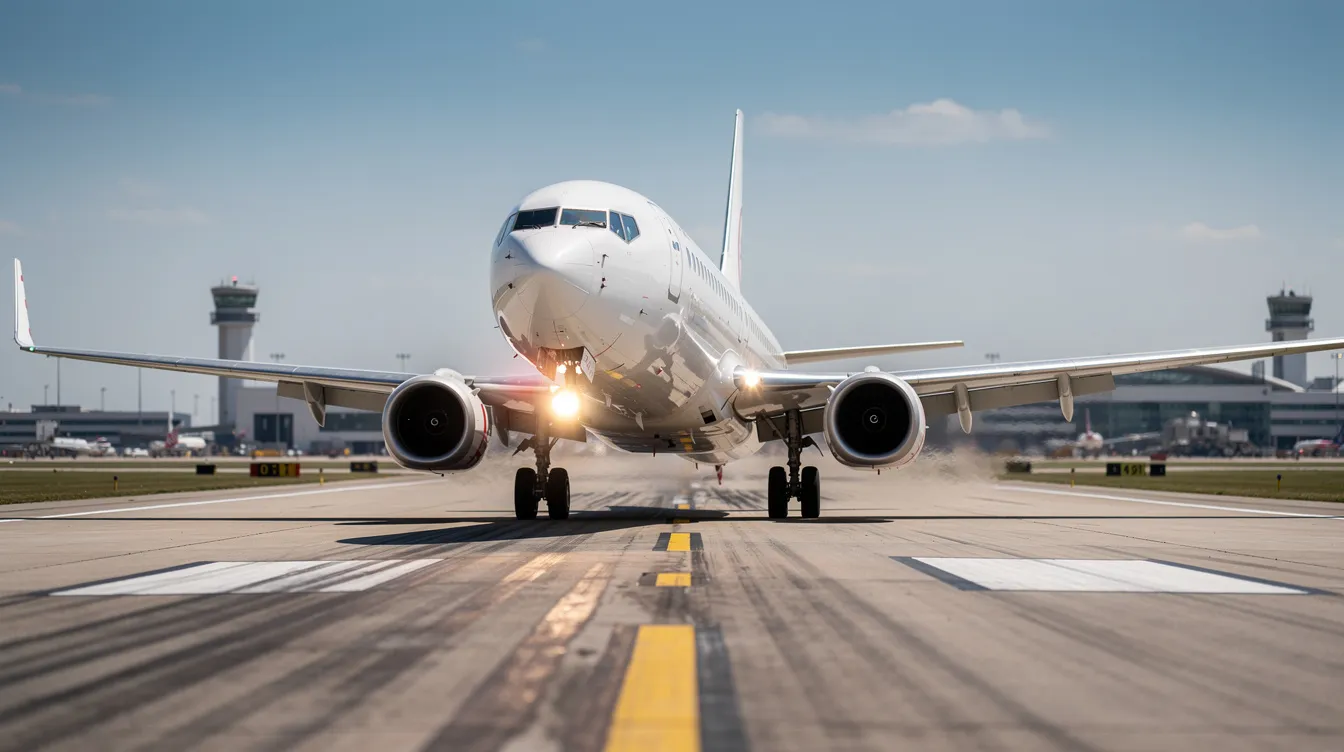
A standard Boeing 737 typically requires about 5,000 to 7,000 feet of runway for takeoff under normal conditions, with typical takeoff lengths ranging from 6,000 to 8,200 feet. Specifically, the 737-800 needs roughly 2,300–2,500 m (7,500–8,200 ft) at sea level on a dry runway near maximum takeoff weight.
For pilots, aircraft operators, charter travelers, and private aviation customers, that number is a starting point rather than a fixed limit. Runway needs change by 737 variant, aircraft weight, temperature, elevation, wind, and runway surface and condition, and landing distance can differ from takeoff distance.
This guide explains the typical runway requirements across Boeing 737 models, the safety and regulatory margins behind those calculations, and the practical airport-planning points that matter when evaluating whether a specific runway can support safe, efficient 737 operations.
Landing distance for a 737-800 is approximately 1,500 meters demonstrated, but regulatory safety margins increase the minimum required landing distance to about 1,800 meters or more, depending on runway surface conditions such as wet or contaminated surfaces that reduce braking performance.
Different 737 models have varying runway length requirements based on their specifications and maximum weights. Larger variants typically require longer runways due to higher maximum takeoff weights.
Environmental factors such as hot temperatures, high airport elevation, and runway surface condition significantly impact required takeoff and landing distances by reducing engine thrust and lift, thereby increasing the minimum runway length. For example, a fully loaded 737 may require up to 10,000 feet of runway at high-altitude airports on hot days.
Pilots calculate minimum runway lengths based on aircraft weight, environmental conditions, and regulatory safety margins. Headwinds reduce the distance needed for takeoff, while tailwinds increase it; cabin experience elements such as in-flight catering for private jets have no impact on performance but matter for overall passenger comfort.
Short runways for Boeing 737 operations are generally considered to be under 2,500 meters. Light aircraft and lighter 737 variants, such as the Boeing 737-800 with its typical charter mission profile, can operate safely from shorter runways when conditions are favorable.
Charter platforms like Jettly assist operators and travelers in matching aircraft performance limits to specific airports and runway lengths worldwide, providing alternatives when a 737 cannot safely use a particular strip and enabling crowdsourced and shared private jet flights when appropriate.
This guide is designed for pilots, aircraft operators, charter travelers, and private aviation customers. Understanding the minimum runway length for a 737 is critical for safe and efficient operations, as it ensures that the aircraft can take off and land within the available runway under all expected conditions, minimizing risk and optimizing flight planning.
The minimum runway length for a 737 is typically about 5,000 to 7,000 feet under normal conditions, while a Boeing 737-800 often needs roughly 7,500 to 8,200 feet at sea level on a dry runway near maximum takeoff weight. That number is critical for pilots, aircraft operators, charter travelers, and private aviation customers comparing airports, planning routes, and confirming whether a specific runway can support safe 737 operations.
Runway requirement is not a single fixed figure, because:
Aircraft weight—the largest driver of runway consumption
Temperature
Elevation
Wind
Runway surface condition
Regulatory safety margins
all influence the takeoff and landing distances. Wet or contaminated runways reduce braking performance and increase landing distance, making runway surface condition a significant factor in operational planning. This article breaks down typical runway length needs across 737 variants, explains how maximum takeoff weight and environmental factors shift those numbers, and shows private charter users how to assess airport suitability for a 737-class aircraft before a trip is booked.
With the general principles in mind, let's look at typical runway lengths for each 737 variant.
Exact figures depend on many variables, but operators and travelers often need quick reference estimates. Under normal conditions, the typical takeoff length for a 737 is 6,000 to 8,200 feet. Larger 737 variants typically require longer runways due to higher maximum weights.
The table below summarizes approximate balanced field length (takeoff) and landing distance at sea level, ISA conditions, dry runway, and near maximum takeoff weight for common Boeing 737 variants.
Balanced field length is the runway length at which the distance required to abort the takeoff (accelerate-stop) equals the distance required to continue takeoff after an engine failure (accelerate-go).
|
Variant |
Approx. Takeoff Distance (sea level, dry) |
Approx. Landing Distance (sea level, dry) |
|---|---|---|
|
737-300 (Classic) |
2,250–2,600 m (7,400–8,500 ft) |
1,700–1,900 m (5,600–6,200 ft) |
|
737-700 (NG) |
2,000–2,300 m (6,500–7,500 ft) |
1,500–1,700 m (4,900–5,600 ft) |
|
737-800 (NG) |
2,300–2,500 m (7,500–8,200 ft) |
1,600–1,800 m (5,200–5,900 ft) |
|
737-900ER |
2,500–3,000 m (8,200–9,800 ft) |
1,700–2,000 m (5,600–6,600 ft) |
|
2,200–2,500 m (7,200–8,200 ft) |
1,500–1,700 m (4,900–5,600 ft) |
A Boeing 737-800 requires about 2,500 meters for takeoff at heavy weight. For short runway scenarios—operations into strips of roughly 1,600–1,800 m—reduced payload, favorable weather, and specific performance calculations are essential. The 737-700, with its lighter frame, is better suited for shorter runways compared to the stretched 737-900ER.
These figures provide a baseline, but several factors can significantly alter the required runway length, as explained in the next section.
Now that you have a sense of typical runway lengths, let's explore how takeoff performance calculations determine the minimum runway required for a Boeing 737.
Takeoff distance is usually longer and more limiting than landing distance for a 737 at or near maximum takeoff weight. The key metric is called balanced field length: the runway length where the accelerate-stop distance equals the accelerate-go distance in case of an engine failure at decision speed V1. If the pilot must abort, the plane can stop in the remaining runway. If the pilot continues, the aircraft can safely fly away.
Balanced field length is the runway length at which the distance required to abort the takeoff (accelerate-stop) equals the distance required to continue takeoff after an engine failure (accelerate-go).
Pilots calculate minimum runway lengths based on:
Aircraft weight
Flap setting
Thrust setting
Temperature
Pressure altitude
Wind components
Runway slope
Surface condition
Headwinds reduce the distance needed for takeoff, while tailwinds increase it. For example, a 737-800 departing at high weight from a 2,400 m runway at sea level on a 30°C day could require 2,350–2,500 m, leaving minimal safety margin.
Regulators like the FAA and EASA require safety margins that make the operational minimum runway length longer than raw ground roll distances from certification tests.
At the end of this section, it's important to understand that landing performance is also subject to similar regulatory and operational considerations, which we will discuss next.
Having covered takeoff performance, let's move on to landing distance requirements and how they are determined for the Boeing 737.
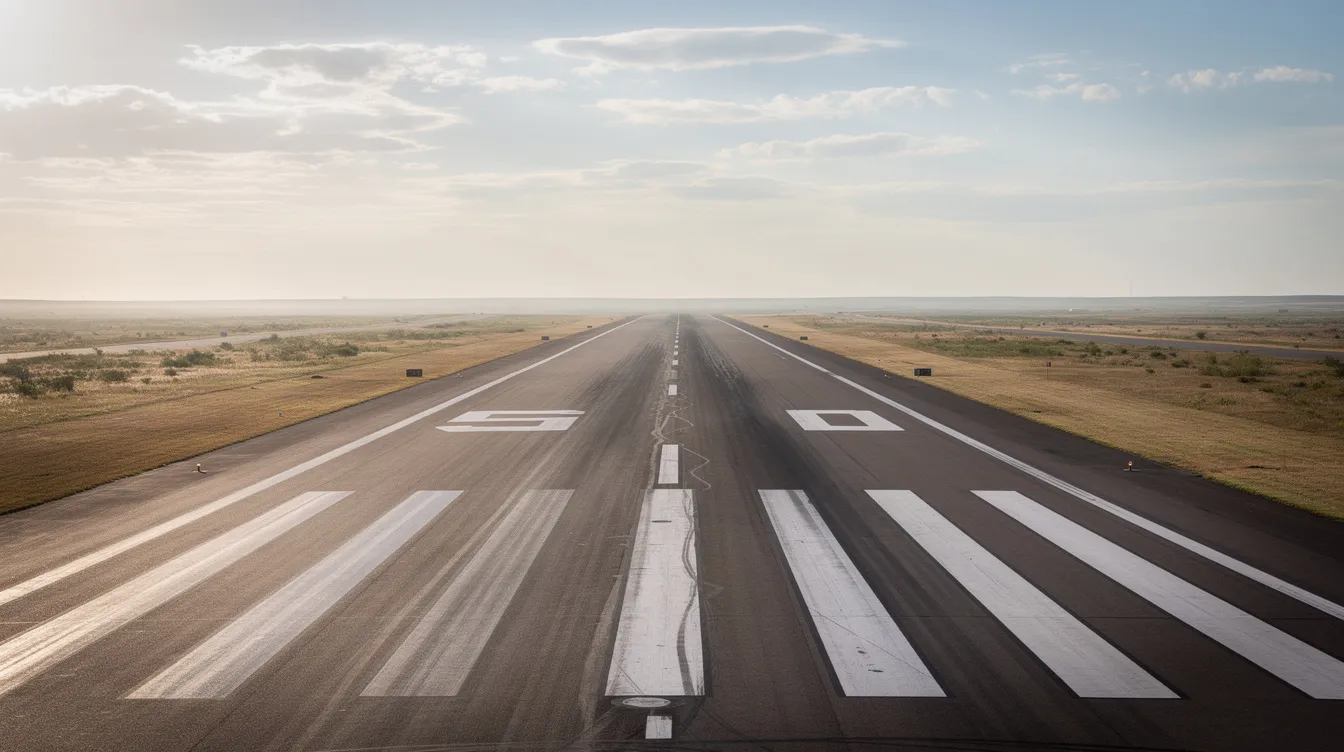
Landing distance in aircraft manuals is a demonstrated value adjusted with regulatory safety factors before operational use. Certification assumes approach at correct speed from 50 ft above threshold, full flap, maximum braking with anti-skid, dry level runway, no thrust reverse credit, and sea level ISA conditions.
Landing distance for a Boeing 737-800 is about 1,500 meters under ideal demonstrated conditions. However, operational planning requires longer distances due to regulatory multipliers and runway surface conditions. Wet or contaminated runways notably increase landing distance by reducing braking effectiveness.
Under EU-OPS rules, certified dry landing distance is about 1.67 times the demonstrated distance, with an additional 1.15 multiplier for wet runways. For a 737-800 at maximum landing weight, this means:
Flight test demonstrated landing distance: ~1,100 m
Certified dry runway distance (×1.67): ~1,840 m
Wet runway distance (×1.15 on top): ~2,120 m
These factors highlight why runway surface condition significantly impacts operational runway length requirements. Actual airline performance manuals remain the authoritative source.
As you can see, weight is a major factor in both takeoff and landing performance, which we will examine in the following section.
Understanding the effect of aircraft weight is essential, as it is the largest driver of runway consumption for the 737.
MTOW (Maximum Takeoff Weight) is the maximum weight at which the pilot is allowed to attempt to take off, due to structural or other limits. MLW (Maximum Landing Weight) is the maximum weight at which the aircraft is permitted to land.
Typical MTOW and MLW ranges for popular variants:
737-700: MTOW ~70 t, MLW ~58 t
737-800: MTOW ~79 t, MLW ~66 t
737 MAX 8: MTOW ~82 t, MLW ~69 t, while long-haul missions may instead call for widebody types such as the Boeing 777-200LR with its ultra-long range capability
Operators can reduce fuel load, passengers, or cargo weight to operate from shorter runways. For example, limiting range by carrying less fuel allows a lighter takeoff weight, making departure from a 1,800–2,000 m strip feasible for shorter sectors.
A 10–15% weight reduction can reduce takeoff distance by several hundred meters under favorable conditions. On a standard day at sea level, a 737-800 departing at 68 t instead of 79 t might need only 1,800–2,000 m instead of 2,300+ m. This difference is crucial when every kilogram counts.
As weight is only one of several environmental and operational factors, let's now look at how weather, elevation, and runway condition further affect runway requirements.
After understanding the impact of weight, it's important to consider how environmental and runway conditions influence the minimum runway length for a Boeing 737.
Density altitude is the pressure altitude corrected for non-standard temperature. It represents the altitude at which the airplane "feels" like it is operating, affecting engine performance and lift.
Key environmental and runway factors include:
Hot temperatures (reduce air density, increasing required runway length)
High airport elevation (reduces engine thrust and lift, increasing runway needs)
Runway surface condition (wet or contaminated runways reduce braking performance, increasing landing distances)
Wind direction and speed (tailwinds increase, headwinds decrease required distances)
Airports like Denver, Mexico City, or Centennial Airport in Colorado significantly increase minimum runway length for 737 operations. For example, at 5,000–7,000 ft elevation on a 30°C day, a 737-800 may require over 3,000 m for takeoff compared to roughly 2,300 m at sea level on a standard day.
A fully loaded 737 may require up to 10,000 feet of runway at high-altitude airports under hot conditions. Conservative performance planning using modern tools is essential, especially at airports with variable weather or short runways.
With these environmental and operational factors in mind, let's examine what is realistic for short runway operations with a 737.
Building on the previous sections, we now focus on the practical limits for 737 operations on short runways.
While not a dedicated short takeoff and landing aircraft, some 737 variants can safely operate from relatively short runways under favorable conditions. The minimum runway length for a Boeing 737-800 is about 1,800 meters, assuming reduced weight, favorable temperature, sea level elevation, a dry runway, and ideally a headwind component.
Operations below roughly 1,600–1,700 m generally require even more careful restrictions and individual assessment. For example, in Sweden, 737-800 departures have been reported from approximately 2,000 m runways at near sea level in cool temperatures (below about 13°C).
Medium-length runways of 1,900–2,200 m often allow 737-700 or 737-800 operations comfortably for regional sectors with moderate payload. Long-haul or full-payload departures may require 2,500 m or more depending on conditions.
For very short fields, smaller jets or turboprops may be more suitable. Platforms like Jettly can instantly suggest alternative private charter aircraft when a runway is too short for a 737, enabling access to airports otherwise off-limits for narrow-body airliners.
Next, let's compare the 737's runway requirements to other narrow-body jets.
To put the 737's performance in context, this section compares its runway requirements to those of other popular narrow-body jets.
Runway requirements are broadly similar under comparable weight and environmental conditions:
|
Aircraft |
Approx. Takeoff (sea level, dry, heavy) |
Approx. Landing (sea level, dry) |
|---|---|---|
|
Boeing 737-800 |
2,300–2,500 m |
1,600–1,800 m |
|
Airbus A320-200 |
2,200–2,400 m |
1,500–1,800 m |
|
McDonnell Douglas MD-82 |
2,300–2,700 m |
1,700–2,000 m |
Older McDonnell Douglas designs, like the DC-9 and successors, were optimized for specific missions and may have different performance profiles. Older engines and braking systems on the MD-80 series can result in longer required distances and lower landing speeds compared to newer 737 models with modern thrust and speed management.
For private charter or ACMI operations, choosing between Boeing 737, Airbus, or McDonnell Douglas models depends on route, runway lengths, and operator availability rather than a single "best" choice, and understanding the broader landscape of charter airlines and private operators can help inform that decision.
As you consider aircraft options, it's important to understand the regulatory requirements and safety margins that govern runway length calculations.
This section explains the regulatory framework and safety margins that ensure safe 737 operations on runways of varying lengths.
ASDA (Accelerate-Stop Distance Available) is the length of runway available and suitable for the acceleration and deceleration of an aircraft aborting takeoff. LDA (Landing Distance Available) is the length of runway declared suitable for landing and rollout.
Regulators like the FAA and EASA require safety margins on takeoff and landing distances. Airlines cannot use 100% of the available runway in theoretical calculations. Regulatory safety margins dictate minimum runway length calculations across all commercial operations.
Key concepts include:
Required accelerate-stop distance versus available runway (ASDA). Pilots must be able to stop within this distance if takeoff is aborted.
Landing distance available (LDA) versus factored landing distance required. Displaced thresholds may reduce usable length.
Additional margins for wet or contaminated runways and one-engine inoperative performance.
Airport planning documents list declared distances—TORA, TODA, ASDA, and LDA. A 737 operator must ensure takeoff and landing performance fit within these declared limits, not just physical pavement length.
For example, a 2,200 m runway on a warm day might be acceptable for landing at moderate weight but marginal for takeoff at maximum weight. This explains payload restrictions or "weight-restricted" departures on shorter runways. Airlines like Alaska Airlines routinely manage these trade-offs.
Understanding these regulatory requirements is especially important for private charter and group travel, which we discuss next.
When planning private or group travel, runway length directly influences which airports and aircraft can be used.
Some private and corporate charters use VIP-configured Boeing 737 aircraft, including BBJ (Boeing Business Jet) versions. Runway length directly influences which airports can be used.
Charter planners assess runway length versus passengers, fuel, and route distance when arranging flights for sports teams, tour groups, or corporate roadshows, often considering high-capacity options like a private charter Boeing 737-800 when the runway permits.
Jettly's private charter platform can:
Filter aircraft and operators based on airport and runway length.
Offer alternative aircraft types (large cabin business jets or turboprops) when a 737 cannot safely operate from a desired short runway.
Provide transparent pricing for different solutions so clients can weigh using a 737 versus multiple smaller jets through the cost calculator and the dedicated jet card flight cost estimator.
For example, a corporate group needing to reach a secondary European airport with a 1,700 m runway might find a 737 ruled out. A shared charter or full private charter solution using a heavy business jet or two midsize jets could accommodate the group safely within runway limits, offering a flexible flight plan.
If runway length is a constraint, selecting the right aircraft is crucial, as discussed in the next section.
When runway length is a limiting factor, choosing the appropriate aircraft ensures both safety and mission success.
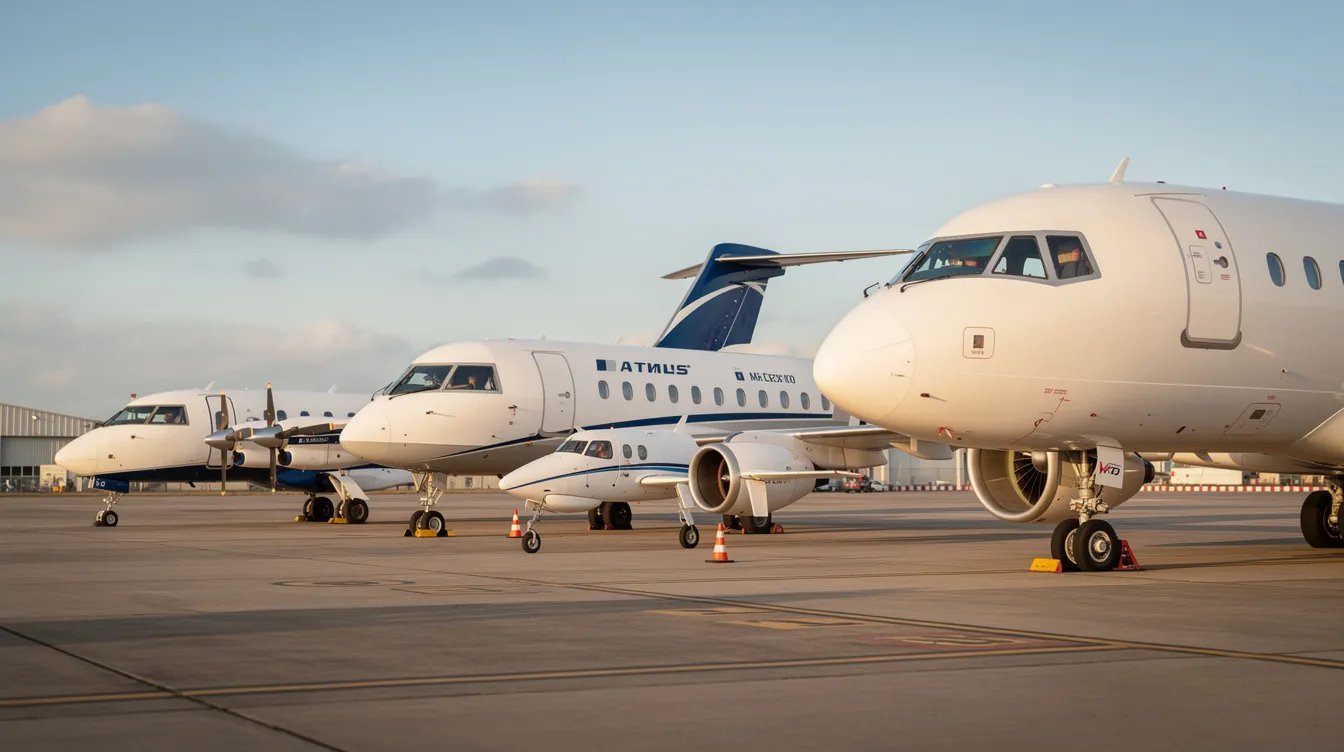
Different aircraft categories vary significantly in short runway performance:
Turboprops (e.g., King Air) perform well on runways under 1,200–1,400 m.
Light and midsize jets often handle 1,400–1,800 m.
Larger jets and airliners like the 737 usually prefer 1,800–2,400 m or more, depending on mission profile.
Charter customers should provide origin and destination airports, passenger count, and luggage needs so brokers or platforms can suggest the safest, most efficient aircraft, and many frequent flyers use private jet membership programs to streamline this planning.
Jettly’s access to over 20,000 aircraft and its jet card programs for frequent flyers allows it to offer alternatives when a 737 is not ideal—such as splitting a large group into two smaller jets for very short airfields or selecting a turboprop for runways unsuitable for airliners.
For more specific questions, refer to the FAQ below.
These questions address common concerns not fully covered in the main sections. Each answer focuses on practical, real-world scenarios and considerations that also apply when working with Part 135 charter operators and brokers.
Under ideal conditions—light weight, cool temperature, sea level, dry runway, and a strong headwind component—some 737 variants may operate from runways in the 1,600–1,800 m (5,200–5,900 ft) range. However, such operations require careful performance analysis and are not typical for high-density airline schedules. Many commercial operators prefer at least 2,000–2,200 m for routine 737 operations to preserve safety margins and scheduling flexibility.
Certification landing distances for the Boeing 737 are usually calculated without credit for reverse thrust. They assume wheel braking only with anti-skid on a dry surface. In real operations, reverse thrust provides an additional safety margin and can help reduce brake wear, but operators still plan using the more conservative, no-reverse assumptions. This approach ensures the airplane can stop safely even if the engines or thrust reversers are not available.
At higher elevations (5,000–7,000 ft), the combination of thinner air and often higher temperatures can add several hundred meters or more to the required takeoff distance. As a rough guide, hot-and-high departures may require payload restrictions or long runways—often 2,600–3,000 m or more—for heavy 737 operations. The exact figure depends on the specific model, engines, flap setting, and day conditions, and similar performance considerations apply when planning private jet charter from regional hubs like Kolkata in West Bengal.
Certain older 737 models were available with gravel kits for operations on semi-prepared surfaces in remote regions. Most modern commercial and charter 737 fleets are configured for paved runways only. Today's 737 operations typically require well-maintained asphalt or concrete runways that meet specific structural and length requirements set by the operator and regulator, which is an important factor for travelers exploring practical ways to get a seat on a private jet.
Customers can provide the airport name or code, travel date, and passenger count to a charter broker or digital marketplace, which will check runway length, pavement strength, and local procedures against the planned 737 operation. Platforms like Jettly automate much of this process using the Airport Locator Tool, offering alternative aircraft when a runway is too short or otherwise unsuitable for a Boeing 737, and can serve as a flexible alternative to fractional programs like NetJets.
In summary, the minimum runway length for a 737 depends on weight, weather, elevation, and runway surface condition. Typical figures range from around 1,500–1,600 m for light-load operations up to 2,500 m or more near maximum takeoff weight. No single published number covers all cases—pilots and operators must rely on certified performance data and regulatory factors for each flight.
Digital charter platforms like Jettly simplify this complexity for travelers by matching aircraft and airports automatically while maintaining safety margins and helping clients understand how much private jet charter really costs. Whether the mission calls for a full-size 737 or a smaller jet that can handle a shorter strip, the right match protects both safety and schedule.
Ready to explore aircraft options for your next trip? Compare charter solutions, look for discounted empty leg flights on private jets, or request a quote at https://www.jettly.com.
Share this post:
Jay Franco Serevilla
Aug 9, 2026
|
5
min read
Discover tips and trends in the industry.
5
min read
Budget Airlines: How Low Cost Flights Really Work (and When Private Charter Makes More Sense)
Budget airlines have transformed air travel by offering low base fares, but hidden fees can quickly inflate the final cost. This guide explores how these airlines operate, the best options for travelers, and when private charters may provide better value. Understanding the true costs associated with budget airlines is crucial for making informed travel decisions.
Read More
5
min read
FedEx Cessna Caravan: How the Cessna 208B Powers Express Cargo and Charter Logistics
The FedEx Cessna Caravan, particularly the Cessna 208B, is essential for regional logistics, enabling efficient delivery to smaller communities. Its reliability and short runway capabilities make it ideal for both cargo and passenger charters, connecting underserved markets with major hubs. Platforms like Jettly facilitate access to similar aircraft for time-sensitive missions.
Read MoreStay updated with our latest insights and tips to elevate your journey with us.
MEMBERSHIPS AND ASSOCIATIONS



Disclaimer: Jettly operates as a charter broker, offering access to a global digital jet charter marketplace. Jettly is not a direct air carrier and does not own or operate aircraft. All advertised flights are conducted by third-party air carriers that are fully licensed and hold the appropriate Part 135 or Part 121 certifications issued by the Federal Aviation Administration (FAA) or equivalent regulatory authorities under U.S. or foreign law. Jettly complies fully with the U.S. Department of Transportation's Part 295 and Part 298 Charter Broker regulations. Jettly does not carry additional liability insurance. Passengers are covered by aircraft operator insurance. TICO: 50023770


