



Login
Get Instant Pricing On 23,000+ Aircraft

>
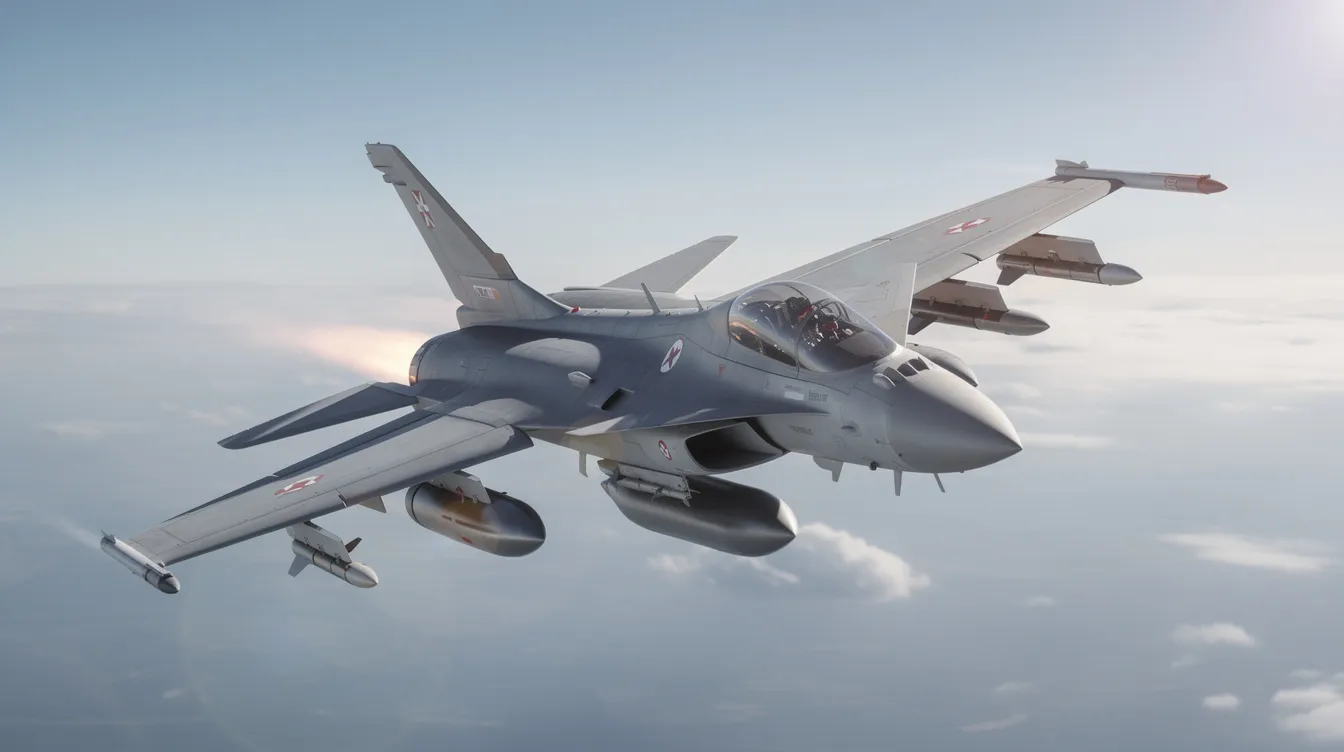
From carrier decks to remote airstrips, the military plane with two propellers continues to fill roles that faster jets cannot match. This guide is for aviation enthusiasts, travelers, and anyone interested in understanding the role of twin-prop military aircraft and their civilian counterparts. Understanding these aircraft helps travelers make informed choices when comparing civilian turboprop options. Whether hauling high-priority cargo to an aircraft carrier or circling overhead on surveillance duty, twin-engine turboprops and tiltrotors remain versatile platforms. This guide covers key aircraft, their missions, and what their performance can teach travelers about civilian turboprop travel.
Military aircraft with two propellers are generally called twin-engine propeller aircraft. The category includes conventional turboprops such as the E-2 Hawkeye and C-2 Greyhound, as well as tiltrotors such as the Bell Boeing V-22 Osprey.
These platforms support carrier-onboard delivery, airborne early warning, aerial refueling support, combat, and humanitarian missions across the Air Force, Marine Corps, and Navy.
Twin-prop military aircraft offer range and fuel efficiency, and some can use short or improvised runways—or ship flight decks.
Twin-engine configurations optimize aerodynamic efficiency, while engine redundancy can improve reliability.
Jettly does not charter military aircraft. Understanding these designs can help travelers compare mission profiles with civilian charter options available through the platform.
Military aircraft with two propellers are generally called twin-engine propeller aircraft. Turboprop engines drive propellers using gas-turbine power. The category includes conventional turboprops and tiltrotors. Turboprop engines offer an alternative to piston engines and jets for missions where efficiency, endurance, or runway access matters.
The category splits into two broad groups:
Conventional twin-prop airplanes, such as the E-2 Hawkeye, C-2 Greyhound, MC-12W Liberty, and RC-12X Guardrail. These aircraft have standard fixed wings and two propellers.
Tiltrotor platforms, such as the Bell Boeing V-22 Osprey family. Their large rotors rotate between vertical and horizontal positions, combining helicopter and airplane capabilities.
Twin-propeller aircraft are useful in reconnaissance, transport, and maritime patrol operations. Examples covered here include the MC-12W, RC-12X, E-2 Hawkeye, C-2 Greyhound, and CMV-22B. The four-engine C-130 Hercules is included for context because it shares turboprop technology and overlapping missions.
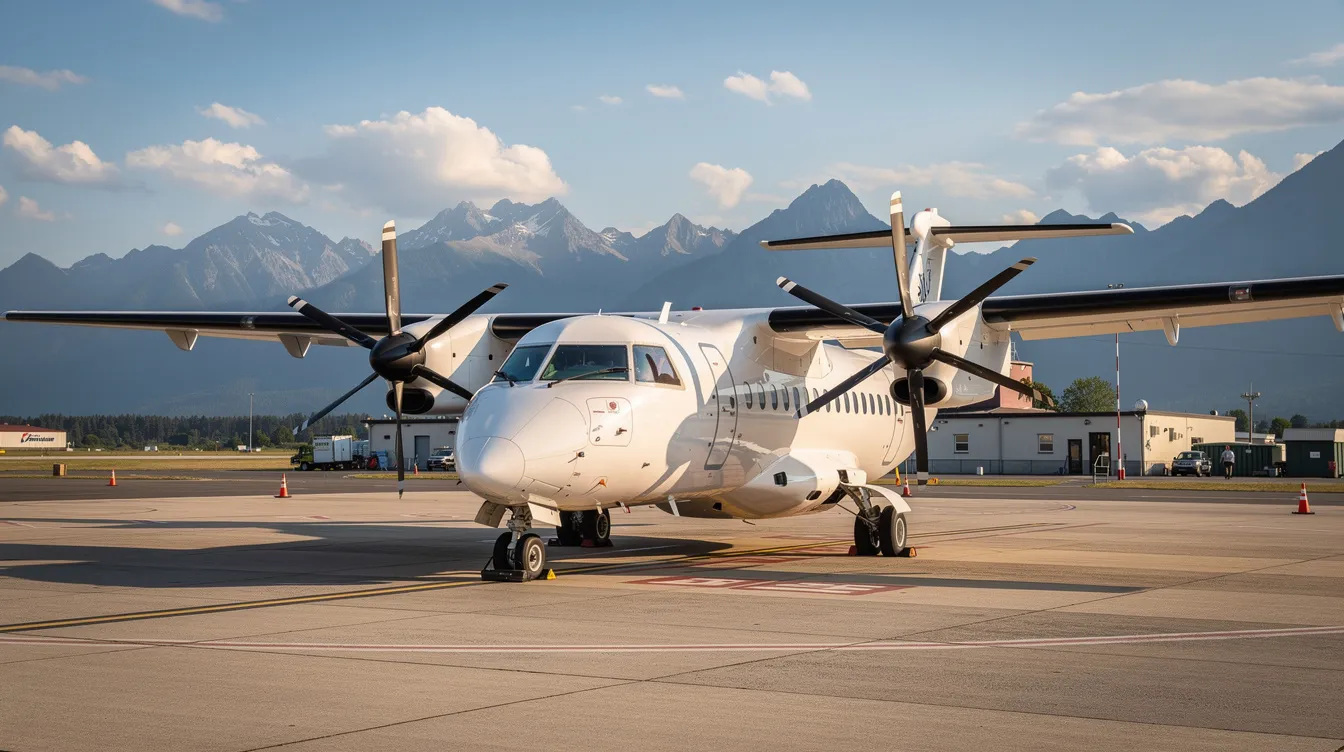
Civilian twin-prop turboprops, including the Beechcraft King Air family, share some performance traits with military aircraft: short-field access, moderate cruise speeds, and fuel efficiency on regional legs.
Jets dominate high-speed combat, but turboprops remain important for logistics, surveillance, search and rescue, and special missions where loiter time and access can matter more than raw speed.
Key advantages of two-prop aircraft include:
Fuel efficiency at low to medium speeds. At sub-300-knot cruise speeds, turboprops can use less fuel per hour than jets, extending mission endurance.
Short and rough runway performance. Propellers can produce strong airflow over the wings at lower speeds, supporting operations at austere airfields and in carrier onboard delivery roles.
Engine redundancy. Two engines can provide continued capability if one engine fails, subject to aircraft limits and operating conditions. They also allow military aircraft to maintain better performance at high altitudes.
Adaptability. Twin-engine aircraft can be adapted for a wide variety of military roles, from intelligence, surveillance, and reconnaissance (ISR) to transport and medical evacuation. Compared with single-engine designs, some can carry heavier weapons and additional fuel.
Counter-rotating propellers reduce net torque effects and improve handling, a feature found on some military and civilian twins. The P-38 Lightning exemplifies the benefits of twin-engine fighters in military aviation: its twin-boom layout supported range and performance during World War II.
Humanitarian missions, maritime patrol, and long-endurance ISR can favor turboprops over jets because turboprops can loiter for hours at moderate operating cost. Similar traits make twin-prop charters attractive for regional trips to smaller airports.
The Bell Boeing V-22 Osprey is a tiltrotor with two large proprotors that combine helicopter-style vertical lift with turboprop cruise performance. It bridges a gap that a conventional twin-prop airplane or standard helicopter cannot fill on its own.
The V-22 serves across three U.S. military branches:
Marine Corps: MV-22B assault support
United States Air Force: CV-22B special operations
Navy: CMV-22B carrier onboard delivery
The V-22 has been in service since 2007, when the MV-22B achieved initial operating capability. Its fleet numbers about 450 aircraft. Across its variants, the V-22 supports combat and humanitarian missions.
|
Spec |
Value |
|---|---|
|
Engines |
Two Rolls-Royce AE1107C engines (6,150 shp each) |
|
Rotor diameter |
38.1 feet |
|
Maximum speed |
322 mph in airplane mode |
|
Cruise speed |
About 266 knots (307 mph) |
|
Service ceiling |
About 25,000 feet |
|
Maximum gross weight |
52,600 pounds in vertical takeoff mode |
|
Troop capacity |
Up to 32 personnel in a floor-loaded configuration; 24 seated combat troops |
|
Internal cargo |
About 20,000 pounds, depending on configuration |
Each engine drives a three-bladed rotor. A cross-shaft can allow one engine to power both rotors in an emergency, adding a measure of redundancy. The aircraft can take off and land vertically, then transition to airplane mode for high-speed cruise. Boeing describes the V-22 as combining vertical performance with turboprop speed and range; exact comparisons depend on aircraft variant and operating conditions.
The V-22 can transport up to 32 personnel in a floor-loaded configuration, or 24 seated combat troops. That combination of vertical takeoff, speed, and payload makes tiltrotors different from conventional two-prop aircraft in handling, maintenance, and mission planning.
The CV-22B is the United States Air Force Special Operations Command (AFSOC) tiltrotor variant of the V-22. It entered service around 2009 and is operated by special operations forces units.
Primary missions include:
Long-range infiltration and exfiltration of special operations forces
Resupply and personnel recovery in austere environments without conventional runways
Support for combat missions requiring vertical lift and high-speed transit
Systems tailored for AFSOC use include terrain-following radar, advanced navigation and electronic warfare equipment, and auxiliary fuel tanks. Aerial refueling from tankers such as the KC-135 and KC-46 can extend the CV-22’s range beyond standard ferry-range figures.
The CV-22’s capabilities highlight a broader point for charter travelers: when access to remote locations matters, aircraft selection should account for endurance, runway requirements, and payload. Jettly’s private charter aircraft platform helps customers compare civilian turboprops and light jets against those practical needs.
The MV-22B is the Marine Corps’ main assault-support tiltrotor. It began replacing older transport helicopters in 2007 and operates from amphibious assault ships. Its wings and rotors can fold for shipboard stowage.
The V-22 can transport up to 32 personnel per sortie, with provisions for fast-rope insertion, rappel operations, and external cargo loads. The maximum load depends on the aircraft configuration and mission.
Mission types include:
Amphibious assault from ships
Tactical resupply and casualty evacuation in forward areas
Rapid-response humanitarian missions after natural disasters
Medical evacuation from remote or contested areas
The V-22 performs medical evacuation missions, carrying litter patients to medical facilities. Its speed and range can help get patients to care within the “Golden Hour.” It can also hover and use a hoist to recover personnel over water or rough terrain.
Its speed—more than 250 knots—and combat radius allow Marine units to reach inland objectives directly from ships without forward bases, reducing reliance on slower rotorcraft and additional staging points.
The CMV-22B is the Navy variant of the V-22, optimized for carrier onboard delivery (COD). The first CMV-22B was delivered to the U.S. Navy in June 2020, and the type reached initial operating capability in December 2021.
The CMV-22B is replacing the C-2A Greyhound in the COD role, transporting high-priority cargo, mail, and personnel—including critical parts for the F-35C Lightning II—between shore bases and aircraft carriers.
Modifications compared with the MV-22B include:
An extended-range fuel system for longer self-deployment legs over open ocean
Enhanced beyond-line-of-sight communications for coordination with carrier strike groups
Interiors tailored for mixed cargo and passenger loads
COD operations at sea have a civilian parallel in urgent corporate or aircraft-on-ground (AOG) charter missions, where timing and payload influence aircraft selection. The practical principle is the same: match the aircraft to the load, distance, and access requirements. That matters whether landing on a carrier or booking a charter for an urgent delivery.
The E-2 Hawkeye is a twin-engine turboprop that has provided airborne early warning and control from U.S. Navy carriers since the 1960s. Its distinctive design includes two propellers, high-mounted wings, and a 24-foot rotating radar dome for broad situational awareness.
The E-2D Hawkeye features two turboprop engines, specifically the Rolls-Royce T56-A-427A, each producing approximately 5,100 shaft horsepower. It represents a substantial upgrade over the earlier E-2C.
|
Spec |
E-2D Hawkeye |
|---|---|
|
Engines |
2 × T56-A-427A turboprops (about 5,100 shp each) |
|
Cruise speed |
About 256 knots (295 mph) |
|
Maximum speed |
More than 300 knots (about 345 mph) |
|
Service ceiling |
About 34,700 feet |
|
Ferry range |
About 1,462 nautical miles |
|
Endurance |
About 6 hours |
|
Crew |
5 |
Missions include detecting air and surface threats at long range, managing battles for carrier strike groups, and cueing missile defense for joint forces. The E-2D adds the AN/APY-9 AESA radar, improved data links, and open-architecture mission systems to expand detection capabilities.
Maintaining these aircraft requires depot work, including corrosion checks, structural inspections, and avionics upgrades. This illustrates the support twin-prop military fleets require over decades of carrier-based service.
The C-2A Greyhound served as the U.S. Navy’s dedicated carrier onboard delivery aircraft. Derived from the E-2 Hawkeye’s wing and engine design, it features a widened fuselage and rear loading ramp for cargo, passengers, and litter patients.
Two Allison T56-A-425 turboprop engines power the Greyhound, each producing roughly 4,600 shaft horsepower. Its maximum speed is approximately 343 knots (394 mph), and its typical range is 1,000 to 1,300 nautical miles, depending on payload. Cargo capacity is near 10,000 pounds—enough for engines, avionics, and other high-priority supplies.
Throughout its career, the C-2A supported U.S. aircraft carriers as a logistics link between shore bases and the fleet. A Service Life Extension Program added structural reinforcements, rewiring, wing-hinge upgrades, and eight-blade NP-2000 propellers, extending each airframe’s service life by 5,000 flight hours and 1,100 catapult launches.
The Navy has been transitioning from the C-2 to the CMV-22B for carrier onboard delivery, illustrating the move from conventional twin-prop aircraft to tiltrotors at sea.
The C-130 Hercules is a four-engine turboprop, not strictly a plane with two propellers. It is often researched alongside twin-prop aircraft because it shares turboprop technology, mission profiles, and operational principles.
The C-130 has been in service since 1956 and remains in production as the C-130J Super Hercules. Modern variants use six-blade composite propellers and reach maximum speeds in the 320-knot class, with ranges above 2,000 nautical miles and a service ceiling around 33,000 feet.
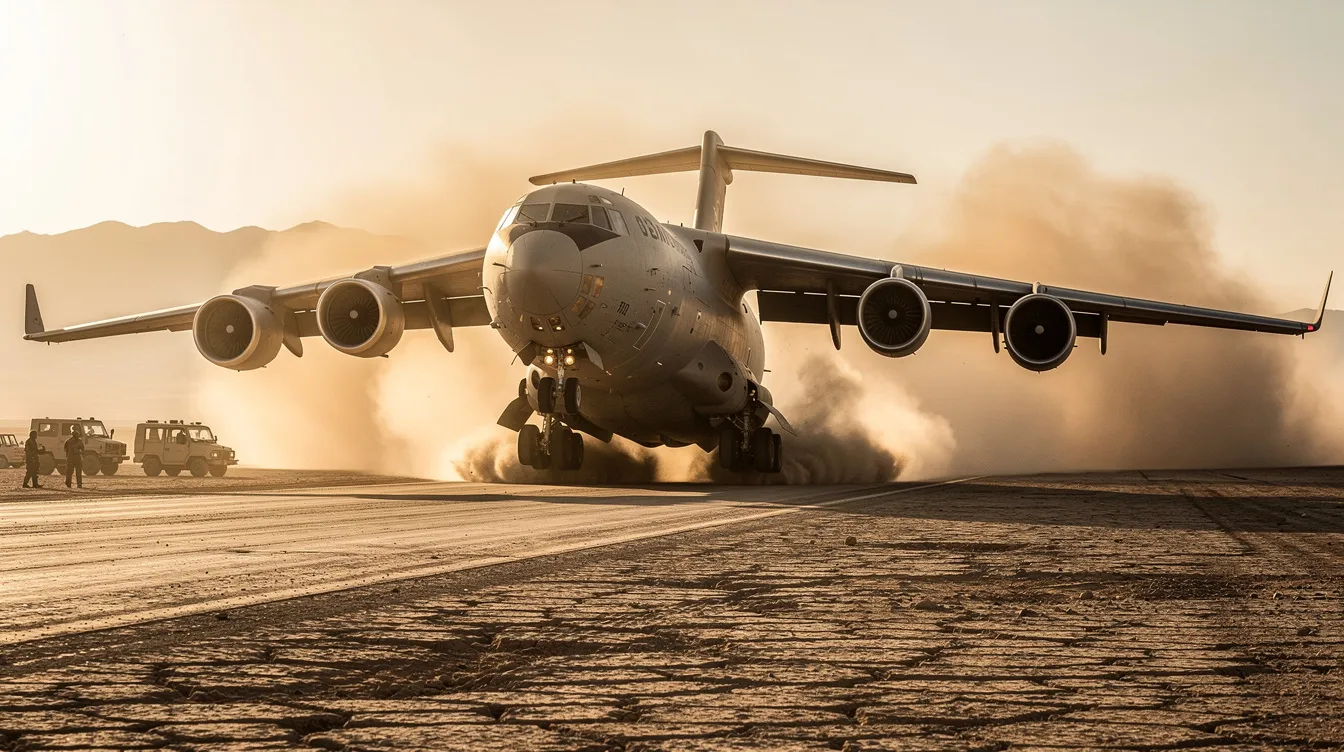
Roles include, in both military and civilian contexts, a spectrum from heavy logistics to more modest, budget-conscious flying—mirroring the range of affordable planes and budget-friendly aircraft choices available to private operators and owners:
Tactical airlift of troops or heavy equipment
Airdrop, medical evacuation, and search and rescue
Specialized variants for gunship operations, weather reconnaissance, and aerial refueling (KC-130)
The Hercules’ ability to fly into short, rough fields mirrors an advantage of civilian turboprops: access to remote strips. Jettly can help travelers compare suitable turboprop types for civilian routes and understand how they stack up against the cheapest private aircraft options for different budgets.
The Air Force and Army have relied on twin-prop turboprops derived from the Beechcraft King Air and C-12 family for ISR work. Two notable platforms are the MC-12W Liberty and the RC-12X Guardrail.
The MC-12W was a military version of the Hawker Beechcraft King Air 350ER, fitted with two Pratt & Whitney PT6A-60A turboprop engines. It flew ISR missions in Iraq and Afghanistan under Project Liberty beginning in 2009. Its published performance figures include a cruise speed of approximately 312 knots (359 mph) and endurance exceeding eight hours.
Its service ceiling of roughly 35,000 feet and extended-range capability made it suitable for persistent surveillance. The type was retired in August 2025 after logging more than 2,500 combat and combat-support sorties across its career.
The RC-12X Guardrail served in a signals intelligence (SIGINT) role, intercepting, classifying, and geolocating hostile communications and electronic emitters. Based on the King Air airframe family, it was optimized for long loiter times and signals collection rather than cargo or transport.
The final RC-12X aircraft was retired on December 11, 2025, marking the end of a decades-long SIGINT program. These retirements reflect shifting priorities toward unmanned systems and newer sensor platforms.
These ISR turboprops operated at moderate to high altitudes for extended periods—a pattern similar to civilian survey or mapping flights using twin-prop aircraft.
Some propeller aircraft specialize in training and light attack, balancing cost, endurance, and simplicity against the greater speed of jets.
The A-29B Super Tucano is a single-prop turboprop, not a twin, but it operates alongside twin-prop fleets in counterinsurgency and special operations training roles. Its PT6A-68C engine supports extended loiter at low altitude. The T-6A Texan II, also a single-engine turboprop, is widely used for early pilot training, building skills pilots later apply to multi-engine aircraft.
The broader trend is clear: militaries favor propeller-driven platforms where subsonic speed, low-altitude agility, and cost-efficient operation matter more than maximum speed. Pilots learn foundational skills on propeller aircraft before transitioning to jets, and many aviators fly turboprops throughout their service, while civilians can sample high-performance aviation through top military jet experience adventures that use ex-military trainers in a controlled environment.
Private pilots and charter customers value similar qualities on some routes. For short sectors into smaller airports, turboprop charters can offer lower costs and more runway flexibility than light jets, and platforms like Jettly serve as a NetJets alternative for flexible private flying.
Propeller aircraft—including two-prop Navy and Air Force platforms—can be among the first responders after natural disasters. Their ability to use damaged or improvised infrastructure can give them an advantage where jets and some helicopters cannot operate.
Examples include:
V-22 Ospreys delivering supplies after earthquakes and hurricanes, using vertical takeoff to bypass damaged runways
C-130H/J aircraft airdropping food and medicine where landing is not possible
Coast Guard HC-144A Ocean Sentry twin-turboprops searching large ocean areas during search and rescue operations
Short takeoff capability, access to improvised strips, and flexible cabin configurations for medical evacuation or cargo make these platforms useful in military and civilian disaster response.
Civilian twin-prop charters can support NGO teams, medical flights, and rapid-response efforts. Jettly’s disaster response solutions connect organizations with aircraft suited to urgent, access-driven missions and complement broader insights from its guide to charter airlines and private flight options.
Military aircraft are not available for charter, but their performance profiles provide a useful comparison with civilian turboprops available through Jettly.
|
Factor |
Military twin-prop range |
Civilian twin-prop charter range |
|---|---|---|
|
Cruise speed |
250–350 knots |
250–320 knots |
|
Operating altitude |
20,000–35,000 feet |
20,000–31,000 feet |
|
Typical runway needs |
Under 5,000 feet for many types |
Under 4,000 feet for many King Airs, subject to conditions |
|
Fuel burn vs. jets |
Can be lower on short legs |
Potential savings on some sub-500-mile sectors |
|
Payload flexibility |
Cargo, passengers, sensors, litters |
Passengers, baggage, some cargo |
Business travelers and families can use turboprop charters to reach airports closer to their final destination, reducing ground transfer times despite slightly slower cruise speeds than light jets—similar to how choosing the best cross-country plane for your travel journey depends on matching range, speed, and airport access to the mission.
Jettly’s private jet charter cost estimator and broad turboprop inventory make it straightforward to compare options. Explore available aircraft at jettly.com.
Choosing between a turboprop and a jet is a practical decision about time, distance, payload, and airport access—not prestige.
Sectors under roughly 500–700 miles
Flights into shorter or non-towered airports
Budget-conscious trips where runway flexibility matters
Nonstop legs above 700 miles
Routes where higher cruising altitudes may help with weather planning
Trips where the time saved justifies the higher hourly cost
Cabin experience differs, too. Turboprop cabins can be narrower and noisier than pressurized jet cabins, though modern sound insulation has narrowed the gap. Travelers focused on in-flight comfort may also care about private jet catering options like Jettly Eats on longer itineraries. Baggage capacity varies by aircraft and passenger load, so travelers should confirm usable luggage space before booking.
For a side-by-side look at turboprop charter prices and jet options on a specific route, Jettly’s airport locator tool and broader platform let travelers compare quotes.
Jettly is a digital charter broker connecting travelers with a global inventory of turboprops, jets, and helicopters operated by properly certified third-party carriers, similar to how its Dexter Air Taxi private jet operator page showcases on-demand access to a worldwide fleet. Its network relies on vetted Part 135 charter companies that meet stringent safety and regulatory standards. The platform does not fly military aircraft. Understanding how military aircraft are matched to missions can help travelers think clearly about choosing a civilian aircraft for their own trip.
Jettly’s features that support informed decisions include tools such as a jet card flight cost estimator and other pricing resources:
Instant pricing to compare costs and available options, including fixed-rate jet card programs
Aircraft-category filters for turboprops, light jets, midsize jets, and heavy jets
Access to more than 20,000 aircraft worldwide, including King Airs, Pilatus PC-12s, and other turboprops
Before requesting a quote, consider runway length at your destination, passenger count, baggage volume, desired cruise speed, and total trip cost—similar to the way a private jet operating cost breakdown separates fixed and variable expenses for owners. These factors matter in civilian charter planning just as mission requirements shape military aircraft selection.
Ready to experience private travel on your terms? Use Jettly’s tools that offer affordable private jet charter, then explore flight options or request a quote at jettly.com.
Below are answers to common questions about military twin-prop aircraft and how their technology relates to civilian charter travel.
Active military aircraft such as the E-2 Hawkeye, C-2 Greyhound, and V-22 Osprey are not available for civilian charter. Jettly works with certified civilian operators. Civilian aircraft derived from military designs, such as the Beechcraft King Air 350i, can be chartered and offer short-field and regional performance, alongside models from some of the best private plane manufacturers serving a wide range of budgets and missions.
Turboprops can be more fuel-efficient at lower speeds, offer short-field performance, and excel at loitering missions such as surveillance, search and rescue, and carrier-onboard delivery. Jets dominate high-speed, high-altitude roles, while propeller aircraft are useful when endurance and runway flexibility matter more than top speed.
Many twin-prop military planes operate between 20,000 and 30,000 feet or higher. The E-2D Hawkeye has a service ceiling of approximately 34,700 feet. Civilian turboprop charters commonly operate in a lower altitude band, with exact limits varying by aircraft, route, weather, and operating conditions.
Tiltrotors rotate their engine nacelles and rotors to provide helicopter-style vertical takeoff and landing, then tilt forward for airplane-mode cruise. The V-22 can reach speeds of 322 mph in airplane mode and land vertically. Conventional twin-prop airplanes use fixed propellers and wings, so they require a runway.
Turboprops can suit short routes, trips to shorter or remote runways, and situations where budget and airport access matter more than maximum speed. Use Jettly’s instant-quote tools to compare aircraft for a specific origin, destination, and passenger count.
For travelers researching twin-prop military aviation, the Japan Ground Self-Defense Force’s use of the V-22 offers another example of how tiltrotor aircraft support long-range transport and humanitarian missions. New Mexico’s varied geography—from desert areas to mountainous terrain—also illustrates why access to regional airports and appropriate aircraft performance can matter in civilian flight planning. For travelers who become enthusiastic about aviation through research like this, Jettly even offers an ULTRA high-ticket affiliate program, allowing them to earn by referring new charter clients.
The military plane with two propellers—from the E-2 Hawkeye and C-2 Greyhound to tiltrotors such as the CMV-22B—remains important to U.S. military operations. The Japan Ground Self-Defense Force also operates a modified MV-22 for humanitarian assistance, search and recovery, and long-range transport. Navy carrier logistics have historically involved aircraft operating from vessels such as the USS Nimitz and USS Carl Vinson.
Four themes stand out:
Mission flexibility. Twin-prop platforms fill roles from airborne early warning to carrier-onboard delivery and humanitarian operations.
Efficiency at moderate speeds. Turboprops suit the speeds and endurance requirements of many missions. Their fuel capacity, fuel consumption, combat range, and auxiliary tanks vary by aircraft and mission configuration.
Access. Short-takeoff performance—and vertical lift in the V-22—lets some aircraft reach places other aircraft cannot. Design factors such as wing loading and stall speed influence handling and runway needs, while modern controls can reduce pilot workload.
Enduring technology. Composite propellers, digital cockpits, and improved engines keep propeller-driven aircraft relevant. They offer more capability for selected missions, though operational risks remain; mission planning and safety matter to avoid more casualties.
The same performance principles can inform smarter choices between turboprops and jets for charter travelers. Whether the trip is a weekend flight to a mountain airstrip or a business journey to a regional airport, understanding what makes a twin-prop aircraft effective puts better data behind every booking decision. Jettly is a charter broker, not an aircraft operator; flights booked through the platform are operated by properly certified third-party carriers. Explore civilian aircraft options and request an instant quote at Jettly.
Share this post:
Jay Franco Serevilla
Nov 6, 2026
|
5
min read
Discover tips and trends in the industry.
5
min read
Recent Plane Crashes: What Happened, Why It Matters, and How Private Flyers Stay Safe
Recent plane crashes in the U.S. have raised concerns about aviation safety, particularly for private flyers. This guide reviews notable incidents, the roles of the FAA and NTSB in investigations, and offers practical safety tips for travelers considering private flights.
Read More
5
min read
Jackson Air Charter: Private Jet Charter to Jackson, Mississippi with Jettly
Jackson Air Charter offers convenient private jet services to Jackson, Mississippi, allowing travelers to bypass commercial airline hassles. With access to multiple airports and a global fleet, Jettly provides flexible scheduling and transparent pricing for both business and leisure travelers.
Read MoreStay updated with our latest insights and tips to elevate your journey with us.
MEMBERSHIPS AND ASSOCIATIONS



© 2026 Jettly Inc. All rights reserved.
Disclaimer: Jettly operates as a charter broker, offering access to a global digital jet charter marketplace. Jettly is not a direct air carrier and does not own or operate aircraft. All advertised flights are conducted by third-party air carriers that are fully licensed and hold the appropriate Part 135 or Part 121 certifications issued by the Federal Aviation Administration (FAA) or equivalent regulatory authorities under U.S. or foreign law. Jettly complies fully with the U.S. Department of Transportation's Part 295 and Part 298 Charter Broker regulations. Jettly does not carry additional liability insurance. Passengers are covered by aircraft operator insurance. TICO: 50023770


