


Login
Get Instant Pricing On 23,000+ Aircraft

>
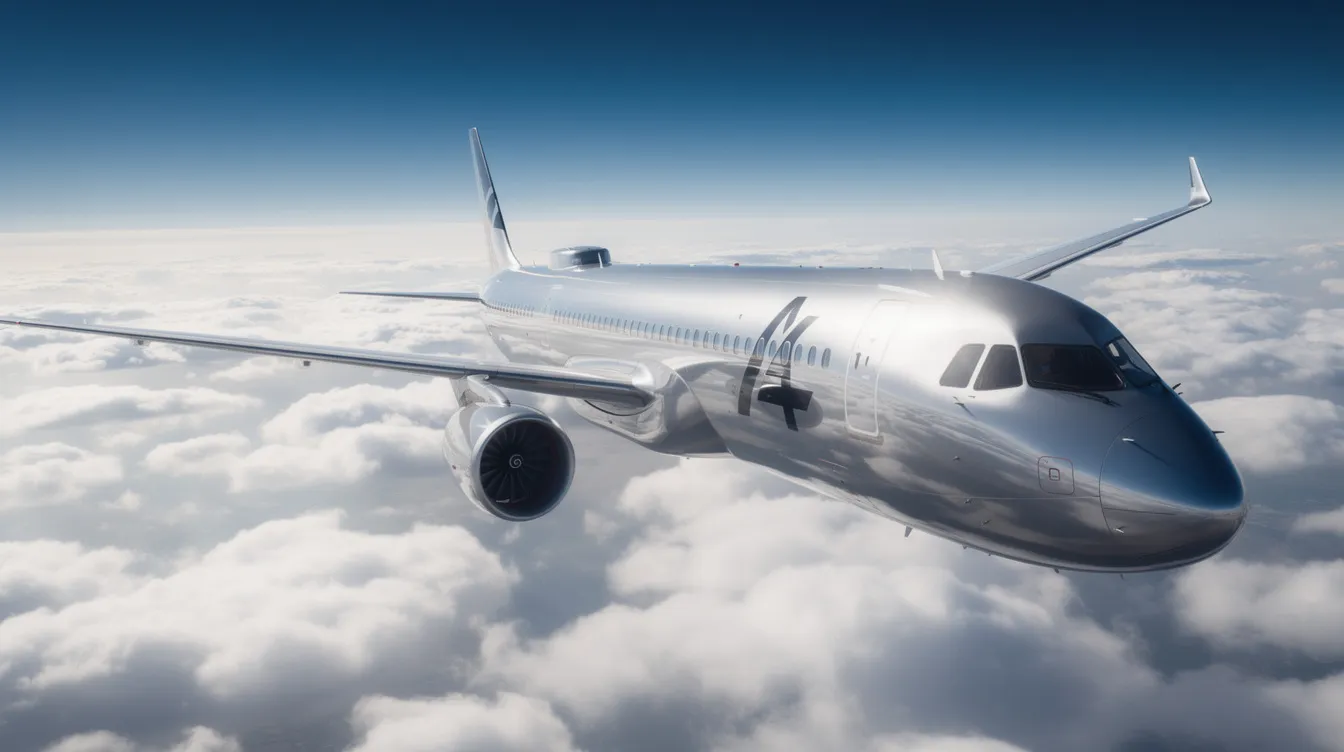
Manufacturers of airplanes include global leaders such as Airbus and Boeing in commercial aviation, along with Bombardier, Gulfstream, Dassault Aviation, Embraer, and Textron Aviation in business and regional aircraft. These companies shape the fleet used for airline travel and private charter alike, affecting aircraft availability, safety, operating costs, and the pace of innovation. For frequent flyers, corporate executives, high-net-worth individuals and families exploring private aviation without the burden of ownership, as well as readers who want a clearer view of the industry behind private jet travel, understanding who builds these aircraft is practical, not abstract.
An aircraft manufacturer is a company that designs, builds, and delivers airplanes for commercial, business, regional, or military use.
This guide looks at the major commercial and business airplane manufacturers, broader market trends in global aircraft production, regional and business jet segments, defense and dual-use makers, and how those manufacturers connect to private charter platforms such as Jettly. It also highlights how new aircraft technology influences the options, experience, and pricing travelers see across private aviation.
The global airplane manufacturing market exceeded $426 billion in 2024 and is forecast to pass $600 billion by 2034, spanning commercial aircraft, business jets, military aircraft, and emerging designs.
Airbus delivered 766 aircraft in 2024, leading the market, while Boeing delivered 348 passenger jets amid ongoing production challenges and a $12.21 billion loss.
Embraer, Bombardier, Textron Aviation, Dassault Aviation, Gulfstream, and Hindustan Aeronautics serve regional jets, business aviation, turboprops, and defense markets.
Aircraft manufacturers build the hardware, but platforms like Jettly connect travelers to these aircraft through certified charter operators, providing on-demand access to over 20,000 unique aircraft.
Future trends include more efficient engines, composite materials, sustainable aviation fuels, and electric or hybrid concepts that will shape both commercial airplanes and business jet operations.
Aircraft manufacturing sits at the core of the wider aerospace industries, encompassing everything from initial construction of commercial airliners to ongoing maintenance, replacement parts, and spare parts supply. The worldwide airplane supply business covers large commercial airliners, regional jets, business jets, turboprops, military aircraft, cargo aircraft production, and emerging eVTOL designs.
Key facts about this aircraft manufacturing ecosystem:
The aircraft manufacturing market was valued at over $426 billion in 2024, driven by fleet renewal, fuel efficiency mandates, and growing air travel demand.
COVID-19 caused a drastic cut in demand for new aircraft, leading to production slowdowns and delivery delays across the entire industry. Recovery is now well underway.
The industry is increasing cargo aircraft production due to e-commerce growth, alongside passenger aircraft demand.
Geographically, major manufacturers span Europe (Airbus), North America (Boeing, Textron, Gulfstream), Brazil (Embraer, founded in 1969), Asia (COMAC, Hindustan Aeronautics, Korea Aerospace Industries), and others.
The global fleet includes tens of thousands of commercial airplanes and thousands of business jets, many accessible for charter through digital platforms such as private charter aircraft services from Jettly.
Airbus and Boeing maintain a high-stakes duopoly over large commercial jetliners, controlling almost exclusive control of narrow-body and wide-body production. This exclusive control shapes airline fleet planning worldwide.
Headquartered in Toulouse and producing Airbus's A series of aircraft, Airbus delivered 766 aircraft in 2024, mostly A320 family, reflecting recovery efforts post-pandemic. Airbus's market cap reached over $150 billion in 2024, with market cap growth of nearly 15% year-on-year.
Product families: A220 (regional), A320neo (short/medium-haul backbone), A330/A350 (long-haul), and the discontinued A380, the world's largest passenger aircraft.
Revenue: Commercial aircraft contributed ~€50.6 billion in 2024, with the rest from helicopters, defense, and space systems.
Backlog: Approximately 8,658 aircraft orders-years of production ahead.
Innovation: Hydrogen propulsion concepts (ZEROe), more efficient wings, and plans to ramp A320 production rates to 75 per month by 2027.
Charter relevance: Airbus Corporate Jets (ACJ) convert standard airliners into VIP transport for government and charter operations. Learn more about these configurations in Jettly's guide to corporate aircraft.
Founded in 1916 in Seattle, Boeing delivered 348 passenger jets in 2024-a sharp decline from 528 in 2023. Boeing's market cap was approximately $130 billion in 2024, and the company faced a $12.21 billion loss that year due to financial challenges, quality issues, and production slowdowns.
Commercial families: 737 MAX (short-haul), 787 Dreamliner (long-haul), 777/767 (long-haul, cargo).
Safety concerns: The 737 MAX grounding (2019–2020) and a 2024 door-plug incident triggered FAA audits and regulatory scrutiny, causing a sudden decline in deliveries and investor confidence.
Boeing Business Jets (BBJ): Based on 737, 777, and 787 platforms with custom cabin interiors and extended range. Read more about the Boeing BBJ.
Defense & services: F-15, KC-46, P-8, and Boeing Global Services (its most consistently profitable division).
COMAC, China's state-backed aircraft manufacturer founded in 2008, produces the ARJ21 regional jet and C919 narrow-body-intended to challenge A320 and 737 aircraft models. By 2025, roughly 37 cumulative C919 deliveries had been made, primarily to Chinese carriers. Certification outside China remains limited; EASA approval is anticipated between 2028–2031.
Other entrants include Russia's Irkut MC-21 (hampered by sanctions) and Mitsubishi's SpaceJet (suspended). Geopolitical factors and supply chain constraints shape their prospects and any future impact on the global fleet.
Beyond large commercial jets, aircraft manufacturing companies serving regional and business aviation markets are more fragmented, with several established brands competing. These private jet manufacturers build the aircraft most commonly found on charter platforms like Jettly; travelers can dive deeper into the best private plane manufacturers for every budget and need.
Embraer is a leader in the regional jet market with its E-Jet family (E170/E175/E190/E195), with over 1,800 E-Jets in service worldwide. Embraer focuses on regional jets alongside a growing executive line.
Delivered 206 aircraft in 2024: 73 commercial jets and 130 executive jets.
Business jet lineup: Phenom 100/300 (light jets), Praetor 500/600 (super-midsize)-popular in charter fleets.
Revenue: US$6.395 billion in 2024, up ~21% year-on-year. Backlog hit a record US$26.3 billion.
Based in Montreal, Bombardier exited commercial airliners to concentrate on business jets. Bombardier delivered 146 aircraft in 2024, focusing on business jets. Bombardier specializes in luxury business aircraft across its Challenger and Global series.
Product lines: Challenger 3500 (super-midsize), Global 5500/6500/7500/8000 (the Global series for ultra-long-range missions).
Key routes: Global jets fly nonstop city pairs like New York–London and Toronto–Dubai, making them favorites for international charter.
Textron Aviation specializes in general aviation and business jets from its Wichita, Kansas base. It produces Citation jets (light/midsize), Cessna Caravan turboprops, and Beechcraft King Air turboprops.
Widely used for charter, air ambulance, cargo, and access to airports with shorter runways.
Supply chain issues in 2023–2024 slowed production, but demand for efficient small aircraft and turboprops remains steady, especially for accessing smaller regional and executive airports worldwide.
Dassault Aviation produces elite business jets and fighter aircraft from its Saint-Cloud, France headquarters. Its Falcon jet family (2000LXS, 7X, 8X, upcoming 10X) features advanced fly-by-wire avionics inherited from Rafale and legacy Mirage fighters.
Record revenues and a historically high market cap in 2024, driven by defense and business jet demand.
Falcon jets serve executives and government delegations across Europe, the Middle East, and North America.
A General Dynamics subsidiary in Savannah, Georgia, Gulfstream focuses almost exclusively on large-cabin business jets. Flagship models include the G500/G600, G650ER, G700, and G800, with ranges connecting city pairs like New York–Tokyo nonstop.
Competes directly with Bombardier's Global series for top-tier charter missions.
Many Gulfstream aircraft are operated by charter providers and accessible via marketplaces like Jettly.
|
Manufacturer |
Headquarters |
Key Products |
2024 Deliveries |
Market Cap (2024) |
Primary Market Focus |
|---|---|---|---|---|---|
|
Airbus |
Toulouse, France |
A220, A320neo, A330, A350, A380 |
766 |
$150+ billion |
Large commercial jets, helicopters |
|
Boeing |
Seattle, USA |
737 MAX, 787, 777, 767 |
348 |
~$130 billion |
Large commercial jets, defense |
|
Embraer |
São José dos Campos, Brazil |
E-Jet family, Phenom, Praetor |
206 |
$6-10 billion |
Regional jets, business jets |
|
Bombardier |
Montreal, Canada |
Challenger, Global series |
146 |
Private company |
Business jets |
|
Textron Aviation |
Wichita, USA |
Citation jets, Caravan, King Air turboprops |
N/A |
$15+ billion |
General and business aviation |
|
Dassault Aviation |
Saint-Cloud, France |
Falcon jets, Rafale fighters |
N/A |
$10+ billion |
Business jets, defense |
|
Gulfstream Aerospace |
Savannah, USA |
G500, G600, G650ER, G700, G800 |
N/A |
Subsidiary |
Large-cabin business jets |
Many aircraft manufacturers rely heavily on defense contracts, which drive innovation in propulsion systems, avionics, landing gear, and composite materials-technologies that later appear in commercial aircraft and business jets.
Lockheed Martin specializes in advanced military aircraft and defense systems. Headquartered in Bethesda, Maryland, it is the world's largest defense contractor by revenue. Originating from the Lockheed Corporation, the company delivered 110 F-35 Lightning II jets in 2024 (over 1,000 total globally). Lockheed Martin delivered over 100 F-35 jets in 2024, reinforcing its position among the largest aircraft manufacturers. Its aircraft are not part of typical charter fleets, but its technology filters into civil applications, just as private aviation providers like NetJets, the industry leader in fractional ownership, bring advanced safety and service standards into the business jet space.
Hindustan Aeronautics Limited, headquartered in Bengaluru, is India's largest aerospace firm, granted Maharatna status in 2024. HAL builds the Tejas light combat aircraft, Dhruv helicopters, trainers, and supports logistics hubs for defense exports across Asia and Africa. Hindustan Aeronautics contributes to India's growing aviation ecosystem, including regional and private operations.
The aircraft manufacturing ecosystem includes several other major manufacturers and smaller specialized firms:
Korea Aerospace Industries (KAI) in South Korea builds the KF-21 fighter and T-50 trainer.
Raytheon Technologies Corporation (now RTX), Rolls Royce, General Electric, and Safran are aerospace suppliers that produce major systems-engines, avionics, and essential components-providing essential components for both civil and military platforms.
Large companies like Leonardo (Italy) and Saab (Sweden) contribute helicopters, transport aircraft, and fighter programs.
Sanctions and geopolitical events have affected certain manufacturers (e.g., Russian civil programs), disrupting the global supply chain.
These firms may not build charter aircraft directly, but their components underpin reliability and safety across commercial jets and business jets.
The total market cap of major aircraft manufacturers is about $610 billion as of 2024–2025. Market cap reflects investor expectations on order backlogs, profit margins, safety performance, and technological leadership. Market cap changes with order backlogs and safety performance-not just annual aircraft deliveries.
Airbus: Market cap exceeded $150 billion, the most valuable company among commercial airframe makers, buoyed by consistent deliveries and a massive A320neo backlog.
Boeing: Market cap was approximately $130 billion in 2024, suppressed by the 737 MAX crisis, production challenges, and financial losses.
Lockheed Martin is among the largest aircraft manufacturers by market cap, supported by long-term government contracts.
Others: Dassault Aviation, Embraer, Textron, and Hindustan Aeronautics reflect cycles in business jets, regional aircraft, and defense spending. Market cap growth across these firms follows delivery volumes and margin improvement.
Manufacturers design and build aircraft, but charter capacity comes from independent operators and owners who purchase or lease them. The aircraft manufacturing industry is dominated by a few major players whose products define charter fleet composition.
Key manufacturers in charter fleets include Bombardier (Challenger and Global series), Gulfstream (G-series), Textron Aviation (Citation jets, King Air, Caravan), Embraer (Phenom, Praetor), and Dassault Aviation (Falcon jets). Understanding aircraft class categories-very light, light, midsize, super-midsize, and large-cabin jets plus turboprops-helps travelers match aircraft to mission needs.
Business aviation saves time by avoiding security lines, boarding queues, and connections. Business jets use smaller airports closer to final destinations, and offer privacy, productivity, and tailored in-flight catering. Per-seat cost is higher but justified for small groups, urgent travel, or complex itineraries, especially when travelers buy a single seat on shared or semi-private flights. More flexible manufacturing processes from OEMs have expanded the range of aircraft available, from light jets for short hops to large-cabin jets for transoceanic flights.
Jettly connects travelers to certified charter operators worldwide, covering over 20,000 unique aircraft. The platform includes jets and turboprops from Bombardier, Gulfstream, Textron, Embraer, Dassault, and other major manufacturers, positioning Jettly as a flexible NetJets alternative for flying private for less.
Instant pricing and on-demand booking through Jettly's booking process and a dedicated jet card flight cost estimator
Membership and pay-as-you-go options via flexible membership plans and structured jet card programs with fixed hourly rates
Transparent cost breakdowns and airport selection guidance
Ground transportation coordination and in-flight catering arrangements
The entire industry is shifting toward more fuel-efficient engines, lightweight composite materials, advanced aerodynamics, and digital flight decks. Sustainability initiatives include sustainable aviation fuel (SAF), hybrid-electric concepts, and eVTOL air taxis. Flexible manufacturing processes and digitalization-predictive maintenance, real-time health monitoring-reduce downtime and enhance safety for both new aircraft entering service and the existing global fleet, while travelers weigh these innovations alongside the full costs of owning or chartering a private jet.
Newer-generation business jets offer quieter cabins, better air quality, longer range, and lower fuel burn. Charter users can ask operators about SAF blends and carbon offsetting. Platforms like Jettly simplify aircraft comparison by showing model, manufacturer, performance, and charter pricing side by side. As manufacturers innovate, charter customers gain access to better aircraft without the financial commitment of ownership.
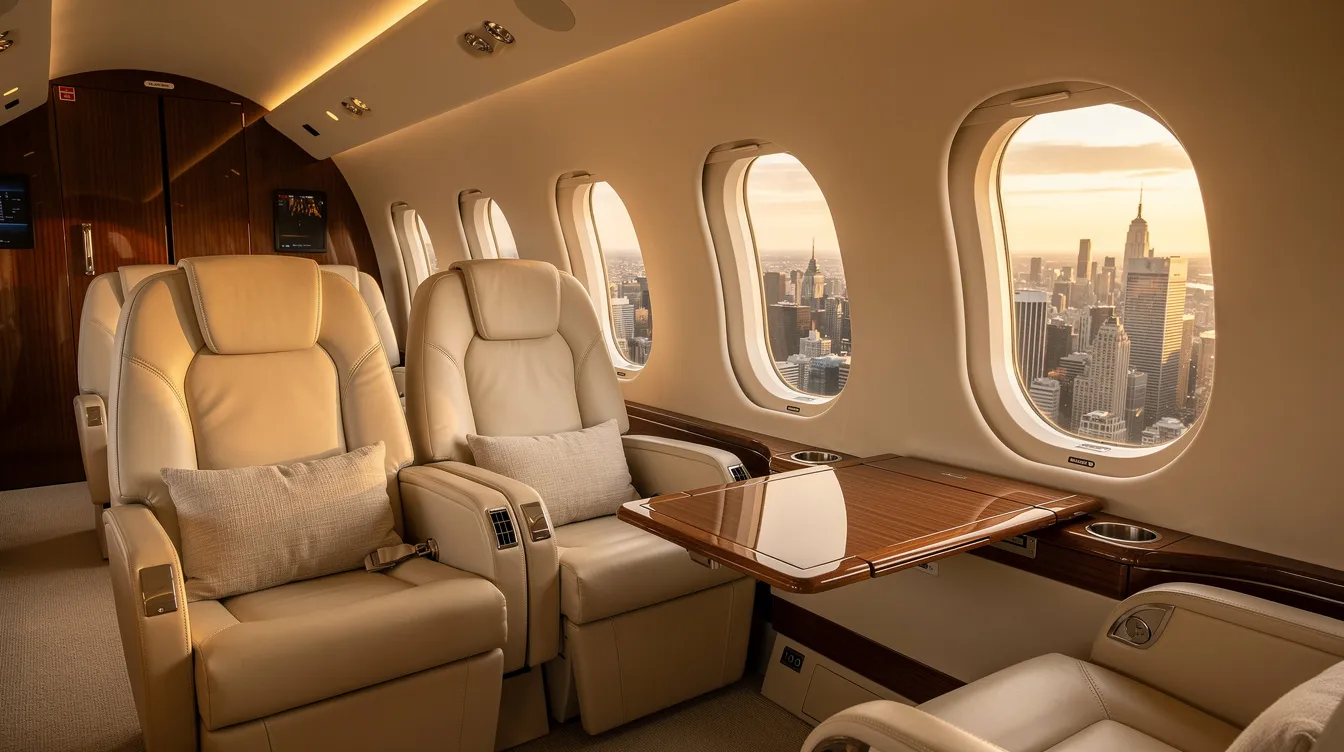
Bombardier, Gulfstream, Textron Aviation (Cessna, Beechcraft), Embraer, and Dassault Aviation supply most business jets available for charter. Models like Citation jets, Phenom, Praetor, Challenger and Global series, G-series, and Falcon jets are frequent options on Jettly. Larger commercial airliners from Airbus and Boeing appear mainly in VIP or government configurations and are less common in standard charter.
Platforms like Jettly do not buy aircraft from manufacturers. They partner with certified charter operators and owners who operate aircraft built by those manufacturers. This separation allows broad fleet access without being tied to a single brand.
Business jets meet rigorous certification standards from authorities like the FAA and EASA, comparable in stringency to those for commercial jetliners. Charter operators comply with operational regulations (such as Part 135 in the US), including crew training and maintenance intervals.
Cost depends on aircraft size, range, speed, fuel consumption, crew requirements, and airport fees. A short regional hop on a light jet may cost a few thousand dollars; a transatlantic flight on a large-cabin jet can reach tens of thousands, especially if you do not take advantage of crowdsourced private jet flights and shared empty seats. Jettly's cost estimator lets users compare prices across aircraft types for the same route.
Travelers can request a particular aircraft category, manufacturer, or model. Final availability depends on operator schedules and airport constraints, but Jettly aims to match preferences closely. Consider both manufacturer and mission needs-range, passenger count, luggage-when selecting.
The manufacturers of airplanes-from Airbus and Boeing dominating commercial aircraft to Embraer, Bombardier, Dassault Aviation, Textron, Gulfstream, and Hindustan Aeronautics serving regional, business jet, and defense markets-collectively build the global fleet that powers modern air travel. Innovation in aircraft design, efficiency, and sustainability will continue enhancing both airline and private jet experiences throughout the coming decade.
Ready to experience private travel on your terms? Explore flight options, compare aircraft types from the world's leading manufacturers, or request a quote at https://www.jettly.com.
Share this post:
Jay Franco Serevilla
Jun 29, 2026
|
5
min read
Discover tips and trends in the industry.

5
min read
Planet 9 Aviation: Ultra Long Range Private Air Travel & How Jettly Helps You Charter It
Planet 9 Aviation specializes in ultra-long-range private jet travel, offering a managed fleet for intercontinental charters. Through Jettly, travelers can easily access these services without the need for ownership or jet cards, ensuring flexibility and convenience in booking private flights.
Read More
5
min read
Guide to Aviation Blogs: From Student Pilots to Private Jet Travelers
Aviation blogs have evolved into essential resources for student pilots, aviation businesses, and private jet travelers. They provide valuable insights on flight training, market trends, and charter options, helping readers make informed decisions. With contributions from industry professionals, these blogs serve as a bridge between education and practical application in aviation.
Read MoreStay updated with our latest insights and tips to elevate your journey with us.
MEMBERSHIPS AND ASSOCIATIONS



Disclaimer: Jettly operates as a charter broker, offering access to a global digital jet charter marketplace. Jettly is not a direct air carrier and does not own or operate aircraft. All advertised flights are conducted by third-party air carriers that are fully licensed and hold the appropriate Part 135 or Part 121 certifications issued by the Federal Aviation Administration (FAA) or equivalent regulatory authorities under U.S. or foreign law. Jettly complies fully with the U.S. Department of Transportation's Part 295 and Part 298 Charter Broker regulations. Jettly does not carry additional liability insurance. Passengers are covered by aircraft operator insurance. TICO: 50023770


