



Login
Get Instant Pricing On 23,000+ Aircraft

>
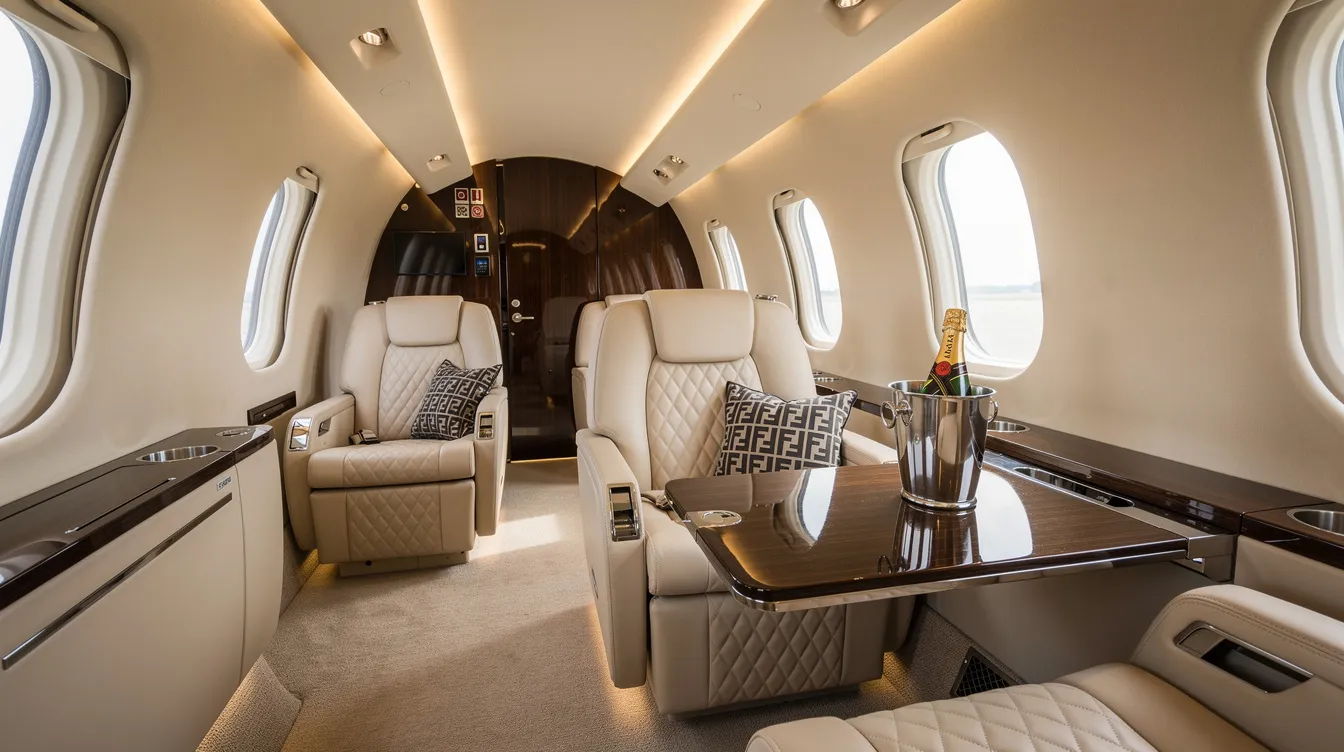
The phrase "luxury private jet cost" covers two very different financial realities. One is private jet rental—chartering a private jet per trip, paying anywhere from $2,000 to $14,000 per hour depending on aircraft size and route. The other is private jet ownership, where purchase prices start around $2 million for older light jets and climb past $75 million for new ultra-long-range platforms like the Gulfstream G800.
In 2026, the private aviation market runs on strong demand, volatile fuel prices, and a growing shift toward digital booking. Platforms like Jettly now make it possible to see real-time private jet pricing across thousands of aircraft, giving travelers a level of transparency that didn't exist five years ago.
This article breaks down real numbers for both flying and owning. It covers concrete examples—New York to Los Angeles, London to Ibiza, Miami to Nassau—and walks through the trade-offs between light jets, midsize jets, and heavy business jets so you can make informed decisions about your next private flight.
Charter costs range from $2,000 to over $20,000 per hour, depending on aircraft type, with light jets at $2,000–$5,000 per hour and heavy jets at $8,000–$14,000 per hour.
Buying a luxury private jet ranges from roughly $3 million for an entry-level light jet to $75 million or more for ultra-long-range flagships, with annual operating costs often running 15–25% of the aircraft's value.
Taxes, positioning flights, short-leg fees, and extras like catering and deicing can add 20–40% on top of base private jet charter costs.
Empty-leg flights can offer discounts of 25% to 75% off standard rates for travelers with flexible schedules.
Jettly's digital marketplace lets private jet travelers compare on-demand charter prices instantly across 20,000+ aircraft, with no long-term ownership commitments required, backed by a broad private charter aircraft network covering every major jet category.
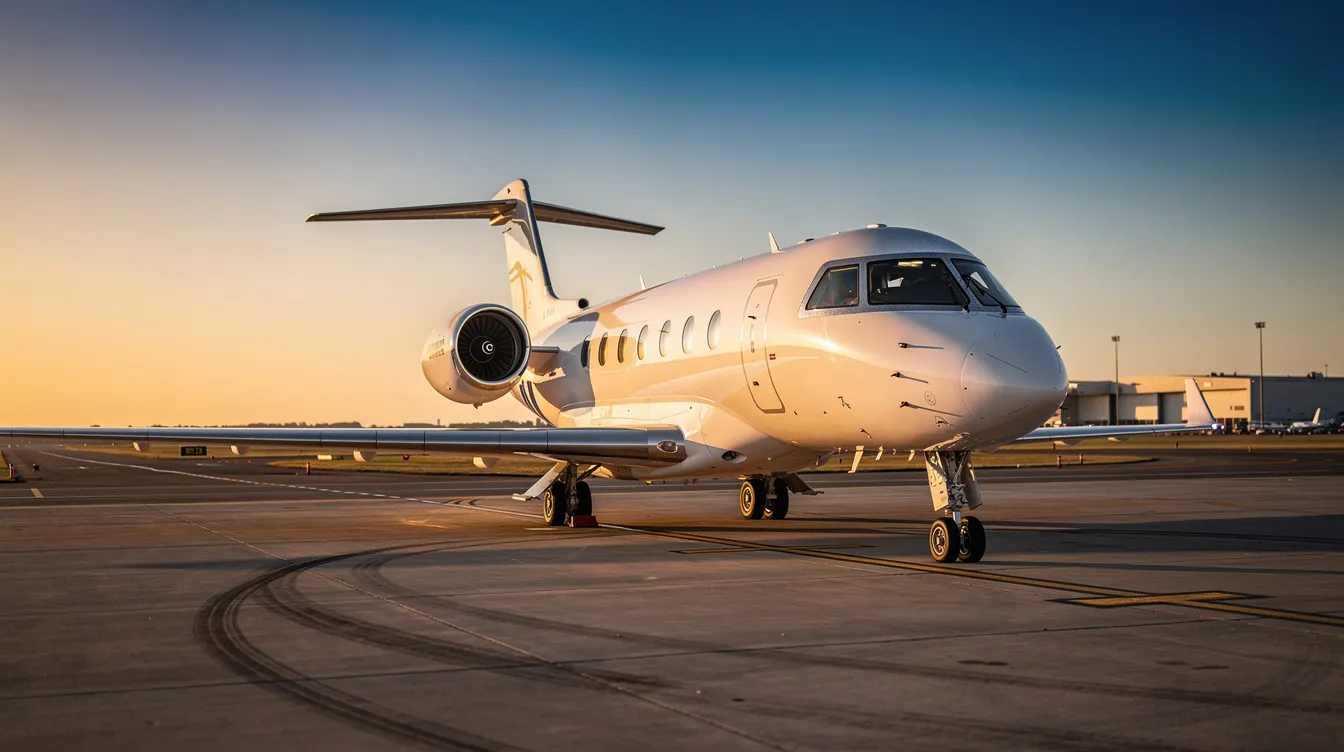
Before diving into the details, here's a cheat sheet of what private jet rental prices look like in 2026.
|
Aircraft Category |
Hourly Charter Rate (USD) |
Typical Passenger Capacity |
Common Use Case Example |
|---|---|---|---|
|
Turboprops |
$1,800–$3,000 |
4–9 |
Miami to Nassau (~45 minutes) |
|
Very Light Jets (VLJs) |
$2,000–$2,800 |
4–6 |
Short regional hops |
|
Light Jets |
$2,600–$3,800 |
4–7 |
New York to Miami (~2.5 hours) |
|
Midsize Jets |
$3,500–$5,500 |
6–9 |
Chicago to Los Angeles (~4 hours) |
|
Super Midsize Jets |
$5,500–$7,500 |
8–10 |
Toronto to Cancún (~4.5 hours) |
|
Heavy and Ultra-Long-Range Jets |
$8,000–$14,000+ |
10–16 |
New York to London (~7 hours) |
Sample all-in trip costs (2026 estimates):
New York to Miami on a light jet (~2.5 hours each way): approximately $18,000–$28,000 round trip, including taxes and fees
Los Angeles to Las Vegas on a light jet (~45 minutes each way): roughly $8,000–$12,000 round trip
New York to London on a heavy jet (~6.5–7 hours each way): often $120,000–$180,000 round trip
Keep in mind that most operators apply minimums of 1.5–2.0 billable hours per leg, even on short routes. A 45-minute hop may still be billed as 1.5 hours, which raises the effective cost per minute of flight time.
Jettly's charter cost estimator can show these ranges in real time based on your specific route and date. Learn more at https://www.jettly.com.
Private jet charter prices are not simply an hourly rate multiplied by flight time. The actual private jet cost is a combination of billable flight time, aircraft type, positioning requirements, taxes, seasonal demand, and operational extras. Flight distance significantly affects private jet pricing, but so do a half-dozen other variables that are easy to overlook.
On Jettly, a displayed quote typically includes the aircraft, crew, standard fuel, and basic handling charges. Any additional extras—catering, deicing, crew overnights—are shown as itemized line items before booking, so there are fewer surprises on the invoice.
Here's how each major pricing factor works.
Operators bill based on actual or minimum flight time, measured from engine start to engine stop. This is called "block time" and includes taxiing on the ground, not just time in the air.
Light jets commonly carry a minimum of 1.0–1.5 billable hours per leg. Larger aircraft often require 2.0+ hours minimum per day.
A 45-minute hop—say, Los Angeles to Palm Springs on a midsize jet—may still be billed as 1.5–2.0 hours because of daily minimums and short-leg fees.
Longer routes like New York to Aspen (~4 hours) tend to have more efficient "per mile" pricing because the minimums are already exceeded.
Example: a flight with 2.2 hours of actual block time might be billed as 2.5 hours once minimums are factored in.
Aircraft type influences the total cost of private jet charters more than almost any other single variable. The gap between a light jet and a heavy jet can be $5,000–$10,000 per hour.
Light jets seat 4–7 passengers with a range of roughly 1,500–2,000 nautical miles. Models like the Citation CJ3+ or Learjet 45XR are workhorses for domestic flights.
Midsize jets carry 6–9 passengers with improved baggage space and have ranges of around 2,500–3,000 nautical miles.
Heavy jets seat 10–16 passengers with a 4,500+ nautical mile range, full stand-up cabins, and advanced connectivity—but their hourly rates reflect that capability.
Jettly's platform allows side-by-side cost comparison across categories for the same route. For guidance on choosing the right jet, matching aircraft size to your mission is the fastest way to control costs.
Aircraft positioning fees cover the cost of moving a private aircraft empty to your departure airport or back to its base after dropping you off. These ferry flights are billed as part of your total private jet rental cost.
If the closest available light jet is based in Chicago but your trip starts in Toronto, the operator may charge 1–2 extra flight hours for repositioning.
Empty-leg flights occur when jets reposition without passengers. These empty-leg flights can offer discounts of 25% to 75% off standard rates, particularly on high-traffic corridors like New York to Florida or London to Nice.
Travelers with flexible schedules benefit most from empty leg flights, since routes and timing are fixed by the aircraft's primary assignment.
Empty-leg flights are often available at short notice, and booking empty-leg flights can significantly reduce travel costs for those who can adjust their plans.
Jettly lists real-time empty legs where available, giving flexible travelers a practical way to fly privately at a fraction of the standard price.
Peak demand can increase private jet costs by 20–40% or even more on the busiest travel days.
Expect surcharges during U.S. Thanksgiving, Christmas through New Year's, Super Bowl weekend, Art Basel Miami, and the Monaco Grand Prix.
Popular private aviation hubs—Teterboro (near New York), Van Nuys (near Los Angeles), London Luton, Paris Le Bourget—tend to carry higher landing and handling fees than nearby regional airports, and international handling fees are often higher at busy international airports because slot coordination and broader ground-service requirements can increase charges.
Using flexible dates and secondary airports (e.g., White Plains instead of JFK, or Northolt instead of Heathrow) can reduce the total cost without sacrificing much convenience, and there are additional tactics for booking the cheapest private jet flights that combine timing, routing, and aircraft choice.
Booking earlier for peak dates typically locks in better aircraft availability and more favorable charter rates.
This section provides a practical breakdown of private jet charter costs for each main jet category, using 2026-appropriate hourly ranges and real-route examples. All costs are estimates. Jettly's instant pricing engine can provide real-time figures based on your specific date, routing, and aircraft availability.
Turboprops like the Pilatus PC-12 and King Air, and very light jets like the Embraer Phenom 100 and Citation Mustang, are the most cost-efficient entry points into private aviation.
Turboprop charters start at around $2,000 per hour, with very light jets running $2,000–$2,800 per hour in 2026.
Route example: Miami to Nassau (~45 minutes) typically costs $5,000–$7,000 round trip, depending on positioning and fuel.
These private aircraft comfortably support 4–6 passengers with modest baggage. Cabins are smaller than light jets but still deliver complete privacy and business-class-level comfort.
Turboprops can access smaller regional airports with short runways that most airliners and larger jets cannot use, making them practical for island hops and mountain destinations.
Jettly often surfaces turboprops as a lower-cost alternative to light jets for regional trips, especially for chartering a small plane where range isn't the priority.

Light jets like the Citation CJ3+, Learjet 45XR, and Phenom 300 are the most popular category for domestic flights with 4–7 passengers.
Hourly charter rates run roughly $2,600–$3,800 per flight hour in North America and Europe. Light jets cost between $2,000 and $5,000 per hour, depending on model and age.
A two-hour flight on a light jet costs about $8,000 to $12,000. Example: Los Angeles to Las Vegas (~45 minutes each way) typically comes in at $8,000–$12,000 round trip. New York to Miami (~2.5 hours each way) runs around $18,000–$28,000 round trip all-in.
For many private jet travelers, light jets hit the best balance of speed, comfort, and private jet cost—especially when chartering a private jet occasionally.
When is a light jet preferable to a turboprop? Generally, when the flight exceeds 90 minutes, when weather conditions call for higher altitude capability, or when client expectations demand a jet-speed experience. Jettly's platform makes it simple to compare both options for the same route and to understand how much it costs to rent a private jet for each category.
A midsize jet (Hawker 800XP, Citation XLS+) or super midsize jet (Challenger 350, Gulfstream G280) is the right fit for 6–10 passengers on 4–6-hour legs.
Hourly rates: midsize around $3,500–$5,500 per hour, super midsize about $5,500–$7,500 per hour.
Route example: Chicago to Los Angeles (~4 hours in a super midsize jet) runs approximately $30,000–$45,000 one-way, all in. Toronto to Cancún (~4.5 hours in a midsize jet) comes to roughly $32,000–$45,000 round trip.
Upgrades over light jets include stand-up cabins, better baggage capacity, and more advanced connectivity options (Gogo AVANCE, Starlink on some aircraft), making them ideal for executive teams and families.
Jettly's inventory includes popular super midsize models like the Challenger 300/350 and G280, often at prices that compete with heavy jets on a per-seat basis, alongside many of the best private jets in the world for travelers prioritizing top-tier luxury and performance.
Heavy jets (Dassault Falcon 2000EX EASy, Challenger 605, Gulfstream G450) and ultra-long-range jets (Gulfstream G650, Global 5000, Falcon 7X) are the flagship category for intercontinental private jet travel.
A heavy jet charter can cost closer to $10,000 per hour and range up to $14,000+ per hour for ultra-long-range platforms with premium cabins and connectivity.
Heavy jets can cost $8,000 to $14,000 per hour, depending on aircraft specifications and route.
Route examples: New York to London (~6.5–7 hours) often runs $120,000–$180,000 round trip. Los Angeles to Honolulu (~5 hours one-way) costs $60,000–$90,000 depending on aircraft and season, and these aircraft are built for long-haul flights, though some trips may still involve fuel-stop or airport-access constraints depending on payload and conditions.
For groups of 10–15, per-passenger cost can be comparable to or below international first-class tickets, especially on time-critical trips. A Boeing Business Jet or converted widebody pushes into even larger aircraft size territory for VIP groups exceeding 20.
Jettly's marketplace can sometimes source empty legs or repositioning deals on these larger aircraft, trimming tens of thousands off premium itineraries. For more details, see how much a private jet costs per flight.
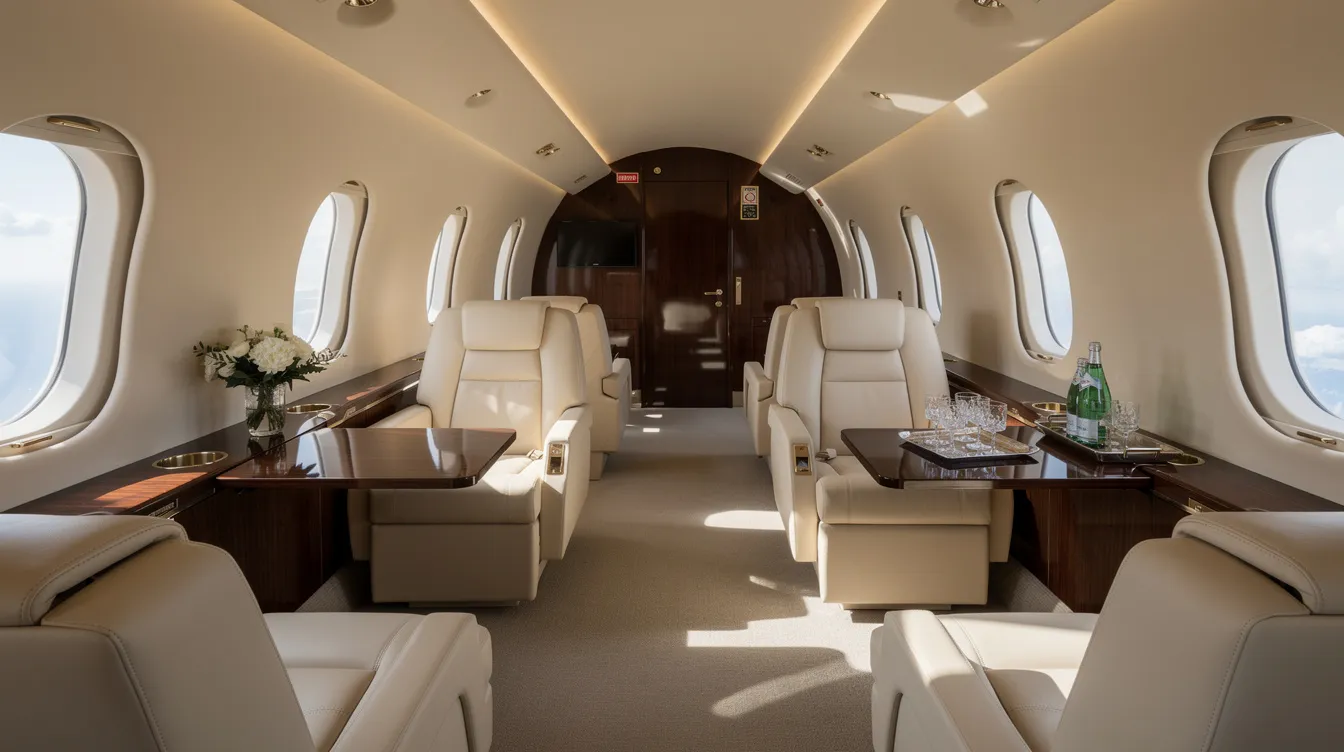
For some travelers, the question isn't "how much does a private jet flight cost?" but whether it makes sense to own a private jet outright. The answer depends on usage, financial tolerance, and how much management complexity you're willing to absorb.
Ownership includes the purchase price plus annual operating costs—crew, maintenance, insurance, hangar fees, and fuel. Charter flights eliminate asset depreciation and fixed overhead costs entirely. Fractional jet ownership and fractional ownership programs split costs among multiple aircraft owners, but still carry ongoing obligations, as illustrated by industry leaders like NetJets and their fractional model.
Here are high-level purchase price bands for 2026:
Light jets: $3 million–$9 million new (a new light jet can cost between $3 million and $9 million)
Midsize jets: $9 million–$16 million new
Super midsize jets: $16 million–$22 million new
Heavy and ultra-long-range jets: $22 million–$75 million+
Pre-owned jets (e.g., a 2010–2014 Challenger 605 or older Gulfstream IVSP) can be 30–60% cheaper to buy, but may carry higher maintenance and upgrade costs. A 2020 Gulfstream G650 was recently listed at approximately $53 million, anchoring the top end of the market. Private jet ownership typically starts around $2 million for older, entry-level models, and buyers looking to minimize acquisition cost often explore affordable planes and budget-friendly aircraft choices before committing.
Owning a private jet incurs annual costs of 15–25% of its value. For a heavy jet valued at $20 million, that means $3–5 million per year in operating and operational costs before touching the purchase price itself.
Key annual operating costs include:
Crew salaries and recurrent training (two pilots minimum; cabin crew for larger aircraft)
Hull and liability insurance ($15,000–$85,000 annually)
Scheduled and unscheduled maintenance, engine reserve programs
Hangar fees (monthly management fee and facility rental)
Navigation and data subscriptions, regulatory compliance
Fuel costs (the single largest variable cost, often 30–40% of the total)
Light jet example: A pre-owned Learjet 45XR valued at around $3.2 million may cost $700,000–$1 million annually to operate at 200 hours per year, with an all-in hourly rate of around $1,800–$3,200.
Heavy jet example: A Gulfstream G650 flying 300 hours per year carries annual operating costs near $3.21 million—roughly $1.83 million in fixed costs plus $1.38 million in variable costs—yielding an all-in hourly cost of around $10,700.
These costs apply even in low-usage years. Fixed overheads don't shrink when the aircraft sits idle, which is why many travelers instead look to affordable private jet charter strategies that keep spending tied directly to actual flight hours.
Luxury private jet interiors—custom leather, hardwood veneers, lie-flat seating, upgraded galleys, and state-of-the-art connectivity—can add hundreds of thousands to several million dollars on larger aircraft.
A full cabin refurbishment and exterior repaint on a Challenger 604 or similar private plane can easily exceed $1 million, depending on scope and materials.
Avionics upgrades (FANS 1/A+, CPDLC, ADS-B Out) are often required to keep older jets compliant with Federal Aviation Administration mandates and desirable on the resale market.
New jets can lose 30–50% of their value in the first five years. Depreciation slows after that but remains a major factor in the total cost of ownership. Resale values are highly sensitive to maintenance program enrollment, engine hours, and avionics compliance.
Chartering a private jet via Jettly shifts all of these capital and upgrade costs to the operator, not the traveler. Aircraft operators and private jet owners absorb the depreciation risk. Private jet leasing is another alternative, though lessees still carry some operational burden; anyone weighing these paths should understand how much a private jet really costs across ownership, leasing, and charter options.
Buying can make sense if you want to own a private jet outright and fly over 300 hours annually. Below that threshold—and particularly under 200 hours per year—chartering or membership models almost always deliver better value.
For executives and families flying 25–150 hours per year, on-demand charter flights or jet card programs offer prepaid flight access without ownership commitments and remain more cost-aligned and flexible; a fractional ownership program can fit travelers whose usage falls between chartering and full ownership.
Jettly's global access to 20,000+ aircraft effectively gives users "virtual fleet ownership" without asset risk, a monthly management fee, or management responsibilities, positioning it as a compelling NetJets alternative for flying private at lower overall cost.
If you're unsure of your annual usage, starting with on-demand charter and then evaluating fractional ownership or purchase with proper cost modeling is the lower-risk path.
Base hourly rates tell only part of the story. Taxes, fees, and operational extras can add 20–40% to the total cost of a luxury private jet flight. Accurate budgeting means accounting for every line item.
Jettly presents these as itemized charges or "all-in" estimates to minimize surprises. Here's what to expect in 2026.
A 7.5% federal excise tax applies to all domestic charter flights in the United States, calculated on the base transportation price.
A domestic segment fee of approximately $5.30 per passenger per flight segment applies at non-rural airports.
International flights to or from the U.S. carry an international arrival/departure head tax of roughly $23.40 per passenger.
These taxes are mandatory whether the charter is booked through an operator, a broker, or a platform like Jettly.
Multi-leg itineraries (e.g., New York–Miami–Nassau–Miami–New York) compound segment and head taxes for each passenger on each leg.
Landing fees range from $100 to $1,500 per flight, depending on aircraft weight and airport congestion. Major hubs like JFK, Miami International, and London airports sit at the upper end.
Ramp and handling fees from fixed-base operators (FBOs) typically run $150–$500 per stop, covering parking, towing, passenger lounge access, and standard ground services.
Some FBOs waive or reduce airport landing fees with minimum fuel purchases, which may show up as a slightly higher fuel line item on the charter invoice.
Smaller executive airports—Teterboro instead of JFK, Van Nuys instead of LAX—often deliver higher convenience with competitive fees. Jettly's advisors can help optimize regional airports for cost savings.
Ask for landing and handling fees to be clearly itemized in any quote.
Short-leg fees apply to flights under 1 hour to cover the high fuel burn during takeoff and landing and the opportunity cost of blocking the aircraft for a very short trip.
Many aircraft operators require daily minimums of 2 billable hours (or more for heavy jets). A same-day out-and-back may be billed as 4 hours even if the actual flight time is just 3 hours.
Crew overnight fees can add $150 to $500 per crew member per night for hotels, meals, and local transport. On a weekend New York to Aspen trip with two overnights, expect $1,000–$2,000 in crew-related costs on top of the base charter cost.
Jettly's quotes present these costs up front where known, based on the planned itinerary.
These line items are often optional but can meaningfully change the final invoice.
Wi-Fi: Some domestic aircraft include connectivity in the hourly rate. International or satellite-based connections may be metered at $2–$9 per MB on certain plans. Always confirm before boarding.
Catering: Ranges from simple snacks and beverages (~$230–$500 per leg) up to full gourmet menus ($1,500–$2,000+ per leg on heavy jets). Special dietary requests add further cost.
Fuel surcharges can add $300 to $900 per hour on top of base rates, depending on global jet fuel pricing.
Cleaning fees can range from $250 and up after flights, particularly on larger aircraft or extended charters.
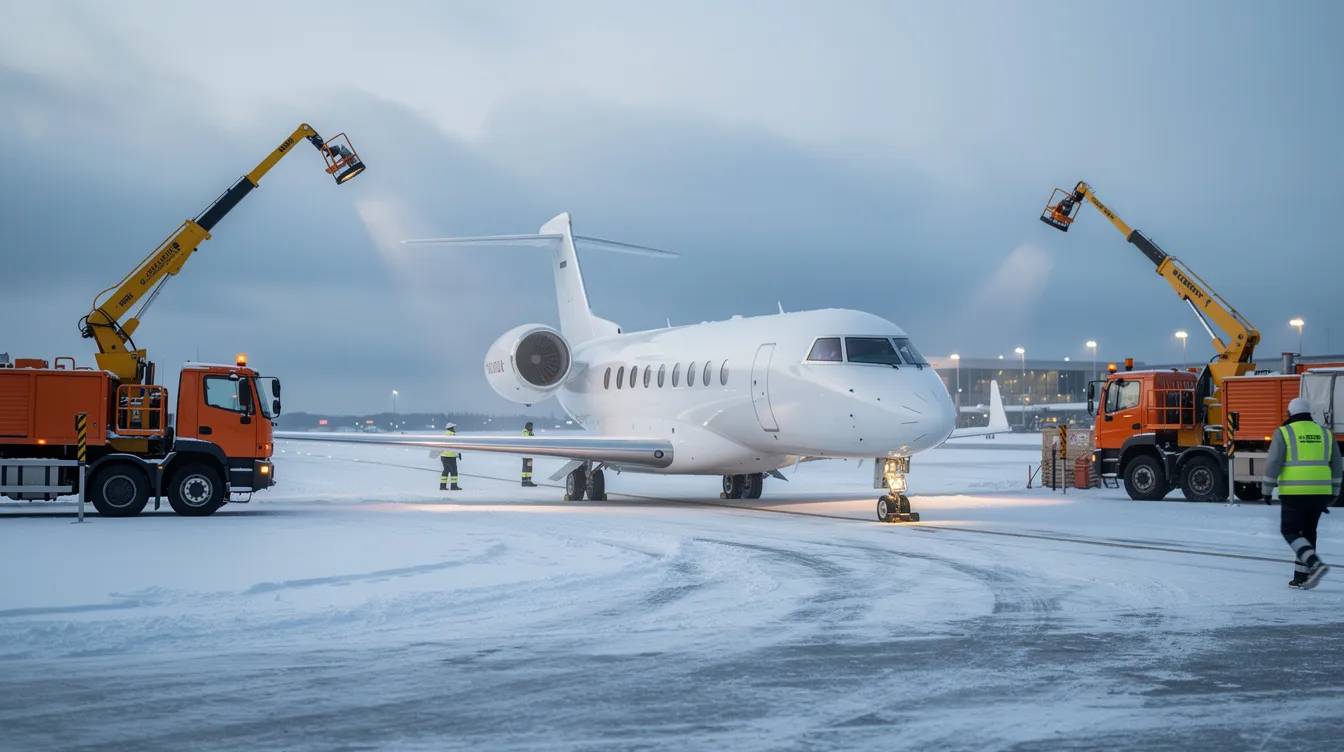
Deicing: Seasonal but unavoidable in winter conditions. Costs range from roughly $1,500 for smaller jets to $10,000+ for larger aircraft at northern airports in Canada, the U.S. Northeast, and Europe.
Ground transportation: Chauffeured SUVs or executive vans arranged through Jettly's partners typically run $180 to $1,000+ per leg, depending on distance and vehicle type.
Decide which extras are "must have" versus optional when budgeting. That choice alone can swing the total cost by thousands per trip.
Jettly is a digital private aviation platform focused on transparent, on-demand private jet charter and memberships. Rather than requiring ownership, private jet leasing, or long-term fractional ownership commitments, it connects travelers with 20,000+ private aircraft worldwide—including light jets, midsize jets, heavy jets, turboprops, and VIP airliners—and sits among a broader ecosystem of private charter airlines and operators that now make private flying more accessible.
Key advantages for managing private jet costs:
Instant route comparison across multiple aircraft types and operators
Access to empty-leg flights when available, cutting costs by 30–75% for flexible travelers and making it easier for some travelers to buy a single seat on a private jet instead of chartering the whole aircraft
No traditional jet card lock-in required (though Jettly's jet card program is available for those who prefer fixed rates)
Digital booking across 190+ countries with integrated catering and ground transport
Support for both business and leisure missions, from short regional hops to long-haul international flights
Users can input route, date, and passenger count on Jettly's platform to see real-time private jet rental cost estimates across multiple aircraft types. The system can surface cost-efficient alternatives—suggesting a turboprop instead of a light jet for a 250-mile trip, for example—to reduce total cost without sacrificing comfort.
Travelers can compare several aircraft—such as a Citation CJ3, Learjet 45XR, and Challenger 300—for the same itinerary, reviewing price, speed, cabin size, and luggage capacity side by side. For complex itineraries involving multi-leg business trips, remote destinations, or time-critical flights, advisory support is available through the platform. Learn how private jet charter works with a step-by-step overview.
Jettly offers private jet memberships that can reduce per-hour private jet costs for frequent flyers while keeping commitments lower than traditional jet cards or fractional ownership programs. Jet cards offer prepaid flight access without ownership commitments, and Jettly's program is designed with that flexibility in mind.
Practical strategies to lower luxury private jet charter costs:
Travel mid-week when aircraft availability is higher and demand-driven pricing is lower.
Avoid peak holiday dates or book 3–6 weeks ahead when peak travel is unavoidable.
Use secondary airports—White Plains instead of Teterboro, or Burbank instead of Van Nuys—to access competitive fees.
Monitor empty legs through Jettly for cheap private jet charter prices on routes that match your plans.
For clients flying fewer than 200 hours per year, these strategies, combined with on-demand charters through Jettly, are almost always more cost-efficient than full private jet ownership.
Flying private carries a clear price premium over commercial airlines. But the math changes when you factor in what the premium buys: time savings, flexibility, privacy, access to regional airports that commercial carriers don't serve, and the ability to be productive—or simply relaxed—from the moment you leave your front door. On some routes, that premium is also weighed against other private jet services or shared-flight alternatives, not just airline tickets.
Consider these comparisons:
A family of four paying $6,000–$10,000 for commercial first-class tickets on an international route may find a $15,000–$20,000 private jet flight acceptable once they account for skipping airport security lines, eliminating layovers, and gaining schedule control.
An executive team flying a multi-city circuit—say, New York to Chicago to Dallas in a single day—would struggle to replicate that itinerary on commercial airlines at any price.
Medical or urgent family travel, poorly served routes, and tight event schedules (like arriving at a conference 30 minutes before it starts) are all use cases where private jet travel delivers value that's hard to measure in dollars alone.
Platforms like Jettly enhance value by ensuring the right aircraft is matched to each mission. A first-time traveler doesn't need a G650 for a 90-minute domestic hop, and Jettly's system helps first-time flyers avoid overpaying for unnecessary aircraft size or range while also guiding them through the best private jet charter companies and top luxury options across the market.
Whether flying private is "worth it" depends on your frequency of travel, the value you place on time, and your overall budget. But understanding real private jet cost numbers—rather than guessing—is how you make that call with confidence.
Below are answers to questions that expand on topics not fully covered in the main body of this article. Each answer is designed to be short, practical, and in plain English.
True last-minute bookings—same-day or within 24 hours—can cost 10–30% more than bookings made a week or more in advance. Tight crew scheduling, limited aircraft availability, and positioning requirements all push the price up. For example, a Friday afternoon New York to Miami request in December during the holiday rush could easily carry a 25–30% premium over the same route booked two weeks earlier.
That said, last-minute empty legs on Jettly can sometimes be cheaper than standard charter rates. This only works when routes and timing align with existing aircraft movements, but it's worth checking if you can fly privately with any flexibility.
Most private jet charters price the entire jet, not individual seats. Passengers are free to split the cost among themselves however they choose. For 6–10 passengers on a midsize or super midsize jet, per-person costs can drop to levels comparable to business or first-class commercial fares on the same route, and some platforms now make it easier to share or crowdsource private jet flights by listing and booking empty seats.
Jettly currently focuses on whole-aircraft charters rather than on selling individual seats. The lead traveler typically signs the charter agreement, even when multiple people contribute to the total.
For trips under 500–600 miles with 2–5 passengers, turboprops or very light jets usually offer the best balance of comfort and cost. For 1–2-hour flights with 6–8 passengers, light jets tend to be more efficient once speed and weather flexibility are factored in.
Using a heavy jet for very short legs can trigger short-leg fees and higher daily minimums, making it less cost-effective unless cabin size or the specific mission demands it. Jettly's advisors can recommend the most suitable category once route, passenger count, and luggage needs are confirmed.
Some aircraft operators now offer carbon offset programs or use sustainable aviation fuel (SAF), which can add a small surcharge per flight hour or per ton of CO₂ offset. Newer, more fuel-efficient aircraft—such as the Praetor 600, G280, or PC-24—can slightly lower both emissions and fuel-related operating costs.
Jettly works with operators focused on efficient routing and modern fleets, which can reduce both environmental impact and fuel surcharges where options are available. Air carrier certificate holders operating under strict Federal Aviation Administration oversight are increasingly incorporating sustainability into their fleet planning.
Booking 7–14 days in advance for non-peak dates generally provides the best balance of aircraft choice and private jet charter prices. For high-demand periods—Christmas, New Year's, major sporting events—booking 3–6 weeks ahead secures better private aviation options and avoids surge pricing.
Jettly can still arrange charter flights within a few hours where aircraft and crews are available, but last-minute flexibility may come at a premium. Use Jettly's online tools early in your planning to see how prices shift across dates and times. For more on timing strategies, read about when the cheapest time to book flights really is.
Chartering a private jet typically costs $2,000 to $14,000+ per flight hour, depending on aircraft type, with private jet rental prices reaching over $20,000 per hour for the largest VIP aircraft.
Total private jet cost includes more than the base hourly charter rates. Federal excise tax (7.5% in the U.S.), aircraft positioning fees, landing fees, short-leg fees, crew overnights, and optional services like Wi-Fi and catering all contribute to the final number.
Private jet ownership demands millions in purchase price plus significant annual operating costs that can run $1–4 million per year for large-cabin aircraft. For most private jet owners flying under 300 hours annually, chartering remains the more efficient path.
Choosing the right category—light jets versus midsize versus heavy—and leveraging tools like Jettly's instant pricing can reduce overall spend while maintaining a luxury private travel experience. Understanding private jet cost at this level of detail is what separates informed decisions from expensive guesses.
Ready to experience private travel on your terms? Explore flight options or request a quote at https://www.jettly.com.
Share this post:
Jay Franco Serevilla
Jul 11, 2026
|
5
min read
Discover tips and trends in the industry.
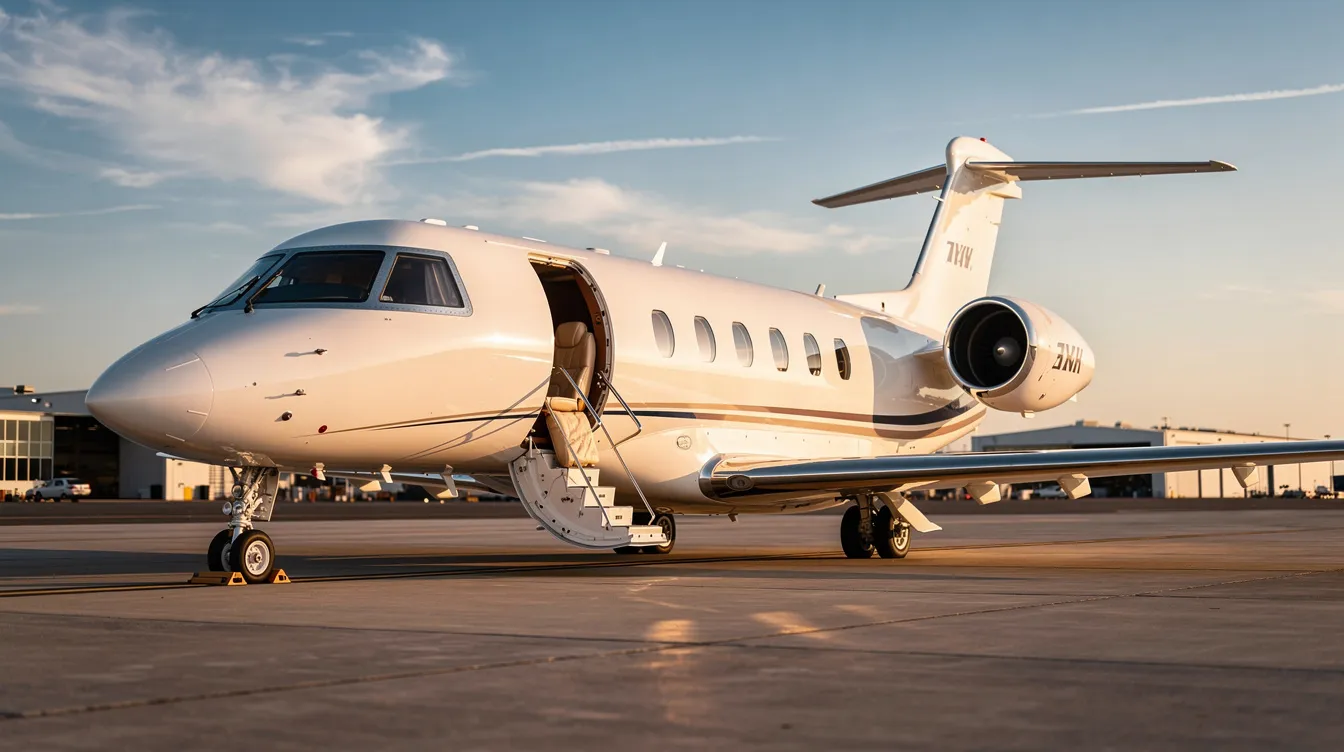
5
min read
Jet Deals: How to Find the Best Private Jet Prices with Jettly
Discover how to find the best private jet prices with Jettly, where jet deals make luxury travel more accessible. From empty leg flights to membership benefits, Jettly offers significant savings and real-time comparisons across 20,000+ aircraft.
Read More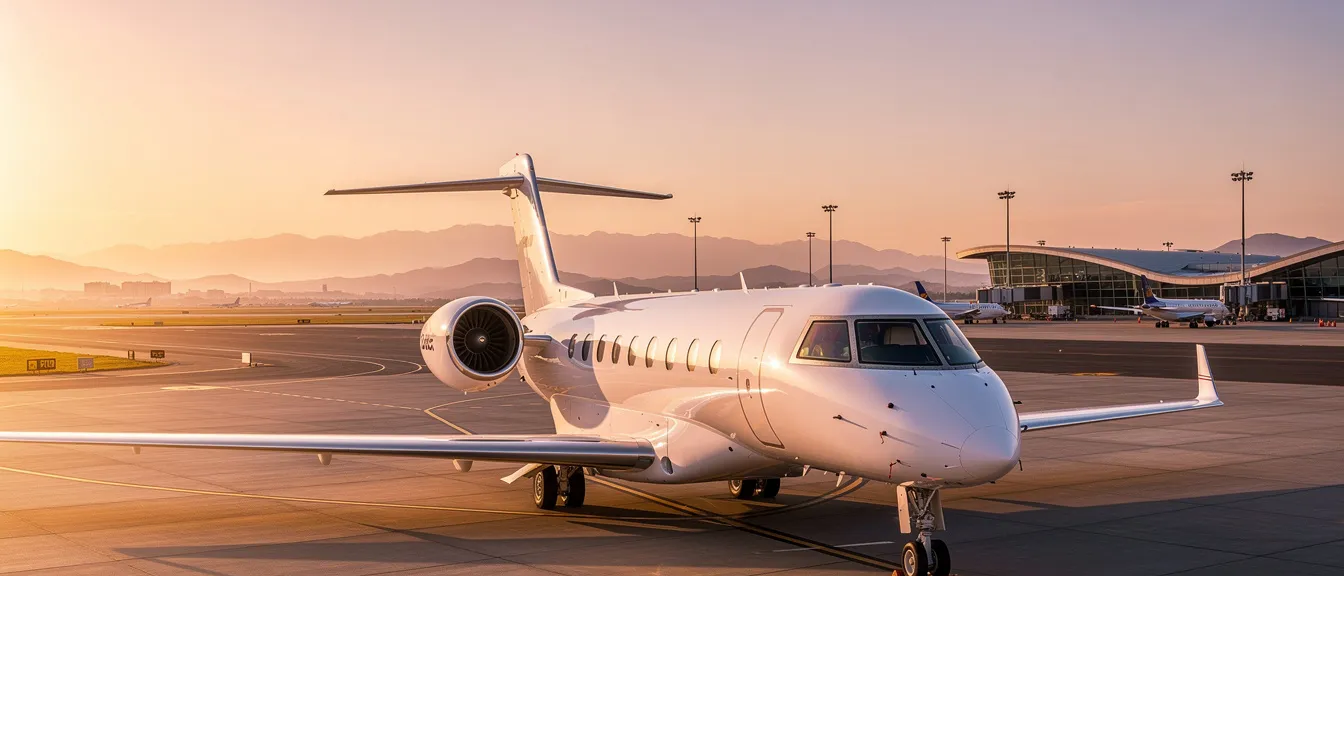
5
min read
Semi Private Flights Oakland: How to Fly Smarter via Oakland International Airport
Semi-private flights from Oakland International Airport provide a convenient and cost-effective alternative to traditional commercial air travel. With access to private terminals and reduced wait times, travelers can enjoy a more comfortable flying experience to popular destinations like Los Angeles and Las Vegas. Platforms like Jettly simplify the booking process, allowing for quick comparisons of flight options and pricing.
Read MoreStay updated with our latest insights and tips to elevate your journey with us.
MEMBERSHIPS AND ASSOCIATIONS



Disclaimer: Jettly operates as a charter broker, offering access to a global digital jet charter marketplace. Jettly is not a direct air carrier and does not own or operate aircraft. All advertised flights are conducted by third-party air carriers that are fully licensed and hold the appropriate Part 135 or Part 121 certifications issued by the Federal Aviation Administration (FAA) or equivalent regulatory authorities under U.S. or foreign law. Jettly complies fully with the U.S. Department of Transportation's Part 295 and Part 298 Charter Broker regulations. Jettly does not carry additional liability insurance. Passengers are covered by aircraft operator insurance. TICO: 50023770


