


Login
Get Instant Pricing On 23,000+ Aircraft

>
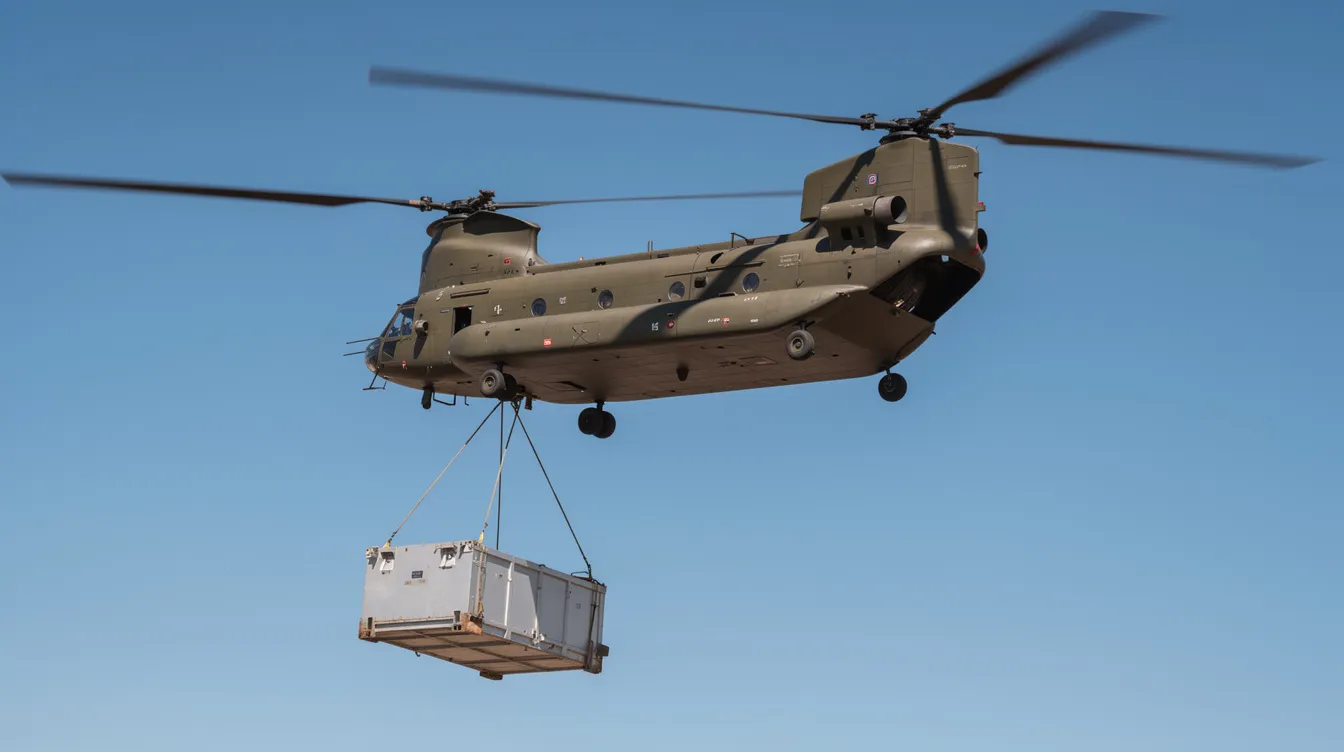
Few aircraft in aviation history have earned a reputation as a true workhorse quite like the CH-47 Chinook. Whether it is hauling artillery across a battlefield, delivering supplies to a disaster zone, or placing steel beams atop a skyscraper, the lift capacity of a Chinook helicopter defines what is possible in heavy vertical transport.
This guide is intended for aviation professionals, project planners, and anyone interested in understanding the real-world capabilities of the CH-47 Chinook. Knowing the true lift capacity of a Chinook is essential for mission planning, safety, and comparing helicopter options for heavy-lift operations.
This guide breaks down exactly how much a Chinook can carry, what reduces that number in the real world, and how this iconic tandem rotor helicopter compares to other heavy lift platforms.
The CH-47 Chinook is one of the world's most capable heavy-lift helicopters, combining raw payload performance with speed, range, and proven reliability across six decades of service. Here are the essentials:
A standard CH-47 Chinook can lift up to about 26,000 lb (11,793 kg) externally at sea level, making it the benchmark heavy lift helicopter for military and civilian operations worldwide.
Lift capacity drops at higher altitude and higher temperature. At 5,000 feet and 30°C, expect roughly 22,000 lb externally. In extreme hot-and-high conditions, the CH-47F can lift around 16,000 pounds. These figures are critical for planning heavy lift operations.
Modern CH-47F and Block II upgrades improve lift, range, and reliability, keeping the Chinook relevant for military, construction, and disaster relief missions well into the 2040s.
While Jettly focuses on private jet and helicopter charters, understanding Chinook-level heavy-lift capability helps clients compare mission requirements to civilian charter solutions for passengers, light cargo, and time-critical travel.
A heavy-lift helicopter is a rotorcraft designed to carry loads far beyond what standard passenger or utility helicopters can manage. Lift capacity figures matter because they determine what equipment, materials, or personnel can reach remote or inaccessible sites without ground transport.
The industry generally breaks helicopters into broad categories:
Light: Primarily passenger transport with minimal external load (under 1,000 lb)
Medium: Approximately 1,000–6,000 lb external load capacity
Heavy: 6,000–36,000+ lb, purpose-built for cargo, construction, and military logistics
The CH-47 Chinook sits firmly in the heavy category. Some US Army documents classify it as "medium" only because the CH-53K King Stallion is heavier, but by any global standard, the Chinook is a heavy lift helicopter.
Key heavy lift types for reference:
CH-47 Chinook – ~26,000 lb external
CH-53E/K Super Stallion / King Stallion – ~32,000–36,000 lb external
S-64 Skycrane – ~20,000 lb external
Mil Mi-26 – ~44,000 lb external
Most private charter helicopters available through platforms like Jettly fall in the light-to-medium category, so Chinook-level capacity is a specialist capability rather than a typical helicopter charter option.
So how much can a Chinook helicopter lift? At sea level under standard atmospheric conditions, a CH-47D or CH-47F can carry up to 26,000 lb (about 11.8 metric tons) on its center cargo hook. The CH-47 Chinook can lift 26,000 pounds at sea level, and the maximum gross weight of the CH-47F is 50,000 pounds; its maximum takeoff weight is the highest total weight the helicopter is approved to depart with.
To put that in perspective:
Roughly 5 Ford F-150 pickup trucks stacked on a sling
A 40-foot shipping container with light cargo inside (empty containers weigh about 8,000–10,000 lb)
A medium-sized pre-fabricated bridge span delivered directly to a river crossing
The cabin of the CH-47 Chinook offers 42 cubic meters of cargo space, and it features a rear ramp for easy cargo access. Internal payload capacity reaches around 24,000 lb in favorable conditions when configured for cargo rather than troops. The useful load for the CH-47F Block II is approximately 27,700 lb, which covers everything aboard: fuel, crew members, and payload combined.
Empty weight is the aircraft’s base weight without payload, crew, or usable fuel, and it helps determine how much payload remains available.
External sling loads on the cargo hooks are the Chinook's specialty. These allow oversized or awkward items that simply cannot fit inside the fuselage to be transported beneath the aircraft.
Here is where published maximums meet operational reality. "Density altitude" is the concept pilots use to account for how thinner, warmer air reduces both engine output and rotor efficiency. The higher and hotter it gets, the less a helicopter can lift.
The Chinook can operate at altitudes up to 20,000 feet, though payload is significantly reduced at that ceiling.
Key altitude and temperature effects on Chinook performance:
At 5,000 feet elevation and 30°C (86°F), a CH-47 Chinook may lift around 22,000 lb externally, roughly 4,000 lb less than at sea level.
The CH-47F can lift approximately 16,000 pounds in high-hot environments where conditions are most demanding.
High humidity and heat can reduce maximum lift by over 30% in mountainous terrain.
The CH-47 Chinook operates effectively in high-altitude environments. Its design allows it to maintain superior maneuverability in high-altitude environments where other helicopters simply cannot perform. During operations in Afghanistan, commanders consistently chose Chinooks over other helicopters for missions above 10,000 ft because no better alternative existed.
For comparison, an S-64 Skycrane might manage roughly 10,500 lb under similar hot-and-high conditions, highlighting the Chinook's edge in demanding environments.
For charter planning in high-altitude areas, clients often rely on fixed-wing turboprops or jets for passenger transport, drawing from a wide range of private charter aircraft types and performance profiles. Heavy-lift rotorcraft like Chinooks handle the oversized cargo and disaster relief tasks that no airplane can.
The Chinook's most distinctive feature is its tandem rotor layout: two large, counter-rotating rotors mounted at the front and rear of the fuselage. This is fundamentally different from a conventional helicopter with a single main rotor and tail rotor.
The key advantage is efficiency. Eliminating the tail rotor means all engine power goes directly into lift and thrust. A conventional helicopter typically diverts 10–15% of its engine output just to counteract torque via the tail rotor. The Chinook wastes none of that energy.
The aircraft uses a five-transmission architecture with power cross-connected between two engines and both rotors. If one engine fails, the remaining engine keeps both rotors turning, preserving controlled flight.
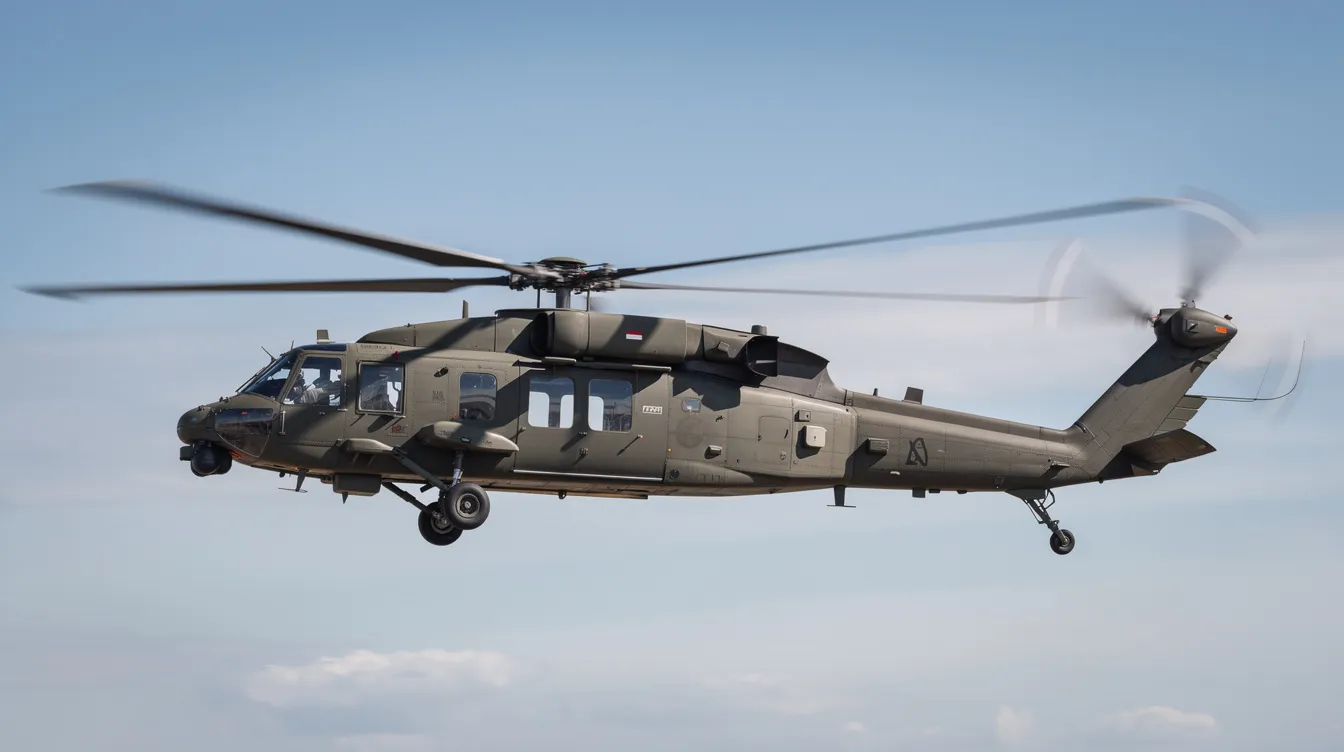
Performance benefits of the tandem rotor helicopter design:
Tandem rotors provide increased stability in windy conditions and during hover
Long or awkward loads can be suspended between the landing gear for better balance
Sling loads swing less compared to single-rotor aircraft, making the Chinook's design ideal for stable cargo lifting and dropping
The CH-47 can perform rolling landings and take-offs, useful on short or unprepared surfaces
The Chinook can hover safely in harsh conditions thanks to its dual rotor disc area
It features a Digital Automatic Flight Control System (DAFCS) that helps crews maintain precise hover positioning with heavy loads. While most charter helicopters on Jettly use conventional layouts optimized for passenger comfort and capacity, the Chinook's tandem design is optimized specifically for heavy lift operations.
The Honeywell T55 turboshaft engines are the muscle behind the Chinook's lift capacity. Over six decades, successive engine upgrades have steadily increased what the aircraft can carry.
Engine power progression across variants:
CH-47A (1960s): ~2,650 shp per engine
CH-47D (1982 onward): ~4,500 shp per engine
CH-47F / Block II (current): ~4,777 shp per engine (Honeywell T55-GA-714A)
More shaft horsepower, improved gearboxes, and advanced composite rotor blades have raised the Chinook's practical lift capacity across each generation. The two engines combined deliver over 9,500 shp, giving the aircraft its designation as a powerful engine.
The top speed of the CH-47 Chinook is 170 knots, approximately 200 mph. The CH-47F can achieve a maximum cruise speed of 160 knots. A common avionics architecture system (CAAS) glass cockpit provides integrated displays that reduce pilot workload and improve situational awareness during complex missions.
The CH-47F is the current production baseline for the US Army and many international operators. Block II enhancements focus on even more lift, endurance, and future mission systems. The T55-714C engine variant under development promises roughly 20% more power and 8% better fuel efficiency, directly benefiting hot-and-high performance.
The cargo hook system is central to the Chinook's role as a heavy lift helicopter. The CH-47 Chinook features a triple-hook system for external loads, arranged along the aircraft's belly.
The standard three-hook layout:
Forward hook: For loads that need to ride ahead of the center of gravity
Center hook: The primary heavy lift point, rated for the full 26,000 lb at sea level
Aft hook: For loads positioned rearward or for distributed multi-point lifts
Typical operations include single-load lifts (one 20,000+ lb item on the center hook) and multi-point configurations where dual or triple loads are carried simultaneously. The Chinook can carry heavy artillery loads, including 155 mm howitzers, and can transport heavy equipment, including artillery, vehicles, and construction materials.
Cargo hooks feature reinforced assemblies, fail-safe mechanisms, and crew procedures that allow safe release even under extreme tension. A flight engineer monitors sling loads in real time during operations.
Common civilian applications include:
Lifting HVAC units onto high-rise rooftops
Setting transmission towers in remote terrain
Placing pre-fabricated bridges over rivers or canyons
Moving construction equipment to sites without road access
Lift capacity means little without the speed and range to deliver cargo efficiently. High cruise speed and extended range allow more tons moved per hour of operation.
Key performance figures for the CH-47F:
Maximum speed: 170 knots (~200 mph)
Typical cruise speed: ~140–160 knots (260–296 km/h), depending on load and conditions
Internal fuel capacity: Approximately 1,080 gallons in standard fuel tanks
Fuel burn: Roughly 340 gallons per hour without extended range fuel tanks
The Extended Range Fuel System (ERFS) adds internal tanks to boost fuel capacity and reduce refueling stops. This is especially valuable for long over-water flights, remote disaster relief missions, or extended-range deployments where landing zones are far apart, similar to how choosing the best cross-country plane for your travel journey depends on balancing range, speed, and payload.
For comparison, the S-64 Skycrane cruises at roughly 115 knots, meaning Chinooks can complete significantly more round trips in the same project window. This makes the CH-47 one of the fastest transport aircraft in the heavy lift category.
The Chinook's advertised lift capacity has been validated in combat, humanitarian, and commercial operations since the early 1960s, when the Boeing model first took its first flight.
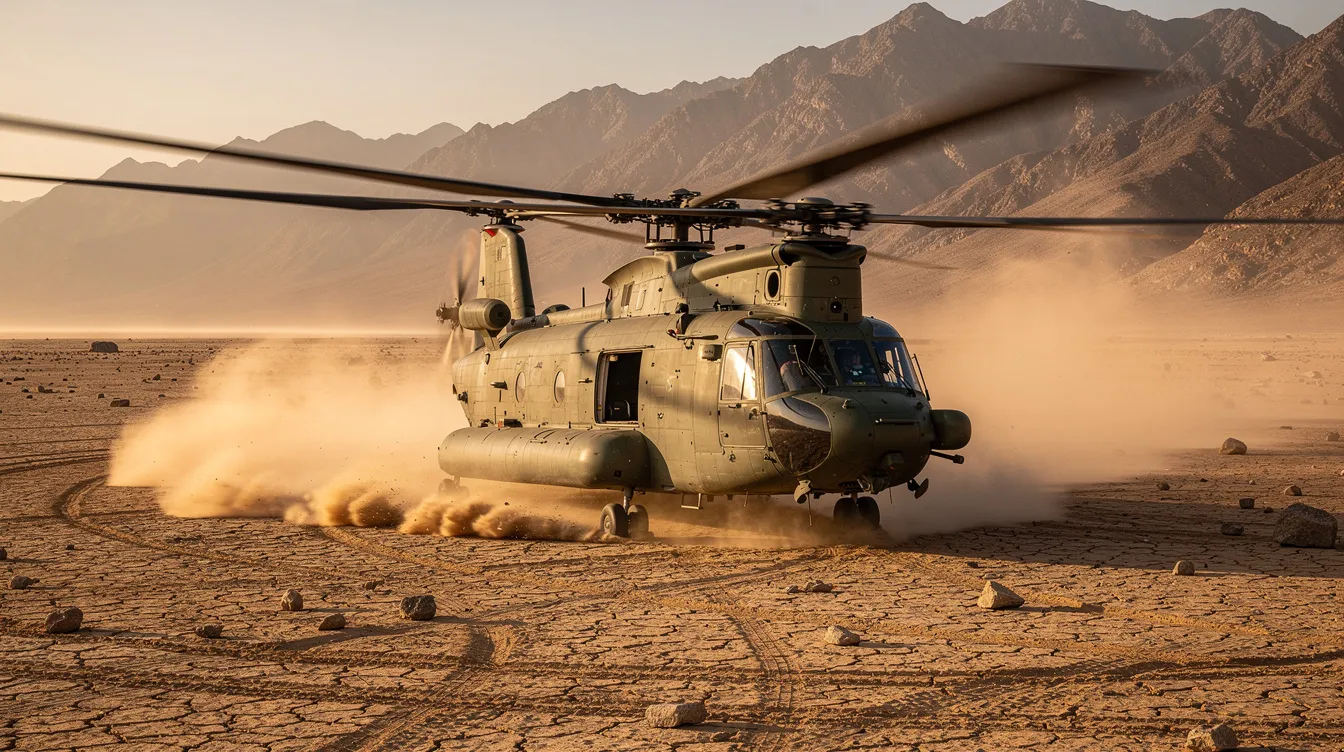
Vietnam War: The Chinook entered service in 1962 and quickly became essential for artillery emplacement, resupply, and aircraft recovery. Crews routinely lifted howitzers, fuel bladders, and downed helicopters from jungle landing zones where no other transport aircraft could operate. The army ordered hundreds of Chinooks during this period, and the aircraft proved its worth in troop transport and casualty evacuation under fire.
Falklands War: RAF Chinook "Bravo November" became legendary for operating in harsh weather across long ranges, carrying loads from ships to remote islands in the South Atlantic. The aircraft also saw service in Northern Ireland and other British operations.
Afghanistan and Iraq: High-altitude, hot-weather environments where Chinooks often replaced multiple Black Hawk helicopters for troop and cargo moves. During Operation ANACONDA in 2002, Chinooks lifted combat troops into high-altitude valley positions where the aircraft could carry up to 36 troops in combat operations. The CH-47 Chinook features enhanced capabilities for special operations in its MH-47G variant, used by United States military special operations forces.
Civilian missions: Logging, power line construction, offshore support, and disaster relief worldwide demonstrate that heavy lift capacity is not purely theoretical.
High lift capacity and stability make Chinooks invaluable during disaster relief operations, where speed and payload determine how many lives are saved.
Historical examples include:
Hurricane Andrew (1992): Chinooks moved pallets of water, food, and generators into devastated areas of southern Florida
2004 Indian Ocean Tsunami: Indian forces and allied militaries deployed Chinooks to deliver relief supplies to coastal communities
2005 Kashmir Earthquake: CH-47s flew into mountainous terrain above 10,000 ft to deliver tents, medical supplies, and rescue personnel
Fukushima (2011): Chinooks assisted with medical evacuation and logistics support
Wildfire and flood evacuations: Chinooks have served in rescue and secondary missions worldwide
Typical disaster relief loads include pallets of water and food, temporary bridges, fuel bladders, generators, and large groups of evacuated civilians. The Chinook can land on damaged runways or improvised sites, or operate purely via sling load when landing is impossible.
In large-scale crises, heavy-lift helicopters move infrastructure and equipment while chartered jets and smaller helicopters handle medical teams, officials, or evacuees. Platforms like Jettly facilitate disaster response air transport for these lighter but time-critical missions, supported by tools such as an airport locator to identify suitable nearby airfields quickly.
Understanding Chinook lift capacity is easier when placed alongside other heavy-lift aircraft in the global fleet.
|
Helicopter |
Max External Load |
Cruise Speed |
Primary Operators |
|---|---|---|---|
|
CH-47F Chinook |
~26,000 lb |
~160 knots |
US Army, UK, 20+ nations |
|
CH-53K King Stallion |
~36,000 lb |
~170 knots |
US Marine Corps |
|
S-64 Skycrane |
~20,000 lb |
~115 knots |
Civil operators globally |
|
Mil Mi-26 |
~44,000 lb |
~137 knots |
Russia, India, others |
While the Mi-26 and CH-53K can lift more, they are rarer, primarily military-operated, and not typically available to civilian clients. The CH-47 hits a practical balance of lift, cruise speed, and global support network, making it one of the most widely used heavy lift helicopters worldwide.
For most commercial or government projects short of the absolute heaviest loads, the Chinook's 20,000–26,000 lb lift capacity is sufficient and more economical than bringing in a CH-53K or chartering a Mi-26, especially when missions are coordinated with compliant Part 135 charter companies for passenger or light-cargo support.
Heavy lift capability comes with high hourly operating costs, but the Chinook remains cost-effective when operating near its maximum payload.
Key cost considerations, which parallel how private fliers use a private jet charter cost estimator to budget missions:
Fuel burn: ~340 gallons/hour for a CH-47 vs. ~500 gallons/hour for an S-64, meaning better fuel efficiency relative to the load delivered
Time savings: Moving one large item with a single Chinook sortie can be cheaper than dispatching several smaller helicopters for multiple trips, especially when project windows are tight
Parts and support: Boeing's large production run (approximately 1,200+ units since the 1960s) has created a robust global supply chain that stabilizes helicopter rental costs and maintenance pricing
Platforms like Jettly typically arrange lighter helicopters and jets for passenger and light cargo missions. However, project planners often compare those solutions with specialist heavy lift providers when oversized loads are involved, much like evaluating the cheapest private aircraft options when balancing capability against budget. Understanding the cost-per-ton difference helps determine which aircraft type fits the budget.
For heavy lift operations, reliability is just as important as raw lift capacity. Weather windows close fast, and project timelines rarely allow for extended downtime.
The CH-47 Chinook has redundant systems for safety, and redundant systems improve reliability during single system failures. The Chinook's redundancy includes avionics, hydraulics, and powerplant systems. Multiple systems allow the Chinook to continue flying safely even when individual components fail.
Key redundancy features:
Dual engines with cross-shafting so both rotors keep turning if one engine fails
Multiple hydraulic systems operating independently
Duplicate avionics and electrical pathways
Three crew members (pilot, copilot, and flight engineer) provide overlapping oversight
Well-maintained commercial Chinook fleets report availability rates that keep downtime to just a few percent. This redundancy allows mission continuation even during complex sling loads over urban areas or extreme environments.
This same emphasis on redundancy and safety culture underpins aircraft selection on charter platforms like Jettly, where only certified operators meeting strict standards are listed, similar to the vetted operators highlighted in comprehensive guides to charter airlines and private flights.
Large-scale production supports long-term lift capacity by ensuring parts, upgrades, and trained crew members remain available for decades.
Boeing and its partners have produced roughly 1,200 CH-47 and related Boeing model variants since the late 1960s, serving more than 20 countries.
Key international operators include:
US Army – the largest operator, with the CH-47F as the fleet backbone
UK Royal Air Force – including the famous Falklands-era Chinooks
Canada, Australia, Italy, Japan, India, Netherlands – among the major allied users
Indian forces deploy Chinooks for high-altitude operations in the Himalayas
Licensed production in Italy and Japan has expanded the global supply chain further. Continuing upgrade programs such as the CH-47F and Block II extend service life well into the 2040s–2050s, ensuring long-term heavy lift support for military, government, and civilian missions worldwide, just as leading private jet charter companies ensure continuity of premium aviation services for high-end travelers.
Heavy lift capacity remains strategically important for both defense logistics and civil infrastructure projects in remote or disaster-prone regions.
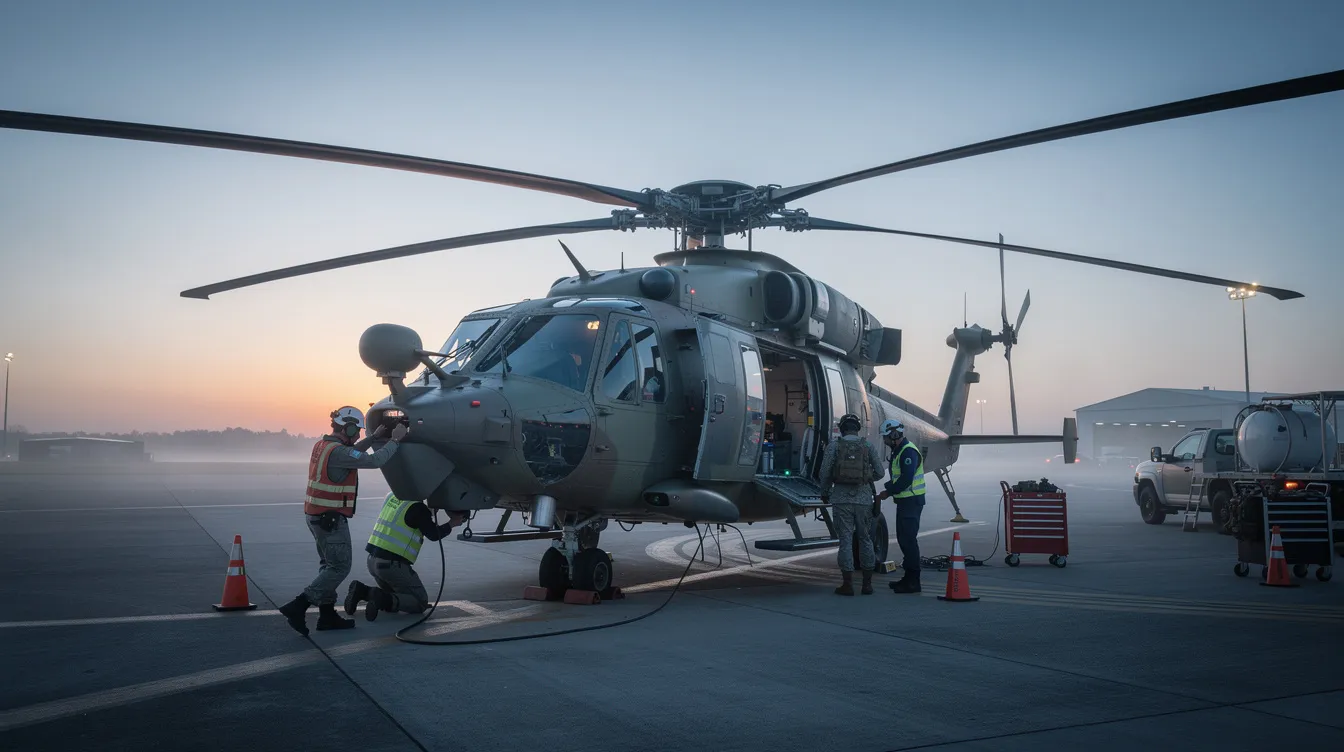
The CH-47F Block II enhancements include:
Strengthened airframe for higher operating weights
Redesigned fuel tanks for improved safety and capacity
Improved drivetrain for greater power transfer to the rotor blades
Open-architecture avionics designed to increase lift margins and mission radius
Competing and complementary future rotorcraft concepts like the Defiant X (Future Long-Range Assault Aircraft) prioritize speed and extended range but may not match the Chinook's pure lift capacity. Heavy-lift helicopters like the CH-47 and CH-53K are expected to dominate extreme-lift roles, while faster tiltrotors and advanced helicopters handle troop transport and light cargo missions, echoing the trade-offs between shared charter flights and full charters in private aviation.
For civilian planners and charter users, this evolution means broader options: high-speed vertical lift for passengers and specialty heavy-lift platforms for oversized cargo, each accessible through different service channels.
Chinook helicopters are mostly military or specialist commercial assets. They are not typical on-demand charters found on Jettly's marketplace. However, understanding their lift capacity helps planners benchmark mission needs accurately.
Many private missions only require light or medium helicopters (1,000–6,000 lb lift) for passengers, aerial filming, site visits, or light cargo. Jettly's platform offers a wide range of private charter aircraft from single-engine helicopters to heavy jets, with instant pricing and transparent details for time-critical travel.
Example scenarios where both worlds intersect:
Executives visiting remote infrastructure projects supported by Chinooks fly in via chartered jets or helicopters booked through Jettly, often leveraging flexible private jet memberships to simplify frequent travel
Insurance adjusters surveying disaster zones use emergency charter flights or participate in crowdsourced private jet flights with shared empty seats, while Chinooks move heavy equipment on the ground
Engineers traveling to staging bases via private aircraft while heavy lift helicopters handle the oversized loads, sometimes relying on predictable-rate jet card programs for recurring project travel
Ready to find the right aircraft for your specific mission? Explore options and get instant pricing at Jettly, and use its resources for an affordable private jet charter to align aircraft choice with your budget.
Yes. Chinook helicopters are used commercially for logging, construction, power line work, and disaster relief. These operations are run by specialized companies operating under strict aviation regulations. They are less common than light and medium helicopters due to high operating costs and niche mission profiles, and they are not part of standard on-demand charter fleets. Clients needing Chinook-level heavy lift typically work directly with specialist operators, while platforms like Jettly focus on broader private jet and helicopter charter needs, positioning themselves as a flexible NetJets alternative for many travelers.
Heavier payloads reduce range because more power and fuel are required to stay airborne, especially at high altitudes. A Chinook near its maximum external load might be limited to short shuttle legs of 50–100 nautical miles, while a lighter internal load allows for longer legs between refueling stops. Operators often balance fuel and payload carefully, or add extended-range fuel tanks, depending on mission distance and available landing sites.
No. Lift capacity varies with temperature, altitude, humidity, and wind. Hot, high, and humid conditions reduce the maximum safe payload. Flight manuals include performance charts so pilots can calculate safe loads for exact conditions on any given day. Operators always leave safety margins below the theoretical maximum to account for changing weather and operational contingencies.
A CH-47F typically carries around 33 fully equipped troops plus three crew members (pilot, copilot, and flight engineer) when configured primarily for personnel. In mixed missions, cargo weight and troop numbers are traded against each other to stay within maximum gross weight limits. Seating is utilitarian compared to private charter helicopters, which may feature premium services such as dedicated in-flight catering via Jettly Eats, reflecting its military and utility role rather than VIP transport.
The Chinook is a large, highly specialized heavy-lift helicopter with high operating costs and complex logistics requirements. Demand is limited to specific industrial, governmental, or military projects. Private charter customers more often require comfortable, efficient aircraft for passengers or light cargo, which are better served by light and medium helicopters and jets. Jettly focuses on these more common mission types, while very heavy-lift requirements are typically arranged through dedicated project-based contracts with specialist operators.
The CH-47 Chinook is one of the world's most capable heavy-lift helicopters, combining raw payload performance with speed, range, and proven reliability across six decades of service. Here are the essentials:
A standard CH-47 Chinook can lift up to about 26,000 lb (11,793 kg) externally at sea level, making it the benchmark heavy lift helicopter for military and civilian operations worldwide.
Lift capacity drops at higher altitude and higher temperature. At 5,000 feet and 30°C, expect roughly 22,000 lb externally. In extreme hot-and-high conditions, the CH-47F can lift around 16,000 pounds. These figures are critical for planning heavy lift operations.
The Chinook operates effectively at altitudes up to 20,000 feet, maintaining superior maneuverability and stability even in challenging high-altitude environments.
Its tandem rotor design provides increased stability in windy conditions and enables stable cargo lifting and precise dropping, supported by a Digital Automatic Flight Control System.
The CH-47F and Block II upgrades improve lift, range, and reliability, keeping the Chinook relevant for military, construction, and disaster relief missions well into the 2040s.
The Chinook features a spacious cabin offering 42 cubic meters of cargo space, a rear ramp for easy cargo access, and a triple-hook system for versatile external load configurations.
Safety is enhanced by redundant avionics, hydraulics, and powerplant systems, allowing the helicopter to continue flying safely even if one system fails.
The CH-47 can carry up to 36 troops in combat operations and transport heavy equipment, including 155 mm howitzers, demonstrating its multi-mission versatility.
With a maximum gross weight of 50,000 pounds and a top speed of approximately 170 knots (200 mph), the Chinook combines heavy lift capability with impressive speed and operational flexibility.
The MH-47G variant offers enhanced capabilities tailored for special operations missions.
While Jettly focuses on private jet and helicopter charters, understanding Chinook-level heavy lift capability helps clients compare mission requirements to civilian charter solutions for passengers, light cargo, and time-critical travel.
The CH-47 Chinook can lift up to 26,000 lb at sea level, remains highly capable in hot-and-high conditions where other helicopters fall short, and combines speed, range, and reliability for the most demanding missions on the planet. Its tandem rotor design, powerful T55 engines, and triple cargo hooks make it a standout heavy-lift helicopter for both military and civilian operations, including construction and disaster relief.
Private charter users can use the lift capacity of a Chinook helicopter as a reference point when deciding whether conventional helicopters or fixed-wing aircraft are adequate for their needs. For most passenger and light cargo missions, lighter and more comfortable options deliver better value.
Ready to experience private travel on your terms? Explore flight options or request a quote at https://www.jettly.com, connect with featured operators like Dexter Air Taxi and Zenflight, or plan city-specific trips such as private jet charter in Houston, Texas, or private jet charter in Kolkata, West Bengal. For shorter hops where a light helicopter suffices, consider models like the Eurocopter EC30 instead of heavy-lift platforms like the Chinook. Few aircraft in aviation history have earned a reputation as a true workhorse quite like the CH-47 Chinook. Whether it is hauling artillery across a battlefield, delivering supplies to a disaster zone, or placing steel beams atop a skyscraper, the lift capacity of a Chinook helicopter defines what is possible in heavy vertical transport. This guide breaks down exactly how much a Chinook can carry, what reduces that number in the real world, and how this iconic tandem rotor helicopter compares to other heavy lift platforms.
Share this post:
Jay Franco Serevilla
Jul 7, 2026
|
5
min read
Discover tips and trends in the industry.

5
min read
Cheapest Time to Fly to Italy: How to Find the Lowest Fares (and Faster Private Options with Jettly)
Discover the best times to fly to Italy for the lowest fares, from November to March, and learn how to find affordable flights. This guide also explores when private jet charters via Jettly can be a cost-effective alternative for groups and last-minute trips.
Read More
5
min read
Best Day of the Week to Buy Plane Tickets: Data, Myths, and Smart Booking Strategies
Finding the best day of the week to buy plane tickets is a common query, but no single day guarantees the lowest fare. Mid-week days often show slightly lower fares, but factors like booking window and flight timing are more crucial for savings. This guide explores data-backed patterns and smart strategies for both commercial and private jet travel.
Read MoreStay updated with our latest insights and tips to elevate your journey with us.
MEMBERSHIPS AND ASSOCIATIONS



Disclaimer: Jettly operates as a charter broker, offering access to a global digital jet charter marketplace. Jettly is not a direct air carrier and does not own or operate aircraft. All advertised flights are conducted by third-party air carriers that are fully licensed and hold the appropriate Part 135 or Part 121 certifications issued by the Federal Aviation Administration (FAA) or equivalent regulatory authorities under U.S. or foreign law. Jettly complies fully with the U.S. Department of Transportation's Part 295 and Part 298 Charter Broker regulations. Jettly does not carry additional liability insurance. Passengers are covered by aircraft operator insurance. TICO: 50023770


