


Login
Get Instant Pricing On 23,000+ Aircraft

>
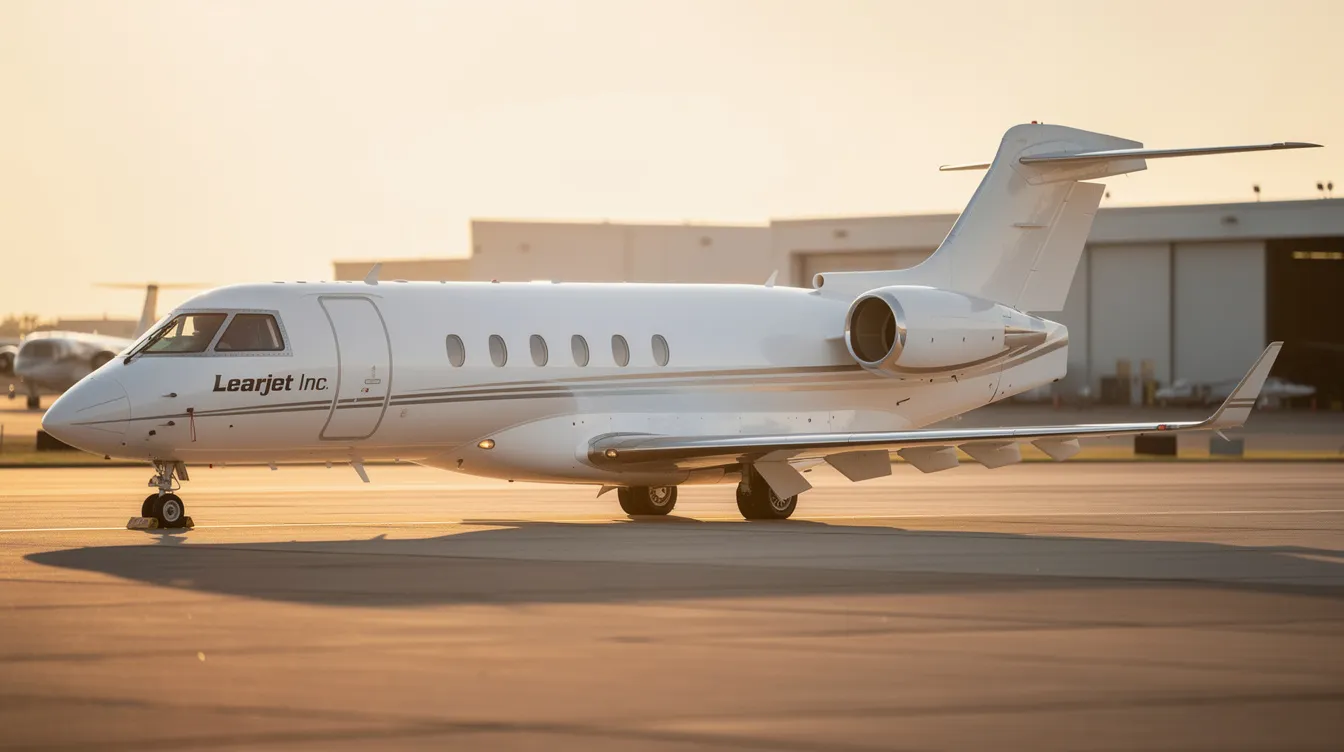
The Learjet 55 is one of the most recognizable midsize business jets ever produced. Developed by Learjet and later carried under the Bombardier banner, the Lear 55 first entered service in the early 1980s and quickly earned a reputation for speed, altitude capability, and a cabin that finally let passengers stand up straight. Decades later, it remains a practical and cost-effective option in the charter market.
This guide is intended for charter travelers, aircraft buyers, and aviation enthusiasts interested in the Learjet 55. Understanding the Learjet 55's features and market position helps travelers and buyers make informed decisions.
This post covers everything charter travelers and aviation enthusiasts need to know about the aircraft: its history, cabin layout, performance specs, operating costs, variant differences, and how to book one through a platform like Jettly.
The Learjet 55 is a mid-size business jet, meaning it offers more cabin space and range than light jets but is smaller and more economical than large-cabin aircraft.
The Learjet 55 is a mid-size business jet developed by Learjet that typically seats seven or eight passengers in a stand-up cabin with roughly 50% more cabin volume than its predecessors. It cruises around 450–460 knots and can reach a maximum operating altitude of 51,000 feet.
Annual ownership budgets can exceed $1 million at approximately 200 flight hours per year, while charter customers avoid those fixed costs and pay hourly rates that typically fall between $3,000 and $5,500 per flight hour depending on routing, aircraft age, and market conditions.
Production included multiple variants like the 55B with improved avionics and the 55C with delta fins for better stability, improved runway performance, and refined handling.
The aircraft has been utilized for corporate transport and charter operations, as well as air ambulance and special government roles, making it one of the more versatile platforms in the Lear family.
Jettly gives travelers on-demand access to the Learjet 55 and comparable midsize jets through instant pricing, digital booking, and flexible routing—no ownership commitment required.
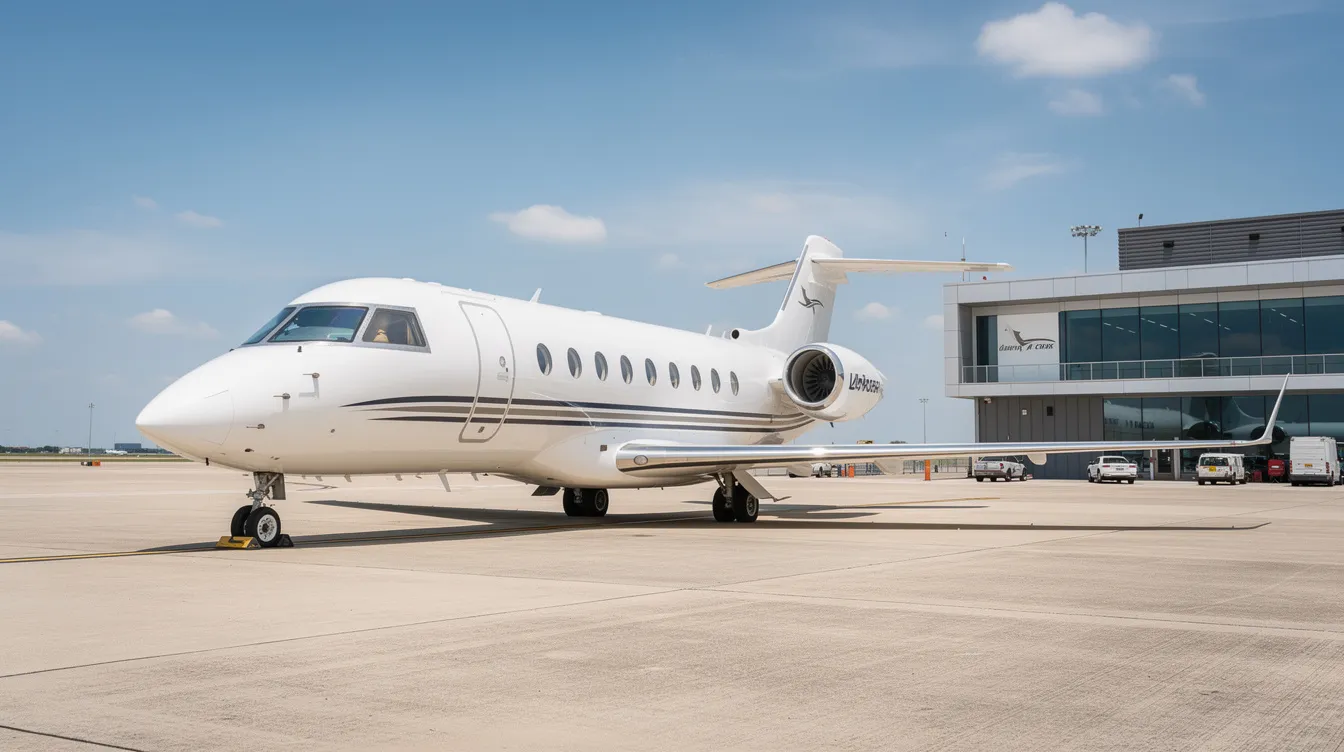
The Learjet 55 is a mid-size business jet developed by Learjet, positioned between the company's classic light jets and larger cabin aircraft. Often called the Lear 55, it was designed to deliver the speed that made the Learjet name famous while solving the cabin space limitations that had defined earlier models. It was developed from the Learjet 20 and 30 series, carrying forward successful elements of those platforms while introducing a significantly larger fuselage and refined aerodynamics.
Learjet announced its 50 series program in 1977, outlining plans for Models 54, 55, and 56. The Learjet 55 reached its first flight on 19 April 1979. After a thorough certification process, production of the Learjet 55 began on 18 March 1981, with FAA type certification achieved that same year. Over 100 Learjet 55 aircraft were built until 1986, and related variants continued rolling off the line until production ceased in 1993. In total, a total of 147 Learjet 55 aircraft were delivered across all variants.
The aircraft features a low-wing cantilever monoplane configuration with a T-tail. It is powered by two Honeywell TFE731-3A-2B engines, each producing approximately 3,700 pounds of thrust. The wing design incorporated NASA-developed winglets known as "Longhorn," a direct lineage from the Learjet 28/29 program, and readers can consult that site for technical reference data. These NASA-developed winglets, called Longhorn, are designed to reduce drag and improve efficiency. These winglets reduced induced drag and improved cruise efficiency at high altitudes—an innovation that helped define the jet's performance character.
The larger fuselage was perhaps the most significant design modification. Earlier Lear models were fast but cramped. The 55 introduced a wider, taller cabin that gave passengers room to move and made the aircraft capable of serving as a legitimate midsize platform rather than a stretched light jet.
Bombardier acquired Learjet in 1990, placing the Learjet 55 within the broader Bombardier Learjet lineup. By that point, the design of the Learjet 55 laid the foundation for later Learjets like the Learjet 60, which carried the wider-body concept further with updated engines and avionics. Travelers today can charter Learjet 60 midsize jets when they want similar performance with newer systems and cabin refinements. The 55 served as a bridge between the early, nimble Lear models and the more refined jets that followed, and many airframes remain active today in charter, shuttle, and medevac roles across North America and beyond.
The Learjet 55 was developed specifically to address a longstanding complaint about earlier Learjets: limited cabin space, particularly headroom and shoulder room. The result was a stand-up cabin design that changed how passengers experienced the aircraft.
The interior cabin dimensions of the Learjet 55 are 13 ft 7 in in cabin length, 5 ft 9 in in cabin width, and 5 ft 7 in in cabin height (1.73 meters). That cabin volume represents roughly 50% more space than what was available in the Learjet 20 and 30 series, which is immediately noticeable when stepping aboard.
The cabin typically accommodates seven or eight passengers in a standard executive configuration. A typical layout includes a four-seat club arrangement—two pairs of facing seats in the center of the cabin—plus a side-facing divan opposite a galley area and an aft forward-facing seat. The Learjet 55 seats up to ten passengers in higher-density or shuttle configurations, though this reduces personal space considerably and is generally reserved for short-haul operations.
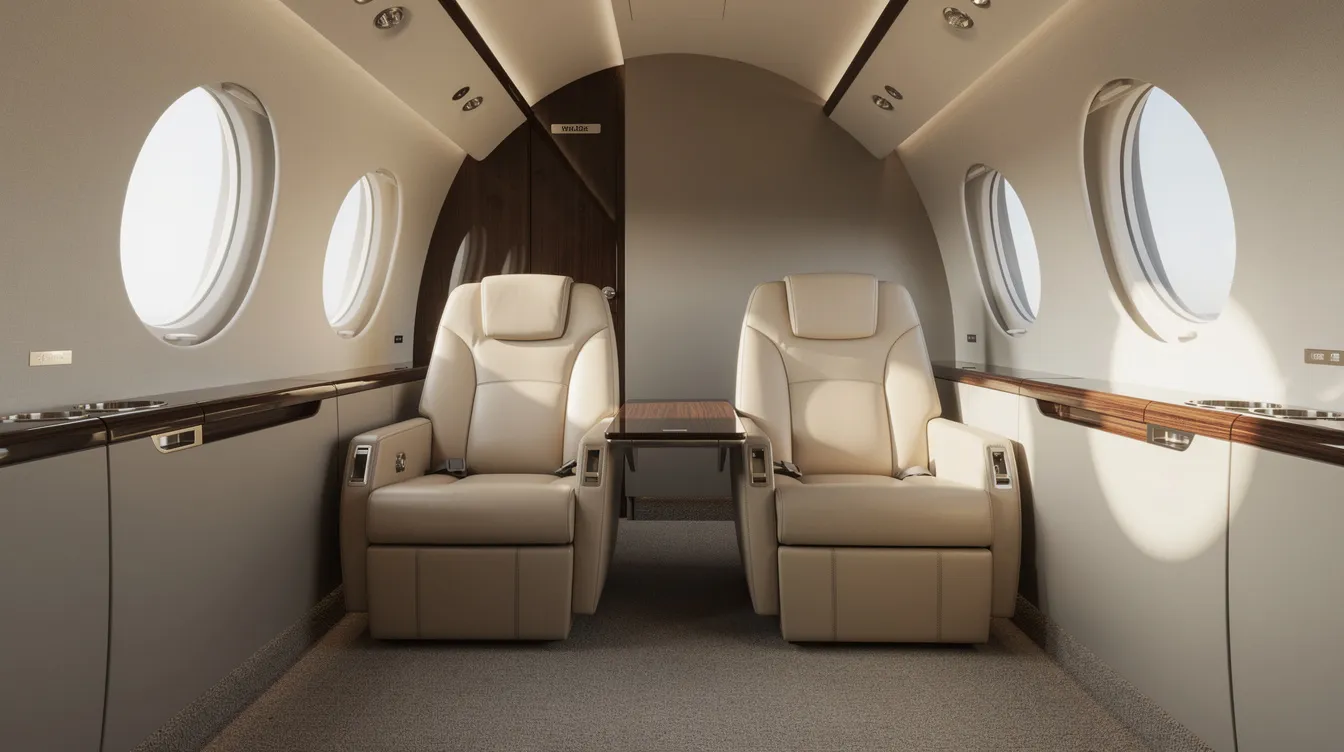
Standard amenities on most chartered Learjet 55 aircraft include:
Enclosed rear lavatory (half-width design)
Small galley area for snacks and beverages
Power outlets (110 VAC standard; USB ports on refurbished aircraft)
Optional Wi-Fi on modernized airframes
Climate-controlled cabin with improved sound insulation compared to earlier Lear models
The Learjet 55 includes a small galley and half-width lavatory as standard equipment, though the quality of both varies depending on how recently the interior has been refurbished.
The typical baggage capacity of the Learjet 55 is about 60 cubic feet, split between an internal compartment (approximately 40 cubic feet) and an external storage area (approximately 20 cubic feet). That's sufficient for overnight bags for seven passengers, though carrying maximum passengers on a long-range flight with full fuel can reduce available payload for luggage.
Compared to newer midsize jets on the market, a well-maintained Learjet 55 cabin can still feel comfortable and efficient for business or leisure flights of two to three hours. Passengers benefit from high cruise altitudes that reduce turbulence. That said, newer aircraft tend to offer quieter cabins, more modern connectivity, and additional baggage space. For cost-conscious travelers who value speed and a stand-up cabin over the latest interior finishes, the Lear 55 remains a strong option.
The Learjet 55 prioritizes speed and cruise altitude, delivering fast sector times and the ability to fly above most weather and airline traffic. For charter clients interested in getting from point A to point B quickly, these are the numbers that matter.
The maximum operating speed is Mach 0.81, which translates to a cruise speed of approximately 527 mph at maximum performance (roughly 450–460 knots in normal cruise settings). The Learjet 55 has a maximum operating altitude of 51,000 feet, placing it above the majority of commercial traffic and most turbulence. That altitude capability also improves fuel efficiency on longer sectors.
Performance standards include a range of approximately 2,165 to 2,346 miles (or about 4,010 kilometers / 2,000–2,300 nautical miles) with four passengers and standard fuel reserves. In practical terms, this means nonstop flights on routes such as:
New York to Dallas (~1,300 NM)
Toronto to Miami (~1,100 NM)
Los Angeles to Denver (~700 NM)
Chicago to Los Angeles (~1,750 NM with lighter loads)
For transcontinental routes at full payload, a fuel stop may be needed depending on conditions, but for most regional and medium-haul missions, the aircraft handles the job without issue.

The jet is powered by two Honeywell TFE731-3A-2B engines, each delivering approximately 3,700 lbf of thrust. These turbofans are well regarded for reliability and smooth performance throughout the flight envelope.
On the runway side, takeoff distance at sea level and maximum takeoff weight runs approximately 5,600 feet. Landing distances are shorter—around 2,800 feet—but hot, high, or heavy conditions increase both figures. Compared to newer midsize jets optimized for short-field access, the Learjet 55 requires more planning for operations into smaller airports.
For owners, the annual cost picture at roughly 200 flight hours per year looks like this; broader context on acquisition and operating expenses is covered in Jettly's guide on how much a private jet costs:
|
Cost Category |
Approximate Annual Cost |
|---|---|
|
Fixed costs (crew, insurance, hangar, inspections) |
$350,000–$400,000 |
|
Variable costs (fuel, maintenance, reserves) |
$500,000–$600,000 |
|
Total (200 hours/year) |
$900,000–$1,100,000 |
Cost per mile effectively decreases the more an owner flies, because fixed costs are spread over more hours. At 325 hours per year, the all-in hourly cost drops closer to the $5,000–$5,400 range. But for travelers who fly fewer than 150–200 hours annually, charter almost always makes more financial sense.
Charter clients pay an hourly rate that typically reflects fuel, crew, maintenance reserves, and operator margin—without assuming any annual fixed costs. For quick trip-specific pricing, travelers can use Jettly's Private Jet Charter Cost Estimator, and for a deeper breakdown of what drives midsize jet pricing, Jettly's Midsize Jet Cost Guide covers the details.
|
Parameter |
Learjet 55 |
Typical Newer Midsize Jet |
|---|---|---|
|
Cruise Speed |
450–460 knots |
430–480 knots |
|
Typical Range (4 pax) |
~2,000–2,300 NM |
~2,200–2,800 NM |
|
Service Ceiling |
51,000 ft |
45,000–51,000 ft |
|
Typical Seating |
7–8 passengers |
8–10 passengers |
|
Takeoff Distance (SL, MTOW) |
~5,600 ft |
~4,000–5,200 ft |
The Learjet 55 family includes several variants produced over its 12-year production run, most notably the Learjet 55B and Learjet 55C, as well as extended range configurations built for longer missions.
The Learjet 55B, introduced in the mid-1980s, refined the baseline Lear 55 with design modifications including a multi-tube EFIS cockpit (electronic flight instrument system), often paired with upgraded avionics such as a King GPS, wing improvements, and a higher maximum takeoff weight. Only a limited number were produced, but the B model demonstrated the direction the platform was heading—toward digital instrumentation and extended range capability.
The Learjet 55C arrived in 1988 and represented the most significant upgrade in the family. Its defining feature was the addition of ventral delta fins mounted on the aft fuselage. Delta fins are small, triangular surfaces added to the aft fuselage to improve stability. These fins improved lateral stability, reduced Dutch-roll tendencies, and delivered improved runway performance through lower approach and takeoff speeds. For operators flying into more demanding airports or dealing with crosswind conditions, the 55C became the preferred variant.
Many 55C airframes also featured updated avionics and cabin refinements, and some were delivered with extended range fuel configurations using tail tanks—though the additional fuel came with modest penalties in available baggage weight.
The Learjet 55 is known for its competitive acquisition value in the pre-owned market. As of the mid-2020s, aircraft in the Learjet 55 family typically trade between $600,000 and $1,300,000 depending on variant, engine program enrollment, avionics condition, and total airframe hours. A Learjet 55 costs from $4 million USD to purchase new (original list price), so the current sale prices reflect significant depreciation that makes the plane attractive for operators and charter companies evaluating NetJets alternatives like Jettly.
Wet lease rates for Learjet 55 vary by aircraft age, condition, and configuration. Charter rates for Learjet 55 vary by journey length and depend on selected airports for departure and arrival. Typical hourly rates fall in the $3,000–$5,500 range.
Buyers considering a purchase must factor in acquisition cost plus ongoing fixed costs—crew salaries, insurance, hangar, scheduled maintenance, and avionics updates. For anyone flying fewer than 200 hours per year, the math often favors charter, especially when paired with tools like Jettly's Jet Card Flight Cost Estimator for predictable budgeting.
Charter travelers pay only when they fly and can choose among multiple aircraft types depending on mission needs from Jettly's global private charter aircraft network. Others opt for private jet memberships that blend predictable access with wholesale pricing. That flexibility is where platforms like Jettly add clear value, especially when combined with structured options such as its Jet Card programs.
Jettly is a digital private jet charter platform that connects customers with a global network of aircraft—including midsize jets comparable to the Learjet 55—for on-demand flights without long-term contracts or fractional ownership commitments.
Beyond individual aircraft types like the Learjet 55, Jettly provides access to a broad portfolio of private charter aircraft spanning light, midsize, and large-cabin categories.
Key benefits of using Jettly to access aircraft like the Learjet 55:
Instant online pricing and transparent cost breakdowns
Ability to compare midsize jet options side by side, including preferred departure and arrival points using Jettly's airport locator tool
Support for both business trips and leisure itineraries
Access to empty leg flights and additional tips for booking the cheapest private jet flights for potential savings
No membership required for on-demand booking
Users can search for a Learjet 55 or similar midsize jets for routes such as New York–Miami, Los Angeles–Denver, or Toronto–Calgary, choosing departure times, airports, and services like catering and ground transfers. Those looking to manage their budget can review Jettly's guidance on affordable private jet charter to understand what drives pricing. For a broader look at available Learjet options, check out Jettly's Top Learjet Charter Options.

Learn more about Jettly's charter options at https://www.jettly.com, or explore their broader overview of the industry in the ultimate list of charter airlines.
The following questions address common topics about the Learjet 55, its variants, and how the aircraft fits into modern private jet charter, including evolving models like crowdsourced private jet flights that share empty seats. Each answer is written with charter customers in mind.
The Learjet 55 remains competitive on speed and cruise altitude, often matching or exceeding newer models in both categories. Its service ceiling of 51,000 feet and maximum speed of Mach 0.81 still place it among the faster options in the midsize category. The trade-off is that newer jets tend to offer quieter cabins, better short-field performance, and more modern interiors. However, because the Learjet 55 typically charters at a lower hourly rate than brand-new midsize aircraft, it appeals to cost-conscious travelers who still want a stand-up cabin and fast flight times.
The aircraft is ideal for regional and transcontinental trips of about two to four hours carrying four to seven passengers. In North America, that covers routes like New York to Dallas, Chicago to Miami, or San Francisco to Denver with ease. In Europe, sectors such as London to Geneva or Madrid to Rome fall well within its range envelope. For very long-haul missions or operations into particularly short runways, newer jets with optimized field performance may be a better fit, and travelers planning overseas trips can benefit from understanding how private jets fly internationally.
The Learjet 55C adds ventral delta fins to the aft fuselage, which improve lateral stability and low-speed handling. Delta fins are small, triangular surfaces added to the aft fuselage to improve stability. In practice, this means smoother approaches, lower takeoff and landing speeds, and improved runway performance—advantages that matter most when operating into airports with shorter runways or challenging wind conditions. The cabin experience for passengers remains broadly similar between variants, though many 55C airframes also received cockpit and avionics upgrades that improve the crew's situational awareness and flight management.
Hourly charter rates for the Learjet 55 generally range from $3,000 to $5,500, depending on the variant, aircraft condition, departure location, routing, and season. Airport fees, fuel surcharges, and repositioning costs can adjust the final trip price in either direction. These figures reflect mid-2020s market conditions and should be treated as estimates. For a personalized quote based on your specific route and dates, Jettly's Jet Card Flight Cost Estimator provides real-time pricing for eligible jet card routes.
The process is straightforward. Visit Jettly's website, enter your departure and arrival airports along with your preferred dates and passenger count, or use the integrated airport locator tool to fine-tune your route. The platform returns available aircraft options—including the Learjet 55 where available—with instant pricing and transparent breakdowns. Travelers who prefer to purchase individual seats instead of chartering the entire aircraft can follow Jettly's guidance on how to buy a seat on a private jet. Compare midsize jet options, review amenities and specifications, and confirm your booking online. For a step-by-step walkthrough, Jettly's guide on How to Book a Private Jet covers the full process.
Ready to experience private travel on your terms? You can explore options like crowdsourced and shared private jet flights or learn how to get a seat on a private jet easily before you explore flight options or request a quote at https://www.jettly.com.
The Learjet 55 remains a standout midsize business jet that balances speed, cabin comfort, and operational efficiency. Its stand-up cabin, high cruise altitude, and competitive charter rates make it an attractive option for travelers seeking a practical yet refined private jet experience. While newer midsize jets offer more modern interiors and enhanced short-field performance, the Learjet 55's proven design and availability on the charter market provide excellent value.
For those interested in booking a Learjet 55 or exploring comparable midsize jets, platforms like Jettly simplify the process with instant pricing, transparent costs, and flexible booking options. Jettly connects travelers to a global network of private aircraft, enabling seamless access to private jet travel without ownership commitments.
Ready to experience private travel on your terms? Explore flight options or request a quote at https://jettly.com.
Share this post:
Jay Franco Serevilla
Sep 13, 2026
|
5
min read
Discover tips and trends in the industry.
5
min read
Richmor Aviation, Inc.: Charter Services, Flight School, and How Jettly Helps You Compare Options
Richmor Aviation, Inc. has been a key player in New York's aviation sector since 1967, offering charter services and a renowned flight school. For those seeking to compare private jet options beyond Richmor, Jettly provides a digital marketplace to explore a vast network of aircraft and operators. This guide details Richmor's offerings and how Jettly enhances the travel experience.
Read More
5
min read
Plane Flying Height in km: How High Different Aircraft Fly and Why It Matters
Most commercial planes fly between 9 to 12 km, while private jets can reach up to 15.5 km. The chosen altitude balances fuel efficiency, safety, and passenger comfort. Understanding these heights helps travelers appreciate the dynamics of air travel and optimize their flight experience.
Read MoreStay updated with our latest insights and tips to elevate your journey with us.
MEMBERSHIPS AND ASSOCIATIONS



Disclaimer: Jettly operates as a charter broker, offering access to a global digital jet charter marketplace. Jettly is not a direct air carrier and does not own or operate aircraft. All advertised flights are conducted by third-party air carriers that are fully licensed and hold the appropriate Part 135 or Part 121 certifications issued by the Federal Aviation Administration (FAA) or equivalent regulatory authorities under U.S. or foreign law. Jettly complies fully with the U.S. Department of Transportation's Part 295 and Part 298 Charter Broker regulations. Jettly does not carry additional liability insurance. Passengers are covered by aircraft operator insurance. TICO: 50023770


