


Login
Get Instant Pricing On 23,000+ Aircraft

>

The Learjet 60 stands as a proven midsize business jet that delivers strong climb performance, efficient Pratt Whitney Canada PW305A engines, and a practical range exceeding 2,000 nm. For corporate teams and private operators needing fast regional travel, this aircraft remains a solid charter choice through platforms like Jettly.
The Learjet 60 is a midsize jet introduced in 1993, featuring PW305A engines and a range of approximately 2,100–2,180 nm—ideal for nonstop routes such as New York–Miami or Toronto–Dallas.
Standard configurations seat 6–7 passengers in a spacious cabin with 5 ft 9 in (1.8 m) ceiling height, offering stand-up comfort rare in this class.
Cruise performance reaches Mach 0.76–0.81, with a service ceiling of up to 51,000 ft, enabling operations above most airline traffic.
Pre-owned market prices range from USD 1 million to over 3 million, making it a value-focused option compared to super-midsize alternatives.
Safety discipline matters: the 2008 Columbia accident prompted the FAA to require tire pressure checks every four days for this model.
The Bombardier Learjet 60 is a mid-size cabin, medium-range business jet aircraft manufactured by Bombardier Aerospace in Wichita, Kansas. Announced in October 1990 as an upgrade of the Learjet 55C, just months after Bombardier acquired Learjet, the Model 60 first flew on October 10, 1990, and received FAA certification in January 1993.
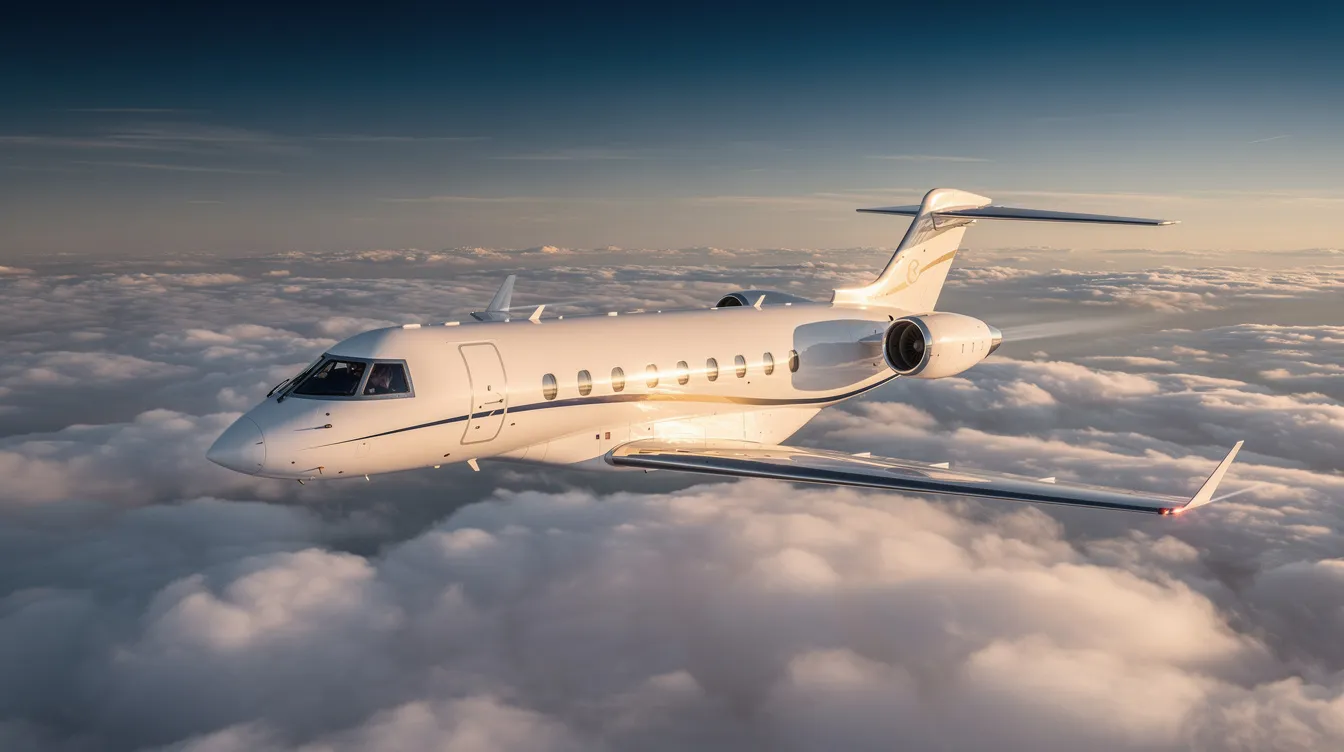
Powered by two Pratt & Whitney Canada PW305A engines delivering 4,600 pounds of thrust each, the Learjet 60 combines excellent speed and rapid climb performance with a maximum takeoff weight of 23,500 lbs (10,659 kg). Its design incorporated improved aerodynamics over the Learjet 55, using computational fluid dynamics (CFD) to enhance fuel efficiency and featuring distinctive ogive winglets and wing cuffs that reduce drag.
With production ending in 2007 after approximately 298 units, the Learjet 60 represents the last legacy Learjet design before Bombardier introduced newer platforms like the Learjet 45 series.
Performance data positions the Learjet 60 aircraft as a strong climber with competitive speed in the midsize category. Key specifications include:
Range: 2,180 nm NBAA IFR with four passengers and reserves
Cruising speed: 460 knots true airspeed (ktas)
High cruise speed: Mach 0.76 to 0.81, depending on altitude
Long-range cruise: Mach 0.72 for improved efficiency
Service ceiling: 51,000 ft (15,545 m)
Time to climb performance: 4,500 ft/min rate; reaches 41,000 feet in 18.5 minutes at max takeoff weight of 23,500 lb (10,660 kg)
Takeoff field length: Approximately 5,450 ft at sea level standard day
Landing distance: Around 3,120 ft
The Learjet 60 is known for some of the lowest direct hourly operating costs in its class. However, it is considered runway-limited, especially on hot days, due to its braking system shared with the smaller Lear 30 series. Pilots often follow a “5-6-7” rule for minimum runway lengths: 5,000 ft dry, 6,000 ft wet, and 7,000 ft contaminated.
External dimensions allow the Learjet 60 to fit standard business aviation ramps:
Length: 58 ft 8 in (17.9 m)
Wing span: 43 ft 9 in (13.4 m)
Height: 14 ft 7 in (4.5 m)
Empty weight: 14,640 lb (6,641 kg)
The mid-size cabin offers genuine stand-up room and is one of the largest in the Learjet series, measuring three inches wider and 43 inches longer than the interior of a Learjet 55. The cabin measures 17 ft 8 in (5.4 m) long, 5 ft 9 in (1.8 m) wide, and 5 ft 9 in (1.8 m) high, providing a cabin volume of approximately 447 cubic feet.
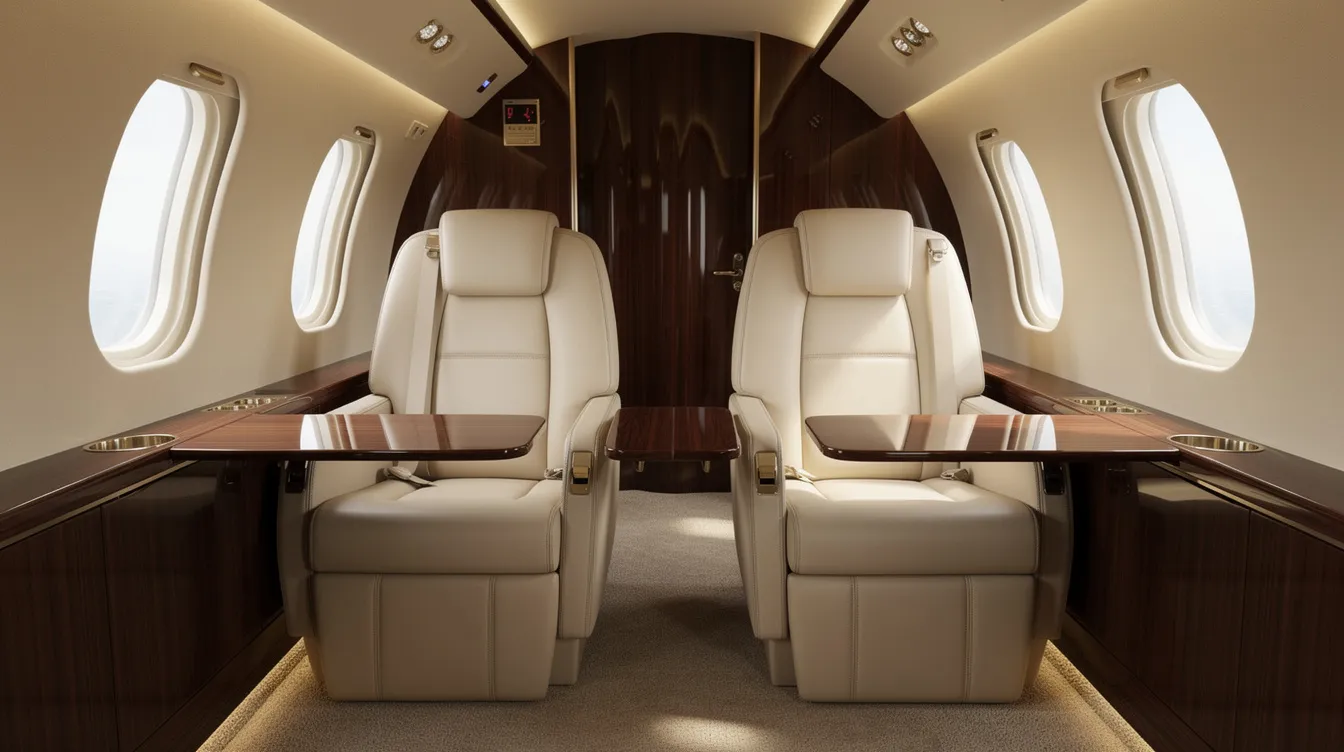
Standard seating configurations typically accommodate six passengers, arranged with a forward club of four executive slide/swivel seats and two aft forward-facing seats. The layout also features a two-place side-facing divan opposite the entry door, a small forward galley with an ice drawer, and a rear lavatory that can be used as an additional belted seat if required.
Cabin noise near the entry door was pronounced, which was a significant factor in the redesign of the Model 60 cabin for the Model 60XR to improve passenger comfort.
Charter-configured aircraft often include refreshment centers with hot and cold beverage options, work tables, power outlets, optional Wi-Fi, and curated in-flight catering services for private jets, making the interior comfortable and practical for 2–4-hour missions.
The Learjet 60’s performance is powered by twin Pratt & Whitney Canada PW305A engines, each rated at 4,600 pounds of thrust. These reliable powerplants have typical overhaul intervals around 5,000 hours, with many operators enrolling engines in maintenance programs like JSSI Premium to manage costs predictably.
The original avionics suite features Collins Pro Line 4 integrated avionics processing systems, including EFIS displays, flight management systems (FMS), and weather radar. Over time, many pre-owned Learjet 60s have been upgraded to Pro Line 21 avionics, ADS-B Out compliance, and WAAS LPV capability, enhancing situational awareness and meeting modern regulatory requirements.
Aerodynamic refinements such as the winglet trailing edge design, wing cuff, and wing-to-body fairing contribute to improved efficiency and handling compared to earlier Learjet models.
The Learjet 60 positions as a cost-effective midsize jet option with lower acquisition costs than newer designs.
Pre-owned pricing (1995–2006 production):
Range: USD 1 million (by 2018) to $3.4 million, depending on year, serial number, and maintenance status
In September 2018, 112 Model 60XRs were in service, priced between $2.5 million (2007 model) and $4.0 million (2013 model)
Ask prices range from $1,760,000 to $3,395,000
Charter rates for the Learjet 60 vary widely depending on journey length and airport fees. The aircraft continues to hold its resale value well, even as the market for mid-size used jets softens.
Estimated operating costs (based on 300 hours per year):
Crew salaries and training
Hangar and insurance
Navigation fees, which factor into estimates from a private jet charter cost estimator
Fuel burn: 230–250 US gallons per hour
Engine reserves and routine maintenance
Combined hourly operating cost is competitive within the midsize jet market
For travelers not requiring full-time access, chartering through platforms like Jettly eliminates fixed costs, allowing payment only for flights used and providing access to a broad selection of private charter aircraft, other top private jet charter companies, and luxury options.
Bombardier introduced the Learjet 60XR in the mid-2000s as a refined variant. The 60XR retained the PW305A engines and proven airframe but added Pro Line 21 avionics, improved cockpit ergonomics, and upgraded interior materials. Deliveries began in 2007, with production concluding around that time as Bombardier shifted focus to newer platforms.
For charter customers, 60XR aircraft offer modern panel aesthetics and enhanced situational awareness while matching the classic 60’s speed, range, and payload capabilities, making the Learjet 60 private jet for rent an attractive option in the midsize category.
The Learjet 60 has the highest incident and accident rate in its class, with most accidents occurring during landing phases. Bombardier's product support for the Learjet 60 has historically ranked low in industry surveys, a concern for operators.
Most accidents are attributed to pilot error, as the aircraft can be unforgiving and demands skilled handling, especially during landings. The National Transportation Safety Board (NTSB) reports that many mishaps resulted from flight crews failing to read or understand key items in the aircraft manual.
Notable incidents include:
A hydraulic-system failure that disabled essential systems required to slow the jet, leading to a crash on a runway too short for landing.
A landing attempt on a snow- and ice-slicked runway with the anti-skid braking system turned off, resulting in loss of control.
The Learjet 60's small brakes and tires, inherited from the smaller Lear 30 series, require precise landing techniques to avoid accidents. Pilots must respect these limitations and adhere strictly to operational procedures.
The 2008 accident at Columbia Metropolitan Airport involving a Learjet 60 highlighted the critical importance of tire pressure maintenance. The FAA responded by mandating tire pressure checks at least every four days for all Learjet 60 and 60XR operators.
Modern charter operators and fractional jet programs emphasize rigorous safety management systems and maintenance protocols to mitigate risks.
The Learjet 60 serves charter markets well for fast regional missions and same-day business itineraries, yet it is also capable of supporting international private jet flights and global missions when properly planned within its range and regulatory limitations. Common routes include regional US pairs as well as international city pairs, such as Abuja private jet charter services:
New York–Miami (approximately 1,000 nm)
Chicago–Denver (900 nm)
Los Angeles–Houston (1,200 nm) and international routes such as private jet charter to Chennai, Tamil Nadu
Toronto–Las Vegas (1,800 nm)
Passenger profiles range from corporate teams of 4–6 people to families and travelers connecting underserved locations, including budget-conscious flyers exploring how to buy a seat on a private jet via shared or semi-private options instead of chartering an entire aircraft. Fractional jet operators and private operators frequently deploy this model for its balance of speed and cabin space, and many compare it with NetJets alternatives like Jettly when evaluating access options, especially after researching NetJets’ role as an industry leader in private aviation.
Jettly connects clients with Learjet 60 operators worldwide through on-demand search, transparent pricing, and private-jet memberships for frequent flyers, which can be evaluated alongside detailed breakdowns of private jet card costs and pricing structures. Chartering versus ownership eliminates maintenance obligations, hangar fees, and crew management while providing access to a range of aircraft types to meet mission needs.
As a 1990s-era midsize jet, the Learjet 60 burns more fuel than some latest-generation designs—approximately 231 US gallons per hour combined. However, operators optimize impact through careful planning and by understanding affordable private jet charter cost drivers:
Efficient routing and flight planning
Optimal cruising altitudes (up to 51,000 ft)
Weight management with tanks full payload configurations
Carbon offset programs, when offered
Sustainable aviation fuel adoption continues to expand across the industry. Many operators accessible through Jettly plan to integrate SAF as availability increases at departure airports supported by Jettly’s global airport locator tool.
The Learjet 60 typically accommodates 6–7 passengers in standard configurations: a four-seat forward club, two aft forward-facing seats, plus an optional belted lavatory seat. Swiss military aircraft or international aviation news sources occasionally reference different configurations, but charter setups prioritize comfort for this capacity.
Under normal charter conditions with four passengers and standard baggage, expect approximately 2,000–2,100 nm non-stop capability. Routes like New York–Miami or Toronto–Dallas fall comfortably within range. Cutter Aviation and similar operators confirm these figures for typical missions.
The Learjet 60 offers larger cabin volume, higher cruising speed, and greater range than light jets while accessing many of the same regional airports. For very short hops with 2–3 passengers, a light jet may prove more economical. The Learjet model provides added flexibility for longer legs or larger groups.
Yes. Jettly’s platform allows travelers to filter aircraft by type, seating, and performance. When a Learjet 60 is available on the selected route, customers can review pricing and specifications before booking.
Visit jettly.com to enter trip details, review available aircraft options, and receive transparent instant quotes or lock in fixed-hourly-rate access through world-class corporate jet card programs. Ready to experience private travel on your terms? Explore flight options, request a quote, or join Jettly’s ULTRA high ticket affiliate program at https://www.jettly.com.
The Learjet 60 remains a compelling choice in the midsize jet category, combining impressive performance, a spacious cabin, and efficient range capabilities. Whether for corporate travel, private operators, or fractional jet programs, this aircraft balances speed, comfort, and operational flexibility. Thanks to platforms like Jettly, accessing a Learjet 60 for your next business trip or leisure flight is easier and more transparent than ever. By leveraging Jettly’s intuitive booking system, travelers can enjoy the benefits of private aviation without the complexities of ownership, making the Learjet 60 an accessible and practical option for a wide range of missions.
Share this post:
Jay Franco Serevilla
Mar 31, 2026
|
5
min read
Discover tips and trends in the industry.
5
min read
Luxury Airlines: The Ultimate Guide to First Class Comfort and Business Class Travel
Luxury airlines have transformed air travel with private suites, gourmet dining, and exceptional service, setting a new standard for first and business class experiences. This guide explores top luxury carriers for 2025-2026, comparing their offerings and highlighting private jet alternatives like Jettly for maximum comfort and flexibility.
Read More5
min read
Luxury Airlines: The Ultimate Guide to First Class Comfort and Business Class Travel
Luxury airlines have transformed air travel with private suites, gourmet dining, and exceptional service, setting a new standard for first and business class experiences. This guide explores top luxury carriers for 2025-2026, comparing their offerings and highlighting private jet alternatives like Jettly for maximum comfort and flexibility.
Read MoreStay updated with our latest insights and tips to elevate your journey with us.
MEMBERSHIPS AND ASSOCIATIONS



Disclaimer: Jettly operates as a charter broker, offering access to a global digital jet charter marketplace. Jettly is not a direct air carrier and does not own or operate aircraft. All advertised flights are conducted by third-party air carriers that are fully licensed and hold the appropriate Part 135 or Part 121 certifications issued by the Federal Aviation Administration (FAA) or equivalent regulatory authorities under U.S. or foreign law. Jettly complies fully with the U.S. Department of Transportation's Part 295 and Part 298 Charter Broker regulations. Jettly does not carry additional liability insurance. Passengers are covered by aircraft operator insurance. TICO: 50023770


